That is why long-horizon robot memory is becoming one of the most important home-robot readiness tests. The question is not whether a robot can recognize an object once. The question is whether it can keep a stable, privacy-safe model of a messy home long enough to finish a real task.

The new hook is Config's memory preview, which shows a robot foundation model handling tasks where the important information disappears from view. Config is not selling a consumer home robot, and its demos are controlled research tasks. But the demos translate cleanly into a buyer question: does this robot remember the world, or is it just reacting to the frame in front of it?
What does long-horizon robot memory mean?
Long-horizon memory is the ability to use information from earlier in a task, not just the last few video frames. In a home, that can mean seconds, minutes, or whole routines.
For a vacuum, memory may only mean room maps, no-go zones, and cleaning history. For a companion robot, it may mean people, preferences, reminders, and daily patterns. For a mobile manipulator or humanoid, memory gets much harder: the robot has to track objects, task steps, tool positions, safety constraints, and human instructions while the scene changes.
Config frames the problem well. Its memory post argues that many physical tasks cannot be solved from the current observation alone. A piano-playing robot has to remember which notes it already played. A shell-game robot has to track an object through occlusion. A desk-tidying robot has to remember the original configuration after someone disturbs it.
Those are not chores, exactly. But they are good proxies for chores. Folding a shirt, loading a washer, setting a table, putting toys away, or bringing an object from another room all require the same underlying skill: hold the task state in memory while the world moves on.
What did Config actually demonstrate?
Config's official posts and TechCrunch's funding report give three useful data points.
First, Config says its CFG-1 model uses a long-horizon architecture with native three-minute memory, 2 billion parameters, and under 50 ms latency on an RTX
- Its product page says the company has collected 100,000 hours of in-house
human action data, and TechCrunch reported that Config wants to scale toward 1 million hours. That matters because robot memory is not just a bigger context window. It needs training data where remembering is necessary.
Second, the results are promising but not magic. Config reports 70% success on 8-note piano trials and 40% on 12-note trials. In the shell-game test, it reports 21 successful trials out of 24. In desk rearrangement, where the robot had to restore a disturbed scene to a remembered layout, it reports 14 successes out of 20.
Third, the strongest home lesson is the failure rate, not only the success rate. A 70% desk-memory result is impressive research progress. It is not enough for a buyer to trust a robot with medication, fragile dishes, pets, or a sleeping child nearby. For the home, memory has to be paired with uncertainty handling: ask before acting, pause on low confidence, and leave a task in a safe state when the remembered plan no longer matches reality.
Which home robots are closest to needing memory?
ui44's database makes the distinction clearer. Some robots already use maps and routine memory. A much smaller set is close to the manipulation problem Config is studying.
Robot
- ui44 database facts
- $20,000 pre-order; 167 cm; 30 kg; about 4 hours of battery life; RGB cameras, depth sensors, tactile skin, microphone array
- Memory relevance
- Explicitly home-focused with household chores, tidying, adaptive learning, and official messaging around visual/spatial awareness with memory
- Buyer caution
- Still a pre-order; buyers need proof of reliable task memory in lived-in homes, not only chore promises
Robot
- ui44 database facts
- $29,950; available; 160 cm; 46 kg; 8-hour light-load runtime; 2.5 kg extended / 4 kg retracted payload
- Memory relevance
- Strong hardware fit for memory-dependent fetching and assistive manipulation because it has mapping, navigation, 3D SLAM, calibrated RGB/depth perception, and ROS 2/Python tooling
- Buyer caution
- High-cost developer/assistive platform, not a mainstream appliance
Robot
- ui44 database facts
- No public price; 173 cm; 61 kg; about 5 hours of battery; Helix VLA; 20 kg payload; multi-step planning
- Memory relevance
- Figure's fleet scale and learning-from-demonstration story are relevant to long-horizon autonomy
- Buyer caution
- Not sold to consumers; currently framed around internal, industrial, and commercial deployment
Robot
- ui44 database facts
- $13,500; available; 132 cm; 35 kg; about 2 hours of battery; optional dexterous hands; SDK/ROS 2
- Memory relevance
- Affordable research platform with enough sensors and development access to test memory policies
- Buyer caution
- A research humanoid is not the same as a safe, self-directed household helper
Robot
- ui44 database facts
- Development; product metadata listed $9,999; on-device OmniSense VLA; 22 degrees of freedom; demos include organizing, laundry, and beverage prep
- Memory relevance
- Interesting because SwitchBot says the VLA is on-device and aimed at home chores
- Buyer caution
- Specs, launch timing, and real-world reliability are still limited
Robot
- ui44 database facts
- $549.99 early-bird; available; V-SLAM, 4K camera, long-term memory, contextual understanding, multi-point spatial memory
- Memory relevance
- Good example of memory for people, patrols, reminders, pets, and routines
- Buyer caution
- Companion memory is not manipulation memory; it will not fold laundry or recover a disturbed desk
| Robot | ui44 database facts | Memory relevance | Buyer caution |
|---|---|---|---|
| 1X NEO | $20,000 pre-order; 167 cm; 30 kg; about 4 hours of battery life; RGB cameras, depth sensors, tactile skin, microphone array | Explicitly home-focused with household chores, tidying, adaptive learning, and official messaging around visual/spatial awareness with memory | Still a pre-order; buyers need proof of reliable task memory in lived-in homes, not only chore promises |
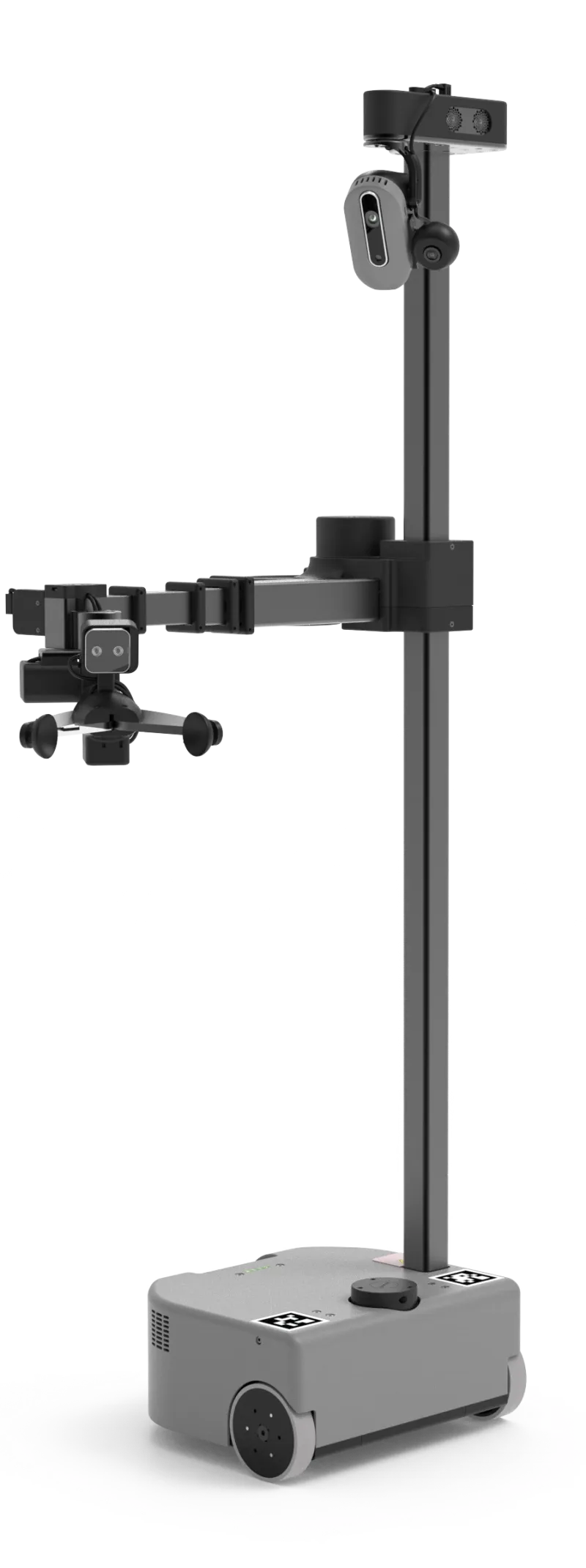
| Hello Robot Stretch 4 | $29,950; available; 160 cm; 46 kg; 8-hour light-load runtime; 2.5 kg extended / 4 kg retracted payload | Strong hardware fit for memory-dependent fetching and assistive manipulation because it has mapping, navigation, 3D SLAM, calibrated RGB/depth perception, and ROS 2/Python tooling | High-cost developer/assistive platform, not a mainstream appliance |
| Figure 03 | No public price; 173 cm; 61 kg; about 5 hours of battery; Helix VLA; 20 kg payload; multi-step planning | Figure's fleet scale and learning-from-demonstration story are relevant to long-horizon autonomy | Not sold to consumers; currently framed around internal, industrial, and commercial deployment |
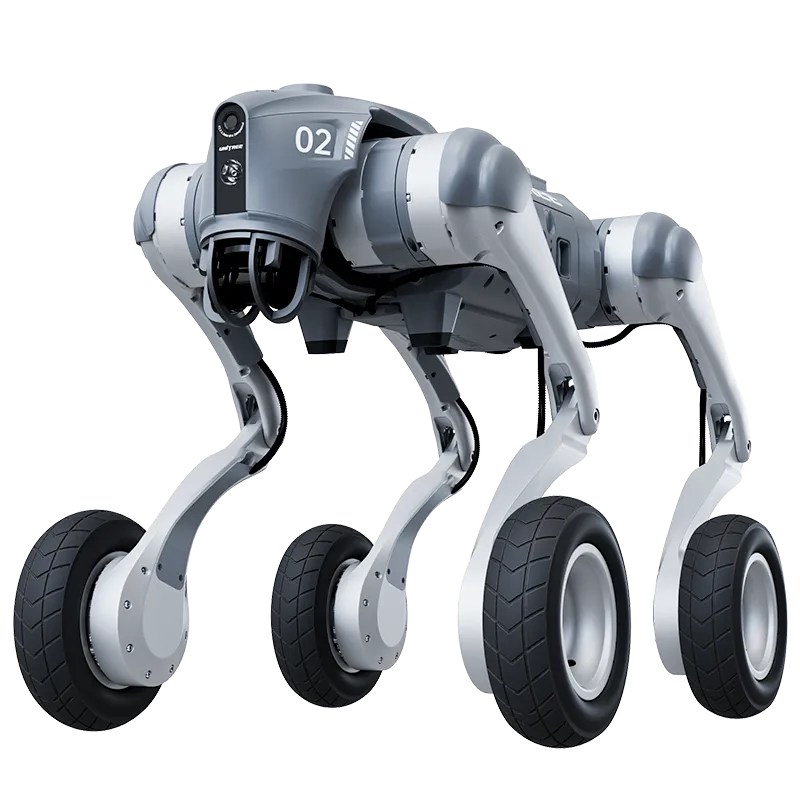
| Unitree G1 | $13,500; available; 132 cm; 35 kg; about 2 hours of battery; optional dexterous hands; SDK/ROS 2 | Affordable research platform with enough sensors and development access to test memory policies | A research humanoid is not the same as a safe, self-directed household helper |
| SwitchBot onero H1 | Development; product metadata listed $9,999; on-device OmniSense VLA; 22 degrees of freedom; demos include organizing, laundry, and beverage prep | Interesting because SwitchBot says the VLA is on-device and aimed at home chores | Specs, launch timing, and real-world reliability are still limited |
| Enabot EBO Max | $549.99 early-bird; available; V-SLAM, 4K camera, long-term memory, contextual understanding, multi-point spatial memory | Good example of memory for people, patrols, reminders, pets, and routines | Companion memory is not manipulation memory; it will not fold laundry or recover a disturbed desk |
The important split is between remembering a person or map and remembering a manipulation task. A companion robot can remember that Mom likes a check-in at 9 a.m. A mobile manipulator has to remember that the blue cup was on the left side of the counter before someone blocked the camera, then recover if the cup is now behind a cereal box.
Both are memory. Only one is physical competence.
What should buyers look for in a robot memory claim?
Treat "memory" as a stack, not a single checkbox.
1. Map memory means the robot can keep rooms, zones, docks, no-go areas, and navigation routes stable over time. This is common in robot vacuums and mobile monitoring robots. It is necessary, but it does not prove the robot can remember objects or chores.
2. Object memory means the robot can keep track of things even when they are partly hidden, moved, or temporarily out of view. Config's shell-game demo is a clean research version of this. In a home, the test is whether the robot can remember that the TV remote went under the magazine, not hallucinate a new remote because the camera sees a black rectangle.
3. Task memory means the robot knows what it has already done. Did it pour the water? Did it close the fridge? Did it put the spoon down before reaching for the bowl? This matters for every multi-step chore.
4. Routine memory means the robot learns user preferences, schedules, recurring tasks, and household patterns. This is where companion robots like EBO Max are already making explicit claims. It can be useful, but it also creates privacy and consent questions.
5. Safety memory means the robot remembers constraints: do not enter this room, do not touch these objects, do not wake this person, do not share this camera feed, do not repeat a failed grasp without asking. For home robots, safety memory may be the most important layer.
A credible product page should say which layer it means. "Learns your home" is not the same as "remembers hidden objects." "Personalized" is not the same as "can resume a half-finished chore after interruption." "VLA" is not the same as "safe long-horizon autonomy."
Why memory is a privacy feature, not just an AI feature
The moment a robot remembers, it stores something about your home. That may be a map, a face, a voice profile, a medication schedule, a child's bedroom, a pet routine, or a history of when people are usually away.
So the buyer checklist has to include privacy questions:
- Is memory processed on-device, in the cloud, or both?
- Can you view, edit, export, or delete what the robot remembers?
- Are maps, camera clips, voice logs, and task histories separate controls?
- Does the robot train shared models from your home data by default?
- Can guests, caregivers, or family members opt out of recognition?
- Does the robot stop remembering in private zones?
- What happens to memory if you sell, return, repair, or replace the robot?
This is where a robot like SwitchBot onero H1 is interesting on paper because ui44's database records an on-device OmniSense VLA claim. On-device processing can reduce exposure, but it is not automatically a privacy guarantee. Buyers still need retention controls, local reset options, clear consent, and a boring privacy policy that says exactly what leaves the home.
The safer default is simple: memory should be local when possible, visible to the owner, scoped by room and user, and easy to wipe. A robot that can remember your home but cannot explain or delete its memory is not ready for serious household trust.
How would you test long-horizon memory at home?
If you are evaluating a robot demo, ignore the perfect one-minute clip. Ask for a messy, interrupted, repeatable test.
Start with a simple object-memory task. Put three objects on a table. Let the robot observe them. Cover one object, move another, and ask the robot to restore the original arrangement. Then repeat with different lighting and a person walking through the scene.
Next, test task memory. Ask the robot to pick up three items in sequence, then interrupt it after item two. A good robot should say what it already completed, what remains, and what changed. A weak robot will restart, duplicate an action, or continue as if nothing happened.
Then test routine memory. Tell the robot a preference, such as "never move the red notebook" or "put the water bottle on the left side of the desk." Check whether it follows that instruction tomorrow, in a different room, and after a software update.
Finally, test deletion. Ask the app what the robot remembers, delete one room or routine, and verify the robot stops using it. If the product cannot show you its memory controls, treat the memory claim as unfinished.
Where does this leave today's buyers?
For most people, long-horizon memory is not a reason to buy a humanoid in 2026. It is a reason to be more specific when comparing products.
If you want a home-focused humanoid, 1X NEO is the most direct match in ui44's database: it is explicitly positioned around chores, safe interaction, adaptive learning, and home use. But it is still a $20,000 pre-order. The right question is not "does it have AI?" The right question is "which chores can it resume after interruption, and what exactly does it store?"
If you need assistive manipulation sooner, Hello Robot Stretch 4 is more concrete. It is available, it is built for real indoor spaces, and it has an open developer stack. It is also a $29,950 research and assistive-pilot platform, so buyers should think in terms of supervised deployments, not a plug-and-play household butler.
If you are a developer, Unitree G1 gives unusually low-cost access to a humanoid platform at $13,500, but its value is experimentation. Its shorter battery life, research positioning, and limited standard payload make it a poor stand-in for a consumer helper.
If you mainly want presence, reminders, or family monitoring, companion robots such as Enabot EBO Max may already deliver a useful form of memory at a much lower price. Just do not confuse social or patrol memory with the ability to manipulate objects safely.
The bottom line
Home robots need long-horizon memory, but memory is not enough by itself. A robot also needs perception, manipulation, error recovery, privacy controls, and a safe way to ask for help when memory is uncertain.
Config's demos are useful because they show the exact gap that polished home robot videos often hide: the important information is frequently not visible when the robot has to act. That is real life. Someone closes a cabinet. A child moves a toy. A pet blocks the path. A caregiver changes the routine. A useful home robot has to remember enough to continue, and be humble enough to stop when its memory may be wrong.
That is the practical buying rule. Do not ask whether a robot has memory. Ask what kind of memory it has, where that memory lives, how long it lasts, whether you can delete it, and which real chores still work after the scene changes.
Related in the database
Use this article as a privacy verification workflow
Turn the article into a privacy verification pass grounded in the robots, manufacturers, and components it actually references.
Do Home Robots Need Long-Horizon Memory? already points you toward 6 linked robots, 6 manufacturers, and 3 countries inside the ui44 database. That matters because strong buyer guidance is easier to apply when you can move immediately from a claim or warning into concrete product pages, manufacturer directories, component explainers, and country-level context instead of treating the article as an isolated opinion piece. The fastest next step is to turn the article into a shortlist workflow: open the linked robot pages, verify which specs are actually published for those models, then compare the surrounding manufacturer and component context before you decide whether the underlying claim changes your buying plan.
For this topic, the useful discipline is to separate the editorial lesson from the catalog evidence. The article gives you the framing, but the robot pages tell you what each product actually ships with today: sensor stack, connectivity methods, listed price, release timing, category, and support-relevant compatibility notes. The manufacturer pages then show whether you are looking at a one-off launch, a broader lineup pattern, or a company that spans multiple categories. That layered workflow reduces the risk of buying on a single marketing phrase or a single support FAQ.
Use the robot pages to confirm which products actually expose cameras, microphones, Wi-Fi, or voice systems, then use the manufacturer pages to decide how much of the privacy question seems product-specific versus brand-wide. On this route cluster, NEO, Stretch 4, and Figure 03 form the fastest reality check. If you want a quick working shortlist, open Compare NEO, Stretch 4, and Figure 03 next, then keep this article open as the reasoning layer while you compare structured data side by side.
Practical Takeaway
Every robot, manufacturer, category, component, and country reference below resolves to a real ui44 page, keeping the follow-up path grounded in database records rather than generic advice.
Suggested next steps in ui44
- Open NEO and note the listed sensors, connectivity methods, and voice stack before you interpret any policy claim.
- Cross-check the wider brand context on 1X Technologies so you can see whether the privacy question touches one model or a broader lineup.
- Use the linked component pages to confirm how common the relevant sensors and connectivity layers are across the database.
- Keep a short note of which policy layers you checked, which device features are actually present on the robot page, and which items still depend on region- or app-level confirmation.
- Finish with Compare NEO, Stretch 4, and Figure 03 so the policy reading sits next to structured product data.
Robot profiles worth opening next
Use the linked product pages as the evidence layer
The linked robot pages are where this article becomes operational. Instead of asking whether the headline is interesting, use the robot entries to inspect the actual mix of sensors, connectivity options, batteries, pricing, release timing, and stated capabilities attached to the products mentioned in the article. That is the easiest way to see whether the warning or opportunity described here affects one product family, a specific design pattern, or an entire buying lane.
NEO
1X Technologies · Humanoid · Pre-order
NEO is tracked on ui44 as a pre-order humanoid robot from 1X Technologies. The database currently records a listed price of $20,000, a release date of 2025-10-28, ~4 hours battery life, Not disclosed charging time, and a published stack that includes RGB Cameras, Depth Sensors, and Tactile Skin plus Wi-Fi and Bluetooth.
For privacy-focused reading, this page matters because it shows the concrete device surface behind the policy discussion. Use it to verify whether NEO combines sensors and connectivity in a way that could change the in-home data footprint, and compare the listed capabilities such as Household Chores, Tidying Up, and Safe Human Interaction with any cloud, app, or voice layers.
Stretch 4
Hello Robot · Home Assistants · Available
Stretch 4 is tracked on ui44 as a available home assistants robot from Hello Robot. The database currently records a listed price of $29,950, a release date of 2026-05-12, 8 hours (light CPU load) battery life, Not officially disclosed charging time, and a published stack that includes Wide-FOV depth sensing, High-resolution RGB cameras, and Calibrated RGB + depth perception plus its listed connectivity stack.
For privacy-focused reading, this page matters because it shows the concrete device surface behind the policy discussion. Use it to verify whether Stretch 4 combines sensors and connectivity in a way that could change the in-home data footprint, and compare the listed capabilities such as Mobile Manipulation, Omnidirectional Indoor Mobility, and Autonomous Mapping and Navigation with any cloud, app, or voice layers.
Figure 03 is tracked on ui44 as a active humanoid robot from Figure AI. The database currently records a listed price of Price TBA, a release date of 2025-10-09, ~5 hours battery life, Not disclosed charging time, and a published stack that includes Stereo Vision, Depth Cameras, and Force Sensors plus Wi-Fi and Bluetooth.
For privacy-focused reading, this page matters because it shows the concrete device surface behind the policy discussion. Use it to verify whether Figure 03 combines sensors and connectivity in a way that could change the in-home data footprint, and compare the listed capabilities such as Complex Manipulation, Warehouse Work, and Manufacturing Tasks with any cloud, app, or voice layers.
G1 is tracked on ui44 as a available humanoid robot from Unitree. The database currently records a listed price of $13,500, a release date of 2024-05-13, ~2 hours battery life, Not disclosed charging time, and a published stack that includes Depth Camera, 3D LiDAR, and 4 Microphone Array plus Wi-Fi 6 and Bluetooth 5.2.
For privacy-focused reading, this page matters because it shows the concrete device surface behind the policy discussion. Use it to verify whether G1 combines sensors and connectivity in a way that could change the in-home data footprint, and compare the listed capabilities such as Bipedal Walking, Object Manipulation, and Dexterous Hands (optional Dex3-1) with any cloud, app, or voice layers.
onero H1 is tracked on ui44 as a development home assistants robot from SwitchBot. The database currently records a listed price of $9,999, a release date of 2026-01-04, Not officially disclosed battery life, Not officially disclosed charging time, and a published stack that includes Multiple cameras, Depth sensing, and Tactile feedback sensing plus its listed connectivity stack.
For privacy-focused reading, this page matters because it shows the concrete device surface behind the policy discussion. Use it to verify whether onero H1 combines sensors and connectivity in a way that could change the in-home data footprint, and compare the listed capabilities such as Indoor wheeled home navigation, Household object manipulation, and Grasping, pushing, opening, and organizing tasks with any cloud, app, or voice layers.
Manufacturer context behind the article
Check whether this is one product story or a broader company pattern
Manufacturer pages add the privacy context that individual product pages cannot show on their own. They help you check whether cameras, microphones, cloud accounts, app controls, and policy assumptions appear across a broader lineup or stay tied to one specific product story.
1X Technologies
ui44 currently tracks 2 robots from 1X Technologies across 1 category. The company is grouped under Norway, and the current catalog footprint on ui44 includes NEO, EVE.
That wider brand context matters because privacy questions rarely stop at one FAQ page. A manufacturer route helps you see whether the article is centered on one premium model or on a company that has several relevant products and therefore more than one place where the same policy or app assumptions might matter. The category mix here currently points toward Humanoid as the most useful next route if you want to see whether this article reflects a wider pattern inside the brand.
Hello Robot
ui44 currently tracks 2 robots from Hello Robot across 1 category. The company is grouped under USA, and the current catalog footprint on ui44 includes Stretch 3, Stretch 4.
That wider brand context matters because privacy questions rarely stop at one FAQ page. A manufacturer route helps you see whether the article is centered on one premium model or on a company that has several relevant products and therefore more than one place where the same policy or app assumptions might matter. The category mix here currently points toward Home Assistants as the most useful next route if you want to see whether this article reflects a wider pattern inside the brand.
Figure AI
ui44 currently tracks 2 robots from Figure AI across 1 category. The company is grouped under USA, and the current catalog footprint on ui44 includes Figure 03, Figure 02.
That wider brand context matters because privacy questions rarely stop at one FAQ page. A manufacturer route helps you see whether the article is centered on one premium model or on a company that has several relevant products and therefore more than one place where the same policy or app assumptions might matter. The category mix here currently points toward Humanoid as the most useful next route if you want to see whether this article reflects a wider pattern inside the brand.
Unitree
ui44 currently tracks 2 robots from Unitree across 1 category. The company is grouped under China, and the current catalog footprint on ui44 includes H1, G1.
That wider brand context matters because privacy questions rarely stop at one FAQ page. A manufacturer route helps you see whether the article is centered on one premium model or on a company that has several relevant products and therefore more than one place where the same policy or app assumptions might matter. The category mix here currently points toward Humanoid as the most useful next route if you want to see whether this article reflects a wider pattern inside the brand.
Broaden the scan without leaving the database
Categories, components, and countries add the wider context
Category framing
Category pages are useful when the article touches a buying pattern that shows up across brands. A category route helps you confirm whether the linked products sit in a narrow niche or whether the same question should be tested across a larger field of alternatives.
Humanoid
The Humanoid category page currently groups 129 tracked robots from 92 manufacturers. ui44 describes this lane as: Full-size bipedal humanoid robots built to work alongside people — from factory floors to household tasks. Compare the cutting edge of humanoid robotics.
That makes the category route a practical follow-up when you want to check whether the products linked in this article are typical for the lane or whether they sit at one edge of the market. Useful starting examples currently include NEO, EVE, Mornine M1.
Home Assistants
The Home Assistants category page currently groups 16 tracked robots from 14 manufacturers. ui44 describes this lane as: Arm-based household helpers — laundry folders, kitchen robots, and mobile manipulators that take on hands-on physical tasks around the home.
That makes the category route a practical follow-up when you want to check whether the products linked in this article are typical for the lane or whether they sit at one edge of the market. Useful starting examples currently include Robody, Futuring 2 (F2), Stretch 3.
Country and ecosystem context
Country pages give extra context when support practices, launch sequencing, regulatory posture, or manufacturer mix matter. They are not a substitute for model-level verification, but they do help you see which ecosystems cluster together and which manufacturers sit in the same regional field when you broaden the search beyond the article headline.
Norway
The Norway route currently groups 2 tracked robots from 1 manufacturers in ui44. That gives you a useful regional lens when the article points toward support practices, launch sequencing, or brand clusters that may share similar ecosystem assumptions.
On the current route, manufacturers like 1X Technologies make the page a good way to broaden the scan without losing the regional context that often shapes availability, documentation style, and adjacent alternatives.
USA
The USA route currently groups 89 tracked robots from 69 manufacturers in ui44. That gives you a useful regional lens when the article points toward support practices, launch sequencing, or brand clusters that may share similar ecosystem assumptions.
On the current route, manufacturers like Faraday Future, iRobot, Boston Dynamics make the page a good way to broaden the scan without losing the regional context that often shapes availability, documentation style, and adjacent alternatives.
China
The China route currently groups 189 tracked robots from 87 manufacturers in ui44. That gives you a useful regional lens when the article points toward support practices, launch sequencing, or brand clusters that may share similar ecosystem assumptions.
On the current route, manufacturers like AGIBOT, Dreame, Unitree Robotics make the page a good way to broaden the scan without losing the regional context that often shapes availability, documentation style, and adjacent alternatives.
Questions to answer before you move from reading to buying
A follow-up FAQ built from the entities already linked in this article
Frequently Asked Questions
Which page should I open first after reading “Do Home Robots Need Long-Horizon Memory?”?
Start with NEO. That gives you a concrete product anchor for the article’s main claim. From there, branch into the manufacturer and component pages so you can tell whether the article is describing one specific model, a repeated brand pattern, or a wider technology issue that affects multiple shortlist options.
How do the manufacturer pages change the buying decision?
1X Technologies help you zoom out from one article and one product. On ui44 they show lineup breadth, category spread, and the neighboring robots tied to the same company. That context is useful when you are deciding whether a risk belongs to a single model, whether it shows up across a brand’s portfolio, and whether you should keep looking at alternatives before committing.
When should I switch from reading to side-by-side comparison?
Move into Compare NEO, Stretch 4, and Figure 03 as soon as you understand the article’s main warning or promise. The article explains what to watch for, but the compare view is where you can check whether price, status, battery life, connectivity, sensors, and category fit still make the robot a good match for your own home and budget.
Where to go next in ui44
Keep the research chain inside the database
If you want to keep going, these follow-on pages give you the cleanest expansion path from article to research session. Open the comparison route first if you are deciding between products today. Open the manufacturer, category, and component routes if you still need to understand the broader pattern behind the claim.
Written by
ui44 Team
Published May 14, 2026
Share this article
Open a plain share link on X or Bluesky. No embeds, no widgets, no cookie baggage.