Most humanoid robot news is built around videos: a robot carries a box, wipes a table, folds a towel, or waves in a kitchen. Those clips are useful, but they do not answer the harder buyer question: which humanoid robots can actually be built, serviced, deployed, and supported outside a lab? The new HMND 01 Bosch manufacturing agreement points at that less glamorous answer.
Readable path
From demo to shipment: the HMND 01 partner path
- Bosch POCBox-handling proof of concept across conveyor-to-trolley workflows.
- DfXManufacturability, reliability, serviceability, supply chain, and cost hardening.
- RolloutSchaeffler-linked deployments in Germany before wider production claims.
- HomeRetail trust should come after production, support, fallback, and uptime proof.
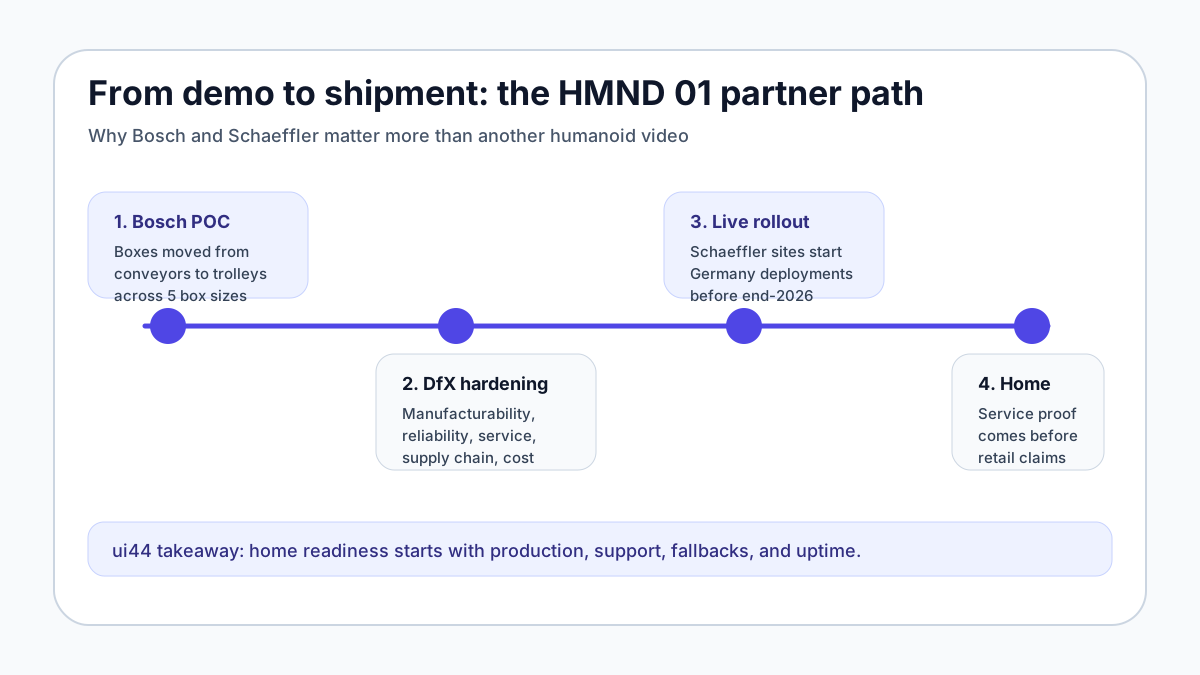
The short version: Humanoid says Bosch will help manufacture HMND 01 robots for the European market after a March 2026 intralogistics proof of concept in Bühl, Germany. Schaeffler is also tied into the rollout as both customer and preferred supplier for a large share of Humanoid's actuator demand. For home-robot buyers, the important part is not that HMND 01 is suddenly coming to apartments. It is that the robot industry is starting to look less like a demo contest and more like a supply-chain contest.
What actually happened with HMND 01 and Bosch?
According to The Robot Report and a Robotics Tomorrow version of the Humanoid announcement, Humanoid's HMND 01 robots completed a Bosch proof of concept focused on a very plain industrial task: moving boxes from conveyors to trolleys.
That sounds less exciting than a living-room demo, but it is a better shipping signal. The work reportedly involved five box sizes across different footprints, heights, and weights. The goal was not a single staged grasp. It was scanning, handling, conveyor input management, mobile movement, and adaptation inside a real logistics environment.
Bosch is now positioned as a contract manufacturing partner for HMND 01 in Europe. The agreement also includes Bosch's structured Design for Excellence framework: manufacturability, reliability, serviceability, supply chain, and cost optimization. Those words are boring in the best possible way. They are the words that separate a prototype from a fleet.
The Schaeffler side is just as important. The Robot Report says Humanoid's phased agreement targets a four-digit number of wheeled units across Schaeffler facilities by 2032, with first systems in Germany before the end of 2026. The initial rollout is supposed to move through Beta in late 2026, Gamma in 2027, and a mass-production version beginning in 2028. Humanoid is also expected to source more than half of its joint-actuator demand from Schaeffler through 2031, which the article describes as a seven-digit number of actuators.
For a home audience, that is the real story. If a humanoid cannot get motors, actuators, sensors, wiring, repair parts, and service procedures right in a factory, it has no business being trusted around a kitchen table.
HMND 01 in the ui44 database
The ui44 database tracks HMND 01 Alpha Wheeled as a commercial, industrial humanoid mobile manipulator, not a consumer robot. That distinction matters.
In our current record, HMND 01 Alpha Wheeled is listed as a development-stage robot with no public price. Humanoid positions it around enterprise pilots, early access, and RaaS-style deployment rather than retail sales. The official specs we track are substantial:
- Height: 220 cm, or about 7 ft 3 in
- Weight: 300 kg, or 661 lb
- Average runtime: 4 hours
- Maximum speed: 2 m/s, or 7.2 km/h
- Payload: 15 kg total in the current Alpha record
- Sensors: 360° RGB cameras, depth sensors, wrist RGB cameras, 6D force/torque sensors, end-effector force/torque sensors, and haptic feedback sensors
- AI stack: Humanoid's KinetIQ system with NVIDIA-powered reasoning and skills
That is not a friendly appliance profile. A 300 kg wheeled humanoid may be a practical industrial tool, but it is not the robot you want squeezing past a child's chair in a narrow hallway. The value for future home robots is indirect: HMND 01 may prove whether partner-led humanoid production can survive real deployments before anyone tries to shrink the idea into homes.
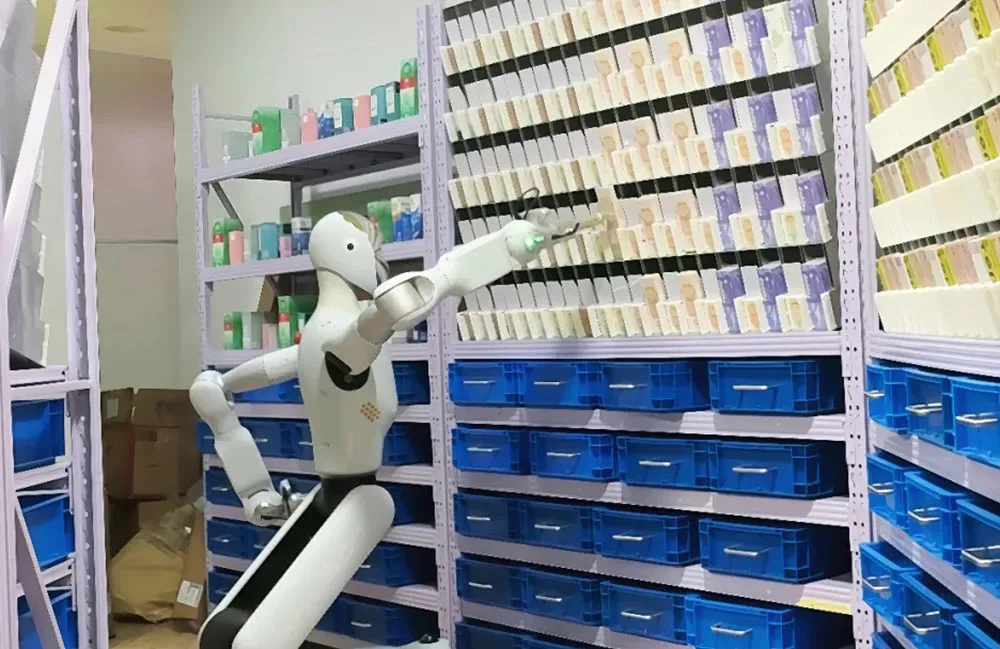
This is also why ui44 tracks commercial robots like Galbot G1, Agility Digit, and Apptronik Apollo alongside more home-facing systems. The first useful home humanoids may inherit hardware, supply chains, safety practices, and support models from robots that spent years moving boxes, totes, and inventory in facilities designed around people.
Why manufacturing partners can matter more than autonomy videos
A good robot demo proves that a task is possible. A manufacturing partnership tries to prove that the robot can exist repeatedly.
Those are different claims. The first is about capability. The second is about production, quality control, uptime, service, and cost. Home buyers should care about the second claim more than the first, because most household robot failures will not happen in a launch video. They will happen six months later when a hand joint wears out, a sensor gets scratched, a battery ages, a wheel module breaks, or a software update changes the robot's behavior.
Bosch's role is interesting because it is not only a factory label. The public reporting says Bosch will provide strategic oversight and technical expertise across hardware design, production, supply chain, and cost optimization. The two companies also plan to explore Bosch components such as actuators, drives, and sensors for future HMND versions.
Schaeffler adds another layer. A humanoid robot is mostly a moving stack of actuators, bearings, sensors, batteries, cables, and thermal compromises. A supplier that can build and validate joint hardware at scale may matter as much as the AI model. That is especially true for homes, where a robot's motion must be strong enough to help but gentle enough to be safe.
Readable comparison
Shipping signals beyond humanoid demos
HMND 01 Alpha
Bosch/Schaeffler industrial rollout; no public retail price.
Figure 03
Vertically integrated fleet-learning story; no consumer purchase path.
1X NEO
Home-facing preorder at $20,000; support model still matters.
Apollo, Galbot G1, Digit
Enterprise and commercial deployment paths before ordinary home use.
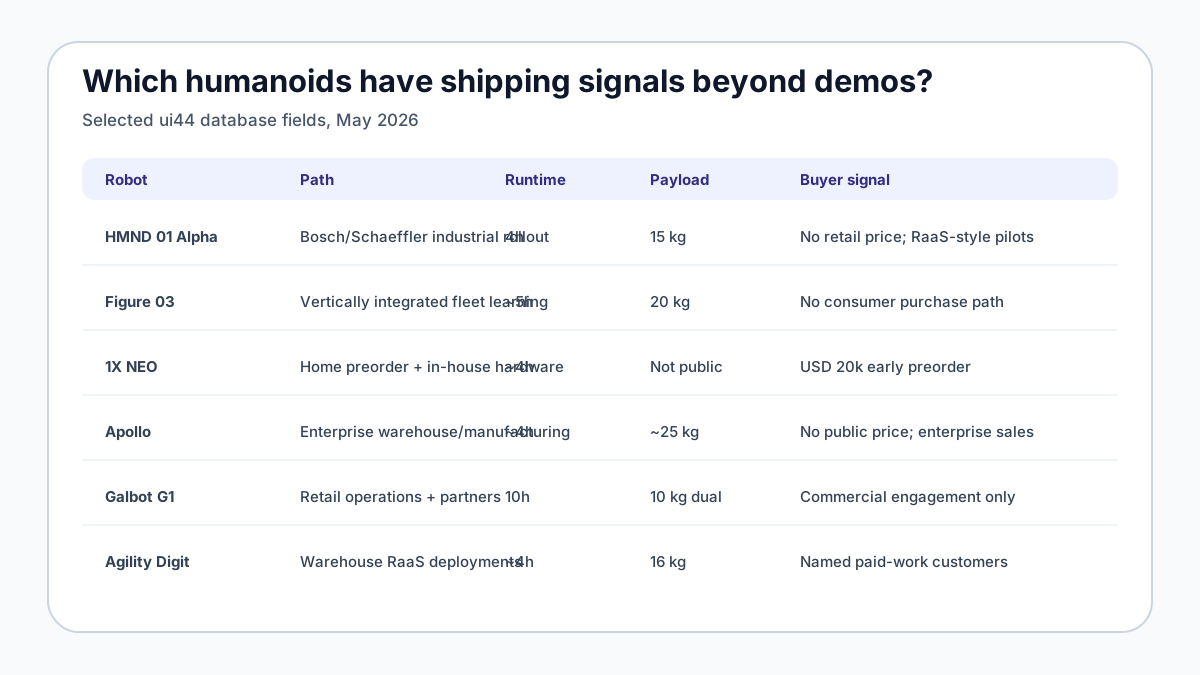
The contrast with other robots is useful. Figure 03 is tracked in ui44 as an active humanoid with no announced price, a 173 cm body, 61 kg weight, roughly five hours of battery life, and a 20 kg payload. Figure is pushing a more vertically integrated story around Helix VLA, fleet learning, and full-body manipulation. 1X NEO is much more home-facing, with a $20,000 early-adopter preorder, 167 cm height, 30 kg weight, and about four hours of runtime. Unitree G1 is available from $13,500, but its standard arm payload is around 2 kg and it is better understood as a research/developer platform than a managed home service robot.
None of these paths is automatically better. Vertical integration gives a robot maker more control. Partner-led production can bring industrial discipline and supplier depth. A retail preorder tests consumer demand. A RaaS deployment tests service operations. The point is that home readiness will probably require all of these disciplines at once.
The industrial-first route is not anti-home
It is tempting to dismiss HMND 01 because it is industrial, huge, and not for ordinary buyers. That would miss the lesson.
Homes are harder than many factories in one sense: every home is different, every person behaves differently, and the robot must operate around pets, children, clutter, stairs, glass, liquids, and privacy boundaries. But factories are harder in another sense: they force uptime. A robot either works for the shift or it does not. Someone pays for downtime. Maintenance has to be scheduled. Failures have to be diagnosed. Parts have to be replaced.
That pressure is useful. If HMND 01 can survive Bosch and Schaeffler-style industrial deployments, Humanoid will learn things that a home-demo robot may never reveal: which joints fail, how often grippers need service, whether fallback supervision works, how much real-world data is needed per task, how quickly robots can be redeployed, and what customers will actually pay for.
The Robot Report's Q&A with Humanoid CEO Artem Sokolov is unusually concrete on this point. For early phases, Humanoid is targeting a 95% autonomous success rate and 99% with fallback strategy, with a longer-term goal of 99.5% and beyond. Sokolov also said box-handling and bin-picking use cases may need only one to two working days of real-world data collection when combined with simulation training.
Those numbers should not be treated as proven home capability. They should be treated as the kind of operational metric buyers should demand. A future home robot listing should not merely say "AI-powered." It should say what tasks are validated, how often they succeed, what fallback exists, and who is accountable when the robot gets stuck.
Readable stack
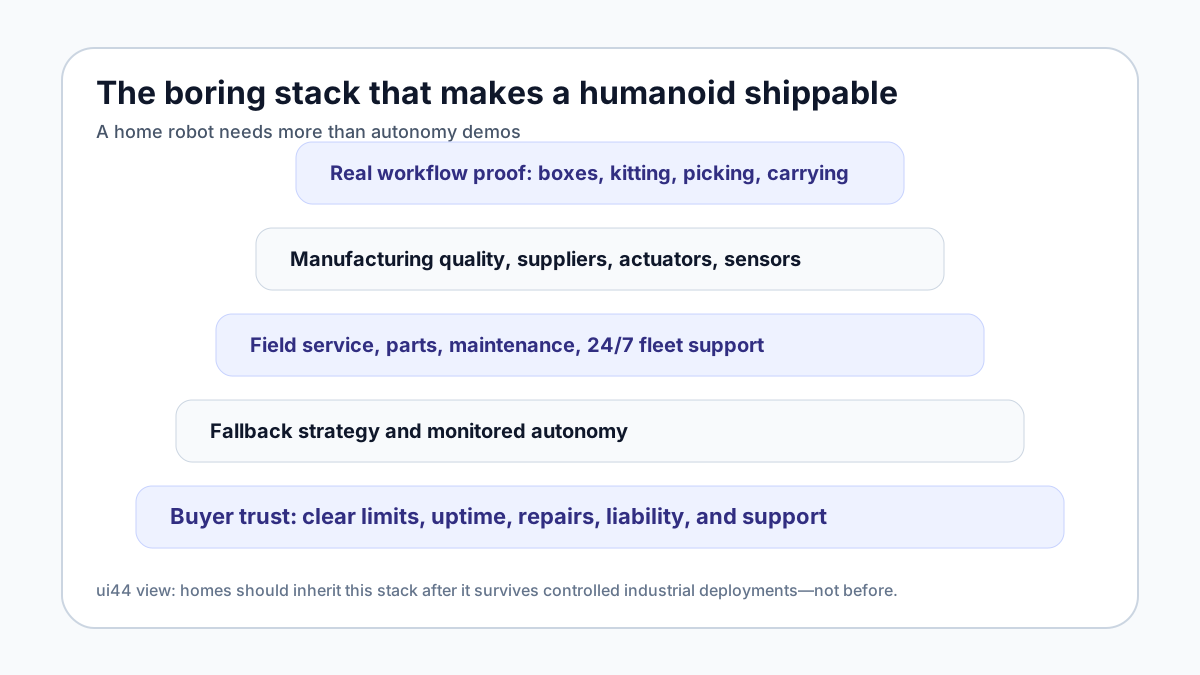
The boring stack that makes a humanoid shippable
- Workflow proof: boxes, kitting, picking, and carrying in controlled environments.
- Manufacturing quality: validated suppliers, actuators, sensors, and repeatable assembly.
- Service: parts, maintenance, diagnostics, and fleet support after deployment.
- Buyer trust: clear limits, uptime, repairs, liability, and fallback operation.
What this means for home robot buyers
The home implication is not "wait for HMND 01." It is "judge every home humanoid by its production and support evidence."
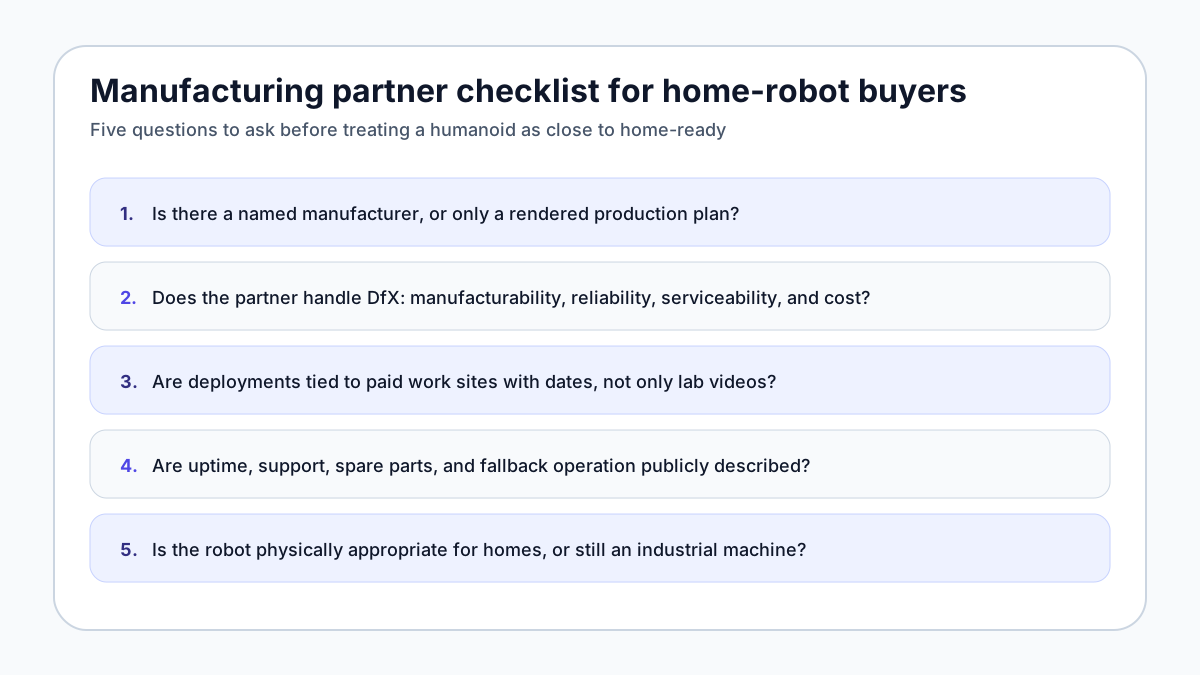
A robot can look ready in a studio and still be years away from being a product. Before putting a humanoid in a home, buyers should want answers to five questions:
- Who builds it repeatedly? A named manufacturing partner or a proven internal factory is stronger than a vague ramp plan.
- Who services it locally? A 60 kg or 300 kg robot is not a phone. Repairs, batteries, actuators, calibration, and transport matter.
- What is the fallback model? Does the robot pause, ask for help, switch to remote supervision, or keep improvising near fragile objects?
- What tasks are actually validated? Box handling, kitting, patrol, and tidying are different capabilities. Do not treat one as proof of the other.
- What happens after the preorder? Price, subscription, support hours, spare parts, updates, insurance, and data policy are part of the product.
This is where a database view helps. In ui44, Apptronik Apollo has no public price and is aimed at enterprise work, but it carries a roughly 25 kg payload signal and a safe-human-interaction positioning. Digit has no retail price either, but it has a clearer paid-work warehouse narrative and a 16 kg box-carrying capability. 1X NEO is more clearly home-oriented, but buyers should still separate a preorder from proven household uptime. Figure 03 has strong manipulation and fleet-learning signals, but no consumer purchase path.
HMND 01 adds a different clue: a young robot company trying to borrow industrial manufacturing gravity from Bosch and actuator/supplier gravity from Schaeffler. That may be a smarter route than trying to build every motor, battery, sensor, factory process, and service workflow from scratch.
Readable checklist
Manufacturing partner checklist for home-robot buyers
- Is there a named manufacturer, not only a rendered production plan?
- Does the partner cover manufacturability, reliability, serviceability, and cost?
- Are deployments tied to paid work sites with dates, not only lab videos?
- Are uptime, support, spare parts, and fallback operation publicly described?
- Is the robot physically appropriate for homes, or still an industrial machine?
The risks are still large
There is a danger in over-reading the Bosch announcement. A manufacturing partner does not make HMND 01 a consumer robot. It does not prove that the robot can operate safely in apartments. It does not disclose a price, a household service plan, a warranty, or an insurance model. It also does not remove the basic physical mismatch between a 300 kg industrial platform and normal homes.
Partner-led scaling has its own risks. Humanoid may gain manufacturing depth, but it also has to coordinate roadmaps, suppliers, customers, service teams, and software releases across multiple organizations. If Bosch, Schaeffler, or a customer site changes priorities, the robot maker has less direct control than a fully integrated company might have.
The opposite risk is real too. A vertically integrated robot maker can move fast, but it may also spend enormous capital solving problems that industrial suppliers already understand: actuators, bearings, power electronics, assembly, quality systems, repair logistics, and regulatory paperwork.
For buyers, the lesson is not to pick a side. It is to ask for evidence. A good home robot company should be able to explain both its AI stack and its boring hardware stack. If it can only explain the demo, be skeptical.
Bottom line: shipping is the new robot spec
HMND 01 and Bosch matter because they move the humanoid conversation from "can a robot do this once?" to "can a company build and support this many times?"
That shift is healthy. The next useful home robots will not be judged only by walking speed, hand dexterity, or a slick VLA model. They will be judged by uptime, serviceability, safe fallback behavior, spare parts, support coverage, and whether the company can keep improving the robot after it leaves the demo room.
Today, HMND 01 is an industrial robot, not a home robot. But the Bosch and Schaeffler deals are still relevant to anyone watching the home-humanoid market. They show what credible scaling starts to look like: named partners, specific workflows, deployment dates, actuator supply, support commitments, and measurable autonomy targets.
For ui44 readers, that is the practical takeaway. Do not ask only which humanoid looks most impressive. Ask which one has the manufacturing, service, and support evidence to survive the boring parts of real life. Those boring parts are where home robots will either become products—or stay videos.
Related in the database
Use this article as a privacy verification workflow
Turn the article into a privacy verification pass grounded in the robots, manufacturers, and components it actually references.
HMND 01 and Bosch: Why Humanoids Need Partners already points you toward 7 linked robots, 7 manufacturers, and 4 countries inside the ui44 database. That matters because strong buyer guidance is easier to apply when you can move immediately from a claim or warning into concrete product pages, manufacturer directories, component explainers, and country-level context instead of treating the article as an isolated opinion piece. The fastest next step is to turn the article into a shortlist workflow: open the linked robot pages, verify which specs are actually published for those models, then compare the surrounding manufacturer and component context before you decide whether the underlying claim changes your buying plan.
For this topic, the useful discipline is to separate the editorial lesson from the catalog evidence. The article gives you the framing, but the robot pages tell you what each product actually ships with today: sensor stack, connectivity methods, listed price, release timing, category, and support-relevant compatibility notes. The manufacturer pages then show whether you are looking at a one-off launch, a broader lineup pattern, or a company that spans multiple categories. That layered workflow reduces the risk of buying on a single marketing phrase or a single support FAQ.
Use the robot pages to confirm which products actually expose cameras, microphones, Wi-Fi, or voice systems, then use the manufacturer pages to decide how much of the privacy question seems product-specific versus brand-wide. On this route cluster, HMND 01 Alpha Wheeled, G1, and Digit form the fastest reality check. If you want a quick working shortlist, open Compare HMND 01 Alpha Wheeled, G1, and Digit next, then keep this article open as the reasoning layer while you compare structured data side by side.
Practical Takeaway
Every robot, manufacturer, category, component, and country reference below resolves to a real ui44 page, keeping the follow-up path grounded in database records rather than generic advice.
Suggested next steps in ui44
- Open HMND 01 Alpha Wheeled and note the listed sensors, connectivity methods, and voice stack before you interpret any policy claim.
- Cross-check the wider brand context on Humanoid so you can see whether the privacy question touches one model or a broader lineup.
- Use the linked component pages to confirm how common the relevant sensors and connectivity layers are across the database.
- Keep a short note of which policy layers you checked, which device features are actually present on the robot page, and which items still depend on region- or app-level confirmation.
- Finish with Compare HMND 01 Alpha Wheeled, G1, and Digit so the policy reading sits next to structured product data.
Robot profiles worth opening next
Use the linked product pages as the evidence layer
The linked robot pages are where this article becomes operational. Instead of asking whether the headline is interesting, use the robot entries to inspect the actual mix of sensors, connectivity options, batteries, pricing, release timing, and stated capabilities attached to the products mentioned in the article. That is the easiest way to see whether the warning or opportunity described here affects one product family, a specific design pattern, or an entire buying lane.
HMND 01 Alpha Wheeled
Humanoid · Commercial · Development
HMND 01 Alpha Wheeled is tracked on ui44 as a development commercial robot from Humanoid. The database currently records a listed price of Price TBA, a release date of 2025-09-19, 4 hours average runtime battery life, Not officially disclosed charging time, and a published stack that includes 360° RGB cameras, 2 depth sensors, and Wrist RGB cameras plus its listed connectivity stack.
For privacy-focused reading, this page matters because it shows the concrete device surface behind the policy discussion. Use it to verify whether HMND 01 Alpha Wheeled combines sensors and connectivity in a way that could change the in-home data footprint, and compare the listed capabilities such as Autonomous Navigation, Bimanual Manipulation, and Goods Handling with any cloud, app, or voice layers.
G1 is tracked on ui44 as a active commercial robot from Galbot. The database currently records a listed price of Price TBA, a release date of 2025, 10 hours battery life, Not disclosed charging time, and a published stack that includes Binocular camera x1, Wrist depth cameras x2, and 6-axis force sensors x2 plus Wi-Fi (2.4/5 GHz) and Ethernet.
For privacy-focused reading, this page matters because it shows the concrete device surface behind the policy discussion. Use it to verify whether G1 combines sensors and connectivity in a way that could change the in-home data footprint, and compare the listed capabilities such as Autonomous Retail Store Operation, Generalizable Object Grasping (5,000+ product types), and Shelf Replenishment & Inventory Management with any cloud, app, or voice layers, including Natural Language Voice Commands.
Digit is tracked on ui44 as a active humanoid robot from Agility. The database currently records a listed price of Price TBA, a release date of 2023, ~4 hours battery life, ~2 hours charging time, and a published stack that includes LiDAR, RGB-D Cameras, and IMU plus Wi-Fi and 5G.
For privacy-focused reading, this page matters because it shows the concrete device surface behind the policy discussion. Use it to verify whether Digit combines sensors and connectivity in a way that could change the in-home data footprint, and compare the listed capabilities such as Box Carrying (16kg), Stair Navigation, and Warehouse Operations with any cloud, app, or voice layers.
Apollo is tracked on ui44 as a active humanoid robot from Apptronik. The database currently records a listed price of Price TBA, a release date of TBD, ~4 hours battery life, Not disclosed charging time, and a published stack that includes Vision System, Force/Torque Sensors, and IMU plus Wi-Fi and Ethernet.
For privacy-focused reading, this page matters because it shows the concrete device surface behind the policy discussion. Use it to verify whether Apollo combines sensors and connectivity in a way that could change the in-home data footprint, and compare the listed capabilities such as Warehouse Operations, Manufacturing Tasks, and Heavy Payload (~25kg) with any cloud, app, or voice layers.
Figure 03 is tracked on ui44 as a active humanoid robot from Figure AI. The database currently records a listed price of Price TBA, a release date of 2025-10-09, ~5 hours battery life, Not disclosed charging time, and a published stack that includes Stereo Vision, Depth Cameras, and Force Sensors plus Wi-Fi and Bluetooth.
For privacy-focused reading, this page matters because it shows the concrete device surface behind the policy discussion. Use it to verify whether Figure 03 combines sensors and connectivity in a way that could change the in-home data footprint, and compare the listed capabilities such as Complex Manipulation, Warehouse Work, and Manufacturing Tasks with any cloud, app, or voice layers.
Manufacturer context behind the article
Check whether this is one product story or a broader company pattern
Manufacturer pages add the privacy context that individual product pages cannot show on their own. They help you check whether cameras, microphones, cloud accounts, app controls, and policy assumptions appear across a broader lineup or stay tied to one specific product story.
Humanoid
ui44 currently tracks 2 robots from Humanoid across 2 categorys. The company is grouped under UK, and the current catalog footprint on ui44 includes HMND 01 Alpha Wheeled, HMND 01 Alpha Bipedal.
That wider brand context matters because privacy questions rarely stop at one FAQ page. A manufacturer route helps you see whether the article is centered on one premium model or on a company that has several relevant products and therefore more than one place where the same policy or app assumptions might matter. The category mix here currently points toward Commercial, Humanoid as the most useful next route if you want to see whether this article reflects a wider pattern inside the brand.
Galbot
ui44 currently tracks 2 robots from Galbot across 2 categorys. The company is grouped under China, and the current catalog footprint on ui44 includes G1, S1.
That wider brand context matters because privacy questions rarely stop at one FAQ page. A manufacturer route helps you see whether the article is centered on one premium model or on a company that has several relevant products and therefore more than one place where the same policy or app assumptions might matter. The category mix here currently points toward Commercial, Humanoid as the most useful next route if you want to see whether this article reflects a wider pattern inside the brand.
Agility
ui44 currently tracks 1 robot from Agility across 1 category. The company is grouped under USA, and the current catalog footprint on ui44 includes Digit.
That wider brand context matters because privacy questions rarely stop at one FAQ page. A manufacturer route helps you see whether the article is centered on one premium model or on a company that has several relevant products and therefore more than one place where the same policy or app assumptions might matter. The category mix here currently points toward Humanoid as the most useful next route if you want to see whether this article reflects a wider pattern inside the brand.
Apptronik
ui44 currently tracks 2 robots from Apptronik across 1 category. The company is grouped under USA, and the current catalog footprint on ui44 includes Apollo, Apollo 2.
That wider brand context matters because privacy questions rarely stop at one FAQ page. A manufacturer route helps you see whether the article is centered on one premium model or on a company that has several relevant products and therefore more than one place where the same policy or app assumptions might matter. The category mix here currently points toward Humanoid as the most useful next route if you want to see whether this article reflects a wider pattern inside the brand.
Broaden the scan without leaving the database
Categories, components, and countries add the wider context
Category framing
Category pages are useful when the article touches a buying pattern that shows up across brands. A category route helps you confirm whether the linked products sit in a narrow niche or whether the same question should be tested across a larger field of alternatives.
Commercial
The Commercial category page currently groups 44 tracked robots from 38 manufacturers. ui44 describes this lane as: Delivery robots, warehouse automation, and hospitality service bots — robots built for business and commercial operations.
That makes the category route a practical follow-up when you want to check whether the products linked in this article are typical for the lane or whether they sit at one edge of the market. Useful starting examples currently include G2 Air, aeo, Pepper.
Humanoid
The Humanoid category page currently groups 129 tracked robots from 92 manufacturers. ui44 describes this lane as: Full-size bipedal humanoid robots built to work alongside people — from factory floors to household tasks. Compare the cutting edge of humanoid robotics.
That makes the category route a practical follow-up when you want to check whether the products linked in this article are typical for the lane or whether they sit at one edge of the market. Useful starting examples currently include NEO, EVE, Mornine M1.
Country and ecosystem context
Country pages give extra context when support practices, launch sequencing, regulatory posture, or manufacturer mix matter. They are not a substitute for model-level verification, but they do help you see which ecosystems cluster together and which manufacturers sit in the same regional field when you broaden the search beyond the article headline.
UK
The UK route currently groups 5 tracked robots from 4 manufacturers in ui44. That gives you a useful regional lens when the article points toward support practices, launch sequencing, or brand clusters that may share similar ecosystem assumptions.
On the current route, manufacturers like Humanoid, Engineered Arts, Kinisi Robotics make the page a good way to broaden the scan without losing the regional context that often shapes availability, documentation style, and adjacent alternatives.
China
The China route currently groups 189 tracked robots from 87 manufacturers in ui44. That gives you a useful regional lens when the article points toward support practices, launch sequencing, or brand clusters that may share similar ecosystem assumptions.
On the current route, manufacturers like AGIBOT, Dreame, Unitree Robotics make the page a good way to broaden the scan without losing the regional context that often shapes availability, documentation style, and adjacent alternatives.
USA
The USA route currently groups 89 tracked robots from 69 manufacturers in ui44. That gives you a useful regional lens when the article points toward support practices, launch sequencing, or brand clusters that may share similar ecosystem assumptions.
On the current route, manufacturers like Faraday Future, iRobot, Boston Dynamics make the page a good way to broaden the scan without losing the regional context that often shapes availability, documentation style, and adjacent alternatives.
Questions to answer before you move from reading to buying
A follow-up FAQ built from the entities already linked in this article
Frequently Asked Questions
Which page should I open first after reading “HMND 01 and Bosch: Why Humanoids Need Partners”?
Start with HMND 01 Alpha Wheeled. That gives you a concrete product anchor for the article’s main claim. From there, branch into the manufacturer and component pages so you can tell whether the article is describing one specific model, a repeated brand pattern, or a wider technology issue that affects multiple shortlist options.
How do the manufacturer pages change the buying decision?
Humanoid help you zoom out from one article and one product. On ui44 they show lineup breadth, category spread, and the neighboring robots tied to the same company. That context is useful when you are deciding whether a risk belongs to a single model, whether it shows up across a brand’s portfolio, and whether you should keep looking at alternatives before committing.
When should I switch from reading to side-by-side comparison?
Move into Compare HMND 01 Alpha Wheeled, G1, and Digit as soon as you understand the article’s main warning or promise. The article explains what to watch for, but the compare view is where you can check whether price, status, battery life, connectivity, sensors, and category fit still make the robot a good match for your own home and budget.
Where to go next in ui44
Keep the research chain inside the database
If you want to keep going, these follow-on pages give you the cleanest expansion path from article to research session. Open the comparison route first if you are deciding between products today. Open the manufacturer, category, and component routes if you still need to understand the broader pattern behind the claim.
Written by
ui44 Team
Published May 25, 2026
Share this article
Open a plain share link on X or Bluesky. No embeds, no widgets, no cookie baggage.