Article 21 min read 4,717 words

Can Street View Train Home Robots?

Google's new Street View grounding for Project Genie is easy to overread. It is not a shortcut from public maps to a robot that can fold laundry. It is not a home simulation product. It does, however, show why the next phase of home robot progress will depend on world models: interactive environments where agents can practice what might happen next.

ui44 Team All articles

For buyers, the useful question is narrower: what can a public map teach a home robot, and what still has to be learned inside real homes?
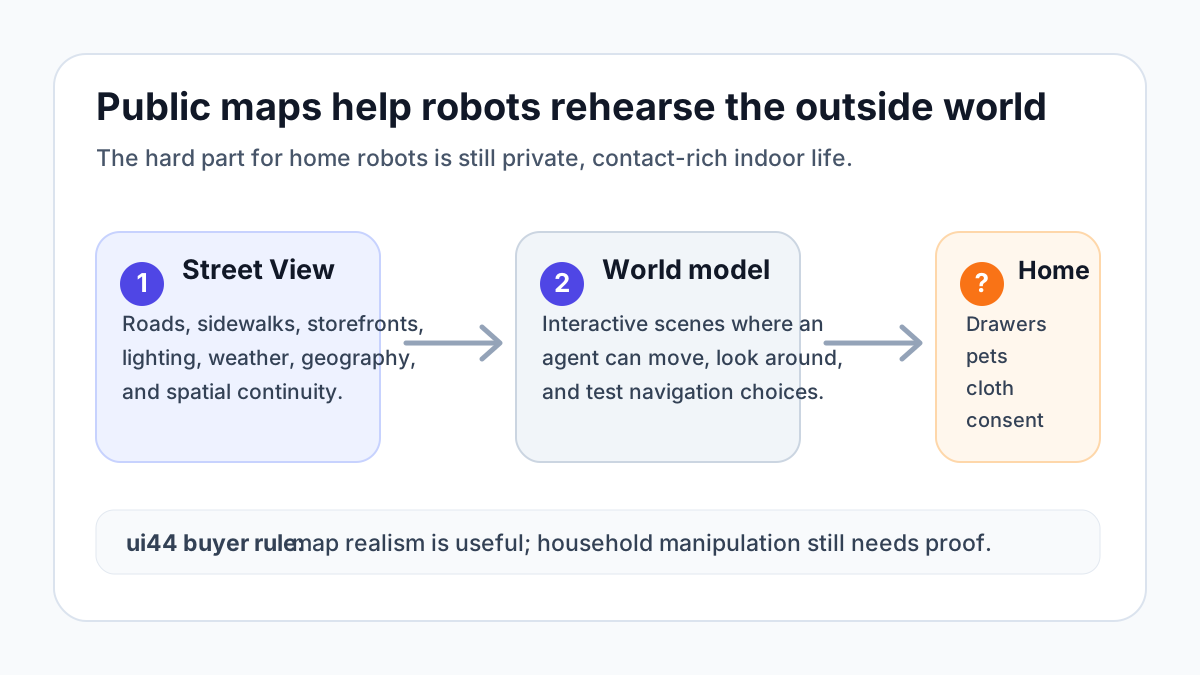
Google Genie Street View home robot training gap diagram
Scroll sideways to inspect the full chart.

The short answer: Street View can help with outdoor context, spatial continuity, lighting, weather, storefronts, and navigation variation. Home robots still need private indoor data, contact-rich physics, safety behavior around people, and proof that skills survive messy rooms.

What did Google actually announce?

Google says Project Genie can now ground generated worlds in Street View imagery. In the official announcement, Google describes Genie as a general-purpose world model that can create interactive environments and says Street View grounding can provide virtual environments for AI agents or robots to navigate and interact with real-world complexity.

The important words are grounded, interactive, and experimental. Genie is not simply drawing a pretty street scene. Google DeepMind describes Genie 3 as a real-time, controllable world model that runs at 20-24 frames per second, renders at 720p, keeps some world consistency when a user revisits an area, and is now grounded in Street View data. Google is rolling the Street View feature into Project Genie through Google AI Ultra, starting with U.S. places and expanding over time.

TechCrunch's reporting adds useful scale and caveats. Google has collected more than 280 billion Street View images across 110 countries and seven continents, and the team described robotics use cases such as simulating unusual lighting or weather before a robot sees those conditions in the real world. But the same report is clear that Genie is still video-game-like in quality, not yet physics-aware, and cannot perfectly reconstruct real streets.

That combination is exactly why this is interesting for home robots. Genie is a strong signal about training environments, not a finished household autonomy stack.

Can public maps train a home robot?

Yes, but only for part of the job.

Public map imagery is useful when the robot's problem looks like navigation. A robot moving through a driveway, apartment lobby, sidewalk, campus, hotel, or storefront pickup zone can benefit from practice across weather, lighting, geometry, signs, entrances, curbs, and unusual street scenes. That is why the Street View angle sounds immediately relevant to autonomous vehicles and outdoor delivery robots.

Waymo's own world-model work shows the same pattern. Waymo says its simulation stack is one pillar of its safety approach, and its Waymo World Model, built on Genie 3, can generate rare driving events such as extreme weather, wrong-way vehicles, flooded streets, animals, and other long-tail situations. That makes sense: driving has lanes, roads, signs, depth sensors, and a large simulator tradition.

Homes are different. A home robot does not just navigate through space. It has to touch things.

1X NEO home humanoid robot world model training data

A robot such as 1X NEO is positioned around household chores, tidying, gentle manipulation, and safe human interaction. In the ui44 database, NEO is a $20,000 pre-order home humanoid with RGB cameras, depth sensors, tactile skin, a microphone array, about four hours of battery life, and a soft, lightweight 30 kg body. Street View does not teach it how your laundry behaves, how much force your sticky drawer needs, or when a child is about to reach into its workspace.

That is the core distinction: public maps help robots understand places. Home robots need to understand places plus objects plus people plus contact.

What does Street View help with?

Street View-style world grounding is still valuable. It can make a robot training pipeline less narrow in at least four ways.

First, it gives models more variation. A robot that only trains in one lab or one mock apartment can learn brittle visual habits. Public imagery adds different architecture, seasons, sunlight, shadows, storefronts, sidewalks, building entrances, and real-world clutter.

Second, it helps with viewpoint changes. TechCrunch noted that Street View can shift perspective beyond a car-mounted view, toward a human or robot point of view. If that improves over time, it could help robots rehearse how a route or pickup location looks from their own sensor height.

Third, it can support rare-scenario testing. Most robots will not get enough real training examples of every lighting condition, weather edge case, blocked path, or odd public-space interaction. Generated environments can create more of those situations before hardware is at risk.

Fourth, it creates a clearer bridge between maps and agents. Google Maps Platform now markets Maps Imagery Grounding as a way to anchor generated media in physical reality. Today that is framed mostly for visuals and enterprise experiences, but the research direction is obvious: future robots will need more truth anchors, not fewer.

For home robot buyers, the lesson is not "Street View equals home autonomy." The lesson is that serious autonomy claims should include a training story, a testing story, and a recovery story.

What can maps not teach?

Maps do not know your apartment.

They do not know which cabinet sticks, where your pet sleeps, how your charging cables snake across the floor, whether your rug edge curls, or which glass is fragile. They also do not know your consent boundaries. A public world model can simulate a sidewalk; it cannot decide whether a private camera feed should leave your home.
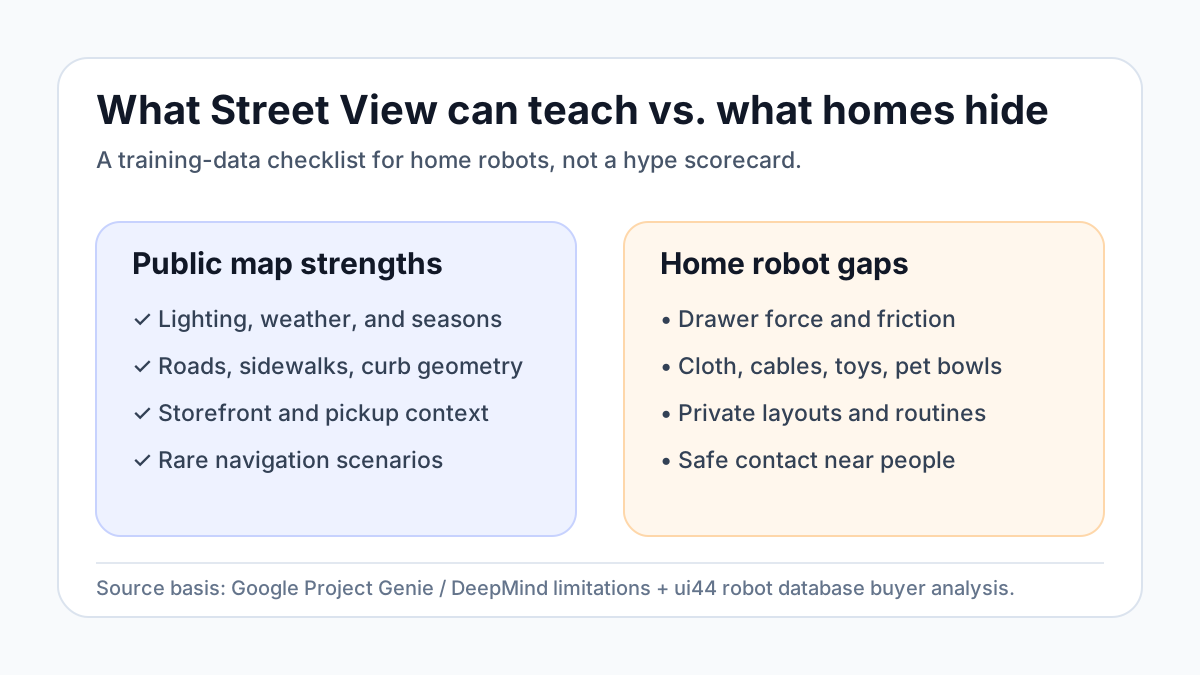
Home robot training data checklist for Street View and indoor chores
Scroll sideways to inspect the full chart.

Google DeepMind lists several limitations that matter here. Genie currently has a limited action space, cannot perfectly represent real-world locations, struggles with interactions between multiple independent agents, and supports only a few minutes of continuous interaction rather than hours. Those are normal research limits, but they are also buyer-relevant limits.

A home robot needs much more than a consistent visual scene:

  • Force and friction: drawers, cabinet doors, chairs, slippers, cords, and laundry baskets all push back.
  • Deformable objects: towels, clothes, cushions, cables, and paper bags do not behave like rigid boxes.
  • Human interruption: a safe home robot has to stop, yield, explain, or ask before acting near people.
  • Private mapping: the most useful indoor map is also the most sensitive one.
  • Long-duration reliability: chores are not two-minute demos; they are repeated routines across weeks.

This is why a public-map world model is best seen as one layer in a larger stack. The indoor layer still needs real homes, physics-ready simulation, teleoperation or demonstration data, safety review, and post-deployment monitoring.

Which current home robots make this buyer question concrete?

The ui44 database already shows why the training-data question is more useful than a generic "AI-powered" label. Robots that only need to patrol or follow can benefit from better navigation. Robots that manipulate objects need a much harder evidence trail.

Robot

1X NEO

ui44 snapshot
$20,000 pre-order home humanoid; 167 cm, 30 kg, about 4 hours battery; RGB/depth cameras plus tactile skin
What Street View-like training could help
General spatial variation, household route planning, and edge-case visual practice
What buyers still need to see
Real evidence for laundry, tidying, object recovery, privacy controls, and human-safe autonomy

Robot

Hello Robot Stretch 4

ui44 snapshot
$29,950 available mobile manipulator; 160 cm, 46 kg; 8-hour light-load runtime; 2.5 kg extended arm payload and 4 kg retracted
What Street View-like training could help
Mapping, navigation, 3D SLAM, and room-layout practice
What buyers still need to see
Drawer/cabinet contact, assistive-care safety, and repeatable manipulation in lived-in homes

Robot

Figure 03

ui44 snapshot
Active humanoid; no public price; 173 cm, 61 kg; Helix VLA, tactile arrays, force sensors, 20 kg payload
What Street View-like training could help
Factory-to-building transfer, lighting variation, and path planning
What buyers still need to see
Whether industrial manipulation data transfers into private homes without overclaiming

Robot

Unitree G1

ui44 snapshot
$13,500 available research humanoid; 132 cm, 35 kg; depth camera, 3D LiDAR, optional dexterous hands
What Street View-like training could help
Developer testing in varied visual scenes and navigation layouts
What buyers still need to see
A supported skill ecosystem, safe manipulation, and honest boundaries for consumer use

Robot

Samsung Ballie

ui44 snapshot
Development-stage rolling companion; camera, spatial sensors, environmental sensors, SmartThings and Gemini integration; no price or date
What Street View-like training could help
Indoor navigation, room context, and smart-home scene understanding
What buyers still need to see
Release date, privacy model, reliable home mapping, and actual shipped behavior

Robot

Reachy 2

ui44 snapshot
$70,000 research platform; 50 kg; 3 kg per arm; ROS 2, Python SDK, LeRobot compatibility, Gazebo and MuJoCo support
What Street View-like training could help
Research workflows that connect simulation, teleoperation, and public visual context
What buyers still need to see
Whether open research tasks become practical consumer skills rather than lab demos
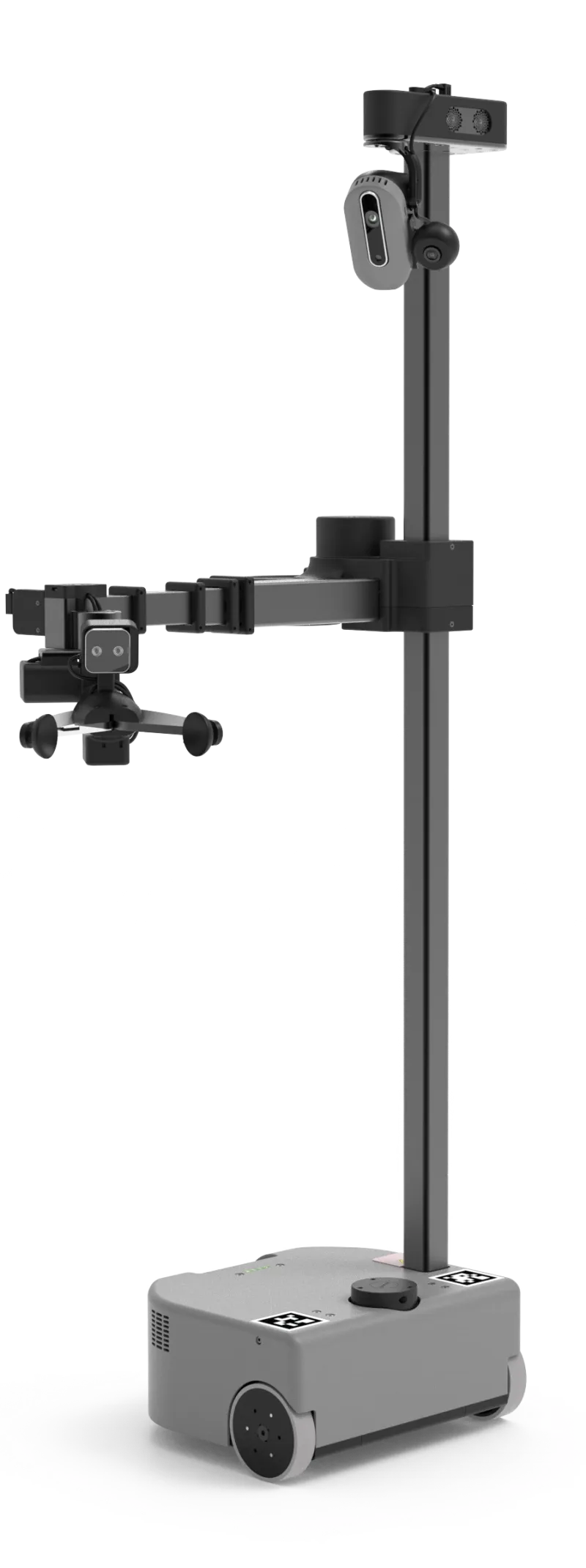
Hello Robot Stretch 3 mobile manipulator for home robot mapping and manipulation

Notice the pattern. The closer a robot gets to real household work, the less impressive a pure visual simulation becomes. A mobile manipulator such as Stretch 4 or Stretch 3 needs navigation, but it also needs reach, contact, tool use, gripper feedback, and safe assistive behavior. A humanoid such as NEO or Figure 03 needs even more proof because buyers will expect whole-body behavior around people and furniture.

How should buyers evaluate world-model claims?

When a robot company says it uses a world model, simulation, VLA, or embodied AI, ask five practical questions.

1. Is the training world visual, physical, or both?

A photorealistic world is useful for perception, but chores need physics. Ask whether the robot trains or tests against articulated drawers, object mass, friction, collision, cloth, liquid, cables, pets, and people moving nearby.

2. Is the data public, private, synthetic, or from deployed robots?

Street View is public-world data. A home robot also needs private indoor data. That can come from opt-in customer homes, lab homes, teleoperation, synthetic scenes, or research datasets. The source matters because it affects privacy, coverage, bias, and reliability.

3. Does the model control actions, or only generate scenery?

Google DeepMind says Genie has a limited action space today. For a buyer, this matters more than visual quality. A robot needs to choose safe actions, not just watch a plausible scene unfold.

4. How long can the system stay reliable?

A few minutes of interaction is different from an afternoon of chores. Look for claims about long-duration operation, recovery after failure, battery behavior, charging, support logs, and what happens when the room changes.

5. What happens when the robot is uncertain?

Good home autonomy should include refusal, pausing, asking, teleoperation, permission checks, and conservative behavior near people. World models are most useful when they help a robot avoid bad actions, not when they encourage it to confidently improvise.

Is Google Genie good news for home robots?

Yes, but not because it solves the home.

It is good news because it makes the training bottleneck clearer. The future home robot will probably not learn from one source. It will combine public worlds, private indoor maps, physics simulation, demonstration data, fleet logs, manual corrections, and safety policies. Street View helps with one large public slice of that puzzle.

It also raises the bar for vague AI claims. If a company says its robot is "general purpose" but cannot explain how it tests rare situations, how it handles contact, what data it uses, and what limitations remain, buyers should treat the claim as early.
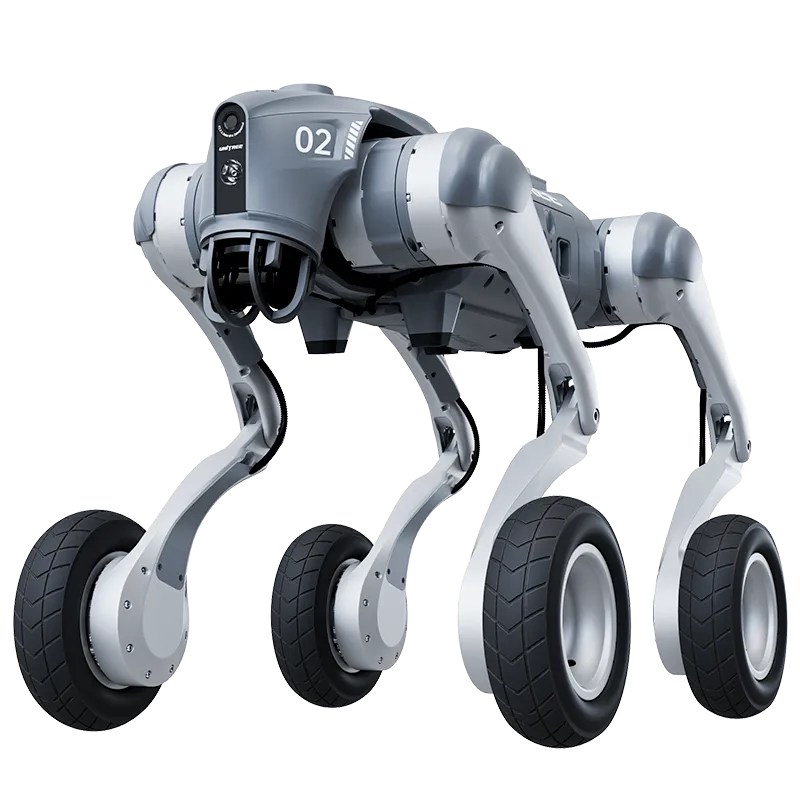
Unitree G1 humanoid research robot for world model and simulation testing

The best near-term use of public-map world models may be outside the apartment: delivery approaches, campus routes, building entrances, robot pickup points, sidewalk edge cases, and the transition from outdoors to indoors. The best near-term use for private-home robots will still come from indoor simulation and real user-consented data.

Bottom line

Google Genie plus Street View is a serious signal for robot training, not a promise that maps can teach a robot to run your home. Public imagery can make world models broader, more grounded, and more useful for navigation. It cannot replace the hard indoor work of force, contact, privacy, consent, and long-term reliability.

For buyers, the practical takeaway is simple: when evaluating a future home robot, do not just ask whether it has an AI brain. Ask what world it practiced in, what that world leaves out, and how the robot behaves when the real home disagrees.

Database context

Use this article as a privacy verification workflow

Turn the article into a real verification pass

Can Street View Train Home Robots? already points you toward 6 linked robots, 6 manufacturers, and 5 countries inside the ui44 database. That matters because strong buyer guidance is easier to apply when you can move immediately from a claim or warning into concrete product pages, manufacturer directories, component explainers, and country-level context instead of treating the article as an isolated opinion piece. The fastest next step is to turn the article into a shortlist workflow: open the linked robot pages, verify which specs are actually published for those models, then compare the surrounding manufacturer and component context before you decide whether the underlying claim changes your buying plan.

For this topic, the useful discipline is to separate the editorial lesson from the catalog evidence. The article gives you the framing, but the robot pages tell you what each product actually ships with today: sensor stack, connectivity methods, listed price, release timing, category, and support-relevant compatibility notes. The manufacturer pages then show whether you are looking at a one-off launch, a broader lineup pattern, or a company that spans multiple categories. That layered workflow reduces the risk of buying on a single marketing phrase or a single support FAQ.

Use the robot pages to confirm which products actually expose cameras, microphones, Wi-Fi, or voice systems, then use the manufacturer pages to decide how much of the privacy question seems product-specific versus brand-wide. On this route cluster, NEO, Stretch 4, and Figure 03 form the fastest reality check. If you want a quick working shortlist, open Compare NEO, Stretch 4, and Figure 03 next, then keep this article open as the reasoning layer while you compare structured data side by side.

Practical Takeaway

Every robot, manufacturer, category, component, and country reference below resolves to a real ui44 page, keeping the follow-up path grounded in database records rather than generic advice.

Suggested next steps in ui44

  1. Open NEO and note the listed sensors, connectivity methods, and voice stack before you interpret any policy claim.
  2. Cross-check the wider brand context on 1X Technologies so you can see whether the privacy question touches one model or a broader lineup.
  3. Use the linked component pages to confirm how common the relevant sensors and connectivity layers are across the database.
  4. Keep a short note of which policy layers you checked, which device features are actually present on the robot page, and which items still depend on region- or app-level confirmation.
  5. Finish with Compare NEO, Stretch 4, and Figure 03 so the policy reading sits next to structured product data.

Database context

Robot profiles worth opening next

Use the linked product pages as the evidence layer

The linked robot pages are where this article becomes operational. Instead of asking whether the headline is interesting, use the robot entries to inspect the actual mix of sensors, connectivity options, batteries, pricing, release timing, and stated capabilities attached to the products mentioned in the article. That is the easiest way to see whether the warning or opportunity described here affects one product family, a specific design pattern, or an entire buying lane.

NEO

1X Technologies · Humanoid · Pre-order

$20,000

NEO is tracked on ui44 as a pre-order humanoid robot from 1X Technologies. The database currently records a listed price of $20,000, a release date of 2025-10-28, ~4 hours battery life, Not disclosed charging time, and a published stack that includes RGB Cameras, Depth Sensors, and Tactile Skin plus Wi-Fi and Bluetooth.

For privacy-focused reading, this page matters because it shows the concrete device surface behind the policy discussion. Use it to verify whether NEO combines sensors and connectivity in a way that could change the in-home data footprint, and compare the listed capabilities such as Household Chores, Tidying Up, and Safe Human Interaction with any cloud, app, or voice layers.

Stretch 4

Hello Robot · Home Assistants · Available

$29,950

Stretch 4 is tracked on ui44 as a available home assistants robot from Hello Robot. The database currently records a listed price of $29,950, a release date of 2026-05-12, 8 hours (light CPU load) battery life, Not officially disclosed charging time, and a published stack that includes Wide-FOV depth sensing, High-resolution RGB cameras, and Calibrated RGB + depth perception plus its listed connectivity stack.

For privacy-focused reading, this page matters because it shows the concrete device surface behind the policy discussion. Use it to verify whether Stretch 4 combines sensors and connectivity in a way that could change the in-home data footprint, and compare the listed capabilities such as Mobile Manipulation, Omnidirectional Indoor Mobility, and Autonomous Mapping and Navigation with any cloud, app, or voice layers.

Figure 03

Figure AI · Humanoid · Active

Price TBA

Figure 03 is tracked on ui44 as a active humanoid robot from Figure AI. The database currently records a listed price of Price TBA, a release date of 2025-10-09, ~5 hours battery life, Not disclosed charging time, and a published stack that includes Stereo Vision, Depth Cameras, and Force Sensors plus Wi-Fi and Bluetooth.

For privacy-focused reading, this page matters because it shows the concrete device surface behind the policy discussion. Use it to verify whether Figure 03 combines sensors and connectivity in a way that could change the in-home data footprint, and compare the listed capabilities such as Complex Manipulation, Warehouse Work, and Manufacturing Tasks with any cloud, app, or voice layers.

G1

Unitree · Humanoid · Available

$13,500

G1 is tracked on ui44 as a available humanoid robot from Unitree. The database currently records a listed price of $13,500, a release date of 2024, ~2 hours battery life, Not disclosed charging time, and a published stack that includes Depth Camera, 3D LiDAR, and 4 Microphone Array plus Wi-Fi 6 and Bluetooth 5.2.

For privacy-focused reading, this page matters because it shows the concrete device surface behind the policy discussion. Use it to verify whether G1 combines sensors and connectivity in a way that could change the in-home data footprint, and compare the listed capabilities such as Bipedal Walking, Object Manipulation, and Dexterous Hands (optional Dex3-1) with any cloud, app, or voice layers.

Ballie

Samsung · Companions · Development

Price TBA

Ballie is tracked on ui44 as a development companions robot from Samsung. The database currently records a listed price of Price TBA, a release date of TBD, Not officially disclosed battery life, Not officially disclosed charging time, and a published stack that includes Camera, Spatial Sensors, and Environmental Sensors plus Wi-Fi and SmartThings.

For privacy-focused reading, this page matters because it shows the concrete device surface behind the policy discussion. Use it to verify whether Ballie combines sensors and connectivity in a way that could change the in-home data footprint, and compare the listed capabilities such as Autonomous Home Navigation, Built-in Projector (Wall & Floor), and Smart Home Control via SmartThings with any cloud, app, or voice layers, including Bixby.

Database context

Manufacturer context behind the article

Check whether this is one product story or a broader company pattern

Manufacturer pages add the privacy context that individual product pages cannot show on their own. They help you check whether cameras, microphones, cloud accounts, app controls, and policy assumptions appear across a broader lineup or stay tied to one specific product story.

1X Technologies

ui44 currently tracks 2 robots from 1X Technologies across 1 category. The company is grouped under Norway, and the current catalog footprint on ui44 includes NEO, EVE.

That wider brand context matters because privacy questions rarely stop at one FAQ page. A manufacturer route helps you see whether the article is centered on one premium model or on a company that has several relevant products and therefore more than one place where the same policy or app assumptions might matter. The category mix here currently points toward Humanoid as the most useful next route if you want to see whether this article reflects a wider pattern inside the brand.

Hello Robot

ui44 currently tracks 2 robots from Hello Robot across 1 category. The company is grouped under USA, and the current catalog footprint on ui44 includes Stretch 3, Stretch 4.

That wider brand context matters because privacy questions rarely stop at one FAQ page. A manufacturer route helps you see whether the article is centered on one premium model or on a company that has several relevant products and therefore more than one place where the same policy or app assumptions might matter. The category mix here currently points toward Home Assistants as the most useful next route if you want to see whether this article reflects a wider pattern inside the brand.

Figure AI

ui44 currently tracks 2 robots from Figure AI across 1 category. The company is grouped under USA, and the current catalog footprint on ui44 includes Figure 03, Figure 02.

That wider brand context matters because privacy questions rarely stop at one FAQ page. A manufacturer route helps you see whether the article is centered on one premium model or on a company that has several relevant products and therefore more than one place where the same policy or app assumptions might matter. The category mix here currently points toward Humanoid as the most useful next route if you want to see whether this article reflects a wider pattern inside the brand.

Unitree

ui44 currently tracks 2 robots from Unitree across 1 category. The company is grouped under China, and the current catalog footprint on ui44 includes H1, G1.

That wider brand context matters because privacy questions rarely stop at one FAQ page. A manufacturer route helps you see whether the article is centered on one premium model or on a company that has several relevant products and therefore more than one place where the same policy or app assumptions might matter. The category mix here currently points toward Humanoid as the most useful next route if you want to see whether this article reflects a wider pattern inside the brand.

Database context

Broaden the scan without leaving the database

Categories, components, and countries add the wider context

Category framing

Category pages are useful when the article touches a buying pattern that shows up across brands. A category route helps you confirm whether the linked products sit in a narrow niche or whether the same question should be tested across a larger field of alternatives.

Humanoid

The Humanoid category page currently groups 98 tracked robots from 70 manufacturers. ui44 describes this lane as: Full-size bipedal humanoid robots designed to work alongside humans. From factory floors to household tasks, these machines represent the cutting edge of robotics.

That makes the category route a practical follow-up when you want to check whether the products linked in this article are typical for the lane or whether they sit at one edge of the market. Useful starting examples currently include NEO, EVE, Mornine M1.

Home Assistants

The Home Assistants category page currently groups 15 tracked robots from 14 manufacturers. ui44 describes this lane as: Arm-based household helpers — laundry folders, kitchen robots, and mobile manipulators that handle physical tasks at home.

That makes the category route a practical follow-up when you want to check whether the products linked in this article are typical for the lane or whether they sit at one edge of the market. Useful starting examples currently include Robody, Futuring 2 (F2), Stretch 3.

Country and ecosystem context

Country pages give extra context when support practices, launch sequencing, regulatory posture, or manufacturer mix matter. They are not a substitute for model-level verification, but they do help you see which ecosystems cluster together and which manufacturers sit in the same regional field when you broaden the search beyond the article headline.

Norway

The Norway route currently groups 2 tracked robots from 1 manufacturers in ui44. That gives you a useful regional lens when the article points toward support practices, launch sequencing, or brand clusters that may share similar ecosystem assumptions.

On the current route, manufacturers like 1X Technologies make the page a good way to broaden the scan without losing the regional context that often shapes availability, documentation style, and adjacent alternatives.

USA

The USA route currently groups 70 tracked robots from 55 manufacturers in ui44. That gives you a useful regional lens when the article points toward support practices, launch sequencing, or brand clusters that may share similar ecosystem assumptions.

On the current route, manufacturers like iRobot, Boston Dynamics, Faraday Future make the page a good way to broaden the scan without losing the regional context that often shapes availability, documentation style, and adjacent alternatives.

China

The China route currently groups 154 tracked robots from 70 manufacturers in ui44. That gives you a useful regional lens when the article points toward support practices, launch sequencing, or brand clusters that may share similar ecosystem assumptions.

On the current route, manufacturers like AGIBOT, Dreame, Unitree Robotics make the page a good way to broaden the scan without losing the regional context that often shapes availability, documentation style, and adjacent alternatives.

Database context

Questions to answer before you move from reading to buying

A follow-up FAQ built from the entities already linked in this article

Frequently Asked Questions

Which page should I open first after reading “Can Street View Train Home Robots?”?

Start with NEO. That gives you a concrete product anchor for the article’s main claim. From there, branch into the manufacturer and component pages so you can tell whether the article is describing one specific model, a repeated brand pattern, or a wider technology issue that affects multiple shortlist options.

How do the manufacturer pages change the buying decision?

1X Technologies help you zoom out from one article and one product. On ui44 they show lineup breadth, category spread, and the neighboring robots tied to the same company. That context is useful when you are deciding whether a risk belongs to a single model, whether it shows up across a brand’s portfolio, and whether you should keep looking at alternatives before committing.

When should I switch from reading to side-by-side comparison?

Move into Compare NEO, Stretch 4, and Figure 03 as soon as you understand the article’s main warning or promise. The article explains what to watch for, but the compare view is where you can check whether price, status, battery life, connectivity, sensors, and category fit still make the robot a good match for your own home and budget.

Database context

Where to go next in ui44

Keep the research chain inside the database

If you want to keep going, these follow-on pages give you the cleanest expansion path from article to research session. Open the comparison route first if you are deciding between products today. Open the manufacturer, category, and component routes if you still need to understand the broader pattern behind the claim.

UT

Written by

ui44 Team

Published May 31, 2026

Share this article

Open a plain share link on X or Bluesky. No embeds, no widgets, no cookie baggage.

Explore the database

Go beyond the headlines

Compare specs, features, and prices across 100+ robots from leading manufacturers worldwide.