That is why X Square Robot's WALL-WM announcement is interesting even if you are not buying an X Square robot. The claim is not just "another bigger VLA model." The useful idea is that robot world models should learn from action-grounded events instead of arbitrary fixed-length chunks.
For home robots, that framing matters. A robot that can talk about a task but cannot tell when a grasp has failed is still a showpiece. A robot that understands events, boundaries, and recovery has a better chance of becoming useful in a kitchen, laundry room, hallway, or cluttered apartment.
What WALL-WM Is Actually Changing
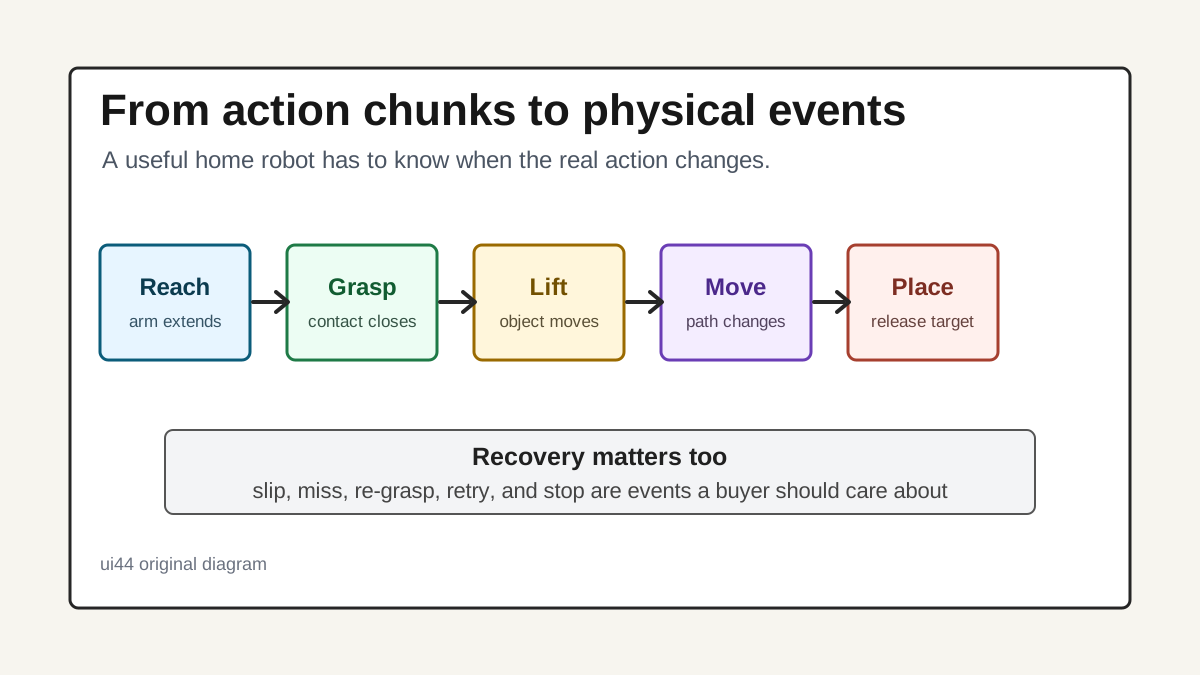
WALL-WM stands for a world action model built around event-level prediction. According to X Square Robot, the model organizes robot learning around executable behaviors such as reaching, grasping, lifting, moving, and placing. Each event can be described in language, seen in video, and connected to action.
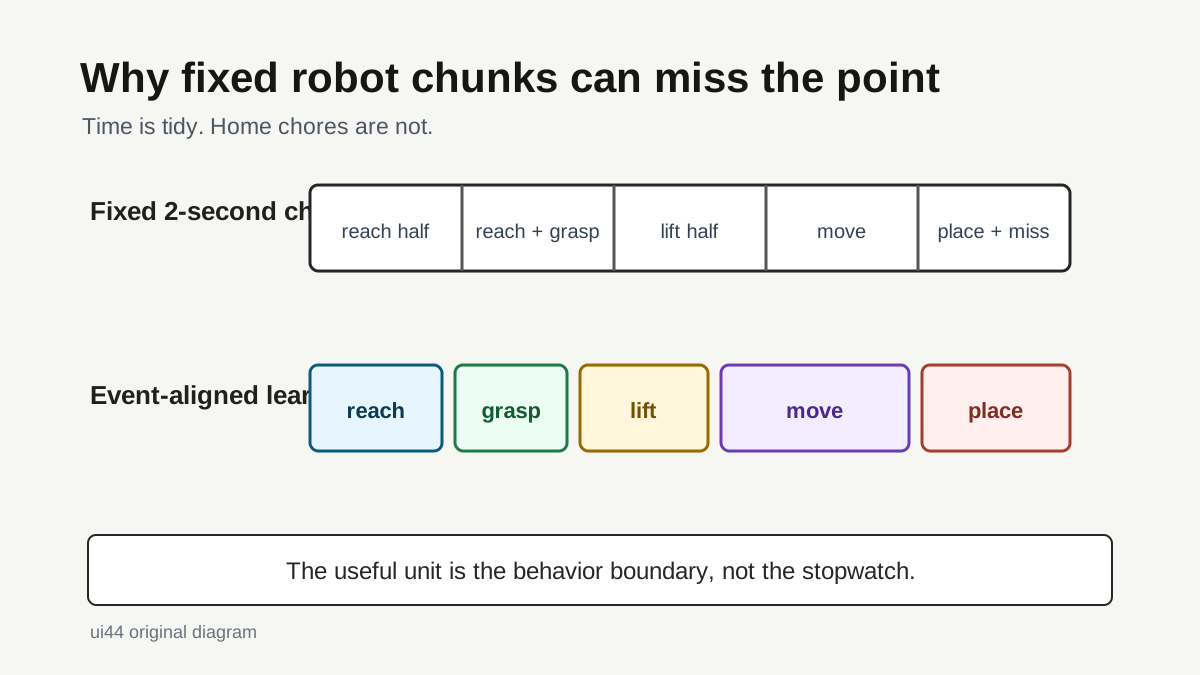
That sounds obvious until you compare it with how many robot learning systems are trained. A lot of policies work on fixed windows: take this much video, this much state, and predict the next chunk of action. Fixed windows are convenient for training, but they do not always match physical reality. A two-second chunk might split a grasp in half. Another chunk might combine the end of a reach, the whole grasp, and the start of a lift.
The WALL-WM pitch is that the unit of learning should be the thing that physically happens. If the action is "lift the object," the segment should begin when lifting starts and end when the lift event ends. If the robot misses the object and needs to re-grasp, that recovery should not be treated as statistical noise.
That is a different kind of promise from a robot that simply advertises "AI" or "VLA." It asks whether the model has a structured idea of task progress.
Why Fixed Chunks Are A Problem At Home
Factories can make life easier for robots. Parts arrive in known bins. Workcells can be lit, measured, and fenced. The same motion can repeat thousands of times.
Homes do not cooperate like that. People move objects. Cables sag. Laundry changes shape. A mug might be wet, upside down, or too close to a plate. The robot has to notice the boundary between "I am approaching the mug" and "I have a secure grasp," then notice whether the lift is working.
Fixed chunks can still be useful, especially for low-level control. The issue is that the buyer-visible task is not fixed length. "Put this on the counter" could take three seconds on an empty table or thirty seconds if the object is partly hidden, the gripper slips, and the destination is blocked.
That is why event-level thinking is a better match for practical home robotics:
Buyer-visible step
Reach
- What the robot must notice
- Object pose, free space, arm limits
- Why it matters
- Avoids collisions and awkward approach angles
Buyer-visible step
Grasp
- What the robot must notice
- Contact, finger closure, force, slip
- Why it matters
- Decides whether the object is actually held
Buyer-visible step
Lift
- What the robot must notice
- Weight shift, object motion, gripper stability
- Why it matters
- Catches failures before the robot carries nothing
Buyer-visible step
Move
- What the robot must notice
- Path, people, furniture, occlusion
- Why it matters
- Keeps a household task safe and adaptable
Buyer-visible step
Place
- What the robot must notice
- Target surface, release timing, object stability
- Why it matters
- Prevents drops, spills, and edge placements
Buyer-visible step
Recover
- What the robot must notice
- Missed grasp, bad pose, unexpected motion
- Why it matters
- Turns a demo into a useful chore attempt
| Buyer-visible step | What the robot must notice | Why it matters |
|---|---|---|
| Reach | Object pose, free space, arm limits | Avoids collisions and awkward approach angles |
| Grasp | Contact, finger closure, force, slip | Decides whether the object is actually held |
| Lift | Weight shift, object motion, gripper stability | Catches failures before the robot carries nothing |
| Move | Path, people, furniture, occlusion | Keeps a household task safe and adaptable |
| Place | Target surface, release timing, object stability | Prevents drops, spills, and edge placements |
| Recover | Missed grasp, bad pose, unexpected motion | Turns a demo into a useful chore attempt |
The Home Robot Angle: Manipulation Is The Test
The most interesting home robots in the ui44 database are no longer only mobile cameras or voice speakers. They are platforms with arms, hands, and enough autonomy to attempt real manipulation.
1X NEO is the most home-explicit example. ui44 tracks it as a 167 cm, 30 kg humanoid with an early-adopter price around $20,000 and roughly four hours of battery life. That is not a casual appliance purchase. At that price, the question is not whether the robot can wave or answer a prompt. The question is whether it can break a household instruction into reliable physical events and recover when one event fails.
Unitree G1 pushes the same question from the affordability side. It is listed at $13,500, stands 132 cm, weighs 35 kg with battery, and has about two hours of battery life. A lower entry price is useful, but short runtime and limited arm payload make task efficiency more important. If a robot spends half its battery retrying poorly segmented motions, the world model is not an abstract research detail anymore.
Figure 03 is a different case. ui44 records a 173 cm, 61 kg humanoid with a 20 kg payload and about five hours of battery life, but no consumer price. Figure's public positioning is still around commercial deployment, not a home checkout page. For a robot like this, event-level world modeling is part of the path from factory demos to less-controlled spaces.
Tesla Optimus Gen 2 is also not a consumer product yet. ui44 tracks it as a 173 cm, 57 kg development platform with a stated target price around $30,000, a 5 mph maximum speed, cameras, force/torque sensors, IMU, and touch sensors. Those sensors are exactly the kind of signals a robot needs for event boundaries: did the gripper touch, did the object move, did the body remain stable?
World Models Are Not Magic
The phrase "world model" can drift into hype quickly. A useful world model is not a crystal ball. It is a practical system for predicting how the scene and the robot's own action will evolve.
WALL-WM's event framing is valuable because it gives buyers a better way to evaluate claims. Ask what the model predicts. Is it just the next video frame? A short action vector? A task label? A variable-length event with a beginning, ending, and expected physical result?
The difference is easy to see in a home task. Suppose a robot is asked to clear a cup from a table.
- A language model can restate the instruction.
- A vision model can identify the cup.
- A fixed-horizon controller can move the arm for a few frames.
- An event-aware system should know whether the reach has completed, whether the grasp succeeded, whether the lift is stable, and whether the place event finished safely.
Only the fourth version begins to look like a chore-performing home robot.
That does not mean WALL-WM itself is a shipping household brain. The open-source repository is a research and development signal, not a retail guarantee. The buyer takeaway is more general: when companies claim "robot foundation model," ask whether their model handles physical event boundaries and failure recovery.
The Robot Specs Still Matter
Better models do not remove hardware limits. They expose them.
Consider a few ui44 database entries side by side:
Robot
- ui44 category
- Humanoid
- Price signal
- $20,000 early-adopter
- Relevant spec
- 167 cm, 30 kg, about 4 hours
- Buyer implication
- Home-first promise needs dependable manipulation, not just telepresence
Robot
- ui44 category
- Humanoid
- Price signal
- $13,500
- Relevant spec
- 132 cm, 35 kg, about 2 hours
- Buyer implication
- Lower price makes autonomy quality and retry efficiency crucial
Robot
- ui44 category
- Humanoid
- Price signal
- Not public
- Relevant spec
- 20 kg payload, about 5 hours
- Buyer implication
- Stronger hardware still needs task transfer beyond structured pilots
Robot
- ui44 category
- Humanoid
- Price signal
- Target around $30,000
- Relevant spec
- 173 cm, 57 kg, force/touch sensing
- Buyer implication
- Sensors help only if the model uses them to detect event success
Robot
- ui44 category
- Home Assistants
- Price signal
- $9,999
- Relevant spec
- 22 DOF claimed in official materials
- Buyer implication
- Home positioning raises the bar for chore-specific reliability
Robot
- ui44 category
- Humanoid
- Price signal
- Not public
- Relevant spec
- 42 active DOF, 7.5 kg single-arm load
- Buyer implication
- Richer motion range needs real-world recovery, not just smooth demos
Robot
- ui44 category
- Humanoid
- Price signal
- EUR19,999 standard
- Relevant spec
- 132 cm, 36 kg, 3 kg payload
- Buyer implication
- Compact platforms must prove useful tasks within payload and runtime limits
| Robot | ui44 category | Price signal | Relevant spec | Buyer implication |
|---|---|---|---|---|
| 1X NEO | Humanoid | $20,000 early-adopter | 167 cm, 30 kg, about 4 hours | Home-first promise needs dependable manipulation, not just telepresence |
| Unitree G1 | Humanoid | $13,500 | 132 cm, 35 kg, about 2 hours | Lower price makes autonomy quality and retry efficiency crucial |
| Figure 03 | Humanoid | Not public | 20 kg payload, about 5 hours | Stronger hardware still needs task transfer beyond structured pilots |
| Optimus Gen 2 | Humanoid | Target around $30,000 | 173 cm, 57 kg, force/touch sensing | Sensors help only if the model uses them to detect event success |
| SwitchBot onero H1 | Home Assistants | $9,999 | 22 DOF claimed in official materials | Home positioning raises the bar for chore-specific reliability |
| MagicBot Gen1 | Humanoid | Not public | 42 active DOF, 7.5 kg single-arm load | Richer motion range needs real-world recovery, not just smooth demos |
| NEURA 4NE-1 Mini | Humanoid | EUR19,999 standard | 132 cm, 36 kg, 3 kg payload | Compact platforms must prove useful tasks within payload and runtime limits |
This is where ui44's robot database becomes useful. Model announcements are broad. Product pages are selective. Specs bring the claim back to earth.
A robot with low payload may understand "lift" perfectly and still be unable to lift the object you care about. A robot with two hours of runtime may recover from failures well but still be impractical if every chore takes repeated attempts. A robot with powerful hands may be unsafe if it cannot detect contact, slip, or unstable placement.
Event-level intelligence and hardware capability have to meet in the middle.
What Should You Ask When A Robot Company Says "World Model"?
The next wave of home robot marketing will use phrases like embodied AI, VLA, physical AI, foundation model, and world model. Some of those claims will be meaningful. Some will be decoration.
Here is a practical checklist.
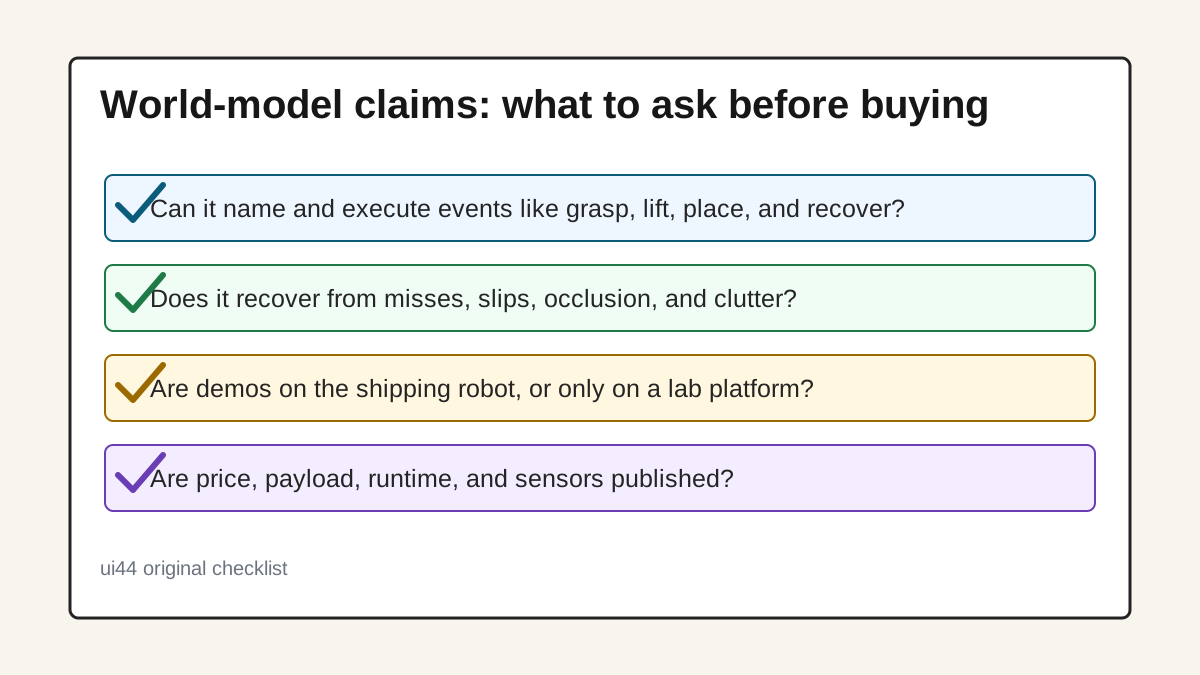
First, ask whether the robot can explain the task in physical events. "I will pick up the cup" is less informative than "I will reach, grasp, lift, move, and place." Better still is a system that can say which event failed.
Second, ask what happens after failure. Home robots need recovery behavior: retry the grasp, choose a different contact point, ask for help, or stop safely. A model that only predicts clean demonstrations is not enough.
Third, look for sensor grounding. Contact, force, torque, touch, depth, and multi-camera perception are not automatic proof of intelligence, but they are the raw signals needed to detect whether an event succeeded.
Fourth, separate lab capability from shipping capability. A paper, repository, or demo can be important without proving that a retail robot will do the same thing in your home.
Finally, compare the model claim with the robot's price, runtime, payload, and availability. A $9,999 to $30,000 household robot is not competing with a phone app. It is competing with the decision to wait.
The Bottom Line
Event-level world models are a useful direction because they match how people think about chores and how physics actually unfolds. Reach, grasp, lift, move, place, and recover are not just labels. They are the natural checkpoints between a robot that performs a staged motion and a robot that can finish a useful household task.
WALL-WM is worth watching because it makes that checkpoint explicit. The important buyer lesson is not that every home robot needs this exact model. It is that future home robots should be judged by how well they understand event boundaries, verify success, and recover from failure.
If a company cannot show that, the safest assumption is simple: the robot may be impressive, but it is not yet dependable help at home.
Related in the database
Use this article as a buyer workflow
Turn the article into a real verification pass grounded in the robots, manufacturers, categories, components, and countries it actually references.
Why Home Robots Need Event-Level World Models already points you toward 7 linked robots, 7 manufacturers, and 4 countries inside the ui44 database. That matters because strong buyer guidance is easier to apply when you can move immediately from a claim or warning into concrete product pages, manufacturer directories, component explainers, and country-level context instead of treating the article as an isolated opinion piece. The fastest next step is to turn the article into a shortlist workflow: open the linked robot pages, verify which specs are actually published for those models, then compare the surrounding manufacturer and component context before you decide whether the underlying claim changes your buying plan.
For this topic, the useful discipline is to separate the editorial lesson from the catalog evidence. The article gives you the framing, but the robot pages tell you what each product actually ships with today: sensor stack, connectivity methods, listed price, release timing, category, and support-relevant compatibility notes. The manufacturer pages then show whether you are looking at a one-off launch, a broader lineup pattern, or a company that spans multiple categories. That layered workflow reduces the risk of buying on a single marketing phrase or a single support FAQ.
The fastest win is to keep the article’s editorial framing tied to real product pages. That way you can test whether NEO, G1, and Figure 03 still make sense once price, category, release timing, and surrounding manufacturer context are visible in one place. If you want a quick working shortlist, open Compare NEO, G1, and Figure 03 next, then keep this article open as the reasoning layer while you compare structured data side by side.
Practical Takeaway
Every robot, manufacturer, category, component, and country reference below resolves to a real ui44 page, keeping the follow-up path grounded in database records rather than generic advice.
Suggested next steps in ui44
- Open NEO first so the article’s main point is anchored to a real robot page.
- Use 1X Technologies to see the broader company context around the products linked in the article.
- Open the linked component pages when you want to separate a shared technology pattern from a single-brand story.
- Build a working shortlist with Compare NEO, G1, and Figure 03.
- Keep a short note of what is already verified in the article and what still needs live confirmation from current vendor documentation.
Robot profiles worth opening next
Use the linked product pages as the evidence layer
The linked robot pages are where this article becomes operational. Instead of asking whether the headline is interesting, use the robot entries to inspect the actual mix of sensors, connectivity options, batteries, pricing, release timing, and stated capabilities attached to the products mentioned in the article. That is the easiest way to see whether the warning or opportunity described here affects one product family, a specific design pattern, or an entire buying lane.
NEO
1X Technologies · Humanoid · Pre-order
NEO is tracked on ui44 as a pre-order humanoid robot from 1X Technologies. The database currently records a listed price of $20,000, a release date of 2025-10-28, ~4 hours battery life, Not disclosed charging time, and a published stack that includes RGB Cameras, Depth Sensors, and Tactile Skin plus Wi-Fi and Bluetooth.
For general buyer research, this route gives you the concrete profile that the article alone cannot. Compare the published capabilities of Household Chores, Tidying Up, and Safe Human Interaction with the linked alternatives so the final decision is based on actual product fit, not just the framing of the article.
G1 is tracked on ui44 as a available humanoid robot from Unitree. The database currently records a listed price of $13,500, a release date of 2024-05-13, ~2 hours battery life, Not disclosed charging time, and a published stack that includes Depth Camera, 3D LiDAR, and 4 Microphone Array plus Wi-Fi 6 and Bluetooth 5.2.
For general buyer research, this route gives you the concrete profile that the article alone cannot. Compare the published capabilities of Bipedal Walking, Object Manipulation, and Dexterous Hands (optional Dex3-1) with the linked alternatives so the final decision is based on actual product fit, not just the framing of the article.
Figure 03 is tracked on ui44 as a active humanoid robot from Figure AI. The database currently records a listed price of Price TBA, a release date of 2025-10-09, ~5 hours battery life, Not disclosed charging time, and a published stack that includes Stereo Vision, Depth Cameras, and Force Sensors plus Wi-Fi and Bluetooth.
For general buyer research, this route gives you the concrete profile that the article alone cannot. Compare the published capabilities of Complex Manipulation, Warehouse Work, and Manufacturing Tasks with the linked alternatives so the final decision is based on actual product fit, not just the framing of the article.
Optimus Gen 2
Tesla · Humanoid · Development
Optimus Gen 2 is tracked on ui44 as a development humanoid robot from Tesla. The database currently records a listed price of Price TBA, a release date of 2023-12-13, Not officially disclosed battery life, Not officially disclosed charging time, and a published stack that includes Cameras, Force/Torque Sensors, and IMU plus Wi-Fi and Bluetooth.
For general buyer research, this route gives you the concrete profile that the article alone cannot. Compare the published capabilities of Bipedal Walking, Object Manipulation, and Factory Tasks with the linked alternatives so the final decision is based on actual product fit, not just the framing of the article.
onero H1 is tracked on ui44 as a development home assistants robot from SwitchBot. The database currently records a listed price of $9,999, a release date of 2026-01-04, Not officially disclosed battery life, Not officially disclosed charging time, and a published stack that includes Multiple cameras, Depth sensing, and Tactile feedback sensing plus its listed connectivity stack.
For general buyer research, this route gives you the concrete profile that the article alone cannot. Compare the published capabilities of Indoor wheeled home navigation, Household object manipulation, and Grasping, pushing, opening, and organizing tasks with the linked alternatives so the final decision is based on actual product fit, not just the framing of the article.
Manufacturer context behind the article
Check whether this is one product story or a broader company pattern
Manufacturer pages add the market context that individual product pages cannot show on their own. They help you check whether the article is centered on a brand with a deep lineup, whether that brand spans several categories, and how much of its ui44 footprint depends on one flagship model versus a broader product strategy.
1X Technologies
ui44 currently tracks 2 robots from 1X Technologies across 1 category. The company is grouped under Norway, and the current catalog footprint on ui44 includes NEO, EVE.
That wider brand context matters because the best buying decision usually depends on lineup depth and adjacent options, not just the one model featured most prominently in the article. The category mix here currently points toward Humanoid as the most useful next route if you want to see whether this article reflects a wider pattern inside the brand.
Unitree
ui44 currently tracks 2 robots from Unitree across 1 category. The company is grouped under China, and the current catalog footprint on ui44 includes H1, G1.
That wider brand context matters because the best buying decision usually depends on lineup depth and adjacent options, not just the one model featured most prominently in the article. The category mix here currently points toward Humanoid as the most useful next route if you want to see whether this article reflects a wider pattern inside the brand.
Figure AI
ui44 currently tracks 2 robots from Figure AI across 1 category. The company is grouped under USA, and the current catalog footprint on ui44 includes Figure 03, Figure 02.
That wider brand context matters because the best buying decision usually depends on lineup depth and adjacent options, not just the one model featured most prominently in the article. The category mix here currently points toward Humanoid as the most useful next route if you want to see whether this article reflects a wider pattern inside the brand.
Tesla
ui44 currently tracks 2 robots from Tesla across 1 category. The company is grouped under USA, and the current catalog footprint on ui44 includes Optimus Gen 2, Optimus Gen 1.
That wider brand context matters because the best buying decision usually depends on lineup depth and adjacent options, not just the one model featured most prominently in the article. The category mix here currently points toward Humanoid as the most useful next route if you want to see whether this article reflects a wider pattern inside the brand.
Broaden the scan without leaving the database
Categories, components, and countries add the wider context
Category framing
Category pages are useful when the article touches a buying pattern that shows up across brands. A category route helps you confirm whether the linked products sit in a narrow niche or whether the same question should be tested across a larger field of alternatives.
Humanoid
The Humanoid category page currently groups 129 tracked robots from 92 manufacturers. ui44 describes this lane as: Full-size bipedal humanoid robots built to work alongside people — from factory floors to household tasks. Compare the cutting edge of humanoid robotics.
That makes the category route a practical follow-up when you want to check whether the products linked in this article are typical for the lane or whether they sit at one edge of the market. Useful starting examples currently include NEO, EVE, Mornine M1.
Home Assistants
The Home Assistants category page currently groups 16 tracked robots from 14 manufacturers. ui44 describes this lane as: Arm-based household helpers — laundry folders, kitchen robots, and mobile manipulators that take on hands-on physical tasks around the home.
That makes the category route a practical follow-up when you want to check whether the products linked in this article are typical for the lane or whether they sit at one edge of the market. Useful starting examples currently include Robody, Futuring 2 (F2), Stretch 3.
Country and ecosystem context
Country pages give extra context when support practices, launch sequencing, regulatory posture, or manufacturer mix matter. They are not a substitute for model-level verification, but they do help you see which ecosystems cluster together and which manufacturers sit in the same regional field when you broaden the search beyond the article headline.
Norway
The Norway route currently groups 2 tracked robots from 1 manufacturers in ui44. That gives you a useful regional lens when the article points toward support practices, launch sequencing, or brand clusters that may share similar ecosystem assumptions.
On the current route, manufacturers like 1X Technologies make the page a good way to broaden the scan without losing the regional context that often shapes availability, documentation style, and adjacent alternatives.
China
The China route currently groups 189 tracked robots from 87 manufacturers in ui44. That gives you a useful regional lens when the article points toward support practices, launch sequencing, or brand clusters that may share similar ecosystem assumptions.
On the current route, manufacturers like AGIBOT, Dreame, Unitree Robotics make the page a good way to broaden the scan without losing the regional context that often shapes availability, documentation style, and adjacent alternatives.
USA
The USA route currently groups 89 tracked robots from 69 manufacturers in ui44. That gives you a useful regional lens when the article points toward support practices, launch sequencing, or brand clusters that may share similar ecosystem assumptions.
On the current route, manufacturers like Faraday Future, iRobot, Boston Dynamics make the page a good way to broaden the scan without losing the regional context that often shapes availability, documentation style, and adjacent alternatives.
Questions to answer before you move from reading to buying
A follow-up FAQ built from the entities already linked in this article
Frequently Asked Questions
Which page should I open first after reading “Why Home Robots Need Event-Level World Models”?
Start with NEO. That gives you a concrete product anchor for the article’s main claim. From there, branch into the manufacturer and component pages so you can tell whether the article is describing one specific model, a repeated brand pattern, or a wider technology issue that affects multiple shortlist options.
How do the manufacturer pages change the buying decision?
1X Technologies help you zoom out from one article and one product. On ui44 they show lineup breadth, category spread, and the neighboring robots tied to the same company. That context is useful when you are deciding whether a risk belongs to a single model, whether it shows up across a brand’s portfolio, and whether you should keep looking at alternatives before committing.
When should I switch from reading to side-by-side comparison?
Move into Compare NEO, G1, and Figure 03 as soon as you understand the article’s main warning or promise. The article explains what to watch for, but the compare view is where you can check whether price, status, battery life, connectivity, sensors, and category fit still make the robot a good match for your own home and budget.
Where to go next in ui44
Keep the research chain inside the database
If you want to keep going, these follow-on pages give you the cleanest expansion path from article to research session. Open the comparison route first if you are deciding between products today. Open the manufacturer, category, and component routes if you still need to understand the broader pattern behind the claim.
Written by
ui44 Team
Published June 22, 2026
Share this article
Open a plain share link on X or Bluesky. No embeds, no widgets, no cookie baggage.