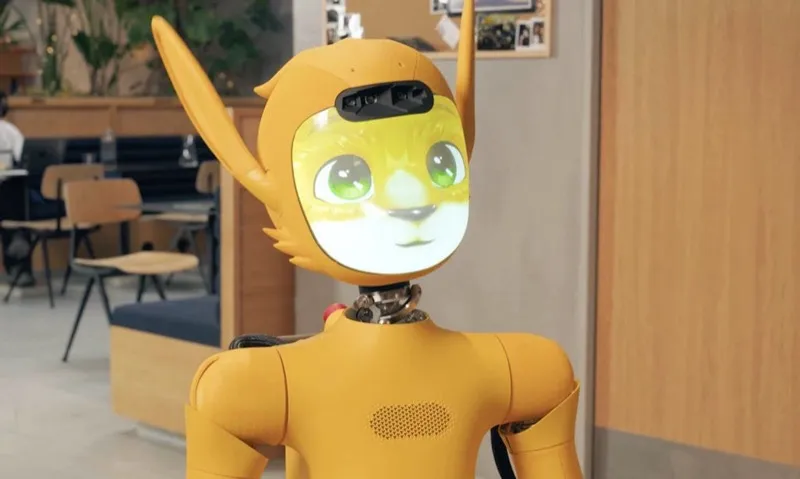
That is the important part of Robody. It is not just another humanoid demo looking for a household task. Devanthro is positioning Robody as a human-in-the-loop care robot: AI handles repeatable routines, while a remote human can step in through VR-style telepresence for judgment, conversation, and delicate assistance. In a category full of autonomy-first claims, that transparency is refreshing.

The question for buyers is not whether teleoperation is "real robotics." It is whether a supervised robot in the home can deliver more practical value than a more autonomous robot that is still waiting for the world to become easier.
What Devanthro Is Actually Claiming
Devanthro says Robody combines robotics, AI, AR, 5G, and human teleoperation to "teleport human presence" into a home. Its main company site says Robodies have been in private homes since early 2024, and its technology page is unusually direct about the reason: full autonomy in unstructured homes remains years away for everyone.
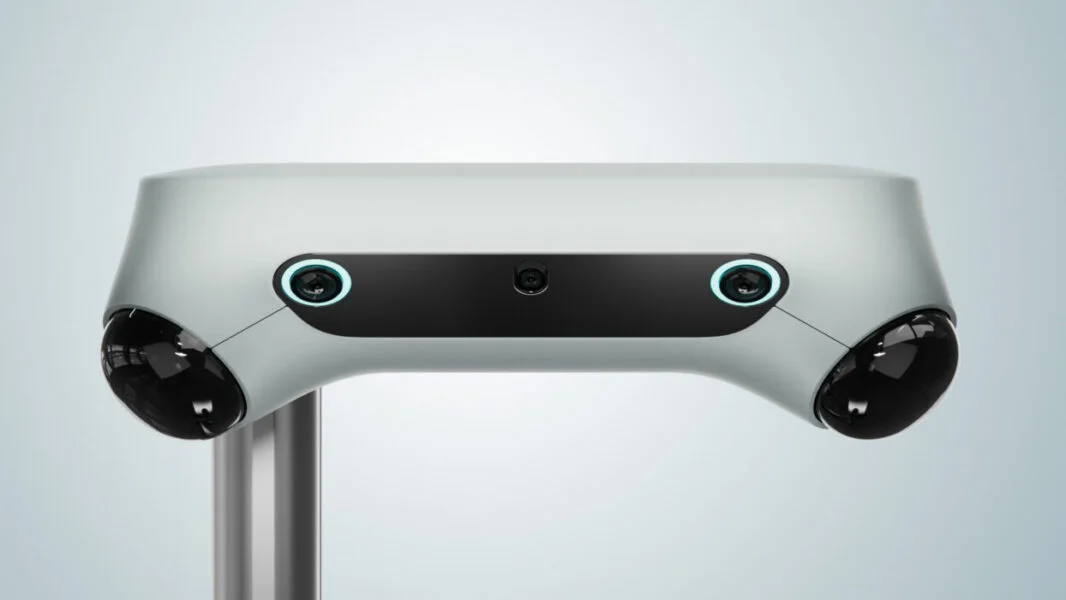
The hardware claims are concrete enough to evaluate. Devanthro lists Robody at 1.65 m tall and 60 kg, with 6-DoF arms, 1.5 kg payload per arm, a 2-finger gripper, differential-drive mobility, a 6-hour runtime with self-docking, 4K fisheye RGB, mm-wave radar, stereo microphones, Nvidia Jetson Orin compute, and ROS2 middleware. It also says typical glass-to-glass telepresence latency stays under 200 ms on standard residential internet.
That spec set tells you what Robody is and what it is not. It is not a heavy-lifting household laborer. The 1.5 kg arm payload is enough for cups, medication, small household objects, a plate, or a light drawer interaction. It is not enough to carry a laundry basket up stairs or move furniture. For care work, that restraint can be a feature: the robot is built around soft contact, low-force assistance, and remote presence rather than brute strength.
Robody's consumer-facing care site is more explicit about the service model. It lists pre-orders at €690 per month, with the robot, setup, maintenance, software updates, emergency detection, family access, and human operator backup included. It also claims more than 300 seniors tested and 95% user satisfaction. Those are vendor claims, not independent clinical results, but they make the business model clear: Devanthro wants to sell a care service, not a one-time gadget.
Why Might Telepresence Be the Shortcut That Matters?
The awkward truth is that home robots need to work in rooms that were never designed for robots. Lighting changes, furniture moves, pets wander through the scene, people interrupt, and the most important tasks often involve soft social judgment: "Is this person okay?", "Should I call someone?", "Does this feel appropriate right now?"
Autonomy-first humanoids have to solve that whole stack before they can be trusted with vulnerable people. Robody sidesteps part of the problem by admitting that some moments should involve a human. The robot becomes a physical proxy for a caregiver, family member, or operator, while routine behaviors can gradually become more automated.
That is a different kind of roadmap. Instead of waiting for a perfect general-purpose household AI, Devanthro can collect training data from real kitchens, hallways, bedrooms, and care routines. Its own technology page frames every teleoperation session as a training episode. Munich Startup's 2026 profile describes the same wedge: care deployments first, household robotics later.
This does not make Robody easy to scale. Human operators cost money. Remote presence needs reliable connectivity. Privacy and consent matter more than they would for a robot vacuum. But as a first step into real homes, the approach is honest about where the hard parts still are.
How Robody Compares With Other Home Robot Paths
Robody is best understood beside three other categories in the ui44 database: autonomous humanoids, mobile manipulators, and commercial social robots.
Robot
- ui44 status
- Pre-order
- ui44 price
- Price not listed
- What it proves
- Human-in-the-loop care can put a humanoid body into real homes sooner
- What is still uncertain
- Service availability, operator staffing, privacy model, long-term reliability
Robot
- ui44 status
- Pre-order
- ui44 price
- $20,000
- What it proves
- A home-facing humanoid with public consumer pricing
- What is still uncertain
- How much everyday chore capability is autonomous at launch
Robot
- ui44 status
- Available
- ui44 price
- $29,950
- What it proves
- A practical mobile manipulator design built around reach and useful payloads
- What is still uncertain
- It is still a developer/assistive platform, not a finished care service
Robot
- ui44 status
- Available
- ui44 price
- $13,500
- What it proves
- Humanoid hardware prices are falling quickly
- What is still uncertain
- It is not sold as a home care service
Robot
- ui44 status
- Active
- ui44 price
- Price not listed
- What it proves
- Expressive service robots can be deployed in human-facing environments
- What is still uncertain
- It is commercial, not a domestic manipulator
Robot
- ui44 status
- Active
- ui44 price
- Price not listed
- What it proves
- Autonomy-first humanoid development is moving quickly
- What is still uncertain
- Consumer home availability and pricing remain unclear
| Robot | ui44 status | ui44 price | What it proves | What is still uncertain |
|---|---|---|---|---|
| Robody | Pre-order | Price not listed | Human-in-the-loop care can put a humanoid body into real homes sooner | Service availability, operator staffing, privacy model, long-term reliability |
| 1X NEO | Pre-order | $20,000 | A home-facing humanoid with public consumer pricing | How much everyday chore capability is autonomous at launch |
| Stretch 4 | Available | $29,950 | A practical mobile manipulator design built around reach and useful payloads | It is still a developer/assistive platform, not a finished care service |
| Unitree G1 | Available | $13,500 | Humanoid hardware prices are falling quickly | It is not sold as a home care service |
| Mirokaï | Active | Price not listed | Expressive service robots can be deployed in human-facing environments | It is commercial, not a domestic manipulator |
| Figure 03 | Active | Price not listed | Autonomy-first humanoid development is moving quickly | Consumer home availability and pricing remain unclear |
The table makes Robody's bet easier to see. It is not trying to win a raw hardware-price race against Unitree. It is not trying to be a developer platform like Stretch. It is not only a social robot like Mirokaï. It is trying to package a humanoid body, care workflow, remote human support, and progressive autonomy into one service.

That makes Robody less futuristic in one sense and more radical in another. A buyer does not get the clean story of "the robot does everything itself." They get a blended service where the machine is sometimes autonomous and sometimes a body for a remote person. For elder care, that may be exactly the right compromise.
The Care Use Case Is Narrower Than "Do Everything"
The strongest case for Robody is not general housework. It is care-adjacent presence: reminders, check-ins, light object fetching, simple food or drink assistance, companionship, family visits, emergency response, and supervised routines.
Those tasks fit Devanthro's hardware constraints. A 1.5 kg payload is not a universal home labor solution, but it is enough for many of the objects that matter in daily support. A 6-hour runtime with self-docking is not 24 hours of active manipulation, but it can support scheduled sessions and standby monitoring. A soft, deliberately weak robot is not impressive in a lifting demo, but it is a better fit around older adults than a stronger platform with less predictable contact behavior.
The care site also makes the human layer central. It describes caregivers and family members stepping into Robody through a VR headset, seeing through its eyes, speaking with its voice, and moving with its hands. That turns the robot into a kind of embodied video call, except the caller can point, hand over a light object, play a game, or respond to an urgent situation.
This is where Robody is meaningfully different from the typical home robot pitch. Many companies talk about replacing chores. Devanthro is talking about reducing the distance between a person who needs help and the person who can provide it.
What Buyers Should Watch Before Pre-Ordering
Robody is interesting, but it should still be judged like a serious care product. The first thing to ask is availability. A pre-order page is not the same as a deployed service in your city, with trained operators, support coverage, maintenance, and reimbursement pathways that apply to your household.
The second question is privacy. A telepresence robot in a private home needs clear rules about who can connect, when they can connect, what is recorded, how data is used for training, and what residents can disable. Devanthro's technical thesis depends on real-world home data. That may be valuable for improving autonomy, but it also raises higher consent requirements than a simple appliance.
The third question is operator quality. If the service depends on remote human support, then the experience is only partly a robotics question. Staffing, training, response times, language coverage, empathy, escalation procedures, and care compliance all matter.
The fourth question is failure behavior. What happens when the internet drops? Can Robody safely stop, call for help, or return to a dock? Does the resident understand when the robot is autonomous versus remotely operated? Can family members see a clear log of interventions?
Those questions are not reasons to dismiss Robody. They are the right buying questions for a robot that enters sensitive domestic space.
Teleoperation Is Not a Dirty Word
There is a tendency in robotics to treat teleoperation as a demo trick. Sometimes it is. A humanoid that pretends to be autonomous while a hidden operator does the work is misleading. But a robot that openly sells human-in-the-loop care is different.
For home robots, teleoperation can be a bridge technology. It can make early deployments useful, capture training data, and keep humans in control for the moments where judgment matters. The important distinction is disclosure. Buyers should know when a robot is acting on its own, when an AI system is suggesting actions, and when a human is operating the body.
Robody's public positioning is unusually aligned with that reality. The company is not hiding the human layer; it is making it the product.
The Bottom Line
Devanthro Robody is not the cleanest version of the home humanoid dream. It is the messier, more service-heavy, more operationally demanding version. That may also make it one of the more plausible near-term paths.
Autonomous humanoids still need to prove they can perform household manipulation safely and repeatedly without a hidden support layer. Mobile manipulators like Stretch prove that simpler forms can be useful, but they are not packaged as mainstream care companions. Commercial robots like Mirokaï show how important personality and interaction design can be, but they do not solve hands-on home assistance.
Robody's answer is to combine a humanoid body with telepresence, care workflows, and gradual automation. If Devanthro can make the service reliable, private, and affordable, the bigger lesson may be this: the first useful home humanoid may not be the one that does everything alone. It may be the one that lets the right human be present at the right time.
Related in the database
Use this article as a privacy verification workflow
Turn the article into a privacy verification pass grounded in the robots, manufacturers, and components it actually references.
Devanthro Robody: Telepresence Care Humanoid already points you toward 7 linked robots, 6 manufacturers, and 5 countries inside the ui44 database. That matters because strong buyer guidance is easier to apply when you can move immediately from a claim or warning into concrete product pages, manufacturer directories, component explainers, and country-level context instead of treating the article as an isolated opinion piece. The fastest next step is to turn the article into a shortlist workflow: open the linked robot pages, verify which specs are actually published for those models, then compare the surrounding manufacturer and component context before you decide whether the underlying claim changes your buying plan.
For this topic, the useful discipline is to separate the editorial lesson from the catalog evidence. The article gives you the framing, but the robot pages tell you what each product actually ships with today: sensor stack, connectivity methods, listed price, release timing, category, and support-relevant compatibility notes. The manufacturer pages then show whether you are looking at a one-off launch, a broader lineup pattern, or a company that spans multiple categories. That layered workflow reduces the risk of buying on a single marketing phrase or a single support FAQ.
Use the robot pages to confirm which products actually expose cameras, microphones, Wi-Fi, or voice systems, then use the manufacturer pages to decide how much of the privacy question seems product-specific versus brand-wide. On this route cluster, Robody, NEO, and Stretch 4 form the fastest reality check. If you want a quick working shortlist, open Compare Robody, NEO, and Stretch 4 next, then keep this article open as the reasoning layer while you compare structured data side by side.
Practical Takeaway
Every robot, manufacturer, category, component, and country reference below resolves to a real ui44 page, keeping the follow-up path grounded in database records rather than generic advice.
Suggested next steps in ui44
- Open Robody and note the listed sensors, connectivity methods, and voice stack before you interpret any policy claim.
- Cross-check the wider brand context on Devanthro so you can see whether the privacy question touches one model or a broader lineup.
- Use the linked component pages to confirm how common the relevant sensors and connectivity layers are across the database.
- Keep a short note of which policy layers you checked, which device features are actually present on the robot page, and which items still depend on region- or app-level confirmation.
- Finish with Compare Robody, NEO, and Stretch 4 so the policy reading sits next to structured product data.
Robot profiles worth opening next
Use the linked product pages as the evidence layer
The linked robot pages are where this article becomes operational. Instead of asking whether the headline is interesting, use the robot entries to inspect the actual mix of sensors, connectivity options, batteries, pricing, release timing, and stated capabilities attached to the products mentioned in the article. That is the easiest way to see whether the warning or opportunity described here affects one product family, a specific design pattern, or an entire buying lane.
Robody is tracked on ui44 as a pre-order home assistants robot from Devanthro. The database currently records a listed price of Price TBA, a release date of 2024-11, 6 hours battery life, Self-docking; full charge time not officially disclosed charging time, and a published stack that includes 4K fisheye RGB cameras, mm-wave radar, and Stereo microphones plus 5G and Wi-Fi 6.
For privacy-focused reading, this page matters because it shows the concrete device surface behind the policy discussion. Use it to verify whether Robody combines sensors and connectivity in a way that could change the in-home data footprint, and compare the listed capabilities such as VR telepresence for family members and caregivers, Medication reminders, and Meal preparation assistance with any cloud, app, or voice layers.
NEO
1X Technologies · Humanoid · Pre-order
NEO is tracked on ui44 as a pre-order humanoid robot from 1X Technologies. The database currently records a listed price of $20,000, a release date of 2025-10-28, ~4 hours battery life, Not disclosed charging time, and a published stack that includes RGB Cameras, Depth Sensors, and Tactile Skin plus Wi-Fi and Bluetooth.
For privacy-focused reading, this page matters because it shows the concrete device surface behind the policy discussion. Use it to verify whether NEO combines sensors and connectivity in a way that could change the in-home data footprint, and compare the listed capabilities such as Household Chores, Tidying Up, and Safe Human Interaction with any cloud, app, or voice layers.
Stretch 4
Hello Robot · Home Assistants · Available
Stretch 4 is tracked on ui44 as a available home assistants robot from Hello Robot. The database currently records a listed price of $29,950, a release date of 2026-05-12, 8 hours (light CPU load) battery life, Not officially disclosed charging time, and a published stack that includes Wide-FOV depth sensing, High-resolution RGB cameras, and Calibrated RGB + depth perception plus its listed connectivity stack.
For privacy-focused reading, this page matters because it shows the concrete device surface behind the policy discussion. Use it to verify whether Stretch 4 combines sensors and connectivity in a way that could change the in-home data footprint, and compare the listed capabilities such as Mobile Manipulation, Omnidirectional Indoor Mobility, and Autonomous Mapping and Navigation with any cloud, app, or voice layers.
Stretch 3
Hello Robot · Home Assistants · Active
Stretch 3 is tracked on ui44 as a active home assistants robot from Hello Robot. The database currently records a listed price of $24,950, a release date of 2024, 2–5 hours battery life, Not disclosed charging time, and a published stack that includes Intel D405 RGBD Camera (gripper), Intel D435if RGBD Camera (head), and Wide-Angle RGB Camera (head) plus Wi-Fi 6E and Bluetooth.
For privacy-focused reading, this page matters because it shows the concrete device surface behind the policy discussion. Use it to verify whether Stretch 3 combines sensors and connectivity in a way that could change the in-home data footprint, and compare the listed capabilities such as Mobile Manipulation, Autonomous Navigation, and Teleoperation (Web / Gamepad / Dexterous) with any cloud, app, or voice layers.
G1 is tracked on ui44 as a available humanoid robot from Unitree. The database currently records a listed price of $13,500, a release date of 2024-05-13, ~2 hours battery life, Not disclosed charging time, and a published stack that includes Depth Camera, 3D LiDAR, and 4 Microphone Array plus Wi-Fi 6 and Bluetooth 5.2.
For privacy-focused reading, this page matters because it shows the concrete device surface behind the policy discussion. Use it to verify whether G1 combines sensors and connectivity in a way that could change the in-home data footprint, and compare the listed capabilities such as Bipedal Walking, Object Manipulation, and Dexterous Hands (optional Dex3-1) with any cloud, app, or voice layers.
Manufacturer context behind the article
Check whether this is one product story or a broader company pattern
Manufacturer pages add the privacy context that individual product pages cannot show on their own. They help you check whether cameras, microphones, cloud accounts, app controls, and policy assumptions appear across a broader lineup or stay tied to one specific product story.
Devanthro
ui44 currently tracks 1 robot from Devanthro across 1 category. The company is grouped under Germany, and the current catalog footprint on ui44 includes Robody.
That wider brand context matters because privacy questions rarely stop at one FAQ page. A manufacturer route helps you see whether the article is centered on one premium model or on a company that has several relevant products and therefore more than one place where the same policy or app assumptions might matter. The category mix here currently points toward Home Assistants as the most useful next route if you want to see whether this article reflects a wider pattern inside the brand.
1X Technologies
ui44 currently tracks 2 robots from 1X Technologies across 1 category. The company is grouped under Norway, and the current catalog footprint on ui44 includes NEO, EVE.
That wider brand context matters because privacy questions rarely stop at one FAQ page. A manufacturer route helps you see whether the article is centered on one premium model or on a company that has several relevant products and therefore more than one place where the same policy or app assumptions might matter. The category mix here currently points toward Humanoid as the most useful next route if you want to see whether this article reflects a wider pattern inside the brand.
Hello Robot
ui44 currently tracks 2 robots from Hello Robot across 1 category. The company is grouped under USA, and the current catalog footprint on ui44 includes Stretch 3, Stretch 4.
That wider brand context matters because privacy questions rarely stop at one FAQ page. A manufacturer route helps you see whether the article is centered on one premium model or on a company that has several relevant products and therefore more than one place where the same policy or app assumptions might matter. The category mix here currently points toward Home Assistants as the most useful next route if you want to see whether this article reflects a wider pattern inside the brand.
Unitree
ui44 currently tracks 2 robots from Unitree across 1 category. The company is grouped under China, and the current catalog footprint on ui44 includes H1, G1.
That wider brand context matters because privacy questions rarely stop at one FAQ page. A manufacturer route helps you see whether the article is centered on one premium model or on a company that has several relevant products and therefore more than one place where the same policy or app assumptions might matter. The category mix here currently points toward Humanoid as the most useful next route if you want to see whether this article reflects a wider pattern inside the brand.
Broaden the scan without leaving the database
Categories, components, and countries add the wider context
Category framing
Category pages are useful when the article touches a buying pattern that shows up across brands. A category route helps you confirm whether the linked products sit in a narrow niche or whether the same question should be tested across a larger field of alternatives.
Home Assistants
The Home Assistants category page currently groups 16 tracked robots from 14 manufacturers. ui44 describes this lane as: Arm-based household helpers — laundry folders, kitchen robots, and mobile manipulators that take on hands-on physical tasks around the home.
That makes the category route a practical follow-up when you want to check whether the products linked in this article are typical for the lane or whether they sit at one edge of the market. Useful starting examples currently include Robody, Futuring 2 (F2), Stretch 3.
Humanoid
The Humanoid category page currently groups 129 tracked robots from 92 manufacturers. ui44 describes this lane as: Full-size bipedal humanoid robots built to work alongside people — from factory floors to household tasks. Compare the cutting edge of humanoid robotics.
That makes the category route a practical follow-up when you want to check whether the products linked in this article are typical for the lane or whether they sit at one edge of the market. Useful starting examples currently include NEO, EVE, Mornine M1.
Country and ecosystem context
Country pages give extra context when support practices, launch sequencing, regulatory posture, or manufacturer mix matter. They are not a substitute for model-level verification, but they do help you see which ecosystems cluster together and which manufacturers sit in the same regional field when you broaden the search beyond the article headline.
Germany
The Germany route currently groups 13 tracked robots from 9 manufacturers in ui44. That gives you a useful regional lens when the article points toward support practices, launch sequencing, or brand clusters that may share similar ecosystem assumptions.
On the current route, manufacturers like NEURA Robotics, Bosch, Agile Robots make the page a good way to broaden the scan without losing the regional context that often shapes availability, documentation style, and adjacent alternatives.
Norway
The Norway route currently groups 2 tracked robots from 1 manufacturers in ui44. That gives you a useful regional lens when the article points toward support practices, launch sequencing, or brand clusters that may share similar ecosystem assumptions.
On the current route, manufacturers like 1X Technologies make the page a good way to broaden the scan without losing the regional context that often shapes availability, documentation style, and adjacent alternatives.
USA
The USA route currently groups 89 tracked robots from 69 manufacturers in ui44. That gives you a useful regional lens when the article points toward support practices, launch sequencing, or brand clusters that may share similar ecosystem assumptions.
On the current route, manufacturers like Faraday Future, iRobot, Boston Dynamics make the page a good way to broaden the scan without losing the regional context that often shapes availability, documentation style, and adjacent alternatives.
Questions to answer before you move from reading to buying
A follow-up FAQ built from the entities already linked in this article
Frequently Asked Questions
Which page should I open first after reading “Devanthro Robody: Telepresence Care Humanoid”?
Start with Robody. That gives you a concrete product anchor for the article’s main claim. From there, branch into the manufacturer and component pages so you can tell whether the article is describing one specific model, a repeated brand pattern, or a wider technology issue that affects multiple shortlist options.
How do the manufacturer pages change the buying decision?
Devanthro help you zoom out from one article and one product. On ui44 they show lineup breadth, category spread, and the neighboring robots tied to the same company. That context is useful when you are deciding whether a risk belongs to a single model, whether it shows up across a brand’s portfolio, and whether you should keep looking at alternatives before committing.
When should I switch from reading to side-by-side comparison?
Move into Compare Robody, NEO, and Stretch 4 as soon as you understand the article’s main warning or promise. The article explains what to watch for, but the compare view is where you can check whether price, status, battery life, connectivity, sensors, and category fit still make the robot a good match for your own home and budget.
Where to go next in ui44
Keep the research chain inside the database
If you want to keep going, these follow-on pages give you the cleanest expansion path from article to research session. Open the comparison route first if you are deciding between products today. Open the manufacturer, category, and component routes if you still need to understand the broader pattern behind the claim.
Written by
ui44 Team
Published July 5, 2026
Share this article
Open a plain share link on X or Bluesky. No embeds, no widgets, no cookie baggage.