Article 18 min read 4,212 words

Can Coding Agents Control Home Robot Arms?

Robot arms are moving from lab demos into the messy category that matters for buyers: products, developer kits, and early home-adjacent platforms. The next question is not only whether a robot can grasp a cup. It is whether ordinary software agents can turn a natural-language instruction into the small programs, checks, and recovery steps that make useful manipulation happen.

ui44 Team All articles

That is the promise behind code-as-policy robotics. Instead of asking an AI model to directly output motor commands, the system asks it to write or assemble code that calls robot APIs: find the object, choose a grasp, move the arm, verify the result, try a fallback, and stop safely when confidence is low. Recent open tooling such as Hugging Face LeRobot and benchmark work such as CaP-X make the idea feel less like science fiction and more like an emerging software layer for physical AI.
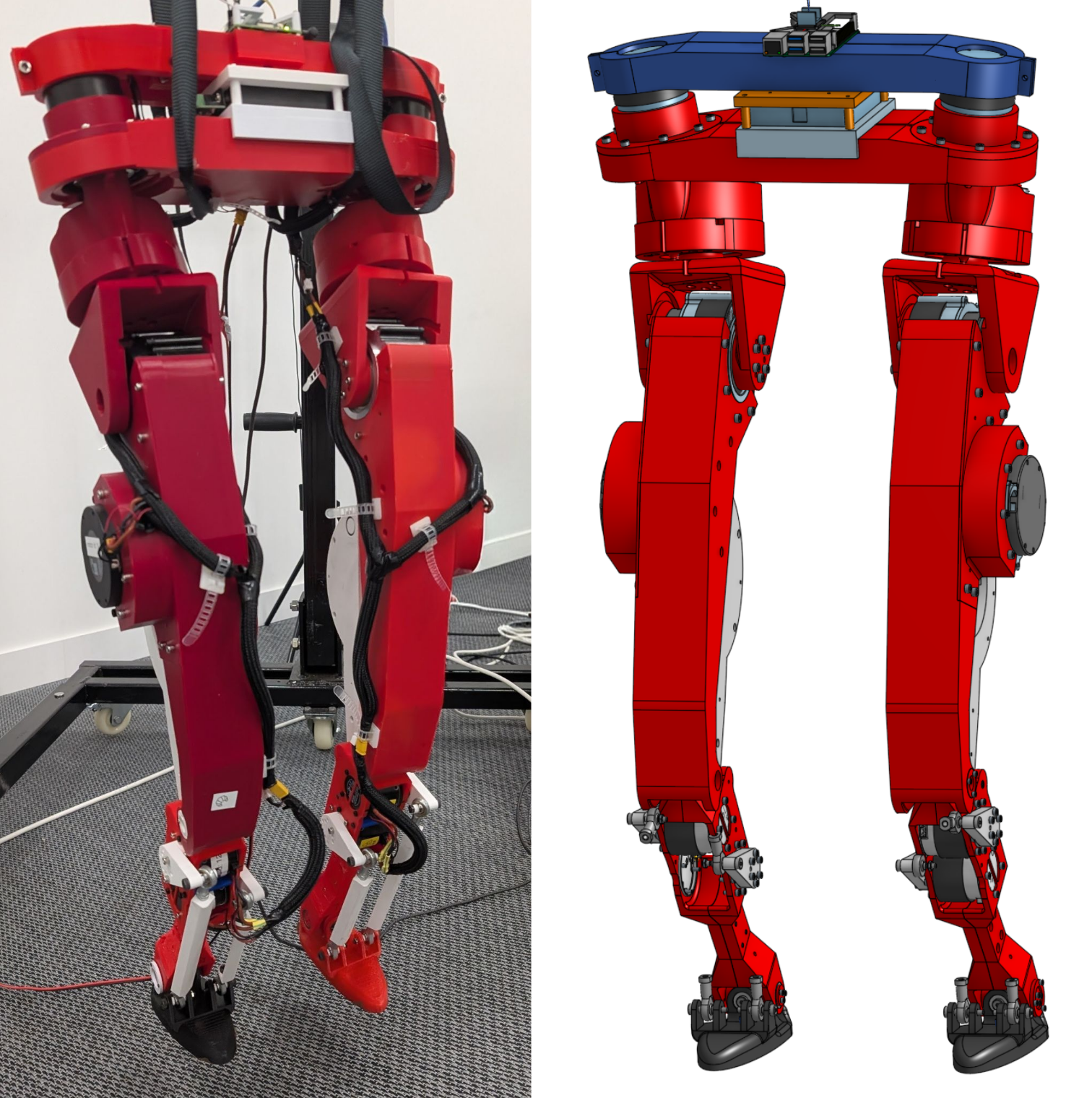
LeRobot Humanoid open robotics platform for code-as-policy experiments

The short answer: coding agents can help control home robot arms, but they should not be treated as the whole controller. In the near term, the best role for an AI coding agent is planner, tool user, test writer, and task debugger. The low-level motion control, collision limits, torque limits, emergency stops, and verified skill library still need to live in boring, hardened robotics software.

What Code-as-Policy Means in Practice

A home robot arm has to bridge two worlds. People speak in goals: "put the snack box on the counter," "wipe the table," "open the drawer," or "sort these toys." Motors need precise trajectories, force limits, camera calibration, object poses, gripper states, and timing.

Code-as-policy approaches put code in the middle. A language model or coding agent writes a short policy program that composes existing robot capabilities. A simplified version might look like this:

  1. Detect the target object.
  2. Estimate whether it is graspable with the available gripper.
  3. Move to a pre-grasp pose.
  4. Close the gripper with a force limit.
  5. Lift a short distance and verify the object moved.
  6. Place it at the destination.
  7. If verification fails, choose a safer fallback or ask for help.

That is very different from asking a chatbot to "be the robot." The agent is not inventing physics from text. It is calling bounded tools.

The difference matters for homes because home manipulation failures are rarely graceful. A bad web search is annoying. A bad robot-arm action can knock over glassware, scratch furniture, pinch fingers, or damage the robot. The useful path is therefore not "let the LLM control everything." It is "let the agent write auditable task code that runs inside a constrained robotics stack."

Why This Matters Now

Two things changed at the same time.

First, low-cost robot-arm ecosystems are becoming more accessible. LeRobot's SO-101 documentation shows how a small leader/follower arm setup can be assembled, calibrated, and used for imitation-learning workflows. The important detail is not that SO-101 is a finished home product. It is that data collection, calibration, and skill reuse are being packaged in a way more developers can actually run.

Second, coding agents are getting better at using APIs, reading errors, and repairing their own code. CaP-X frames this directly as a benchmark for coding agents in robot manipulation. Its examples emphasize zero-shot robotics tasks, cross-embodiment use, long-horizon task planning, visual grounding, and code generation around robot APIs.

That combination is why this topic belongs in a home robot buying conversation. A robot with arms is only as useful as its task library. If agent-generated policies make new tasks cheaper to create, the value of capable arms, hands, sensors, and onboard compute goes up.

The Hardware Still Decides the Ceiling

Software can only compose what the robot body can safely do. The ui44 database makes that visible. A few current and near-current platforms show the spread:

Robot

Unitree G1

Home relevance
Developer and early adopter humanoid
Arm/manipulation data from ui44
132 cm, 35 kg, about 2 kg standard arm load, about 3 kg on G1 EDU, depth camera, 3D LiDAR, optional Jetson Orin on EDU
Price signal
$13,500

Robot

1X NEO

Home relevance
Explicitly home-focused humanoid
Arm/manipulation data from ui44
167 cm, 30 kg, soft lightweight body, RGB/depth sensing, tactile skin, microphone array, about 4 hours runtime
Price signal
$20,000 early-adopter pricing

Robot

Galbot G1

Home relevance
Commercial service manipulator, home-relevant lessons
Arm/manipulation data from ui44
173 cm, 85 kg, 10-hour battery, 5 kg single-arm payload, 10 kg dual-arm payload, wrist depth cameras and force sensors
Price signal
Not public

Robot

VLAI L1 Agile Mobile Manipulator

Home relevance
Research and education platform
Arm/manipulation data from ui44
Dual 8-DOF arms, 6 kg per arm, ROS 2, Isaac Sim, MuJoCo, LeRobot, VR teleoperation and data collection
Price signal
28,800 CNY starting price reported in source notes

Robot

Quanta X2

Home relevance
Home-service direction, still early
Arm/manipulation data from ui44
164 cm wheeled humanoid, 6 kg single-arm payload, 25 kg max dual-arm payload, 765 mm arm reach
Price signal
Not public

Robot

ZERITH H1

Home relevance
Commercial cleaning, home-assistance adjacent
Arm/manipulation data from ui44
130-180 cm lift-adjustable body, 2.5 kg single-arm payload, 0-2.2 m reach, RGBD cameras, tactile arrays, LiDAR
Price signal
Not public

This table is the reality check. A code agent cannot make a 2 kg payload arm safely lift a heavy cast-iron pan. It cannot make a robot with no tactile sensing reliably handle soft laundry. It cannot make an early developer humanoid into a trustworthy eldercare assistant just by writing a clever script.

But it can make the same hardware more useful if the platform exposes well-designed tools: perception calls, motion primitives, grasp candidates, force-limited actions, simulation checks, and verification APIs.

1X NEO home humanoid robot for safe domestic manipulation

The Best Near-Term Use: Task Glue

For home robots, code-as-policy is most credible as task glue. The agent should not calculate every joint angle. It should decide how to combine known skills.

Good examples include:

  • Turn "clear this table" into a sequence of object detection, category grouping, safe grasp attempts, bin placement, and human confirmation for unknown objects.
  • Turn "water the plant" into navigation to a known plant zone, container detection, fill-level check, low-force grasp, and a pour action with spill monitoring.
  • Turn "put the remote on the side table" into locating the remote, checking whether the side table is reachable, planning a carry path, and verifying placement.
  • Turn "wipe the counter" into surface detection, cloth grasping, force-limited wiping strokes, and a final visual inspection.

These are not single skills. They are small workflows made of perception, motion, and verification. Coding agents are naturally suited to this middle layer because they are good at sequencing tools and handling branching logic.

The result could look less like an app store of fixed robot chores and more like a growing library of editable task policies. A manufacturer might ship certified base skills, while developers and advanced users add household-specific routines.

The Safety Model Has to Be Boring

The most important part of a code-as-policy home robot is the part that refuses bad code.

Any serious implementation needs several layers:

  • A sandboxed policy runtime with no arbitrary network or file-system access during physical execution.
  • Typed robot APIs that expose safe actions instead of raw motor control.
  • Hard workspace limits around people, pets, furniture, stairs, heat, water, and fragile objects.
  • Simulation or dry-run checks for new policies before the real robot moves.
  • Runtime monitors for force, speed, joint limits, slipping grasps, and unexpected contact.
  • Clear human approval for new tasks, risky locations, sharp objects, liquids, appliances, and anything involving another person.

That list is deliberately unglamorous. It is also where products will be won or lost. A robot that can generate new task code but cannot prove it will stop safely is not ready for ordinary homes.

CaP-style systems are interesting because code can be inspected, tested, and constrained more easily than a hidden chain of model activations. A generated policy can be linted. It can be run in simulation. It can be blocked from calling unapproved functions. It can be stored, versioned, and rolled back.

That does not make it safe by default. It makes it possible to build a safety case around it.

What Should Buyers Watch For?

If you are evaluating a home robot with arms, do not ask only whether it has an LLM. Ask what the LLM is allowed to do.

The useful questions are more specific:

  • Does the robot expose a public or partner API for manipulation tasks?
  • Are skills represented as inspectable code, behavior trees, scripts, or opaque cloud prompts?
  • Can new tasks be tested in simulation or replay before real-world execution?
  • Does the robot have enough sensing for the tasks being advertised: depth cameras, wrist cameras, tactile sensing, force sensors, LiDAR, or reliable object tracking?
  • Are arm payload, reach, and gripper limits published?
  • What happens when the robot is uncertain?
  • Can the user approve, edit, disable, or roll back learned routines?

The ui44 data already shows why these questions matter. Unitree G1 is compelling because of its price and developer orientation, but its standard arm payload is modest. NEO is more home-focused, with a soft lightweight body and tactile skin, but it is still a pre-order product at early-adopter pricing. Galbot G1 and VLAI L1 look more like manipulation infrastructure: heavier, more specialized, and aimed at commercial or research workflows before ordinary homes.
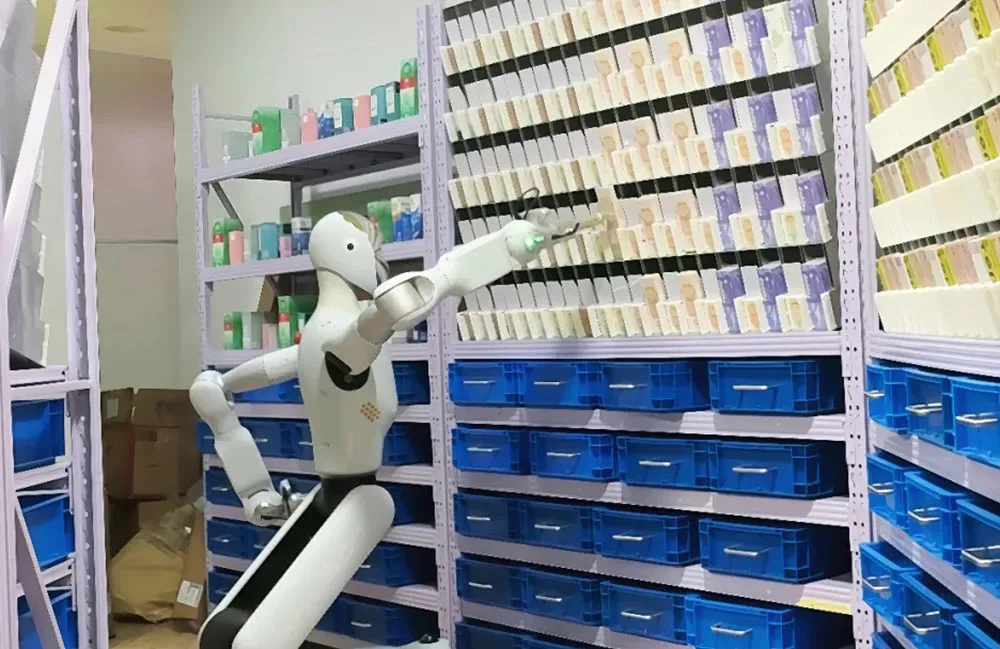
Galbot G1 mobile manipulator robot for home-relevant task automation

What Would Make This Feel Real at Home

The first convincing home examples will probably be narrow, repetitive, and supervised. That is fine. A robot does not need to cook an entire meal to be useful.

The best early tasks for code-as-policy robots share a few traits:

  • The objects are known in advance.
  • The workspace is constrained.
  • Failure is easy to detect.
  • The robot can ask for help without ruining the task.
  • The action uses light payloads and low force.

Think of pantry sorting, toy pickup, moving laundry between a basket and a table, fetching lightweight items from known shelves, plant care, or wiping a defined surface. These are still hard, but they fit the strengths of a generated policy layer: object lists, conditional logic, retries, and verification.

The least credible early tasks are open-ended cooking, knife handling, glassware in clutter, childcare, medication handling, and anything involving unpredictable contact with people. Those require much stronger guarantees than today's agentic demos provide.

The Bottom Line

AI coding agents are not a magic brain for home robots. They are a promising way to make robot arms programmable at the task level.

The winning architecture is likely to be layered: a certified low-level robotics stack, a library of safe manipulation skills, a constrained code-generation layer that composes those skills, and human approval for anything new or risky. In that setup, code-as-policy can help home robots learn new chores faster without pretending that text generation is a substitute for physical safety.

For buyers, the practical takeaway is simple: watch the arms, not just the chatbot. A home robot that combines published payload specs, useful sensors, inspectable task policies, simulation testing, and conservative safety limits is much more interesting than a robot that merely says it has "AI."

That is where code-as-policy could matter most. It may become the bridge between today's impressive manipulation demos and tomorrow's boringly useful home robot chores.

Database context

Use this article as a buyer workflow

Turn the article into a real verification pass

Can Coding Agents Control Home Robot Arms? already points you toward 6 linked robots, 6 manufacturers, and 2 countries inside the ui44 database. That matters because strong buyer guidance is easier to apply when you can move immediately from a claim or warning into concrete product pages, manufacturer directories, component explainers, and country-level context instead of treating the article as an isolated opinion piece. The fastest next step is to turn the article into a shortlist workflow: open the linked robot pages, verify which specs are actually published for those models, then compare the surrounding manufacturer and component context before you decide whether the underlying claim changes your buying plan.

For this topic, the useful discipline is to separate the editorial lesson from the catalog evidence. The article gives you the framing, but the robot pages tell you what each product actually ships with today: sensor stack, connectivity methods, listed price, release timing, category, and support-relevant compatibility notes. The manufacturer pages then show whether you are looking at a one-off launch, a broader lineup pattern, or a company that spans multiple categories. That layered workflow reduces the risk of buying on a single marketing phrase or a single support FAQ.

The fastest win is to keep the article’s editorial framing tied to real product pages. That way you can test whether G1, NEO, and G1 still make sense once price, category, release timing, and surrounding manufacturer context are visible in one place. If you want a quick working shortlist, open Compare G1, NEO, and G1 next, then keep this article open as the reasoning layer while you compare structured data side by side.

Practical Takeaway

Every robot, manufacturer, category, component, and country reference below resolves to a real ui44 page, keeping the follow-up path grounded in database records rather than generic advice.

Suggested next steps in ui44

  1. Open G1 first so the article’s main point is anchored to a real robot page.
  2. Use Unitree to see the broader company context around the products linked in the article.
  3. Open the linked component pages when you want to separate a shared technology pattern from a single-brand story.
  4. Build a working shortlist with Compare G1, NEO, and G1.
  5. Keep a short note of what is already verified in the article and what still needs live confirmation from current vendor documentation.

Database context

Robot profiles worth opening next

Use the linked product pages as the evidence layer

The linked robot pages are where this article becomes operational. Instead of asking whether the headline is interesting, use the robot entries to inspect the actual mix of sensors, connectivity options, batteries, pricing, release timing, and stated capabilities attached to the products mentioned in the article. That is the easiest way to see whether the warning or opportunity described here affects one product family, a specific design pattern, or an entire buying lane.

G1

Unitree · Humanoid · Available

$13,500

G1 is tracked on ui44 as a available humanoid robot from Unitree. The database currently records a listed price of $13,500, a release date of 2024, ~2 hours battery life, Not disclosed charging time, and a published stack that includes Depth Camera, 3D LiDAR, and 4 Microphone Array plus Wi-Fi 6 and Bluetooth 5.2.

For general buyer research, this route gives you the concrete profile that the article alone cannot. Compare the published capabilities of Bipedal Walking, Object Manipulation, and Dexterous Hands (optional Dex3-1) with the linked alternatives so the final decision is based on actual product fit, not just the framing of the article.

NEO

1X Technologies · Humanoid · Pre-order

$20,000

NEO is tracked on ui44 as a pre-order humanoid robot from 1X Technologies. The database currently records a listed price of $20,000, a release date of 2025-10-28, ~4 hours battery life, Not disclosed charging time, and a published stack that includes RGB Cameras, Depth Sensors, and Tactile Skin plus Wi-Fi and Bluetooth.

For general buyer research, this route gives you the concrete profile that the article alone cannot. Compare the published capabilities of Household Chores, Tidying Up, and Safe Human Interaction with the linked alternatives so the final decision is based on actual product fit, not just the framing of the article.

G1

Galbot · Commercial · Active

Price TBA

G1 is tracked on ui44 as a active commercial robot from Galbot. The database currently records a listed price of Price TBA, a release date of 2025, 10 hours battery life, Not disclosed charging time, and a published stack that includes Binocular camera x1, Wrist depth cameras x2, and 6-axis force sensors x2 plus Wi-Fi (2.4/5 GHz) and Ethernet.

For general buyer research, this route gives you the concrete profile that the article alone cannot. Compare the published capabilities of Autonomous Retail Store Operation, Generalizable Object Grasping (5,000+ product types), and Shelf Replenishment & Inventory Management with the linked alternatives so the final decision is based on actual product fit, not just the framing of the article.

¥28,800

L1 Agile Mobile Manipulator is tracked on ui44 as a active research robot from VLAI Robotics. The database currently records a listed price of ¥28,800, a release date of 2026-04-01, Rechargeable battery; runtime not officially disclosed battery life, Not officially disclosed charging time, and a published stack that includes Not officially disclosed plus Developer interfaces for base and arms and Remote control / teleoperation interface.

For general buyer research, this route gives you the concrete profile that the article alone cannot. Compare the published capabilities of Wheeled Dual-Arm Mobile Manipulation, 16-DOF Humanoid Dual Arms, and 6 kg Per-Arm Payload with the linked alternatives so the final decision is based on actual product fit, not just the framing of the article.

Quanta X2

X Square Robot · Humanoid · Active

Price TBA

Quanta X2 is tracked on ui44 as a active humanoid robot from X Square Robot. The database currently records a listed price of Price TBA, a release date of 2026-04, Not officially disclosed battery life, Not officially disclosed charging time, and a published stack that includes 2D LiDAR, Ultrasonic Sensors, and RGB-D Camera plus Not officially disclosed.

For general buyer research, this route gives you the concrete profile that the article alone cannot. Compare the published capabilities of Wheeled Humanoid Mobility, 62-DOF Whole-Body Motion, and 6-DOF Torso with the linked alternatives so the final decision is based on actual product fit, not just the framing of the article.

Database context

Manufacturer context behind the article

Check whether this is one product story or a broader company pattern

Manufacturer pages add the market context that individual product pages cannot show on their own. They help you check whether the article is centered on a brand with a deep lineup, whether that brand spans several categories, and how much of its ui44 footprint depends on one flagship model versus a broader product strategy.

Unitree

ui44 currently tracks 2 robots from Unitree across 1 category. The company is grouped under China, and the current catalog footprint on ui44 includes H1, G1.

That wider brand context matters because the best buying decision usually depends on lineup depth and adjacent options, not just the one model featured most prominently in the article. The category mix here currently points toward Humanoid as the most useful next route if you want to see whether this article reflects a wider pattern inside the brand.

1X Technologies

ui44 currently tracks 2 robots from 1X Technologies across 1 category. The company is grouped under Norway, and the current catalog footprint on ui44 includes NEO, EVE.

That wider brand context matters because the best buying decision usually depends on lineup depth and adjacent options, not just the one model featured most prominently in the article. The category mix here currently points toward Humanoid as the most useful next route if you want to see whether this article reflects a wider pattern inside the brand.

Galbot

ui44 currently tracks 1 robot from Galbot across 1 category. The company is grouped under China, and the current catalog footprint on ui44 includes G1.

That wider brand context matters because the best buying decision usually depends on lineup depth and adjacent options, not just the one model featured most prominently in the article. The category mix here currently points toward Commercial as the most useful next route if you want to see whether this article reflects a wider pattern inside the brand.

VLAI Robotics

ui44 currently tracks 1 robot from VLAI Robotics across 1 category. The company is grouped under China, and the current catalog footprint on ui44 includes L1 Agile Mobile Manipulator.

That wider brand context matters because the best buying decision usually depends on lineup depth and adjacent options, not just the one model featured most prominently in the article. The category mix here currently points toward Research as the most useful next route if you want to see whether this article reflects a wider pattern inside the brand.

Database context

Broaden the scan without leaving the database

Categories, components, and countries add the wider context

Category framing

Category pages are useful when the article touches a buying pattern that shows up across brands. A category route helps you confirm whether the linked products sit in a narrow niche or whether the same question should be tested across a larger field of alternatives.

Humanoid

The Humanoid category page currently groups 103 tracked robots from 74 manufacturers. ui44 describes this lane as: Full-size bipedal humanoid robots designed to work alongside humans. From factory floors to household tasks, these machines represent the cutting edge of robotics.

That makes the category route a practical follow-up when you want to check whether the products linked in this article are typical for the lane or whether they sit at one edge of the market. Useful starting examples currently include NEO, EVE, Mornine M1.

Commercial

The Commercial category page currently groups 34 tracked robots from 28 manufacturers. ui44 describes this lane as: Delivery robots, warehouse automation, hospitality service bots, and other robots built for business operations.

That makes the category route a practical follow-up when you want to check whether the products linked in this article are typical for the lane or whether they sit at one edge of the market. Useful starting examples currently include G2 Air, aeo, Pepper.

Country and ecosystem context

Country pages give extra context when support practices, launch sequencing, regulatory posture, or manufacturer mix matter. They are not a substitute for model-level verification, but they do help you see which ecosystems cluster together and which manufacturers sit in the same regional field when you broaden the search beyond the article headline.

China

The China route currently groups 164 tracked robots from 75 manufacturers in ui44. That gives you a useful regional lens when the article points toward support practices, launch sequencing, or brand clusters that may share similar ecosystem assumptions.

On the current route, manufacturers like AGIBOT, Dreame, Unitree Robotics make the page a good way to broaden the scan without losing the regional context that often shapes availability, documentation style, and adjacent alternatives.

Norway

The Norway route currently groups 2 tracked robots from 1 manufacturers in ui44. That gives you a useful regional lens when the article points toward support practices, launch sequencing, or brand clusters that may share similar ecosystem assumptions.

On the current route, manufacturers like 1X Technologies make the page a good way to broaden the scan without losing the regional context that often shapes availability, documentation style, and adjacent alternatives.

Database context

Questions to answer before you move from reading to buying

A follow-up FAQ built from the entities already linked in this article

Frequently Asked Questions

Which page should I open first after reading “Can Coding Agents Control Home Robot Arms?”?

Start with G1. That gives you a concrete product anchor for the article’s main claim. From there, branch into the manufacturer and component pages so you can tell whether the article is describing one specific model, a repeated brand pattern, or a wider technology issue that affects multiple shortlist options.

How do the manufacturer pages change the buying decision?

Unitree help you zoom out from one article and one product. On ui44 they show lineup breadth, category spread, and the neighboring robots tied to the same company. That context is useful when you are deciding whether a risk belongs to a single model, whether it shows up across a brand’s portfolio, and whether you should keep looking at alternatives before committing.

When should I switch from reading to side-by-side comparison?

Move into Compare G1, NEO, and G1 as soon as you understand the article’s main warning or promise. The article explains what to watch for, but the compare view is where you can check whether price, status, battery life, connectivity, sensors, and category fit still make the robot a good match for your own home and budget.

Database context

Where to go next in ui44

Keep the research chain inside the database

If you want to keep going, these follow-on pages give you the cleanest expansion path from article to research session. Open the comparison route first if you are deciding between products today. Open the manufacturer, category, and component routes if you still need to understand the broader pattern behind the claim.

UT

Written by

ui44 Team

Published June 3, 2026

Share this article

Open a plain share link on X or Bluesky. No embeds, no widgets, no cookie baggage.

Explore the database

Go beyond the headlines

Compare specs, features, and prices across 100+ robots from leading manufacturers worldwide.