In June 2026, China's Ministry of Industry and Information Technology and the State-owned Assets Supervision and Administration Commission launched a real-scene training action for humanoid robots and embodied AI. The notice, republished by Sina Finance and summarized by People's Daily, aims to move robots from stage demos into routine deployment in industrial, service, and special-operation settings by the end of 2026.
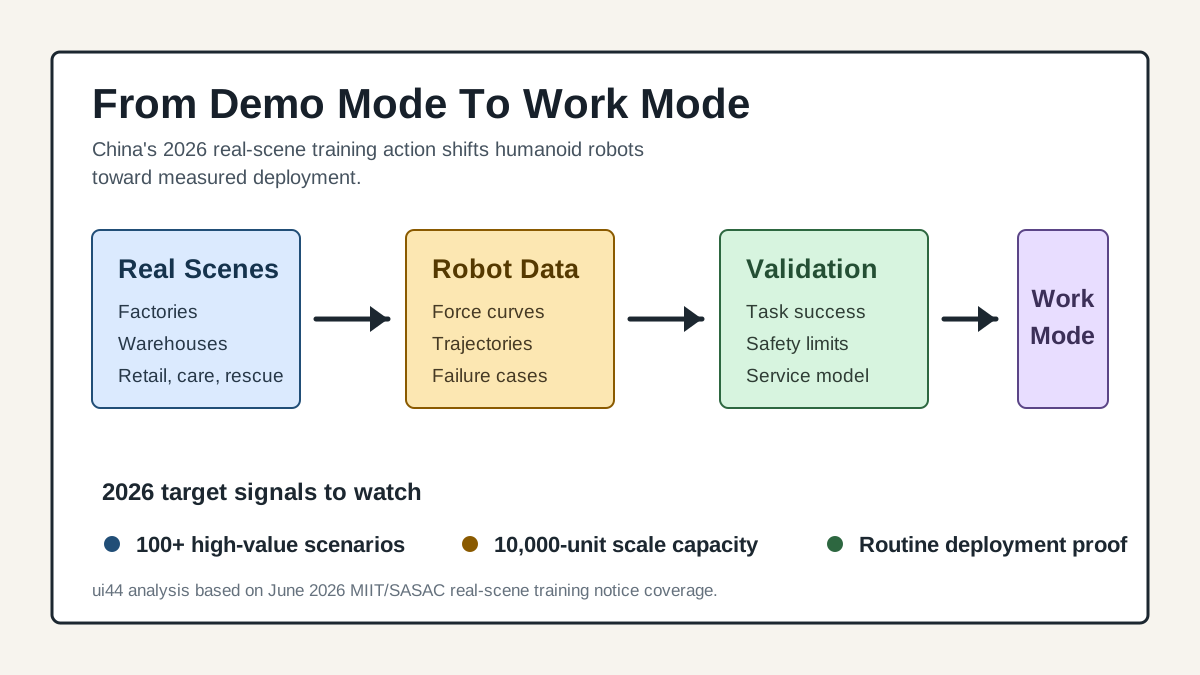
For home robot buyers, that does not mean a capable housekeeper is suddenly ready. It means the next serious humanoid wave may be trained first in factories, warehouses, clinics, retail counters, and emergency-response sites, where tasks can be measured and repeated. If that work produces real robot data, safety rules, and validated skill packages, homes benefit later.
The short version: China's "work mode" is a reminder that useful humanoids are likely to arrive through boring deployment proof, not viral kung-fu clips.
What China Actually Announced
The notice sets a concrete 2026 target: humanoid robots and embodied AI products should complete application verification and routine deployment in representative scenarios, form more than 100 high-value application scenarios, and build the ability to land at a ten-thousand-unit scale.
That wording matters. It is not a claim that 10,000 home humanoids will enter apartments this year. It is a policy goal for deployment capacity across chosen real-world scenarios. The target areas are practical: manufacturing, inspection, maintenance, warehousing, food service, retail, medical care, workplace safety, emergency rescue, and disaster prevention.
The plan also asks provincial regions to select at least 20 key scene units and central enterprises to select at least 10. Each scene is supposed to become a training, testing, and verification site. Instead of asking a robot company to produce a generic demo, the user organization opens a real work environment, defines the task, contributes process data, and measures whether the robot solution is safe, reliable, and economically useful.
That is a different kind of robotics progress. It is less theatrical, but much more relevant to anyone waiting for a robot that can do repeatable work.
Why Does "Work Mode" Beat Demo Mode?
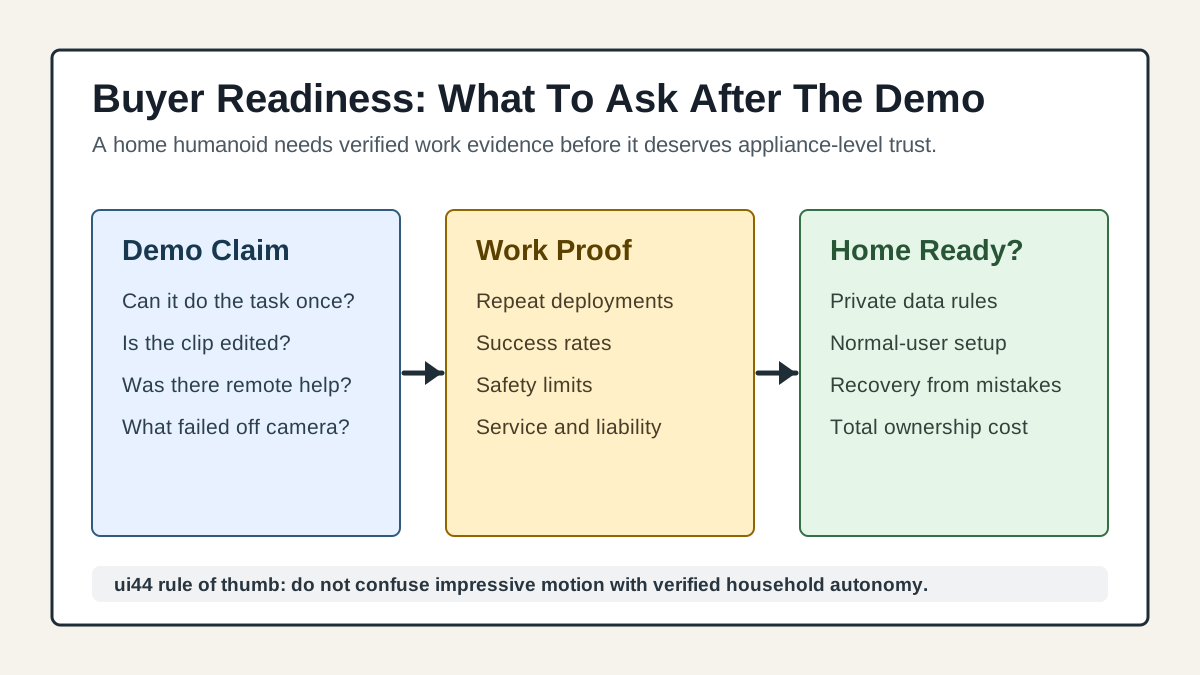
Humanoid robot demos are useful for showing hardware range: walking, balancing, manipulating objects, recovering from pushes, or following voice commands. But demos do not answer buyer questions.
Can the robot repeat the task for four hours? What happens when the object is slightly different? Does it know when to stop? Can a non-engineer supervise it? Who is liable if it breaks something? Is there a service plan when joints, hands, or batteries wear out?
China's real-scene training framework points at those missing answers. The notice calls for skill packages, validation reports, lifecycle governance, robot identity management, insurance exploration, and robot-as-a-service business models. It also calls out high-quality real-robot data: full-body motion trajectories, force-position control curves, operation sequences, timing logic, spatial semantics, object attributes, exception handling, disruptions, and edge cases.
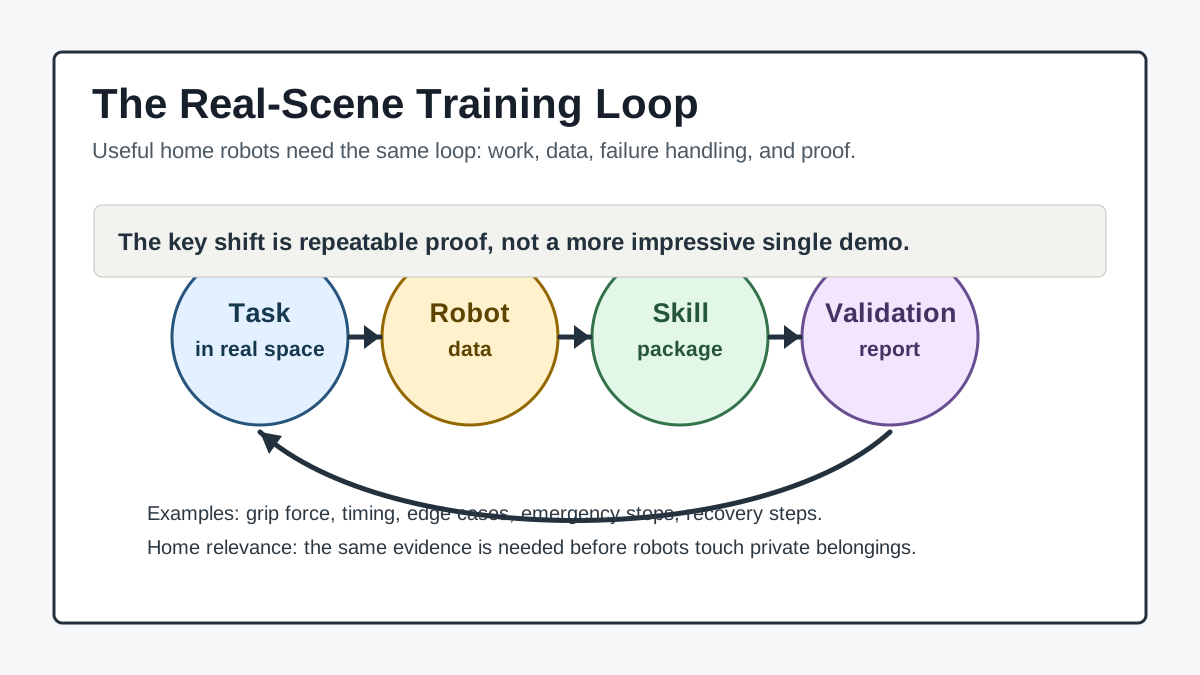
That is the gap between a robot that can perform and a robot that can work. A backflip tells you something about motors and balance. A verified maintenance task tells you something about reliability, sensing, error recovery, safety, and cost.
TrendForce's June 2026 humanoid bulletin frames the market shift in similar terms: competition is moving from innovation speed toward verification capability, with China, Europe, and the United States shaping different standards and testing paths. That is exactly the shift home robot buyers should want. The home market does not need more impressive clips. It needs evidence.
The Home Robot Connection
Homes are harder than many commercial sites. A warehouse may be large, but it is designed for repeatable workflows. A kitchen drawer is small, messy, personal, and constantly changing. A hospital hallway has policies and staff; a living room has toys, pets, laundry, cables, privacy expectations, and no robot technician standing nearby.
That is why real-scene work deployments are still important for home robots. They can train the pieces that homes will eventually need:
Work-mode requirement
Real objects, not simulator props
- Why it matters at home
- Homes contain flexible, reflective, fragile, and odd-shaped objects
Work-mode requirement
Force and collision limits
- Why it matters at home
- A home robot works near people, furniture, pets, doors, and cabinets
Work-mode requirement
Exception handling
- Why it matters at home
- Chores fail in small ways: stuck cloth, dropped item, blocked path
Work-mode requirement
Validation reports
- Why it matters at home
- Buyers need task success rates, not "AI-powered" language
Work-mode requirement
Lifecycle governance
- Why it matters at home
- A household robot needs maintenance, software support, and liability rules
Work-mode requirement
Robot-as-a-service
- Why it matters at home
- Leasing or service subscriptions may arrive before outright ownership
| Work-mode requirement | Why it matters at home |
|---|---|
| Real objects, not simulator props | Homes contain flexible, reflective, fragile, and odd-shaped objects |
| Force and collision limits | A home robot works near people, furniture, pets, doors, and cabinets |
| Exception handling | Chores fail in small ways: stuck cloth, dropped item, blocked path |
| Validation reports | Buyers need task success rates, not "AI-powered" language |
| Lifecycle governance | A household robot needs maintenance, software support, and liability rules |
| Robot-as-a-service | Leasing or service subscriptions may arrive before outright ownership |
The lesson is not that a factory robot becomes a housekeeper by changing the software. The lesson is that real deployment creates the datasets, failure logs, and operating rules that consumer products eventually need.
What ui44's Robot Database Shows Today
The current home-adjacent humanoid market is still a split between research platforms, pre-order promises, and expensive manipulation systems. ui44's database makes that clear.
Robot
- ui44 status
- Available
- Listed price
- $13,500
- What it proves
- Affordable biped research hardware with optional dexterous hands
- What it does not prove
- Mainstream home chore readiness
Robot
- ui44 status
- Pre-order
- Listed price
- $4,900
- What it proves
- Lower-cost humanoid hardware, mobility, voice/image interaction, OTA updates
- What it does not prove
- Reliable household manipulation
Robot
- ui44 status
- Pre-order
- Listed price
- $20,000
- What it proves
- A home-facing humanoid concept with chores, tidying, safe interaction, and adaptive learning in its positioning
- What it does not prove
- Broad verified in-home task autonomy
Robot
- ui44 status
- Available
- Listed price
- $69,999
- What it proves
- Dual-arm wheeled manipulation, force-controlled grippers, VR teleoperation support
- What it does not prove
- Consumer pricing or simple household ownership
Robot
- ui44 status
- Active
- Listed price
- Price not listed
- What it proves
- Large humanoid platform with bipedal locomotion, payload carrying, stairs, perception, and language-model integration
- What it does not prove
- A finished home appliance
Robot
- ui44 status
- Discontinued
- Listed price
- Price not listed
- What it proves
- How fast public humanoid generations can change
- What it does not prove
- Long-term consumer availability
| Robot | ui44 status | Listed price | What it proves | What it does not prove |
|---|---|---|---|---|
| Unitree G1 | Available | $13,500 | Affordable biped research hardware with optional dexterous hands | Mainstream home chore readiness |
| Unitree R1 | Pre-order | $4,900 | Lower-cost humanoid hardware, mobility, voice/image interaction, OTA updates | Reliable household manipulation |
| 1X NEO | Pre-order | $20,000 | A home-facing humanoid concept with chores, tidying, safe interaction, and adaptive learning in its positioning | Broad verified in-home task autonomy |
| Galaxea R1 Pro | Available | $69,999 | Dual-arm wheeled manipulation, force-controlled grippers, VR teleoperation support | Consumer pricing or simple household ownership |
| Fourier GR-1 | Active | Price not listed | Large humanoid platform with bipedal locomotion, payload carrying, stairs, perception, and language-model integration | A finished home appliance |
| Figure 02 | Discontinued | Price not listed | How fast public humanoid generations can change | Long-term consumer availability |
This is why the China announcement is interesting. The market already has capable-looking humanoid bodies. What it lacks is enough verified task performance across messy real environments. A $13,500 research humanoid and a $20,000 home pre-order are both meaningful signals, but neither automatically answers whether a buyer can trust the robot with daily chores.
The Smart Angle: Data From Real Work
The most important word in the policy is not humanoid. It is data.
Embodied AI systems need examples of bodies interacting with the world. Video is useful, but video alone does not capture force, slip, timing, failed grasps, recovery decisions, or the small physical details that separate a clean demo from a robust product. The Chinese notice explicitly mentions trajectories, force-control curves, operation sequences, temporal logic, spatial semantics, object attributes, abnormal situations, sudden disturbances, and boundary conditions.
Those are home robot problems too.
A laundry task is not just "pick up shirt." It involves cloth state, drawer position, occlusion, grip force, fabric deformation, and recovery when the shirt folds around the gripper. A kitchen task is not just "move cup." It involves liquid risk, object identity, surface friction, human interruption, and cleanup if something goes wrong.
Real-scene training in industrial and service environments is not a substitute for home data. But it can teach robot companies how to collect and govern the right kind of physical data before asking families to trust the result.
Where Buyers Should Stay Skeptical
There is a risk that "work mode" becomes another marketing phrase. A company can say it is collecting real-world data without proving that the robot is useful, safe, or autonomous. Buyers should separate four claims:
- The robot can perform a task once.
- The robot can repeat the task under supervision.
- The robot can work routinely with a defined success rate and failure procedure.
- The robot can do the task safely in a private home without expert setup.
Most humanoids today are somewhere between one and two for consumer-relevant chores. Some commercial systems may reach three in constrained environments sooner. Four is the hard one.
The policy also emphasizes industrial, service, and special-operation scenes rather than consumer apartments. That is realistic. It means the first useful proof may come from a robot loading parts, inspecting equipment, carrying supplies, handling a retail counter task, or assisting in a care facility. A home buyer should treat those deployments as upstream evidence, not as a purchase recommendation.
The Checklist for Home Robot Buyers
What This Means for the Next 12 Months
Through late 2026, watch for three kinds of evidence from China and from other humanoid markets.
First, look for named scenarios. "Industrial service" is vague. "Routine shelf replenishment in a defined retail aisle" is testable. "Maintenance inspection at a specific type of equipment station" is testable. The more specific the deployment, the more useful the result.
Second, look for validation reports and repeat deployments. One pilot is a story. A verified solution deployed across similar sites is a signal that the robot, workflow, and support model are starting to mature.
Third, look for safety and data governance. The notice mentions collision detection, force-control limits, emergency braking, black-box records, privacy, trade secrets, and controlled data sharing. Those topics are not exciting, but they are exactly what separates a robot demo from something that can share human spaces.
For ui44 readers, the practical takeaway is simple: a home humanoid will not become trustworthy because a company says its AI model got smarter. It becomes trustworthy when the whole system is measured: body, hand, sensors, software, human fallback, data policy, maintenance, insurance, and cost.
Bottom Line
China's humanoid "work mode" push is not a consumer launch. It is a deployment discipline.
That makes it more important, not less. The home robot market needs fewer vague promises and more verified physical work. If real-scene training produces repeatable tasks, better failure data, safer hardware rules, and clearer service models, then future home robots can inherit more than flashy motion.
Until then, a buyer should treat every home humanoid as early. Unitree G1, Unitree R1, 1X NEO, Galaxea R1 Pro, and Fourier GR-1 all show different pieces of the market. The missing piece is not ambition. It is validated work in the real world.
Related in the database
Use this article as a privacy verification workflow
Turn the article into a privacy verification pass grounded in the robots, manufacturers, and components it actually references.
China's Humanoid Work Mode: What It Means for Home Robots already points you toward 6 linked robots, 6 manufacturers, and 3 countries inside the ui44 database. That matters because strong buyer guidance is easier to apply when you can move immediately from a claim or warning into concrete product pages, manufacturer directories, component explainers, and country-level context instead of treating the article as an isolated opinion piece. The fastest next step is to turn the article into a shortlist workflow: open the linked robot pages, verify which specs are actually published for those models, then compare the surrounding manufacturer and component context before you decide whether the underlying claim changes your buying plan.
For this topic, the useful discipline is to separate the editorial lesson from the catalog evidence. The article gives you the framing, but the robot pages tell you what each product actually ships with today: sensor stack, connectivity methods, listed price, release timing, category, and support-relevant compatibility notes. The manufacturer pages then show whether you are looking at a one-off launch, a broader lineup pattern, or a company that spans multiple categories. That layered workflow reduces the risk of buying on a single marketing phrase or a single support FAQ.
Use the robot pages to confirm which products actually expose cameras, microphones, Wi-Fi, or voice systems, then use the manufacturer pages to decide how much of the privacy question seems product-specific versus brand-wide. On this route cluster, G1, R1, and NEO form the fastest reality check. If you want a quick working shortlist, open Compare G1, R1, and NEO next, then keep this article open as the reasoning layer while you compare structured data side by side.
Practical Takeaway
Every robot, manufacturer, category, component, and country reference below resolves to a real ui44 page, keeping the follow-up path grounded in database records rather than generic advice.
Suggested next steps in ui44
- Open G1 and note the listed sensors, connectivity methods, and voice stack before you interpret any policy claim.
- Cross-check the wider brand context on Unitree so you can see whether the privacy question touches one model or a broader lineup.
- Use the linked component pages to confirm how common the relevant sensors and connectivity layers are across the database.
- Keep a short note of which policy layers you checked, which device features are actually present on the robot page, and which items still depend on region- or app-level confirmation.
- Finish with Compare G1, R1, and NEO so the policy reading sits next to structured product data.
Robot profiles worth opening next
Use the linked product pages as the evidence layer
The linked robot pages are where this article becomes operational. Instead of asking whether the headline is interesting, use the robot entries to inspect the actual mix of sensors, connectivity options, batteries, pricing, release timing, and stated capabilities attached to the products mentioned in the article. That is the easiest way to see whether the warning or opportunity described here affects one product family, a specific design pattern, or an entire buying lane.
G1 is tracked on ui44 as a available humanoid robot from Unitree. The database currently records a listed price of $13,500, a release date of 2024-05-13, ~2 hours battery life, Not disclosed charging time, and a published stack that includes Depth Camera, 3D LiDAR, and 4 Microphone Array plus Wi-Fi 6 and Bluetooth 5.2.
For privacy-focused reading, this page matters because it shows the concrete device surface behind the policy discussion. Use it to verify whether G1 combines sensors and connectivity in a way that could change the in-home data footprint, and compare the listed capabilities such as Bipedal Walking, Object Manipulation, and Dexterous Hands (optional Dex3-1) with any cloud, app, or voice layers.
R1
Unitree Robotics · Humanoid · Pre-order
R1 is tracked on ui44 as a pre-order humanoid robot from Unitree Robotics. The database currently records a listed price of $4,900, a release date of 2025, ~1 hour (mixed activity) battery life, Not officially disclosed charging time, and a published stack that includes Monocular camera (R1 Air); binocular camera (R1/R1 EDU), 4-Mic Array, and Dual 6-Axis IMU plus Wi-Fi 6 and Bluetooth 5.2.
For privacy-focused reading, this page matters because it shows the concrete device surface behind the policy discussion. Use it to verify whether R1 combines sensors and connectivity in a way that could change the in-home data footprint, and compare the listed capabilities such as Bipedal Walking & Running, Cartwheels & Handstands, and Push Recovery with any cloud, app, or voice layers, including UnifoLM (voice + image commands).
NEO
1X Technologies · Humanoid · Pre-order
NEO is tracked on ui44 as a pre-order humanoid robot from 1X Technologies. The database currently records a listed price of $20,000, a release date of 2025-10-28, ~4 hours battery life, Not disclosed charging time, and a published stack that includes RGB Cameras, Depth Sensors, and Tactile Skin plus Wi-Fi and Bluetooth.
For privacy-focused reading, this page matters because it shows the concrete device surface behind the policy discussion. Use it to verify whether NEO combines sensors and connectivity in a way that could change the in-home data footprint, and compare the listed capabilities such as Household Chores, Tidying Up, and Safe Human Interaction with any cloud, app, or voice layers.
R1 Pro
Galaxea Dynamics · Humanoid · Available
R1 Pro is tracked on ui44 as a available humanoid robot from Galaxea Dynamics. The database currently records a listed price of $69,999, a release date of 2026, Not officially disclosed; official docs list a 35Ah / 1680Wh lithium-ion battery battery life, Not officially disclosed charging time, and a published stack that includes Head binocular / stereo-ready camera system, 5 chassis monocular cameras, and Optional wrist depth cameras plus Ethernet and USB 3.0.
For privacy-focused reading, this page matters because it shows the concrete device surface behind the policy discussion. Use it to verify whether R1 Pro combines sensors and connectivity in a way that could change the in-home data footprint, and compare the listed capabilities such as Wheeled Dual-Arm Humanoid Manipulation, 26 Total Degrees of Freedom, and Dual 7-DOF A2 Robotic Arms with any cloud, app, or voice layers.
GR-1 is tracked on ui44 as a active humanoid robot from Fourier. The database currently records a listed price of Price TBA, a release date of 2023, 2 hours (Humanoid.Guide; not manufacturer-published) battery life, Not disclosed charging time, and a published stack that includes 1 RealSense Camera, 1 ring-shaped microphone sensor, and 6 RGB cameras (pure vision perception solution) plus Wi-Fi and Ethernet.
For privacy-focused reading, this page matters because it shows the concrete device surface behind the policy discussion. Use it to verify whether GR-1 combines sensors and connectivity in a way that could change the in-home data footprint, and compare the listed capabilities such as Bipedal Walking, Object Manipulation, and Uneven Terrain Navigation with any cloud, app, or voice layers.
Manufacturer context behind the article
Check whether this is one product story or a broader company pattern
Manufacturer pages add the privacy context that individual product pages cannot show on their own. They help you check whether cameras, microphones, cloud accounts, app controls, and policy assumptions appear across a broader lineup or stay tied to one specific product story.
Unitree
ui44 currently tracks 2 robots from Unitree across 1 category. The company is grouped under China, and the current catalog footprint on ui44 includes H1, G1.
That wider brand context matters because privacy questions rarely stop at one FAQ page. A manufacturer route helps you see whether the article is centered on one premium model or on a company that has several relevant products and therefore more than one place where the same policy or app assumptions might matter. The category mix here currently points toward Humanoid as the most useful next route if you want to see whether this article reflects a wider pattern inside the brand.
Unitree Robotics
ui44 currently tracks 9 robots from Unitree Robotics across 3 categorys. The company is grouped under China, and the current catalog footprint on ui44 includes B2, B1, Go2.
That wider brand context matters because privacy questions rarely stop at one FAQ page. A manufacturer route helps you see whether the article is centered on one premium model or on a company that has several relevant products and therefore more than one place where the same policy or app assumptions might matter. The category mix here currently points toward Quadruped, Humanoid, Research as the most useful next route if you want to see whether this article reflects a wider pattern inside the brand.
1X Technologies
ui44 currently tracks 2 robots from 1X Technologies across 1 category. The company is grouped under Norway, and the current catalog footprint on ui44 includes NEO, EVE.
That wider brand context matters because privacy questions rarely stop at one FAQ page. A manufacturer route helps you see whether the article is centered on one premium model or on a company that has several relevant products and therefore more than one place where the same policy or app assumptions might matter. The category mix here currently points toward Humanoid as the most useful next route if you want to see whether this article reflects a wider pattern inside the brand.
Galaxea Dynamics
ui44 currently tracks 2 robots from Galaxea Dynamics across 1 category. The company is grouped under China, and the current catalog footprint on ui44 includes R1 Pro, Kengo.
That wider brand context matters because privacy questions rarely stop at one FAQ page. A manufacturer route helps you see whether the article is centered on one premium model or on a company that has several relevant products and therefore more than one place where the same policy or app assumptions might matter. The category mix here currently points toward Humanoid as the most useful next route if you want to see whether this article reflects a wider pattern inside the brand.
Broaden the scan without leaving the database
Categories, components, and countries add the wider context
Category framing
Category pages are useful when the article touches a buying pattern that shows up across brands. A category route helps you confirm whether the linked products sit in a narrow niche or whether the same question should be tested across a larger field of alternatives.
Humanoid
The Humanoid category page currently groups 129 tracked robots from 92 manufacturers. ui44 describes this lane as: Full-size bipedal humanoid robots built to work alongside people — from factory floors to household tasks. Compare the cutting edge of humanoid robotics.
That makes the category route a practical follow-up when you want to check whether the products linked in this article are typical for the lane or whether they sit at one edge of the market. Useful starting examples currently include NEO, EVE, Mornine M1.
Country and ecosystem context
Country pages give extra context when support practices, launch sequencing, regulatory posture, or manufacturer mix matter. They are not a substitute for model-level verification, but they do help you see which ecosystems cluster together and which manufacturers sit in the same regional field when you broaden the search beyond the article headline.
China
The China route currently groups 189 tracked robots from 87 manufacturers in ui44. That gives you a useful regional lens when the article points toward support practices, launch sequencing, or brand clusters that may share similar ecosystem assumptions.
On the current route, manufacturers like AGIBOT, Dreame, Unitree Robotics make the page a good way to broaden the scan without losing the regional context that often shapes availability, documentation style, and adjacent alternatives.
Norway
The Norway route currently groups 2 tracked robots from 1 manufacturers in ui44. That gives you a useful regional lens when the article points toward support practices, launch sequencing, or brand clusters that may share similar ecosystem assumptions.
On the current route, manufacturers like 1X Technologies make the page a good way to broaden the scan without losing the regional context that often shapes availability, documentation style, and adjacent alternatives.
USA
The USA route currently groups 89 tracked robots from 69 manufacturers in ui44. That gives you a useful regional lens when the article points toward support practices, launch sequencing, or brand clusters that may share similar ecosystem assumptions.
On the current route, manufacturers like Faraday Future, iRobot, Boston Dynamics make the page a good way to broaden the scan without losing the regional context that often shapes availability, documentation style, and adjacent alternatives.
Questions to answer before you move from reading to buying
A follow-up FAQ built from the entities already linked in this article
Frequently Asked Questions
Which page should I open first after reading “China's Humanoid Work Mode: What It Means for Home Robots”?
Start with G1. That gives you a concrete product anchor for the article’s main claim. From there, branch into the manufacturer and component pages so you can tell whether the article is describing one specific model, a repeated brand pattern, or a wider technology issue that affects multiple shortlist options.
How do the manufacturer pages change the buying decision?
Unitree help you zoom out from one article and one product. On ui44 they show lineup breadth, category spread, and the neighboring robots tied to the same company. That context is useful when you are deciding whether a risk belongs to a single model, whether it shows up across a brand’s portfolio, and whether you should keep looking at alternatives before committing.
When should I switch from reading to side-by-side comparison?
Move into Compare G1, R1, and NEO as soon as you understand the article’s main warning or promise. The article explains what to watch for, but the compare view is where you can check whether price, status, battery life, connectivity, sensors, and category fit still make the robot a good match for your own home and budget.
Where to go next in ui44
Keep the research chain inside the database
If you want to keep going, these follow-on pages give you the cleanest expansion path from article to research session. Open the comparison route first if you are deciding between products today. Open the manufacturer, category, and component routes if you still need to understand the broader pattern behind the claim.
Written by
ui44 Team
Published July 6, 2026
Share this article
Open a plain share link on X or Bluesky. No embeds, no widgets, no cookie baggage.