That is a different route from the standard "watch a demo video and wait for a home robot" cycle. If it works, wearable robots could become one of the quiet training grounds for future home humanoids. If it does not, ALLEX may remain a promising research platform with no direct buyer relevance.
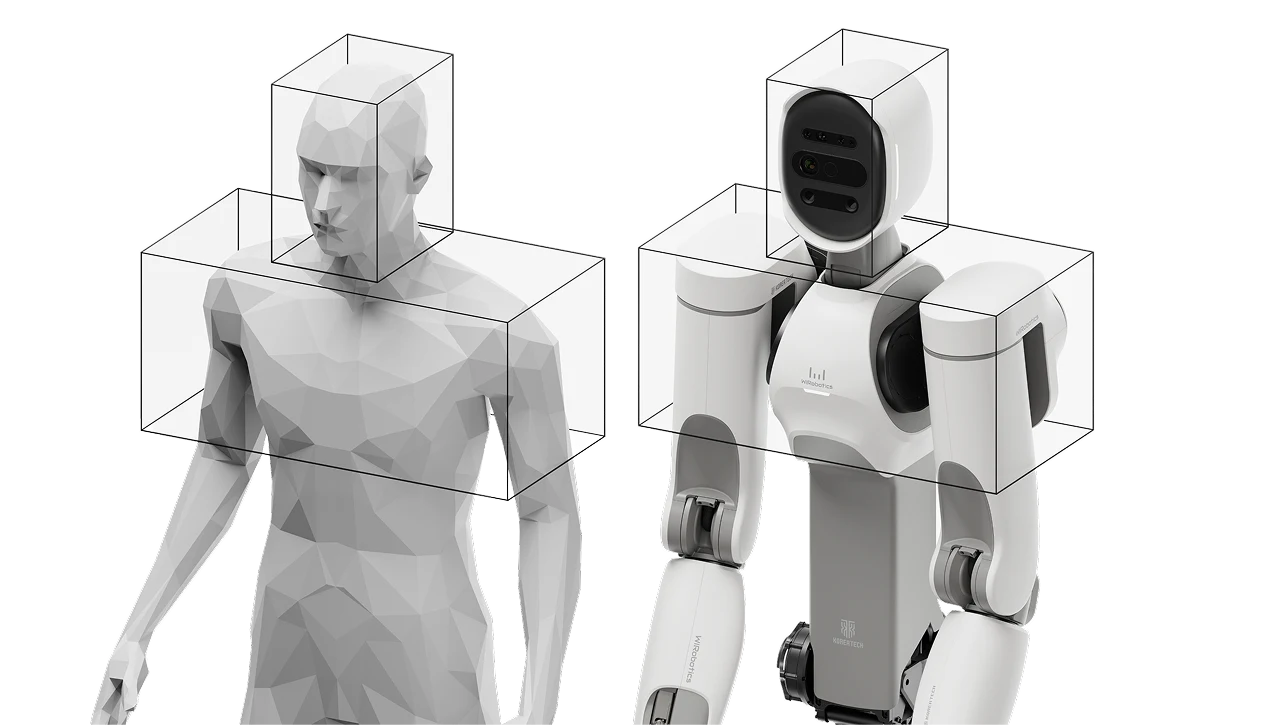
For ui44 readers, the right question is not "Is ALLEX a home robot yet?" It is what the WIM-to-ALLEX strategy teaches us about how home humanoids might become safe, useful, and commercially realistic.
What is WIRobotics ALLEX?
ALLEX is WIRobotics' upper-body general-purpose humanoid platform. In the ui44 database it is listed as a Development robot, with no public price and no published consumer purchase path. WIRobotics frames it as a research and commercialization platform rather than a finished household product.
The specs that matter are unusually contact-focused:
ALLEX fact
Upper-body humanoid, currently without a lower body
- Why it matters for home robots
- It can test arms, hands, waist motion, and manipulation before becoming a full mobile home robot
ALLEX fact
15 degrees of freedom in the compliant hand, including fingers and wrist
- Why it matters for home robots
- More finger motion can help with irregular household objects, not just factory parts
ALLEX fact
Detects and reacts to forces around the 100 gf level without force sensors
- Why it matters for home robots
- WIRobotics is emphasizing inherent compliance, not only camera-based AI
ALLEX fact
40 N fingertip force and over 30 kg hook grip
- Why it matters for home robots
- Strong enough to be useful, but force limits must be controlled around people
ALLEX fact
More than 3 kg one-handed handling across the workspace
- Why it matters for home robots
- Relevant for groceries, bottles, small appliances, and assistive handoffs
ALLEX fact
Hand around 700 g; shoulder-down arm assembly around 5 kg
- Why it matters for home robots
- Lightweight arms reduce collision energy compared with heavy industrial arms
ALLEX fact
Runtime, charging, full-body weight, mobility, and consumer price are not disclosed
- Why it matters for home robots
- The missing buyer facts are still large
| ALLEX fact | Why it matters for home robots |
|---|---|
| Upper-body humanoid, currently without a lower body | It can test arms, hands, waist motion, and manipulation before becoming a full mobile home robot |
| 15 degrees of freedom in the compliant hand, including fingers and wrist | More finger motion can help with irregular household objects, not just factory parts |
| Detects and reacts to forces around the 100 gf level without force sensors | WIRobotics is emphasizing inherent compliance, not only camera-based AI |
| 40 N fingertip force and over 30 kg hook grip | Strong enough to be useful, but force limits must be controlled around people |
| More than 3 kg one-handed handling across the workspace | Relevant for groceries, bottles, small appliances, and assistive handoffs |
| Hand around 700 g; shoulder-down arm assembly around 5 kg | Lightweight arms reduce collision energy compared with heavy industrial arms |
| Runtime, charging, full-body weight, mobility, and consumer price are not disclosed | The missing buyer facts are still large |
WIRobotics says ALLEX stands for "ALL-EXperience." The name fits the company's pitch: the robot is meant to interact with the physical world through force, contact, and impact, not only through vision recognition and pre-planned position control.
That distinction matters in a home. A robot that can see a mug is not the same as a robot that can safely feel the difference between a mug, a hand, a sleeve, a pet, and a cabinet door that is stuck.
Why does the WIM wearable robot matter?
The unusual part of the ALLEX story is WIM, WIRobotics' wearable walking-assist robot. WIM is a commercial product line, not just a humanoid lab demo. The official WIRobotics product page describes WIM as a 1.6 kg wearable that analyzes walking, supports gait, uses back-drivable actuation, and includes an IP54-rated design with a detachable battery. WIM S keeps the 1.6 kg weight class and moves to an IP65-rated integrated-battery design.
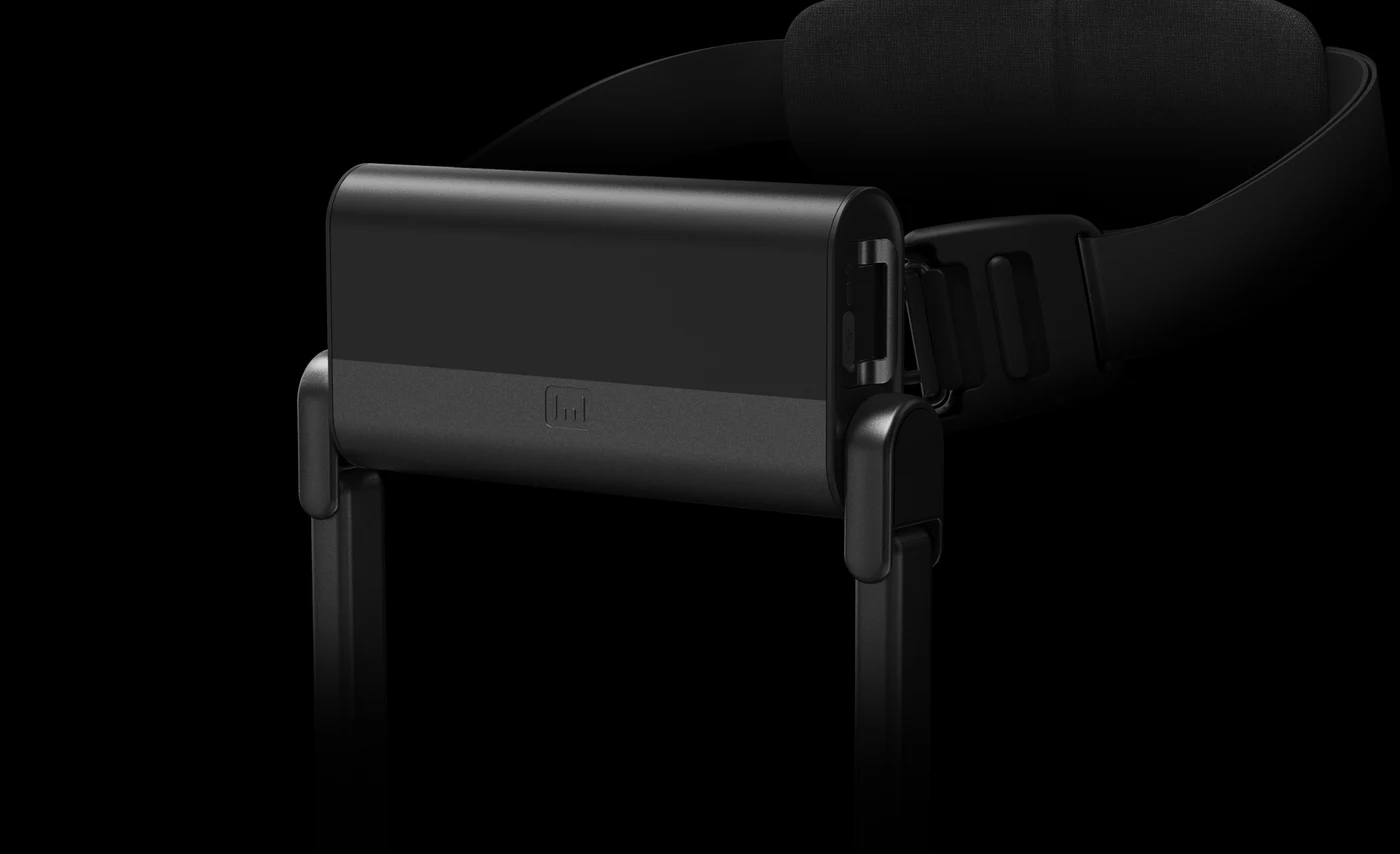
In its May 2026 Series B announcement, WIRobotics said WIM has passed 3,000 cumulative units sold and expanded into Europe, China, Türkiye, and Japan. It also reported revenue growth from KRW 560 million in 2023 to KRW 1.3 billion in 2024 and KRW 2.79 billion in 2025, with Q1 2026 already above full-year 2024 revenue.
Those are not home humanoid sales. They are wearable robot sales. But they give WIRobotics something many humanoid companies still lack: repeated contact with real users, real bodies, real gait differences, real service expectations, and real hardware support problems.
That could feed a humanoid program in three practical ways:
- Movement data: wearable robots see how people actually walk, slow down, compensate, fatigue, recover, and change pace across daily environments.
- Control lessons: back-drivable actuators and assistive force control have to cooperate with the body instead of fighting it.
- Commercial discipline: a shipped wearable product forces the company to care about fit, durability, retail channels, support, and user trust.
None of that automatically solves home manipulation. A kitchen countertop is not a hip joint. But it is a stronger foundation than a humanoid team that has only lab videos and simulation clips.
Can wearable robot data really teach a home humanoid?
Some of it can. Some of it cannot.
Wearable robot data is most relevant to human motion, force assistance, comfort, recovery behavior, and safety margins. A walking-assist system must understand when to help, when to yield, and when not to apply force. That maps well to ALLEX's emphasis on compliance: force response, backdrivability, and human-like interaction.
It is less directly useful for tasks like loading a dishwasher, folding a towel, opening a childproof cap, or picking a tomato without bruising it. Those chores require vision, grasp planning, tactile judgment, object memory, and long-horizon task recovery. WIRobotics still has to prove those pieces.
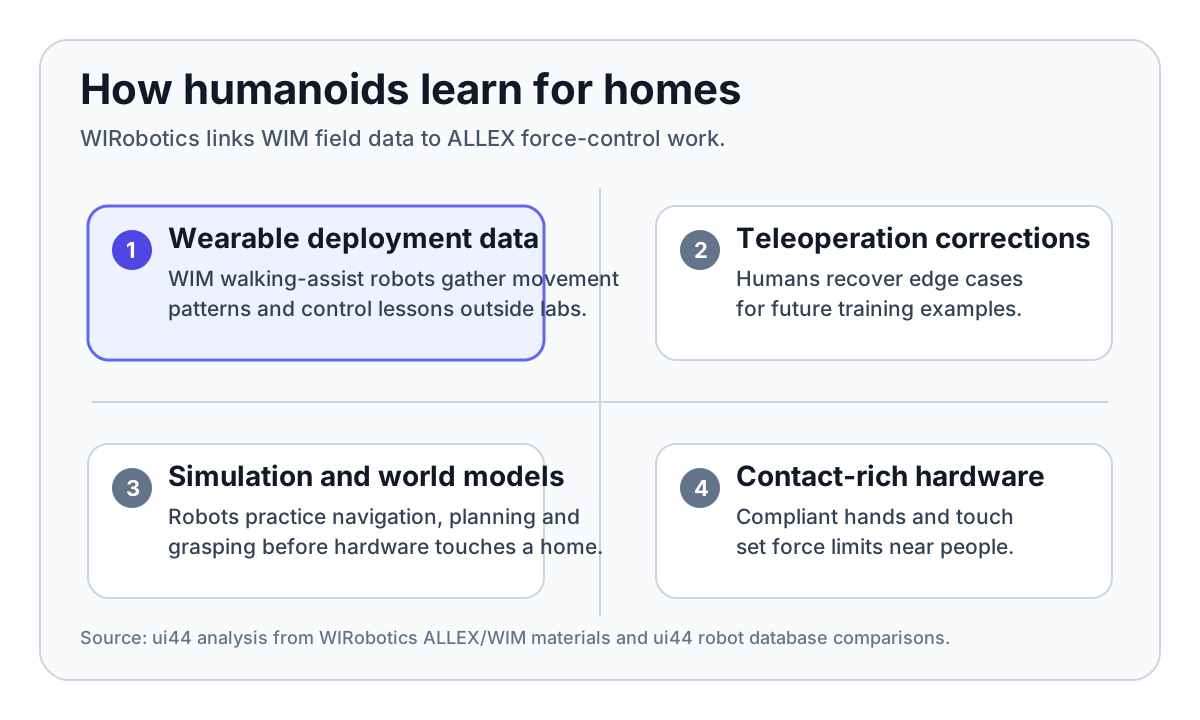
A useful way to think about ALLEX is as one learning path among several:
Learning path
Wearable deployment data
- Example robots in ui44
- WIRobotics WIM feeding ALLEX
- What it teaches well
- Human motion, force assistance, compliance, user comfort
- What it may miss
- Object manipulation, room-scale autonomy, home privacy
Learning path
Teleoperation and correction
- Example robots in ui44
- 1X NEO, Weave Isaac 0
- What it teaches well
- Recovery behavior, human demonstrations, messy edge cases
- What it may miss
- Expensive human labor and privacy concerns
Learning path
Simulation and world models
- Example robots in ui44
- MenteeBot, Hello Robot Stretch 4
- What it teaches well
- Safer testing, navigation, task planning, repeatable benchmarks
- What it may miss
- Sim-to-real gaps around contact and clutter
Learning path
Contact-rich hardware
- Example robots in ui44
- Figure 03, Kinetix AI KAI, ALLEX
- What it teaches well
- Force, touch, grasping, collision response
- What it may miss
- Still needs productization, certification, and cost control
| Learning path | Example robots in ui44 | What it teaches well | What it may miss |
|---|---|---|---|
| Wearable deployment data | WIRobotics WIM feeding ALLEX | Human motion, force assistance, compliance, user comfort | Object manipulation, room-scale autonomy, home privacy |
| Teleoperation and correction | 1X NEO, Weave Isaac 0 | Recovery behavior, human demonstrations, messy edge cases | Expensive human labor and privacy concerns |
| Simulation and world models | MenteeBot, Hello Robot Stretch 4 | Safer testing, navigation, task planning, repeatable benchmarks | Sim-to-real gaps around contact and clutter |
| Contact-rich hardware | Figure 03, Kinetix AI KAI, ALLEX | Force, touch, grasping, collision response | Still needs productization, certification, and cost control |
The best home robot companies will probably use more than one path. Wearable data may help a robot understand people, but it will need contact-rich hands, training environments, teleoperation fallbacks, and explicit safety limits before it should work near families.
How does ALLEX compare with other home-relevant robots?
ALLEX is not competing directly with consumer robots yet. It sits between a research humanoid and a future service platform. That makes comparison tricky, but ui44's database gives buyers a useful reference point.
Robot
- Status
- Development
- Public price
- Not announced
- Core buyer signal
- Force-responsive upper-body humanoid platform tied to wearable robot know-how
Robot
- Status
- Pre-order
- Public price
- $20,000
- Core buyer signal
- Home-focused soft humanoid with roughly 4-hour runtime and tactile skin
Robot
- Status
- Available
- Public price
- From $13,500
- Core buyer signal
- Compact research humanoid with optional dexterous hands, but not a finished home helper
Robot
- Status
- Available
- Public price
- $29,950
- Core buyer signal
- Wheeled mobile manipulator for research, assistive pilots, ROS 2, and self-charging
Robot
- Status
- Development
- Public price
- Not announced
- Core buyer signal
- Full-size humanoid with Mobileye backing, 40 DoF, and planned 2026 proof-of-concepts
Robot
- Status
- Available
- Public price
- $7,999 or $450/mo
- Core buyer signal
- Narrow home robot for laundry folding with remote-assist fallback
| Robot | Status | Public price | Core buyer signal |
|---|---|---|---|
| WIRobotics ALLEX | Development | Not announced | Force-responsive upper-body humanoid platform tied to wearable robot know-how |
| 1X NEO | Pre-order | $20,000 | Home-focused soft humanoid with roughly 4-hour runtime and tactile skin |
| Unitree G1 | Available | From $13,500 | Compact research humanoid with optional dexterous hands, but not a finished home helper |
| Hello Robot Stretch 4 | Available | $29,950 | Wheeled mobile manipulator for research, assistive pilots, ROS 2, and self-charging |
| MenteeBot | Development | Not announced | Full-size humanoid with Mobileye backing, 40 DoF, and planned 2026 proof-of-concepts |
| Weave Isaac 0 | Available | $7,999 or $450/mo | Narrow home robot for laundry folding with remote-assist fallback |
That table is the honest buyer takeaway: ALLEX has impressive manipulation hardware, but the robots closer to purchase either narrow the task sharply (Weave Isaac 0), stay in research/assistive channels (Stretch 4), or sell as a research humanoid rather than a dependable household worker (Unitree G1).
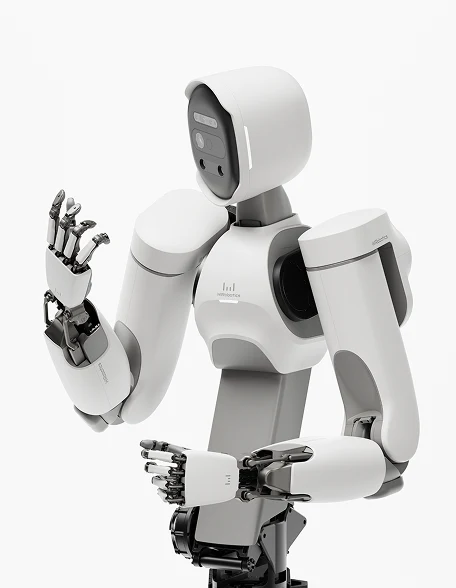
ALLEX's best claim is not "you can buy this for your apartment." It is "we are building the kind of force-responsive hand and arm system that a future apartment robot would need." Those are very different claims.
What would ALLEX need before it becomes a home robot?
WIRobotics' latest funding announcement says the company plans to supply a research-oriented Mobile ALLEX platform to global research institutions and overseas partners, while pursuing staged commercialization and mass-production readiness targeted for late next year. The company also says its longer-term goal is a general-purpose humanoid platform usable in everyday life by 2030.
That roadmap is ambitious. For buyers, the checklist is straightforward:
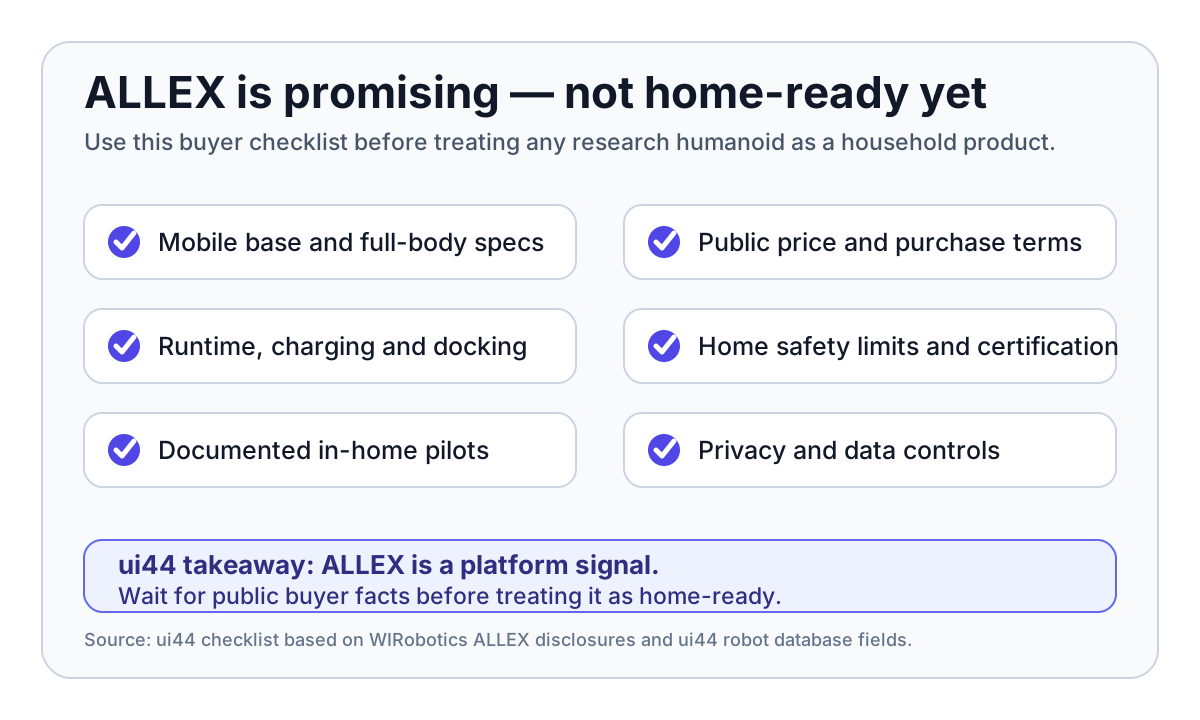
- Mobile body: the public ALLEX record is still an upper-body platform. Mobile ALLEX needs published details on locomotion, stability, fall behavior, speed, and safe stopping.
- Runtime and charging: a future home robot needs battery life, docking, recharge time, and power-draw numbers that can be compared with other robots.
- Price and support: no public ALLEX price exists. A home robot also needs warranty terms, service coverage, parts availability, and software update commitments.
- In-home pilots: household-task research is promising, but buyers should look for repeated trials in real homes, not only lab or trade-show tasks.
- Safety evidence: force control is a good start. It still needs clear limits for children, pets, stairs, glass, sharp objects, hot cookware, doors, and emergency stops.
- Privacy and data controls: if wearable movement data and humanoid training data are part of the strategy, buyers need to know what is collected, where it is processed, and whether a remote operator can see or hear the home.
Until those facts are public, ALLEX belongs in the "watch closely" bucket, not the "plan your purchase" bucket.
What should buyers learn from the WIRobotics strategy?
The WIRobotics story is useful because it shifts attention away from humanoid showmanship. A home robot is not valuable because it looks human. It is valuable if it can safely apply force, recover from mistakes, respect people, and keep working after the demo ends.
WIM gives WIRobotics a real-world commercial base. ALLEX gives the company a way to extend that base from wearable assistance into manipulation and physical AI. That combination is more credible than a standalone humanoid reveal, especially for buyers who care about daily use rather than spectacle.
But credibility is not the same as readiness. The current ALLEX record still has big blanks: no public price, no runtime, no charging time, no full-body consumer configuration, and no direct household availability. Its strongest facts are hardware and strategy facts, not purchase facts.
The practical advice is simple:
- If you are tracking Korean humanoid robots, ALLEX deserves attention.
- If you are comparing research platforms, ALLEX's compliant hands and force response are genuinely interesting.
- If you are shopping for a home robot now, compare available or pre-orderable options in the ui44 robot database, and treat ALLEX as a future platform signal.
- If a company says wearable data will make a humanoid safer, ask which tasks, which homes, which failure modes, and which privacy rules prove it.
Wearable robots may well teach home humanoids something important. They can teach robots how human bodies move, how assistance should feel, and why force control cannot be an afterthought. The hard part is turning those lessons into a robot that can move through a home, handle objects, protect people, and explain what it is doing.
That is the ALLEX promise. It is worth watching precisely because it is not ready to buy yet.
Related in the database
Use this article as a setup-friction workflow
Turn the article into a first-day setup pass grounded in the robots, manufacturers, and countries it actually references.
WIRobotics ALLEX: Wearable Data to Home Humanoids already points you toward 8 linked robots, 8 manufacturers, and 6 countries inside the ui44 database. Treat those links as a first-day setup trail: open the robot pages, check what is actually published about charging, battery life, control method, app or OTA support, and recovery, then use the surrounding manufacturer and country context to judge whether the article describes a low-friction product path or a still-specialist deployment.
For setup topics, the useful discipline is to separate a polished demo from the work required after the box arrives. The article gives you the narrative, but the robot pages show the operational clues: dimensions, weight, battery runtime, charging time, controller support, listed availability, and the capabilities that might need supervision. Manufacturer pages then reveal whether the same setup assumptions repeat across a wider lineup.
Use the robot pages to verify what happens between delivery and the first useful task: size, weight, battery, charger or dock path, controller, app, OTA support, and recovery cues. On this route cluster, ALLEX, NEO, and Isaac 0 form the fastest setup-friction reality check. If you want a quick working shortlist, open Compare ALLEX, NEO, and Isaac 0 next, then keep this article open while you compare first-day setup evidence side by side.
Practical Takeaway
The links below stay tied to the robots, manufacturers, and countries actually referenced by this setup article, so the checklist remains grounded in published ui44 records rather than generic humanoid advice.
Suggested next steps in ui44
- Open ALLEX and check the concrete first-day fields: box contents, charger or dock path, battery life, controller, app, OTA support, and recovery options.
- Use WIRobotics to see whether the company’s broader lineup looks appliance-like, developer-first, or still closer to a pilot deployment.
- Run Compare ALLEX, NEO, and Isaac 0 with the article open and compare battery, size, weight, price path, status, and support cues side by side.
- Write down the first realistic task each robot can plausibly attempt on day one, then separate low-friction setup signals from impressive but still lab-style demos.
Robot profiles worth opening next
Use the linked product pages as the evidence layer
The linked robot pages are where this setup article becomes operational. Use the robot entries to inspect the actual mix of size, weight, battery runtime, charging path, control method, pricing, availability, and stated capabilities attached to the products mentioned in the article. That is the easiest way to see whether the first useful task looks appliance-like, developer-led, or still dependent on supervised experimentation.
ALLEX
WIRobotics · Humanoid · Development
ALLEX is tracked on ui44 as a development humanoid robot from WIRobotics. The database currently records a listed price of Price TBA, a release date of 2025-08-18, Not officially disclosed battery life, Not officially disclosed charging time, and a published stack that includes Force, contact, and impact response via inherent compliance, Whole-body force response across arms, fingers, and waist without force sensors, and Official visual sensor suite not disclosed plus Not officially disclosed.
For setup-friction reading, this page matters because it shows the physical and support burden behind the demo. Use it to verify whether ALLEX has a credible day-one path across charging, control, recovery, battery limits, and listed capabilities such as Waist-up humanoid manipulation, 15-DOF compliant robotic hands, and Human-like force response without tactile sensors.
NEO
1X Technologies · Humanoid · Pre-order
NEO is tracked on ui44 as a pre-order humanoid robot from 1X Technologies. The database currently records a listed price of $20,000, a release date of 2025-10-28, ~4 hours battery life, Not disclosed charging time, and a published stack that includes RGB Cameras, Depth Sensors, and Tactile Skin plus Wi-Fi and Bluetooth.
For setup-friction reading, this page matters because it shows the physical and support burden behind the demo. Use it to verify whether NEO has a credible day-one path across charging, control, recovery, battery limits, and listed capabilities such as Household Chores, Tidying Up, and Safe Human Interaction.
Isaac 0
Weave Robotics · Home Assistants · Available
Isaac 0 is tracked on ui44 as a available home assistants robot from Weave Robotics. The database currently records a listed price of $3,999, a release date of 2026-02, Mains powered (600W, 120V) battery life, N/A (plugged in) charging time, and a published stack that includes Vision System and Proprioceptive Sensors plus Wi-Fi 2.4GHz/5GHz and Ethernet.
For setup-friction reading, this page matters because it shows the physical and support burden behind the demo. Use it to verify whether Isaac 0 has a credible day-one path across charging, control, recovery, battery limits, and listed capabilities such as Laundry Folding, T-shirts, Long Sleeves, Sweaters, and Pants and Towels.
MenteeBot
Mentee Robotics · Humanoid · Development
MenteeBot is tracked on ui44 as a development humanoid robot from Mentee Robotics. The database currently records a listed price of Price TBA, a release date of 2028 (target), Hot-swappable (continuous operation) battery life, Not disclosed charging time, and a published stack that includes Vision System, Depth Sensors, and Proprioceptive Sensors plus Wi-Fi.
For setup-friction reading, this page matters because it shows the physical and support burden behind the demo. Use it to verify whether MenteeBot has a credible day-one path across charging, control, recovery, battery limits, and listed capabilities such as Bipedal Walking, Dexterous Manipulation (40 DOF), and Autonomous Navigation, with voice support noted as Voice Interaction.
Stretch 4
Hello Robot · Home Assistants · Available
Stretch 4 is tracked on ui44 as a available home assistants robot from Hello Robot. The database currently records a listed price of $29,950, a release date of 2026-05-12, 8 hours (light CPU load) battery life, Not officially disclosed charging time, and a published stack that includes Wide-FOV depth sensing, High-resolution RGB cameras, and Calibrated RGB + depth perception plus its listed connectivity stack.
For setup-friction reading, this page matters because it shows the physical and support burden behind the demo. Use it to verify whether Stretch 4 has a credible day-one path across charging, control, recovery, battery limits, and listed capabilities such as Mobile Manipulation, Omnidirectional Indoor Mobility, and Autonomous Mapping and Navigation.
Manufacturer context behind the article
Check whether this is one product story or a broader company pattern
Manufacturer pages add the setup context that individual product pages cannot show on their own. They help you check whether a brand repeats the same controller, battery, update, support, and availability patterns across multiple robots, or whether the article is really describing one early product path. That matters for humanoids because first-day friction usually comes from the surrounding ecosystem as much as from the robot itself.
WIRobotics
ui44 currently tracks 1 robot from WIRobotics across 1 category. The company is grouped under South Korea, and the current catalog footprint on ui44 includes ALLEX.
That wider brand context matters because setup friction is rarely just a box problem. A manufacturer route helps you see whether the company has repeated controller, battery, support, and update patterns across its lineup, or whether the article is really about one early product story. The category mix here currently points toward Humanoid as the most useful next route if you want to see whether this article reflects a wider pattern inside the brand.
1X Technologies
ui44 currently tracks 2 robots from 1X Technologies across 1 category. The company is grouped under Norway, and the current catalog footprint on ui44 includes NEO, EVE.
That wider brand context matters because setup friction is rarely just a box problem. A manufacturer route helps you see whether the company has repeated controller, battery, support, and update patterns across its lineup, or whether the article is really about one early product story. The category mix here currently points toward Humanoid as the most useful next route if you want to see whether this article reflects a wider pattern inside the brand.
Weave Robotics
ui44 currently tracks 2 robots from Weave Robotics across 1 category. The company is grouped under Denmark, and the current catalog footprint on ui44 includes Isaac 0, Isaac 1.
That wider brand context matters because setup friction is rarely just a box problem. A manufacturer route helps you see whether the company has repeated controller, battery, support, and update patterns across its lineup, or whether the article is really about one early product story. The category mix here currently points toward Home Assistants as the most useful next route if you want to see whether this article reflects a wider pattern inside the brand.
Mentee Robotics
ui44 currently tracks 1 robot from Mentee Robotics across 1 category. The company is grouped under Israel, and the current catalog footprint on ui44 includes MenteeBot.
That wider brand context matters because setup friction is rarely just a box problem. A manufacturer route helps you see whether the company has repeated controller, battery, support, and update patterns across its lineup, or whether the article is really about one early product story. The category mix here currently points toward Humanoid as the most useful next route if you want to see whether this article reflects a wider pattern inside the brand.
Broaden the scan without leaving the database
Categories, components, and countries add the wider context
Category framing
Category pages are useful when the article touches a buying pattern that shows up across brands. A category route helps you confirm whether the linked products sit in a narrow niche or whether the same question should be tested across a larger field of alternatives.
Humanoid
The Humanoid category page currently groups 129 tracked robots from 92 manufacturers. ui44 describes this lane as: Full-size bipedal humanoid robots built to work alongside people — from factory floors to household tasks. Compare the cutting edge of humanoid robotics.
That makes the category route a practical follow-up when you want to check whether the products linked in this article are typical for the lane or whether they sit at one edge of the market. Useful starting examples currently include NEO, EVE, Mornine M1.
Home Assistants
The Home Assistants category page currently groups 16 tracked robots from 14 manufacturers. ui44 describes this lane as: Arm-based household helpers — laundry folders, kitchen robots, and mobile manipulators that take on hands-on physical tasks around the home.
That makes the category route a practical follow-up when you want to check whether the products linked in this article are typical for the lane or whether they sit at one edge of the market. Useful starting examples currently include Robody, Futuring 2 (F2), Stretch 3.
Country and ecosystem context
Country pages give extra context when support practices, launch sequencing, regulatory posture, or manufacturer mix matter. They are not a substitute for model-level verification, but they do help you see which ecosystems cluster together and which manufacturers sit in the same regional field when you broaden the search beyond the article headline.
South Korea
The South Korea route currently groups 9 tracked robots from 7 manufacturers in ui44. That gives you a useful regional lens when the article points toward support practices, launch sequencing, or brand clusters that may share similar ecosystem assumptions.
On the current route, manufacturers like ROBOTIS, Samsung, GenON make the page a good way to broaden the scan without losing the regional context that often shapes availability, documentation style, and adjacent alternatives.
Norway
The Norway route currently groups 2 tracked robots from 1 manufacturers in ui44. That gives you a useful regional lens when the article points toward support practices, launch sequencing, or brand clusters that may share similar ecosystem assumptions.
On the current route, manufacturers like 1X Technologies make the page a good way to broaden the scan without losing the regional context that often shapes availability, documentation style, and adjacent alternatives.
Denmark
The Denmark route currently groups 2 tracked robots from 1 manufacturers in ui44. That gives you a useful regional lens when the article points toward support practices, launch sequencing, or brand clusters that may share similar ecosystem assumptions.
On the current route, manufacturers like Weave Robotics make the page a good way to broaden the scan without losing the regional context that often shapes availability, documentation style, and adjacent alternatives.
Questions to answer before you move from reading to buying
A follow-up FAQ built from the entities already linked in this article
Frequently Asked Questions
Which page should I open first after reading “WIRobotics ALLEX: Wearable Data to Home Humanoids”?
Start with ALLEX. That gives you a concrete product anchor for the article’s main claim. From there, branch into the manufacturer and component pages so you can tell whether the article is describing one specific model, a repeated brand pattern, or a wider technology issue that affects multiple shortlist options.
How do the manufacturer pages change the buying decision?
WIRobotics help you zoom out from one article and one product. On ui44 they show lineup breadth, category spread, and the neighboring robots tied to the same company. That context is useful when you are deciding whether a risk belongs to a single model, whether it shows up across a brand’s portfolio, and whether you should keep looking at alternatives before committing.
When should I switch from reading to side-by-side comparison?
Move into Compare ALLEX, NEO, and Isaac 0 as soon as you understand the article’s main warning or promise. The article explains what to watch for, but the compare view is where you can check whether price, status, battery life, connectivity, sensors, and category fit still make the robot a good match for your own home and budget.
Where to go next in ui44
Keep the research chain inside the database
If you want to keep going, these follow-on pages give you the cleanest expansion path from article to research session. Open the comparison route first if you are deciding between products today. Open the manufacturer, category, and component routes if you still need to understand the broader pattern behind the claim.
Written by
ui44 Team
Published May 24, 2026
Share this article
Open a plain share link on X or Bluesky. No embeds, no widgets, no cookie baggage.