The hard question is whether Joy is a real ElliQ alternative or simply another friendly-looking AI device with a care story attached. The short answer: Joy is worth watching because the feature set is pointed at a real need, but ElliQ still has the stronger proof record. If you are buying for a parent or grandparent today, the difference between "promising" and "deployed" matters.

What Spiritify Joy Is Promising
Spiritify describes Joy as a companion carebot for seniors and a support tool for caregivers. The company's own product list is care-oriented: memory care, activity assistance, fun activities, life journal, mood and engagement monitoring, medication reminders, caregiver support and dashboard, personal assistant features, and an edge-AI plus AIoT platform.
That is a useful scope. A carebot does not need to pick up laundry to be valuable. It needs to create enough daily interaction that an older adult actually uses it, and it needs to give caregivers signals without making the home feel surveilled.
The pricing story needs a careful read because Spiritify's own public pages are not perfectly aligned. Order-page metadata lists Home Care at $499 for families and Institution Pro at $1,499 for care facilities. The visible plan listing shows HomeCare at $59 per month and Institution ProCare at $999 per month. The purchasable Joy HomeCare Monthly Bundle page, however, shows $758 and says that price includes the Joy Carebot plus the first month of HomeCare service, with a recurring subscription after that. Older launch coverage described Joy at $699 for home users. Until checkout confirms the final bundle, buyers should treat Joy's current price as unresolved rather than assuming the $499 metadata is the active retail price. Its Kickstarter campaign, tracked through BackerKit, ended after raising $12,014 against a $10,000 goal from 21 backers. That is not mass-market validation, but it is enough to show an early niche audience.
The caution is just as important. A campaign-stage robot can have an appealing product page before it has years of support history, replacement parts, reliable software updates, or caregiver workflows proven across thousands of homes. Joy's pitch is strong. The buying decision should still be conservative.
The ElliQ Benchmark
ElliQ 3 is the obvious comparison because it is also a senior-focused tabletop companion. ui44 tracks ElliQ 3 as an available companion robot from Intuition Robotics. The current database notes a January 2024 third-generation launch, generative-AI capabilities, proactive conversation, medication reminders, wellness programs, video calling, and virtual activities.
The commercial model is different from Joy's reported up-front price. ElliQ is listed in the ui44 database with an official $249 one-time lease initiation fee plus a subscription. The current options noted in the database are $59 per month, $49 per month with a 12-month annual commitment, or $39 per month on a 24-month plan. ElliQ is leased while the membership remains valid.
That subscription can look expensive next to a one-time gadget purchase, but for care robots the question is not just hardware cost. The ongoing service is the product. If a robot is supposed to call family, adapt its routines, maintain conversation history, handle reminders, and receive updates, the buyer should expect a recurring software and support model.
ElliQ also has deployment evidence that Joy does not yet match. ui44's record notes over 800 units deployed through the New York State Office for the Aging, and Intuition Robotics has publicly claimed loneliness and wellness improvements among users. Those claims should still be read carefully, but they are a stronger signal than a campaign page alone.
Joy vs ElliQ: The Practical Differences
The two products appear to be aiming at the same household problem from slightly different angles.
ElliQ is a mature senior-companion service with a polished wellness and communication loop. It is stationary, voice-first, and intentionally non-humanoid. That can be a benefit. A less human-looking form factor may feel less uncanny, and a service that has already been installed in public-sector programs has fewer unknowns.
Joy is more visibly character-like. Spiritify's official imagery makes it look closer to a small doll-like companion than a smart speaker with a moving head. That could help some users form a stronger emotional attachment. It could also make the product polarizing. In care settings, "cute" is not automatically respectful, and families should think about the older adult's taste before choosing a robot with a childlike face.
The caregiver angle is where Joy could become genuinely interesting. Spiritify is not just pitching chat. It is pitching mood and engagement monitoring, memory care, journaling, medication reminders, and caregiver dashboard support. If those tools work reliably, Joy would compete less with Alexa-style reminders and more with a specialized care platform.
The unresolved part is proof. ElliQ can point to existing users, public deployments, and several years of iteration. Joy needs to prove shipping reliability, support quality, privacy practices, and whether families keep using the caregiver dashboard after the novelty fades.
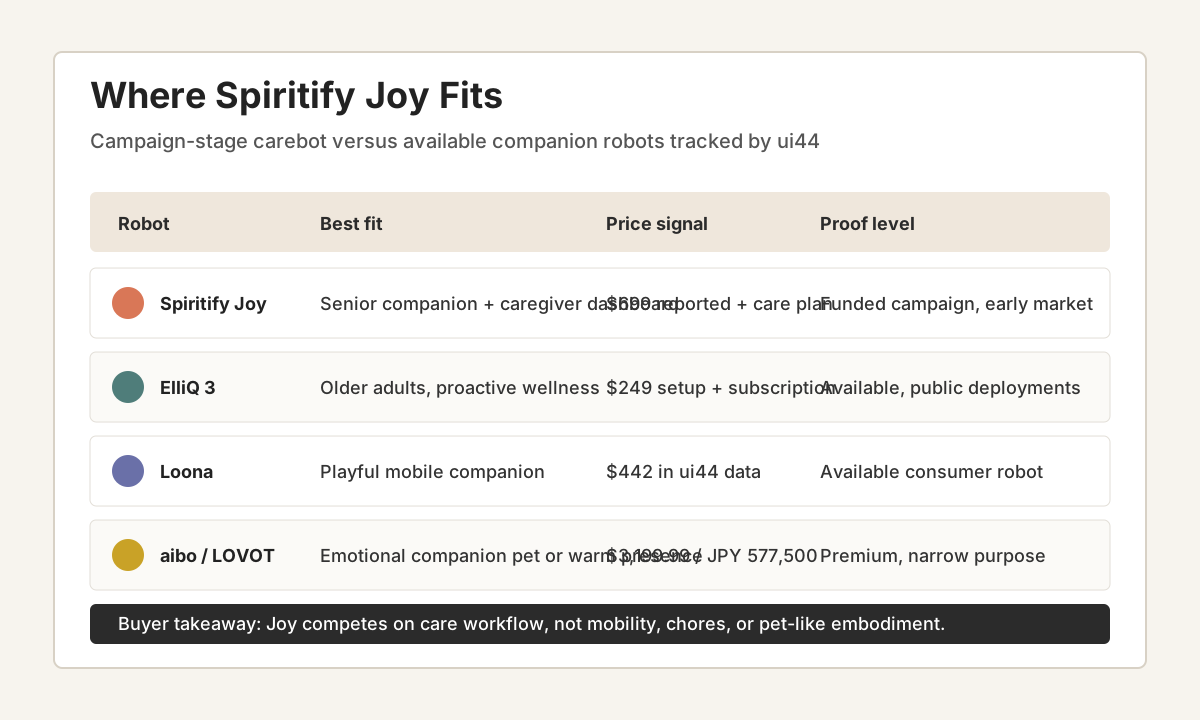
The Wider Companion Robot Field
Joy and ElliQ are not the only companion robots worth comparing. The broader field helps clarify what "alternative" really means.
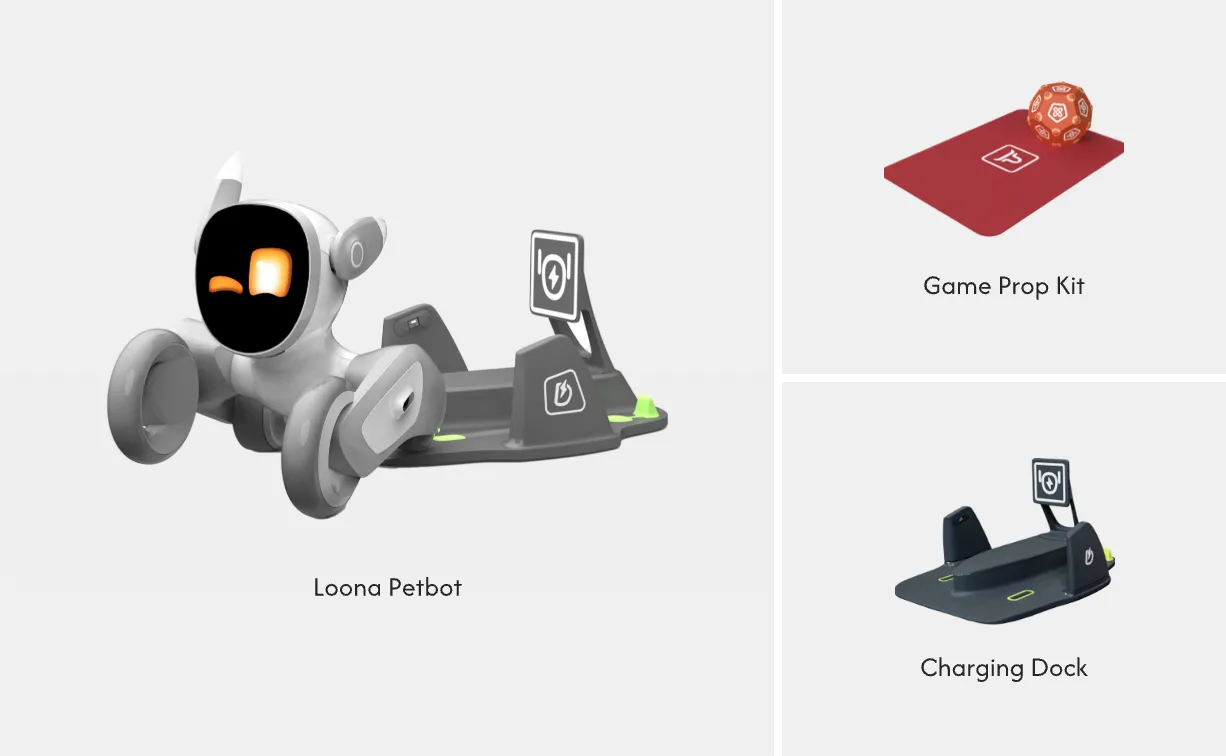
Loona is a playful mobile companion from KEYi Tech. ui44 lists it at $442 and available. It has more movement and pet-like personality than ElliQ, but it is not built around senior care workflows. Loona DeskMate, listed at $219 and pre-order status in ui44, moves the Loona idea toward a smaller desk companion. Both are interesting AI companions, but neither is a direct caregiver tool.
Sony aibo and LOVOT show another path: emotional companionship through premium hardware. ui44 lists aibo at $3,199.99 and LOVOT at JPY 577,500. These robots are not cheap, and they are not medical-care dashboards. Their value is embodiment: movement, warmth, personality, and the feeling of a pet-like presence.
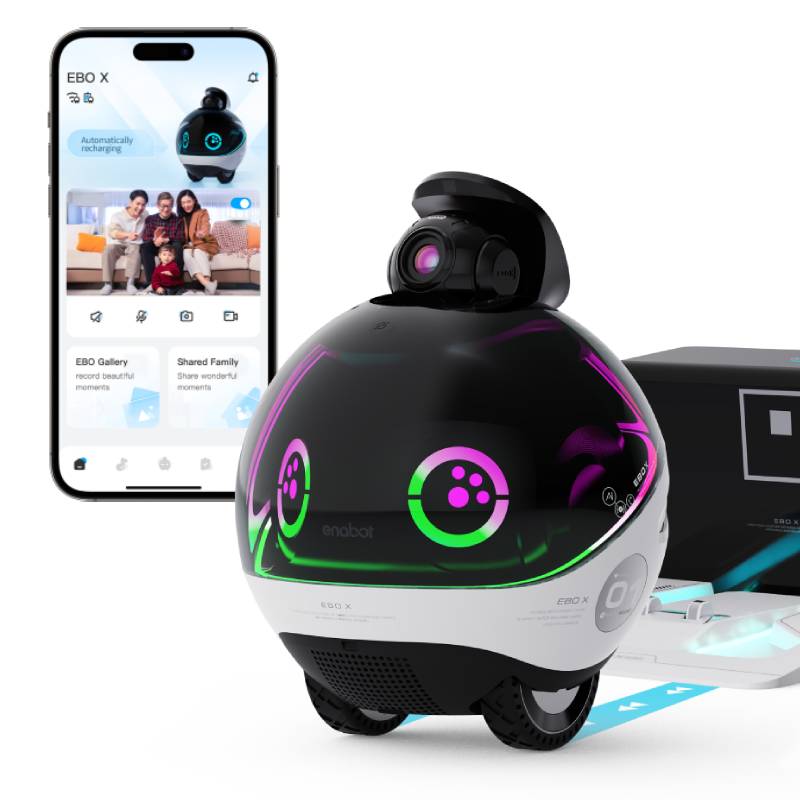
EBO X sits between companion robot and home monitor. ui44 lists Enabot's EBO X at $999 and available. It can patrol, communicate, and act as a rolling home presence. That makes it more mobile than Joy or ElliQ, but the care promise is different. A roaming robot can be useful for family check-ins, yet mobility is not the same as a sustained companionship program.
What Buyers Should Check Before Preordering Joy
For a robot like Joy, the spec sheet is only half the story. The more important questions are operational.
First, check the subscription terms and the checkout total. If Joy were sold at the $499 Home Care price shown in order-page metadata and paired with a $59 monthly plan, first-year cost would be $1,207 before taxes or shipping. The visible $758 HomeCare Monthly Bundle appears to include Joy plus the first month of service; if 11 more $59 payments followed, that would put first-year cost at $1,407. Those two paths are different enough that families should not budget from the metadata alone. Either number is reasonable only if the caregiver dashboard, reminders, memory care, and engagement features are used daily. It is expensive if the robot becomes a talking decoration.
Second, check what works without the plan. Some companion robots lose much of their value when the subscription lapses. Before buying, families should know whether basic conversation, reminders, video calling, journaling, and caregiver access require an active paid tier.
Third, look for privacy specifics. Care robots handle sensitive routines, emotional signals, medication schedules, family contacts, and sometimes video or audio. Spiritify says its platform includes privacy, governance, and security themes, but a buyer should still look for plain-language controls: what is stored, who can see it, how caregivers are authorized, how data can be deleted, and whether the device has visible recording indicators.
Fourth, ask about support and replacement. A companion robot for an older adult cannot depend on a technically confident user. Setup, Wi-Fi recovery, account changes, failed updates, damaged parts, and caregiver handoff all need a clear support path.
Fifth, ask whether the older adult actually wants this form factor. Some people will enjoy a doll-like companion. Others will prefer the less character-heavy design of ElliQ, the pet-like behavior of aibo, or no embodied robot at all. The best care robot is the one that fits the person's dignity and daily habits.
Is Joy a Real ElliQ Alternative?
Joy is a plausible alternative on paper, but not an equal substitute yet.
It is closest to ElliQ because both products are focused on older adults, reminders, conversation, companionship, and caregiver reassurance. Joy could appeal to families that dislike leased hardware or want a more character-like device, but its current official pricing conflict matters: $499 metadata, $758 visible HomeCare bundle, and $59 monthly service are not the same buyer story. Spiritify's caregiver-dashboard framing is pointed in the right direction, but the final checkout terms deserve verification before anyone calls Joy the cheaper ElliQ path.
But ElliQ has the stronger buyer case today. It is already available, has a third-generation product in ui44's database, has public-sector deployment history, and has a clearer service model. That does not make ElliQ cheap or perfect. It does make it a lower-uncertainty choice.
The right way to view Joy is as a watchlist robot for families who want a senior companion with more personality than ElliQ and more care structure than general AI toys. It should not be treated like a proven home-health product until Spiritify shows reliable deliveries, durable support, clear privacy documentation, and evidence that older adults keep using it after the first month.
For now, Joy is one of the more relevant new entries in companion robotics because it understands the category correctly. The future of home robots will not be only humanoids doing chores. Some of the most useful robots may be small, stationary companions that help people stay connected, remember routines, and give caregivers a calmer way to check in.
That is a real home-robot job. Joy still has to prove it can do the job better than the robots already on the table.
Related in the database
Use this article as a privacy verification workflow
Turn the article into a privacy verification pass grounded in the robots, manufacturers, and components it actually references.
Spiritify Joy vs ElliQ: Carebot Pricing Reality Check already points you toward 6 linked robots, 5 manufacturers, and 4 countries inside the ui44 database. That matters because strong buyer guidance is easier to apply when you can move immediately from a claim or warning into concrete product pages, manufacturer directories, component explainers, and country-level context instead of treating the article as an isolated opinion piece. The fastest next step is to turn the article into a shortlist workflow: open the linked robot pages, verify which specs are actually published for those models, then compare the surrounding manufacturer and component context before you decide whether the underlying claim changes your buying plan.
For this topic, the useful discipline is to separate the editorial lesson from the catalog evidence. The article gives you the framing, but the robot pages tell you what each product actually ships with today: sensor stack, connectivity methods, listed price, release timing, category, and support-relevant compatibility notes. The manufacturer pages then show whether you are looking at a one-off launch, a broader lineup pattern, or a company that spans multiple categories. That layered workflow reduces the risk of buying on a single marketing phrase or a single support FAQ.
Use the robot pages to confirm which products actually expose cameras, microphones, Wi-Fi, or voice systems, then use the manufacturer pages to decide how much of the privacy question seems product-specific versus brand-wide. On this route cluster, ElliQ 3, Loona, and Loona DeskMate form the fastest reality check. If you want a quick working shortlist, open Compare ElliQ 3, Loona, and Loona DeskMate next, then keep this article open as the reasoning layer while you compare structured data side by side.
Practical Takeaway
Every robot, manufacturer, category, component, and country reference below resolves to a real ui44 page, keeping the follow-up path grounded in database records rather than generic advice.
Suggested next steps in ui44
- Open ElliQ 3 and note the listed sensors, connectivity methods, and voice stack before you interpret any policy claim.
- Cross-check the wider brand context on Intuition Robotics so you can see whether the privacy question touches one model or a broader lineup.
- Use the linked component pages to confirm how common the relevant sensors and connectivity layers are across the database.
- Keep a short note of which policy layers you checked, which device features are actually present on the robot page, and which items still depend on region- or app-level confirmation.
- Finish with Compare ElliQ 3, Loona, and Loona DeskMate so the policy reading sits next to structured product data.
Robot profiles worth opening next
Use the linked product pages as the evidence layer
The linked robot pages are where this article becomes operational. Instead of asking whether the headline is interesting, use the robot entries to inspect the actual mix of sensors, connectivity options, batteries, pricing, release timing, and stated capabilities attached to the products mentioned in the article. That is the easiest way to see whether the warning or opportunity described here affects one product family, a specific design pattern, or an entire buying lane.
ElliQ 3
Intuition Robotics · Companions · Available
ElliQ 3 is tracked on ui44 as a available companions robot from Intuition Robotics. The database currently records a listed price of Price TBA, a release date of 2024-01, Mains powered battery life, N/A (plugged in) charging time, and a published stack that includes 4-mic array, 12 MP camera for images, and 1080p HD video at 30 fps with 120° horizontal FoV plus Wi-Fi 802.11b/g/n/ac (2.4 GHz and 5 GHz) and Bluetooth 5+.
For privacy-focused reading, this page matters because it shows the concrete device surface behind the policy discussion. Use it to verify whether ElliQ 3 combines sensors and connectivity in a way that could change the in-home data footprint, and compare the listed capabilities such as Proactive Conversation, Medication Reminders, and Health & Pain Tracking with any cloud, app, or voice layers, including ElliQ Voice AI.
Loona is tracked on ui44 as a available companions robot from KEYi Tech. The database currently records a listed price of $442, a release date of 2023, 2 hours continuous playtime; 1350 mAh, 11.1 V lithium-ion rechargeable battery battery life, Not officially disclosed charging time, and a published stack that includes 3D Time-of-Flight (ToF) Sensor, 720p RGB Camera, and Touch Sensor plus Wi-Fi (Dual-band 2.4G/5.8G, 802.11a/b/g/n) and USB Type-C (charging).
For privacy-focused reading, this page matters because it shows the concrete device surface behind the policy discussion. Use it to verify whether Loona combines sensors and connectivity in a way that could change the in-home data footprint, and compare the listed capabilities such as Face Recognition, Voice Commands, and Emotion Expression (LCD face) with any cloud, app, or voice layers.
Loona DeskMate
KEYi Tech · Companions · Pre-order
Loona DeskMate is tracked on ui44 as a pre-order companions robot from KEYi Tech. The database currently records a listed price of $219, a release date of 2026-01, Not applicable (desktop dock / powered charging hub) battery life, Not applicable charging time, and a published stack that includes Docked iPhone camera and microphones, Audio-visual multimodal perception, and Gesture and attention tracking plus MagSafe / magnetic iPhone dock and 3× USB-C ports.
For privacy-focused reading, this page matters because it shows the concrete device surface behind the policy discussion. Use it to verify whether Loona DeskMate combines sensors and connectivity in a way that could change the in-home data footprint, and compare the listed capabilities such as Screen-Aware AI Assistant, Voice Interaction, and Gesture Interaction with any cloud, app, or voice layers.
aibo (ERS-1000)
Sony · Companions · Available
aibo (ERS-1000) is tracked on ui44 as a available companions robot from Sony. The database currently records a listed price of $3,200, a release date of 2018-01, ~2 hours battery life, ~3 hours charging time, and a published stack that includes Front Camera, SLAM Camera, and Time-of-Flight Sensor plus Wi-Fi 802.11 b/g/n (2.4GHz) and LTE.
For privacy-focused reading, this page matters because it shows the concrete device surface behind the policy discussion. Use it to verify whether aibo (ERS-1000) combines sensors and connectivity in a way that could change the in-home data footprint, and compare the listed capabilities such as Emotion Recognition, Face Recognition (up to 100 faces), and Voice Command Recognition (100+ commands) with any cloud, app, or voice layers.
LOVOT is tracked on ui44 as a available companions robot from GROOVE X. The database currently records a listed price of ¥577,500, a release date of 2019, 30-45 minutes active, then returns to nest battery life, 15-30 minutes (on charging nest) charging time, and a published stack that includes Horn Top Camera (half-sphere), Horn Front Camera, and Depth Camera plus Wi-Fi and Bluetooth.
For privacy-focused reading, this page matters because it shows the concrete device surface behind the policy discussion. Use it to verify whether LOVOT combines sensors and connectivity in a way that could change the in-home data footprint, and compare the listed capabilities such as Emotional Companionship, Person Recognition, and Touch Response (full body sensors) with any cloud, app, or voice layers.
Manufacturer context behind the article
Check whether this is one product story or a broader company pattern
Manufacturer pages add the privacy context that individual product pages cannot show on their own. They help you check whether cameras, microphones, cloud accounts, app controls, and policy assumptions appear across a broader lineup or stay tied to one specific product story.
Intuition Robotics
ui44 currently tracks 1 robot from Intuition Robotics across 1 category. The company is grouped under Israel, and the current catalog footprint on ui44 includes ElliQ 3.
That wider brand context matters because privacy questions rarely stop at one FAQ page. A manufacturer route helps you see whether the article is centered on one premium model or on a company that has several relevant products and therefore more than one place where the same policy or app assumptions might matter. The category mix here currently points toward Companions as the most useful next route if you want to see whether this article reflects a wider pattern inside the brand.
KEYi Tech
ui44 currently tracks 2 robots from KEYi Tech across 1 category. The company is grouped under USA, and the current catalog footprint on ui44 includes Loona, Loona DeskMate.
That wider brand context matters because privacy questions rarely stop at one FAQ page. A manufacturer route helps you see whether the article is centered on one premium model or on a company that has several relevant products and therefore more than one place where the same policy or app assumptions might matter. The category mix here currently points toward Companions as the most useful next route if you want to see whether this article reflects a wider pattern inside the brand.
Sony
ui44 currently tracks 2 robots from Sony across 2 categorys. The company is grouped under Japan, and the current catalog footprint on ui44 includes aibo (ERS-1000), QRIO.
That wider brand context matters because privacy questions rarely stop at one FAQ page. A manufacturer route helps you see whether the article is centered on one premium model or on a company that has several relevant products and therefore more than one place where the same policy or app assumptions might matter. The category mix here currently points toward Companions, Research as the most useful next route if you want to see whether this article reflects a wider pattern inside the brand.
GROOVE X
ui44 currently tracks 1 robot from GROOVE X across 1 category. The company is grouped under Japan, and the current catalog footprint on ui44 includes LOVOT.
That wider brand context matters because privacy questions rarely stop at one FAQ page. A manufacturer route helps you see whether the article is centered on one premium model or on a company that has several relevant products and therefore more than one place where the same policy or app assumptions might matter. The category mix here currently points toward Companions as the most useful next route if you want to see whether this article reflects a wider pattern inside the brand.
Broaden the scan without leaving the database
Categories, components, and countries add the wider context
Category framing
Category pages are useful when the article touches a buying pattern that shows up across brands. A category route helps you confirm whether the linked products sit in a narrow niche or whether the same question should be tested across a larger field of alternatives.
Companions
The Companions category page currently groups 53 tracked robots from 48 manufacturers. ui44 describes this lane as: Social robots, robot pets, and elderly-care companions designed for emotional connection and everyday support at home.
That makes the category route a practical follow-up when you want to check whether the products linked in this article are typical for the lane or whether they sit at one edge of the market. Useful starting examples currently include PARO, Abi, Next-Generation Companion Robot.
Country and ecosystem context
Country pages give extra context when support practices, launch sequencing, regulatory posture, or manufacturer mix matter. They are not a substitute for model-level verification, but they do help you see which ecosystems cluster together and which manufacturers sit in the same regional field when you broaden the search beyond the article headline.
Israel
The Israel route currently groups 5 tracked robots from 5 manufacturers in ui44. That gives you a useful regional lens when the article points toward support practices, launch sequencing, or brand clusters that may share similar ecosystem assumptions.
On the current route, manufacturers like Flytrex, Intuition Robotics, Maytronics make the page a good way to broaden the scan without losing the regional context that often shapes availability, documentation style, and adjacent alternatives.
USA
The USA route currently groups 89 tracked robots from 69 manufacturers in ui44. That gives you a useful regional lens when the article points toward support practices, launch sequencing, or brand clusters that may share similar ecosystem assumptions.
On the current route, manufacturers like Faraday Future, iRobot, Boston Dynamics make the page a good way to broaden the scan without losing the regional context that often shapes availability, documentation style, and adjacent alternatives.
Japan
The Japan route currently groups 26 tracked robots from 17 manufacturers in ui44. That gives you a useful regional lens when the article points toward support practices, launch sequencing, or brand clusters that may share similar ecosystem assumptions.
On the current route, manufacturers like AIST, SoftBank Robotics, Toyota make the page a good way to broaden the scan without losing the regional context that often shapes availability, documentation style, and adjacent alternatives.
Questions to answer before you move from reading to buying
A follow-up FAQ built from the entities already linked in this article
Frequently Asked Questions
Which page should I open first after reading “Spiritify Joy vs ElliQ: Carebot Pricing Reality Check”?
Start with ElliQ 3. That gives you a concrete product anchor for the article’s main claim. From there, branch into the manufacturer and component pages so you can tell whether the article is describing one specific model, a repeated brand pattern, or a wider technology issue that affects multiple shortlist options.
How do the manufacturer pages change the buying decision?
Intuition Robotics help you zoom out from one article and one product. On ui44 they show lineup breadth, category spread, and the neighboring robots tied to the same company. That context is useful when you are deciding whether a risk belongs to a single model, whether it shows up across a brand’s portfolio, and whether you should keep looking at alternatives before committing.
When should I switch from reading to side-by-side comparison?
Move into Compare ElliQ 3, Loona, and Loona DeskMate as soon as you understand the article’s main warning or promise. The article explains what to watch for, but the compare view is where you can check whether price, status, battery life, connectivity, sensors, and category fit still make the robot a good match for your own home and budget.
Where to go next in ui44
Keep the research chain inside the database
If you want to keep going, these follow-on pages give you the cleanest expansion path from article to research session. Open the comparison route first if you are deciding between products today. Open the manufacturer, category, and component routes if you still need to understand the broader pattern behind the claim.
Written by
ui44 Team
Published July 6, 2026
Share this article
Open a plain share link on X or Bluesky. No embeds, no widgets, no cookie baggage.