That is the most interesting part of Korea's home-robot strategy. A recent Seoul Shinmun series framed the global race as four different bets: the United States trying to own the robot brain, China pushing cost and supply chain, Japan leaning on precision components, and Korea looking for leverage in its appliance ecosystem and sovereign AI.
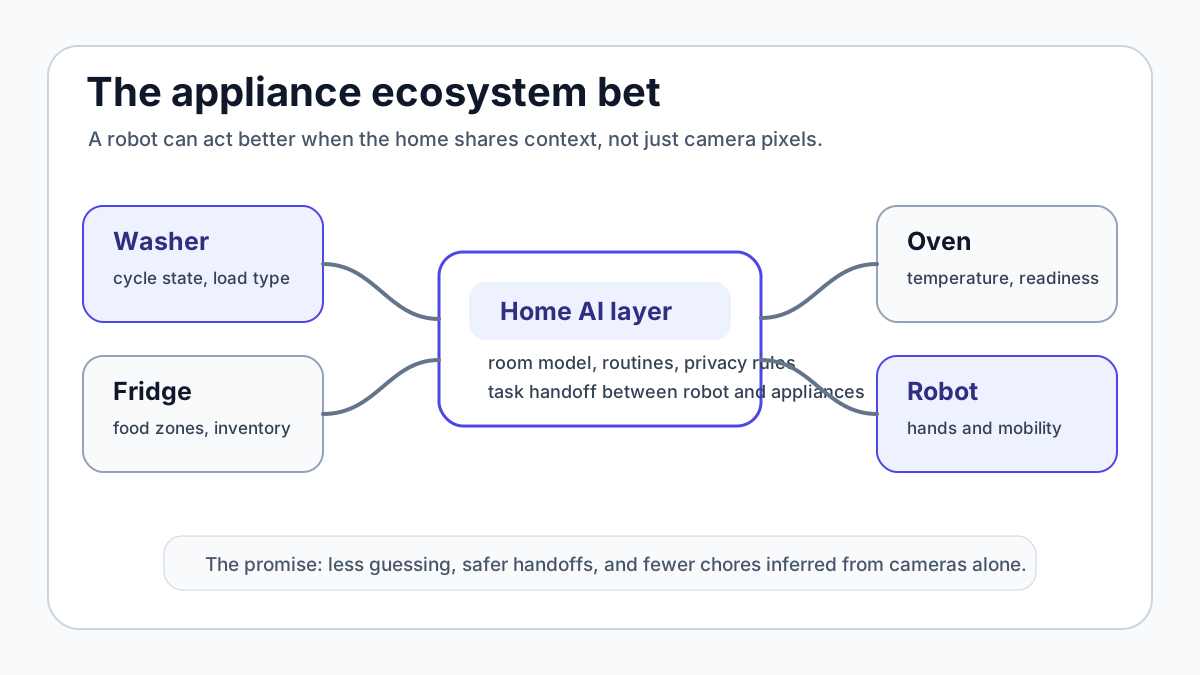
For buyers, this matters because it changes the question. Instead of asking "Can one humanoid do every chore?" the appliance strategy asks: can the home make the robot's job easier? A robot that knows the laundry cycle ended, the fridge door is open, the oven is preheated, and the dishwasher has clean plates has less to infer from camera footage alone.
That is not magic, and it is not a reason to ignore privacy. It is a practical route around one of the hardest problems in domestic robotics: homes are unstructured, private, crowded, and full of appliances that already know more about a chore than a new robot does.
What is the appliance-ecosystem strategy?
The appliance-ecosystem strategy treats the robot as one part of a connected home system rather than as a standalone genius with arms.
In the Seoul Shinmun framing, Korea's edge is not necessarily cheaper humanoid hardware or a better general-purpose VLA model. It is the installed base and engineering knowledge around connected appliances: washers that understand load state, refrigerators that understand food zones, air conditioners that know room conditions, robot vacuums that already map floors, and smart-home platforms that can coordinate routines.
LG's official CLOiD announcement makes the idea concrete. LG CLOiD is a wheeled home robot with two 7-DoF arms, five independently actuated fingers on each hand, cameras and sensors in the head, and integration with LG ThinQ and ThinQ ON. LG says its Physical AI stack combines VLM and VLA models, and that CLOiD is meant to retrieve items, help with meal prep, start laundry cycles, and fold or stack garments after drying.
Samsung Ballie is a lighter version of the same strategy. It does not have arms, but it is built around SmartThings, onboard camera and environmental sensing, a projector, Bixby, and Gemini plus Samsung language models. Samsung's 2025 announcement positioned Ballie as a mobile home AI companion that can manage lighting, schedules, reminders, wellbeing advice, and other home-environment tasks.
The common idea is not "robot replaces appliance." It is "robot becomes the mobile part of the appliance network."
Why appliances can teach robots what cameras miss
A camera can see a shirt. A washing machine can know the cycle, spin speed, water state, load size, and whether the clothes are likely wet. A robot can see a carton. A refrigerator can know which compartment it belongs in, whether the door has been open too long, and whether the user usually stores it in a particular zone.
That context is valuable because domestic manipulation is expensive. Every time a robot has to infer state from scratch, it pays in latency, energy, compute, and error risk. A connected appliance can reduce the search space.
Here is a simple example: unloading laundry. A standalone humanoid needs to recognize the washer, open the door, identify wet clothing, understand whether it should transfer to a dryer or drying rack, avoid snagging garments, and respond if the user interrupts. An appliance-aware robot could start with a much cleaner plan: the washer says the cycle is done, the home model says the dryer is beside it, the user's routine says towels go to high heat, and the robot only has to solve the physical transfer.
That still leaves the hardest part: hands. The appliance ecosystem does not make dexterity free. It can, however, turn a vague task into a bounded task. That is a real advantage.
The same logic applies to safety. If a robot is about to carry hot food, the oven and kitchen sensors may provide better context than the robot's front camera alone. If a child enters the room, fixed sensors and appliance states can help the robot pause before the arm is already in motion. The more physical a home robot becomes, the more important these handoffs get.
How this compares with standalone humanoids
Standalone humanoids are still the most exciting path if they work. A robot like 1X NEO is explicitly aimed at household chores, with a soft 167 cm, 30 kg body, about four hours of battery life, RGB cameras, depth sensors, tactile skin, and a $20,000 early-adopter price in ui44's database. 1X also describes an Expert Mode where a human expert can guide the robot through chores it does not yet know.
Figure 03 represents the high-end VLA route. ui44 tracks it as a 173 cm, 61 kg humanoid with roughly five hours of battery life, force sensors, tactile arrays, and a 20 kg payload. Figure's Helix announcement emphasizes onboard VLA control, high-rate upper-body movement, and natural language prompts for manipulating household objects.
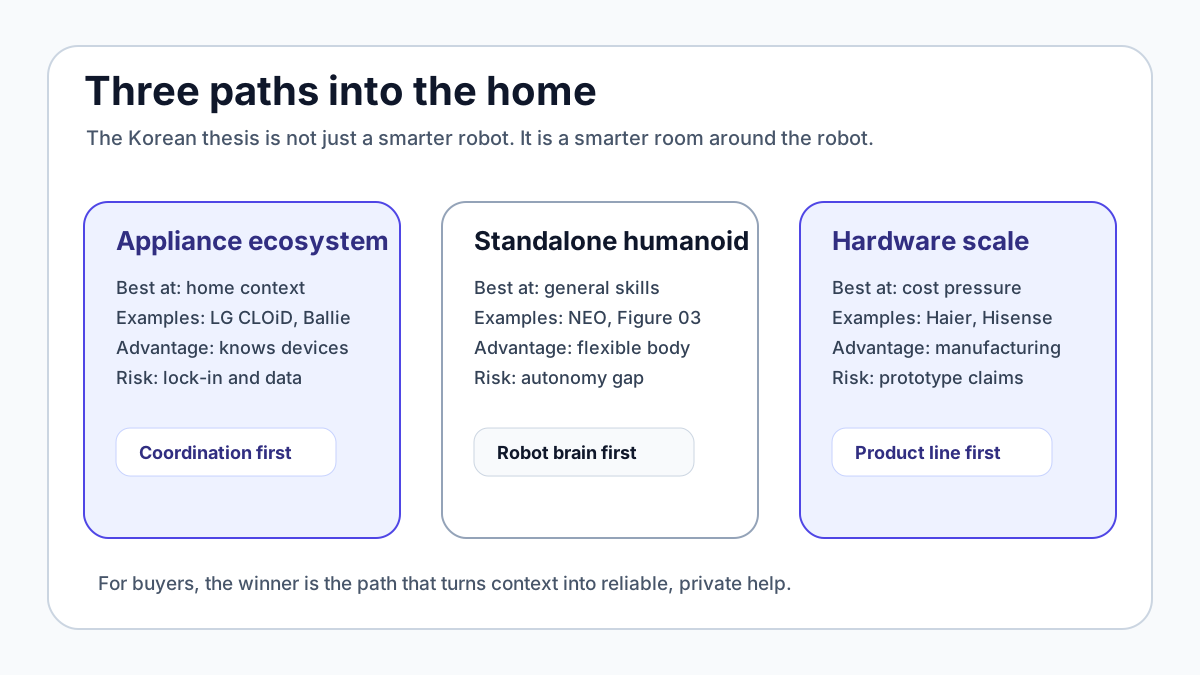
Those systems are trying to make the robot smarter and more general. The Korean appliance thesis is slightly different: make the home more legible so the robot does not need to generalize as much on every task.
Neither approach wins automatically. A standalone humanoid can move between brands and rooms if it is good enough. An appliance ecosystem can be more reliable inside one branded home but weaker when the fridge, washer, lights, and robot come from different companies.
What the ui44 database says right now
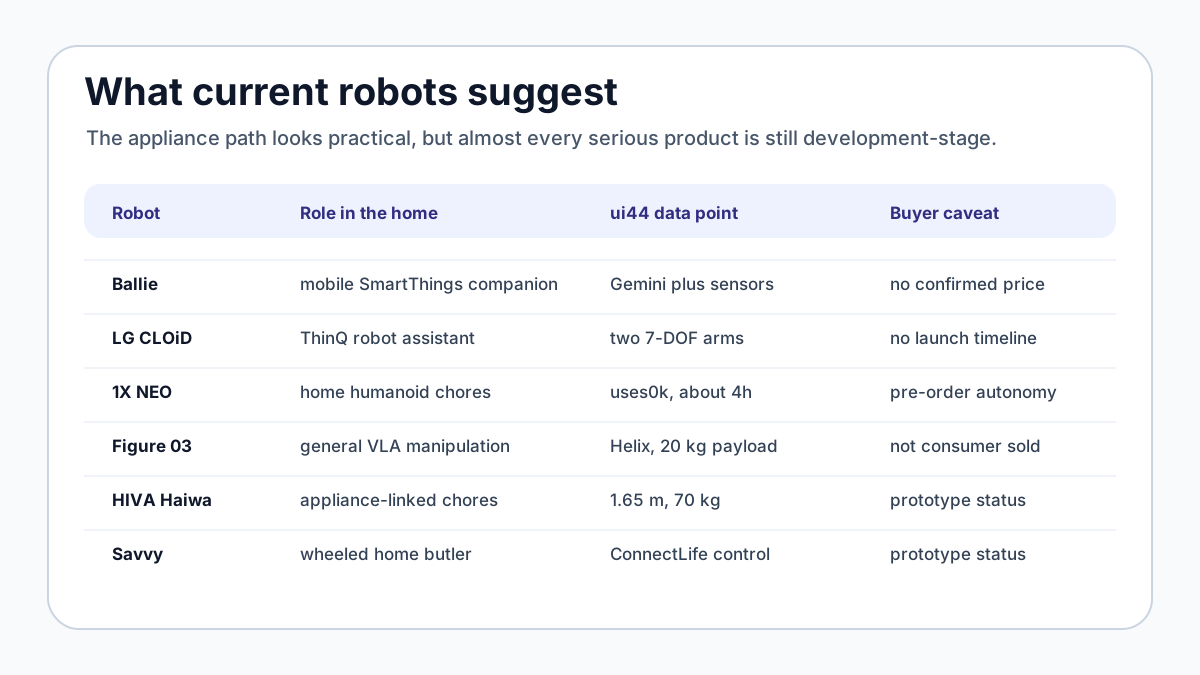
The database pattern is blunt: appliance-linked robots sound practical, but most are still not products you can buy.
Robot
- Ecosystem role
- mobile SmartThings companion
- Useful ui44 data point
- Development status; SmartThings, projector, camera/spatial/environmental sensors, Gemini plus Samsung language models
- Buyer caveat
- no confirmed price or release date
Robot
- Ecosystem role
- ThinQ-connected chore robot
- Useful ui44 data point
- two 7-DoF arms, five-finger hands, VLM/VLA Physical AI, ThinQ and ThinQ ON support
- Buyer caveat
- no pricing or retail launch timeline
Robot
- Ecosystem role
- standalone home humanoid
- Useful ui44 data point
- $20,000 early-adopter price, 167 cm, 30 kg, about four hours battery, tactile skin
- Buyer caveat
- pre-order; autonomy and service model still need proof
Robot
- Ecosystem role
- industrial-to-home VLA signal
- Useful ui44 data point
- 173 cm, 61 kg, Helix VLA, roughly five hours battery, 20 kg payload
- Buyer caveat
- not sold to consumers
Robot
- Ecosystem role
- Haier appliance-linked humanoid
- Useful ui44 data point
- 1.65 m, 70 kg, AI Eye 2.0 and UHomeOS appliance coordination
- Buyer caveat
- prototype; no pricing or commercialization timing
Robot
- Ecosystem role
- wheeled home butler
- Useful ui44 data point
- ConnectLife integration, wheeled chassis, appliance coordination
- Buyer caveat
- prototype; official pricing not announced
| Robot | Ecosystem role | Useful ui44 data point | Buyer caveat |
|---|---|---|---|
| Samsung Ballie | mobile SmartThings companion | Development status; SmartThings, projector, camera/spatial/environmental sensors, Gemini plus Samsung language models | no confirmed price or release date |
| LG CLOiD | ThinQ-connected chore robot | two 7-DoF arms, five-finger hands, VLM/VLA Physical AI, ThinQ and ThinQ ON support | no pricing or retail launch timeline |
| 1X NEO | standalone home humanoid | $20,000 early-adopter price, 167 cm, 30 kg, about four hours battery, tactile skin | pre-order; autonomy and service model still need proof |
| Figure 03 | industrial-to-home VLA signal | 173 cm, 61 kg, Helix VLA, roughly five hours battery, 20 kg payload | not sold to consumers |
| HIVA Haiwa | Haier appliance-linked humanoid | 1.65 m, 70 kg, AI Eye 2.0 and UHomeOS appliance coordination | prototype; no pricing or commercialization timing |
| Hisense Savvy | wheeled home butler | ConnectLife integration, wheeled chassis, appliance coordination | prototype; official pricing not announced |
The table also shows why the strategy is credible. Samsung, LG, Haier, and Hisense all talk about the robot as a mobile interface to the home, not as an isolated gadget. That is different from another smart speaker on wheels.
It also shows why buyers should stay skeptical. The most appliance-aware robots are mostly development-stage or prototype-stage. The most buyable home humanoid in this group, NEO, is not primarily an appliance ecosystem product. The most advanced VLA demonstrations are not retail home products.
The privacy trade-off is the product
A home robot that learns from appliances can be safer and more useful, but it also concentrates sensitive data.
Room maps, washing routines, refrigerator habits, camera clips, voice commands, care schedules, and presence patterns are not abstract telemetry. They describe how people live. Seoul Shinmun's series explicitly flagged home data sovereignty and privacy as central issues, not side notes. That is exactly right.
The appliance ecosystem only works if the robot and home platform can share context. So the buyer question is not simply "does it have privacy?" It is:
- Which tasks run locally, and which require cloud AI?
- Can the robot act safely if the network is down?
- Can you delete room maps, camera history, and appliance routines separately?
- Is cross-brand data shared, or locked inside one company's platform?
- Who can review remote assistance logs if a human operator helps the robot?
- Does the robot need video from private rooms to improve future models?
Those questions are not anti-robot. They are the difference between a helpful home assistant and a surveillance platform with wheels.
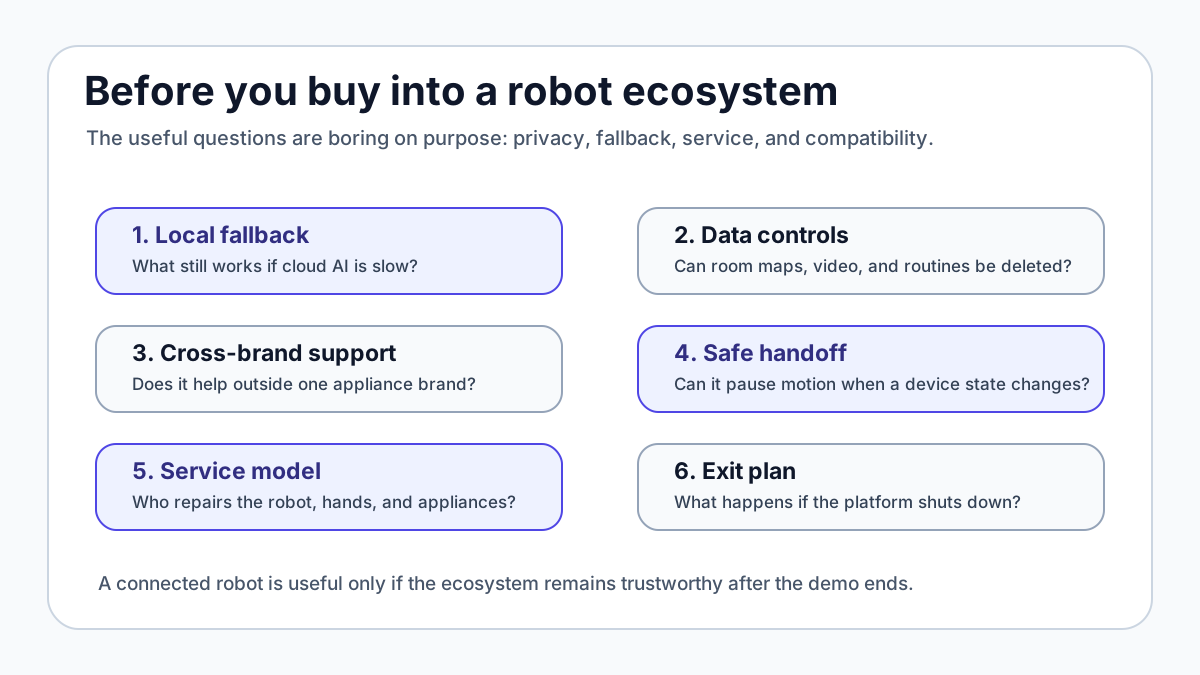
What buyers should ask before trusting an ecosystem robot
If appliance-connected robots start shipping, judge them by mundane tasks rather than keynote videos.
Ask for a demo where the robot starts with appliance context, then has to handle a change:
- The washer says a cycle is finished, but one item is too delicate for the dryer.
- The fridge suggests a storage zone, but the user corrects it.
- The oven is hot, a child enters the kitchen, and the robot must pause.
- A cloud service is disconnected, and the robot still has to dock safely.
- A non-LG or non-Samsung appliance is present, and the robot has to explain what it can and cannot control.
That last point matters. An ecosystem robot could be excellent inside a single brand's kitchen and mediocre everywhere else. Many real homes are mixed-brand. If the robot's best features only work after replacing half your appliances, the true price is far higher than the robot sticker.
Also ask who services the system. A traditional appliance company may have an advantage here. If the robot breaks a hinge, jams a dryer door, or needs a hand module replaced, a national service network matters more than a flashy model name.
The most likely near-term outcome
The first successful appliance-aware home robots probably will not fold every shirt, cook every meal, and clean every room. They will do narrower handoffs: bring items to appliances, start or confirm routines, move laundry between machines, fetch simple objects, monitor home status, and explain what the smart home is doing.
That may sound less dramatic than a universal humanoid, but it is more plausible as a product. A robot that reliably coordinates five boring workflows is more valuable than a robot that can theoretically do anything and practically needs a human to rescue every task.
Korea's strategy is interesting because it accepts a truth buyers already know: the home is not empty space waiting for a humanoid. It is already full of machines. The robot that understands those machines may reach usefulness before the robot that tries to replace them.
Bottom line
Smart appliances will not "teach" home robots in the human sense. They can teach in a more useful product sense: by sharing state, routines, constraints, and context that make robot actions easier to plan and safer to execute.
That is a serious home-robot path. It is also a lock-in and privacy path. If LG, Samsung, Haier, Hisense, or another appliance company can make the ecosystem transparent, local where it matters, cross-brand enough to be useful, and backed by real service, appliance-aware robots could become the most practical route to home automation with hands.
Until then, treat the strategy as a promising architecture, not a purchase promise. The buyer test is simple: does the robot make your existing home easier to run, or does it mostly ask you to rebuild the home around the robot?
Related in the database
Use this article as a privacy verification workflow
Turn the article into a privacy verification pass grounded in the robots, manufacturers, and components it actually references.
Will Smart Appliances Teach Home Robots? already points you toward 6 linked robots, 6 manufacturers, and 4 countries inside the ui44 database. That matters because strong buyer guidance is easier to apply when you can move immediately from a claim or warning into concrete product pages, manufacturer directories, component explainers, and country-level context instead of treating the article as an isolated opinion piece. The fastest next step is to turn the article into a shortlist workflow: open the linked robot pages, verify which specs are actually published for those models, then compare the surrounding manufacturer and component context before you decide whether the underlying claim changes your buying plan.
For this topic, the useful discipline is to separate the editorial lesson from the catalog evidence. The article gives you the framing, but the robot pages tell you what each product actually ships with today: sensor stack, connectivity methods, listed price, release timing, category, and support-relevant compatibility notes. The manufacturer pages then show whether you are looking at a one-off launch, a broader lineup pattern, or a company that spans multiple categories. That layered workflow reduces the risk of buying on a single marketing phrase or a single support FAQ.
Use the robot pages to confirm which products actually expose cameras, microphones, Wi-Fi, or voice systems, then use the manufacturer pages to decide how much of the privacy question seems product-specific versus brand-wide. On this route cluster, CLOiD, Ballie, and NEO form the fastest reality check. If you want a quick working shortlist, open Compare CLOiD, Ballie, and NEO next, then keep this article open as the reasoning layer while you compare structured data side by side.
Practical Takeaway
Every robot, manufacturer, category, component, and country reference below resolves to a real ui44 page, keeping the follow-up path grounded in database records rather than generic advice.
Suggested next steps in ui44
- Open CLOiD and note the listed sensors, connectivity methods, and voice stack before you interpret any policy claim.
- Cross-check the wider brand context on LG Electronics so you can see whether the privacy question touches one model or a broader lineup.
- Use the linked component pages to confirm how common the relevant sensors and connectivity layers are across the database.
- Keep a short note of which policy layers you checked, which device features are actually present on the robot page, and which items still depend on region- or app-level confirmation.
- Finish with Compare CLOiD, Ballie, and NEO so the policy reading sits next to structured product data.
Robot profiles worth opening next
Use the linked product pages as the evidence layer
The linked robot pages are where this article becomes operational. Instead of asking whether the headline is interesting, use the robot entries to inspect the actual mix of sensors, connectivity options, batteries, pricing, release timing, and stated capabilities attached to the products mentioned in the article. That is the easiest way to see whether the warning or opportunity described here affects one product family, a specific design pattern, or an entire buying lane.
CLOiD
LG Electronics · Home Assistants · Development
CLOiD is tracked on ui44 as a development home assistants robot from LG Electronics. The database currently records a listed price of Price TBA, a release date of 2026-01-04, Not officially disclosed battery life, Not officially disclosed charging time, and a published stack that includes Cameras and Various onboard sensors plus LG ThinQ and ThinQ ON.
For privacy-focused reading, this page matters because it shows the concrete device surface behind the policy discussion. Use it to verify whether CLOiD combines sensors and connectivity in a way that could change the in-home data footprint, and compare the listed capabilities such as Autonomous indoor wheeled navigation, Dual-arm household manipulation, and Appliance coordination via LG ThinQ with any cloud, app, or voice layers.
Ballie is tracked on ui44 as a development companions robot from Samsung. The database currently records a listed price of Price TBA, a release date of TBD, Not officially disclosed battery life, Not officially disclosed charging time, and a published stack that includes Camera, Spatial Sensors, and Environmental Sensors plus Wi-Fi and SmartThings.
For privacy-focused reading, this page matters because it shows the concrete device surface behind the policy discussion. Use it to verify whether Ballie combines sensors and connectivity in a way that could change the in-home data footprint, and compare the listed capabilities such as Autonomous Home Navigation, Built-in Projector (Wall & Floor), and Smart Home Control via SmartThings with any cloud, app, or voice layers, including Bixby.
NEO
1X Technologies · Humanoid · Pre-order
NEO is tracked on ui44 as a pre-order humanoid robot from 1X Technologies. The database currently records a listed price of $20,000, a release date of 2025-10-28, ~4 hours battery life, Not disclosed charging time, and a published stack that includes RGB Cameras, Depth Sensors, and Tactile Skin plus Wi-Fi and Bluetooth.
For privacy-focused reading, this page matters because it shows the concrete device surface behind the policy discussion. Use it to verify whether NEO combines sensors and connectivity in a way that could change the in-home data footprint, and compare the listed capabilities such as Household Chores, Tidying Up, and Safe Human Interaction with any cloud, app, or voice layers.
Figure 03 is tracked on ui44 as a active humanoid robot from Figure AI. The database currently records a listed price of Price TBA, a release date of 2025-10-09, ~5 hours battery life, Not disclosed charging time, and a published stack that includes Stereo Vision, Depth Cameras, and Force Sensors plus Wi-Fi and Bluetooth.
For privacy-focused reading, this page matters because it shows the concrete device surface behind the policy discussion. Use it to verify whether Figure 03 combines sensors and connectivity in a way that could change the in-home data footprint, and compare the listed capabilities such as Complex Manipulation, Warehouse Work, and Manufacturing Tasks with any cloud, app, or voice layers.
HIVA Haiwa
Haier · Humanoid · Prototype
HIVA Haiwa is tracked on ui44 as a prototype humanoid robot from Haier. The database currently records a listed price of Price TBA, a release date of 2026-02, Not officially disclosed battery life, Not officially disclosed charging time, and a published stack that includes Computer vision, Barcode recognition, and Environmental perception plus its listed connectivity stack.
For privacy-focused reading, this page matters because it shows the concrete device surface behind the policy discussion. Use it to verify whether HIVA Haiwa combines sensors and connectivity in a way that could change the in-home data footprint, and compare the listed capabilities such as Household chore assistance, Grocery transport, and Food sorting for refrigeration with any cloud, app, or voice layers.
Manufacturer context behind the article
Check whether this is one product story or a broader company pattern
Manufacturer pages add the privacy context that individual product pages cannot show on their own. They help you check whether cameras, microphones, cloud accounts, app controls, and policy assumptions appear across a broader lineup or stay tied to one specific product story.
LG Electronics
ui44 currently tracks 1 robot from LG Electronics across 1 category. The company is grouped under South Korea, and the current catalog footprint on ui44 includes CLOiD.
That wider brand context matters because privacy questions rarely stop at one FAQ page. A manufacturer route helps you see whether the article is centered on one premium model or on a company that has several relevant products and therefore more than one place where the same policy or app assumptions might matter. The category mix here currently points toward Home Assistants as the most useful next route if you want to see whether this article reflects a wider pattern inside the brand.
Samsung
ui44 currently tracks 2 robots from Samsung across 2 categorys. The company is grouped under South Korea, and the current catalog footprint on ui44 includes Ballie, Bespoke AI Jet Bot Steam Ultra.
That wider brand context matters because privacy questions rarely stop at one FAQ page. A manufacturer route helps you see whether the article is centered on one premium model or on a company that has several relevant products and therefore more than one place where the same policy or app assumptions might matter. The category mix here currently points toward Companions, Cleaning as the most useful next route if you want to see whether this article reflects a wider pattern inside the brand.
1X Technologies
ui44 currently tracks 2 robots from 1X Technologies across 1 category. The company is grouped under Norway, and the current catalog footprint on ui44 includes NEO, EVE.
That wider brand context matters because privacy questions rarely stop at one FAQ page. A manufacturer route helps you see whether the article is centered on one premium model or on a company that has several relevant products and therefore more than one place where the same policy or app assumptions might matter. The category mix here currently points toward Humanoid as the most useful next route if you want to see whether this article reflects a wider pattern inside the brand.
Figure AI
ui44 currently tracks 2 robots from Figure AI across 1 category. The company is grouped under USA, and the current catalog footprint on ui44 includes Figure 03, Figure 02.
That wider brand context matters because privacy questions rarely stop at one FAQ page. A manufacturer route helps you see whether the article is centered on one premium model or on a company that has several relevant products and therefore more than one place where the same policy or app assumptions might matter. The category mix here currently points toward Humanoid as the most useful next route if you want to see whether this article reflects a wider pattern inside the brand.
Broaden the scan without leaving the database
Categories, components, and countries add the wider context
Category framing
Category pages are useful when the article touches a buying pattern that shows up across brands. A category route helps you confirm whether the linked products sit in a narrow niche or whether the same question should be tested across a larger field of alternatives.
Home Assistants
The Home Assistants category page currently groups 16 tracked robots from 14 manufacturers. ui44 describes this lane as: Arm-based household helpers — laundry folders, kitchen robots, and mobile manipulators that take on hands-on physical tasks around the home.
That makes the category route a practical follow-up when you want to check whether the products linked in this article are typical for the lane or whether they sit at one edge of the market. Useful starting examples currently include Robody, Futuring 2 (F2), Stretch 3.
Companions
The Companions category page currently groups 53 tracked robots from 48 manufacturers. ui44 describes this lane as: Social robots, robot pets, and elderly-care companions designed for emotional connection and everyday support at home.
That makes the category route a practical follow-up when you want to check whether the products linked in this article are typical for the lane or whether they sit at one edge of the market. Useful starting examples currently include PARO, Abi, Next-Generation Companion Robot.
Country and ecosystem context
Country pages give extra context when support practices, launch sequencing, regulatory posture, or manufacturer mix matter. They are not a substitute for model-level verification, but they do help you see which ecosystems cluster together and which manufacturers sit in the same regional field when you broaden the search beyond the article headline.
South Korea
The South Korea route currently groups 9 tracked robots from 7 manufacturers in ui44. That gives you a useful regional lens when the article points toward support practices, launch sequencing, or brand clusters that may share similar ecosystem assumptions.
On the current route, manufacturers like ROBOTIS, Samsung, GenON make the page a good way to broaden the scan without losing the regional context that often shapes availability, documentation style, and adjacent alternatives.
Norway
The Norway route currently groups 2 tracked robots from 1 manufacturers in ui44. That gives you a useful regional lens when the article points toward support practices, launch sequencing, or brand clusters that may share similar ecosystem assumptions.
On the current route, manufacturers like 1X Technologies make the page a good way to broaden the scan without losing the regional context that often shapes availability, documentation style, and adjacent alternatives.
USA
The USA route currently groups 89 tracked robots from 69 manufacturers in ui44. That gives you a useful regional lens when the article points toward support practices, launch sequencing, or brand clusters that may share similar ecosystem assumptions.
On the current route, manufacturers like Faraday Future, iRobot, Boston Dynamics make the page a good way to broaden the scan without losing the regional context that often shapes availability, documentation style, and adjacent alternatives.
Questions to answer before you move from reading to buying
A follow-up FAQ built from the entities already linked in this article
Frequently Asked Questions
Which page should I open first after reading “Will Smart Appliances Teach Home Robots?”?
Start with CLOiD. That gives you a concrete product anchor for the article’s main claim. From there, branch into the manufacturer and component pages so you can tell whether the article is describing one specific model, a repeated brand pattern, or a wider technology issue that affects multiple shortlist options.
How do the manufacturer pages change the buying decision?
LG Electronics help you zoom out from one article and one product. On ui44 they show lineup breadth, category spread, and the neighboring robots tied to the same company. That context is useful when you are deciding whether a risk belongs to a single model, whether it shows up across a brand’s portfolio, and whether you should keep looking at alternatives before committing.
When should I switch from reading to side-by-side comparison?
Move into Compare CLOiD, Ballie, and NEO as soon as you understand the article’s main warning or promise. The article explains what to watch for, but the compare view is where you can check whether price, status, battery life, connectivity, sensors, and category fit still make the robot a good match for your own home and budget.
Where to go next in ui44
Keep the research chain inside the database
If you want to keep going, these follow-on pages give you the cleanest expansion path from article to research session. Open the comparison route first if you are deciding between products today. Open the manufacturer, category, and component routes if you still need to understand the broader pattern behind the claim.
Written by
ui44 Team
Published May 9, 2026
Share this article
Open a plain share link on X or Bluesky. No embeds, no widgets, no cookie baggage.