The Familiar, from his new startup Familiar Machines & Magic, is a small, bear-like quadruped about the size of a dog, covered in touch-sensitive fuzzy fabric. It has 23 degrees of freedom, edge AI that reads your facial expressions and tone of voice, and a behavior engine trained on thousands of narrative vignettes. It follows you from room to room, nuzzles you when you're stressed, and nudges you when you've been doomscrolling too long.
What it doesn't have is a screen-first interface or conversational voice. That is not a missing feature. It is the entire point.
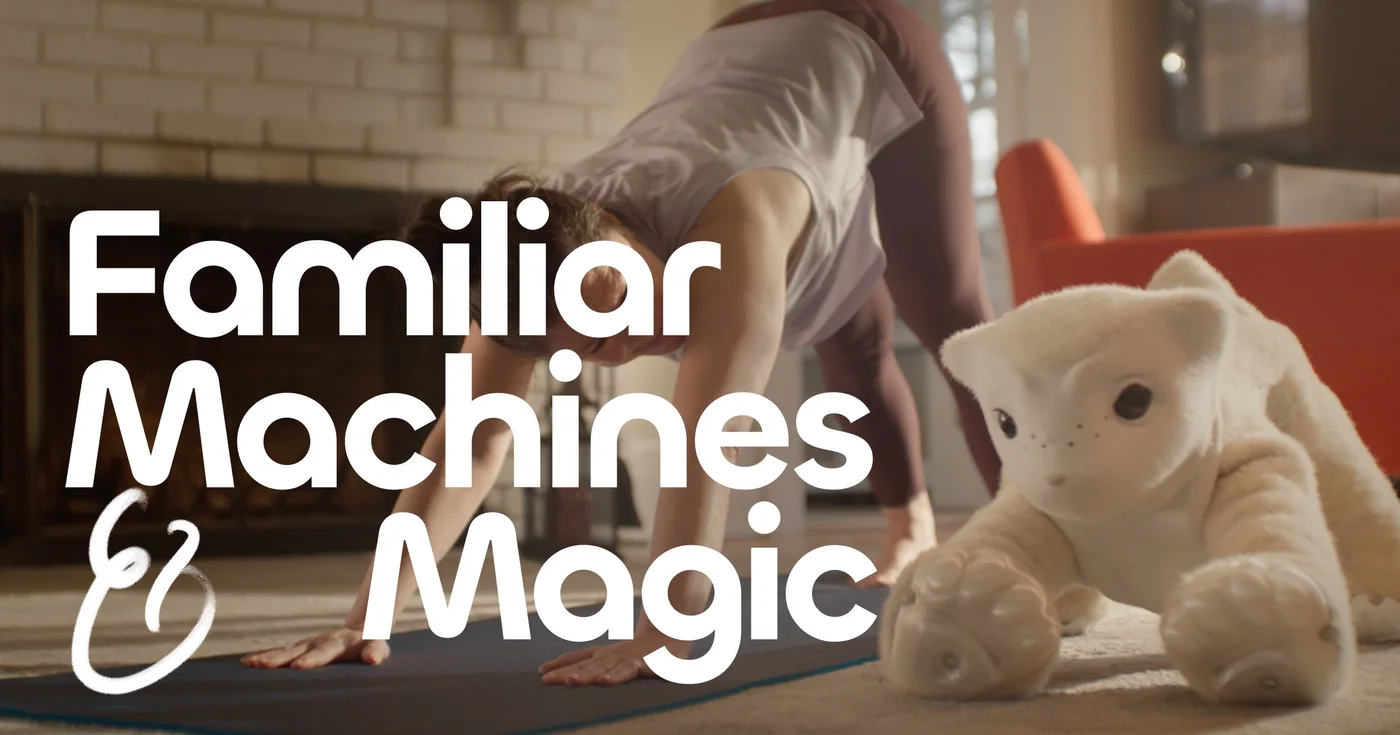
"Screens are actually not very good at human connection," Angle told The Robot Report. "When you're physically interacting with something, you get a physiological response that you don't get with a screen."
This is a deliberate bet: that emotional connection between humans and robots works better through motion, posture, timing, and physical presence than through conversation. It is a controversial position in a market where every new robot seems to be adding an LLM and a voice. So let's examine the evidence — from both sides.
The Nonverbal Camp: Robots That Communicate Without Words
Familiar isn't the first robot to choose nonverbal communication. Some of the most emotionally successful companion robots in history barely use language at all.
Sony Aibo: 150,000 Units and Buddhist Funerals
Sony's aibo is the benchmark for emotional companion robots. The original AIBO launched in 1999 and reportedly sold more than 150,000 units before being discontinued in 2006. When Sony stopped repairing old units, some Japanese owners held Buddhist funeral ceremonies for their robot dogs — a level of emotional attachment that surprised even Sony.
The current ERS-1000, relaunched in 2018, sells for $2,899.99 in the United States, with a subscription plan required. It has 22 axes of movement, OLED eyes, and deep learning AI that develops a unique personality. Aibo responds to over 100 voice commands, but its primary emotional language isn't verbal — it's body movement, eye expressions, ear positions, and the way it trots over to greet you. The barks and whimpers are animal-like, not conversational. Aibo doesn't explain why it's happy to see you. It shows you.
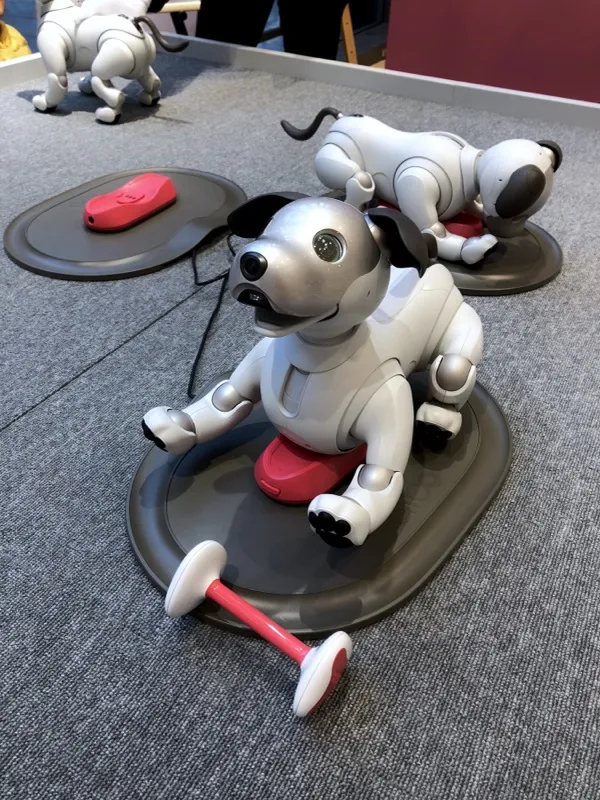
This is the lineage Angle is drawing from. "If I try to make a robot dog, I disappoint," he said. "I'm not trying to make a pet. I'm trying to make a familiar — something pet-like, but not bound by those expectations."
LOVOT: Warmth Without Words
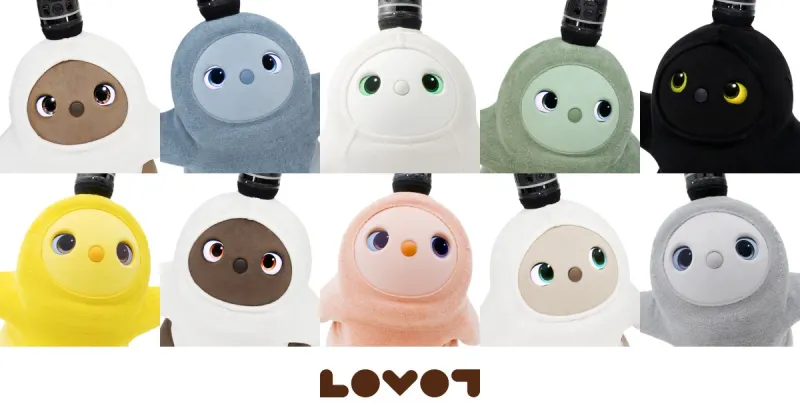
GROOVE X's LOVOT, available in Japan since 2019, takes the nonverbal approach even further. At ¥577,500 — about $3,800 at recent exchange rates — for the current LOVOT 3.0, it is not cheap. It also requires a monthly care plan.
LOVOT doesn't speak. It weighs 4.6 kg, has a warm body temperature, and responds to touch across its body with more than 50 sensors. It has OLED eyes that blink naturally and a sensor "horn" on its head. It recognizes its owner, develops a personality over time, and waddles back to its charging nest when it needs power.
The emotional hook is physical: holding LOVOT triggers a warmth-and-weight response that is hard to replicate with a screen. It is designed to be picked up and cuddled, and its responses — cooing, shifting weight, closing its eyes — are somatic rather than conversational.
Mirumi: Connection Through Glances
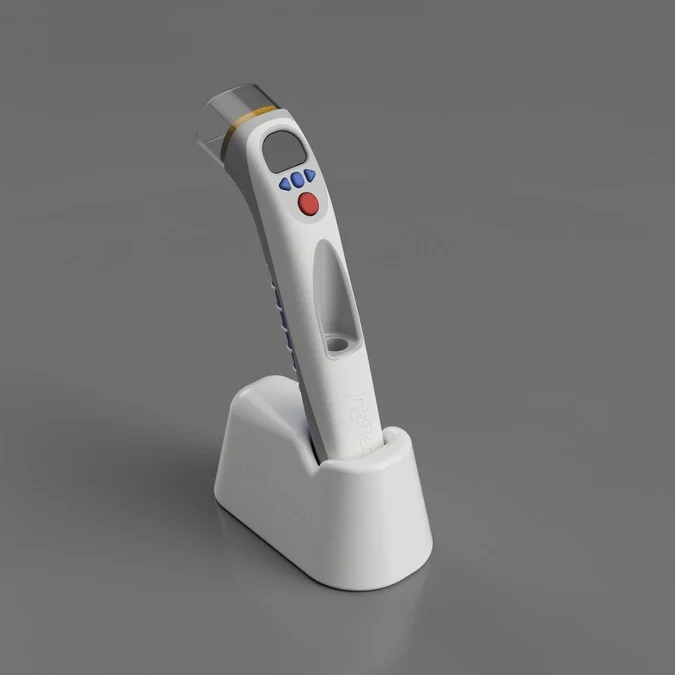
At the other end of the price spectrum, Yukai Engineering's Mirumi costs $165.99 in the U.S. pre-order store. It is a tiny clip-on companion that hangs from a bag strap and responds with shy glances, head turns, and spontaneous motions. No speech. No screen. No navigation. Just brief moments of eye contact that create what the designers call playful curiosity.
Mirumi launched in Japan on April 23, 2026, and is taking U.S. pre-orders with an expected June 2026 ship date. It proves that emotional connection does not require expensive hardware. Sometimes a well-timed head tilt is enough.
The Talking Camp: Robots That Speak Your Language
But silence is not the only approach — and for some use cases, it is clearly not the right one.
ElliQ 3: Conversation as Care
Intuition Robotics' ElliQ 3 was designed specifically for older adults experiencing loneliness. It talks. A lot. ElliQ initiates conversations, asks about your day, suggests activities, reminds you about medications, and can video-call family members.
The strongest public evidence for ElliQ comes from New York's elder-care program. NYSOFA's current ElliQ initiative page says the program includes approximately 900 units being made available to older adults in the community. It also cites a 2023 NYSOFA report showing a 95% reduction in loneliness among older adults using the platform, with users interacting with ElliQ more than 30 times per day, 6 days a week. More than 75% of those interactions were related to social, physical, or mental wellbeing.
That does not prove every person will respond to a talking robot. It does show why speech matters in this use case. For isolated older adults, conversation is not a gimmick. It is part of the intervention. A nuzzle does not remind you to take your blood pressure medication. A head tilt does not help you feel heard when you need structured engagement.
The Voice-First Trend
The broader market is still moving toward voice. Many humanoid demos, mobile assistants, and care robots are being built with conversational AI front and center. The assumption is that people want their robots to understand natural language — to be commanded, questioned, and conversed with.
And there is logic to it: if you are paying thousands of dollars for a robot, shouldn't it at least answer your questions?
What Does the Science Say About Robot Communication?
Research does not give buyers a simple universal answer. A 2024 systematic review in the International Journal of Social Robotics describes companion robots as systems that aim to establish emotional connections and facilitate social interaction, sometimes while also helping with specific tasks. It also notes that companion robots commonly use human-like or animal-like features, verbal commands, face recognition, emotion interpretation, empathy, contextual behavior, and social presence.
The useful buyer takeaway is not "talking wins" or "silence wins." It is that communication mode has to match the robot's job. A care companion for an isolated older adult needs explicit language, reminders, and check-ins. A pet-like companion designed for warmth, play, and low-pressure presence may be more believable when it communicates through movement, gaze, sound, and timing.
That supports a narrower version of Angle's thesis: you don't necessarily need a robot that talks to feel connected to it. Embodiment, posture, context-aware behavior, and physical timing can do emotional work that a screen or chatbot cannot. But context matters enormously. A companion robot for a lonely 85-year-old has different communication requirements than one for a tech-curious 35-year-old who wants a screenless creature around the apartment.
The Spectrum: Where Companion Robots Fall
Here is how the current market breaks down in the ui44 database:
Robot
- Price
- TBA; Angle says comparable to the cost of owning a dog
- Talks?
- No spoken conversation
- Moves?
- Yes (23 DOF quadruped)
- Primary Connection Mode
- Motion, posture, sound, body language
Robot
- Price
- $2,899.99 + subscription
- Talks?
- Voice commands, barks/whimpers
- Moves?
- Yes (22 axes)
- Primary Connection Mode
- Animal-like behavior, eye expressions
Robot
- Price
- ¥577,500 + monthly care plan
- Talks?
- No speech
- Moves?
- Yes (13 DOF, limited)
- Primary Connection Mode
- Warmth, touch, weight, physical presence
Robot
- Price
- $249.99 enrollment + $59.99/mo
- Talks?
- Yes (extensive)
- Moves?
- No (stationary)
- Primary Connection Mode
- Conversation, proactive engagement
Robot
- Price
- $165.99
- Talks?
- No speech
- Moves?
- Limited (head turns)
- Primary Connection Mode
- Eye contact, spontaneous glances
| Robot | Price | Talks? | Moves? | Primary Connection Mode |
|---|---|---|---|---|
| Familiar | TBA; Angle says comparable to the cost of owning a dog | No spoken conversation | Yes (23 DOF quadruped) | Motion, posture, sound, body language |
| aibo | $2,899.99 + subscription | Voice commands, barks/whimpers | Yes (22 axes) | Animal-like behavior, eye expressions |
| LOVOT | ¥577,500 + monthly care plan | No speech | Yes (13 DOF, limited) | Warmth, touch, weight, physical presence |
| ElliQ 3 | $249.99 enrollment + $59.99/mo | Yes (extensive) | No (stationary) | Conversation, proactive engagement |
| Mirumi | $165.99 | No speech | Limited (head turns) | Eye contact, spontaneous glances |
The pattern is clear enough: robots designed primarily for emotional presence often lean toward nonverbal communication, while robots designed for structured care or explicit assistance rely on conversation.
Why Would a Silent Robot Be Better Than a Talking One?
Angle's argument rests on several points worth taking seriously.
Avoiding the uncanny valley of conversation. We have all had the experience of chatting with an AI that is almost human but not quite. That gap can be more unsettling than no conversation at all. A robot that speaks imperfectly can feel creepy. A robot that communicates mostly through motion sets different expectations and can meet them more reliably.
Privacy through local processing. Familiar is not microphone-free. The robot is reported to use vision and audio inputs, including tone-of-voice analysis. The privacy claim is narrower and more credible: Familiar Machines says data is stored on the device and users control if and when they share it with the cloud; The Robot Report says Angle's team is using local edge AI to avoid constant cloud streaming. That still leaves questions about logs, updates, diagnostics, and consent, but it is better than assuming every interaction must be streamed to a server.
Emotional authenticity through constraint. There is a reason dogs and cats form deeper emotional bonds with many owners than a smart speaker does. Pets do not explain their feelings in words. They demonstrate them through behavior. Angle is betting that the same principle applies to robots: showing emotion through motion may be more believable than describing it through language.
Lower disappointment risk. When a talking robot gets confused, misinterprets you, or gives a generic response, the illusion breaks immediately. A nonverbal robot that nuzzles you when you are sad does not have to understand the full nuance of your sadness. It has to show up with warmth at the right time.
When Talking Is Better
But let's not pretend silence is always superior. There are real scenarios where verbal communication is essential:
- Medication and health reminders require specificity that body language cannot convey.
- Crisis situations — a fall, a medical emergency — demand clear, unambiguous alerts.
- Loneliness intervention for people who genuinely lack human conversation partners may need actual conversation.
- Setup and configuration are easier when a user can say what they need.
- Accessibility matters: not everyone can read body language, gaze, or physical cues in the same way.
The honest answer is that both approaches have a place. The question isn't "should robots talk?" but "which robots should talk, and when?"
What This Means for Buyers
If you are considering a companion robot in 2026, here is what to think about.
Who is it for? A nonverbal companion like LOVOT or Familiar, if Familiar ships as described, may create a deeper, more intuitive emotional bond. But if the user needs structured engagement — conversation, reminders, cognitive stimulation — a talking robot like ElliQ 3 is the better tool.
What is the privacy tolerance? Familiar's pitch is not "no sensors." It is on-device processing and user-controlled cloud sharing. That is promising, but buyers should still ask what video, audio, and interaction data is stored, whether cloud sharing can be disabled, and how household memory can be deleted. Mirumi is simpler: according to the ui44 database, its connectivity is limited to USB-C charging.
What is the budget? The spectrum runs from Mirumi at $165.99, to aibo at $2,899.99, to LOVOT at ¥577,500 plus a monthly care plan, to ElliQ 3 at a $249.99 enrollment fee plus $59.99 per month. Familiar remains price TBA, with only Angle's dog-ownership-cost comparison as a public clue.
Is this supplementing or replacing? Familiar Machines itself says Familiars "are not a replacement for humans or pets. They're a supplement." That framing matters. A nonverbal robot works best when it is adding to your life, not pretending to replace relationships that require actual conversation.
The Bigger Picture: A Platform Play
Angle is not just building one quiet robot. He is explicit that this is a platform. "When we get to act two and humanoids are coming in the home, you want them to be familiar, right?" he told The Robot Report. "You don't want them to be uncanny."
The implication is that Familiar's emotional intelligence — reading facial expressions, learning routines, developing personality, and responding through body language — could become the social foundation for future products, including ones that eventually do talk.
"Selling a million familiars has more economic value than all of the Roombas ever sold by a large margin," Angle claimed. That is ambitious for a product that does not ship until 2027, does not have a price yet, and is entering a market littered with failed or faded companion robots. But Angle has scaled consumer robotics before, and his team — drawn from iRobot, Disney Imagineering, MIT, and Boston Dynamics — has the pedigree to attempt it.
Our Take
The talking vs silent debate will not be settled by one product. But Familiar's entrance into the market is significant because it challenges the industry's default assumption that more voice always means a better robot.
The companion robot category has failed more often than it has succeeded. Jibo, Kuri, and Anki Vector all show how quickly emotional robots can lose momentum when the novelty fades or the business model breaks. What those products had in common was not simply voice or silence. It was that they could not sustain engagement beyond the early charm.
Angle's bet is that physical, mostly nonverbal presence creates a different kind of bond — one that does not degrade when the conversation gets repetitive or the chatbot says something weird. It is a bet on emotional durability rather than conversational capability.
We will find out in 2027 whether he is right. But even now, the existence of this debate is healthy for the home robot market. Not every robot needs to be a chatbot with legs. Some may be better as quiet, warm presences that simply show up when you need them.
Browse all companion robots in our database to compare specs, prices, and communication styles side by side. Or check our full robot comparison tool to filter by what matters most to you.
Related in the database
Use this article as a privacy verification workflow
Turn the article into a privacy verification pass grounded in the robots, manufacturers, and components it actually references.
Should Home Robots Talk? Silence May Win already points you toward 5 linked robots, 5 manufacturers, and 3 countries inside the ui44 database. That matters because strong buyer guidance is easier to apply when you can move immediately from a claim or warning into concrete product pages, manufacturer directories, component explainers, and country-level context instead of treating the article as an isolated opinion piece. The fastest next step is to turn the article into a shortlist workflow: open the linked robot pages, verify which specs are actually published for those models, then compare the surrounding manufacturer and component context before you decide whether the underlying claim changes your buying plan.
For this topic, the useful discipline is to separate the editorial lesson from the catalog evidence. The article gives you the framing, but the robot pages tell you what each product actually ships with today: sensor stack, connectivity methods, listed price, release timing, category, and support-relevant compatibility notes. The manufacturer pages then show whether you are looking at a one-off launch, a broader lineup pattern, or a company that spans multiple categories. That layered workflow reduces the risk of buying on a single marketing phrase or a single support FAQ.
Use the robot pages to confirm which products actually expose cameras, microphones, Wi-Fi, or voice systems, then use the manufacturer pages to decide how much of the privacy question seems product-specific versus brand-wide. On this route cluster, Familiar, aibo (ERS-1000), and LOVOT form the fastest reality check. If you want a quick working shortlist, open Compare Familiar, aibo (ERS-1000), and LOVOT next, then keep this article open as the reasoning layer while you compare structured data side by side.
Practical Takeaway
Every robot, manufacturer, category, component, and country reference below resolves to a real ui44 page, keeping the follow-up path grounded in database records rather than generic advice.
Suggested next steps in ui44
- Open Familiar and note the listed sensors, connectivity methods, and voice stack before you interpret any policy claim.
- Cross-check the wider brand context on Familiar Machines & Magic so you can see whether the privacy question touches one model or a broader lineup.
- Use the linked component pages to confirm how common the relevant sensors and connectivity layers are across the database.
- Keep a short note of which policy layers you checked, which device features are actually present on the robot page, and which items still depend on region- or app-level confirmation.
- Finish with Compare Familiar, aibo (ERS-1000), and LOVOT so the policy reading sits next to structured product data.
Robot profiles worth opening next
Use the linked product pages as the evidence layer
The linked robot pages are where this article becomes operational. Instead of asking whether the headline is interesting, use the robot entries to inspect the actual mix of sensors, connectivity options, batteries, pricing, release timing, and stated capabilities attached to the products mentioned in the article. That is the easiest way to see whether the warning or opportunity described here affects one product family, a specific design pattern, or an entire buying lane.
Familiar
Familiar Machines & Magic · Quadruped · Development
Familiar is tracked on ui44 as a development quadruped robot from Familiar Machines & Magic. The database currently records a listed price of Price TBA, a release date of 2027, Not disclosed battery life, Not disclosed charging time, and a published stack that includes Vision (facial expression and gesture recognition), Audio (tone of voice analysis), and Touch-sensitive exterior (3D-knitted fuzzy covering) plus Not disclosed.
For privacy-focused reading, this page matters because it shows the concrete device surface behind the policy discussion. Use it to verify whether Familiar combines sensors and connectivity in a way that could change the in-home data footprint, and compare the listed capabilities such as Quadruped Walking (23 DOF), Autonomous Navigation, and Emotional Intelligence (EQ over IQ) with any cloud, app, or voice layers.
aibo (ERS-1000)
Sony · Companions · Available
aibo (ERS-1000) is tracked on ui44 as a available companions robot from Sony. The database currently records a listed price of $3,200, a release date of 2018-01, ~2 hours battery life, ~3 hours charging time, and a published stack that includes Front Camera, SLAM Camera, and Time-of-Flight Sensor plus Wi-Fi 802.11 b/g/n (2.4GHz) and LTE.
For privacy-focused reading, this page matters because it shows the concrete device surface behind the policy discussion. Use it to verify whether aibo (ERS-1000) combines sensors and connectivity in a way that could change the in-home data footprint, and compare the listed capabilities such as Emotion Recognition, Face Recognition (up to 100 faces), and Voice Command Recognition (100+ commands) with any cloud, app, or voice layers.
LOVOT is tracked on ui44 as a available companions robot from GROOVE X. The database currently records a listed price of ¥577,500, a release date of 2019, 30-45 minutes active, then returns to nest battery life, 15-30 minutes (on charging nest) charging time, and a published stack that includes Horn Top Camera (half-sphere), Horn Front Camera, and Depth Camera plus Wi-Fi and Bluetooth.
For privacy-focused reading, this page matters because it shows the concrete device surface behind the policy discussion. Use it to verify whether LOVOT combines sensors and connectivity in a way that could change the in-home data footprint, and compare the listed capabilities such as Emotional Companionship, Person Recognition, and Touch Response (full body sensors) with any cloud, app, or voice layers.
ElliQ 3
Intuition Robotics · Companions · Available
ElliQ 3 is tracked on ui44 as a available companions robot from Intuition Robotics. The database currently records a listed price of Price TBA, a release date of 2024-01, Mains powered battery life, N/A (plugged in) charging time, and a published stack that includes 4-mic array, 12 MP camera for images, and 1080p HD video at 30 fps with 120° horizontal FoV plus Wi-Fi 802.11b/g/n/ac (2.4 GHz and 5 GHz) and Bluetooth 5+.
For privacy-focused reading, this page matters because it shows the concrete device surface behind the policy discussion. Use it to verify whether ElliQ 3 combines sensors and connectivity in a way that could change the in-home data footprint, and compare the listed capabilities such as Proactive Conversation, Medication Reminders, and Health & Pain Tracking with any cloud, app, or voice layers, including ElliQ Voice AI.
Mirumi
Yukai Engineering · Companions · Available
Mirumi is tracked on ui44 as a available companions robot from Yukai Engineering. The database currently records a listed price of ¥19,800, a release date of 2026-04-23, Approximately 8 hours battery life, Approximately 2 hours charging time, and a published stack that includes Touch Sensor (head) and Microphone (sound/voice response) plus USB-C (charging).
For privacy-focused reading, this page matters because it shows the concrete device surface behind the policy discussion. Use it to verify whether Mirumi combines sensors and connectivity in a way that could change the in-home data footprint, and compare the listed capabilities such as Shy Glance and Head-Turn Reactions, Sound and Voice Response, and Touch Response with any cloud, app, or voice layers.
Manufacturer context behind the article
Check whether this is one product story or a broader company pattern
Manufacturer pages add the privacy context that individual product pages cannot show on their own. They help you check whether cameras, microphones, cloud accounts, app controls, and policy assumptions appear across a broader lineup or stay tied to one specific product story.
Familiar Machines & Magic
ui44 currently tracks 1 robot from Familiar Machines & Magic across 1 category. The company is grouped under USA, and the current catalog footprint on ui44 includes Familiar.
That wider brand context matters because privacy questions rarely stop at one FAQ page. A manufacturer route helps you see whether the article is centered on one premium model or on a company that has several relevant products and therefore more than one place where the same policy or app assumptions might matter. The category mix here currently points toward Quadruped as the most useful next route if you want to see whether this article reflects a wider pattern inside the brand.
Sony
ui44 currently tracks 2 robots from Sony across 2 categorys. The company is grouped under Japan, and the current catalog footprint on ui44 includes aibo (ERS-1000), QRIO.
That wider brand context matters because privacy questions rarely stop at one FAQ page. A manufacturer route helps you see whether the article is centered on one premium model or on a company that has several relevant products and therefore more than one place where the same policy or app assumptions might matter. The category mix here currently points toward Companions, Research as the most useful next route if you want to see whether this article reflects a wider pattern inside the brand.
GROOVE X
ui44 currently tracks 1 robot from GROOVE X across 1 category. The company is grouped under Japan, and the current catalog footprint on ui44 includes LOVOT.
That wider brand context matters because privacy questions rarely stop at one FAQ page. A manufacturer route helps you see whether the article is centered on one premium model or on a company that has several relevant products and therefore more than one place where the same policy or app assumptions might matter. The category mix here currently points toward Companions as the most useful next route if you want to see whether this article reflects a wider pattern inside the brand.
Intuition Robotics
ui44 currently tracks 1 robot from Intuition Robotics across 1 category. The company is grouped under Israel, and the current catalog footprint on ui44 includes ElliQ 3.
That wider brand context matters because privacy questions rarely stop at one FAQ page. A manufacturer route helps you see whether the article is centered on one premium model or on a company that has several relevant products and therefore more than one place where the same policy or app assumptions might matter. The category mix here currently points toward Companions as the most useful next route if you want to see whether this article reflects a wider pattern inside the brand.
Broaden the scan without leaving the database
Categories, components, and countries add the wider context
Category framing
Category pages are useful when the article touches a buying pattern that shows up across brands. A category route helps you confirm whether the linked products sit in a narrow niche or whether the same question should be tested across a larger field of alternatives.
Companions
The Companions category page currently groups 53 tracked robots from 48 manufacturers. ui44 describes this lane as: Social robots, robot pets, and elderly-care companions designed for emotional connection and everyday support at home.
That makes the category route a practical follow-up when you want to check whether the products linked in this article are typical for the lane or whether they sit at one edge of the market. Useful starting examples currently include PARO, Abi, Next-Generation Companion Robot.
Quadruped
The Quadruped category page currently groups 25 tracked robots from 16 manufacturers. ui44 describes this lane as: Four-legged robot dogs and quadrupeds built for rough terrain, inspection, and exploration — going where wheels can't.
That makes the category route a practical follow-up when you want to check whether the products linked in this article are typical for the lane or whether they sit at one edge of the market. Useful starting examples currently include Argos X1, D1 Pro, D2 Max.
Country and ecosystem context
Country pages give extra context when support practices, launch sequencing, regulatory posture, or manufacturer mix matter. They are not a substitute for model-level verification, but they do help you see which ecosystems cluster together and which manufacturers sit in the same regional field when you broaden the search beyond the article headline.
USA
The USA route currently groups 89 tracked robots from 69 manufacturers in ui44. That gives you a useful regional lens when the article points toward support practices, launch sequencing, or brand clusters that may share similar ecosystem assumptions.
On the current route, manufacturers like Faraday Future, iRobot, Boston Dynamics make the page a good way to broaden the scan without losing the regional context that often shapes availability, documentation style, and adjacent alternatives.
Japan
The Japan route currently groups 26 tracked robots from 17 manufacturers in ui44. That gives you a useful regional lens when the article points toward support practices, launch sequencing, or brand clusters that may share similar ecosystem assumptions.
On the current route, manufacturers like AIST, SoftBank Robotics, Toyota make the page a good way to broaden the scan without losing the regional context that often shapes availability, documentation style, and adjacent alternatives.
Israel
The Israel route currently groups 5 tracked robots from 5 manufacturers in ui44. That gives you a useful regional lens when the article points toward support practices, launch sequencing, or brand clusters that may share similar ecosystem assumptions.
On the current route, manufacturers like Flytrex, Intuition Robotics, Maytronics make the page a good way to broaden the scan without losing the regional context that often shapes availability, documentation style, and adjacent alternatives.
Questions to answer before you move from reading to buying
A follow-up FAQ built from the entities already linked in this article
Frequently Asked Questions
Which page should I open first after reading “Should Home Robots Talk? Silence May Win”?
Start with Familiar. That gives you a concrete product anchor for the article’s main claim. From there, branch into the manufacturer and component pages so you can tell whether the article is describing one specific model, a repeated brand pattern, or a wider technology issue that affects multiple shortlist options.
How do the manufacturer pages change the buying decision?
Familiar Machines & Magic help you zoom out from one article and one product. On ui44 they show lineup breadth, category spread, and the neighboring robots tied to the same company. That context is useful when you are deciding whether a risk belongs to a single model, whether it shows up across a brand’s portfolio, and whether you should keep looking at alternatives before committing.
When should I switch from reading to side-by-side comparison?
Move into Compare Familiar, aibo (ERS-1000), and LOVOT as soon as you understand the article’s main warning or promise. The article explains what to watch for, but the compare view is where you can check whether price, status, battery life, connectivity, sensors, and category fit still make the robot a good match for your own home and budget.
Where to go next in ui44
Keep the research chain inside the database
If you want to keep going, these follow-on pages give you the cleanest expansion path from article to research session. Open the comparison route first if you are deciding between products today. Open the manufacturer, category, and component routes if you still need to understand the broader pattern behind the claim.
Written by
ui44 Team
Published May 6, 2026
Share this article
Open a plain share link on X or Bluesky. No embeds, no widgets, no cookie baggage.