For buyers, the useful question is not "does this robot use AI?" It is: can the company afford to collect enough physical-AI data to improve the robot after it ships?
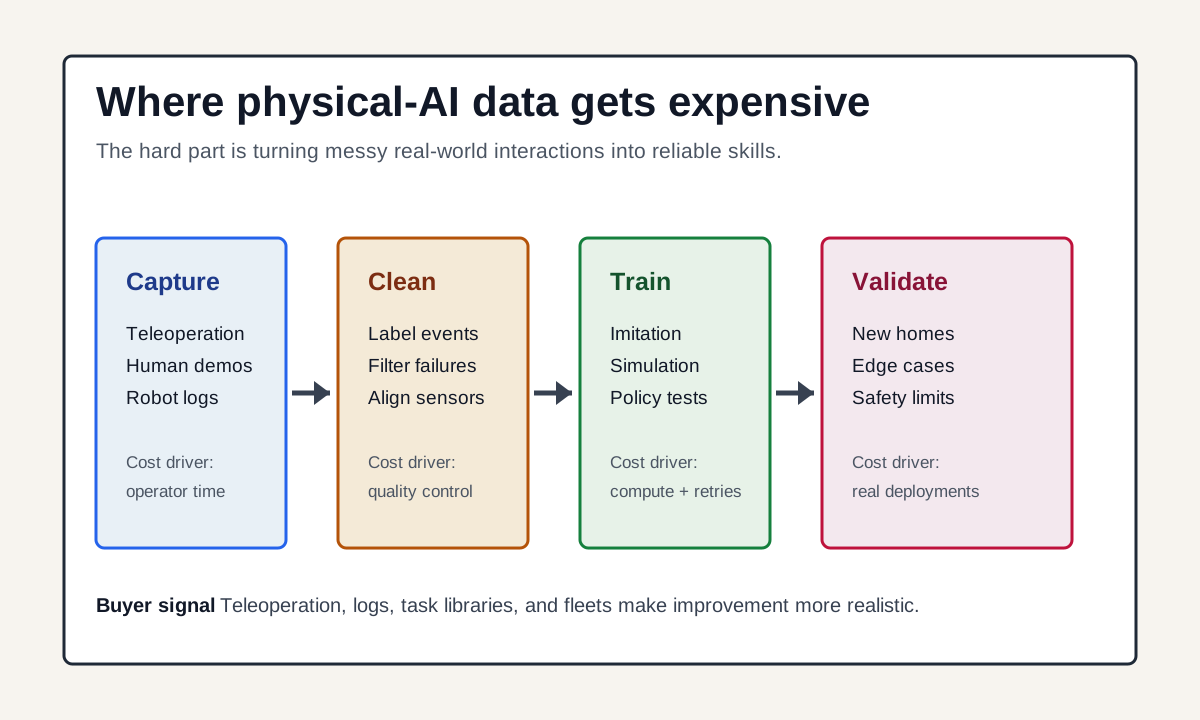
This matters because physical AI is different from chat AI. Text models learn from huge existing datasets. Home robots need embodied interaction data: camera views, depth, force, joint states, failed grasps, operator corrections, safety stops, and the messy before-and-after state of real objects. If that data is scarce or expensive, the product may remain a teleoperated demo machine for years. If the data loop is cheap and repeatable, the same robot body has a better chance of learning new chores over time.
Recent Chinese coverage of embodied-AI infrastructure has put a sharp number on the issue: scarce, high-quality robot interaction data can be expensive enough that companies are trying to push single-task collection costs down dramatically, including claims around low-cost wheeled dual-arm collection hardware and sub-90 ms cloud teleoperation loops. Kinetix AI's official research page points in the same general direction from the research side, describing household-like manipulation work such as clothing folding and hanging with a focus on data-efficient learning. Treat those claims carefully. They are not a guarantee that a consumer robot is ready. They are a signal that the next home-robot race may be about data economics as much as motors, batteries, or hands.
The Hidden Bill Behind "Learns Chores"
When a company says a robot learns from demonstration, the buyer sees one person moving one robot through one task. The company sees a much longer bill.
First, someone has to capture the demonstration. That can mean a human directly teleoperating a robot, a person wearing motion-capture gear, a user guiding the robot by hand, or a fleet robot logging its own attempts. Then the data has to be cleaned. Was the grasp successful? Did the object slip? Did the robot bump a chair? Which camera saw the object? Was the room lighting unusual? Did the operator rescue the task halfway through?
After that, the company has to train and test a policy, usually across many variations of the same task. A coffee mug on an empty counter is not the same problem as a glass in a cluttered sink. A shirt laid flat is not the same as a soft garment half hanging over a chair. A toy on a wood floor is not the same as a toy under a table leg.
This is why a cheap data flywheel can matter more than a spectacular one-off demo. If each new chore requires a custom engineering push, the product roadmap slows down. If the company has a repeatable pipeline for collecting, labeling, retraining, and validating robot behavior, the robot can improve more like a software product, though still much more slowly and carefully than an app.
What Counts As A Real Data Flywheel?
A credible home-robot data loop usually has at least four parts.
- A way to collect real interaction data from the robot body or a closely related training platform.
- A way to correct failures, often through teleoperation, user demonstration, or human review.
- A model or autonomy stack that can turn those corrections into better behavior.
- A deployment path that tests the improved skill outside the original demo scene.
That fourth point is where many home robots get stuck. A robot can be excellent in one lab room and confused in a normal home. The furniture moves. Pets interrupt. Objects are not where the robot expects them. Lighting changes. People leave cables, bags, socks, toys, and dishes in inconvenient places. For manipulation, tiny details matter: the angle of a handle, the softness of a garment, the friction of a floor, and the difference between a full bottle and an empty one.
That is why robots with teleoperation and research access can be more interesting than their consumer polish suggests. Hello Robot Stretch 4, for example, is not a mass-market appliance at $29,950, but ui44's database records a serious home-relevant platform: a 160 cm wheeled mobile manipulator, 45 cm diameter footprint, self charging, an 8-hour light-load runtime, wide-FOV depth sensing, LiDAR, wrist depth sensing, and open ROS 2/Python tools for mapping, navigation, data collection, and VLM grasping demos. The price is high, but the data story is legible.
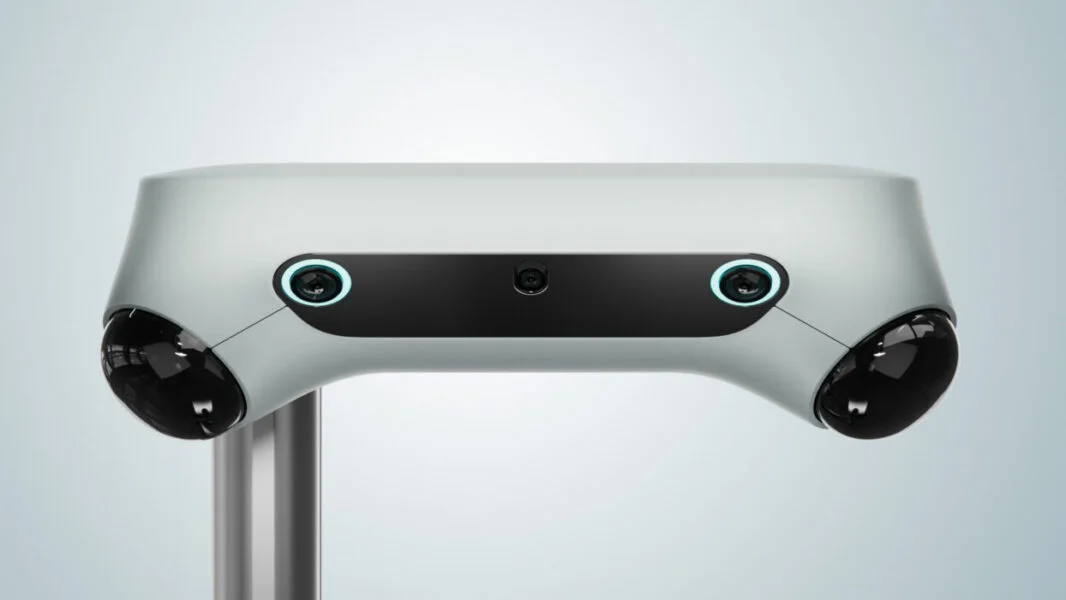
The same logic applies lower down the stack. LeRobot Humanoid is not a finished home humanoid. It is a prototype, ui44 lists it at about $2,636, and the current release is a 12-DOF biped without arms. But its value is not that it can clean your apartment. Its value is that it sits inside an open robot-learning ecosystem with simulation, logging, policy execution, and LeRobot data-collection integration. That kind of infrastructure can make experimentation cheaper, even when the hardware is far from consumer-ready.
The Robots That Make The Question Concrete
The buyer-facing data question looks different across current robot categories.
Robot
- ui44 status and price
- Pre-order, $20,000
- Why its data loop matters
- A home-focused humanoid needs real domestic task data, not just walking and presentation demos. ui44 records a soft 30 kg body, roughly 4-hour battery life, RGB cameras, depth sensors, tactile skin, and 1X Embodied Intelligence.
Robot
- ui44 status and price
- Available, $29,950
- Why its data loop matters
- A research and assistive mobile manipulator with open data-collection tools is expensive, but it gives developers a practical way to gather real home interaction data.
Robot
- ui44 status and price
- Pre-order, EUR 8,990 pioneer pricing
- Why its data loop matters
- A dual-arm outdoor robot built around train-by-demonstration and a shared task library shows how data loops may appear first in constrained yard tasks.
Robot
VLAI L1 Agile Mobile Manipulator
- ui44 status and price
- Active, 28,800 CNY starting price
- Why its data loop matters
- A low-cost wheeled dual-arm platform with ROS 2, Isaac Sim, MuJoCo, LeRobot, VR teleoperation, and data-collection compatibility can reduce experimentation cost before a consumer product exists.
Robot
- ui44 status and price
- Active, enterprise pricing
- Why its data loop matters
- Retail deployments, VLA models, and claims around 5,000+ product types show how structured commercial fleets can generate manipulation data before similar skills reach homes.
Robot
- ui44 status and price
- Active, not consumer-priced
- Why its data loop matters
- Its Helix VLA system and factory deployment path suggest that industrial fleets may train the manipulation stack before home buyers ever see a version.
| Robot | ui44 status and price | Why its data loop matters |
|---|---|---|
| 1X NEO | Pre-order, $20,000 | A home-focused humanoid needs real domestic task data, not just walking and presentation demos. ui44 records a soft 30 kg body, roughly 4-hour battery life, RGB cameras, depth sensors, tactile skin, and 1X Embodied Intelligence. |
| Hello Robot Stretch 4 | Available, $29,950 | A research and assistive mobile manipulator with open data-collection tools is expensive, but it gives developers a practical way to gather real home interaction data. |
| EEVE Willow X | Pre-order, EUR 8,990 pioneer pricing | A dual-arm outdoor robot built around train-by-demonstration and a shared task library shows how data loops may appear first in constrained yard tasks. |
| VLAI L1 Agile Mobile Manipulator | Active, 28,800 CNY starting price | A low-cost wheeled dual-arm platform with ROS 2, Isaac Sim, MuJoCo, LeRobot, VR teleoperation, and data-collection compatibility can reduce experimentation cost before a consumer product exists. |
| Galbot G1 | Active, enterprise pricing | Retail deployments, VLA models, and claims around 5,000+ product types show how structured commercial fleets can generate manipulation data before similar skills reach homes. |
| Figure 03 | Active, not consumer-priced | Its Helix VLA system and factory deployment path suggest that industrial fleets may train the manipulation stack before home buyers ever see a version. |
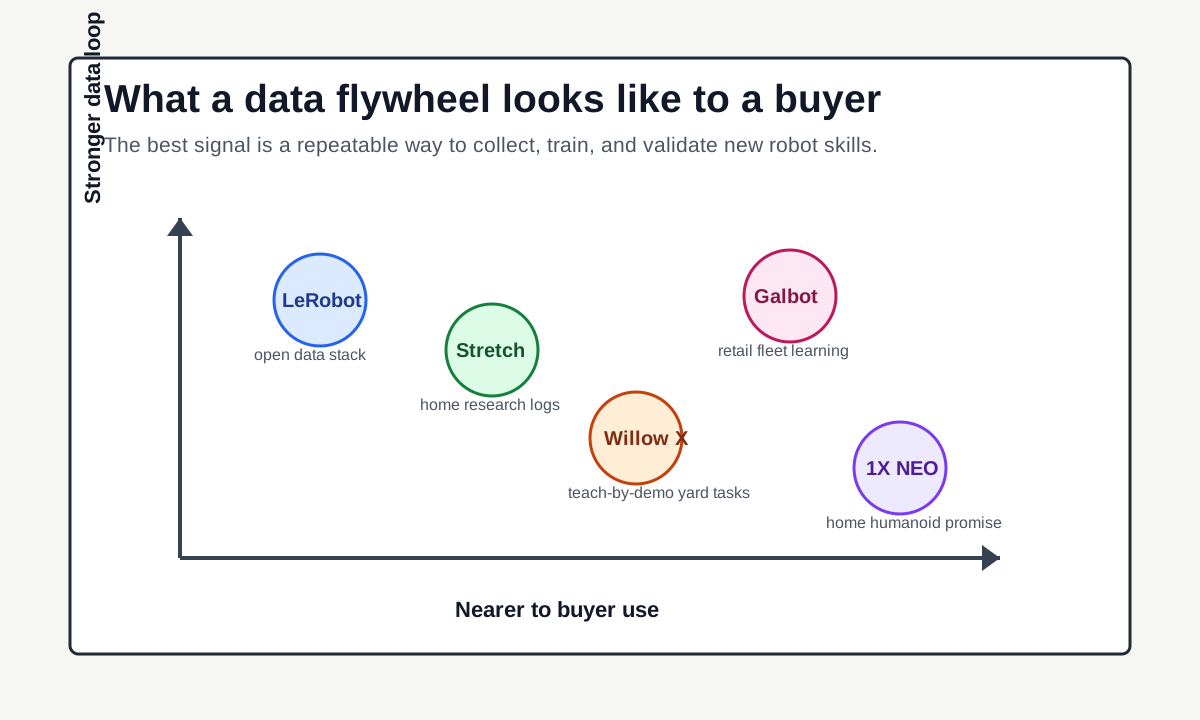
The pattern is clear: the robot that improves fastest may not be the one with the most humanlike shell. It may be the one connected to the cheapest, cleanest, highest-volume learning loop.
Why Cheap Data Does Not Automatically Mean A Good Home Robot
Low-cost data collection is necessary, but it is not sufficient. Buyers should separate three ideas that are often bundled together.
First is collection cost. If a company can cheaply capture many demonstrations, it has more raw material. That helps, especially for long-tail chores. Second is data quality. Ten thousand sloppy attempts may be worse than a smaller set of carefully labeled, safety-bounded demonstrations. Third is validation. A policy trained on one apartment, one store, or one lab still has to survive new layouts and new users.
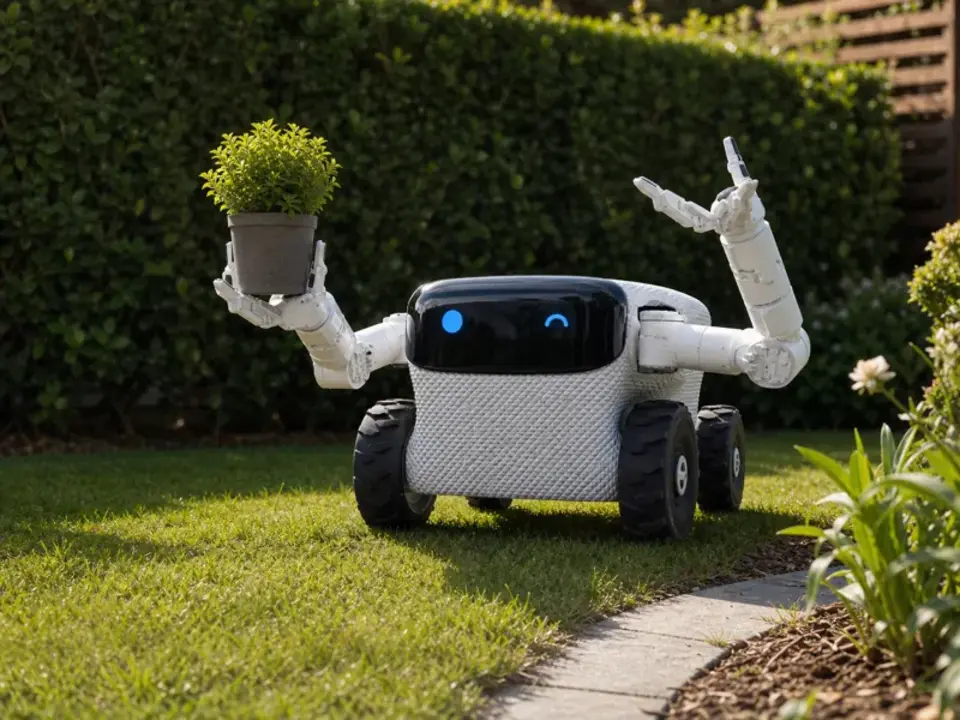
This is where home robots face a tougher problem than warehouse robots. Galbot G1 can learn from structured retail shelves, product SKUs, pharmacy layouts, and repeated pick-place workflows. That is valuable, but a home is less standardized. A Willow X may avoid part of that problem by focusing on outdoor and yard tasks, where EEVE's train-by-demonstration workflow can ask the owner to show a task several times before autonomous repetition. But even there, changing grass, mud, tools, sunlight, and obstacles make the data problem hard.
Home humanoids face the hardest version of the problem. NEO has the right buyer-facing framing: a home-focused humanoid, gentle manipulation, adaptive learning, a soft body, and tactile skin. But at $20,000 for early adopters, buyers should ask how quickly the company can turn household edge cases into safer and more capable updates. A robot that can fold one towel in a launch video is different from a robot that can handle a family's laundry without constant remote help.
The Teleoperation Question Buyers Should Ask
Teleoperation is not a dirty word. In early home robotics, it can be a practical bridge between today's autonomy and tomorrow's learned skills. The key is honesty.
If a company says the robot can be remotely assisted, ask what that assistance does for future autonomy. Does the robot log operator corrections? Are failed attempts used for training? Can users opt out of data collection? Is sensitive home video filtered or processed locally? Are new skills pushed as software updates, or does teleoperation remain the product?
Devanthro Robody is a useful contrast because its care model openly combines AI for routine support with VR teleoperation for tasks that need human judgment. That may be more honest than pretending full autonomy is solved. For elder care and disability support, remote help can be valuable, but privacy, consent, latency, and operator availability become part of the product.
The same applies to research platforms. Stretch 4's web and assistive teleoperation path is not just a convenience feature. It can be a source of correction data. VLAI's L1 lists VR teleoperation and data-collection compatibility. These systems are not normal consumer robots, but they show what the infrastructure side of the market is building: cheaper ways to produce useful embodied data.
A Buyer's Checklist For Physical-AI Claims
Before preordering a home robot on the promise that it will learn new chores, look for concrete answers.
Ask what data the robot actually collects. Camera-only logs are different from synchronized camera, depth, force, joint, and operator-correction data. Ask whether the robot can learn from your own demonstrations or only from company updates. Ask whether training happens locally, in the cloud, or through a hybrid system. EEVE Willow X is notable because ui44 records local training and execution claims for its Higgs system, while other products emphasize fleet or company-managed learning.
Ask how the company validates updates. A good answer should mention more than internal demos. It should include homes, pilot users, safety constraints, rollback paths, and clear limits on what the robot is allowed to attempt. A vague answer such as "AI improves over time" is not enough for a machine that moves around people and touches property.
Ask what happens when the robot fails. Can the user intervene? Can the company assist remotely? Is the failure logged? Is the object dropped safely? Does the robot know when to stop? The ability to stop safely is part of the data flywheel because it creates recoverable failures instead of dangerous ones.
Finally, ask how broad the task library really is. A shared task store, open dataset, or fleet-learning system is useful only if tasks transfer across homes. A robot that learns one owner's patio cleanup routine may not automatically understand another owner's shed, driveway, or garden path.
The Practical Takeaway
Robot training data cost is not an abstract AI-infrastructure issue. It decides which home robots have a path from "impressive demo" to "useful appliance" or "useful assistant."
For buyers today, the safest interpretation is skeptical but not cynical. Most home humanoids and mobile manipulators are still early. Full autonomy for open-ended chores is not here. But the data flywheel is becoming visible. Research platforms such as Stretch and LeRobot show how open tools can lower experimentation cost. Train-by-demonstration products such as Willow X show how a narrow task domain may be easier to scale. Enterprise fleets such as Galbot and Figure show how companies may learn manipulation in stores and factories before trying homes.
The robots worth watching are the ones that make their learning loop concrete. They explain how data is collected, corrected, trained, validated, and protected. They connect the robot body to a real stream of embodied experience. And they are honest about what still requires a human, a teleoperator, or a narrow environment.
That is the buyer signal. Do not only ask whether a robot has AI. Ask whether it can afford to learn.
Related in the database
Use this article as a buyer workflow
Turn the article into a real verification pass grounded in the robots, manufacturers, categories, components, and countries it actually references.
Robot Training Data Costs: A Buyer Guide already points you toward 10 linked robots, 9 manufacturers, and 5 countries inside the ui44 database. That matters because strong buyer guidance is easier to apply when you can move immediately from a claim or warning into concrete product pages, manufacturer directories, component explainers, and country-level context instead of treating the article as an isolated opinion piece. The fastest next step is to turn the article into a shortlist workflow: open the linked robot pages, verify which specs are actually published for those models, then compare the surrounding manufacturer and component context before you decide whether the underlying claim changes your buying plan.
For this topic, the useful discipline is to separate the editorial lesson from the catalog evidence. The article gives you the framing, but the robot pages tell you what each product actually ships with today: sensor stack, connectivity methods, listed price, release timing, category, and support-relevant compatibility notes. The manufacturer pages then show whether you are looking at a one-off launch, a broader lineup pattern, or a company that spans multiple categories. That layered workflow reduces the risk of buying on a single marketing phrase or a single support FAQ.
The fastest win is to keep the article’s editorial framing tied to real product pages. That way you can test whether NEO, Stretch 4, and Stretch 3 still make sense once price, category, release timing, and surrounding manufacturer context are visible in one place. If you want a quick working shortlist, open Compare NEO, Stretch 4, and Stretch 3 next, then keep this article open as the reasoning layer while you compare structured data side by side.
Practical Takeaway
Every robot, manufacturer, category, component, and country reference below resolves to a real ui44 page, keeping the follow-up path grounded in database records rather than generic advice.
Suggested next steps in ui44
- Open NEO first so the article’s main point is anchored to a real robot page.
- Use 1X Technologies to see the broader company context around the products linked in the article.
- Open the linked component pages when you want to separate a shared technology pattern from a single-brand story.
- Build a working shortlist with Compare NEO, Stretch 4, and Stretch 3.
- Keep a short note of what is already verified in the article and what still needs live confirmation from current vendor documentation.
Robot profiles worth opening next
Use the linked product pages as the evidence layer
The linked robot pages are where this article becomes operational. Instead of asking whether the headline is interesting, use the robot entries to inspect the actual mix of sensors, connectivity options, batteries, pricing, release timing, and stated capabilities attached to the products mentioned in the article. That is the easiest way to see whether the warning or opportunity described here affects one product family, a specific design pattern, or an entire buying lane.
NEO
1X Technologies · Humanoid · Pre-order
NEO is tracked on ui44 as a pre-order humanoid robot from 1X Technologies. The database currently records a listed price of $20,000, a release date of 2025-10-28, ~4 hours battery life, Not disclosed charging time, and a published stack that includes RGB Cameras, Depth Sensors, and Tactile Skin plus Wi-Fi and Bluetooth.
For general buyer research, this route gives you the concrete profile that the article alone cannot. Compare the published capabilities of Household Chores, Tidying Up, and Safe Human Interaction with the linked alternatives so the final decision is based on actual product fit, not just the framing of the article.
Stretch 4
Hello Robot · Home Assistants · Available
Stretch 4 is tracked on ui44 as a available home assistants robot from Hello Robot. The database currently records a listed price of $29,950, a release date of 2026-05-12, 8 hours (light CPU load) battery life, Not officially disclosed charging time, and a published stack that includes Wide-FOV depth sensing, High-resolution RGB cameras, and Calibrated RGB + depth perception plus its listed connectivity stack.
For general buyer research, this route gives you the concrete profile that the article alone cannot. Compare the published capabilities of Mobile Manipulation, Omnidirectional Indoor Mobility, and Autonomous Mapping and Navigation with the linked alternatives so the final decision is based on actual product fit, not just the framing of the article.
Stretch 3
Hello Robot · Home Assistants · Active
Stretch 3 is tracked on ui44 as a active home assistants robot from Hello Robot. The database currently records a listed price of $24,950, a release date of 2024, 2–5 hours battery life, Not disclosed charging time, and a published stack that includes Intel D405 RGBD Camera (gripper), Intel D435if RGBD Camera (head), and Wide-Angle RGB Camera (head) plus Wi-Fi 6E and Bluetooth.
For general buyer research, this route gives you the concrete profile that the article alone cannot. Compare the published capabilities of Mobile Manipulation, Autonomous Navigation, and Teleoperation (Web / Gamepad / Dexterous) with the linked alternatives so the final decision is based on actual product fit, not just the framing of the article.
LeRobot Humanoid
Hugging Face LeRobot · Research · Prototype
LeRobot Humanoid is tracked on ui44 as a prototype research robot from Hugging Face LeRobot. The database currently records a listed price of $2,636, a release date of 2026-05-21, Not officially disclosed battery life, Not disclosed charging time, and a published stack that includes BNO055 or BNO085 IMU and Joint/motor state feedback from RobStride actuators plus Dual CAN FD motor bus and USB CAN FD adapter.
For general buyer research, this route gives you the concrete profile that the article alone cannot. Compare the published capabilities of Open-source bipedal humanoid research platform, DIY assembly from 3D-printed parts and off-the-shelf components, and Simulation and real-hardware control through one runtime stack with the linked alternatives so the final decision is based on actual product fit, not just the framing of the article.
Willow X is tracked on ui44 as a pre-order lawn & garden robot from EEVE. The database currently records a listed price of €8,990, a release date of 2026, 5-8 hours; 600 Wh battery battery life, Approximately 3 hours charging time, and a published stack that includes Four onboard cameras, Two depth cameras, and Two recording cameras plus Wi-Fi and Optional 4G.
For general buyer research, this route gives you the concrete profile that the article alone cannot. Compare the published capabilities of Train-by-demonstration Task Learning, Autonomous Task Execution, and Dual-arm Manipulation with the linked alternatives so the final decision is based on actual product fit, not just the framing of the article.
Manufacturer context behind the article
Check whether this is one product story or a broader company pattern
Manufacturer pages add the market context that individual product pages cannot show on their own. They help you check whether the article is centered on a brand with a deep lineup, whether that brand spans several categories, and how much of its ui44 footprint depends on one flagship model versus a broader product strategy.
1X Technologies
ui44 currently tracks 2 robots from 1X Technologies across 1 category. The company is grouped under Norway, and the current catalog footprint on ui44 includes NEO, EVE.
That wider brand context matters because the best buying decision usually depends on lineup depth and adjacent options, not just the one model featured most prominently in the article. The category mix here currently points toward Humanoid as the most useful next route if you want to see whether this article reflects a wider pattern inside the brand.
Hello Robot
ui44 currently tracks 2 robots from Hello Robot across 1 category. The company is grouped under USA, and the current catalog footprint on ui44 includes Stretch 3, Stretch 4.
That wider brand context matters because the best buying decision usually depends on lineup depth and adjacent options, not just the one model featured most prominently in the article. The category mix here currently points toward Home Assistants as the most useful next route if you want to see whether this article reflects a wider pattern inside the brand.
Hugging Face LeRobot
ui44 currently tracks 2 robots from Hugging Face LeRobot across 1 category. The company is grouped under USA, and the current catalog footprint on ui44 includes LeRobot Humanoid, HOPEJr.
That wider brand context matters because the best buying decision usually depends on lineup depth and adjacent options, not just the one model featured most prominently in the article. The category mix here currently points toward Research as the most useful next route if you want to see whether this article reflects a wider pattern inside the brand.
EEVE
ui44 currently tracks 1 robot from EEVE across 1 category. The company is grouped under Belgium, and the current catalog footprint on ui44 includes Willow X.
That wider brand context matters because the best buying decision usually depends on lineup depth and adjacent options, not just the one model featured most prominently in the article. The category mix here currently points toward Lawn & Garden as the most useful next route if you want to see whether this article reflects a wider pattern inside the brand.
Broaden the scan without leaving the database
Categories, components, and countries add the wider context
Category framing
Category pages are useful when the article touches a buying pattern that shows up across brands. A category route helps you confirm whether the linked products sit in a narrow niche or whether the same question should be tested across a larger field of alternatives.
Humanoid
The Humanoid category page currently groups 129 tracked robots from 91 manufacturers. ui44 describes this lane as: Full-size bipedal humanoid robots built to work alongside people — from factory floors to household tasks. Compare the cutting edge of humanoid robotics.
That makes the category route a practical follow-up when you want to check whether the products linked in this article are typical for the lane or whether they sit at one edge of the market. Useful starting examples currently include NEO, EVE, Mornine M1.
Home Assistants
The Home Assistants category page currently groups 16 tracked robots from 14 manufacturers. ui44 describes this lane as: Arm-based household helpers — laundry folders, kitchen robots, and mobile manipulators that take on hands-on physical tasks around the home.
That makes the category route a practical follow-up when you want to check whether the products linked in this article are typical for the lane or whether they sit at one edge of the market. Useful starting examples currently include Robody, Futuring 2 (F2), Stretch 3.
Country and ecosystem context
Country pages give extra context when support practices, launch sequencing, regulatory posture, or manufacturer mix matter. They are not a substitute for model-level verification, but they do help you see which ecosystems cluster together and which manufacturers sit in the same regional field when you broaden the search beyond the article headline.
Norway
The Norway route currently groups 2 tracked robots from 1 manufacturers in ui44. That gives you a useful regional lens when the article points toward support practices, launch sequencing, or brand clusters that may share similar ecosystem assumptions.
On the current route, manufacturers like 1X Technologies make the page a good way to broaden the scan without losing the regional context that often shapes availability, documentation style, and adjacent alternatives.
USA
The USA route currently groups 89 tracked robots from 69 manufacturers in ui44. That gives you a useful regional lens when the article points toward support practices, launch sequencing, or brand clusters that may share similar ecosystem assumptions.
On the current route, manufacturers like Faraday Future, iRobot, Boston Dynamics make the page a good way to broaden the scan without losing the regional context that often shapes availability, documentation style, and adjacent alternatives.
Belgium
The Belgium route currently groups 1 tracked robots from 1 manufacturers in ui44. That gives you a useful regional lens when the article points toward support practices, launch sequencing, or brand clusters that may share similar ecosystem assumptions.
On the current route, manufacturers like EEVE make the page a good way to broaden the scan without losing the regional context that often shapes availability, documentation style, and adjacent alternatives.
Questions to answer before you move from reading to buying
A follow-up FAQ built from the entities already linked in this article
Frequently Asked Questions
Which page should I open first after reading “Robot Training Data Costs: A Buyer Guide”?
Start with NEO. That gives you a concrete product anchor for the article’s main claim. From there, branch into the manufacturer and component pages so you can tell whether the article is describing one specific model, a repeated brand pattern, or a wider technology issue that affects multiple shortlist options.
How do the manufacturer pages change the buying decision?
1X Technologies help you zoom out from one article and one product. On ui44 they show lineup breadth, category spread, and the neighboring robots tied to the same company. That context is useful when you are deciding whether a risk belongs to a single model, whether it shows up across a brand’s portfolio, and whether you should keep looking at alternatives before committing.
When should I switch from reading to side-by-side comparison?
Move into Compare NEO, Stretch 4, and Stretch 3 as soon as you understand the article’s main warning or promise. The article explains what to watch for, but the compare view is where you can check whether price, status, battery life, connectivity, sensors, and category fit still make the robot a good match for your own home and budget.
Where to go next in ui44
Keep the research chain inside the database
If you want to keep going, these follow-on pages give you the cleanest expansion path from article to research session. Open the comparison route first if you are deciding between products today. Open the manufacturer, category, and component routes if you still need to understand the broader pattern behind the claim.
Written by
ui44 Team
Published June 8, 2026
Share this article
Open a plain share link on X or Bluesky. No embeds, no widgets, no cookie baggage.