Robot improvisation is one of the hottest ideas in home robotics right now. The promise sounds almost magical: a robot sees a problem it was not explicitly scripted for, makes a reasonable adjustment, and keeps going.
That is the dream. The reality in 2026 is more limited, but still important.
The best home-robot systems are starting to show something more useful than a perfect lab demo. They are showing recovery. A robot notices the scene is a little different, changes its approach, and finishes more of the task without a human stepping in immediately. That is a meaningful step beyond simple if-this-then-that automation.
For buyers, the key question is not whether a company says its robot can "improvise." It is whether the robot can handle the small messiness of a real home: clutter, unusual object positions, changing lighting, fragile items, pets, and people moving through the room.
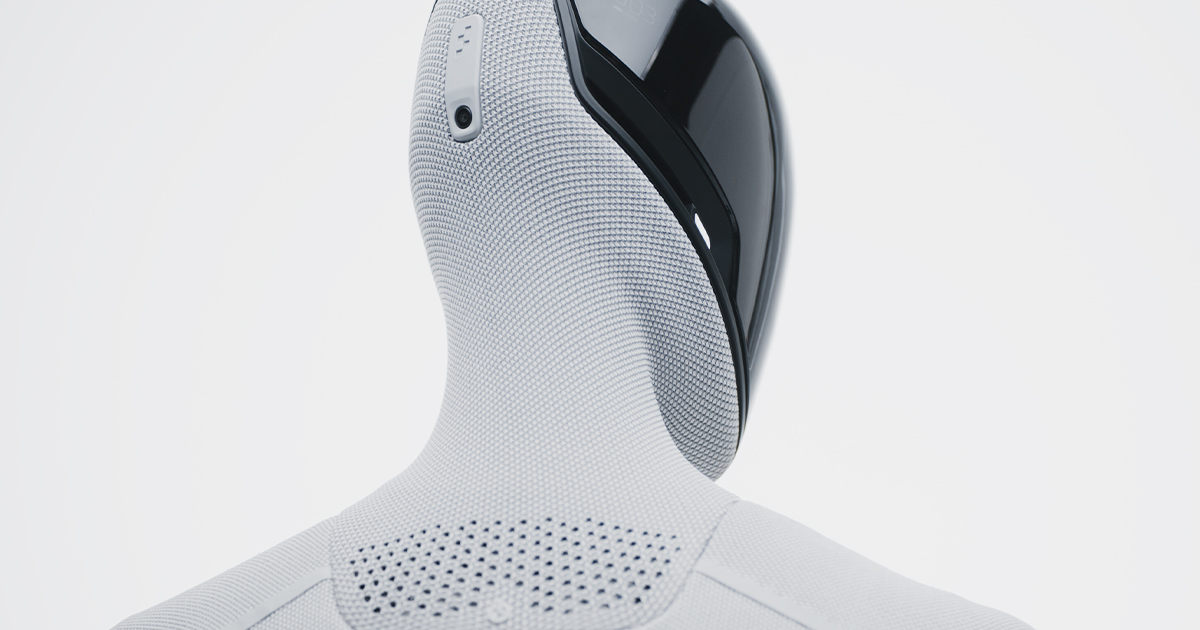
Using the ui44 robot database, the practical answer is this: no consumer home robot today is genuinely open-ended in the way a person is. But a few robots are getting noticeably better at adaptation, and the gaps between the leaders are now easier to see.
What robot improvisation actually means
In plain language, robot improvisation is not consciousness, creativity, or science-fiction reasoning. It is usually one of three smaller things.
1. Reactive behavior
The robot notices something changed and picks a different motion. That could be avoiding a chair leg, re-grasping an object, or adjusting its route through a room.
2. Task recovery
The robot starts a job, hits a small failure, and still finishes without a full reset. This is the difference between a robot that freezes when a bowl is placed slightly differently and a robot that tries another angle.
3. Generalization from prior training
The robot was not manually scripted for this exact scene, but it saw enough similar examples during training that it can produce a workable response.
That last point matters most. A lot of robotics marketing still turns every successful adjustment into a claim about broad intelligence. Buyers should be more skeptical than that. A robot can generalize within a narrow range and still be very far from trustworthy all-purpose autonomy.
Why this matters more at home than in a lab
Homes are brutal for robots.
They have reflective surfaces, narrow gaps, inconsistent lighting, soft objects, fragile items, pets, laundry piles, mixed flooring, and humans who do not stand still and help the machine.
That is why I think home robotics is the best place to judge so-called improvisation claims. A warehouse can be partially structured around the robot. A home usually is not. If a company says its robot is getting smarter, the right buyer test is simple: does that intelligence survive outside a staged moment?
Figure makes this point explicitly in its official Figure 03 launch materials, where it says the robot is designed for "Helix, the home, and the world at scale." The company also says the new hardware is meant for "intelligent navigation and precise manipulation in complex, cluttered spaces such as homes."
That is the right target. It is also the hardest target.
The closest thing to improvisation in official 2026 demos
A few companies are now showing stronger evidence than a single pick-and-place clip. The signals are still uneven, but they are useful.
Figure 03 and Helix 02 show the strongest adaptation story
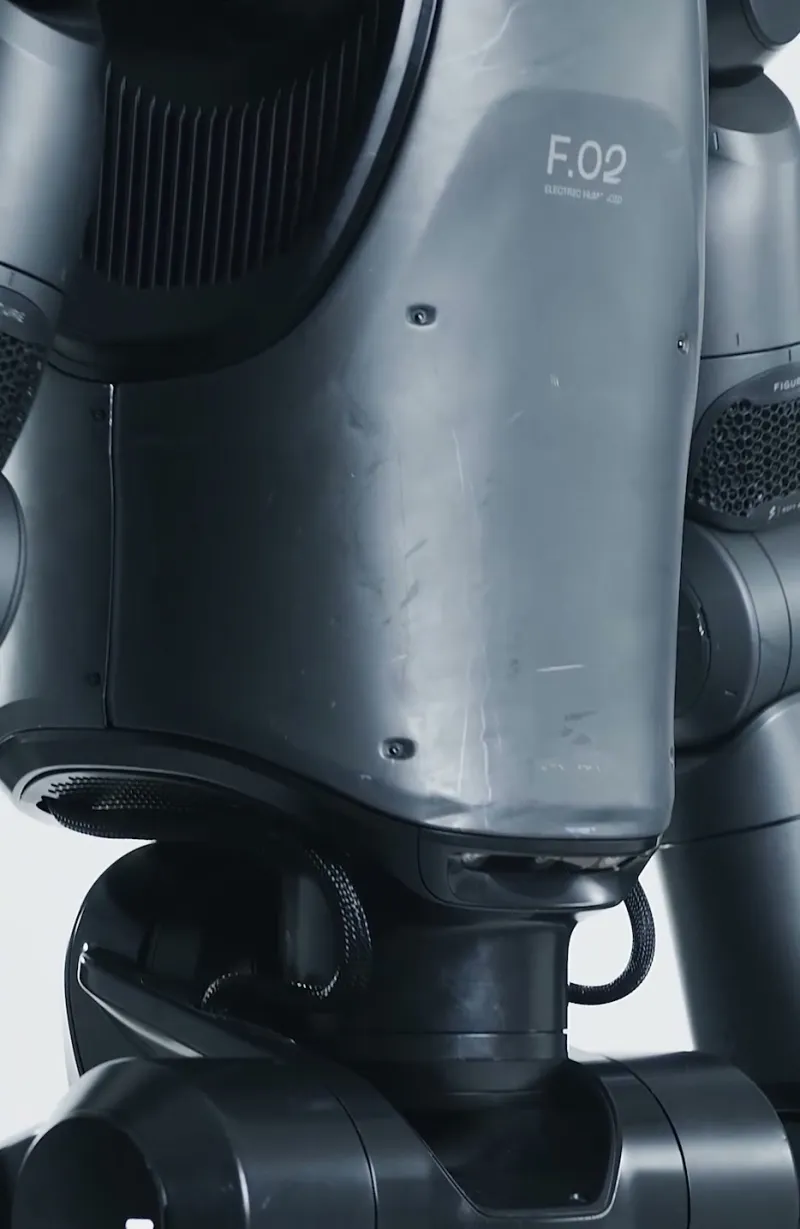
In ui44's database, Figure 03 is listed as an active humanoid with no announced price, a height of 168 cm, a weight of 60 kg, and roughly 5 hours of battery life. Those are serious machine specs, not appliance specs.
What makes Figure more interesting is the official autonomy evidence around Helix 02. Figure says Helix 02 can unload and reload a dishwasher across a full-sized kitchen in a continuous four-minute task with no human intervention, combining walking, manipulation, and balance. It also says the system now uses palm cameras, fingertip tactile sensing, and a unified full-body control stack rather than stitching together separate movement phases.
That matters because it sounds less like a scripted pose demo and more like an attempt at task continuity.
It still has big limits.
- The evidence is still company-run, not independent home validation.
- ui44 still lists Figure 03 with no consumer purchase path.
- A longer demo is not the same thing as months of reliable household use.
So yes, Figure is one of the best current examples of home-robot adaptation. No, that does not mean Figure 03 is a near-term household buy.
1X NEO is more honest about where autonomy stops
1X NEO is easier to evaluate because the official product page is more explicit about the transition between autonomy and human help.
In ui44's database, NEO is listed at $20,000 for early adopters, 167 cm tall, 30 kg, and in pre-order status. Officially, 1X says NEO works "autonomously by default," but also says users can schedule a 1X Expert to guide a chore the robot does not know, helping NEO learn while getting the job done.
That is not full improvisation. But it is a more believable bridge between demo culture and real product use.
For buyers, that matters a lot. A robot that openly admits where it still needs supervised help is easier to trust than one that implies it already solves every edge case.

Sunday Memo looks promising because it is training in messy homes
Sunday Memo is one of the most interesting home-robot projects in ui44 precisely because its official story is not centered on one polished moment.
Our database lists Memo with no announced retail price, development status, and a late-2026 beta timeline. Sunday says Memo is trained using its ACT-1 robotics model plus a Skill Capture Glove pipeline, and the company says hundreds of people in unique homes are showing the robot how chores are done. Official materials also say Memo can clear tables, load dishwashers, fold socks, handle glassware, and pull espresso shots.
That is the kind of training story you want if the goal is adaptation. Homes are different, so a robot trained only in pristine demo kitchens will hit a wall fast.
Still, Memo is a development-stage product with no public retail pricing. It is closer to a strong signal than a buying recommendation.
Some robots are adaptive without being good at chores
Not every kind of robot improvisation is about arms, kitchens, or laundry.
Samsung Ballie is adaptive, but mostly in a lighter-weight way
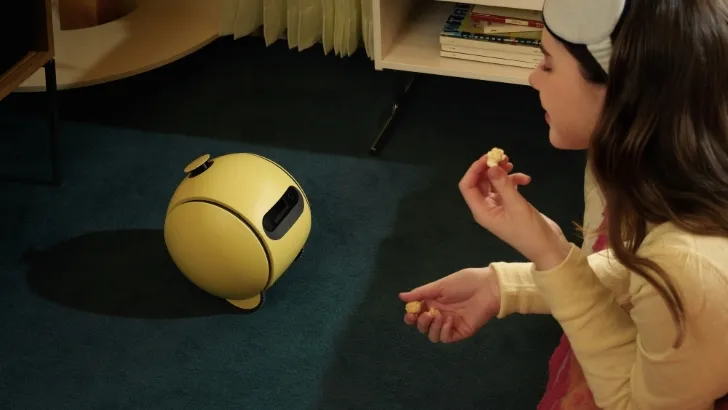
Samsung Ballie is not a manipulation robot at all. It is a rolling home companion.
Ballie remains an unreleased concept with no confirmed retail price. Samsung's April 9, 2025 announcement promised consumer availability in summer 2025; that dated promise does not establish a completed launch. Samsung announced Google Gemini plus Samsung's own language models, and that it can process audio, voice, camera input, and environmental sensor data together. That multimodal setup simply means Ballie is combining several kinds of input at once instead of reacting to a single command stream.
Official use cases include smart-home control, schedule management, reminders, family or pet updates, and conversational assistance.
Those are announced adaptation capabilities in a narrower domain. Ballie may become useful at contextual conversation and home orchestration long before it becomes relevant to physical household chores, because it has no arms to manipulate the world.
That still matters for buyers. Sometimes the smarter home robot is the one that makes a smaller promise.
LOVOT is a reminder that unscripted behavior is not the same as useful labor
LOVOT is almost the opposite case.
ui44 lists LOVOT 3.0 at ¥577,500, plus a monthly care plan from ¥9,900/month, and marks it as available now. The current model stands about 43 cm tall, weighs 4.6 kg, and uses 50+ sensors. GROOVE X's official technology page says LOVOT's actions are not pre-programmed and are instead generated in real time from sensor input, deep learning, and changing interaction with its owner.
That is a valid kind of robot adaptation. It is just aimed at emotional presence, not productivity.
This is an important buyer distinction. A robot can feel alive, reactive, and social without being remotely close to autonomous kitchen work. The market is starting to split more clearly between those categories.

Which ui44 robots are closest to real home improvisation?
The table below is the simplest way I know to compare the current field.
Robot
- ui44 price/status snapshot
- No price, active, 168 cm, 60 kg
- What official materials suggest
- Long-horizon full-body autonomy is the core pitch
- Where the real gap still is
- No consumer launch path, no independent home reliability proof
Robot
- ui44 price/status snapshot
- $20,000, pre-order, 167 cm, 30 kg
- What official materials suggest
- Home-focused autonomy with explicit expert fallback
- Where the real gap still is
- Still early, still partly supervised in edge cases
Robot
- ui44 price/status snapshot
- No price, development
- What official materials suggest
- Learns household skills from many real homes
- Where the real gap still is
- Beta-stage only, no broad consumer proof yet
Robot
- ui44 price/status snapshot
- No price, unreleased
- What official materials suggest
- Real-time multimodal adaptation for conversation and home control
- Where the real gap still is
- No physical manipulation, repeated delays
Robot
- ui44 price/status snapshot
- ¥577,500 + care plan, available
- What official materials suggest
- Real-time unscripted social behavior and personality development
- Where the real gap still is
- Not a chores robot at all
| Robot | ui44 price/status snapshot | What official materials suggest | Where the real gap still is |
|---|---|---|---|
| Figure 03 | No price, active, 168 cm, 60 kg | Long-horizon full-body autonomy is the core pitch | No consumer launch path, no independent home reliability proof |
| 1X NEO | $20,000, pre-order, 167 cm, 30 kg | Home-focused autonomy with explicit expert fallback | Still early, still partly supervised in edge cases |
| Sunday Memo | No price, development | Learns household skills from many real homes | Beta-stage only, no broad consumer proof yet |
| Samsung Ballie | No price, unreleased | Real-time multimodal adaptation for conversation and home control | No physical manipulation, repeated delays |
| LOVOT | ¥577,500 + care plan, available | Real-time unscripted social behavior and personality development | Not a chores robot at all |
My blunt takeaway is this: the industry has not solved general home improvisation, but it has started to break it into believable sub-problems. That is progress.
How to tell whether a robot demo is showing real adaptation
If you are comparing robots on ui44 or watching manufacturer videos, ask five questions.
1. Is it a full task or just a moment?
A robot picking up one object tells you almost nothing. A robot completing a multi-step task tells you more.
2. Does the environment look annoying enough?
A spotless counter is easy. Mixed objects, partial blockage from one object hiding another (occlusion), narrow spaces, and changing item positions are more convincing.
3. Does the robot recover from small mistakes?
Real home usefulness starts when a robot can hesitate, adjust, and continue. That is closer to improvisation than a perfect first try in a fixed setup.
4. Is human help disclosed?
If a company mentions teleoperation, expert assistance, or guided learning, that is not a dealbreaker. Hidden intervention is worse than disclosed intervention.
5. Can you actually buy the robot?
This is the simplest filter of all. A spectacular demo with no price, no ship date, and no purchase path deserves curiosity, not immediate trust.
Should buyers pay for robot improvisation in 2026?
Usually, not directly.
What buyers should pay for in 2026 is the practical outcome of better adaptation:
- fewer stuck moments
- better recovery in clutter
- fewer fragile-object mistakes
- more useful scheduling and conversational context
- less babysitting
If you want a robot today, the most realistic choices are still narrow ones. Companion robots like LOVOT already deliver a clear social promise. Smart assistants like Samsung Ballie may make sense if they ever ship at a sane price. Humanoids like 1X NEO, Figure 03, and Sunday Memo are more exciting, but they are still better understood as early signals than settled consumer products.
If you want to compare where these robots sit today, ui44's compare tool is more useful than almost any keynote. It forces the marketing claims back into price, status, size, battery, and actual availability.
Frequently Asked Questions
Is robot improvisation the same as AGI?
No. AGI means artificial general intelligence, the idea of a system with much
broader human-like reasoning across many domains. In home robotics,
improvisation usually means the robot can recover from a small problem or
generalize within a known task family. That is very different from open-ended
human reasoning.
Which robot in ui44 looks closest to true home improvisation?
Today, Figure 03 has the strongest official home-autonomy
story, while 1X NEO has the most transparent bridge between
autonomy and human backup. Sunday Memo is the most
interesting training-data story.
Are companion robots also "improvisational"?
Sometimes, yes. LOVOT adapts socially and reacts in real time,
but that is different from a robot learning to tidy a kitchen.
What should buyers trust more: a long demo or a real ship date?
A real ship date, price, and support path usually matter more. The best signal
is when a company has both credible demos and a believable product path.
Written by
ui44 Team
Published April 14, 2026
Share this article
Open a plain share link on X or Bluesky. No embeds, no widgets, no cookie baggage.