SoftBank Robotics' Japanese Pepper+ pages describe a premium humanoid with AI agent capability, updated tablet hardware, vision analysis, and retail-focused apps. That does not make Pepper+ a consumer home robot. It does make it a useful case study for anyone watching companion robots, care robots, and social humanoids in 2026.
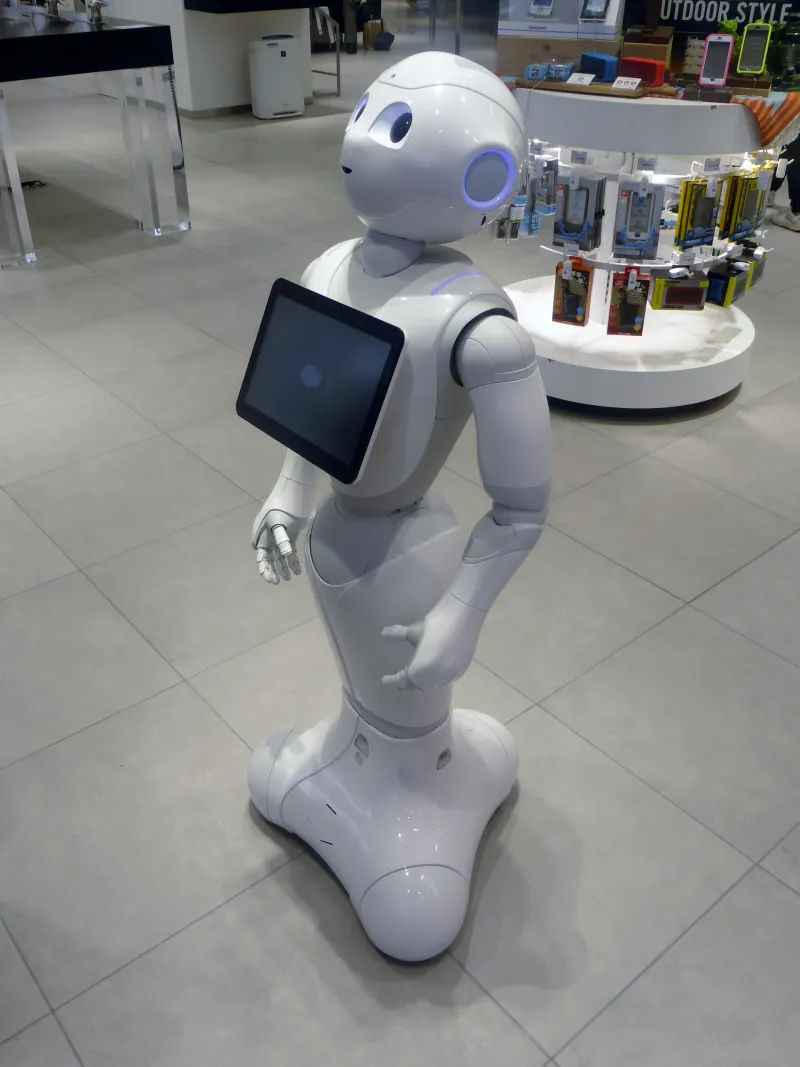
The short version: AI agents can make social humanoids more useful, but only when the robot is tied to a narrow, measurable job. Pepper+ looks strongest in retail, reception, events, and facility workflows. For homes, the lesson is more cautious: buyers should judge every social robot by utility, support continuity, privacy controls, and human fallback paths—not by how alive it feels in a demo.
What Pepper+ actually is
SoftBank Robotics announced Pepper+ on February 2, 2026, alongside a Guinness World Records recognition for Pepper as the "First mass-produced humanoid service robot." The official release says Pepper has been active for more than 10 years since its June 2014 debut, and that Pepper+ adds current AI and image analysis technology.
On the Pepper+ product page, SoftBank frames the robot around AI接客エージェント—an AI sales/customer-service agent. The claimed workflow is straightforward: Pepper+ recognizes people, notices clothing or expression cues, learns store product and service information, and makes product suggestions through conversation. The official AI-agent page says the robot can call out to passersby, ask about a customer's interests, and recommend products in a more standardized way than a one-off human sales pitch.
The current public pricing also tells you who Pepper+ is for. SoftBank lists an AI-use annual plan at ¥79,800 per month, plus an initial ¥9,800 contract fee. It also lists a short-term plan at ¥150,000 per use for one-month-or-less event rentals. Those prices are for businesses, not households. The FAQ is even clearer: as of the launch announcement, migration timing for Pepper for Care, Education, and Home users was still undecided, while existing Pepper for Promotion users were the priority.
That matters because social robots often blur categories. Pepper+ may look like a companion robot, but its launch package is closer to a robotic kiosk, greeter, event host, access-control assistant, and scripted-but-updatable AI sales agent. The body creates attention. The AI agent is supposed to turn that attention into a measurable outcome.
Can AI agents make Pepper+ useful again?
The original Pepper was already a serious piece of social robot hardware. In the ui44 database, Pepper is listed as a 120 cm, 29.6 kg semi-humanoid robot with roughly 12 hours of shop-use battery life, about 20 degrees of freedom, two RGB cameras, a 3D depth sensor, four microphones, touch sensors, sonars, laser sensors, and bumpers. Its legacy Japan launch pricing was about ¥198,000, roughly $1,800, before regional and service-plan complexity.
Those specs were enough to make Pepper memorable. They were not enough to make Pepper indispensable. Pepper could attract attention in banks, stores, restaurants, airports, and events. The harder question was always: what useful thing happens after the person stops and smiles?
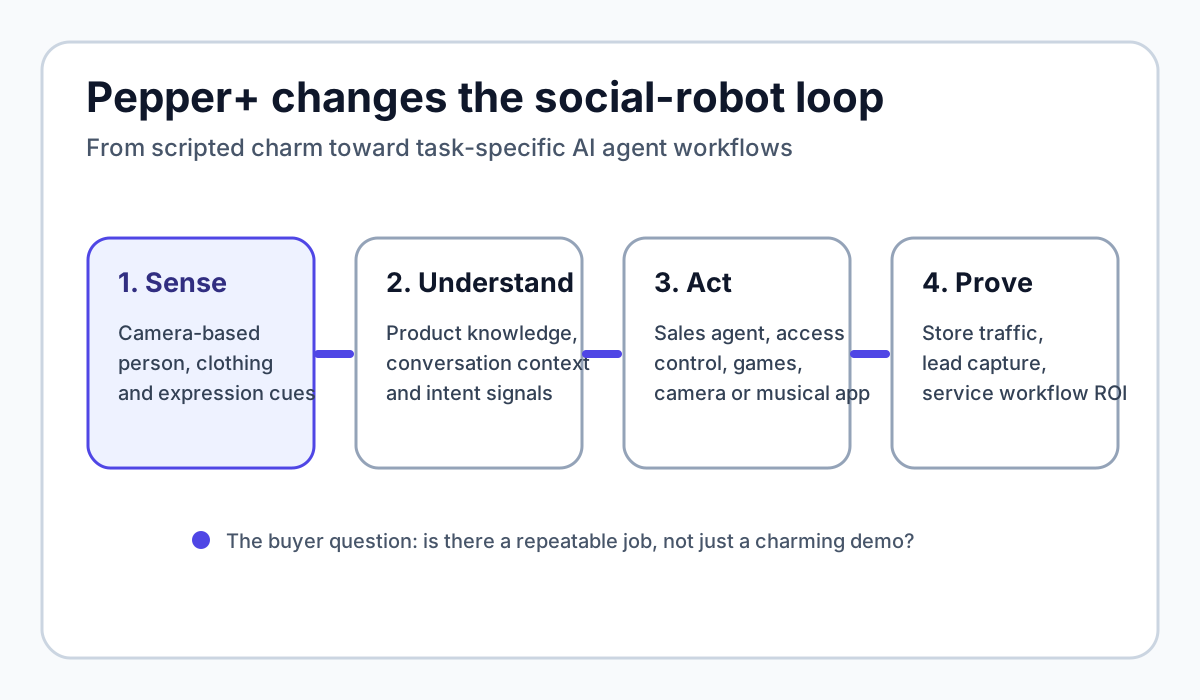
Pepper+ is a more disciplined answer. SoftBank is not merely saying, "the robot can talk better now." It is packaging the robot around apps: AI sales agent, office entry/exit management, Pepper Game Center, an improvisational camera app, and a generated musical/photo entertainment experience. The retail page also points to claimed internal case examples, including higher foot-stopping or traffic effects when Pepper is deployed in sales/event contexts.
Treat those performance claims as vendor claims, not universal guarantees. But the structure is right. A social humanoid becomes more credible when it can be evaluated like any other tool: did it bring people into the booth, answer the same questions consistently, reduce staff load, capture leads, route visitors, or create a repeatable experience?
That is the part home-robot watchers should pay attention to. The breakthrough is not "Pepper has generative AI." The breakthrough, if it holds up in the field, is that Pepper+ narrows the robot's promise to jobs where attention, speech, vision, and a public body are actually useful.
What this means for home-robot buyers
ui44 now tracks more than 240 robots, and the companion/social category is already full of products that sound similar in marketing but solve very different problems. Pepper+ is useful because it separates two questions that buyers often mix together:
- Can the robot create social engagement?
- Does that engagement lead to a repeatable useful outcome?
Here is the practical comparison.
Robot
- What ui44 tracks
- 120 cm, 29.6 kg, 20 DoF, ~12h shop battery, social/reception use
- What the Pepper+ news teaches
- Scale and charm are not enough without durable workflows
Robot
- What ui44 tracks
- Older-adult companion; $249.99 enrollment + $59.99/mo plan
- What the Pepper+ news teaches
- Narrow care routines can justify recurring service better than generic friendship
Robot
- What ui44 tracks
- ¥577,500 LOVOT 3.0 plus monthly care plan; pet-like emotional companion
- What the Pepper+ news teaches
- Emotional robots work best when sold honestly as emotional products
Robot
- What ui44 tracks
- 123 cm, ~26 kg, multi-LLM social robot with arms and VSLAM
- What the Pepper+ news teaches
- Physical assistance plus social interaction is a stronger business case than chat alone
Robot
- What ui44 tracks
- €17,066.95 developer/social robot platform with APIs and sensors
- What the Pepper+ news teaches
- Programmability matters if the buyer needs custom human-robot workflows
Robot
- What ui44 tracks
- $299 kid companion with learning content, camera, microphones, parental controls
- What the Pepper+ news teaches
- Social AI needs age-specific guardrails, not just fun conversation
Robot
- What ui44 tracks
- $1,599 invite-only mobile home monitoring robot with Alexa/Ring workflows
- What the Pepper+ news teaches
- A home robot is clearer when tied to monitoring, check-ins, or security
| Robot | What ui44 tracks | What the Pepper+ news teaches |
|---|---|---|
| Pepper | 120 cm, 29.6 kg, 20 DoF, ~12h shop battery, social/reception use | Scale and charm are not enough without durable workflows |
| ElliQ 3 | Older-adult companion; $249.99 enrollment + $59.99/mo plan | Narrow care routines can justify recurring service better than generic friendship |
| LOVOT | ¥577,500 LOVOT 3.0 plus monthly care plan; pet-like emotional companion | Emotional robots work best when sold honestly as emotional products |
| Mirokaï | 123 cm, ~26 kg, multi-LLM social robot with arms and VSLAM | Physical assistance plus social interaction is a stronger business case than chat alone |
| Misty II | €17,066.95 developer/social robot platform with APIs and sensors | Programmability matters if the buyer needs custom human-robot workflows |
| Miko 3 | $299 kid companion with learning content, camera, microphones, parental controls | Social AI needs age-specific guardrails, not just fun conversation |
| Amazon Astro | $1,599 invite-only mobile home monitoring robot with Alexa/Ring workflows | A home robot is clearer when tied to monitoring, check-ins, or security |
The pattern is not "humanoid beats non-humanoid" or "AI beats scripted." The pattern is fit. A robot that entertains shoppers for five minutes may be useful in a store and useless in a kitchen. A robot that nudges medication and helps a caregiver check in may be valuable even if it cannot pick up a sock. A robot dog or pet-like companion can be worth buying if the buyer knowingly wants emotional presence, not chores.
Pepper+ should therefore make buyers more skeptical, not less. If a future home social humanoid says it has an AI agent, ask what the agent is allowed to do. Can it schedule, escalate, verify, remember, or control smart-home devices? Can it handle sensitive contexts? Can the user see what it remembers? What happens if the monthly AI service changes?
Where Pepper+ style robots fit first
The most realistic first markets for AI social humanoids are controlled and semi-public. Retail stores, reception desks, event booths, museums, schools, hotels, hospitals, and care facilities have repeatable interactions. The robot can be installed in a known place, trained on known content, supervised by staff, and measured against a practical target.
Homes are harder. Homes are messy, private, emotionally complex, and full of ambiguous requests. A family does not want a robot that sells more bread or generates a tourist poster. It wants something like: check on a parent, keep a child safe, help a guest, remember routines, notice risk, or coordinate with other devices without becoming creepy.
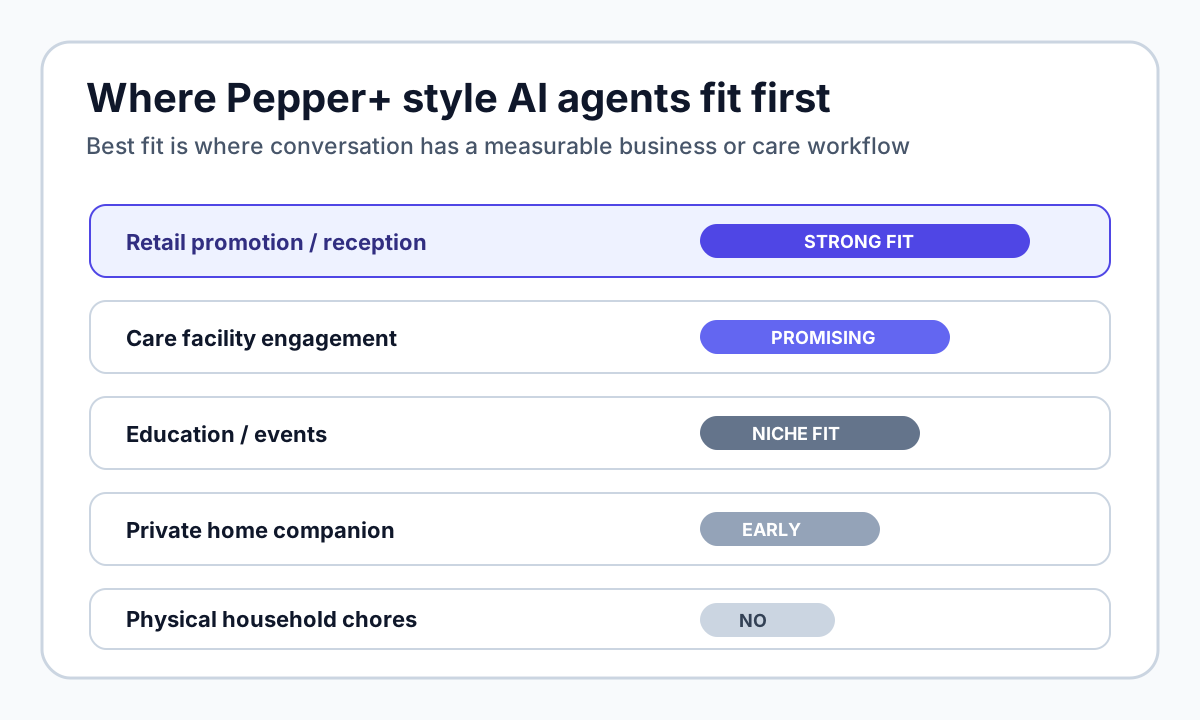
That is why Pepper+ is not evidence that home humanoids are suddenly solved. It is evidence that the industry is learning to wrap social robots around more specific jobs. The strongest near-term cases are customer interaction, front-desk routing, engagement in supervised care settings, and educational or event experiences. The weakest case remains general-purpose household help, because Pepper+ does not add arms, manipulation, laundry skill, dish loading, or safe physical assistance.
This is also why Pepper+ belongs next to—not above—robots like ElliQ, LOVOT, Mirokaï, and Astro in a buyer's mental map. Different bodies solve different problems. A wheeled humanoid with a tablet can be great at public interaction. A tabletop care companion may be better for daily routine nudges. A mobile home monitoring robot may be better for checking rooms. A service robot with arms may be better for actual facility work.
What AI agents still do not solve
AI agents improve the conversation layer. They do not automatically fix the hard parts of living with a robot.
Physical ability is still separate from intelligence. Pepper+ can speak, recognize, recommend, guide, and entertain. It is not a chore robot. If your main question is whether a humanoid can load a dishwasher, fold laundry, or tidy a bedroom, Pepper+ is not the evidence you need.
Privacy becomes more important, not less. The Pepper+ pitch depends on cameras, person recognition, clothing/expression cues, conversation, and product knowledge. In a store, that raises customer-disclosure and data-handling questions. In a home, the same pattern would be even more sensitive because the robot would see routines, faces, rooms, possessions, and vulnerable moments.
AI support has to be funded. The old social-robot graveyard is full of products that were charming but hard to support. Generative AI adds more costs: model access, content moderation, safety testing, memory infrastructure, localization, updates, and customer support. A recurring plan is not a flaw by itself, but buyers should understand what the plan pays for and what works if it ends.
Human fallback is mandatory. A social robot that gives sales advice, care prompts, educational content, or access-control help must know when to stop and hand off to a person. The more humanlike the robot feels, the more important that boundary becomes.
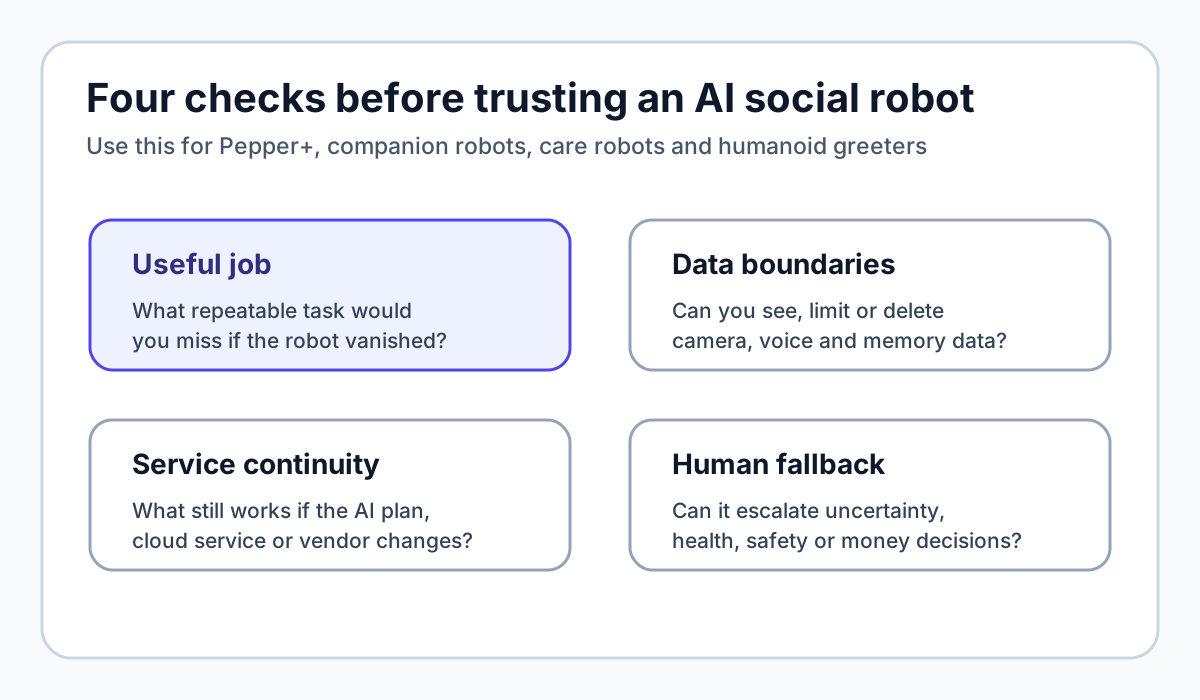
The healthiest way to view Pepper+ is as a better interface for bounded work. It is not a magic personality upgrade. If a company can define the work, supervise it, measure it, and support the AI layer, a social humanoid may finally earn its space. If the company cannot define the work, AI simply makes the demo smoother.
How to judge the next social humanoid announcement
When the next Pepper-like robot appears, do not start with the face. Start with these questions:
- What job does it do every week? Companionship can be real, but the buyer should be able to name the recurring value: care check-ins, learning, reception, monitoring, coaching, entertainment, or facility support.
- What is the business model? Hardware-only social robots are risky if the product depends on cloud AI, content, moderation, or repairs. Subscription robots are not automatically bad, but the value must be visible.
- What does the robot remember? AI agents are more useful when they know context. They are also more invasive when the user cannot inspect, delete, or limit that context.
- What can it refuse? A good social robot should be able to say it is unsure, redirect sensitive questions, and escalate to a human.
- What still works offline or after cancellation? The answer tells you whether you are buying a robot, renting a cloud character, or both.
For Pepper+, the answer is fairly clear: it is a business-facing social humanoid, not a household helper. The interesting part is that SoftBank is marketing it around AI-agent workflows rather than vague companionship. That is a healthier direction for the category.
Bottom line: Pepper+ is a useful warning and a useful signal
Pepper+ does not prove that social humanoids are ready for every home. It does prove something subtler: the next phase of social robots will be judged by whether AI turns interaction into outcomes.
For stores and events, that outcome might be attention, routing, product recommendation, or lead capture. For care settings, it might be engagement, routine support, or staff assistance. For homes, the bar is higher because the robot must earn trust in private space over months and years.
That makes Pepper+ worth watching. It is a reminder that the old Pepper problem was never simply a lack of personality. Pepper had personality. The missing piece was durable utility. AI agents can help fill that gap—but only when the robot has a real job, honest limits, and a support model strong enough to last.
If you are comparing social robots today, start with Pepper, ElliQ 3, LOVOT, Misty II, and Amazon Astro, then use the ui44 comparison tool to separate the product's body, sensors, price, status, and service model from its demo personality.
Sources & References
- SoftBank Robotics Pepper+ product page: https://www.softbankrobotics.com/jp/product/pepper-plus/
- SoftBank Robotics Pepper+ press release, February 2, 2026: https://www.softbankrobotics.com/jp/news/press/20260202a/
- SoftBank Robotics AI sales-agent page: https://www.softbankrobotics.com/jp/product/pepper-plus/app/ai-agent/
- Robot Start Japanese coverage of the Pepper+ launch and April 2026 Pepper+ seminar context: https://robotstart.info/article/2026/02/02/381592.html https://robotstart.info/article/2026/04/28/381836.html
Related in the database
Use this article as a privacy verification workflow
Turn the article into a privacy verification pass grounded in the robots, manufacturers, and components it actually references.
Pepper+ Robot: AI Agents for Social Humanoids already points you toward 7 linked robots, 7 manufacturers, and 5 countries inside the ui44 database. That matters because strong buyer guidance is easier to apply when you can move immediately from a claim or warning into concrete product pages, manufacturer directories, component explainers, and country-level context instead of treating the article as an isolated opinion piece. The fastest next step is to turn the article into a shortlist workflow: open the linked robot pages, verify which specs are actually published for those models, then compare the surrounding manufacturer and component context before you decide whether the underlying claim changes your buying plan.
For this topic, the useful discipline is to separate the editorial lesson from the catalog evidence. The article gives you the framing, but the robot pages tell you what each product actually ships with today: sensor stack, connectivity methods, listed price, release timing, category, and support-relevant compatibility notes. The manufacturer pages then show whether you are looking at a one-off launch, a broader lineup pattern, or a company that spans multiple categories. That layered workflow reduces the risk of buying on a single marketing phrase or a single support FAQ.
Use the robot pages to confirm which products actually expose cameras, microphones, Wi-Fi, or voice systems, then use the manufacturer pages to decide how much of the privacy question seems product-specific versus brand-wide. On this route cluster, Pepper, ElliQ 3, and LOVOT form the fastest reality check. If you want a quick working shortlist, open Compare Pepper, ElliQ 3, and LOVOT next, then keep this article open as the reasoning layer while you compare structured data side by side.
Practical Takeaway
Every robot, manufacturer, category, component, and country reference below resolves to a real ui44 page, keeping the follow-up path grounded in database records rather than generic advice.
Suggested next steps in ui44
- Open Pepper and note the listed sensors, connectivity methods, and voice stack before you interpret any policy claim.
- Cross-check the wider brand context on Aldebaran Robotics so you can see whether the privacy question touches one model or a broader lineup.
- Use the linked component pages to confirm how common the relevant sensors and connectivity layers are across the database.
- Keep a short note of which policy layers you checked, which device features are actually present on the robot page, and which items still depend on region- or app-level confirmation.
- Finish with Compare Pepper, ElliQ 3, and LOVOT so the policy reading sits next to structured product data.
Robot profiles worth opening next
Use the linked product pages as the evidence layer
The linked robot pages are where this article becomes operational. Instead of asking whether the headline is interesting, use the robot entries to inspect the actual mix of sensors, connectivity options, batteries, pricing, release timing, and stated capabilities attached to the products mentioned in the article. That is the easiest way to see whether the warning or opportunity described here affects one product family, a specific design pattern, or an entire buying lane.
Pepper
Aldebaran Robotics · Commercial · Available
Pepper is tracked on ui44 as a available commercial robot from Aldebaran Robotics. The database currently records a listed price of Price TBA, a release date of 2014-06, ~12 hours (shop use) battery life, ~8 hours 20 minutes charging time, and a published stack that includes RGB Camera ×2 (forehead + mouth), 3D Depth Sensor, and Microphone ×4 plus Wi-Fi 802.11 a/b/g/n (2.4/5 GHz) and Ethernet.
For privacy-focused reading, this page matters because it shows the concrete device surface behind the policy discussion. Use it to verify whether Pepper combines sensors and connectivity in a way that could change the in-home data footprint, and compare the listed capabilities such as Emotion Recognition, Facial Expression Analysis, and Natural Conversation with any cloud, app, or voice layers, including Multilingual Speech Recognition & Synthesis.
ElliQ 3
Intuition Robotics · Companions · Available
ElliQ 3 is tracked on ui44 as a available companions robot from Intuition Robotics. The database currently records a listed price of Price TBA, a release date of 2024-01, Mains powered battery life, N/A (plugged in) charging time, and a published stack that includes 4-mic array, 12 MP camera for images, and 1080p HD video at 30 fps with 120° horizontal FoV plus Wi-Fi 802.11b/g/n/ac (2.4 GHz and 5 GHz) and Bluetooth 5+.
For privacy-focused reading, this page matters because it shows the concrete device surface behind the policy discussion. Use it to verify whether ElliQ 3 combines sensors and connectivity in a way that could change the in-home data footprint, and compare the listed capabilities such as Proactive Conversation, Medication Reminders, and Health & Pain Tracking with any cloud, app, or voice layers, including ElliQ Voice AI.
LOVOT is tracked on ui44 as a available companions robot from GROOVE X. The database currently records a listed price of ¥577,500, a release date of 2019, 30-45 minutes active, then returns to nest battery life, 15-30 minutes (on charging nest) charging time, and a published stack that includes Horn Top Camera (half-sphere), Horn Front Camera, and Depth Camera plus Wi-Fi and Bluetooth.
For privacy-focused reading, this page matters because it shows the concrete device surface behind the policy discussion. Use it to verify whether LOVOT combines sensors and connectivity in a way that could change the in-home data footprint, and compare the listed capabilities such as Emotional Companionship, Person Recognition, and Touch Response (full body sensors) with any cloud, app, or voice layers.
Mirokaï
Enchanted Tools · Commercial · Active
Mirokaï is tracked on ui44 as a active commercial robot from Enchanted Tools. The database currently records a listed price of Price TBA, a release date of 2025, ~4 hours battery life, Not disclosed charging time, and a published stack that includes 2 RGBD Cameras, 2 Infrared Cameras, and 9 Time-of-Flight Cameras plus Wi-Fi and Bluetooth.
For privacy-focused reading, this page matters because it shows the concrete device surface behind the policy discussion. Use it to verify whether Mirokaï combines sensors and connectivity in a way that could change the in-home data footprint, and compare the listed capabilities such as 26 Degrees of Freedom, Omnidirectional Rolling Globe Locomotion, and Expressive Animated Face (projector-based) with any cloud, app, or voice layers, including Multi-language speech recognition & synthesis with emotional prosody.
Misty II
Misty Robotics · Companions · Available
Misty II is tracked on ui44 as a available companions robot from Misty Robotics. The database currently records a listed price of €17,179, a release date of 2018, Up to 2 hours (max) or 30–60 minutes (heavy use) battery life, Not publicly specified charging time, and a published stack that includes Occipital Structure Core depth sensor and wide-angle camera, 4K camera, and Eight IR-based time-of-flight sensors plus 2.4 and 5 GHz Wi-Fi and Bluetooth.
For privacy-focused reading, this page matters because it shows the concrete device surface behind the policy discussion. Use it to verify whether Misty II combines sensors and connectivity in a way that could change the in-home data footprint, and compare the listed capabilities such as Autonomous navigation, Dynamic obstacle response, and 3D mapping with any cloud, app, or voice layers.
Manufacturer context behind the article
Check whether this is one product story or a broader company pattern
Manufacturer pages add the privacy context that individual product pages cannot show on their own. They help you check whether cameras, microphones, cloud accounts, app controls, and policy assumptions appear across a broader lineup or stay tied to one specific product story.
Aldebaran Robotics
ui44 currently tracks 1 robot from Aldebaran Robotics across 1 category. The company is grouped under France, and the current catalog footprint on ui44 includes Pepper.
That wider brand context matters because privacy questions rarely stop at one FAQ page. A manufacturer route helps you see whether the article is centered on one premium model or on a company that has several relevant products and therefore more than one place where the same policy or app assumptions might matter. The category mix here currently points toward Commercial as the most useful next route if you want to see whether this article reflects a wider pattern inside the brand.
Intuition Robotics
ui44 currently tracks 1 robot from Intuition Robotics across 1 category. The company is grouped under Israel, and the current catalog footprint on ui44 includes ElliQ 3.
That wider brand context matters because privacy questions rarely stop at one FAQ page. A manufacturer route helps you see whether the article is centered on one premium model or on a company that has several relevant products and therefore more than one place where the same policy or app assumptions might matter. The category mix here currently points toward Companions as the most useful next route if you want to see whether this article reflects a wider pattern inside the brand.
GROOVE X
ui44 currently tracks 1 robot from GROOVE X across 1 category. The company is grouped under Japan, and the current catalog footprint on ui44 includes LOVOT.
That wider brand context matters because privacy questions rarely stop at one FAQ page. A manufacturer route helps you see whether the article is centered on one premium model or on a company that has several relevant products and therefore more than one place where the same policy or app assumptions might matter. The category mix here currently points toward Companions as the most useful next route if you want to see whether this article reflects a wider pattern inside the brand.
Enchanted Tools
ui44 currently tracks 1 robot from Enchanted Tools across 1 category. The company is grouped under France, and the current catalog footprint on ui44 includes Mirokaï.
That wider brand context matters because privacy questions rarely stop at one FAQ page. A manufacturer route helps you see whether the article is centered on one premium model or on a company that has several relevant products and therefore more than one place where the same policy or app assumptions might matter. The category mix here currently points toward Commercial as the most useful next route if you want to see whether this article reflects a wider pattern inside the brand.
Broaden the scan without leaving the database
Categories, components, and countries add the wider context
Category framing
Category pages are useful when the article touches a buying pattern that shows up across brands. A category route helps you confirm whether the linked products sit in a narrow niche or whether the same question should be tested across a larger field of alternatives.
Commercial
The Commercial category page currently groups 44 tracked robots from 38 manufacturers. ui44 describes this lane as: Delivery robots, warehouse automation, and hospitality service bots — robots built for business and commercial operations.
That makes the category route a practical follow-up when you want to check whether the products linked in this article are typical for the lane or whether they sit at one edge of the market. Useful starting examples currently include G2 Air, aeo, Pepper.
Companions
The Companions category page currently groups 53 tracked robots from 48 manufacturers. ui44 describes this lane as: Social robots, robot pets, and elderly-care companions designed for emotional connection and everyday support at home.
That makes the category route a practical follow-up when you want to check whether the products linked in this article are typical for the lane or whether they sit at one edge of the market. Useful starting examples currently include PARO, Abi, Next-Generation Companion Robot.
Country and ecosystem context
Country pages give extra context when support practices, launch sequencing, regulatory posture, or manufacturer mix matter. They are not a substitute for model-level verification, but they do help you see which ecosystems cluster together and which manufacturers sit in the same regional field when you broaden the search beyond the article headline.
France
The France route currently groups 8 tracked robots from 7 manufacturers in ui44. That gives you a useful regional lens when the article points toward support practices, launch sequencing, or brand clusters that may share similar ecosystem assumptions.
On the current route, manufacturers like Pollen Robotics, Aldebaran / Maxtronics, Aldebaran Robotics make the page a good way to broaden the scan without losing the regional context that often shapes availability, documentation style, and adjacent alternatives.
Israel
The Israel route currently groups 5 tracked robots from 5 manufacturers in ui44. That gives you a useful regional lens when the article points toward support practices, launch sequencing, or brand clusters that may share similar ecosystem assumptions.
On the current route, manufacturers like Flytrex, Intuition Robotics, Maytronics make the page a good way to broaden the scan without losing the regional context that often shapes availability, documentation style, and adjacent alternatives.
Japan
The Japan route currently groups 26 tracked robots from 17 manufacturers in ui44. That gives you a useful regional lens when the article points toward support practices, launch sequencing, or brand clusters that may share similar ecosystem assumptions.
On the current route, manufacturers like AIST, SoftBank Robotics, Toyota make the page a good way to broaden the scan without losing the regional context that often shapes availability, documentation style, and adjacent alternatives.
Questions to answer before you move from reading to buying
A follow-up FAQ built from the entities already linked in this article
Frequently Asked Questions
Which page should I open first after reading “Pepper+ Robot: AI Agents for Social Humanoids”?
Start with Pepper. That gives you a concrete product anchor for the article’s main claim. From there, branch into the manufacturer and component pages so you can tell whether the article is describing one specific model, a repeated brand pattern, or a wider technology issue that affects multiple shortlist options.
How do the manufacturer pages change the buying decision?
Aldebaran Robotics help you zoom out from one article and one product. On ui44 they show lineup breadth, category spread, and the neighboring robots tied to the same company. That context is useful when you are deciding whether a risk belongs to a single model, whether it shows up across a brand’s portfolio, and whether you should keep looking at alternatives before committing.
When should I switch from reading to side-by-side comparison?
Move into Compare Pepper, ElliQ 3, and LOVOT as soon as you understand the article’s main warning or promise. The article explains what to watch for, but the compare view is where you can check whether price, status, battery life, connectivity, sensors, and category fit still make the robot a good match for your own home and budget.
Where to go next in ui44
Keep the research chain inside the database
If you want to keep going, these follow-on pages give you the cleanest expansion path from article to research session. Open the comparison route first if you are deciding between products today. Open the manufacturer, category, and component routes if you still need to understand the broader pattern behind the claim.
Written by
ui44 Team
Published May 1, 2026
Share this article
Open a plain share link on X or Bluesky. No embeds, no widgets, no cookie baggage.