That sounds like a small distinction, but it changes the whole adoption path. A private apartment is a chaotic robotics problem: moving furniture, pets, loose cables, stairs, privacy expectations, fragile objects, and no trained operator standing nearby. A residential lobby, package room, elevator bank, care floor, or gated-community service desk is still close to home, but it is more repeatable, more supervised, and easier to justify as a shared service.

That is why the most credible near-term question is not only when will humanoid robots reach homes? It is which layer of "home" do they reach first: the private unit, the building, the care community, or the staff-operated service model around it?
Recent signals point toward the building layer. AI² Robotics says its AlphaBot 2 strategy starts in industrial settings, expands to airports in the third quarter, and targets domestic demonstration communities in the fourth quarter. In a separate interview, AI² founder Eric Guo argued that large-scale business use could arrive in roughly three years while true consumer adoption may still need five to seven years. CNBC's April 2026 reporting adds the wider market context: Chinese humanoid companies are shipping more robots into factories, malls, and public-service sites while U.S. companies are often valued more like AI platforms than deployed hardware fleets.
For buyers, residents, and building operators, the useful takeaway is not "humanoid butlers are ready." It is more grounded: apartment buildings may be the bridge between public-service pilots and a robot you trust inside your own front door.
When will humanoid robots reach homes?
If "home" means a robot that a normal household can buy, insure, maintain, and trust alone with dishes, laundry, medication, pets, and kids, the answer is: not immediately. If "home" means residential environments with shared staff, controlled routes, and narrow service tasks, the timeline looks shorter.
The ui44 database already shows that split. 1X NEO is one of the clearest private-home bets: a soft, 167 cm, 30 kg humanoid listed at $20,000 for early adopters, with roughly four hours of battery life and a design focused on safe human coexistence. 1X's own product page emphasizes chores, scheduling, soft materials, and an "Expert Mode" where a human can guide NEO through tasks it does not yet know. That is a serious home-first posture, but it also quietly admits the hard part: early autonomy will need help.
By contrast, 1X EVE is an enterprise robot first. It is a wheeled, self-balancing humanoid with a 183 cm height, 83 kg weight, 15 kg payload, four-to-six-hour battery life, and a history of real facility deployment since 2022. EVE is not a consumer robot, but it is important because it shows the pattern: deploy in controlled environments, collect operational lessons, then feed that experience into a home-focused platform.
Apartment buildings sit between those worlds. They are residential enough to teach robots about deliveries, elevators, residents, pets, accessibility, and home-adjacent expectations. They are also commercial enough to support service contracts, maintenance windows, liability processes, staff training, mapped routes, and staged rollouts.
Why apartment buildings are easier than private apartments
A private home asks one robot to be a generalist. An apartment building can ask a fleet, or one shared robot, to be useful in narrower ways.
The first advantage is repeatability. A robot can learn the lobby, package room, elevator path, trash room, mail area, front desk, and selected corridors. Those spaces still change, but not like a living room after a birthday party. The building can add signs, docking areas, staff protocols, and no-go zones without redesigning every resident's apartment.
The second advantage is human backup. If a robot gets confused in a private kitchen, the buyer becomes the support team. In a staffed building, a concierge, maintenance worker, caregiver, or remote operator can reset the robot, clear an obstacle, or take over a delicate task. That makes imperfect autonomy less catastrophic.
The third advantage is shared economics. A $20,000 robot is expensive for a single apartment. The same hardware can make more sense if it handles package runs, lobby patrols, resident escort tasks, elevator deliveries, or overnight monitoring across 100 units. Even subscription robots become easier to justify when the cost is attached to a building service budget rather than one family.
The fourth advantage is privacy boundary control. A robot operating in a lobby or corridor is still a privacy concern, but it is not the same as a robot scanning a bedroom. Buildings can define what data is collected, where cameras are disabled, when human teleoperation is allowed, and how residents opt out. Those policies are not solved automatically, but they are easier to standardize than thousands of one-off household preferences.
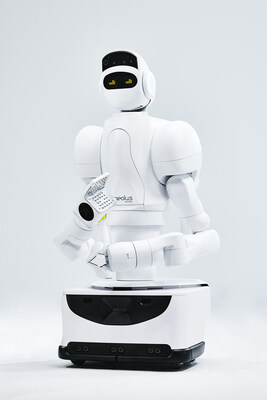
The best example in ui44's database is not a flashy biped. It is aeo from Aeolus Robotics. aeo is a dual-arm service robot offered through robot-as-a-service, designed for delivery, security patrols, eldercare support, kiosk operation, and UV disinfection. The database notes that each arm has seven degrees of freedom, the robot can operate elevators, open doors, pick up objects, and has been shaped by deployments in eldercare, hospitals, and property-management settings. Aeolus's own site highlights property management explicitly, including autonomous elevator operation as a selling point.
That is not a kitchen-butler story. It is arguably more relevant: before a robot handles every drawer in your apartment, it may first prove that it can ride the elevator, bring supplies to a floor, patrol a corridor, and hand off a simple object without creating new work for staff.
What shared residential robots can do first
Apartment-building robots should not start with "clean the whole home." They should start with jobs that are valuable, repeatable, and easy to supervise.
A practical first wave could include:
- Package and amenity delivery from a lobby or package room to a resident's door.
- Elevator-aware item movement for small loads, maintenance parts, linens, or supplies.
- Reception and guidance in large complexes, senior living communities, or mixed-use buildings.
- Night patrol and anomaly reporting in public areas, with clear signage and privacy rules.
- Care-adjacent check-ins where staff or family remain in the loop.
- Resident-requested assistance such as carrying a light bag from the lobby, retrieving a stored item, or escorting a visitor.
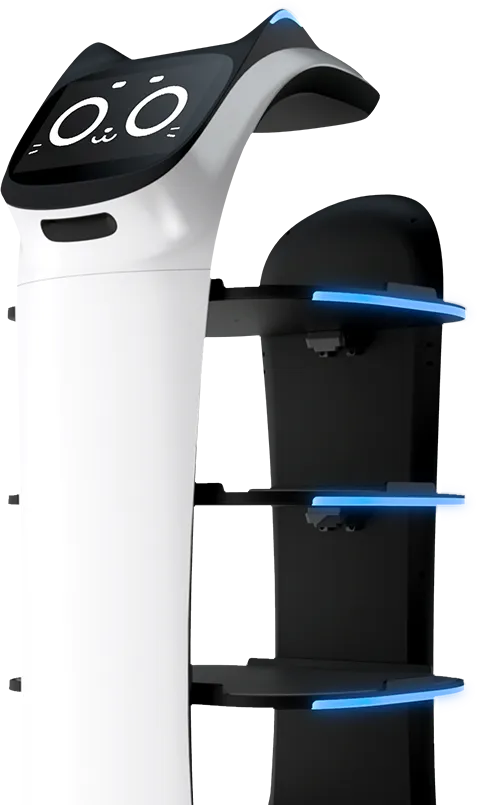
This is where commercial service robots and humanoids start to overlap. PUDU BellaBot, for example, is not humanoid at all, but it is an active delivery robot with LiDAR plus visual SLAM, 13 hours of no-load battery life, hot-swappable battery support, elevator integration, multi-robot coordination, and a 40 kg total tray payload. BellaBot has been deployed in more than 60 countries across 600-plus cities. That installed-base experience matters because residential service robots will need reliability more than theatrical human shape.
The more humanoid version is PUDU FlashBot Arm. It combines an enclosed delivery compartment with two 7-DOF arms, PUDU DH11 dexterous hands, VSLAM plus LiDAR SLAM, RGBD cameras, panoramic cameras, pressure-sensitive skin, automatic recharging, and multi-robot collaboration. The official product page lists a 144 cm height, 15 kg delivery capacity, a 65 cm minimum path width, four-hour charging time, and up to eight hours of no-load working duration.
That spec mix is exactly why buildings are interesting. FlashBot Arm is not trying to solve every household chore from day one. It looks built for hospitality-style tasks: navigate a known site, carry something safely, use arms where a pure tray robot cannot, and return to charge. Those same constraints map well to apartment lobbies, hotels, senior residences, and serviced apartments.
Why bipedal humanoids still matter
If wheeled service robots are already more practical, why keep talking about humanoids at all?
Because buildings are designed around human bodies. Door handles, elevator buttons, counters, mail slots, carts, cupboards, access panels, and service rooms all assume arms at human height. A rolling box can deliver a meal, but it struggles with a door, a high shelf, a loose item, or a task that requires two hands and judgment.
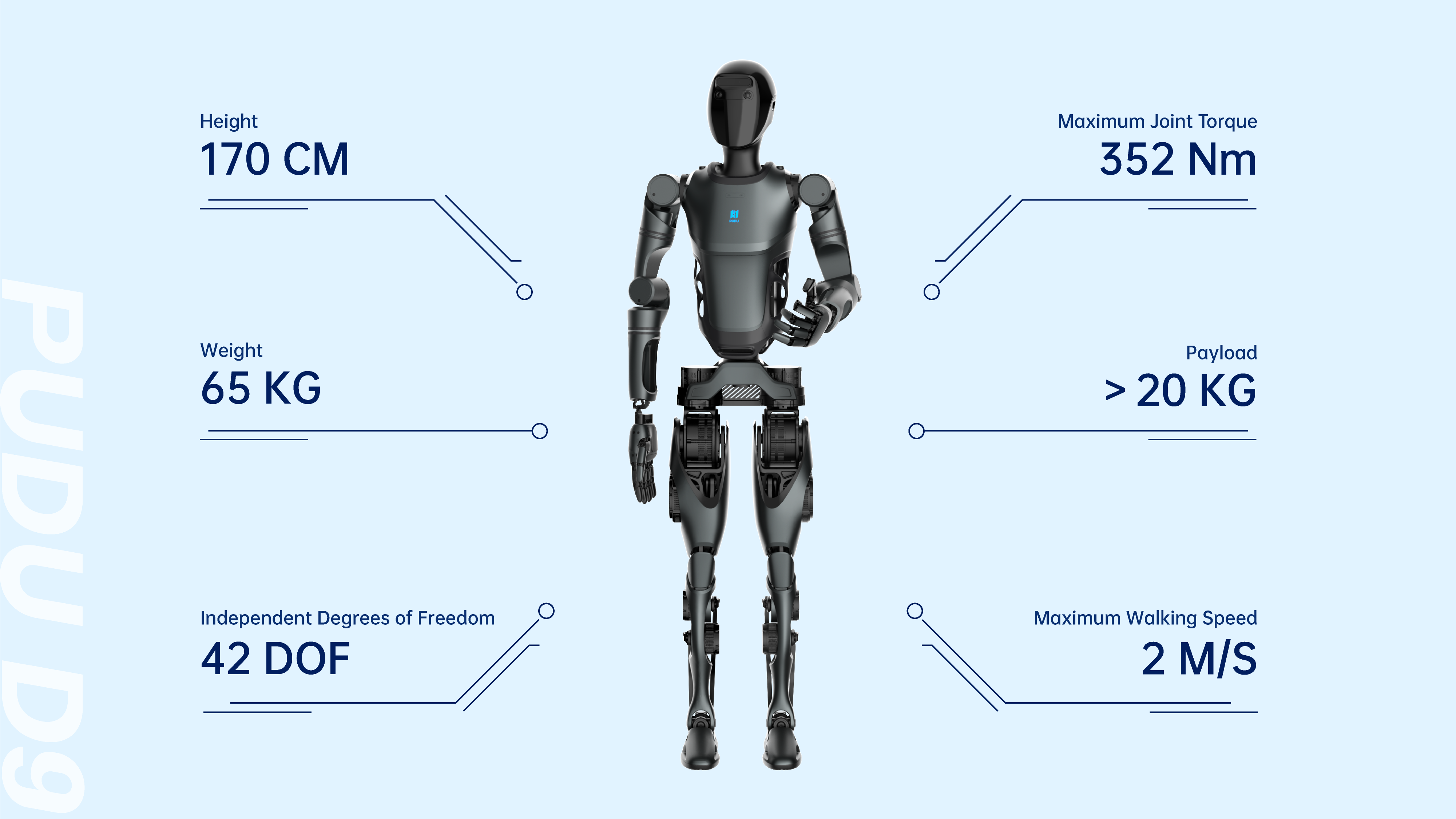
PUDU D9 shows the bipedal direction. It is a full-size humanoid listed in the database as 170 cm tall, with up to 2 m/s speed, stair-and-slope navigation, real-time 3D semantic mapping, autonomous route planning, dual-arm manipulation, dexterous hand operations, and payload handling over 20 kg. Pudu's own launch language frames D9 around commercially viable embodied intelligence for logistics and operational assistance across service environments, not around immediate consumer ownership.
UBTECH Walker S2 makes a different point. It is an industrial humanoid, not a residential robot, but its autonomous battery-swap system is exactly the kind of infrastructure thinking buildings need. The database records 24/7 continuous-operation design via autonomous battery swapping, a three-minute swap time, a 15 kg payload, and whole-body manipulation for factory and logistics deployment. Private buyers do not want to install a robot pit stop. Apartment operators, hotels, hospitals, and large campuses might.
AGIBOT G2 points to the wheeled-humanoid compromise: omnidirectional mobility, force-controlled dual-arm manipulation, guided tours, logistics sorting, dual hot-swappable batteries, autonomous charging, and multimodal voice interaction. It is still commercial hardware, but the shape of the problem is residential-adjacent: move through a human site, understand requests, manipulate objects, and keep operating without turning every staff member into a robotics engineer.
The apartment-first robot scorecard
For a robot to work in an apartment building, ignore the most cinematic demo and ask more boring questions.
Requirement
Elevator operation
- Why it matters in buildings
- Multi-floor usefulness starts here
- Robots that illustrate the point
- aeo, PUDU BellaBot
Requirement
Long runtime or fast service model
- Why it matters in buildings
- Shared services cannot wait all day for charging
- Robots that illustrate the point
- PUDU BellaBot, UBTECH Walker S2
Requirement
Manipulation at human height
- Why it matters in buildings
- Doors, counters, shelves, and handoffs need arms
- Robots that illustrate the point
- PUDU FlashBot Arm, AGIBOT G2
Requirement
Human backup and teleoperation
- Why it matters in buildings
- Autonomy will fail at the edges
- Robots that illustrate the point
- 1X NEO, Devanthro Robody
Requirement
Building-friendly business model
- Why it matters in buildings
- Leasing, support, and liability matter more than sticker price
- Robots that illustrate the point
- aeo, PUDU FlashBot Arm
Requirement
Clear privacy policy
- Why it matters in buildings
- Residential corridors are not factory floors
- Robots that illustrate the point
- Any camera-equipped service robot
| Requirement | Why it matters in buildings | Robots that illustrate the point |
|---|---|---|
| Elevator operation | Multi-floor usefulness starts here | aeo, PUDU BellaBot |
| Long runtime or fast service model | Shared services cannot wait all day for charging | PUDU BellaBot, UBTECH Walker S2 |
| Manipulation at human height | Doors, counters, shelves, and handoffs need arms | PUDU FlashBot Arm, AGIBOT G2 |
| Human backup and teleoperation | Autonomy will fail at the edges | 1X NEO, Devanthro Robody |
| Building-friendly business model | Leasing, support, and liability matter more than sticker price | aeo, PUDU FlashBot Arm |
| Clear privacy policy | Residential corridors are not factory floors | Any camera-equipped service robot |
The scorecard also explains why a robot can be impressive and still not be a building product. Noetix Hobbs W1 is a 170 cm, 75 kg wheeled bionic service robot with 54 active degrees of freedom, a silicone head, 2 kg per-arm load, up to six hours of full-load operation, laser SLAM, and corporate receptionist or hospital guidance use cases. It may fit a lobby or front desk better than a private kitchen. But its own official safety notes warn users to understand humanoid limitations and keep a safe distance. That caution is a feature, not a bug: building deployments need clear limits before they need friendly faces.
What private homes still need before the robot comes inside
The apartment-building path should not be mistaken for guaranteed home readiness. A robot that succeeds in a lobby may still fail in a normal apartment.
Private homes need better answers to at least six problems.
First, object judgment. A building robot can be told to move packages. A home robot must know the difference between laundry, trash, paperwork, medicine, pet toys, and things it should never touch.
Second, privacy and teleoperation. Human-in-the-loop support is practical, but residents need to know when a remote expert can see or hear anything, how access is approved, and what data is retained. This is especially important for robots like NEO, where guided expert help is part of the early-access story, and for care models like Devanthro Robody, which combines physical AI with VR telepresence and an all-inclusive €690/month Robody Cares service plan.
Third, safe failure. A home robot cannot just stop in front of the elevator and wait for staff. It may block a hallway, drop a cup, scare a pet, or fail while holding something fragile. The robot needs predictable fallback behavior that non-technical residents understand.
Fourth, maintenance. Apartment buildings can schedule service. Households will expect the robot to work like an appliance. That is a brutal gap for hardware with arms, batteries, sensors, software updates, and moving joints.
Fifth, support economics. A robot priced at $20,000 can make sense for early adopters. A mass-market home robot needs either a much lower price, a reliable subscription, or a clear service outcome that beats hiring help, using smart appliances, or doing the chore manually.
Sixth, trust. Residents may accept a robot carrying a package in a hallway long before they accept the same robot entering a bedroom. Trust will be earned in layers.
Which robots should buyers watch?
If you are trying to understand the home timeline, watch three categories, not one hero robot.
The first category is home-first humanoids. 1X NEO is the obvious reference point because it is explicitly designed for household chores, soft interaction, and early-adopter home deployment. Devanthro Robody is another because it treats the robot as a care service, not just a purchased machine.
The second category is residential-adjacent service robots. aeo, PUDU FlashBot Arm, PUDU BellaBot, and Noetix Hobbs W1 show how navigation, elevators, front-desk work, delivery, and care support can be productized before full home autonomy arrives.
The third category is commercial humanoids with building-relevant features. PUDU D9, UBTECH Walker S2, and AGIBOT G2 are not normal apartment purchases, but they show where the hardware is heading: higher payloads, better autonomy, battery infrastructure, dual-arm manipulation, and service-environment workflows.
One extra wildcard is Quanta X2 from X Square Robot. The ui44 database lists it as a 164 cm wheeled humanoid with 62 whole-body degrees of freedom, 765 mm arm reach, 6 kg single-arm payload, optional 20-DOF dexterous hands, a 25 kg maximum dual-arm payload, 1 m/s speed, and a WALL-A embodied AI model. Its official positioning includes home-based services and selected-home trials. That makes it exactly the kind of robot to watch carefully: promising, residential-facing, but still contact-sales rather than a normal appliance on a retail shelf.
Bottom line
Apartment buildings are not a compromise story. They may be the realistic first residential market for useful humanoid and semi-humanoid robots.
A building can give robots what private homes cannot yet provide reliably: mapped shared spaces, repeatable routes, staff backup, service budgets, charging areas, resident policies, and a narrow set of valuable tasks. That makes the building layer a better proving ground than a fully private apartment and a more home-relevant test than a factory.
So when a company says home humanoids are coming, ask a sharper question: do they mean a robot you buy for your kitchen, or a robot your building operates in the spaces between everyone's homes?
The second version may arrive first. And if it works, it will teach us far more about the first version than another perfectly staged kitchen demo.
Related in the database
Use this article as a setup-friction workflow
Turn the article into a first-day setup pass grounded in the robots, manufacturers, and countries it actually references.
Why Humanoid Robots May Reach Apartments First already points you toward 11 linked robots, 8 manufacturers, and 4 countries inside the ui44 database. Treat those links as a first-day setup trail: open the robot pages, check what is actually published about charging, battery life, control method, app or OTA support, and recovery, then use the surrounding manufacturer and country context to judge whether the article describes a low-friction product path or a still-specialist deployment.
For setup topics, the useful discipline is to separate a polished demo from the work required after the box arrives. The article gives you the narrative, but the robot pages show the operational clues: dimensions, weight, battery runtime, charging time, controller support, listed availability, and the capabilities that might need supervision. Manufacturer pages then reveal whether the same setup assumptions repeat across a wider lineup.
Use the robot pages to verify what happens between delivery and the first useful task: size, weight, battery, charger or dock path, controller, app, OTA support, and recovery cues. On this route cluster, NEO, EVE, and aeo form the fastest setup-friction reality check. If you want a quick working shortlist, open Compare NEO, EVE, and aeo next, then keep this article open while you compare first-day setup evidence side by side.
Practical Takeaway
The links below stay tied to the robots, manufacturers, and countries actually referenced by this setup article, so the checklist remains grounded in published ui44 records rather than generic humanoid advice.
Suggested next steps in ui44
- Open NEO and check the concrete first-day fields: box contents, charger or dock path, battery life, controller, app, OTA support, and recovery options.
- Use 1X Technologies to see whether the company’s broader lineup looks appliance-like, developer-first, or still closer to a pilot deployment.
- Run Compare NEO, EVE, and aeo with the article open and compare battery, size, weight, price path, status, and support cues side by side.
- Write down the first realistic task each robot can plausibly attempt on day one, then separate low-friction setup signals from impressive but still lab-style demos.
Robot profiles worth opening next
Use the linked product pages as the evidence layer
The linked robot pages are where this setup article becomes operational. Use the robot entries to inspect the actual mix of size, weight, battery runtime, charging path, control method, pricing, availability, and stated capabilities attached to the products mentioned in the article. That is the easiest way to see whether the first useful task looks appliance-like, developer-led, or still dependent on supervised experimentation.
NEO
1X Technologies · Humanoid · Pre-order
NEO is tracked on ui44 as a pre-order humanoid robot from 1X Technologies. The database currently records a listed price of $20,000, a release date of 2025-10-28, ~4 hours battery life, Not disclosed charging time, and a published stack that includes RGB Cameras, Depth Sensors, and Tactile Skin plus Wi-Fi and Bluetooth.
For setup-friction reading, this page matters because it shows the physical and support burden behind the demo. Use it to verify whether NEO has a credible day-one path across charging, control, recovery, battery limits, and listed capabilities such as Household Chores, Tidying Up, and Safe Human Interaction.
EVE
1X Technologies · Humanoid · Active
EVE is tracked on ui44 as a active humanoid robot from 1X Technologies. The database currently records a listed price of Price TBA, a release date of 2018, 4-6 hours battery life, Not disclosed charging time, and a published stack that includes High-Resolution HDR Camera (Front x2), Rear Camera, and Panoramic View System plus Wi-Fi and Bluetooth.
For setup-friction reading, this page matters because it shows the physical and support burden behind the demo. Use it to verify whether EVE has a credible day-one path across charging, control, recovery, battery limits, and listed capabilities such as 25 Degrees of Freedom, Dual-Wheel Self-Balancing Mobility, and Dual-Arm Manipulation (heavy and fragile items).
aeo
Aeolus Robotics · Commercial · Active
aeo is tracked on ui44 as a active commercial robot from Aeolus Robotics. The database currently records a listed price of Price TBA, a release date of 2023, Not publicly disclosed battery life, Not publicly disclosed charging time, and a published stack that includes Vision system (posture/position and anomaly detection) plus Web apps and Native smartphone apps.
For setup-friction reading, this page matters because it shows the physical and support burden behind the demo. Use it to verify whether aeo has a credible day-one path across charging, control, recovery, battery limits, and listed capabilities such as Dual 7-DOF manipulator arms, Autonomous elevator operation, and Door operation.
BellaBot
Pudu Robotics · Commercial · Active
BellaBot is tracked on ui44 as a active commercial robot from Pudu Robotics. The database currently records a listed price of Price TBA, a release date of 2020-01, 13 hours (no load) battery life, 4.5 hours (or instant with battery swap) charging time, and a published stack that includes LiDAR, 3 × RGBD Depth Cameras, and Cliff Sensors plus Wi-Fi.
For setup-friction reading, this page matters because it shows the physical and support burden behind the demo. Use it to verify whether BellaBot has a credible day-one path across charging, control, recovery, battery limits, and listed capabilities such as Autonomous Food & Item Delivery, Dual SLAM Navigation (LiDAR + Visual), and 3D Omnidirectional Obstacle Avoidance.
PUDU FlashBot Arm
Pudu Robotics · Commercial · Active
PUDU FlashBot Arm is tracked on ui44 as a active commercial robot from Pudu Robotics. The database currently records a listed price of Price TBA, a release date of 2025-03, Up to 8 hours (no-load) battery life, 4 hours charging time, and a published stack that includes RGBD cameras, LiDAR, and Panoramic cameras plus Not publicly disclosed.
For setup-friction reading, this page matters because it shows the physical and support burden behind the demo. Use it to verify whether PUDU FlashBot Arm has a credible day-one path across charging, control, recovery, battery limits, and listed capabilities such as Autonomous delivery, Two 7-DOF robotic arms, and PUDU DH11 dexterous hands.
Manufacturer context behind the article
Check whether this is one product story or a broader company pattern
Manufacturer pages add the setup context that individual product pages cannot show on their own. They help you check whether a brand repeats the same controller, battery, update, support, and availability patterns across multiple robots, or whether the article is really describing one early product path. That matters for humanoids because first-day friction usually comes from the surrounding ecosystem as much as from the robot itself.
1X Technologies
ui44 currently tracks 2 robots from 1X Technologies across 1 category. The company is grouped under Norway, and the current catalog footprint on ui44 includes NEO, EVE.
That wider brand context matters because setup friction is rarely just a box problem. A manufacturer route helps you see whether the company has repeated controller, battery, support, and update patterns across its lineup, or whether the article is really about one early product story. The category mix here currently points toward Humanoid as the most useful next route if you want to see whether this article reflects a wider pattern inside the brand.
Aeolus Robotics
ui44 currently tracks 1 robot from Aeolus Robotics across 1 category. The company is grouped under USA, and the current catalog footprint on ui44 includes aeo.
That wider brand context matters because setup friction is rarely just a box problem. A manufacturer route helps you see whether the company has repeated controller, battery, support, and update patterns across its lineup, or whether the article is really about one early product story. The category mix here currently points toward Commercial as the most useful next route if you want to see whether this article reflects a wider pattern inside the brand.
Pudu Robotics
ui44 currently tracks 6 robots from Pudu Robotics across 3 categorys. The company is grouped under China, and the current catalog footprint on ui44 includes BellaBot, PUDU D9, PUDU D7.
That wider brand context matters because setup friction is rarely just a box problem. A manufacturer route helps you see whether the company has repeated controller, battery, support, and update patterns across its lineup, or whether the article is really about one early product story. The category mix here currently points toward Commercial, Humanoid, Quadruped as the most useful next route if you want to see whether this article reflects a wider pattern inside the brand.
UBTECH
ui44 currently tracks 5 robots from UBTECH across 2 categorys. The company is grouped under China, and the current catalog footprint on ui44 includes Walker S, Walker S2, Alpha Mini.
That wider brand context matters because setup friction is rarely just a box problem. A manufacturer route helps you see whether the company has repeated controller, battery, support, and update patterns across its lineup, or whether the article is really about one early product story. The category mix here currently points toward Humanoid, Companions as the most useful next route if you want to see whether this article reflects a wider pattern inside the brand.
Broaden the scan without leaving the database
Categories, components, and countries add the wider context
Category framing
Category pages are useful when the article touches a buying pattern that shows up across brands. A category route helps you confirm whether the linked products sit in a narrow niche or whether the same question should be tested across a larger field of alternatives.
Humanoid
The Humanoid category page currently groups 129 tracked robots from 92 manufacturers. ui44 describes this lane as: Full-size bipedal humanoid robots built to work alongside people — from factory floors to household tasks. Compare the cutting edge of humanoid robotics.
That makes the category route a practical follow-up when you want to check whether the products linked in this article are typical for the lane or whether they sit at one edge of the market. Useful starting examples currently include NEO, EVE, Mornine M1.
Commercial
The Commercial category page currently groups 44 tracked robots from 38 manufacturers. ui44 describes this lane as: Delivery robots, warehouse automation, and hospitality service bots — robots built for business and commercial operations.
That makes the category route a practical follow-up when you want to check whether the products linked in this article are typical for the lane or whether they sit at one edge of the market. Useful starting examples currently include G2 Air, aeo, Pepper.
Country and ecosystem context
Country pages give extra context when support practices, launch sequencing, regulatory posture, or manufacturer mix matter. They are not a substitute for model-level verification, but they do help you see which ecosystems cluster together and which manufacturers sit in the same regional field when you broaden the search beyond the article headline.
Norway
The Norway route currently groups 2 tracked robots from 1 manufacturers in ui44. That gives you a useful regional lens when the article points toward support practices, launch sequencing, or brand clusters that may share similar ecosystem assumptions.
On the current route, manufacturers like 1X Technologies make the page a good way to broaden the scan without losing the regional context that often shapes availability, documentation style, and adjacent alternatives.
USA
The USA route currently groups 89 tracked robots from 69 manufacturers in ui44. That gives you a useful regional lens when the article points toward support practices, launch sequencing, or brand clusters that may share similar ecosystem assumptions.
On the current route, manufacturers like Faraday Future, iRobot, Boston Dynamics make the page a good way to broaden the scan without losing the regional context that often shapes availability, documentation style, and adjacent alternatives.
China
The China route currently groups 189 tracked robots from 87 manufacturers in ui44. That gives you a useful regional lens when the article points toward support practices, launch sequencing, or brand clusters that may share similar ecosystem assumptions.
On the current route, manufacturers like AGIBOT, Dreame, Unitree Robotics make the page a good way to broaden the scan without losing the regional context that often shapes availability, documentation style, and adjacent alternatives.
Questions to answer before you move from reading to buying
A follow-up FAQ built from the entities already linked in this article
Frequently Asked Questions
Which page should I open first after reading “Why Humanoid Robots May Reach Apartments First”?
Start with NEO. That gives you a concrete product anchor for the article’s main claim. From there, branch into the manufacturer and component pages so you can tell whether the article is describing one specific model, a repeated brand pattern, or a wider technology issue that affects multiple shortlist options.
How do the manufacturer pages change the buying decision?
1X Technologies help you zoom out from one article and one product. On ui44 they show lineup breadth, category spread, and the neighboring robots tied to the same company. That context is useful when you are deciding whether a risk belongs to a single model, whether it shows up across a brand’s portfolio, and whether you should keep looking at alternatives before committing.
When should I switch from reading to side-by-side comparison?
Move into Compare NEO, EVE, and aeo as soon as you understand the article’s main warning or promise. The article explains what to watch for, but the compare view is where you can check whether price, status, battery life, connectivity, sensors, and category fit still make the robot a good match for your own home and budget.
Where to go next in ui44
Keep the research chain inside the database
If you want to keep going, these follow-on pages give you the cleanest expansion path from article to research session. Open the comparison route first if you are deciding between products today. Open the manufacturer, category, and component routes if you still need to understand the broader pattern behind the claim.
Written by
ui44 Team
Published May 1, 2026
Share this article
Open a plain share link on X or Bluesky. No embeds, no widgets, no cookie baggage.