The buyer question is not whether mood-sensing robots are possible. They already exist in pieces: cameras, microphones, face recognition, voice analysis, conversation memory, and companion software are all appearing in home and care robots. The real question is whether a robot's emotional guess is accurate enough, private enough, and useful enough to justify another always-present sensor system in the home.
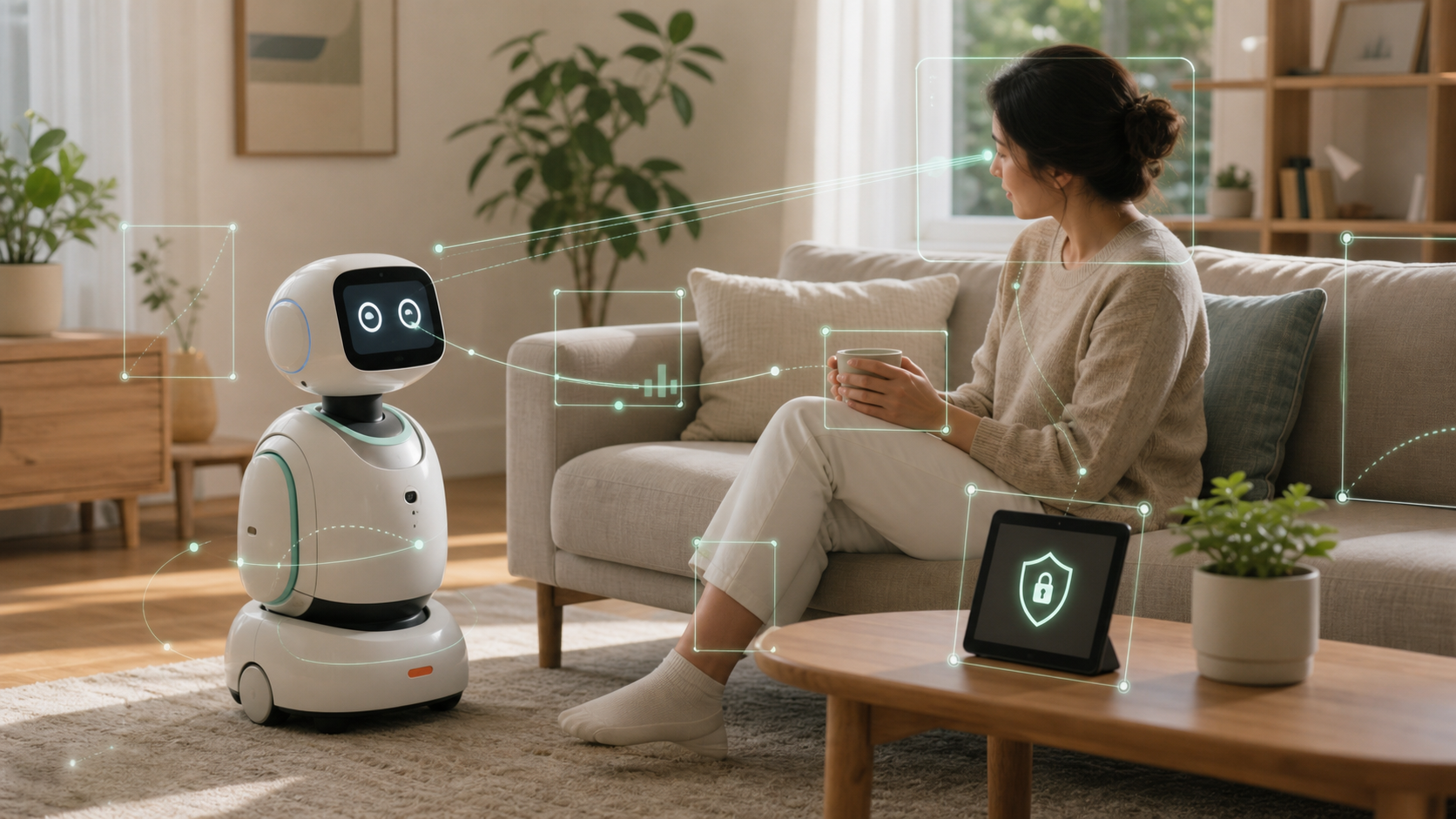
That distinction matters because the newest research is encouraging and humbling at the same time. A June 2026 IEEE Spectrum report described work using a vision language model to infer human emotion from a whole interaction scene rather than from facial expression alone. In that study, the VLM's emotion labels aligned more closely with third-party human observers than a conventional facial analysis pipeline did: 0.86 versus 0.77 on a 0-to-1 semantic similarity scale. When a robot made a mistake, 31 of 40 participants preferred an apology that adapted to the perceived human response instead of a fixed script.
But the same report contains the part buyers should remember: people still trusted the robot less after it failed the task, and the VLM did not reliably match each participant's own self-reported feelings. Mood sensing can make a robot more polite. It does not make the robot a mind reader, and it cannot rescue bad physical performance.
What changed with VLM-based emotion sensing?
Older emotion recognition systems often treated the face as the main signal. They looked for expression categories, sometimes mixed with voice tone, and then mapped those signals to labels such as happy, angry, confused, or bored. That can be brittle in a house. A furrowed brow could mean irritation, deep focus, eye strain, bad lighting, or a person trying to remember where they left their keys.
Vision language models change the input. Instead of asking "what does this face look like?", a VLM can evaluate the broader scene: the person's posture, hand motion, the object being handled, whether the robot dropped something, and what just happened in the interaction. That is why VLM-based mood sensing is interesting for home robots. Homes are contextual places. A useful robot has to notice more than a smile.
The risk is that broader context also means broader collection. A robot that uses the whole room to infer mood may process faces, voices, body language, objects on a table, household routines, visitors, and children. For a buyer, the feature should be evaluated like a privacy-sensitive sensing system, not like a cute personality upgrade.
Which current home robots are closest?
ui44's database shows a split between three types of products. Some robots explicitly claim emotion recognition or mood adaptation. Some have the cameras, microphones, and AI stack needed for social inference but do not claim to read emotions. Others express emotions on their own screen or body, which is not the same as reading yours.
Robot
- What ui44 records
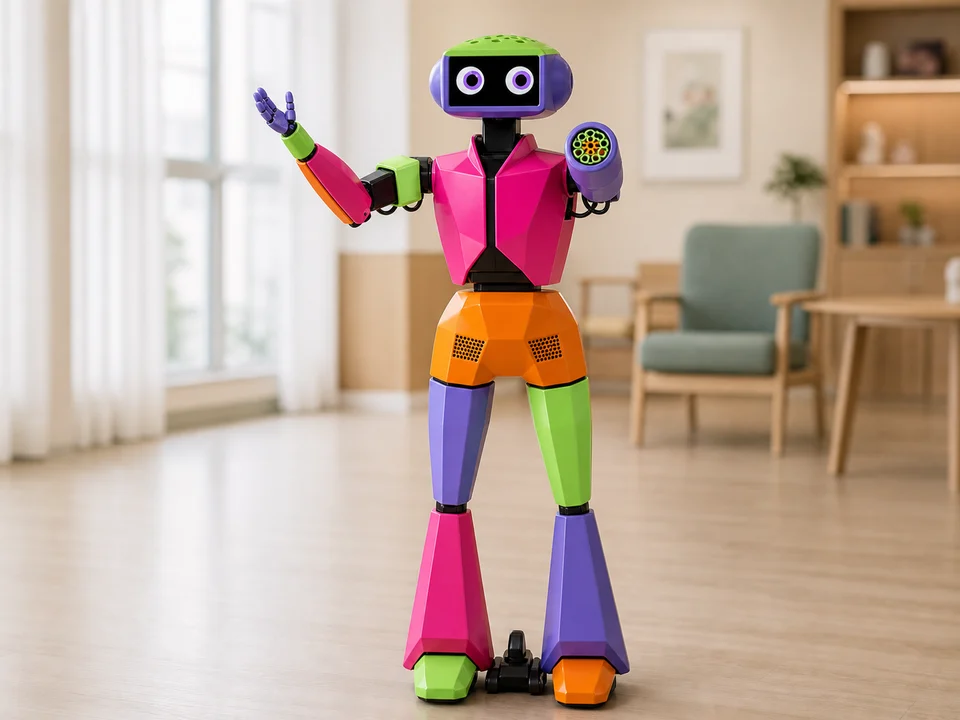
- A roughly 110 cm aged-care companion with front and face-recognition cameras, far-field microphones, generative AI, proprietary emotional AI models, and mood-adaptive responses. Pricing is contract-based.
- What to take seriously
- This is the clearest home-adjacent example of emotion recognition being sold as part of the product experience. Ask how mood labels are generated, stored, audited, and shown to care staff.
Robot
- What ui44 records
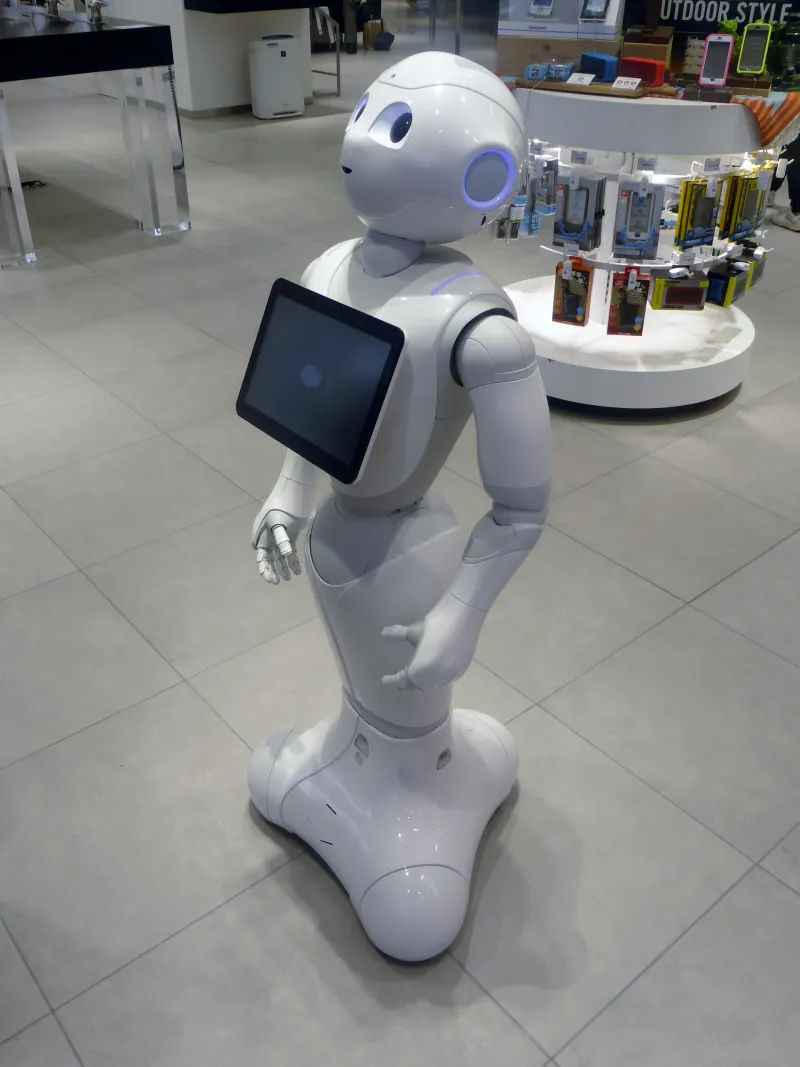
- A 120 cm social robot with two RGB cameras, a 3D depth sensor, four microphones, a 10.1-inch display, and emotion recognition via facial expression and voice-tone analysis.
- What to take seriously
- Pepper proves that emotion recognition has a long commercial history, but also that social ability does not guarantee broad home usefulness.
Robot
- What ui44 records
- A stationary older-adult companion with a 12 MP camera, 1080p video, a four-microphone array, an 8-inch touchscreen, and LLM-powered relationship orchestration.
- What to take seriously
- ElliQ is deeply social, but ui44 does not record it as an emotion-recognition robot. That difference matters: companionship and emotion inference are related, not identical.
Robot
- What ui44 records
- A mobile home robot with Visual ID, a 5 MP bezel camera, a 1080p periscope camera, infrared vision, Alexa, Ring integration, and invite-only $1,599.99 pricing.
- What to take seriously
- Astro shows how much sensitive home perception can exist without a mood-reading claim. Face recognition and remote monitoring already deserve close privacy review.
Robot
- What ui44 records
- A EUR269 child-focused companion with a wide-angle 720p camera, face recognition, voice recognition, touch sensors, parental controls, and COPPA/kidSAFE+ certifications.
- What to take seriously
- For children, the policy bar should be higher. Emotion inference would need clear opt-in, parental control, retention limits, and age-appropriate explanations.
Robot
- What ui44 records
- A $442 pet-style companion with a 720p camera, 3D ToF sensor, four-microphone array, GPT-powered conversations, remote monitoring, and an LCD face that displays emotions.
- What to take seriously
- Displaying emotions is not the same as recognizing human emotions. Buyers should separate expressive animation from sensing claims.
| Robot | What ui44 records | What to take seriously |
|---|---|---|
| Abi | A roughly 110 cm aged-care companion with front and face-recognition cameras, far-field microphones, generative AI, proprietary emotional AI models, and mood-adaptive responses. Pricing is contract-based. | This is the clearest home-adjacent example of emotion recognition being sold as part of the product experience. Ask how mood labels are generated, stored, audited, and shown to care staff. |
| Pepper | A 120 cm social robot with two RGB cameras, a 3D depth sensor, four microphones, a 10.1-inch display, and emotion recognition via facial expression and voice-tone analysis. | Pepper proves that emotion recognition has a long commercial history, but also that social ability does not guarantee broad home usefulness. |
| ElliQ 3 | A stationary older-adult companion with a 12 MP camera, 1080p video, a four-microphone array, an 8-inch touchscreen, and LLM-powered relationship orchestration. | ElliQ is deeply social, but ui44 does not record it as an emotion-recognition robot. That difference matters: companionship and emotion inference are related, not identical. |
| Amazon Astro | A mobile home robot with Visual ID, a 5 MP bezel camera, a 1080p periscope camera, infrared vision, Alexa, Ring integration, and invite-only $1,599.99 pricing. | Astro shows how much sensitive home perception can exist without a mood-reading claim. Face recognition and remote monitoring already deserve close privacy review. |
| Miko 3 | A EUR269 child-focused companion with a wide-angle 720p camera, face recognition, voice recognition, touch sensors, parental controls, and COPPA/kidSAFE+ certifications. | For children, the policy bar should be higher. Emotion inference would need clear opt-in, parental control, retention limits, and age-appropriate explanations. |
| Loona | A $442 pet-style companion with a 720p camera, 3D ToF sensor, four-microphone array, GPT-powered conversations, remote monitoring, and an LCD face that displays emotions. | Displaying emotions is not the same as recognizing human emotions. Buyers should separate expressive animation from sensing claims. |
The practical pattern is simple: the more a robot knows about your mood, the more it probably knows about your home.
The feature is most useful after a robot makes a mistake
The strongest near-term use for mood sensing is not therapy, deep empathy, or relationship building. It is recovery.
A capable home robot will eventually need to hand over objects, navigate around people, ask for clarification, and recover from failure. If it bumps a chair, misunderstands a command, wakes someone during a nap, or gets stuck in a hallway, it should be able to adapt its next move. A person who is amused can get a short apology and a retry. A person who is visibly frustrated may need the robot to stop, back away, lower its voice, and ask before continuing.
That is a meaningful feature. It can make robots feel less clumsy and less socially tone-deaf. In elder care, it could help a companion robot choose whether to prompt, wait, call a caregiver, or switch to a calmer interaction. In family settings, it could help a child-focused robot avoid escalating when a child is overwhelmed.
The limit is competence. If the robot cannot perform the underlying task, a customized apology becomes cosmetic. Buyers should reward robots that use mood signals to change behavior, not robots that only rephrase apologies.
The privacy checklist should be specific
- What signals are used?
- Where is inference done?
- Who sees the label?
- Can the user correct it?
- Does it improve behavior?
Emotion-aware robots will not all look like companions
The obvious examples are social robots, but emotion-aware interaction will probably spread to service robots too. ASUS has already positioned its Computex 2026 care and service robotics work around personalized support, memory-based interaction, and, for the Kairo service platform, emotion-aware AI. Those are not mass-market home products yet, but they point to where the interface is going.
Home robots with arms could use mood inference during handovers. Security robots could decide when not to interrupt. Telepresence robots could notice confusion and repeat instructions. A future kitchen robot could tell the difference between "I am annoyed because you are slow" and "I am watching carefully because you are holding a knife."
That is useful only if the product is honest about uncertainty. A good interface does not say "you are angry." It says, in effect, "I may have interrupted. Do you want me to stop?" The robot should act on observable context and user feedback, not pretend to know inner feelings.
What buyers should look for in 2026
For most people, emotion recognition should not be the headline buying reason. It should be a supporting feature behind the basics:
Buyer priority
Physical competence
- Why it comes first
- A robot that fails the task loses trust even if its apology is personalized.
Buyer priority
Clear sensing disclosure
- Why it comes first
- Cameras and microphones are the real commitment. Mood labels are built on top of them.
Buyer priority
Local controls
- Why it comes first
- Buyers need easy ways to pause cameras, mute microphones, delete history, and disable mood features.
Buyer priority
Limited sharing
- Why it comes first
- Caregivers, parents, and household members should not receive sensitive labels by default.
Buyer priority
Correction and consent
- Why it comes first
- The user should be able to tell the robot it guessed wrong and prevent future use.
| Buyer priority | Why it comes first |
|---|---|
| Physical competence | A robot that fails the task loses trust even if its apology is personalized. |
| Clear sensing disclosure | Cameras and microphones are the real commitment. Mood labels are built on top of them. |
| Local controls | Buyers need easy ways to pause cameras, mute microphones, delete history, and disable mood features. |
| Limited sharing | Caregivers, parents, and household members should not receive sensitive labels by default. |
| Correction and consent | The user should be able to tell the robot it guessed wrong and prevent future use. |
If a robot is for a child, older adult, disabled user, or shared household, the standard should be even stricter. The more vulnerable the user, the less a company should rely on broad consent hidden inside setup.
The bottom line
Mood-sensing VLMs are a real step forward because they can look at interaction context, not just faces. That makes them better suited to messy homes than older expression-only systems. They could help robots apologize better, pause at the right time, and avoid repeating a mistake.
But "reads emotions" is the wrong mental model. A home robot can estimate visible social cues. It can adapt its behavior based on those estimates. It can be useful while still being uncertain.
The best buyer test is blunt: if the emotion feature were wrong 20 percent of the time, would the robot still be respectful, controllable, and useful? If yes, it may be a thoughtful interaction layer. If no, it is probably too much trust wrapped around too little evidence.
Related in the database
Use this article as a privacy verification workflow
Turn the article into a privacy verification pass grounded in the robots, manufacturers, and components it actually references.
Should Home Robots Read Your Emotions? already points you toward 6 linked robots, 6 manufacturers, and 5 countries inside the ui44 database. That matters because strong buyer guidance is easier to apply when you can move immediately from a claim or warning into concrete product pages, manufacturer directories, component explainers, and country-level context instead of treating the article as an isolated opinion piece. The fastest next step is to turn the article into a shortlist workflow: open the linked robot pages, verify which specs are actually published for those models, then compare the surrounding manufacturer and component context before you decide whether the underlying claim changes your buying plan.
For this topic, the useful discipline is to separate the editorial lesson from the catalog evidence. The article gives you the framing, but the robot pages tell you what each product actually ships with today: sensor stack, connectivity methods, listed price, release timing, category, and support-relevant compatibility notes. The manufacturer pages then show whether you are looking at a one-off launch, a broader lineup pattern, or a company that spans multiple categories. That layered workflow reduces the risk of buying on a single marketing phrase or a single support FAQ.
Use the robot pages to confirm which products actually expose cameras, microphones, Wi-Fi, or voice systems, then use the manufacturer pages to decide how much of the privacy question seems product-specific versus brand-wide. On this route cluster, Abi, Pepper, and ElliQ 3 form the fastest reality check. If you want a quick working shortlist, open Compare Abi, Pepper, and ElliQ 3 next, then keep this article open as the reasoning layer while you compare structured data side by side.
Practical Takeaway
Every robot, manufacturer, category, component, and country reference below resolves to a real ui44 page, keeping the follow-up path grounded in database records rather than generic advice.
Suggested next steps in ui44
- Open Abi and note the listed sensors, connectivity methods, and voice stack before you interpret any policy claim.
- Cross-check the wider brand context on Andromeda Robotics so you can see whether the privacy question touches one model or a broader lineup.
- Use the linked component pages to confirm how common the relevant sensors and connectivity layers are across the database.
- Keep a short note of which policy layers you checked, which device features are actually present on the robot page, and which items still depend on region- or app-level confirmation.
- Finish with Compare Abi, Pepper, and ElliQ 3 so the policy reading sits next to structured product data.
Robot profiles worth opening next
Use the linked product pages as the evidence layer
The linked robot pages are where this article becomes operational. Instead of asking whether the headline is interesting, use the robot entries to inspect the actual mix of sensors, connectivity options, batteries, pricing, release timing, and stated capabilities attached to the products mentioned in the article. That is the easiest way to see whether the warning or opportunity described here affects one product family, a specific design pattern, or an entire buying lane.
Abi
Andromeda Robotics · Companions · Available
Abi is tracked on ui44 as a available companions robot from Andromeda Robotics. The database currently records a listed price of Price TBA, a release date of 2024, AC-powered for long sessions (battery not published) battery life, N/A (plugged in) charging time, and a published stack that includes Front Camera, Face Recognition Camera, and Far-field Microphone Array plus Wi-Fi and Cloud-based AI Backend.
For privacy-focused reading, this page matters because it shows the concrete device surface behind the policy discussion. Use it to verify whether Abi combines sensors and connectivity in a way that could change the in-home data footprint, and compare the listed capabilities such as Personalized Conversation, Face Recognition, and Emotion Recognition & Mood Adaptation with any cloud, app, or voice layers, including Abi Voice AI (90+ languages).
Pepper
Aldebaran Robotics · Commercial · Available
Pepper is tracked on ui44 as a available commercial robot from Aldebaran Robotics. The database currently records a listed price of Price TBA, a release date of 2014-06, ~12 hours (shop use) battery life, ~8 hours 20 minutes charging time, and a published stack that includes RGB Camera ×2 (forehead + mouth), 3D Depth Sensor, and Microphone ×4 plus Wi-Fi 802.11 a/b/g/n (2.4/5 GHz) and Ethernet.
For privacy-focused reading, this page matters because it shows the concrete device surface behind the policy discussion. Use it to verify whether Pepper combines sensors and connectivity in a way that could change the in-home data footprint, and compare the listed capabilities such as Emotion Recognition, Facial Expression Analysis, and Natural Conversation with any cloud, app, or voice layers, including Multilingual Speech Recognition & Synthesis.
ElliQ 3
Intuition Robotics · Companions · Available
ElliQ 3 is tracked on ui44 as a available companions robot from Intuition Robotics. The database currently records a listed price of Price TBA, a release date of 2024-01, Mains powered battery life, N/A (plugged in) charging time, and a published stack that includes 4-mic array, 12 MP camera for images, and 1080p HD video at 30 fps with 120° horizontal FoV plus Wi-Fi 802.11b/g/n/ac (2.4 GHz and 5 GHz) and Bluetooth 5+.
For privacy-focused reading, this page matters because it shows the concrete device surface behind the policy discussion. Use it to verify whether ElliQ 3 combines sensors and connectivity in a way that could change the in-home data footprint, and compare the listed capabilities such as Proactive Conversation, Medication Reminders, and Health & Pain Tracking with any cloud, app, or voice layers, including ElliQ Voice AI.
Astro is tracked on ui44 as a active security & patrol robot from Amazon. The database currently records a listed price of $1,599, a release date of 2021, Not officially disclosed battery life, Not officially disclosed charging time, and a published stack that includes 5MP Bezel Camera, 1080p Periscope Camera (132° FOV), and Infrared Vision plus Wi-Fi 802.11ac and Bluetooth.
For privacy-focused reading, this page matters because it shows the concrete device surface behind the policy discussion. Use it to verify whether Astro combines sensors and connectivity in a way that could change the in-home data footprint, and compare the listed capabilities such as Autonomous Home Patrol, Visual ID (face recognition), and Remote Home Monitoring with any cloud, app, or voice layers, including Amazon Alexa.
Miko 3 is tracked on ui44 as a available companions robot from Miko. The database currently records a listed price of €269, a release date of 2021, 5–7 hours active use, up to 12 hours standby battery life, ~4 hours (15W USB-C adapter) charging time, and a published stack that includes Time-of-Flight Range Sensor, Odometric Sensors, and Dual MEMS Microphones plus Wi-Fi and Bluetooth.
For privacy-focused reading, this page matters because it shows the concrete device surface behind the policy discussion. Use it to verify whether Miko 3 combines sensors and connectivity in a way that could change the in-home data footprint, and compare the listed capabilities such as AI-Powered Conversations, Face Recognition, and Voice Recognition with any cloud, app, or voice layers.
Manufacturer context behind the article
Check whether this is one product story or a broader company pattern
Manufacturer pages add the privacy context that individual product pages cannot show on their own. They help you check whether cameras, microphones, cloud accounts, app controls, and policy assumptions appear across a broader lineup or stay tied to one specific product story.
Andromeda Robotics
ui44 currently tracks 1 robot from Andromeda Robotics across 1 category. The company is grouped under Australia, and the current catalog footprint on ui44 includes Abi.
That wider brand context matters because privacy questions rarely stop at one FAQ page. A manufacturer route helps you see whether the article is centered on one premium model or on a company that has several relevant products and therefore more than one place where the same policy or app assumptions might matter. The category mix here currently points toward Companions as the most useful next route if you want to see whether this article reflects a wider pattern inside the brand.
Aldebaran Robotics
ui44 currently tracks 1 robot from Aldebaran Robotics across 1 category. The company is grouped under France, and the current catalog footprint on ui44 includes Pepper.
That wider brand context matters because privacy questions rarely stop at one FAQ page. A manufacturer route helps you see whether the article is centered on one premium model or on a company that has several relevant products and therefore more than one place where the same policy or app assumptions might matter. The category mix here currently points toward Commercial as the most useful next route if you want to see whether this article reflects a wider pattern inside the brand.
Intuition Robotics
ui44 currently tracks 1 robot from Intuition Robotics across 1 category. The company is grouped under Israel, and the current catalog footprint on ui44 includes ElliQ 3.
That wider brand context matters because privacy questions rarely stop at one FAQ page. A manufacturer route helps you see whether the article is centered on one premium model or on a company that has several relevant products and therefore more than one place where the same policy or app assumptions might matter. The category mix here currently points toward Companions as the most useful next route if you want to see whether this article reflects a wider pattern inside the brand.
Amazon
ui44 currently tracks 1 robot from Amazon across 1 category. The company is grouped under USA, and the current catalog footprint on ui44 includes Astro.
That wider brand context matters because privacy questions rarely stop at one FAQ page. A manufacturer route helps you see whether the article is centered on one premium model or on a company that has several relevant products and therefore more than one place where the same policy or app assumptions might matter. The category mix here currently points toward Security & Patrol as the most useful next route if you want to see whether this article reflects a wider pattern inside the brand.
Broaden the scan without leaving the database
Categories, components, and countries add the wider context
Category framing
Category pages are useful when the article touches a buying pattern that shows up across brands. A category route helps you confirm whether the linked products sit in a narrow niche or whether the same question should be tested across a larger field of alternatives.
Companions
The Companions category page currently groups 53 tracked robots from 48 manufacturers. ui44 describes this lane as: Social robots, robot pets, and elderly-care companions designed for emotional connection and everyday support at home.
That makes the category route a practical follow-up when you want to check whether the products linked in this article are typical for the lane or whether they sit at one edge of the market. Useful starting examples currently include PARO, Abi, Next-Generation Companion Robot.
Commercial
The Commercial category page currently groups 44 tracked robots from 38 manufacturers. ui44 describes this lane as: Delivery robots, warehouse automation, and hospitality service bots — robots built for business and commercial operations.
That makes the category route a practical follow-up when you want to check whether the products linked in this article are typical for the lane or whether they sit at one edge of the market. Useful starting examples currently include G2 Air, aeo, Pepper.
Country and ecosystem context
Country pages give extra context when support practices, launch sequencing, regulatory posture, or manufacturer mix matter. They are not a substitute for model-level verification, but they do help you see which ecosystems cluster together and which manufacturers sit in the same regional field when you broaden the search beyond the article headline.
Australia
The Australia route currently groups 2 tracked robots from 2 manufacturers in ui44. That gives you a useful regional lens when the article points toward support practices, launch sequencing, or brand clusters that may share similar ecosystem assumptions.
On the current route, manufacturers like Andromeda Robotics, GMEX Robotics make the page a good way to broaden the scan without losing the regional context that often shapes availability, documentation style, and adjacent alternatives.
France
The France route currently groups 8 tracked robots from 7 manufacturers in ui44. That gives you a useful regional lens when the article points toward support practices, launch sequencing, or brand clusters that may share similar ecosystem assumptions.
On the current route, manufacturers like Pollen Robotics, Aldebaran / Maxtronics, Aldebaran Robotics make the page a good way to broaden the scan without losing the regional context that often shapes availability, documentation style, and adjacent alternatives.
Israel
The Israel route currently groups 5 tracked robots from 5 manufacturers in ui44. That gives you a useful regional lens when the article points toward support practices, launch sequencing, or brand clusters that may share similar ecosystem assumptions.
On the current route, manufacturers like Flytrex, Intuition Robotics, Maytronics make the page a good way to broaden the scan without losing the regional context that often shapes availability, documentation style, and adjacent alternatives.
Questions to answer before you move from reading to buying
A follow-up FAQ built from the entities already linked in this article
Frequently Asked Questions
Which page should I open first after reading “Should Home Robots Read Your Emotions?”?
Start with Abi. That gives you a concrete product anchor for the article’s main claim. From there, branch into the manufacturer and component pages so you can tell whether the article is describing one specific model, a repeated brand pattern, or a wider technology issue that affects multiple shortlist options.
How do the manufacturer pages change the buying decision?
Andromeda Robotics help you zoom out from one article and one product. On ui44 they show lineup breadth, category spread, and the neighboring robots tied to the same company. That context is useful when you are deciding whether a risk belongs to a single model, whether it shows up across a brand’s portfolio, and whether you should keep looking at alternatives before committing.
When should I switch from reading to side-by-side comparison?
Move into Compare Abi, Pepper, and ElliQ 3 as soon as you understand the article’s main warning or promise. The article explains what to watch for, but the compare view is where you can check whether price, status, battery life, connectivity, sensors, and category fit still make the robot a good match for your own home and budget.
Where to go next in ui44
Keep the research chain inside the database
If you want to keep going, these follow-on pages give you the cleanest expansion path from article to research session. Open the comparison route first if you are deciding between products today. Open the manufacturer, category, and component routes if you still need to understand the broader pattern behind the claim.
Written by
ui44 Team
Published July 19, 2026
Share this article
Open a plain share link on X or Bluesky. No embeds, no widgets, no cookie baggage.