That class of work is called contact-rich manipulation. It is where home robots stop being camera-on-wheels demos and start needing force sensing, dexterous hands, whole-body balance, recovery behavior, and training data that captures what contact actually feels like.
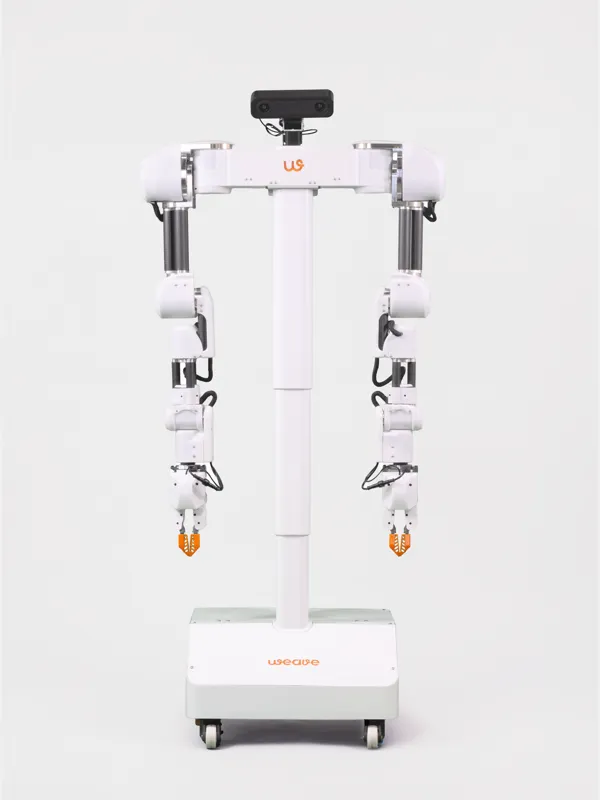
The useful buyer question is not "can the robot move?" It is: can it apply the right amount of force, notice when contact changes, and recover before something spills, tears, tips over, or gets dropped?
What are contact-rich chores?
A contact-rich chore is any task where success depends on continuous physical feedback, not just recognizing objects in an image. If the robot only needs to see a cup and drive near it, vision may be enough. If it must grip the cup, lift it, avoid squeezing too hard, keep it level, pour liquid, and set it down on a crowded table, force and touch start to matter.
Households are full of these chores:
Chore
Folding towels or laundry
- Why it is hard for a robot
- Cloth changes shape, hides edges, bunches under fingers, and rarely lies the same way twice
- What proof matters before buying
- Repeated full-load folding, recovery from bad folds, and published failure/intervention rates
Chore
Scooping cat litter
- Why it is hard for a robot
- Granular material shifts, tool angle matters, and the robot must avoid dumping waste
- What proof matters before buying
- Tool-use demos with missed-scoop recovery, container-edge awareness, and cleaning/sanitation limits
Chore
Serving tea or carrying open liquids
- Why it is hard for a robot
- The robot must coordinate grip force, wrist angle, arm motion, and whole-body stability
- What proof matters before buying
- Spill-rate testing, slip detection, speed limits, and safe behavior near people
Chore
Opening drawers or stuck containers
- Why it is hard for a robot
- Force rises before anything visibly moves
- What proof matters before buying
- Torque/force sensing, compliant control, and a safe abort if the object jams
Chore
Picking up fragile or slippery objects
- Why it is hard for a robot
- The visual scene may not reveal whether the object is secure
- What proof matters before buying
- Tactile slip detection, compliant fingertips, and tests with glass, fabric, plastic, and wet objects
| Chore | Why it is hard for a robot | What proof matters before buying |
|---|---|---|
| Folding towels or laundry | Cloth changes shape, hides edges, bunches under fingers, and rarely lies the same way twice | Repeated full-load folding, recovery from bad folds, and published failure/intervention rates |
| Scooping cat litter | Granular material shifts, tool angle matters, and the robot must avoid dumping waste | Tool-use demos with missed-scoop recovery, container-edge awareness, and cleaning/sanitation limits |
| Serving tea or carrying open liquids | The robot must coordinate grip force, wrist angle, arm motion, and whole-body stability | Spill-rate testing, slip detection, speed limits, and safe behavior near people |
| Opening drawers or stuck containers | Force rises before anything visibly moves | Torque/force sensing, compliant control, and a safe abort if the object jams |
| Picking up fragile or slippery objects | The visual scene may not reveal whether the object is secure | Tactile slip detection, compliant fingertips, and tests with glass, fabric, plastic, and wet objects |
This is why a polished thirty-second clip is not enough. Contact-rich chores need many trials across many homes, objects, lighting conditions, furniture layouts, and failure modes.
Why are towels, tea, and cat litter a useful test?
A 2026 research project called Humanoid Touch Dream is useful because its benchmark tasks sound closer to messy household work than the usual humanoid highlight reel. The project tested five contact-rich tasks: Insert-T, Book Organization, Towel Folding, Cat Litter Scooping, and Tea Serving. The team reports that its Humanoid Transformer with Touch Dreaming improved average success rate by 90.9% relative to a stronger baseline, and that predicting latent tactile signals produced a 30% relative gain in part of the ablation study.
Those numbers should not be read as a consumer product claim. They are a research signal. The important takeaway is what the researchers chose to measure: contact changes, tactile prediction, dexterous hands, whole-body control, and real-world rollouts. In other words, the benchmark is asking whether the robot can handle the kinds of physical uncertainty that homes create every day.

That maps directly to newer home-humanoid claims. Figure 03 is listed in the ui44 database as an active humanoid with no public price, a 173 cm height, 61 kg weight, about 5 hours of battery life, and a reported 20 kg payload. Figure's own announcement says Figure 03 adds compliant fingertips, first-generation tactile sensors, palm cameras, improved vision, soft goods, and wireless charging. Those are exactly the hardware clues buyers should look for. They do not prove a household robot is ready, but they show the company understands that home work is about contact, not just motion.
Which robots in the ui44 database are closest today?
No robot in the ui44 database should be treated as a fully general contact-rich home worker today. The better way to compare them is by asking which one has the right ingredients, which one is actually available, and which one is still mainly a research or preorder promise.
Robot
- ui44 status / price
- Available; $29,950 list price
- Contact-rich clue from the database
- Mobile manipulator, 160 cm height, 45 cm footprint, self-charging, 8-hour light-load runtime, 2.5 kg extended / 4 kg retracted arm payload
- Buyer interpretation
- Best real-home manipulation platform here, but priced for research, enterprise, and assistive pilots
Robot
- ui44 status / price
- Pre-order; $20,000 early-adopter price
- Contact-rich clue from the database
- Soft 30 kg humanoid with tactile skin, RGB/depth sensing, about 4 hours runtime, and household-chore positioning
- Buyer interpretation
- Most explicitly home-focused, but still early-access and dependent on autonomy maturity
Robot
- ui44 status / price
- Active; no public price
- Contact-rich clue from the database
- Tactile arrays, force sensors, Helix VLA, 20 kg payload, home-oriented safety and charging redesign
- Buyer interpretation
- Strong technical direction, not a consumer purchase today
Robot
- ui44 status / price
- Available; $13,500 starting price
- Contact-rich clue from the database
- 132 cm, 35 kg developer humanoid, optional dexterous hands on EDU, about 2 hours runtime, 2–3 kg arm load
- Buyer interpretation
- Affordable by humanoid standards, but Unitree warns individual users to understand limitations
Robot
- ui44 status / price
- Development; price undisclosed
- Contact-rich clue from the database
- Reported 115 DoF, 72 hand DoF, full-body tactile skin with 18,000 sensing points, clothes-folding demo
- Buyer interpretation
- Interesting tactile direction, but public ordering and final configuration are unclear
Robot
- ui44 status / price
- Available; $7,999 or $450/mo subscription
- Contact-rich clue from the database
- Stationary laundry folding, towels included, 30–90 minutes per load, remote teleoperation assist
- Buyer interpretation
- Narrow task, but a better near-term model for contact-heavy chores than a vague humanoid promise
| Robot | ui44 status / price | Contact-rich clue from the database | Buyer interpretation |
|---|---|---|---|
| Hello Robot Stretch 4 | Available; $29,950 list price | Mobile manipulator, 160 cm height, 45 cm footprint, self-charging, 8-hour light-load runtime, 2.5 kg extended / 4 kg retracted arm payload | Best real-home manipulation platform here, but priced for research, enterprise, and assistive pilots |
| 1X NEO | Pre-order; $20,000 early-adopter price | Soft 30 kg humanoid with tactile skin, RGB/depth sensing, about 4 hours runtime, and household-chore positioning | Most explicitly home-focused, but still early-access and dependent on autonomy maturity |
| Figure 03 | Active; no public price | Tactile arrays, force sensors, Helix VLA, 20 kg payload, home-oriented safety and charging redesign | Strong technical direction, not a consumer purchase today |
| Unitree G1 | Available; $13,500 starting price | 132 cm, 35 kg developer humanoid, optional dexterous hands on EDU, about 2 hours runtime, 2–3 kg arm load | Affordable by humanoid standards, but Unitree warns individual users to understand limitations |
| Kinetix AI KAI | Development; price undisclosed | Reported 115 DoF, 72 hand DoF, full-body tactile skin with 18,000 sensing points, clothes-folding demo | Interesting tactile direction, but public ordering and final configuration are unclear |
| Weave Isaac 0 | Available; $7,999 or $450/mo subscription | Stationary laundry folding, towels included, 30–90 minutes per load, remote teleoperation assist | Narrow task, but a better near-term model for contact-heavy chores than a vague humanoid promise |
This is the trade-off buyers should notice. Stretch 4 is a real product, but at nearly $30,000 it is not a mainstream appliance. 1X NEO is home-focused and soft, but preorder status means buyers should demand evidence before assuming it can do all advertised chores autonomously. Figure 03 has strong hardware language around sensing and tactile hands, but is not priced for consumers. Unitree G1 is available and comparatively low-cost, yet its own product page cautions that the humanoid industry remains early and that individual users should understand the limitations before purchase.
Why vision alone is not enough
Vision-language-action models are improving quickly. They can recognize scenes, parse instructions, and generate motion. But many contact-rich problems are not visible. A cup can look secure while starting to slip. A drawer can look closed while force is building against a jammed runner. A towel can hide the edge the robot needs to grab. A bottle cap can look the same whether a hand is resting on it or squeezing it.
The Robotics & AI Institute makes this point clearly in its discussion of handheld robotic data collection: internet-scale video lacks force and tactile data, egocentric video cannot capture many contact cues, and teleoperation without tactile feedback can lose the subtle force information that makes manipulation work. Its argument is not that cameras are useless. It is that contact-rich manipulation needs data streams that include force, proprioception, and tactile signals, not just pixels.
That is also why DAIMON Robotics' tactile-data push is worth watching. In an IEEE Spectrum interview, DAIMON describes a fingertip-sized tactile module with more than 110,000 effective sensing units, a dataset strategy that includes 10,000 hours of open-sourced data, and a Vision-Tactile-Language-Action approach that treats touch as a core modality. The interview is company-led and should be read with that context, but the technical point is sound: if a robot cannot detect slip, deformation, friction, and contact state, fragile household work becomes guesswork.
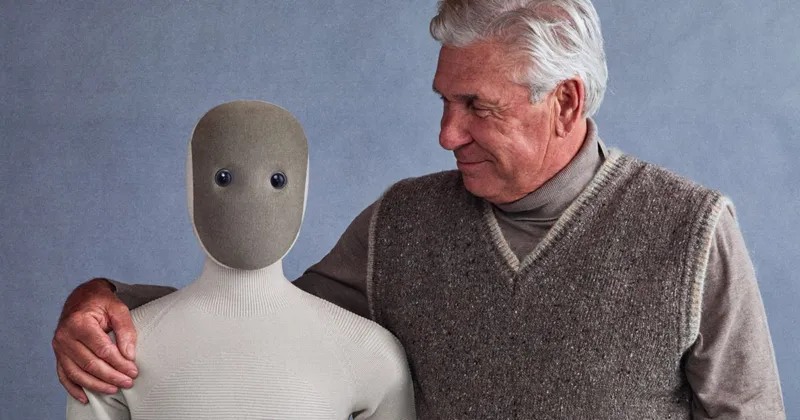
For buyers, this means the phrase "AI-powered" is not specific enough. Ask what the robot senses at the hand, wrist, arm, base, and body. Ask whether the company publishes slip detection, grip-force ranges, tool-use tests, spill tests, and intervention rates. A home robot does not need human-level hands on day one, but it does need enough physical awareness to avoid expensive or unsafe mistakes.
What should buyers ask before trusting a contact-rich chore demo?
Use a stricter checklist for any robot promising laundry, dishes, pet care, cooking help, plant care, or elder-assistance handling.
- How many full task attempts were run? A single success clip is weak. A table of 100 attempts, failure categories, and recovery rates is stronger.
- Was the task reset by a person between tries? A robot that succeeds only after a human arranges the towel, cup, tray, or litter box is not doing the real chore.
- What contact sensors are active? Look for force/torque sensing, tactile fingertips or skin, slip detection, compliant actuation, and wrist or palm sensing.
- Can it abort safely? The robot should know when to stop pulling a drawer, stop pouring, release a fragile object, or ask for help.
- Does it recover from common failures? Recovery is the product. Bad grasps, partial folds, stuck tools, object slips, pet interruptions, and occluded cameras are normal at home.
- Is remote assistance part of the workflow? Teleoperation is not cheating if it is disclosed. Weave Isaac 0 is explicit that a specialist can help if the laundry-folding robot gets stuck. That is more honest than pretending early autonomy never fails.
- What does the warranty cover after contact damage? Contact-rich chores wear grippers, fingertips, actuators, fabric covers, and sensors. Ask about repair cost before you buy.
Are contact-rich home chores ready in 2026?
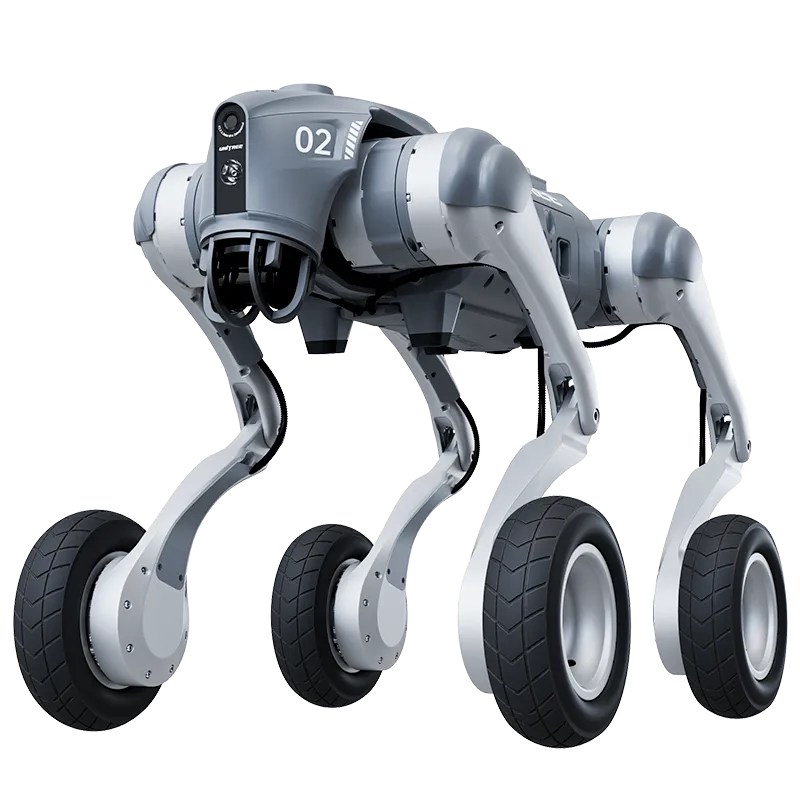
Some narrow versions are ready, but general household contact-rich autonomy is not. The honest 2026 answer is layered:
- Ready now: stationary or constrained systems for one chore, such as laundry folding with remote-assist fallback, or mobile manipulators used by researchers and assistive pilots.
- Promising but early: home humanoids with soft bodies, tactile skin, compliant hands, and expert/teleoperation modes.
- Not proven yet: a general robot that can walk into an arbitrary home and reliably fold laundry, serve drinks, scoop litter, open stuck containers, clean up spills, and recover without a human reset.
That should not make buyers cynical. It should make them specific. The next wave of useful home robots will not be defined only by smarter chat, faster walking, or better object recognition. It will be defined by the boring physical details: how hard the robot presses, whether it notices slip, how it keeps balance while using both hands, how quickly it gives up before damage, and how much evidence the company publishes beyond the best take.
For now, contact-rich chores are the filter. If a robot company can explain force, touch, recovery, and repeated trials, keep reading. If it only shows a clean demo in a perfect room, assume towels, tea, and cat litter are still harder than the video makes them look.
Related in the database
Use this article as a warranty and coverage workflow
Turn the article into a warranty and coverage pass grounded in the robots and manufacturers it actually references.
Can Home Robots Handle Contact-Rich Chores? already points you toward 6 linked robots, 6 manufacturers, and 4 countries inside the ui44 database. That matters because strong buyer guidance is easier to apply when you can move immediately from a claim or warning into concrete product pages, manufacturer directories, component explainers, and country-level context instead of treating the article as an isolated opinion piece. The fastest next step is to turn the article into a shortlist workflow: open the linked robot pages, verify which specs are actually published for those models, then compare the surrounding manufacturer and component context before you decide whether the underlying claim changes your buying plan.
For this topic, the useful discipline is to separate the editorial lesson from the catalog evidence. The article gives you the framing, but the robot pages tell you what each product actually ships with today: sensor stack, connectivity methods, listed price, release timing, category, and support-relevant compatibility notes. The manufacturer pages then show whether you are looking at a one-off launch, a broader lineup pattern, or a company that spans multiple categories. That layered workflow reduces the risk of buying on a single marketing phrase or a single support FAQ.
The most practical move is to keep warranty language and product context together. Compare the linked robots first, then check whether the manufacturer pages suggest a mature service lane or a more limited lineup. On this article, Figure 03, Stretch 4, and NEO are the right place to start. If you want a quick working shortlist, open Compare Figure 03, Stretch 4, and NEO next, then keep this article open as the reasoning layer while you compare structured data side by side.
Practical Takeaway
Every robot, manufacturer, category, component, and country reference below resolves to a real ui44 page, keeping the follow-up path grounded in database records rather than generic advice.
Suggested next steps in ui44
- Compare the listed price, release timing, and category fit of the linked robots before you treat warranty length as a direct value proxy.
- Open Figure AI to see whether the brand has several relevant models in the same lane or whether the article is centered on one flagship product.
- Record what the article proves, what still depends on seller or region rules, and which consumables or battery-related details you still need to verify externally.
- Use Compare Figure 03, Stretch 4, and NEO before checkout so the warranty conversation stays anchored to a real shortlist.
- Do not treat the article as the final source of truth on coverage terms. Treat it as the framing layer that tells you which documentation you still need to inspect before purchase.
Robot profiles worth opening next
Use the linked product pages as the evidence layer
The linked robot pages are where this article becomes operational. Instead of asking whether the headline is interesting, use the robot entries to inspect the actual mix of sensors, connectivity options, batteries, pricing, release timing, and stated capabilities attached to the products mentioned in the article. That is the easiest way to see whether the warning or opportunity described here affects one product family, a specific design pattern, or an entire buying lane.
Figure 03 is tracked on ui44 as a active humanoid robot from Figure AI. The database currently records a listed price of Price TBA, a release date of 2025-10-09, ~5 hours battery life, Not disclosed charging time, and a published stack that includes Stereo Vision, Depth Cameras, and Force Sensors plus Wi-Fi and Bluetooth.
For warranty and coverage questions, the robot page gives you the operating context that fine print often leaves out. Review the published capability mix, including Complex Manipulation, Warehouse Work, and Manufacturing Tasks, and the listed battery and charging profile before deciding whether a coverage term meaningfully reduces your ownership risk or merely sounds reassuring in isolation.
Stretch 4
Hello Robot · Home Assistants · Available
Stretch 4 is tracked on ui44 as a available home assistants robot from Hello Robot. The database currently records a listed price of $29,950, a release date of 2026-05-12, 8 hours (light CPU load) battery life, Not officially disclosed charging time, and a published stack that includes Wide-FOV depth sensing, High-resolution RGB cameras, and Calibrated RGB + depth perception plus its listed connectivity stack.
For warranty and coverage questions, the robot page gives you the operating context that fine print often leaves out. Review the published capability mix, including Mobile Manipulation, Omnidirectional Indoor Mobility, and Autonomous Mapping and Navigation, and the listed battery and charging profile before deciding whether a coverage term meaningfully reduces your ownership risk or merely sounds reassuring in isolation.
NEO
1X Technologies · Humanoid · Pre-order
NEO is tracked on ui44 as a pre-order humanoid robot from 1X Technologies. The database currently records a listed price of $20,000, a release date of 2025-10-28, ~4 hours battery life, Not disclosed charging time, and a published stack that includes RGB Cameras, Depth Sensors, and Tactile Skin plus Wi-Fi and Bluetooth.
For warranty and coverage questions, the robot page gives you the operating context that fine print often leaves out. Review the published capability mix, including Household Chores, Tidying Up, and Safe Human Interaction, and the listed battery and charging profile before deciding whether a coverage term meaningfully reduces your ownership risk or merely sounds reassuring in isolation.
G1 is tracked on ui44 as a available humanoid robot from Unitree. The database currently records a listed price of $13,500, a release date of 2024-05-13, ~2 hours battery life, Not disclosed charging time, and a published stack that includes Depth Camera, 3D LiDAR, and 4 Microphone Array plus Wi-Fi 6 and Bluetooth 5.2.
For warranty and coverage questions, the robot page gives you the operating context that fine print often leaves out. Review the published capability mix, including Bipedal Walking, Object Manipulation, and Dexterous Hands (optional Dex3-1), and the listed battery and charging profile before deciding whether a coverage term meaningfully reduces your ownership risk or merely sounds reassuring in isolation.
KAI (KaiBot)
Kinetix AI · Humanoid · Development
KAI (KaiBot) is tracked on ui44 as a development humanoid robot from Kinetix AI. The database currently records a listed price of Price TBA, a release date of 2026-04, 1.7 kWh semi-solid-state battery; about 4 hours per charge reported battery life, Not officially disclosed charging time, and a published stack that includes Full-body tactile skin with 18,000 sensing points, Touch detection down to 0.1 N reported, and Vision and spatial data captured for training through the KAI Halo wearable system plus Ethernet and Wi-Fi.
For warranty and coverage questions, the robot page gives you the operating context that fine print often leaves out. Review the published capability mix, including Bipedal Humanoid Locomotion, 115 Degrees of Freedom, and 72 Degrees of Freedom Across Both Hands, and the listed battery and charging profile before deciding whether a coverage term meaningfully reduces your ownership risk or merely sounds reassuring in isolation.
Manufacturer context behind the article
Check whether this is one product story or a broader company pattern
Manufacturer pages add the support context that individual product pages cannot show on their own. They help you check whether the article is pointing at one coverage promise or at a company with a broader service footprint and multiple products to maintain.
Figure AI
ui44 currently tracks 2 robots from Figure AI across 1 category. The company is grouped under USA, and the current catalog footprint on ui44 includes Figure 03, Figure 02.
That wider brand context matters because support confidence is easier to judge when you can see the company’s overall footprint, not just one warranty phrase attached to one product. A broader tracked lineup can change how you interpret the article’s coverage discussion. The category mix here currently points toward Humanoid as the most useful next route if you want to see whether this article reflects a wider pattern inside the brand.
Hello Robot
ui44 currently tracks 2 robots from Hello Robot across 1 category. The company is grouped under USA, and the current catalog footprint on ui44 includes Stretch 3, Stretch 4.
That wider brand context matters because support confidence is easier to judge when you can see the company’s overall footprint, not just one warranty phrase attached to one product. A broader tracked lineup can change how you interpret the article’s coverage discussion. The category mix here currently points toward Home Assistants as the most useful next route if you want to see whether this article reflects a wider pattern inside the brand.
1X Technologies
ui44 currently tracks 2 robots from 1X Technologies across 1 category. The company is grouped under Norway, and the current catalog footprint on ui44 includes NEO, EVE.
That wider brand context matters because support confidence is easier to judge when you can see the company’s overall footprint, not just one warranty phrase attached to one product. A broader tracked lineup can change how you interpret the article’s coverage discussion. The category mix here currently points toward Humanoid as the most useful next route if you want to see whether this article reflects a wider pattern inside the brand.
Unitree
ui44 currently tracks 2 robots from Unitree across 1 category. The company is grouped under China, and the current catalog footprint on ui44 includes H1, G1.
That wider brand context matters because support confidence is easier to judge when you can see the company’s overall footprint, not just one warranty phrase attached to one product. A broader tracked lineup can change how you interpret the article’s coverage discussion. The category mix here currently points toward Humanoid as the most useful next route if you want to see whether this article reflects a wider pattern inside the brand.
Broaden the scan without leaving the database
Categories, components, and countries add the wider context
Category framing
Category pages are useful when the article touches a buying pattern that shows up across brands. A category route helps you confirm whether the linked products sit in a narrow niche or whether the same question should be tested across a larger field of alternatives.
Humanoid
The Humanoid category page currently groups 129 tracked robots from 92 manufacturers. ui44 describes this lane as: Full-size bipedal humanoid robots built to work alongside people — from factory floors to household tasks. Compare the cutting edge of humanoid robotics.
That makes the category route a practical follow-up when you want to check whether the products linked in this article are typical for the lane or whether they sit at one edge of the market. Useful starting examples currently include NEO, EVE, Mornine M1.
Home Assistants
The Home Assistants category page currently groups 16 tracked robots from 14 manufacturers. ui44 describes this lane as: Arm-based household helpers — laundry folders, kitchen robots, and mobile manipulators that take on hands-on physical tasks around the home.
That makes the category route a practical follow-up when you want to check whether the products linked in this article are typical for the lane or whether they sit at one edge of the market. Useful starting examples currently include Robody, Futuring 2 (F2), Stretch 3.
Country and ecosystem context
Country pages give extra context when support practices, launch sequencing, regulatory posture, or manufacturer mix matter. They are not a substitute for model-level verification, but they do help you see which ecosystems cluster together and which manufacturers sit in the same regional field when you broaden the search beyond the article headline.
USA
The USA route currently groups 89 tracked robots from 69 manufacturers in ui44. That gives you a useful regional lens when the article points toward support practices, launch sequencing, or brand clusters that may share similar ecosystem assumptions.
On the current route, manufacturers like Faraday Future, iRobot, Boston Dynamics make the page a good way to broaden the scan without losing the regional context that often shapes availability, documentation style, and adjacent alternatives.
Norway
The Norway route currently groups 2 tracked robots from 1 manufacturers in ui44. That gives you a useful regional lens when the article points toward support practices, launch sequencing, or brand clusters that may share similar ecosystem assumptions.
On the current route, manufacturers like 1X Technologies make the page a good way to broaden the scan without losing the regional context that often shapes availability, documentation style, and adjacent alternatives.
China
The China route currently groups 189 tracked robots from 87 manufacturers in ui44. That gives you a useful regional lens when the article points toward support practices, launch sequencing, or brand clusters that may share similar ecosystem assumptions.
On the current route, manufacturers like AGIBOT, Dreame, Unitree Robotics make the page a good way to broaden the scan without losing the regional context that often shapes availability, documentation style, and adjacent alternatives.
Questions to answer before you move from reading to buying
A follow-up FAQ built from the entities already linked in this article
Frequently Asked Questions
Which page should I open first after reading “Can Home Robots Handle Contact-Rich Chores?”?
Start with Figure 03. That gives you a concrete product anchor for the article’s main claim. From there, branch into the manufacturer and component pages so you can tell whether the article is describing one specific model, a repeated brand pattern, or a wider technology issue that affects multiple shortlist options.
How do the manufacturer pages change the buying decision?
Figure AI help you zoom out from one article and one product. On ui44 they show lineup breadth, category spread, and the neighboring robots tied to the same company. That context is useful when you are deciding whether a risk belongs to a single model, whether it shows up across a brand’s portfolio, and whether you should keep looking at alternatives before committing.
When should I switch from reading to side-by-side comparison?
Move into Compare Figure 03, Stretch 4, and NEO as soon as you understand the article’s main warning or promise. The article explains what to watch for, but the compare view is where you can check whether price, status, battery life, connectivity, sensors, and category fit still make the robot a good match for your own home and budget.
Where to go next in ui44
Keep the research chain inside the database
If you want to keep going, these follow-on pages give you the cleanest expansion path from article to research session. Open the comparison route first if you are deciding between products today. Open the manufacturer, category, and component routes if you still need to understand the broader pattern behind the claim.
Written by
ui44 Team
Published May 18, 2026
Share this article
Open a plain share link on X or Bluesky. No embeds, no widgets, no cookie baggage.