A robot that can start a task but cannot verify the result is still waiting for a human to be the quality-control system. A useful home robot needs a loop: understand the goal, attempt the action, check the outcome, retry when it failed, and stop when the task is complete or unsafe.
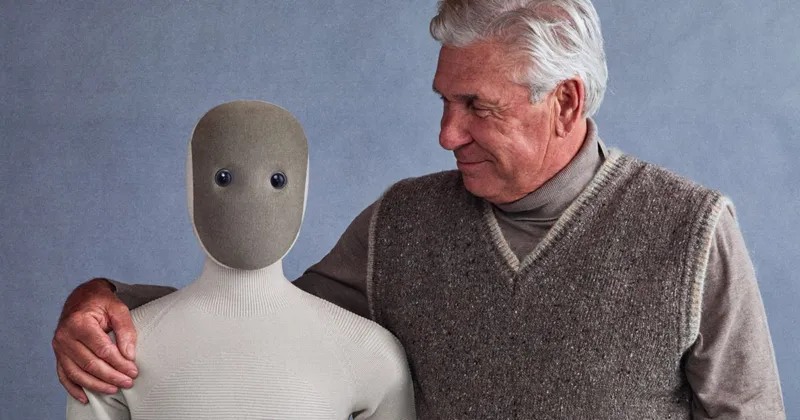
Google DeepMind made that problem unusually explicit in its April 2026 Gemini Robotics-ER 1.6 announcement. The model is not a consumer robot. But DeepMind calls out task planning and success detection as core robotics capabilities, including multi-view examples where a robot must decide whether a blue pen is really inside a black pen holder. That is exactly the kind of verification problem home robots face every day, just with laundry, mugs, socks, toys, and messy kitchens instead of neat lab props.
The buyer takeaway is simple: when a robot company says a machine can do a chore, ask what it measures after the movement is over.
How Does a Home Robot Know a Chore Is Done?
A home robot needs three kinds of intelligence:
- Intent understanding: what did the person ask for?
- Action planning: what motions should the robot try?
- Success detection: did the world end up in the right state?
Most marketing focuses on the first two. Voice control sounds futuristic. Dexterous motion looks impressive on video. But completion checking is where the product becomes useful. If the robot drops the sock behind the chair, half-folds a shirt, pushes a cup to the edge of the table, or misses the sticky patch on the floor, it needs to notice.
DeepMind's Robotics-ER 1.6 framing is useful because it names the technical pieces. A robot may need a wrist camera, an overhead view, depth sensing, touch, object recognition, spatial reasoning, and world knowledge at the same time. The system also needs to understand uncertainty: sometimes the right answer is not "done" or "failed," but "I cannot see the object anymore" or "this is no longer safe to keep trying."
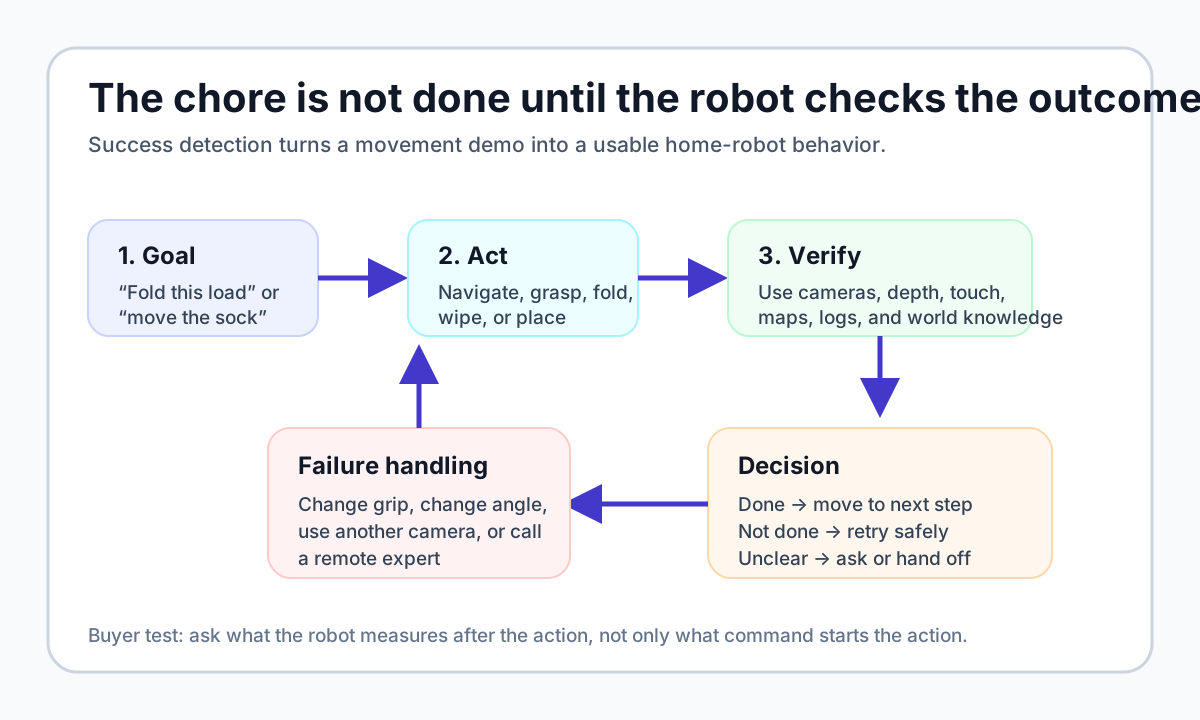
That matters more in homes than in factories. A factory bin can be lit, measured, and standardized. A home is full of occlusion: laundry covers laundry, pets move through scenes, mugs look different, lighting changes, and humans interrupt the task halfway through.
What Counts as "Done" Depends on the Chore
There is no single completion signal for every home chore. A robot vacuum has a map. A laundry robot needs fabric geometry. A humanoid moving an object needs to know both where the object ended up and whether it left a new hazard behind.
Chore type
Move an object
- What "done" should mean
- The object is in the requested place and stable
- What can go wrong
- It fell, is partly hanging over an edge, or blocks a path
Chore type
Fold laundry
- What "done" should mean
- The garment is folded neatly enough and stacked
- What can go wrong
- It is wrinkled, inverted, tangled, or only half-folded
Chore type
Clean a floor
- What "done" should mean
- The target area was reached and the visible mess changed
- What can go wrong
- The robot avoided the stain, moved dirt around, or skipped behind an obstacle
Chore type
Fetch an item
- What "done" should mean
- The right item was grasped and delivered to the right person or location
- What can go wrong
- The robot picked the wrong object or dropped it in transit
Chore type
Inspect a condition
- What "done" should mean
- The reading, object, or hazard was correctly interpreted
- What can go wrong
- The robot saw the wrong gauge, poor lighting, or an ambiguous result
| Chore type | What "done" should mean | What can go wrong |
|---|---|---|
| Move an object | The object is in the requested place and stable | It fell, is partly hanging over an edge, or blocks a path |
| Fold laundry | The garment is folded neatly enough and stacked | It is wrinkled, inverted, tangled, or only half-folded |
| Clean a floor | The target area was reached and the visible mess changed | The robot avoided the stain, moved dirt around, or skipped behind an obstacle |
| Fetch an item | The right item was grasped and delivered to the right person or location | The robot picked the wrong object or dropped it in transit |
| Inspect a condition | The reading, object, or hazard was correctly interpreted | The robot saw the wrong gauge, poor lighting, or an ambiguous result |
This is why a robot with better completion checking can be more useful than a robot with more dramatic movement. A reliable "I could not finish this" is often better than a confident but wrong success message.
What Current Robots in the ui44 Database Show
The robots closest to this problem are not ordinary app-controlled appliances. They are home humanoids, mobile manipulators, narrow chore robots, and the first consumer cleaning robots with object-handling hardware.
Robot
- ui44 data point
- $20,000 pre-order; 167 cm; 30 kg; about 4 hours battery; RGB/depth sensors and tactile skin
- Why it matters for completion checking
- A home-first humanoid needs to verify chores in normal rooms, then fall back to expert guidance when autonomy is not enough.
Robot
- ui44 data point
- $24,950; 24.5 kg; 33 × 34 × 141 cm; 2 kg payload; ROS 2/Python SDK
- Why it matters for completion checking
- A transparent research and assistive platform where developers can define explicit perception, manipulation, and success checks.
Robot
- ui44 data point
- $7,999 or $450/month; 20 DoF; stationary; folds a load in 30-90 minutes
- Why it matters for completion checking
- A narrow task can have clearer success criteria: are the clothes folded into acceptable stacks?
Robot
- ui44 data point
- $1,299; five-axis OmniGrip arm; 22,000 Pa suction; AI object recognition
- Why it matters for completion checking
- A cleaning robot with an arm must verify both object relocation and the previously blocked floor area.
Robot
- ui44 data point
- 1.3 m; 34 kg; 23 DoF; 3 kg arm payload; open-source roadmap
- Why it matters for completion checking
- A research humanoid makes the learning and validation pipeline more inspectable, even if it is not a consumer helper yet.
| Robot | ui44 data point | Why it matters for completion checking |
|---|---|---|
| 1X NEO | $20,000 pre-order; 167 cm; 30 kg; about 4 hours battery; RGB/depth sensors and tactile skin | A home-first humanoid needs to verify chores in normal rooms, then fall back to expert guidance when autonomy is not enough. |
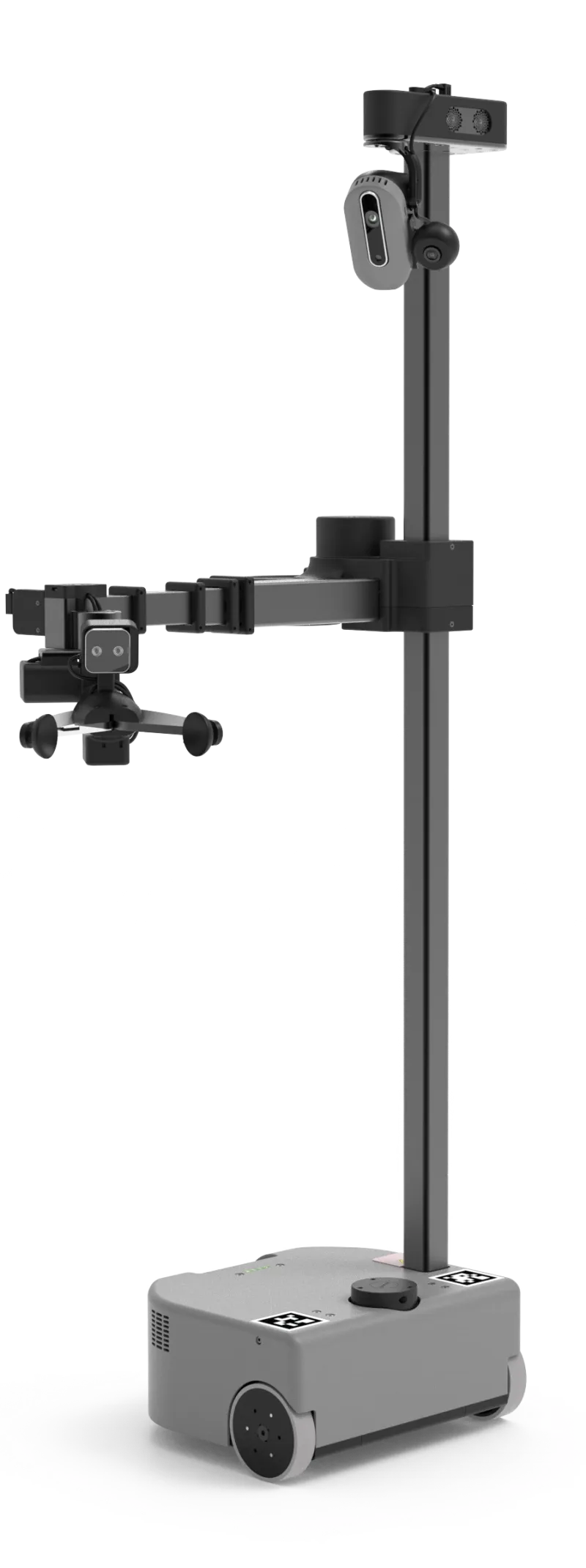
| Hello Robot Stretch 3 | $24,950; 24.5 kg; 33 × 34 × 141 cm; 2 kg payload; ROS 2/Python SDK | A transparent research and assistive platform where developers can define explicit perception, manipulation, and success checks. |
| Weave Isaac 0 | $7,999 or $450/month; 20 DoF; stationary; folds a load in 30-90 minutes | A narrow task can have clearer success criteria: are the clothes folded into acceptable stacks? |
| Roborock Saros Z70 | $1,299; five-axis OmniGrip arm; 22,000 Pa suction; AI object recognition | A cleaning robot with an arm must verify both object relocation and the previously blocked floor area. |
| ROBOTIS AI Sapiens K0 | 1.3 m; 34 kg; 23 DoF; 3 kg arm payload; open-source roadmap | A research humanoid makes the learning and validation pipeline more inspectable, even if it is not a consumer helper yet. |
The pattern is clear: the more open-ended the chore, the more the robot needs a way to decide whether the state of the home changed correctly.
1X NEO: Autonomy Plus Human Fallback
1X NEO is the most direct buyer-facing example. 1X says NEO can take a list of chores, schedule them, and operate autonomously by default. It also says that for chores the robot does not know, a buyer can schedule a 1X Expert to guide it, helping the robot learn while the job gets done.
That is not a weakness; it is an honest clue about the state of the market. Early home humanoids will not perfectly verify every chore in every room. They will need a fallback path for ambiguous results, failed grasps, unusual objects, and privacy-sensitive situations where the buyer may not want remote help.
1X's AI page also describes Redwood as training on both successes and failures. That phrase is important. A robot cannot learn robust completion if the training set only contains perfect-looking demos. It needs examples of failed grasps, missed placements, awkward starting positions, and recovery attempts.
For a buyer, the right question is not only "Can NEO fold laundry?" It is: When NEO thinks it folded the laundry, what evidence does it use?
Stretch 3: Why Transparent Sensors Matter
Hello Robot Stretch 3 is not sold as a plug-and-play chore servant. That makes it valuable as a reality check. The robot is a compact mobile manipulator with a compliant gripper, head and gripper RGBD cameras, navigation laser, ROS 2, Python SDK, and web/gamepad/dexterous teleoperation.
Those details are not just developer trivia. They are the tools needed to build completion checks. A developer can define whether an object moved, whether the gripper is empty, whether a shelf is reachable, whether a person's pose changed, or whether a grasp attempt should be abandoned.
Stretch's buyer lesson is that completion checking is often a software contract on top of hardware sensors. If the robot platform exposes its cameras, logs, state, and SDK, the autonomy claim is easier to audit. If a product only shows a polished video, you cannot tell whether the robot detected success or whether a human stopped the recording at the lucky moment.
Narrow Robots Can Be More Honest Than General Ones
A bounded chore often gives the cleanest success test. That is why narrow home robots may become useful before general humanoids do.
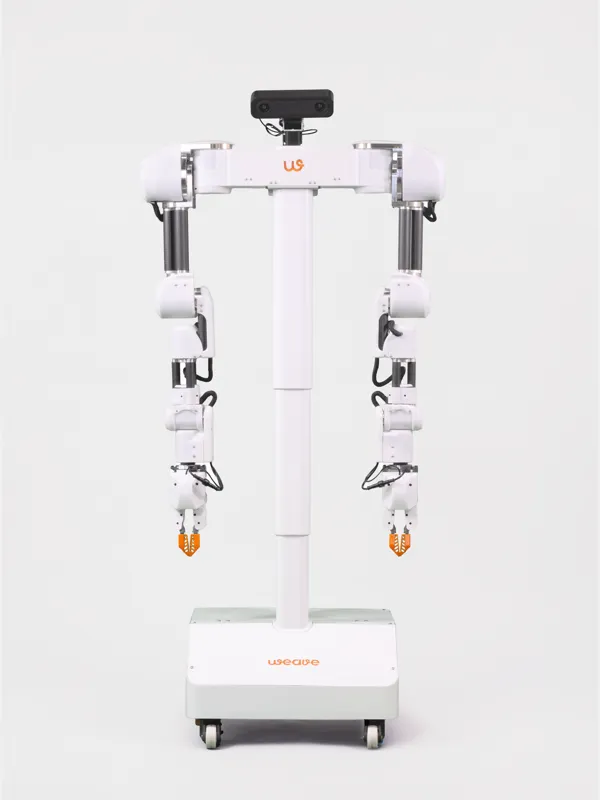
Weave Isaac 0 is a good example. Weave says Isaac 0 is already going into first customers' homes, folds shirts, long sleeves, sweaters, pants, and towels, and works for 30-90 minutes per load. The company also says that if it gets stuck or makes a mistake it cannot correct, a Weave specialist can sub in remotely for a 5-10 second correction, then hand control back to the robot. Models are updated weekly.
That is not universal autonomy. But it is a credible structure for a first home chore robot because the end state is specific. A load of laundry is either folded into usable stacks or it is not. The robot does not need to understand every possible household task to provide value.
The trade-off is privacy and service dependency. Remote correction may be useful for quality, but it should be disclosed clearly. Buyers should know who can see camera feeds, what is recorded, whether clips are used for training, and how to turn assistance off.
Cleaning Robots Already Have a Simpler Version of This Problem
Robot vacuums solved a narrow version of success detection years ago: cover the mapped area, return to dock, and report completion. The new problem is that cleaning robots are starting to manipulate the environment, not just drive over it.
The Roborock Saros Z70 is tracked in ui44 as a $1,299 robot vacuum with a foldable five-axis OmniGrip mechanical arm, 22,000 Pa suction, LiDAR, RGB camera, structured light, and AI object recognition. Its core claim is not just cleaning around objects. It can pick up small items like socks or shoes, move obstacles, clean areas that were previously blocked, and then return to those missed spots.
That creates two completion checks:
- Did the object move to a safe, intended place?
- Did the robot actually clean the floor that became available?
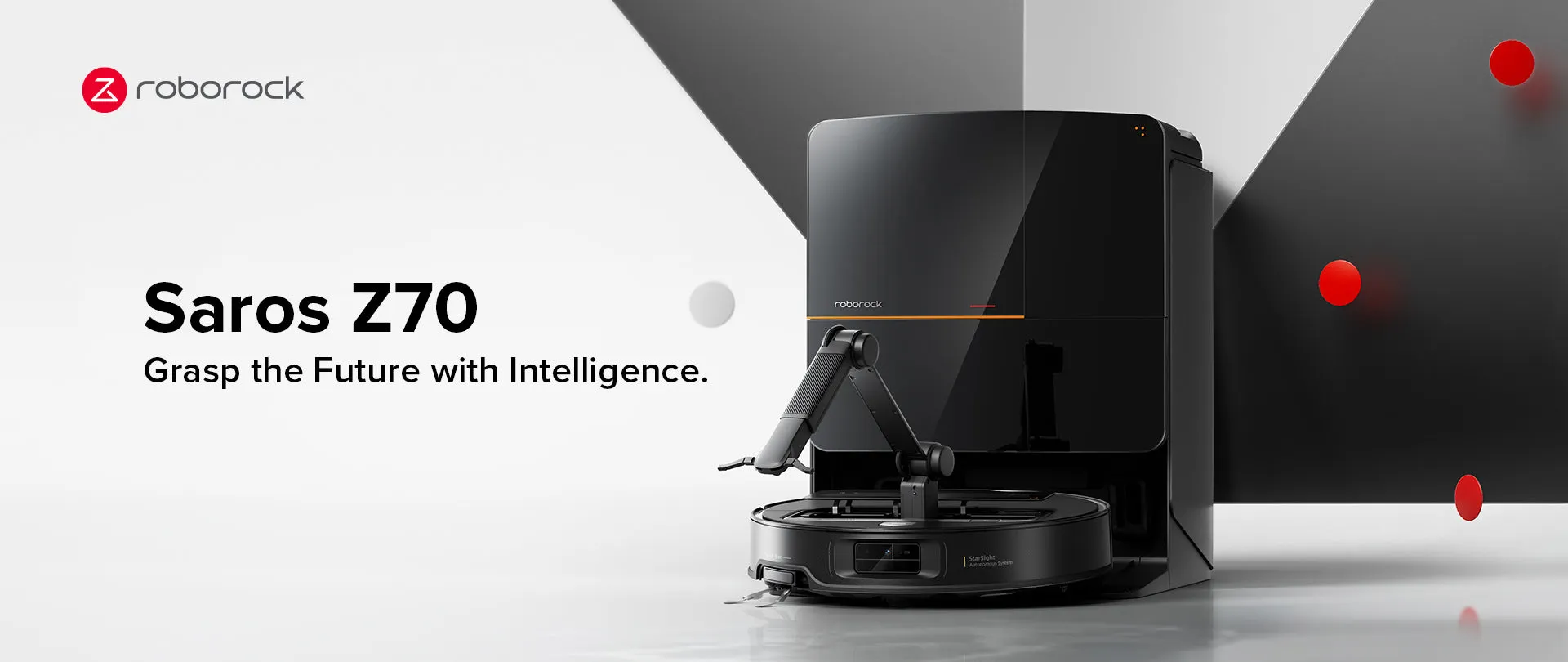
This is still appliance-level autonomy, not a general household helper. But it is a useful preview because buyers can inspect the boundary. If the arm only handles certain objects, weights, shapes, and floor conditions, the product should say that plainly. A limited success detector is acceptable when the task boundary is honest.
What Gemini Robotics Changes — and What It Does Not
DeepMind's Gemini Robotics-ER 1.6 points toward more capable completion checks. The official announcement highlights pointing, counting, multi-view success detection, instrument reading, and safety-constraint following. It also mentions complex visual reasoning such as reading pressure gauges and sight glasses in collaboration with Boston Dynamics.
That is relevant to homes because many household tasks are visual-state questions. Is the cup in the sink? Is the drawer closed? Is the towel folded? Is the spill gone? Is the toy bin full enough? Did the medicine bottle land on the counter or roll behind the toaster?
But Gemini Robotics is not a magic consumer feature by itself. It is a model layer that robot developers can use. A home product still needs the right body, latency, safety system, privacy model, camera placement, local/off-board compute split, and product support. Better reasoning helps, but it does not remove the need for cautious hardware design.
The most interesting direction is multi-view reasoning. A wrist camera may see the gripper, while a room camera or head camera sees the destination. Completion often requires combining those views. If the robot only checks from one angle, it can miss the fact that the object is hidden, unstable, or only partially placed.
The Buyer Checklist: Ask These Seven Questions
Before believing a home-robot chore claim, ask the company these questions:
- What exactly is the success condition? A folded towel, a visibly cleaner area, an object in a named zone, or just a completed motion path?
- Which sensors verify the result? Camera, depth, touch, force, map state, gripper state, dock logs, or human confirmation?
- Can the robot detect failure? Ask for examples: dropped object, blocked view, wrong item, partial fold, unsafe placement.
- What happens after failure? Retry, change strategy, ask a human, call a remote expert, or stop?
- Does the robot log the proof? A map, snapshot, task report, or plain language explanation can help buyers trust the result.
- Where does the data go? Especially for remote expert modes and cloud learning.
- What task boundary is guaranteed? The narrower the guarantee, the easier it is to verify.
If a company can answer these clearly, its autonomy claim is much stronger. If it can only show a video where the robot succeeds once, be skeptical.
The Honest Near-Term Forecast
Home robots will not become useful because they can start more chores. They will become useful when they can reliably decide what happened after each attempt.
In the near term, the best completion checking will come from narrow robots with clear task boundaries: laundry folding, object pickup, patrol/inspection, floor-cleaning, or assistive fetch tasks. General humanoids will improve, but buyers should expect a mix of autonomy, guided learning, remote assistance, and hard limits.
The robots worth watching are the ones that make those limits visible. Weave Isaac 0 is narrow but measurable. Stretch 3 is not consumer-simple, but it exposes the stack. 1X NEO is ambitious, but its Expert Mode hints at the real fallback model. Saros Z70 is an appliance, but it shows why object handling needs verification. ROBOTIS K0 is research hardware, but its open-learning roadmap is the kind of transparency future home robots need.
The next time you see a home robot demo, do not ask only, "What did it do?" Ask: "How did it know it was done?"
Written by
ui44 Team
Published April 26, 2026
Share this article
Open a plain share link on X or Bluesky. No embeds, no widgets, no cookie baggage.