That is why Mobileye's plan to acquire Mentee Robotics is more interesting than another humanoid launch video. Mobileye is not just buying a robot company. It is trying to move ideas from autonomous driving safety into physical AI: formal rules, redundancy, predictable behavior, and auditable decisions. For a future home robot buyer, that shift matters more than whether a humanoid can wave on stage.
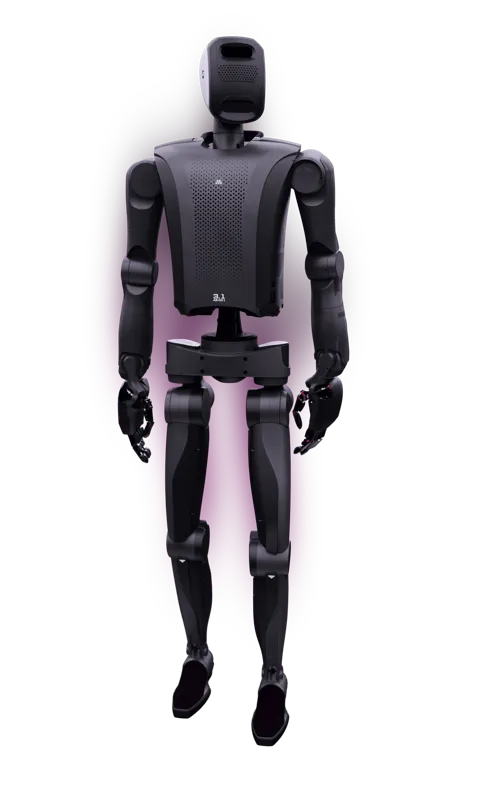
The short version: car-style safety rules will not magically make humanoids home ready. A kitchen is not a highway. But Mobileye and Mentee are pointing at the right buyer question: do not ask only what the robot can do. Ask what it can prove it will not do.
What are car-style safety rules for home humanoids?
Mobileye's best-known safety framework is Responsibility-Sensitive Safety, or RSS. In autonomous driving, RSS is a white-box mathematical model intended to formalize safe behavior instead of leaving it as a vague promise. Mobileye's public explanation summarizes five driving rules: keep a safe distance, do not cut in recklessly, treat right of way as something given rather than taken, be cautious when visibility is limited, and avoid a crash if it can be avoided without causing another one.
Those rules were written for cars, not robots carrying laundry. Still, the translation to home humanoids is surprisingly practical:
RSS-style driving idea
Safe distance
- Home humanoid version
- Keep a measurable personal bubble around people, pets, stairs, glass, and hot surfaces
RSS-style driving idea
Do not cut in recklessly
- Home humanoid version
- Do not cross a person's walking path, doorway, or wheelchair route unless there is room to yield
RSS-style driving idea
Right of way is given
- Home humanoid version
- Humans, pets, children, and mobility aids always get priority over the robot's task
RSS-style driving idea
Limited visibility
- Home humanoid version
- Slow down near counters, blind corners, beds, toys, and cluttered floors
RSS-style driving idea
Avoid a crash
- Home humanoid version
- Put the object down, stop, sit, crouch, or back away instead of trying to finish the chore
| RSS-style driving idea | Home humanoid version |
|---|---|
| Safe distance | Keep a measurable personal bubble around people, pets, stairs, glass, and hot surfaces |
| Do not cut in recklessly | Do not cross a person's walking path, doorway, or wheelchair route unless there is room to yield |
| Right of way is given | Humans, pets, children, and mobility aids always get priority over the robot's task |
| Limited visibility | Slow down near counters, blind corners, beds, toys, and cluttered floors |
| Avoid a crash | Put the object down, stop, sit, crouch, or back away instead of trying to finish the chore |
That is the useful part of the car analogy. It turns "safe AI" from a mood into a checklist. A home humanoid should have explicit limits for speed, force, payload, reach, blind corners, children, pets, stairs, liquid spills, knives, hot pans, and fragile furniture. If the company cannot explain those limits, the robot is asking for trust before it has earned it.
What did Mobileye say Mentee is building?
Mobileye announced in January 2026 that it had entered a definitive agreement to acquire Mentee Robotics for a consideration described as about $900 million, subject to adjustments. The release says Mentee has a third-generation, vertically integrated humanoid platform and that Mobileye expects first on-site customer proof-of-concept deployments in 2026, operating autonomously without teleoperation. Series production and commercialization are targeted for 2028.
That timeline is important. MenteeBot is not a consumer home robot you can buy today. ui44 lists it as a Development humanoid with no public price. The database entry tracks a 175 cm, 70 kg robot with a reported 1.5 m/s top speed, 40 degrees of freedom, hot-swappable battery architecture, motor-based tactile sensing in the hands, and carrying capability up to 25 kg. Its official positioning spans household and warehouse tasks, but Mobileye's public commercialization language is still about proof-of-concept and scalable deployment, not weekend delivery to your apartment.
That cautious reading actually makes the story stronger. The interesting claim is not "MenteeBot is ready for the home." It is that Mobileye thinks humanoids will need the same discipline that made driver-assistance systems shippable at scale: edge compute, redundancy, formal safety reasoning, simulation, validation, manufacturing discipline, and a business model that survives outside a lab.
Why does this matter for someone buying a home robot?
Because household robots fail differently from cars. A car mostly stays on roads and follows traffic structure. A home robot has to work around socks, pets, charging cables, glassware, elderly relatives, sleeping children, uneven rugs, wet floors, folding chairs, and humans who change their minds mid-sentence.
That makes buyer-facing safety proof more important, not less. A robot that can lift 25 kg is not just a helpful assistant. It is a moving machine with enough mass and strength to damage property or hurt someone if its software, sensors, brakes, or operator model fail. A robot with a hand is not just a camera on wheels. It can pinch, drop, spill, snag, shove, or pull.
The home market already has a lower-risk precedent: Amazon Astro is a 44 cm, 9.35 kg wheeled patrol robot with Alexa, Visual ID, Ring integration, ultrasonic sensing, infrared sensing, time-of-flight sensing, and a periscope camera. It can be annoying or privacy-sensitive, but it is not trying to pick up a toddler's chair. Full-size humanoids raise the stakes.
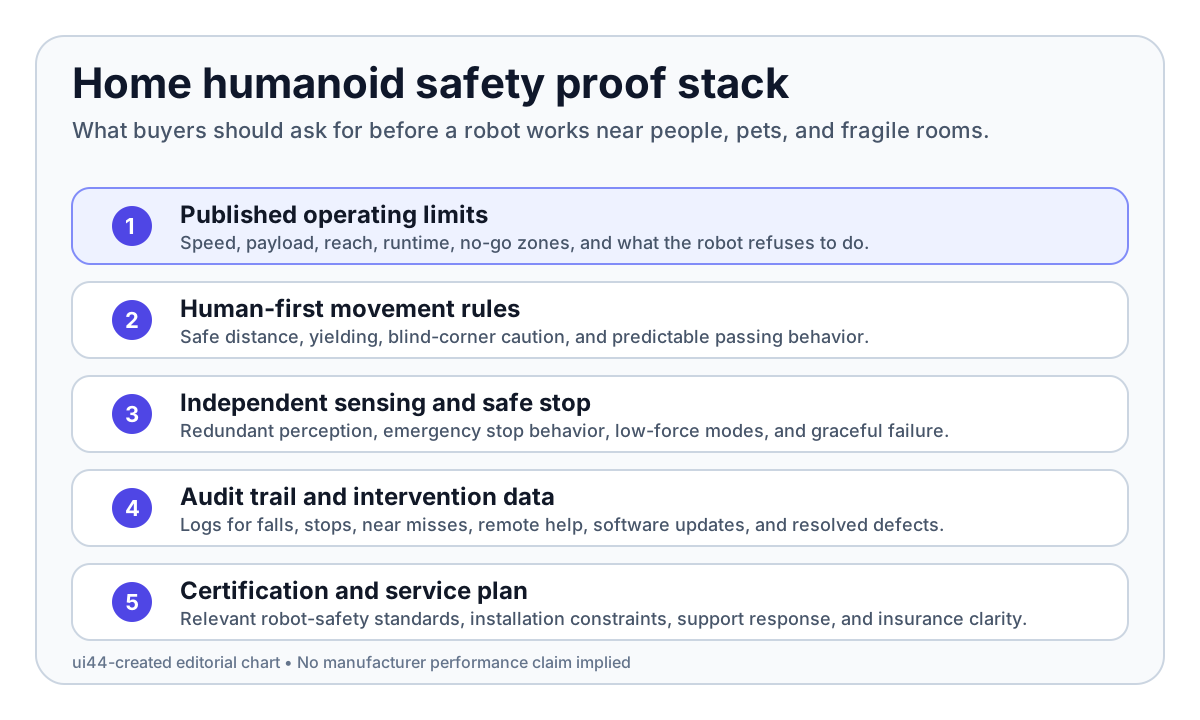
That is why future home humanoid product pages should not only show chore demos. They should publish safety behavior in plain language:
- What speed does the robot use around people?
- What force and payload limits apply in home mode?
- Does it detect feet, pets, glass doors, stairs, and people on the floor?
- What happens if a camera is blocked or depth sensing disagrees with vision?
- Can it continue safely without a cloud connection?
- Does it log near misses, falls, collisions, remote interventions, and stopped tasks?
- Who is responsible when a software update changes the robot's behavior?
Those are not anti-robot questions. They are pro-buyer questions.
How do current ui44 robots compare on safety evidence?
The ui44 database shows why "humanoid safety" cannot be reduced to one spec. Price, mass, payload, autonomy, and market status all change the risk profile.
Robot in ui44 database
- Status and price
- Development; no public price
- Safety-relevant buyer read
- Big Mobileye safety thesis, 2026 POCs, 2028 commercialization target, but not a buyable home product yet
Robot in ui44 database
- Status and price
- Pre-order; $20,000
- Safety-relevant buyer read
- Home-focused humanoid with soft lightweight body, 167 cm height, 30 kg weight, about 4 hours battery life, and tactile skin
Robot in ui44 database
- Status and price
- Available from $13,500
- Safety-relevant buyer read
- Compact developer humanoid, 132 cm, 35 kg, about 2 hours battery life; useful for labs, not automatically a safe home worker
Robot in ui44 database
- Status and price
- Available; $29,950
- Safety-relevant buyer read
- Wheeled mobile manipulator with open ROS 2/Python model, 8 hours light-load runtime, self-charging, and 2.5 kg extended arm payload
Robot in ui44 database
- Status and price
- Active enterprise robot; no public price
- Safety-relevant buyer read
- Industrial humanoid with 15 kg payload and autonomous battery swapping; relevant uptime proof, not a consumer home purchase
Robot in ui44 database
- Status and price
- Active invite-only robot; $1,599.99
- Safety-relevant buyer read
- Lower-mass home patrol robot with limited manipulation risk; useful as a bounded home-robot precedent
| Robot in ui44 database | Status and price | Safety-relevant buyer read |
|---|---|---|
| MenteeBot | Development; no public price | Big Mobileye safety thesis, 2026 POCs, 2028 commercialization target, but not a buyable home product yet |
| 1X NEO | Pre-order; $20,000 | Home-focused humanoid with soft lightweight body, 167 cm height, 30 kg weight, about 4 hours battery life, and tactile skin |
| Unitree G1 | Available from $13,500 | Compact developer humanoid, 132 cm, 35 kg, about 2 hours battery life; useful for labs, not automatically a safe home worker |
| Hello Robot Stretch 4 | Available; $29,950 | Wheeled mobile manipulator with open ROS 2/Python model, 8 hours light-load runtime, self-charging, and 2.5 kg extended arm payload |
| UBTECH Walker S2 | Active enterprise robot; no public price | Industrial humanoid with 15 kg payload and autonomous battery swapping; relevant uptime proof, not a consumer home purchase |
| Amazon Astro | Active invite-only robot; $1,599.99 | Lower-mass home patrol robot with limited manipulation risk; useful as a bounded home-robot precedent |
This table is the antidote to demo hype. Unitree G1 being available at $13,500 is a very different safety conversation from 1X selling a soft-bodied home preorder at $20,000, or Mentee targeting commercial deployment after Mobileye integration. A robot can be exciting, affordable, and still not appropriate to run around children without supervision.
What should buyers ask before trusting a humanoid at home?
Here is a practical checklist to use before treating any full-size humanoid as a real home product rather than a supervised developer platform.
1. Does the robot publish a home-mode safety envelope?
A safety envelope should include speed, reach, force, payload, gripping force, stair behavior, fall behavior, child/pet behavior, privacy behavior, and supervised-versus-unsupervised tasks. "AI-powered" is not an answer. "Maximum arm payload is X, home mode limits it to Y, and the robot stops when a person enters Z centimeters" is closer.
2. Does it have independent ways to notice danger?
Mobileye's True Redundancy concept for cars separates camera and radar/lidar perception into independent world models. Homes will not copy that exact stack, but the idea is useful. A robot should not depend on one camera view to decide whether a child is in its path. Buyers should look for depth sensing, tactile sensing, floor sensing, joint torque sensing, emergency stop behavior, and clear fallback states when sensors disagree.
3. Is remote help transparent?
Many early home robots will use teleoperation or remote assistance for hard cases. That is not automatically bad. It becomes bad when the product sells "autonomy" while quietly depending on humans watching through cameras. Mentee's acquisition announcement is notable because Mobileye says first customer POCs are intended to operate autonomously without teleoperation. Buyers should ask other companies the same question: when does a remote human see or control the robot, what data is stored, and how is consent handled?
4. Are near misses measured?
A safe robot company should know how often its robots stop unexpectedly, drop an object, lose localization, request help, collide, fall, or create a near miss. The first public number may not be flattering. That is fine. The absence of any number is more worrying. For comparison, industrial humanoid evidence is already moving toward measured work: Figure 02 is listed in ui44 with BMW runtime history, while UBTECH Walker S2 emphasizes autonomous battery swapping for continuous industrial operation. Home robots need the same honesty, translated to household risk.
5. What standard or certification path applies?
ISO 13482 covers safety requirements for personal care robots, including mobile servant robots, physical assistant robots, and person-carrier robots. It deals with human-robot physical contact applications and hazards involving people, domestic animals, and property, while explicitly excluding areas like robot toys, medical devices, military robots, water-borne robots, flying robots, industrial robots covered elsewhere, and robots faster than 20 km/h. The standard also notes that internationally recognized injury or pain limits for impact hazards were not exhaustive at publication.
In plain English: standards exist, but they are not a magic sticker that solves every home humanoid scenario. A good product should explain which standards it uses, what it does beyond them, and where its certified operating conditions end.

The honest buyer takeaway
Mobileye and Mentee do not prove that home humanoids are safe. They prove that serious robotics companies are starting to talk about safety like infrastructure, not like a footnote.
That is the right direction. Future home humanoids should have explicit rules for yielding, stopping, sensing, refusing tasks, handling blind spots, logging near misses, protecting private video, recovering from failures, and staying inside certified limits. They should publish what happens when the robot is confused, not only what happens when the demo works.
For now, treat MenteeBot as a signal rather than a shopping recommendation. It is a development-stage humanoid backed by a major autonomy company, not a consumer product. If Mobileye can bring RSS-style formal safety, redundant validation, and auditable behavior into humanoid robotics, that could raise the bar for everyone else. Until then, a home humanoid's most important feature may not be the chore it can perform. It may be the rule that makes it stop.
Related in the database
Use this article as a privacy verification workflow
Turn the article into a privacy verification pass grounded in the robots, manufacturers, and components it actually references.
Home Humanoid Safety Rules: Mobileye Mentee already points you toward 7 linked robots, 7 manufacturers, and 4 countries inside the ui44 database. That matters because strong buyer guidance is easier to apply when you can move immediately from a claim or warning into concrete product pages, manufacturer directories, component explainers, and country-level context instead of treating the article as an isolated opinion piece. The fastest next step is to turn the article into a shortlist workflow: open the linked robot pages, verify which specs are actually published for those models, then compare the surrounding manufacturer and component context before you decide whether the underlying claim changes your buying plan.
For this topic, the useful discipline is to separate the editorial lesson from the catalog evidence. The article gives you the framing, but the robot pages tell you what each product actually ships with today: sensor stack, connectivity methods, listed price, release timing, category, and support-relevant compatibility notes. The manufacturer pages then show whether you are looking at a one-off launch, a broader lineup pattern, or a company that spans multiple categories. That layered workflow reduces the risk of buying on a single marketing phrase or a single support FAQ.
Use the robot pages to confirm which products actually expose cameras, microphones, Wi-Fi, or voice systems, then use the manufacturer pages to decide how much of the privacy question seems product-specific versus brand-wide. On this route cluster, MenteeBot, Astro, and NEO form the fastest reality check. If you want a quick working shortlist, open Compare MenteeBot, Astro, and NEO next, then keep this article open as the reasoning layer while you compare structured data side by side.
Practical Takeaway
Every robot, manufacturer, category, component, and country reference below resolves to a real ui44 page, keeping the follow-up path grounded in database records rather than generic advice.
Suggested next steps in ui44
- Open MenteeBot and note the listed sensors, connectivity methods, and voice stack before you interpret any policy claim.
- Cross-check the wider brand context on Mentee Robotics so you can see whether the privacy question touches one model or a broader lineup.
- Use the linked component pages to confirm how common the relevant sensors and connectivity layers are across the database.
- Keep a short note of which policy layers you checked, which device features are actually present on the robot page, and which items still depend on region- or app-level confirmation.
- Finish with Compare MenteeBot, Astro, and NEO so the policy reading sits next to structured product data.
Robot profiles worth opening next
Use the linked product pages as the evidence layer
The linked robot pages are where this article becomes operational. Instead of asking whether the headline is interesting, use the robot entries to inspect the actual mix of sensors, connectivity options, batteries, pricing, release timing, and stated capabilities attached to the products mentioned in the article. That is the easiest way to see whether the warning or opportunity described here affects one product family, a specific design pattern, or an entire buying lane.
MenteeBot
Mentee Robotics · Humanoid · Development
MenteeBot is tracked on ui44 as a development humanoid robot from Mentee Robotics. The database currently records a listed price of Price TBA, a release date of 2028 (target), Hot-swappable (continuous operation) battery life, Not disclosed charging time, and a published stack that includes Vision System, Depth Sensors, and Proprioceptive Sensors plus Wi-Fi.
For privacy-focused reading, this page matters because it shows the concrete device surface behind the policy discussion. Use it to verify whether MenteeBot combines sensors and connectivity in a way that could change the in-home data footprint, and compare the listed capabilities such as Bipedal Walking, Dexterous Manipulation (40 DOF), and Autonomous Navigation with any cloud, app, or voice layers, including Voice Interaction.
Astro is tracked on ui44 as a active security & patrol robot from Amazon. The database currently records a listed price of $1,599, a release date of 2021, Not officially disclosed battery life, Not officially disclosed charging time, and a published stack that includes 5MP Bezel Camera, 1080p Periscope Camera (132° FOV), and Infrared Vision plus Wi-Fi 802.11ac and Bluetooth.
For privacy-focused reading, this page matters because it shows the concrete device surface behind the policy discussion. Use it to verify whether Astro combines sensors and connectivity in a way that could change the in-home data footprint, and compare the listed capabilities such as Autonomous Home Patrol, Visual ID (face recognition), and Remote Home Monitoring with any cloud, app, or voice layers, including Amazon Alexa.
NEO
1X Technologies · Humanoid · Pre-order
NEO is tracked on ui44 as a pre-order humanoid robot from 1X Technologies. The database currently records a listed price of $20,000, a release date of 2025-10-28, ~4 hours battery life, Not disclosed charging time, and a published stack that includes RGB Cameras, Depth Sensors, and Tactile Skin plus Wi-Fi and Bluetooth.
For privacy-focused reading, this page matters because it shows the concrete device surface behind the policy discussion. Use it to verify whether NEO combines sensors and connectivity in a way that could change the in-home data footprint, and compare the listed capabilities such as Household Chores, Tidying Up, and Safe Human Interaction with any cloud, app, or voice layers.
G1 is tracked on ui44 as a available humanoid robot from Unitree. The database currently records a listed price of $13,500, a release date of 2024-05-13, ~2 hours battery life, Not disclosed charging time, and a published stack that includes Depth Camera, 3D LiDAR, and 4 Microphone Array plus Wi-Fi 6 and Bluetooth 5.2.
For privacy-focused reading, this page matters because it shows the concrete device surface behind the policy discussion. Use it to verify whether G1 combines sensors and connectivity in a way that could change the in-home data footprint, and compare the listed capabilities such as Bipedal Walking, Object Manipulation, and Dexterous Hands (optional Dex3-1) with any cloud, app, or voice layers.
Stretch 4
Hello Robot · Home Assistants · Available
Stretch 4 is tracked on ui44 as a available home assistants robot from Hello Robot. The database currently records a listed price of $29,950, a release date of 2026-05-12, 8 hours (light CPU load) battery life, Not officially disclosed charging time, and a published stack that includes Wide-FOV depth sensing, High-resolution RGB cameras, and Calibrated RGB + depth perception plus its listed connectivity stack.
For privacy-focused reading, this page matters because it shows the concrete device surface behind the policy discussion. Use it to verify whether Stretch 4 combines sensors and connectivity in a way that could change the in-home data footprint, and compare the listed capabilities such as Mobile Manipulation, Omnidirectional Indoor Mobility, and Autonomous Mapping and Navigation with any cloud, app, or voice layers.
Manufacturer context behind the article
Check whether this is one product story or a broader company pattern
Manufacturer pages add the privacy context that individual product pages cannot show on their own. They help you check whether cameras, microphones, cloud accounts, app controls, and policy assumptions appear across a broader lineup or stay tied to one specific product story.
Mentee Robotics
ui44 currently tracks 1 robot from Mentee Robotics across 1 category. The company is grouped under Israel, and the current catalog footprint on ui44 includes MenteeBot.
That wider brand context matters because privacy questions rarely stop at one FAQ page. A manufacturer route helps you see whether the article is centered on one premium model or on a company that has several relevant products and therefore more than one place where the same policy or app assumptions might matter. The category mix here currently points toward Humanoid as the most useful next route if you want to see whether this article reflects a wider pattern inside the brand.
Amazon
ui44 currently tracks 1 robot from Amazon across 1 category. The company is grouped under USA, and the current catalog footprint on ui44 includes Astro.
That wider brand context matters because privacy questions rarely stop at one FAQ page. A manufacturer route helps you see whether the article is centered on one premium model or on a company that has several relevant products and therefore more than one place where the same policy or app assumptions might matter. The category mix here currently points toward Security & Patrol as the most useful next route if you want to see whether this article reflects a wider pattern inside the brand.
1X Technologies
ui44 currently tracks 2 robots from 1X Technologies across 1 category. The company is grouped under Norway, and the current catalog footprint on ui44 includes NEO, EVE.
That wider brand context matters because privacy questions rarely stop at one FAQ page. A manufacturer route helps you see whether the article is centered on one premium model or on a company that has several relevant products and therefore more than one place where the same policy or app assumptions might matter. The category mix here currently points toward Humanoid as the most useful next route if you want to see whether this article reflects a wider pattern inside the brand.
Unitree
ui44 currently tracks 2 robots from Unitree across 1 category. The company is grouped under China, and the current catalog footprint on ui44 includes H1, G1.
That wider brand context matters because privacy questions rarely stop at one FAQ page. A manufacturer route helps you see whether the article is centered on one premium model or on a company that has several relevant products and therefore more than one place where the same policy or app assumptions might matter. The category mix here currently points toward Humanoid as the most useful next route if you want to see whether this article reflects a wider pattern inside the brand.
Broaden the scan without leaving the database
Categories, components, and countries add the wider context
Category framing
Category pages are useful when the article touches a buying pattern that shows up across brands. A category route helps you confirm whether the linked products sit in a narrow niche or whether the same question should be tested across a larger field of alternatives.
Humanoid
The Humanoid category page currently groups 129 tracked robots from 92 manufacturers. ui44 describes this lane as: Full-size bipedal humanoid robots built to work alongside people — from factory floors to household tasks. Compare the cutting edge of humanoid robotics.
That makes the category route a practical follow-up when you want to check whether the products linked in this article are typical for the lane or whether they sit at one edge of the market. Useful starting examples currently include NEO, EVE, Mornine M1.
Security & Patrol
The Security & Patrol category page currently groups 5 tracked robots from 5 manufacturers. ui44 describes this lane as: Autonomous surveillance and patrol robots that monitor homes, businesses, and perimeters — keeping watch without an operator on site.
That makes the category route a practical follow-up when you want to check whether the products linked in this article are typical for the lane or whether they sit at one edge of the market. Useful starting examples currently include Astro, Vision 60, K7 Autonomous Security Robot.
Country and ecosystem context
Country pages give extra context when support practices, launch sequencing, regulatory posture, or manufacturer mix matter. They are not a substitute for model-level verification, but they do help you see which ecosystems cluster together and which manufacturers sit in the same regional field when you broaden the search beyond the article headline.
Israel
The Israel route currently groups 5 tracked robots from 5 manufacturers in ui44. That gives you a useful regional lens when the article points toward support practices, launch sequencing, or brand clusters that may share similar ecosystem assumptions.
On the current route, manufacturers like Flytrex, Intuition Robotics, Maytronics make the page a good way to broaden the scan without losing the regional context that often shapes availability, documentation style, and adjacent alternatives.
USA
The USA route currently groups 89 tracked robots from 69 manufacturers in ui44. That gives you a useful regional lens when the article points toward support practices, launch sequencing, or brand clusters that may share similar ecosystem assumptions.
On the current route, manufacturers like Faraday Future, iRobot, Boston Dynamics make the page a good way to broaden the scan without losing the regional context that often shapes availability, documentation style, and adjacent alternatives.
Norway
The Norway route currently groups 2 tracked robots from 1 manufacturers in ui44. That gives you a useful regional lens when the article points toward support practices, launch sequencing, or brand clusters that may share similar ecosystem assumptions.
On the current route, manufacturers like 1X Technologies make the page a good way to broaden the scan without losing the regional context that often shapes availability, documentation style, and adjacent alternatives.
Questions to answer before you move from reading to buying
A follow-up FAQ built from the entities already linked in this article
Frequently Asked Questions
Which page should I open first after reading “Home Humanoid Safety Rules: Mobileye Mentee”?
Start with MenteeBot. That gives you a concrete product anchor for the article’s main claim. From there, branch into the manufacturer and component pages so you can tell whether the article is describing one specific model, a repeated brand pattern, or a wider technology issue that affects multiple shortlist options.
How do the manufacturer pages change the buying decision?
Mentee Robotics help you zoom out from one article and one product. On ui44 they show lineup breadth, category spread, and the neighboring robots tied to the same company. That context is useful when you are deciding whether a risk belongs to a single model, whether it shows up across a brand’s portfolio, and whether you should keep looking at alternatives before committing.
When should I switch from reading to side-by-side comparison?
Move into Compare MenteeBot, Astro, and NEO as soon as you understand the article’s main warning or promise. The article explains what to watch for, but the compare view is where you can check whether price, status, battery life, connectivity, sensors, and category fit still make the robot a good match for your own home and budget.
Where to go next in ui44
Keep the research chain inside the database
If you want to keep going, these follow-on pages give you the cleanest expansion path from article to research session. Open the comparison route first if you are deciding between products today. Open the manufacturer, category, and component routes if you still need to understand the broader pattern behind the claim.
Written by
ui44 Team
Published May 19, 2026
Share this article
Open a plain share link on X or Bluesky. No embeds, no widgets, no cookie baggage.