That is the first concrete consumer-pricing signal from any top-tier humanoid company — and it reframes the question from "when can I afford a $20,000 robot?" to "is a $500/month robot cheaper than the help I'm already paying for?"
Here's what the lease model actually buys, what's still unclear, and how the math works out compared to alternatives.
What $400–600/Month Actually Buys
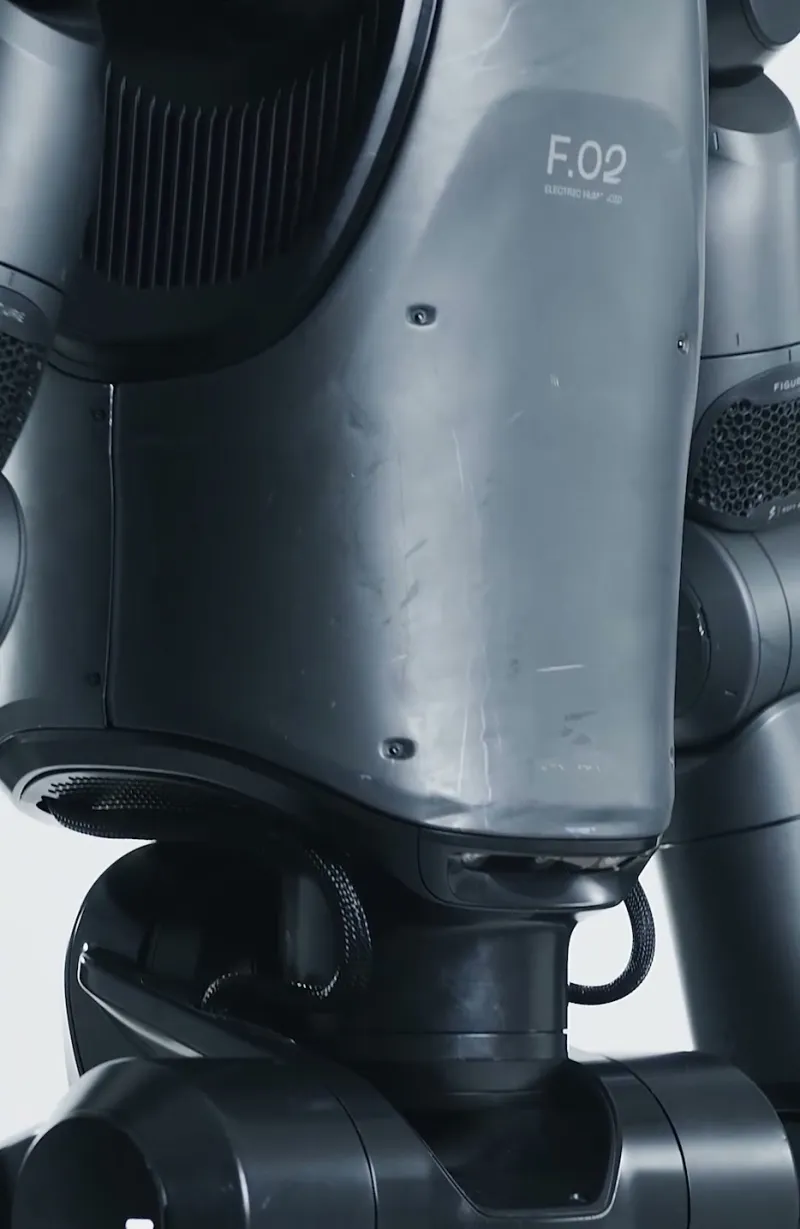
Based on Figure's public statements and what we know from the Figure 03 specs in our database, the lease would cover:
- 24/7 household assistance — tidying, cleaning, organizing, and chore execution
- Wireless inductive charging — the robot steps onto a 2 kW mat for ~1 hour to recharge (4–5 hour runtime)
- Over-the-air (OTA) software updates — new behaviors and capabilities pushed automatically
- Self-triage and maintenance alerts — the robot limps to a safe state if hardware fails ("Never Fall" protocol)
- Hot-swap fleet strategy — if the robot needs service, a replacement unit fills in (enterprise context first)
Figure's Helix 02 AI model runs entirely on-board — no internet connection required to perform tasks. That means the robot keeps working during Wi-Fi outages, and your home data stays local by design.
What's Still Unclear
Several critical questions remain unanswered:
- Maintenance costs — who pays when an actuator fails after 18 months?
- Insurance and liability — who's responsible if the robot damages property or injures someone?
- Early termination — can you return the robot, or are you locked into a multi-year commitment?
- Task guarantees — what happens if the robot can't actually complete the chores you expected?
- Security deposit — is there an upfront fee on top of the monthly lease?
These gaps matter. A lease that looks like $500/month can easily become $650/month with insurance and maintenance add-ons, or $0/month with a $3,000 early-termination penalty if you realize the robot isn't useful enough.
The Lease-vs-Buy Math
The closest comparison point for a home humanoid purchase right now is the 1X NEO at $20,000 (pre-order). Let's run the numbers.
Upfront cost
- Figure 03 Lease
- $0–500 (deposit?)
- 1X NEO Purchase
- $20,000
Monthly cost
- Figure 03 Lease
- $400–600
- 1X NEO Purchase
- $0 (no loan)
3-year total
- Figure 03 Lease
- $14,400–$21,600
- 1X NEO Purchase
- $20,000
5-year total
- Figure 03 Lease
- $24,000–$36,000
- 1X NEO Purchase
- $20,000
Maintenance
- Figure 03 Lease
- Likely included
- 1X NEO Purchase
- Your responsibility
Software updates
- Figure 03 Lease
- Included
- 1X NEO Purchase
- Included
Hardware upgrades
- Figure 03 Lease
- Swap for newer model
- 1X NEO Purchase
- Buy again
You own it
- Figure 03 Lease
- No
- 1X NEO Purchase
- Yes
| Figure 03 Lease | 1X NEO Purchase | |
|---|---|---|
| Upfront cost | $0–500 (deposit?) | $20,000 |
| Monthly cost | $400–600 | $0 (no loan) |
| 3-year total | $14,400–$21,600 | $20,000 |
| 5-year total | $24,000–$36,000 | $20,000 |
| Maintenance | Likely included | Your responsibility |
| Software updates | Included | Included |
| Hardware upgrades | Swap for newer model | Buy again |
| You own it | No | Yes |
At the midpoint ($500/month), you break even with a 1X NEO purchase at roughly 40 months (3.3 years). After that, the lease becomes more expensive.
But the comparison isn't purely financial. The lease model includes hardware refresh risk — if Figure releases a Figure 04 or 05 with dramatically better capabilities, lessees likely get the upgrade. Buyers of the 1X NEO own a fixed hardware platform that may be obsolete in 2–3 years.

The Depreciation Factor
Consumer electronics lose value fast. A $20,000 humanoid purchased today might be worth $5,000 on the secondary market in three years — or it might be worth nothing if the software ecosystem moves on. The lease model transfers that depreciation risk to Figure.
For context, a NEURA 4NE1 Mini at €19,999 — a 132 cm, 36 kg compact humanoid — is already approaching the 1X NEO's price point, and the full-size NEURA 4NE1 at €98,000 shows how expensive the high end remains. A $13,500 Unitree G1 is cheaper — a 132 cm, 35 kg compact humanoid — but aimed at researchers, not home consumers.
Can a $500/Month Robot Replace Your Cleaning Service?
Here's where the comparison gets genuinely interesting. What does $500/month buy in human household help?
Service
Cleaning service
- Typical US Cost
- $150–300/visit
- Frequency
- Biweekly
Service
Housekeeper (part-time)
- Typical US Cost
- $400–800/week
- Frequency
- 2–3 days
Service
Lawn service
- Typical US Cost
- $100–200/visit
- Frequency
- Weekly
Service
Dog walker
- Typical US Cost
- $20–30/walk
- Frequency
- Daily
Service
Meal prep/delivery
- Typical US Cost
- $250–400/month
- Frequency
- Subscriptions
| Service | Typical US Cost | Frequency |
|---|---|---|
| Cleaning service | $150–300/visit | Biweekly |
| Housekeeper (part-time) | $400–800/week | 2–3 days |
| Lawn service | $100–200/visit | Weekly |
| Dog walker | $20–30/walk | Daily |
| Meal prep/delivery | $250–400/month | Subscriptions |
A biweekly cleaning service at $200/visit runs $400/month — roughly the same as Figure's lease floor. But a humanoid robot works 24/7 (minus charging), potentially handling cleaning, tidying, organizing, laundry folding, dish loading, and other tasks simultaneously.
The value proposition is clearest for households that currently spend $800+/month on a combination of cleaning, yard work, and other services. If a humanoid replaces even 60–70% of that labor, the lease pays for itself.
The "Good Enough" Problem
But here's the honest caveat: no humanoid robot in 2026 can reliably replace a human housekeeper.
Stanford's 2026 AI Index reported an 88% failure rate for current robots on household tasks. Figure's own Helix 02 demos show impressive tidying in controlled living-room sets, but real homes have clutter, pets, stairs, and edge cases that lab environments don't.
The robot won't:
- Scrub a bathtub the way a human does
- Notice that your kid left homework on the kitchen counter and move it carefully
- Adapt to your specific organizational preferences without extensive training
- Handle non-routine tasks (assembling IKEA furniture, fixing a leaky faucet)
At best, think of the current generation of home humanoids as automated tidying and light cleaning, not a full housekeeper replacement. The lease math only works if you're honest about what the robot can actually do today.
The Car Lease Analogy — And Where It Breaks
Adcock explicitly compared the model to car leasing. The comparison is useful but imperfect:
Where it works:
- Monthly payments instead of large upfront cost
- Hardware refresh every 2–4 years
- Maintenance and repairs handled by the company
- You return it if it doesn't work out
Where it breaks:
- A car is a mature product with 100+ years of reliability data; a home humanoid is not
- Car insurance is a solved market; robot liability insurance barely exists
- A car has clear, measurable utility (transportation); a robot's utility varies wildly by household
- Car lease terms are standardized and regulated; robot lease contracts will be new territory
The car analogy also obscures one critical difference: a car's value is independent of software updates. A 2020 Toyota still drives fine in 2026. A humanoid robot's value depends entirely on the AI software running on it. If Figure stops updating Helix for older hardware, or shifts development to Figure 04/05, your leased Figure 03 could become significantly less useful.
What Figure's Production Readiness Tells Us
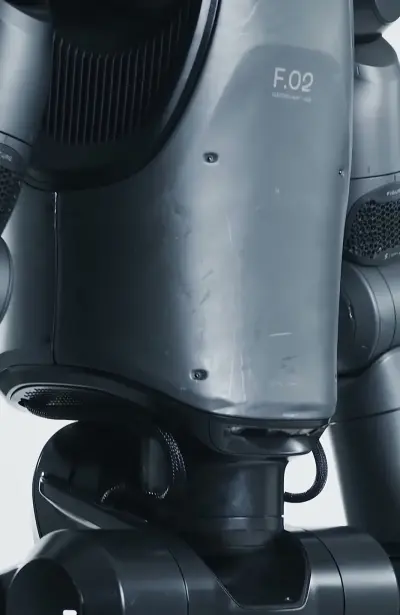
Figure isn't just making claims — it's building the infrastructure. From our coverage of the Figure 03 production ramp:
- BotQ, its dedicated factory, now produces 1 robot per hour (24× throughput increase in under 120 days)
- 350+ Figure 03 units built so far
- 80%+ first-pass yield on the production line (improving weekly)
- 9,000+ actuators produced across 10+ SKUs
- 80+ functional verification tests per robot before shipping
- 500 employees and growing
Figure also has a fleet management system with OTA updates, field service management, and recall campaign processes — the operational backbone you'd need to support a lease model at scale.
This is real manufacturing infrastructure, not a render on a website. But producing 350 robots is a very long way from the thousands (or tens of thousands) needed for a consumer lease program. The $400–600/month target is likely years away from actual availability.
The 1X NEO Factory Context
Figure's lease model also needs to be understood in the context of 1X Technologies' new Hayward, CA factory — a 58,000 sq ft facility with 200+ staff and full vertical integration for the NEO humanoid.
1X is betting on purchase, not lease: pay $20,000 upfront, own the robot. Figure is betting on lease: pay monthly, always have the latest hardware. Both models will likely coexist, and the market will decide which wins.
There's also a third model emerging: deposit-based pre-orders. NEURA's 4NE1 Mini takes €100 refundable deposits with a €19,999 purchase price. 1X's NEO took pre-orders at $20,000. These are commitment signals, not subscriptions — but they show that the market is experimenting with multiple pricing structures simultaneously.
Who Should Consider a Home Humanoid Lease (When It Exists)
The lease model makes the most sense for:
- Households already spending $500+/month on cleaning and home services — the robot partially replaces that spend
- Tech-forward early adopters who want the latest hardware without being locked into a $20K purchase that depreciates
- People in smaller homes or apartments where a full-time housekeeper isn't practical but automated tidying would help
- Anyone concerned about hardware obsolescence — lease swaps solve the "what if Figure 04 is twice as good?" problem
It makes less sense for:
- Households where a human housekeeper already handles everything well at similar or lower cost
- People expecting a fully autonomous robot butler — the technology isn't there yet
- Anyone uncomfortable with a robot in their home that collects visual data (even if processed on-device)
- Budget-conscious buyers who would benefit from a cheaper single-purpose robot (robot vacuum, mop, or lawn mower) instead
Bottom Line
Figure's $400–600/month lease target is the most important pricing signal in home humanoid robotics so far. It reframes the conversation from "when will humanoids be affordable?" to "is a humanoid lease competitive with human labor?"
The answer today is: almost, but not yet. The price is in the right ballpark to compete with cleaning services, but the robot's capabilities don't yet justify replacing human help. The lease model itself is smart — it removes the sticker shock of a $20,000 purchase and shifts depreciation and maintenance risk to the manufacturer.
When the capabilities catch up to the price (likely 2–4 years), the lease model could be the thing that puts humanoids in mainstream homes. For now, it's a promise with a payment plan.
_Compare humanoid robots side by side in the ui44 robot database. Track specs, prices, and availability for every home robot on the market._
Related in the database
Use this article as a buyer workflow
Turn the article into a real verification pass grounded in the robots, manufacturers, categories, components, and countries it actually references.
Home Humanoid Lease: Is $500/Month for a Figure 03 Worth It? already points you toward 6 linked robots, 4 manufacturers, and 4 countries inside the ui44 database. That matters because strong buyer guidance is easier to apply when you can move immediately from a claim or warning into concrete product pages, manufacturer directories, component explainers, and country-level context instead of treating the article as an isolated opinion piece. The fastest next step is to turn the article into a shortlist workflow: open the linked robot pages, verify which specs are actually published for those models, then compare the surrounding manufacturer and component context before you decide whether the underlying claim changes your buying plan.
For this topic, the useful discipline is to separate the editorial lesson from the catalog evidence. The article gives you the framing, but the robot pages tell you what each product actually ships with today: sensor stack, connectivity methods, listed price, release timing, category, and support-relevant compatibility notes. The manufacturer pages then show whether you are looking at a one-off launch, a broader lineup pattern, or a company that spans multiple categories. That layered workflow reduces the risk of buying on a single marketing phrase or a single support FAQ.
The fastest win is to keep the article’s editorial framing tied to real product pages. That way you can test whether Figure 03, NEO, and Figure 02 still make sense once price, category, release timing, and surrounding manufacturer context are visible in one place. If you want a quick working shortlist, open Compare Figure 03, NEO, and Figure 02 next, then keep this article open as the reasoning layer while you compare structured data side by side.
Practical Takeaway
Every robot, manufacturer, category, component, and country reference below resolves to a real ui44 page, keeping the follow-up path grounded in database records rather than generic advice.
Suggested next steps in ui44
- Open Figure 03 first so the article’s main point is anchored to a real robot page.
- Use Figure AI to see the broader company context around the products linked in the article.
- Open the linked component pages when you want to separate a shared technology pattern from a single-brand story.
- Build a working shortlist with Compare Figure 03, NEO, and Figure 02.
- Keep a short note of what is already verified in the article and what still needs live confirmation from current vendor documentation.
Robot profiles worth opening next
Use the linked product pages as the evidence layer
The linked robot pages are where this article becomes operational. Instead of asking whether the headline is interesting, use the robot entries to inspect the actual mix of sensors, connectivity options, batteries, pricing, release timing, and stated capabilities attached to the products mentioned in the article. That is the easiest way to see whether the warning or opportunity described here affects one product family, a specific design pattern, or an entire buying lane.
Figure 03 is tracked on ui44 as a active humanoid robot from Figure AI. The database currently records a listed price of Price TBA, a release date of 2025-10-09, ~5 hours battery life, Not disclosed charging time, and a published stack that includes Stereo Vision, Depth Cameras, and Force Sensors plus Wi-Fi and Bluetooth.
For general buyer research, this route gives you the concrete profile that the article alone cannot. Compare the published capabilities of Complex Manipulation, Warehouse Work, and Manufacturing Tasks with the linked alternatives so the final decision is based on actual product fit, not just the framing of the article.
NEO
1X Technologies · Humanoid · Pre-order
NEO is tracked on ui44 as a pre-order humanoid robot from 1X Technologies. The database currently records a listed price of $20,000, a release date of 2025-10-28, ~4 hours battery life, Not disclosed charging time, and a published stack that includes RGB Cameras, Depth Sensors, and Tactile Skin plus Wi-Fi and Bluetooth.
For general buyer research, this route gives you the concrete profile that the article alone cannot. Compare the published capabilities of Household Chores, Tidying Up, and Safe Human Interaction with the linked alternatives so the final decision is based on actual product fit, not just the framing of the article.
Figure 02 is tracked on ui44 as a discontinued humanoid robot from Figure AI. The database currently records a listed price of Price TBA, a release date of 2024-08-06, Not disclosed (50% greater capacity than Figure 01) battery life, Not disclosed charging time, and a published stack that includes 6 RGB Cameras, Onboard Vision Language Model, and Microphones plus Wi-Fi and Bluetooth.
For general buyer research, this route gives you the concrete profile that the article alone cannot. Compare the published capabilities of Autonomous Task Execution, Speech-to-Speech Conversation, and Pick and Place with the linked alternatives so the final decision is based on actual product fit, not just the framing of the article.
4NE-1 Mini
NEURA Robotics · Humanoid · Pre-order
4NE-1 Mini is tracked on ui44 as a pre-order humanoid robot from NEURA Robotics. The database currently records a listed price of €19,999, a release date of 2026-01-05, ~2.5 hours battery life, Not disclosed charging time, and a published stack that includes Multi-camera Array, Force/Torque Sensors, and 3D Vision plus Wi-Fi 6 and Gigabit Ethernet.
For general buyer research, this route gives you the concrete profile that the article alone cannot. Compare the published capabilities of 25 Degrees of Freedom, Autonomous Navigation, and Object Manipulation (Pro tier: 12-DOF dexterous hands) with the linked alternatives so the final decision is based on actual product fit, not just the framing of the article.
G1 is tracked on ui44 as a available humanoid robot from Unitree. The database currently records a listed price of $13,500, a release date of 2024-05-13, ~2 hours battery life, Not disclosed charging time, and a published stack that includes Depth Camera, 3D LiDAR, and 4 Microphone Array plus Wi-Fi 6 and Bluetooth 5.2.
For general buyer research, this route gives you the concrete profile that the article alone cannot. Compare the published capabilities of Bipedal Walking, Object Manipulation, and Dexterous Hands (optional Dex3-1) with the linked alternatives so the final decision is based on actual product fit, not just the framing of the article.
Manufacturer context behind the article
Check whether this is one product story or a broader company pattern
Manufacturer pages add the market context that individual product pages cannot show on their own. They help you check whether the article is centered on a brand with a deep lineup, whether that brand spans several categories, and how much of its ui44 footprint depends on one flagship model versus a broader product strategy.
Figure AI
ui44 currently tracks 2 robots from Figure AI across 1 category. The company is grouped under USA, and the current catalog footprint on ui44 includes Figure 03, Figure 02.
That wider brand context matters because the best buying decision usually depends on lineup depth and adjacent options, not just the one model featured most prominently in the article. The category mix here currently points toward Humanoid as the most useful next route if you want to see whether this article reflects a wider pattern inside the brand.
1X Technologies
ui44 currently tracks 2 robots from 1X Technologies across 1 category. The company is grouped under Norway, and the current catalog footprint on ui44 includes NEO, EVE.
That wider brand context matters because the best buying decision usually depends on lineup depth and adjacent options, not just the one model featured most prominently in the article. The category mix here currently points toward Humanoid as the most useful next route if you want to see whether this article reflects a wider pattern inside the brand.
NEURA Robotics
ui44 currently tracks 4 robots from NEURA Robotics across 3 categorys. The company is grouped under Germany, and the current catalog footprint on ui44 includes 4NE-1, 4NE-1 Mini, MiPA.
That wider brand context matters because the best buying decision usually depends on lineup depth and adjacent options, not just the one model featured most prominently in the article. The category mix here currently points toward Humanoid, Home Assistants, Quadruped as the most useful next route if you want to see whether this article reflects a wider pattern inside the brand.
Unitree
ui44 currently tracks 2 robots from Unitree across 1 category. The company is grouped under China, and the current catalog footprint on ui44 includes H1, G1.
That wider brand context matters because the best buying decision usually depends on lineup depth and adjacent options, not just the one model featured most prominently in the article. The category mix here currently points toward Humanoid as the most useful next route if you want to see whether this article reflects a wider pattern inside the brand.
Broaden the scan without leaving the database
Categories, components, and countries add the wider context
Category framing
Category pages are useful when the article touches a buying pattern that shows up across brands. A category route helps you confirm whether the linked products sit in a narrow niche or whether the same question should be tested across a larger field of alternatives.
Humanoid
The Humanoid category page currently groups 129 tracked robots from 92 manufacturers. ui44 describes this lane as: Full-size bipedal humanoid robots built to work alongside people — from factory floors to household tasks. Compare the cutting edge of humanoid robotics.
That makes the category route a practical follow-up when you want to check whether the products linked in this article are typical for the lane or whether they sit at one edge of the market. Useful starting examples currently include NEO, EVE, Mornine M1.
Country and ecosystem context
Country pages give extra context when support practices, launch sequencing, regulatory posture, or manufacturer mix matter. They are not a substitute for model-level verification, but they do help you see which ecosystems cluster together and which manufacturers sit in the same regional field when you broaden the search beyond the article headline.
USA
The USA route currently groups 89 tracked robots from 69 manufacturers in ui44. That gives you a useful regional lens when the article points toward support practices, launch sequencing, or brand clusters that may share similar ecosystem assumptions.
On the current route, manufacturers like Faraday Future, iRobot, Boston Dynamics make the page a good way to broaden the scan without losing the regional context that often shapes availability, documentation style, and adjacent alternatives.
Norway
The Norway route currently groups 2 tracked robots from 1 manufacturers in ui44. That gives you a useful regional lens when the article points toward support practices, launch sequencing, or brand clusters that may share similar ecosystem assumptions.
On the current route, manufacturers like 1X Technologies make the page a good way to broaden the scan without losing the regional context that often shapes availability, documentation style, and adjacent alternatives.
Germany
The Germany route currently groups 13 tracked robots from 9 manufacturers in ui44. That gives you a useful regional lens when the article points toward support practices, launch sequencing, or brand clusters that may share similar ecosystem assumptions.
On the current route, manufacturers like NEURA Robotics, Bosch, Agile Robots make the page a good way to broaden the scan without losing the regional context that often shapes availability, documentation style, and adjacent alternatives.
Questions to answer before you move from reading to buying
A follow-up FAQ built from the entities already linked in this article
Frequently Asked Questions
Which page should I open first after reading “Home Humanoid Lease: Is $500/Month for a Figure 03 Worth It?”?
Start with Figure 03. That gives you a concrete product anchor for the article’s main claim. From there, branch into the manufacturer and component pages so you can tell whether the article is describing one specific model, a repeated brand pattern, or a wider technology issue that affects multiple shortlist options.
How do the manufacturer pages change the buying decision?
Figure AI help you zoom out from one article and one product. On ui44 they show lineup breadth, category spread, and the neighboring robots tied to the same company. That context is useful when you are deciding whether a risk belongs to a single model, whether it shows up across a brand’s portfolio, and whether you should keep looking at alternatives before committing.
When should I switch from reading to side-by-side comparison?
Move into Compare Figure 03, NEO, and Figure 02 as soon as you understand the article’s main warning or promise. The article explains what to watch for, but the compare view is where you can check whether price, status, battery life, connectivity, sensors, and category fit still make the robot a good match for your own home and budget.
Where to go next in ui44
Keep the research chain inside the database
If you want to keep going, these follow-on pages give you the cleanest expansion path from article to research session. Open the comparison route first if you are deciding between products today. Open the manufacturer, category, and component routes if you still need to understand the broader pattern behind the claim.
Written by
ui44 Team
Published May 5, 2026
Share this article
Open a plain share link on X or Bluesky. No embeds, no widgets, no cookie baggage.