This guide is not another explainer about the gig workers behind robot training. We covered that supply chain in our prior piece on the invisible workforce training home robots. The buyer problem now is narrower and more practical: which data questions should you ask when a humanoid company says its robot learns, improves, or can be guided by a human operator?

The short version: do not treat data policy as legal boilerplate. For a home robot, it is part of the product spec.
Why data policy is a robot capability
A smart speaker mostly hears sound. A security camera mostly sees a fixed field of view. A home humanoid can combine cameras, microphones, depth sensors, tactile sensors, maps, motion history, task labels, app commands, and sometimes remote human assistance. That creates a richer picture of a home than most consumer devices ever see.
The data is also operational. Robot companies need it to debug failed grasps, train manipulation policies, evaluate safety, and decide whether the machine completed a task. Figure's Helix announcement makes the core challenge clear: the home is hard because objects are varied, tasks are long, and conventional robot learning can require either expert programming or many demonstrations. 1X says NEO can use Expert Mode when a chore is beyond current autonomy. Unitree G1 is sold as a research platform with SDK access and over-the-air upgrades. Agility's Digit is tied to Arc, a cloud automation platform for enterprise fleet monitoring.
Those are not identical models, but they all point to the same buyer reality: autonomy is a loop. Sensors observe, software acts, humans may review or guide, updates change behavior, and new data may improve the next attempt. If that loop enters a private home, the loop needs rules.
What data policy should home humanoid buyers demand?
Before comparing individual robots, split the issue into three separate disclosures. A company can be strong on one and vague on another.
Disclosure
Collection
- What it should answer
- What video, audio, maps, commands, robot-state logs, touch data, and task labels are captured?
- Why it matters at home
- A depth map, microphone clip, and failed-grasp video expose different levels of household detail.
Disclosure
Access
- What it should answer
- Who can see raw or processed data: remote operators, internal reviewers, contractors, AI systems, cloud vendors, or partners?
- Why it matters at home
- Remote help can be useful, but it changes who is effectively present in the room.
Disclosure
Reuse
- What it should answer
- Is data used only to finish the task, or also for debugging, product analytics, model training, resale, or partner datasets?
- Why it matters at home
- A one-time assist and a permanent training contribution are not the same consent decision.
| Disclosure | What it should answer | Why it matters at home |
|---|---|---|
| Collection | What video, audio, maps, commands, robot-state logs, touch data, and task labels are captured? | A depth map, microphone clip, and failed-grasp video expose different levels of household detail. |
| Access | Who can see raw or processed data: remote operators, internal reviewers, contractors, AI systems, cloud vendors, or partners? | Remote help can be useful, but it changes who is effectively present in the room. |
| Reuse | Is data used only to finish the task, or also for debugging, product analytics, model training, resale, or partner datasets? | A one-time assist and a permanent training contribution are not the same consent decision. |
A good policy makes those boundaries understandable before checkout. A weak one buries them in broad terms such as "improve our services" without explaining what the robot actually sends, who reviews it, or whether the owner can opt out without losing core functions.
What current humanoids already tell us
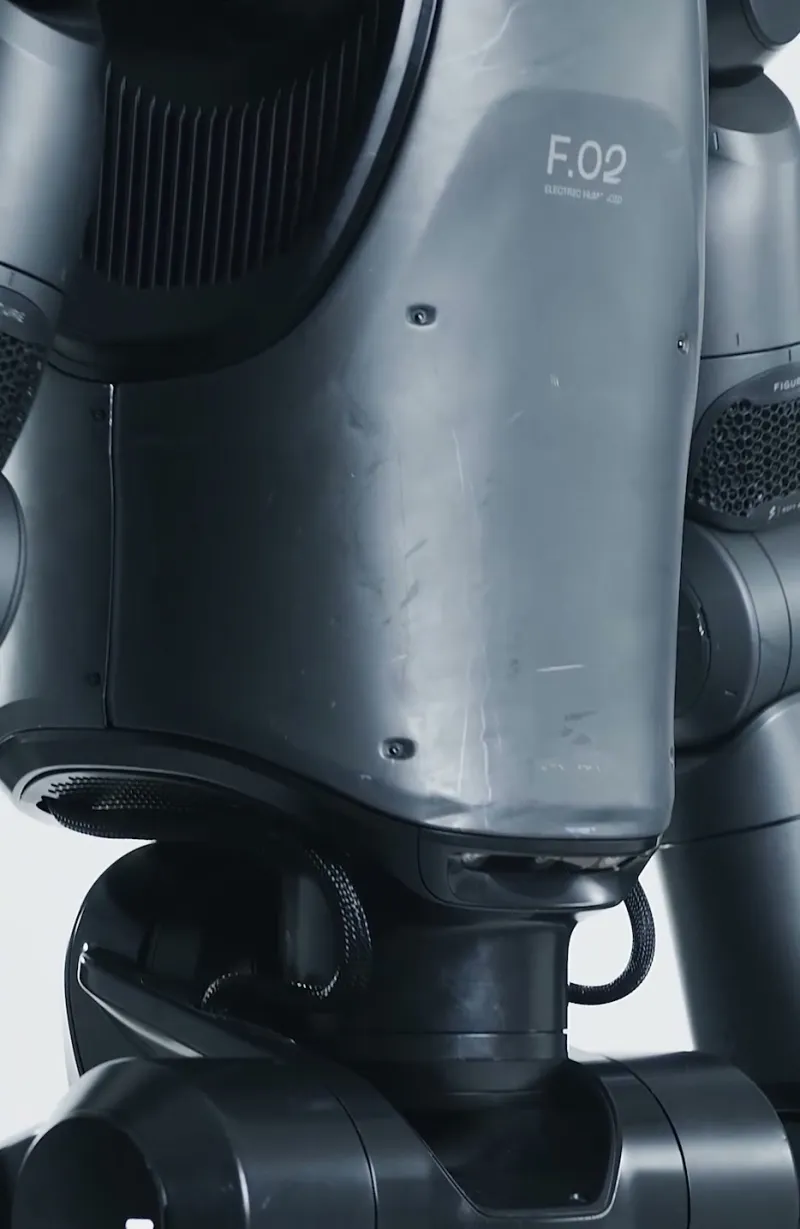
The ui44 database shows why one generic privacy checklist is not enough. The robots near the home-humanoid conversation have different prices, statuses, sensors, and support models. Those differences should change the data questions you ask.
Robot
- ui44 data signal
- Pre-order, $20,000, 167 cm, 30 kg, about four hours of battery life, RGB cameras, depth sensors, tactile skin, microphone array, 1X app.
- Public policy question to ask
- If Expert Mode is used, who can see or control what, how is the session recorded, and can owners block training use?
Robot
- ui44 data signal
- Active industrial humanoid, no public consumer price, 173 cm, 61 kg, about five hours of battery life, Helix VLA, stereo/depth vision, force sensors, tactile arrays.
- Public policy question to ask
- What consumer data policy would apply if Figure moves from industrial sites into homes?
Robot
- ui44 data signal
- Development status, target price around $30,000, 173 cm, 57 kg, cameras, force/torque sensors, IMU, touch sensors.
- Public policy question to ask
- Is there a robot-specific privacy policy, separate from vehicle data, before any consumer sale?
Robot
- ui44 data signal
- Enterprise/RaaS only, about four hours of battery life, LiDAR, RGB-D cameras, force sensors, CE/FCC/NRTL certifications, Arc fleet software.
- Public policy question to ask
- Which enterprise monitoring practices would be unacceptable if copied into a home product?
Robot
- ui44 data signal
- Available from $13,500, 132 cm, 35 kg, about two hours of battery life, depth camera, 3D LiDAR, microphone array, SDK/ROS2 support, OTA upgrades.
- Public policy question to ask
- For a developer/research robot, who controls logs, app data, uploaded maps, and code-level telemetry?
Robot
- ui44 data signal
- Enterprise humanoid, no public price, 173 cm, 73 kg, roughly four hours of battery life, vision, force/torque sensors, heavy payload around 25 kg.
- Public policy question to ask
- If it later enters elder care or home delivery, what changes from factory data governance?
Robot
- ui44 data signal
- Industrial humanoid, no public price, 170 cm, 70 kg, 1,000+ tactile sensors, vision, proprioception, thermal sensing, teleoperation capability.
- Public policy question to ask
- How are tactile, teleoperation, and workplace-learning logs separated from personal environments?
| Robot | ui44 data signal | Public policy question to ask |
|---|---|---|
| 1X NEO | Pre-order, $20,000, 167 cm, 30 kg, about four hours of battery life, RGB cameras, depth sensors, tactile skin, microphone array, 1X app. | If Expert Mode is used, who can see or control what, how is the session recorded, and can owners block training use? |
| Figure 03 | Active industrial humanoid, no public consumer price, 173 cm, 61 kg, about five hours of battery life, Helix VLA, stereo/depth vision, force sensors, tactile arrays. | What consumer data policy would apply if Figure moves from industrial sites into homes? |
| Tesla Optimus Gen 2 | Development status, target price around $30,000, 173 cm, 57 kg, cameras, force/torque sensors, IMU, touch sensors. | Is there a robot-specific privacy policy, separate from vehicle data, before any consumer sale? |
| Agility Digit | Enterprise/RaaS only, about four hours of battery life, LiDAR, RGB-D cameras, force sensors, CE/FCC/NRTL certifications, Arc fleet software. | Which enterprise monitoring practices would be unacceptable if copied into a home product? |
| Unitree G1 | Available from $13,500, 132 cm, 35 kg, about two hours of battery life, depth camera, 3D LiDAR, microphone array, SDK/ROS2 support, OTA upgrades. | For a developer/research robot, who controls logs, app data, uploaded maps, and code-level telemetry? |
| Apptronik Apollo | Enterprise humanoid, no public price, 173 cm, 73 kg, roughly four hours of battery life, vision, force/torque sensors, heavy payload around 25 kg. | If it later enters elder care or home delivery, what changes from factory data governance? |
| Sanctuary Phoenix | Industrial humanoid, no public price, 170 cm, 70 kg, 1,000+ tactile sensors, vision, proprioception, thermal sensing, teleoperation capability. | How are tactile, teleoperation, and workplace-learning logs separated from personal environments? |
The table is not a verdict on any company. It is a reminder that "humanoid" is not one product category. A $13,500 developer platform, a $20,000 home preorder, and an enterprise RaaS robot create different privacy and training-data risks.
1X NEO: remote help needs plain boundaries
1X is one of the few companies talking directly about a home humanoid. Its NEO page says the robot is designed for household chores, safe human interaction, contextual help, and continued learning. It also describes Expert Mode: when a chore is beyond the robot's current autonomy, a 1X Expert can guide it so NEO learns while the job gets done.
That is refreshingly honest. Early home robots will not be fully autonomous at every task, and pretending otherwise would be worse. But Expert Mode also makes data policy central to the product.
A serious NEO buyer should ask:
- Can Expert Mode start only after explicit approval for each session?
- Does the remote expert see live video, audio, maps, task history, or only a restricted robot-control view?
- Are sessions recorded by default?
- Can the owner delete a recording and prevent it from being used for training?
- How are visitors, children, bedrooms, bathrooms, and sensitive documents handled?
- Can the robot finish basic chores if the owner opts out of model-training use?
The goal is not to reject remote help. Remote assistance may make the first wave of home humanoids more useful and safer. The goal is to know whether the remote-help system respects the home as a private place.
Figure, Tesla, and the factory-to-home gap
Figure and Tesla are useful because both show how much humanoid progress is happening before consumer home sales.
Figure's Helix post says the system runs on onboard embedded GPUs and combines language understanding with fast robot control. It also says Helix was trained on a multi-robot, multi-operator dataset of about 500 hours of teleoperated behaviors. That is not a home privacy scandal. It is a concrete example of how robot learning depends on operators, robot cameras, labels, and controlled data collection.
Tesla Optimus Gen 2 is still listed in ui44 as development-stage, with a future target price around $30,000 and internal factory work rather than consumer sales. Factory-first deployment can be sensible: tasks are bounded, sites are controlled, and failures can be reviewed by employees under business policies. But factory learning does not automatically answer home questions. A kitchen, nursery, bedroom, or elder-care apartment needs stricter consent and deletion controls than a factory aisle.
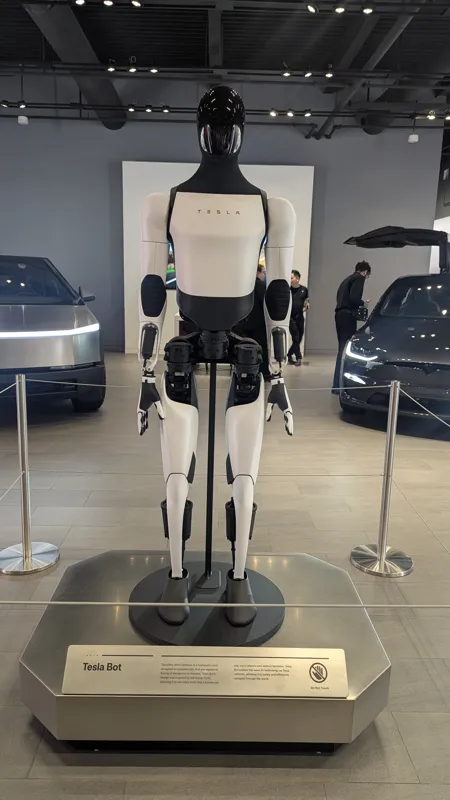
For any factory-to-home humanoid, ask what changes at the boundary:
- Is the consumer robot covered by a dedicated robot privacy policy?
- Does video leave the home by default, or only during support incidents?
- Are factory training logs, consumer logs, and partner datasets kept separate?
- Can users review a history of data exports and remote-access events?
- Are model updates tested for household safety, not only workplace throughput?
A company that can answer those questions clearly is more credible than one that only says its robot uses AI.
Agility Digit: enterprise monitoring is not a home template
Agility Digit is not sold as a home robot, and that distinction matters. Digit's current value is industrial: warehouse workflows, box carrying, fleet coordination, and integration through Agility Arc. Agility describes Arc as a cloud automation platform that can monitor workflows, show live metrics, and manage fleets, with service support and real-time monitoring.
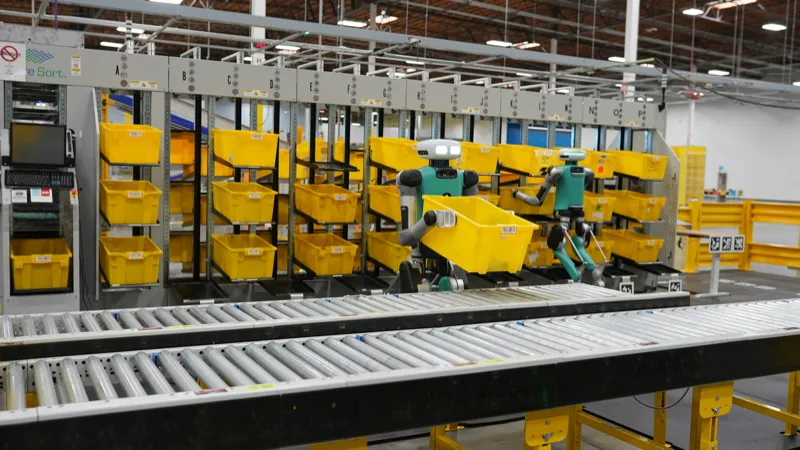
That model can be appropriate in a business facility. The customer is an organization, the task area is known, the legal relationship is negotiated, and workers can be trained around the system. It is a poor default template for a private home.
If an enterprise humanoid architecture later moves toward home care, delivery, or domestic assistance, buyers should watch for copied assumptions. "Real-time monitoring" sounds normal in logistics. In a living room, it requires a tighter permission model: visible indicators, per-session approval, room-level privacy zones, clear audit logs, and a way to run local or offline modes when possible.
Digit's enterprise posture is not a knock against it. It is a useful contrast. The more a robot depends on fleet software and remote support, the more the home version needs user-facing controls instead of admin-only dashboards.
Unitree G1: affordable does not mean consumer-simple
Unitree G1 is one of the most accessible humanoids in the database: $13,500 starting price, compact 132 cm body, 35 kg weight, depth camera, 3D LiDAR, four-microphone array, Wi-Fi 6, Bluetooth 5.2, SDK support, ROS2 compatibility, and about two hours of battery life. The official G1 page also warns individual users to understand humanoid limitations before buying.
That warning is important. G1 is available, but it is closer to a research and development platform than a polished home appliance. The data policy challenge is therefore different from NEO's. A developer robot may involve custom code, third-party packages, cloud dashboards, local logs, external cameras, app accounts, and experimental OTA updates.
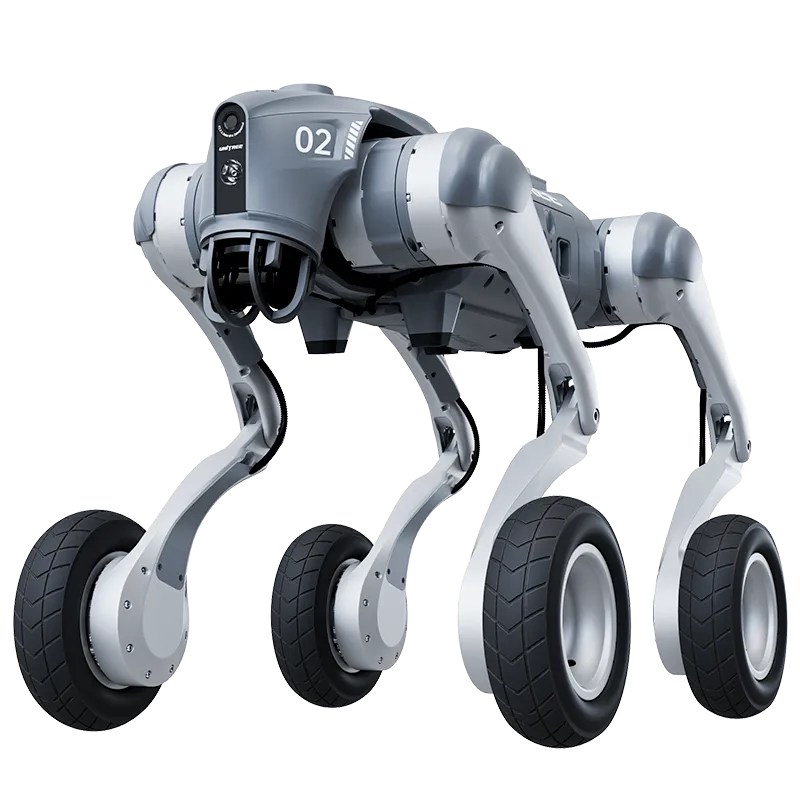
Before bringing a developer humanoid into a home, ask:
- Which data is sent to the manufacturer app or cloud service?
- Can the robot run locally without uploading camera, LiDAR, or microphone data?
- What logs are created by SDK tools, ROS2 nodes, and third-party packages?
- Are OTA updates automatic, optional, or reversible?
- Does the buyer have a way to disable sensors or create no-record zones?
- Who is responsible if experimental code stores private home data badly?
For technically skilled buyers, G1's openness is part of the appeal. For normal households, openness without clear governance can create more risk, not less.
A practical buyer checklist
- List every sensor that can capture the home. Cameras, depth sensors,
- Ask what is stored versus processed temporarily. A robot can use live
- Ask whether private rooms can be excluded. Room-level privacy zones
- Ask how bystanders are handled. Visitors and family members did not
- Ask when a human can connect. Remote help should require explicit owner
- Ask what the operator can see and control. Video, audio, map, arm motion,
- Ask for an access log. Owners should be able to see when remote sessions
- Ask how contractors are governed. Outside annotation or support vendors
- Ask if your data trains future models. Product debugging, support, and
- Ask whether opt-out breaks the product. A robot that becomes useless
- Ask whether updates are reversible. A bad model update should have a
- Ask how failures are reviewed. Dropped objects, collisions, blocked
What good answers sound like
Good answers are specific. They sound like: "Remote operation is off by default. You approve each Expert Mode session. The operator cannot enter privacy-marked rooms. Raw video is retained for 30 days unless you delete it sooner. Training use is opt-in. You can export the session log. Critical updates can be paused or rolled back."
Weak answers are vague. They sound like: "We may collect information to improve our products," "service partners may process data," or "AI learning requires continuous improvement" without explaining the actual robot data path. Those phrases are common in software terms, but a mobile robot with cameras and arms needs more precision.
Also watch for missing separation between support and training. If a remote operator helps unload a dishwasher, that may be acceptable as a service session. It should not automatically become permanent training data unless the owner understands and accepts that use. The same goes for worker and contractor data: a company should be able to explain how demonstration data is consented, filtered, retained, and protected.
How to compare robots with ui44 data
When you compare robots on ui44, start with hardware and status, then add the data-policy layer.
- Use the robot pages for concrete specs: 1X NEO, Figure 03, Tesla Optimus Gen 2, Agility Digit, and Unitree G1.
- Use /compare to separate a consumer preorder from an enterprise deployment or developer platform.
- Check sensors and connectivity before accepting a privacy claim. A robot with microphones, depth cameras, LiDAR, tactile sensing, Wi-Fi, and cloud support needs more than a one-line privacy promise.
- Treat missing price and status honestly. A robot that is not for consumer sale yet may not have consumer-grade policy documents yet either.
- Revisit the question after major updates. Data policy can change when a robot gains remote help, subscriptions, new skills, or more autonomous chores.
The strongest home-humanoid companies will make this easy. They will publish clear data-flow diagrams, remote-access rules, retention windows, opt-out paths, safety-review processes, and update controls. They will not ask buyers to infer all of that from a demo video.
Bottom line
Home humanoids will not become useful without data. They need demonstrations, teleoperation, evaluation, failure logs, simulation, fleet learning, and safety review. The right response is not to panic about every data loop. The right response is to make the loop visible.
For buyers, the key question is simple: can the company explain what the robot records, who can access it, how long it is kept, whether it trains future models, and what control the household has? If the answer is no, the robot is not ready for private rooms, no matter how impressive the walking demo looks.
Treat the home humanoid data policy as a core spec. Compare it beside price, battery life, payload, sensors, and support. A robot that can carry a box but cannot clearly protect your household data is not yet a trustworthy home robot.
Related in the database
Use this article as a privacy verification workflow
Turn the article into a privacy verification pass grounded in the robots, manufacturers, and components it actually references.
Home Humanoid Data Policy Checklist already points you toward 7 linked robots, 7 manufacturers, and 4 countries inside the ui44 database. That matters because strong buyer guidance is easier to apply when you can move immediately from a claim or warning into concrete product pages, manufacturer directories, component explainers, and country-level context instead of treating the article as an isolated opinion piece. The fastest next step is to turn the article into a shortlist workflow: open the linked robot pages, verify which specs are actually published for those models, then compare the surrounding manufacturer and component context before you decide whether the underlying claim changes your buying plan.
For this topic, the useful discipline is to separate the editorial lesson from the catalog evidence. The article gives you the framing, but the robot pages tell you what each product actually ships with today: sensor stack, connectivity methods, listed price, release timing, category, and support-relevant compatibility notes. The manufacturer pages then show whether you are looking at a one-off launch, a broader lineup pattern, or a company that spans multiple categories. That layered workflow reduces the risk of buying on a single marketing phrase or a single support FAQ.
Use the robot pages to confirm which products actually expose cameras, microphones, Wi-Fi, or voice systems, then use the manufacturer pages to decide how much of the privacy question seems product-specific versus brand-wide. On this route cluster, NEO, Figure 03, and Optimus Gen 2 form the fastest reality check. If you want a quick working shortlist, open Compare NEO, Figure 03, and Optimus Gen 2 next, then keep this article open as the reasoning layer while you compare structured data side by side.
Practical Takeaway
Every robot, manufacturer, category, component, and country reference below resolves to a real ui44 page, keeping the follow-up path grounded in database records rather than generic advice.
Suggested next steps in ui44
- Open NEO and note the listed sensors, connectivity methods, and voice stack before you interpret any policy claim.
- Cross-check the wider brand context on 1X Technologies so you can see whether the privacy question touches one model or a broader lineup.
- Use the linked component pages to confirm how common the relevant sensors and connectivity layers are across the database.
- Keep a short note of which policy layers you checked, which device features are actually present on the robot page, and which items still depend on region- or app-level confirmation.
- Finish with Compare NEO, Figure 03, and Optimus Gen 2 so the policy reading sits next to structured product data.
Robot profiles worth opening next
Use the linked product pages as the evidence layer
The linked robot pages are where this article becomes operational. Instead of asking whether the headline is interesting, use the robot entries to inspect the actual mix of sensors, connectivity options, batteries, pricing, release timing, and stated capabilities attached to the products mentioned in the article. That is the easiest way to see whether the warning or opportunity described here affects one product family, a specific design pattern, or an entire buying lane.
NEO
1X Technologies · Humanoid · Pre-order
NEO is tracked on ui44 as a pre-order humanoid robot from 1X Technologies. The database currently records a listed price of $20,000, a release date of 2025-10-28, ~4 hours battery life, Not disclosed charging time, and a published stack that includes RGB Cameras, Depth Sensors, and Tactile Skin plus Wi-Fi and Bluetooth.
For privacy-focused reading, this page matters because it shows the concrete device surface behind the policy discussion. Use it to verify whether NEO combines sensors and connectivity in a way that could change the in-home data footprint, and compare the listed capabilities such as Household Chores, Tidying Up, and Safe Human Interaction with any cloud, app, or voice layers.
Figure 03 is tracked on ui44 as a active humanoid robot from Figure AI. The database currently records a listed price of Price TBA, a release date of 2025-10-09, ~5 hours battery life, Not disclosed charging time, and a published stack that includes Stereo Vision, Depth Cameras, and Force Sensors plus Wi-Fi and Bluetooth.
For privacy-focused reading, this page matters because it shows the concrete device surface behind the policy discussion. Use it to verify whether Figure 03 combines sensors and connectivity in a way that could change the in-home data footprint, and compare the listed capabilities such as Complex Manipulation, Warehouse Work, and Manufacturing Tasks with any cloud, app, or voice layers.
Optimus Gen 2
Tesla · Humanoid · Development
Optimus Gen 2 is tracked on ui44 as a development humanoid robot from Tesla. The database currently records a listed price of Price TBA, a release date of 2023-12-13, Not officially disclosed battery life, Not officially disclosed charging time, and a published stack that includes Cameras, Force/Torque Sensors, and IMU plus Wi-Fi and Bluetooth.
For privacy-focused reading, this page matters because it shows the concrete device surface behind the policy discussion. Use it to verify whether Optimus Gen 2 combines sensors and connectivity in a way that could change the in-home data footprint, and compare the listed capabilities such as Bipedal Walking, Object Manipulation, and Factory Tasks with any cloud, app, or voice layers.
Digit is tracked on ui44 as a active humanoid robot from Agility. The database currently records a listed price of Price TBA, a release date of 2023, ~4 hours battery life, ~2 hours charging time, and a published stack that includes LiDAR, RGB-D Cameras, and IMU plus Wi-Fi and 5G.
For privacy-focused reading, this page matters because it shows the concrete device surface behind the policy discussion. Use it to verify whether Digit combines sensors and connectivity in a way that could change the in-home data footprint, and compare the listed capabilities such as Box Carrying (16kg), Stair Navigation, and Warehouse Operations with any cloud, app, or voice layers.
G1 is tracked on ui44 as a available humanoid robot from Unitree. The database currently records a listed price of $13,500, a release date of 2024-05-13, ~2 hours battery life, Not disclosed charging time, and a published stack that includes Depth Camera, 3D LiDAR, and 4 Microphone Array plus Wi-Fi 6 and Bluetooth 5.2.
For privacy-focused reading, this page matters because it shows the concrete device surface behind the policy discussion. Use it to verify whether G1 combines sensors and connectivity in a way that could change the in-home data footprint, and compare the listed capabilities such as Bipedal Walking, Object Manipulation, and Dexterous Hands (optional Dex3-1) with any cloud, app, or voice layers.
Manufacturer context behind the article
Check whether this is one product story or a broader company pattern
Manufacturer pages add the privacy context that individual product pages cannot show on their own. They help you check whether cameras, microphones, cloud accounts, app controls, and policy assumptions appear across a broader lineup or stay tied to one specific product story.
1X Technologies
ui44 currently tracks 2 robots from 1X Technologies across 1 category. The company is grouped under Norway, and the current catalog footprint on ui44 includes NEO, EVE.
That wider brand context matters because privacy questions rarely stop at one FAQ page. A manufacturer route helps you see whether the article is centered on one premium model or on a company that has several relevant products and therefore more than one place where the same policy or app assumptions might matter. The category mix here currently points toward Humanoid as the most useful next route if you want to see whether this article reflects a wider pattern inside the brand.
Figure AI
ui44 currently tracks 2 robots from Figure AI across 1 category. The company is grouped under USA, and the current catalog footprint on ui44 includes Figure 03, Figure 02.
That wider brand context matters because privacy questions rarely stop at one FAQ page. A manufacturer route helps you see whether the article is centered on one premium model or on a company that has several relevant products and therefore more than one place where the same policy or app assumptions might matter. The category mix here currently points toward Humanoid as the most useful next route if you want to see whether this article reflects a wider pattern inside the brand.
Tesla
ui44 currently tracks 2 robots from Tesla across 1 category. The company is grouped under USA, and the current catalog footprint on ui44 includes Optimus Gen 2, Optimus Gen 1.
That wider brand context matters because privacy questions rarely stop at one FAQ page. A manufacturer route helps you see whether the article is centered on one premium model or on a company that has several relevant products and therefore more than one place where the same policy or app assumptions might matter. The category mix here currently points toward Humanoid as the most useful next route if you want to see whether this article reflects a wider pattern inside the brand.
Agility
ui44 currently tracks 1 robot from Agility across 1 category. The company is grouped under USA, and the current catalog footprint on ui44 includes Digit.
That wider brand context matters because privacy questions rarely stop at one FAQ page. A manufacturer route helps you see whether the article is centered on one premium model or on a company that has several relevant products and therefore more than one place where the same policy or app assumptions might matter. The category mix here currently points toward Humanoid as the most useful next route if you want to see whether this article reflects a wider pattern inside the brand.
Broaden the scan without leaving the database
Categories, components, and countries add the wider context
Category framing
Category pages are useful when the article touches a buying pattern that shows up across brands. A category route helps you confirm whether the linked products sit in a narrow niche or whether the same question should be tested across a larger field of alternatives.
Humanoid
The Humanoid category page currently groups 129 tracked robots from 92 manufacturers. ui44 describes this lane as: Full-size bipedal humanoid robots built to work alongside people — from factory floors to household tasks. Compare the cutting edge of humanoid robotics.
That makes the category route a practical follow-up when you want to check whether the products linked in this article are typical for the lane or whether they sit at one edge of the market. Useful starting examples currently include NEO, EVE, Mornine M1.
Country and ecosystem context
Country pages give extra context when support practices, launch sequencing, regulatory posture, or manufacturer mix matter. They are not a substitute for model-level verification, but they do help you see which ecosystems cluster together and which manufacturers sit in the same regional field when you broaden the search beyond the article headline.
Norway
The Norway route currently groups 2 tracked robots from 1 manufacturers in ui44. That gives you a useful regional lens when the article points toward support practices, launch sequencing, or brand clusters that may share similar ecosystem assumptions.
On the current route, manufacturers like 1X Technologies make the page a good way to broaden the scan without losing the regional context that often shapes availability, documentation style, and adjacent alternatives.
USA
The USA route currently groups 89 tracked robots from 69 manufacturers in ui44. That gives you a useful regional lens when the article points toward support practices, launch sequencing, or brand clusters that may share similar ecosystem assumptions.
On the current route, manufacturers like Faraday Future, iRobot, Boston Dynamics make the page a good way to broaden the scan without losing the regional context that often shapes availability, documentation style, and adjacent alternatives.
China
The China route currently groups 189 tracked robots from 87 manufacturers in ui44. That gives you a useful regional lens when the article points toward support practices, launch sequencing, or brand clusters that may share similar ecosystem assumptions.
On the current route, manufacturers like AGIBOT, Dreame, Unitree Robotics make the page a good way to broaden the scan without losing the regional context that often shapes availability, documentation style, and adjacent alternatives.
Questions to answer before you move from reading to buying
A follow-up FAQ built from the entities already linked in this article
Frequently Asked Questions
Which page should I open first after reading “Home Humanoid Data Policy Checklist”?
Start with NEO. That gives you a concrete product anchor for the article’s main claim. From there, branch into the manufacturer and component pages so you can tell whether the article is describing one specific model, a repeated brand pattern, or a wider technology issue that affects multiple shortlist options.
How do the manufacturer pages change the buying decision?
1X Technologies help you zoom out from one article and one product. On ui44 they show lineup breadth, category spread, and the neighboring robots tied to the same company. That context is useful when you are deciding whether a risk belongs to a single model, whether it shows up across a brand’s portfolio, and whether you should keep looking at alternatives before committing.
When should I switch from reading to side-by-side comparison?
Move into Compare NEO, Figure 03, and Optimus Gen 2 as soon as you understand the article’s main warning or promise. The article explains what to watch for, but the compare view is where you can check whether price, status, battery life, connectivity, sensors, and category fit still make the robot a good match for your own home and budget.
Where to go next in ui44
Keep the research chain inside the database
If you want to keep going, these follow-on pages give you the cleanest expansion path from article to research session. Open the comparison route first if you are deciding between products today. Open the manufacturer, category, and component routes if you still need to understand the broader pattern behind the claim.
Written by
ui44 Team
Published May 13, 2026
Share this article
Open a plain share link on X or Bluesky. No embeds, no widgets, no cookie baggage.