A robot that can walk across the room but cannot pick up a soft sock, hold a cup without crushing it, or pass medication safely is still mostly a moving camera. That is why the emerging split between five-finger dexterous hands and simpler gripper-style robot hands matters for buyers. The five-finger camp promises a higher ceiling. The gripper camp argues that fewer joints, better force control, and easier maintenance will reach real homes first.
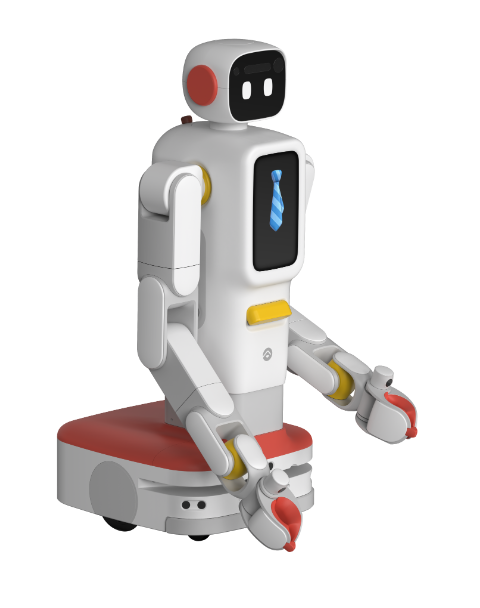
This is not an abstract robotics debate. ui44's database now includes robots on both sides: Quanta X2 with optional 20-DOF dexterous hands, Futuring 2 with force-controlled grippers, Wanda 2.0 with adaptive intelligent grippers, Stretch 3 with a proven compliant gripper, and new modular platforms like Unitree R1-A7-D that can be configured with two-finger, three-finger, or five-finger end-effectors.
What is the five-finger vs gripper debate actually about?
A five-finger robot hand tries to copy some of the geometry of a human hand. It can spread contacts around an object, use fingertips, and sometimes reorient an object after grasping it. That makes it attractive for tool use, knobs, handles, cloth, and delicate objects.
A gripper is more limited, but that limit is also the point. A two-finger or clamp-style gripper has fewer tiny joints to break, fewer actuators to calibrate, and a simpler control problem. If the task is picking up a toy, carrying a cup, or handing over a remote, a well-sensored gripper may be the more practical choice.
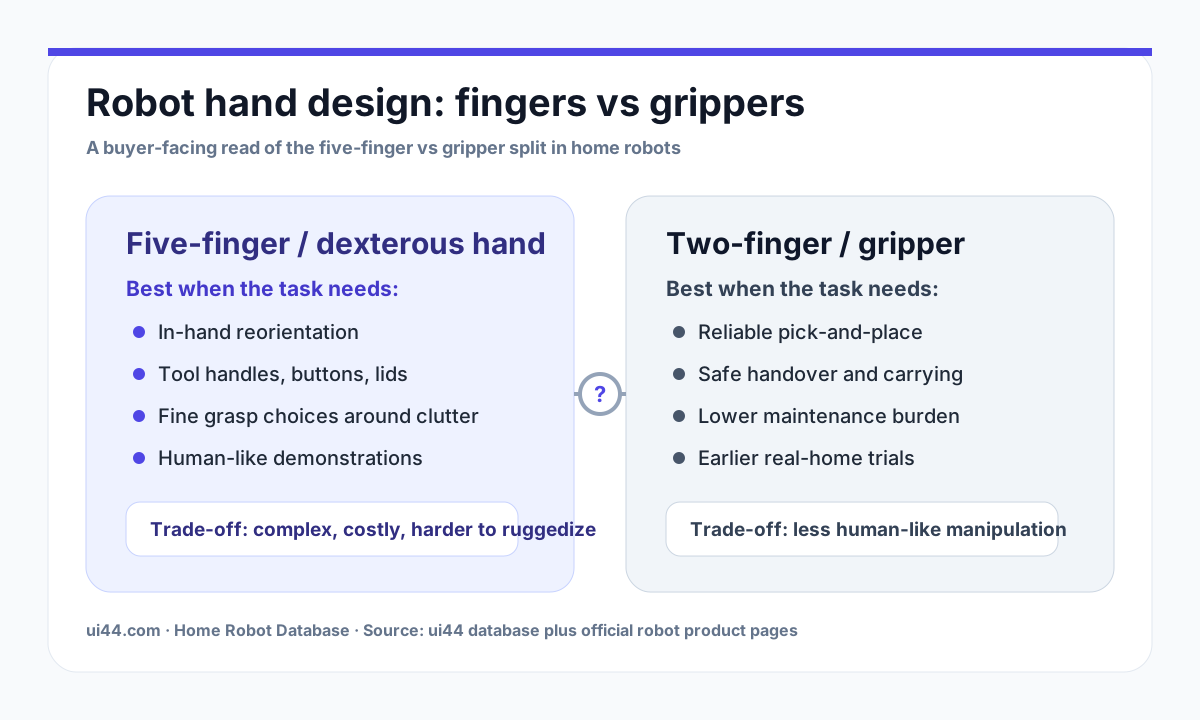
The useful framing is not "which looks more human?" It is this:
Design path
Five-finger dexterous hand
- Best current argument
- Higher ceiling for tools, cloth, handles, and in-hand adjustment
- Main buyer risk
- More complexity, more cost, more ways to fail
Design path
Two-finger / clamp gripper
- Best current argument
- Faster path to robust pick-and-place, safer handover, lower maintenance
- Main buyer risk
- May struggle with human-style tasks that need many contacts
Design path
Modular end-effectors
- Best current argument
- Lets one robot swap between task-specific hands
- Main buyer risk
- Only helpful if the software can use each tool reliably
| Design path | Best current argument | Main buyer risk |
|---|---|---|
| Five-finger dexterous hand | Higher ceiling for tools, cloth, handles, and in-hand adjustment | More complexity, more cost, more ways to fail |
| Two-finger / clamp gripper | Faster path to robust pick-and-place, safer handover, lower maintenance | May struggle with human-style tasks that need many contacts |
| Modular end-effectors | Lets one robot swap between task-specific hands | Only helpful if the software can use each tool reliably |
Finger count is a hardware clue, not proof of chore ability. Buyers should care more about repeatable task success, payload at the actual reach posture, force control, tactile sensing, and whether the company shows autonomous completion rather than a teleoperated demo.
Why five-finger robot hands still matter
The strongest argument for five-finger hands is simple: homes are full of objects designed for human hands. Door handles, drawer pulls, zippers, bottle caps, faucets, scissors, mugs, charger cables, and clothing were not designed for parallel robot clamps.
Quanta X2 is one of the clearest home-facing examples in the ui44 database. X Square Robot lists it as a 164 cm wheeled humanoid with 62 whole-body degrees of freedom, a 765 mm arm reach, a 6 kg single-arm payload, and optional 20-DOF dexterous hands. Its WALL-A embodied AI model is positioned around perception, reasoning, and precision manipulation. The company has also described real-home trials and household service deployments, which makes the hand choice more than a lab spec.
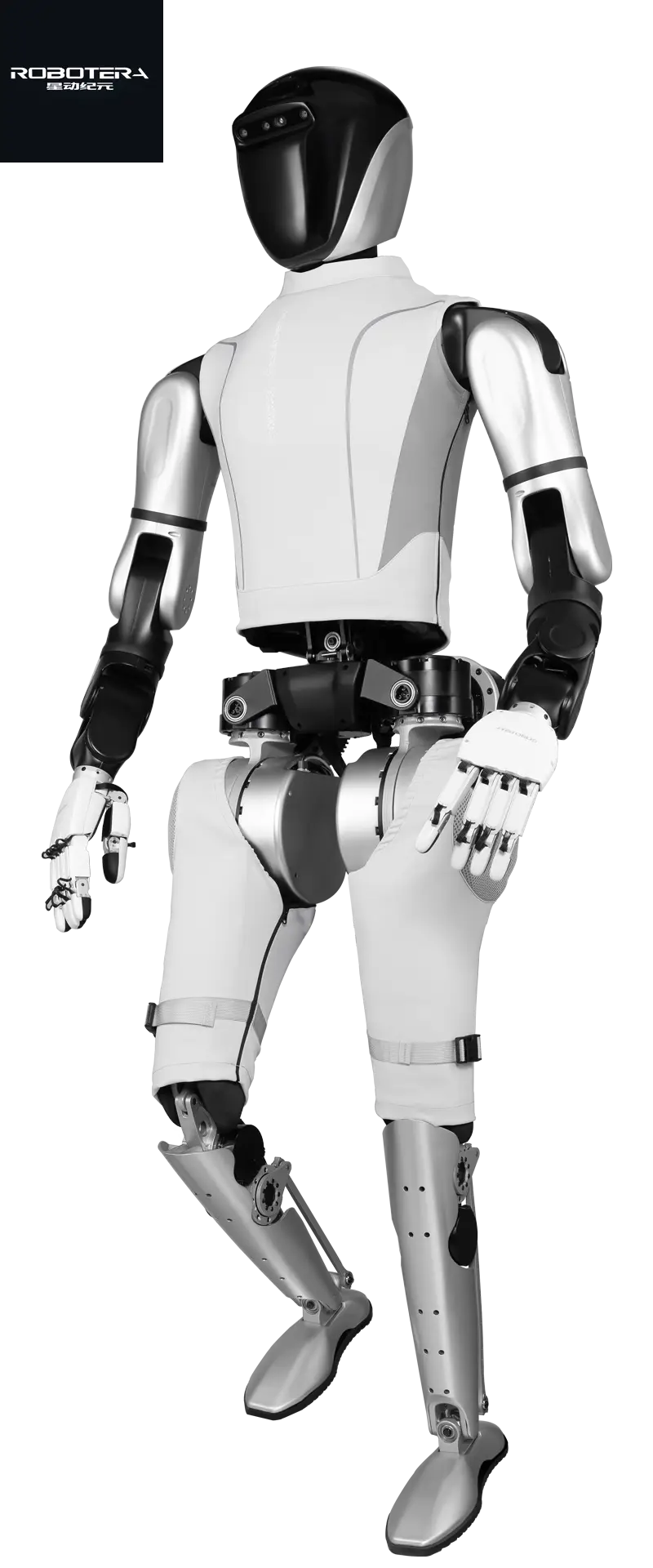
RobotEra STAR1 points at the same ambition from a full-body humanoid direction. ui44 records STAR1 with 55 total DOF and 12-DOF five-fingered XHAND1 hands, plus a 20 kg payload and about four hours of battery life. RobotEra's official site describes domestic care and health scenarios including room cleaning, meal preparation, item transport, elder care, child care, and emotional interaction. That does not make STAR1 a consumer home robot today, but it shows why dexterous hands remain strategically important.
There are other signals. 1X NEO emphasizes a soft, lightweight, home-safe body and gentle manipulation at a $20,000 early-adopter price. Figure 03 is not available for consumer purchase, but ui44 records it as a Helix VLA humanoid with complex manipulation and a 20 kg payload. MagicLab's X1 was unveiled alongside the H01 dexterous hand, though public X1 pricing and ordering terms are not disclosed.
The caveat is important: five fingers raise the ceiling, not the floor. A human-like hand still needs fast perception, good wrist planning, tactile feedback, safe force limits, and enough training data from messy rooms. Without those, the robot may have a beautiful hand that pauses, drops objects, or needs a remote human to rescue the task.
Why grippers may reach useful homes first
The gripper argument is less glamorous and, for 2026 buyers, probably more practical. Most early home tasks are not tying knots or using scissors. They are picking up clutter, moving lightweight objects, carrying drinks, pushing buttons, opening simple appliance doors, and handing items to people. For that work, a well-designed gripper can be enough.
Futuring 2 (F2) is a good example because it is openly home-oriented. ui44 records the F2 as a pre-order home-assistant robot starting at CNY 36,000, with real-home trial reservations open. The official and independent descriptions emphasize a wheeled dual-arm platform with 21 high-degree-of-freedom joints, 24 sensors, a 360-degree sensing system, multimodal perception, tactile force control, a 3 kg end-effector payload, claimed ±0.05 mm repeatability, and ±0.1 N force-control precision. Those are the right kinds of specs for a gripper-first robot: not just "it has a hand," but how accurately and gently it can close that hand.
Wanda 2.0 takes the gripper side into humanoid service work. The ui44 database records 23 high-DOF joints, mass-produced 8-DOF bionic arms, adaptive intelligent grippers, a 12 kg dual-arm payload, RGB/RGB-D cameras, 360-degree LiDAR, tactile sensing, and 8-16 hours of battery life depending on workload. The missing piece for consumers is public pricing: UniX AI operates more like an enterprise/service deployment company than a normal retail seller.
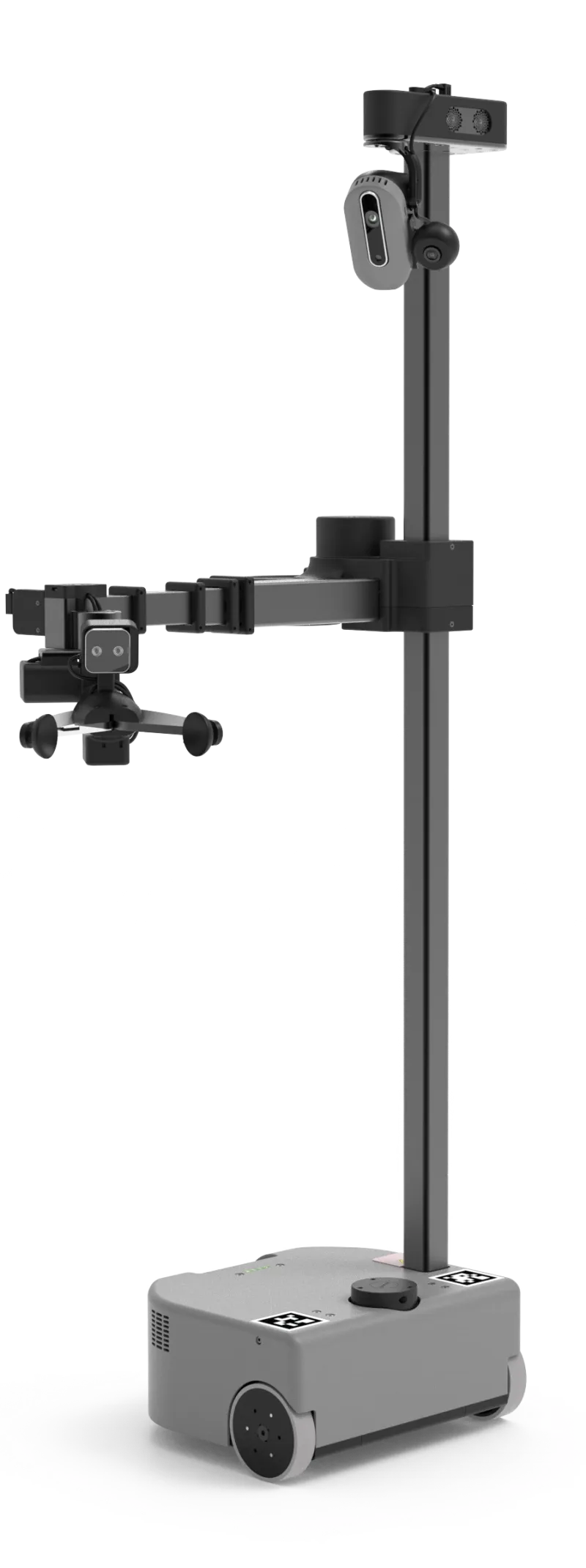
Stretch 3 is the boring-but-serious benchmark. It costs $24,950, weighs 24.5 kg, has a compact 33 × 34 cm footprint, gets 2-5 hours of runtime, and uses a telescoping arm with a compliant gripper instead of a humanoid hand. It is not trying to look like a person. It is trying to reach shelves, tables, floors, and cabinets in real homes while giving researchers and assistive-care developers a reliable platform.
Even Roborock Saros Z70 belongs in this discussion. It is a robot vacuum, not a humanoid, but its foldable five-axis OmniGrip arm is one of the few consumer products actually shipping a small manipulator into homes. At $1,299 in the current ui44 database, it is not a general-purpose helper. It can pick up small objects like socks and shoes in a constrained cleaning context. That narrowness is exactly why it can ship.
Which hand works better for common home tasks?
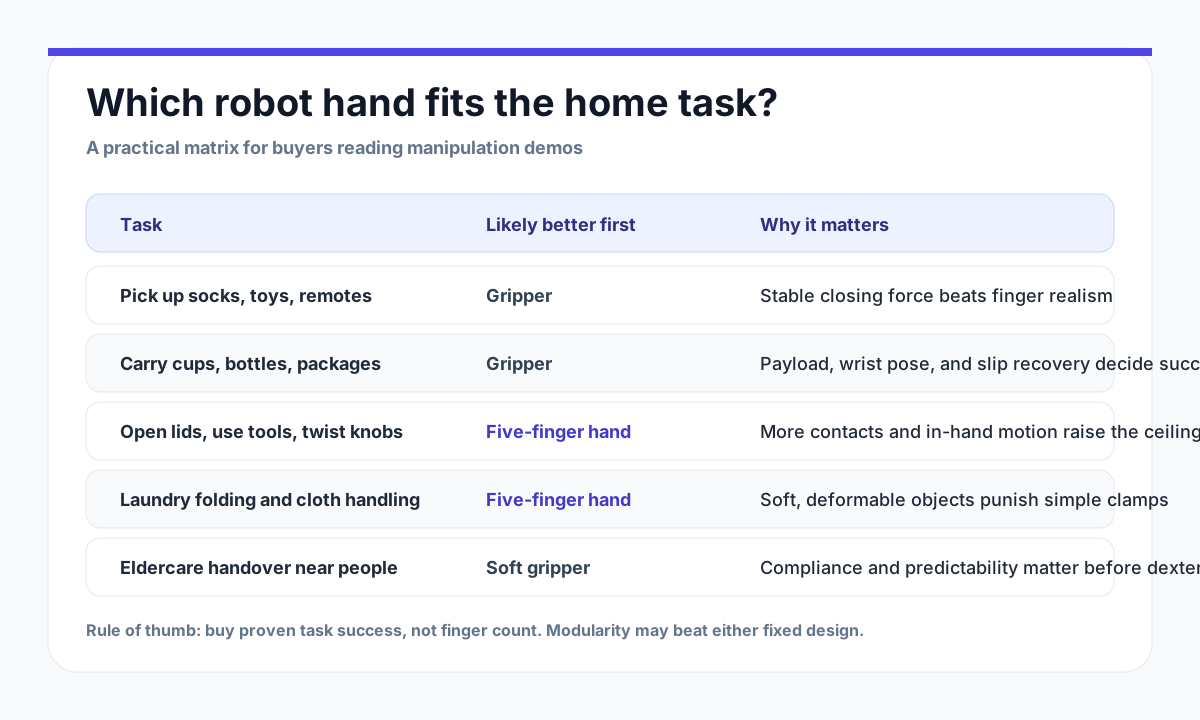
For buyers, the better question is not "five fingers or gripper?" It is "what job do I actually need this robot to do?"
Home task
Pick up socks, toys, remotes
- Better first bet
- Gripper
- Why
- Stable closing force is often enough
Home task
Carry cups, bottles, light packages
- Better first bet
- Gripper
- Why
- Payload, wrist pose, and slip detection matter more than finger count
Home task
Open lids, twist knobs, use tools
- Better first bet
- Five-finger hand
- Why
- Multiple contacts and in-hand adjustment help
Home task
Fold laundry or handle cloth
- Better first bet
- Five-finger hand
- Why
- Soft, deformable objects need more nuanced contact
Home task
Hand over medication or a phone
- Better first bet
- Soft gripper
- Why
- Predictable compliance matters before dexterity
Home task
Load a dishwasher
- Better first bet
- Mixed
- Why
- Gripper can place items; fingers help with awkward handles and fragile dishes
Home task
Tidy a cluttered shelf
- Better first bet
- Mixed
- Why
- Perception, reach, and recovery may matter more than hand type
| Home task | Better first bet | Why |
|---|---|---|
| Pick up socks, toys, remotes | Gripper | Stable closing force is often enough |
| Carry cups, bottles, light packages | Gripper | Payload, wrist pose, and slip detection matter more than finger count |
| Open lids, twist knobs, use tools | Five-finger hand | Multiple contacts and in-hand adjustment help |
| Fold laundry or handle cloth | Five-finger hand | Soft, deformable objects need more nuanced contact |
| Hand over medication or a phone | Soft gripper | Predictable compliance matters before dexterity |
| Load a dishwasher | Mixed | Gripper can place items; fingers help with awkward handles and fragile dishes |
| Tidy a cluttered shelf | Mixed | Perception, reach, and recovery may matter more than hand type |
This is why modularity may become the quiet winner. Unitree's official R1-D page lists optional two-finger grippers, three-finger dexterous hands, and five-finger dexterous hands across the R1-A5/R1-A7/R1-A5-D/R1-A7-D family. The R1-A7-D database entry records a mobile-base, 7-DOF-arm configuration with a height-adjustable torso, chassis LiDAR, binocular vision, voice interaction, 2-4 kg arm payload, optional end-effectors, and a line starting from $4,290 while exact configuration pricing remains undisclosed.
That is the right hardware question: not whether every home robot should have one perfect hand, but whether the platform can choose the right end-effector for the job.
What should buyers ask before trusting a robot hand demo?
Robot hand demos are easy to overread. A strawberry pickup, a bottle-cap twist, or a folded shirt can be real and still not mean the robot is ready for your home. Before treating a demo as buying evidence, ask seven questions.
1. Is the task autonomous or teleoperated? If a remote operator is guiding the robot, the hand hardware may be good, but you are watching human skill through a machine.
2. What is the payload at reach? Arm payload changes dramatically with posture. A robot may lift more close to its body than at full extension over a table.
3. Does the hand sense force or just position? Household success depends on knowing when an object slips, bends, sticks, or resists. Force and tactile feedback matter more than a pretty shell.
4. Can the hand be repaired? Five-finger hands have small joints, tendons, sensors, fingertips, and covers. Ask what wears out and how replacements work.
5. What objects were excluded? A demo with rigid boxes is not the same as cloth, cables, transparent cups, wet dishes, or pet toys.
6. Does the robot recover after failure? Dropping a sock is normal. The real question is whether the robot notices, replans, and tries again safely.
7. Is the whole robot safe near people? End-effectors do not act alone. Arm speed, torque, compliance, collision detection, base stability, and emergency stop behavior all matter.
What do the ui44 specs suggest right now?
The current buyer-facing answer is blunt: grippers are closer to practical home use in 2026, while five-finger hands are the higher-upside research bet.
If you want something that already looks like a usable home manipulation platform, Stretch 3 and narrow products like Saros Z70 are more credible than most humanoid videos because their task boundaries are clear. Stretch is a real mobile manipulator with a compliant gripper and open software. Saros Z70 is a cleaning robot with a tiny arm for a tiny job.
If you want to track home humanoid ambition, Quanta X2, Futuring 2, Wanda 2.0, Unitree R1-A7-D, RobotEra STAR1, and 1X NEO are more interesting than generic walking demos. They expose the actual design split: dexterous hands for maximum future capability, grippers for simpler near-term reliability, and modular end-effectors for buyers who do not want to bet the whole robot on one hand.
The most promising home robot may eventually use both. A gripper for 80 percent of daily object handling. A dexterous hand or tool attachment for the hard cases. And software smart enough to know which one to use.
Bottom line
Do not buy a home robot because it has five fingers. Do not dismiss one because it uses a gripper. Buy, preorder, or wait based on the tasks it can complete repeatedly in a real home.
For now, the practical rule is simple:
- Choose gripper-first robots when the job is reliable pick-and-place, handover, carrying, or low-maintenance assistive work.
- Watch five-finger robots when the job involves tools, cloth, handles, and fine manipulation that simple clamps cannot do.
- Favor modular platforms when the manufacturer exposes end-effector options, safety details, payload-at-reach data, and honest limits.
The hand is not the whole robot. But for home chores, it may be the part that turns a walking demo into something useful.
Related in the database
Use this article as a buyer workflow
Turn the article into a real verification pass grounded in the robots, manufacturers, categories, components, and countries it actually references.
Five-Finger Hands vs Grippers: Home Robot Guide already points you toward 9 linked robots, 9 manufacturers, and 3 countries inside the ui44 database. That matters because strong buyer guidance is easier to apply when you can move immediately from a claim or warning into concrete product pages, manufacturer directories, component explainers, and country-level context instead of treating the article as an isolated opinion piece. The fastest next step is to turn the article into a shortlist workflow: open the linked robot pages, verify which specs are actually published for those models, then compare the surrounding manufacturer and component context before you decide whether the underlying claim changes your buying plan.
For this topic, the useful discipline is to separate the editorial lesson from the catalog evidence. The article gives you the framing, but the robot pages tell you what each product actually ships with today: sensor stack, connectivity methods, listed price, release timing, category, and support-relevant compatibility notes. The manufacturer pages then show whether you are looking at a one-off launch, a broader lineup pattern, or a company that spans multiple categories. That layered workflow reduces the risk of buying on a single marketing phrase or a single support FAQ.
The fastest win is to keep the article’s editorial framing tied to real product pages. That way you can test whether Quanta X2, Futuring 2 (F2), and Wanda 2.0 still make sense once price, category, release timing, and surrounding manufacturer context are visible in one place. If you want a quick working shortlist, open Compare Quanta X2, Futuring 2 (F2), and Wanda 2.0 next, then keep this article open as the reasoning layer while you compare structured data side by side.
Practical Takeaway
Every robot, manufacturer, category, component, and country reference below resolves to a real ui44 page, keeping the follow-up path grounded in database records rather than generic advice.
Suggested next steps in ui44
- Open Quanta X2 first so the article’s main point is anchored to a real robot page.
- Use X Square Robot to see the broader company context around the products linked in the article.
- Open the linked component pages when you want to separate a shared technology pattern from a single-brand story.
- Build a working shortlist with Compare Quanta X2, Futuring 2 (F2), and Wanda 2.0.
- Keep a short note of what is already verified in the article and what still needs live confirmation from current vendor documentation.
Robot profiles worth opening next
Use the linked product pages as the evidence layer
The linked robot pages are where this article becomes operational. Instead of asking whether the headline is interesting, use the robot entries to inspect the actual mix of sensors, connectivity options, batteries, pricing, release timing, and stated capabilities attached to the products mentioned in the article. That is the easiest way to see whether the warning or opportunity described here affects one product family, a specific design pattern, or an entire buying lane.
Quanta X2
X Square Robot · Humanoid · Active
Quanta X2 is tracked on ui44 as a active humanoid robot from X Square Robot. The database currently records a listed price of Price TBA, a release date of 2025-08, Not officially disclosed battery life, Not officially disclosed charging time, and a published stack that includes 2D LiDAR, Ultrasonic Sensors, and RGB-D Camera plus Not officially disclosed.
For general buyer research, this route gives you the concrete profile that the article alone cannot. Compare the published capabilities of Wheeled Humanoid Mobility, 62-DOF Whole-Body Motion, and 6-DOF Torso with the linked alternatives so the final decision is based on actual product fit, not just the framing of the article.
Futuring 2 (F2)
Futuring Robot · Home Assistants · Pre-order
Futuring 2 (F2) is tracked on ui44 as a pre-order home assistants robot from Futuring Robot. The database currently records a listed price of ¥36,000, a release date of 2026-04-09, High-intensity work: >8h; standby: >24h battery life, Not officially disclosed charging time, and a published stack that includes 24 sensors, 360° omnidirectional sensing system, and Multimodal perception system plus Not officially disclosed.
For general buyer research, this route gives you the concrete profile that the article alone cannot. Compare the published capabilities of Dual-arm household manipulation, Toy and clothing tidying, and Appliance operation assistance with the linked alternatives so the final decision is based on actual product fit, not just the framing of the article.
Wanda 2.0 is tracked on ui44 as a active humanoid robot from UniX AI. The database currently records a listed price of Price TBA, a release date of 2024-12, 8–16 hours depending on workload battery life, Not disclosed (autonomous docking) charging time, and a published stack that includes Head-Mounted Dual RGB/RGB-D Cameras, 360° LiDAR, and Ultrasonic Sensors plus Wi-Fi and Cloud + Local Control.
For general buyer research, this route gives you the concrete profile that the article alone cannot. Compare the published capabilities of Wheeled Differential-Drive Navigation, 23 High-DoF Joints, and 8-DoF Bionic Arms (mass-produced) with the linked alternatives so the final decision is based on actual product fit, not just the framing of the article.
Stretch 3
Hello Robot · Home Assistants · Active
Stretch 3 is tracked on ui44 as a active home assistants robot from Hello Robot. The database currently records a listed price of $24,950, a release date of 2024, 2–5 hours battery life, Not disclosed charging time, and a published stack that includes Intel D405 RGBD Camera (gripper), Intel D435if RGBD Camera (head), and Wide-Angle RGB Camera (head) plus Wi-Fi 6E and Bluetooth.
For general buyer research, this route gives you the concrete profile that the article alone cannot. Compare the published capabilities of Mobile Manipulation, Autonomous Navigation, and Teleoperation (Web / Gamepad / Dexterous) with the linked alternatives so the final decision is based on actual product fit, not just the framing of the article.
R1-A7-D
Unitree Robotics · Humanoid · Active
R1-A7-D is tracked on ui44 as a active humanoid robot from Unitree Robotics. The database currently records a listed price of $100,000, a release date of 2026-04-30, Approx. 1.5 hours (battery-powered; external power also supported) battery life, Not officially disclosed charging time, and a published stack that includes Chassis LiDAR, Binocular camera / depth module, and Optional wrist camera plus Wi-Fi 6 and Bluetooth 5.2.
For general buyer research, this route gives you the concrete profile that the article alone cannot. Compare the published capabilities of Mobile Dual-Arm Manipulation, 7-DOF Arms, and Wheeled Mobile Base with the linked alternatives so the final decision is based on actual product fit, not just the framing of the article.
Manufacturer context behind the article
Check whether this is one product story or a broader company pattern
Manufacturer pages add the market context that individual product pages cannot show on their own. They help you check whether the article is centered on a brand with a deep lineup, whether that brand spans several categories, and how much of its ui44 footprint depends on one flagship model versus a broader product strategy.
X Square Robot
ui44 currently tracks 1 robot from X Square Robot across 1 category. The company is grouped under China, and the current catalog footprint on ui44 includes Quanta X2.
That wider brand context matters because the best buying decision usually depends on lineup depth and adjacent options, not just the one model featured most prominently in the article. The category mix here currently points toward Humanoid as the most useful next route if you want to see whether this article reflects a wider pattern inside the brand.
Futuring Robot
ui44 currently tracks 1 robot from Futuring Robot across 1 category. The company is grouped under China, and the current catalog footprint on ui44 includes Futuring 2 (F2).
That wider brand context matters because the best buying decision usually depends on lineup depth and adjacent options, not just the one model featured most prominently in the article. The category mix here currently points toward Home Assistants as the most useful next route if you want to see whether this article reflects a wider pattern inside the brand.
UniX AI
ui44 currently tracks 2 robots from UniX AI across 1 category. The company is grouped under China, and the current catalog footprint on ui44 includes Wanda 2.0, Panther.
That wider brand context matters because the best buying decision usually depends on lineup depth and adjacent options, not just the one model featured most prominently in the article. The category mix here currently points toward Humanoid as the most useful next route if you want to see whether this article reflects a wider pattern inside the brand.
Hello Robot
ui44 currently tracks 2 robots from Hello Robot across 1 category. The company is grouped under USA, and the current catalog footprint on ui44 includes Stretch 3, Stretch 4.
That wider brand context matters because the best buying decision usually depends on lineup depth and adjacent options, not just the one model featured most prominently in the article. The category mix here currently points toward Home Assistants as the most useful next route if you want to see whether this article reflects a wider pattern inside the brand.
Broaden the scan without leaving the database
Categories, components, and countries add the wider context
Category framing
Category pages are useful when the article touches a buying pattern that shows up across brands. A category route helps you confirm whether the linked products sit in a narrow niche or whether the same question should be tested across a larger field of alternatives.
Humanoid
The Humanoid category page currently groups 129 tracked robots from 92 manufacturers. ui44 describes this lane as: Full-size bipedal humanoid robots built to work alongside people — from factory floors to household tasks. Compare the cutting edge of humanoid robotics.
That makes the category route a practical follow-up when you want to check whether the products linked in this article are typical for the lane or whether they sit at one edge of the market. Useful starting examples currently include NEO, EVE, Mornine M1.
Home Assistants
The Home Assistants category page currently groups 16 tracked robots from 14 manufacturers. ui44 describes this lane as: Arm-based household helpers — laundry folders, kitchen robots, and mobile manipulators that take on hands-on physical tasks around the home.
That makes the category route a practical follow-up when you want to check whether the products linked in this article are typical for the lane or whether they sit at one edge of the market. Useful starting examples currently include Robody, Futuring 2 (F2), Stretch 3.
Country and ecosystem context
Country pages give extra context when support practices, launch sequencing, regulatory posture, or manufacturer mix matter. They are not a substitute for model-level verification, but they do help you see which ecosystems cluster together and which manufacturers sit in the same regional field when you broaden the search beyond the article headline.
China
The China route currently groups 189 tracked robots from 87 manufacturers in ui44. That gives you a useful regional lens when the article points toward support practices, launch sequencing, or brand clusters that may share similar ecosystem assumptions.
On the current route, manufacturers like AGIBOT, Dreame, Unitree Robotics make the page a good way to broaden the scan without losing the regional context that often shapes availability, documentation style, and adjacent alternatives.
USA
The USA route currently groups 89 tracked robots from 69 manufacturers in ui44. That gives you a useful regional lens when the article points toward support practices, launch sequencing, or brand clusters that may share similar ecosystem assumptions.
On the current route, manufacturers like Faraday Future, iRobot, Boston Dynamics make the page a good way to broaden the scan without losing the regional context that often shapes availability, documentation style, and adjacent alternatives.
Norway
The Norway route currently groups 2 tracked robots from 1 manufacturers in ui44. That gives you a useful regional lens when the article points toward support practices, launch sequencing, or brand clusters that may share similar ecosystem assumptions.
On the current route, manufacturers like 1X Technologies make the page a good way to broaden the scan without losing the regional context that often shapes availability, documentation style, and adjacent alternatives.
Questions to answer before you move from reading to buying
A follow-up FAQ built from the entities already linked in this article
Frequently Asked Questions
Which page should I open first after reading “Five-Finger Hands vs Grippers: Home Robot Guide”?
Start with Quanta X2. That gives you a concrete product anchor for the article’s main claim. From there, branch into the manufacturer and component pages so you can tell whether the article is describing one specific model, a repeated brand pattern, or a wider technology issue that affects multiple shortlist options.
How do the manufacturer pages change the buying decision?
X Square Robot help you zoom out from one article and one product. On ui44 they show lineup breadth, category spread, and the neighboring robots tied to the same company. That context is useful when you are deciding whether a risk belongs to a single model, whether it shows up across a brand’s portfolio, and whether you should keep looking at alternatives before committing.
When should I switch from reading to side-by-side comparison?
Move into Compare Quanta X2, Futuring 2 (F2), and Wanda 2.0 as soon as you understand the article’s main warning or promise. The article explains what to watch for, but the compare view is where you can check whether price, status, battery life, connectivity, sensors, and category fit still make the robot a good match for your own home and budget.
Where to go next in ui44
Keep the research chain inside the database
If you want to keep going, these follow-on pages give you the cleanest expansion path from article to research session. Open the comparison route first if you are deciding between products today. Open the manufacturer, category, and component routes if you still need to understand the broader pattern behind the claim.
Written by
ui44 Team
Published May 8, 2026
Share this article
Open a plain share link on X or Bluesky. No embeds, no widgets, no cookie baggage.