For home-robot buyers, the right question is not "does this mean I can buy a Figure 03?" The answer is still no. The useful question is: what does a real warehouse deployment prove that a lab video cannot?
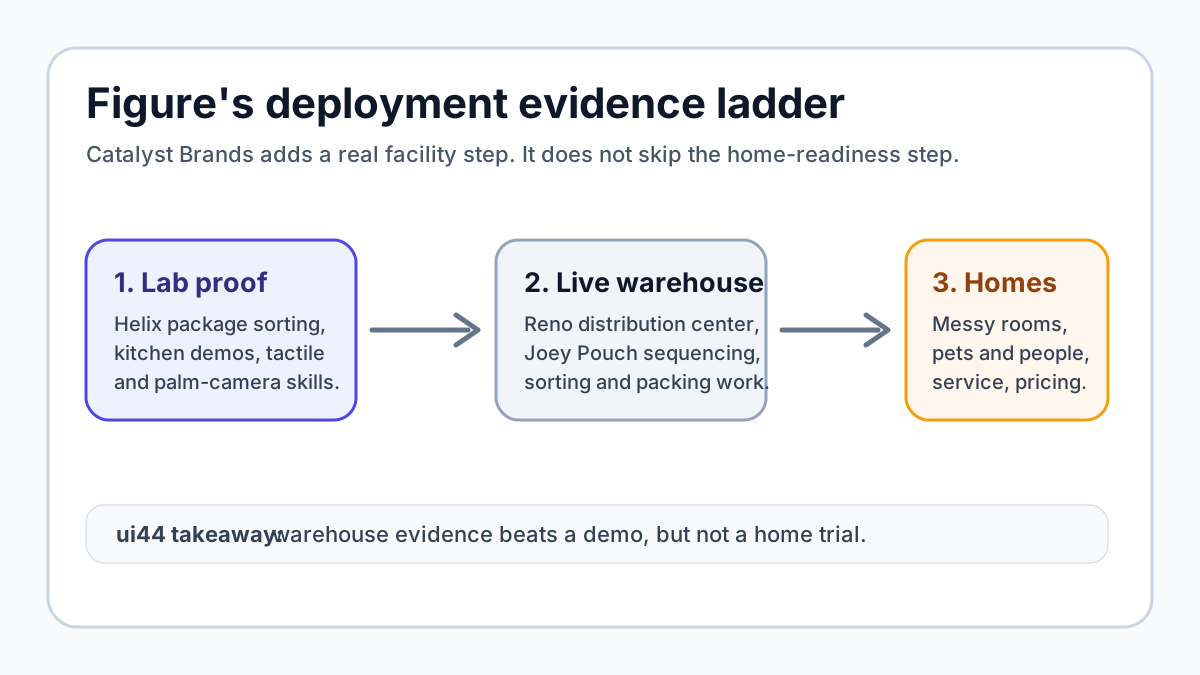
The short version: the Catalyst agreement is strong evidence that Figure is being tested against third-party operations, workflow integration, seasonality, and uptime pressure. It is not yet evidence that a Figure home robot is safe, affordable, or useful enough for a private home.
What did Figure and Catalyst Brands announce?
Figure announced a commercial agreement with Catalyst Brands to deploy humanoids into Catalyst's distribution and logistics network. Catalyst's own release says the initial phase starts at the Reno facility and focuses first on helping associates with the Joey Pouch sorting system, a computerized induction, sorting, and packing system. Catalyst says the Reno site received a $40 million infrastructure update in 2024, and that the partnership is meant to support scalability across a portfolio that includes JCPenney, Aéropostale, Brooks Brothers, Lucky Brand, and Nautica.
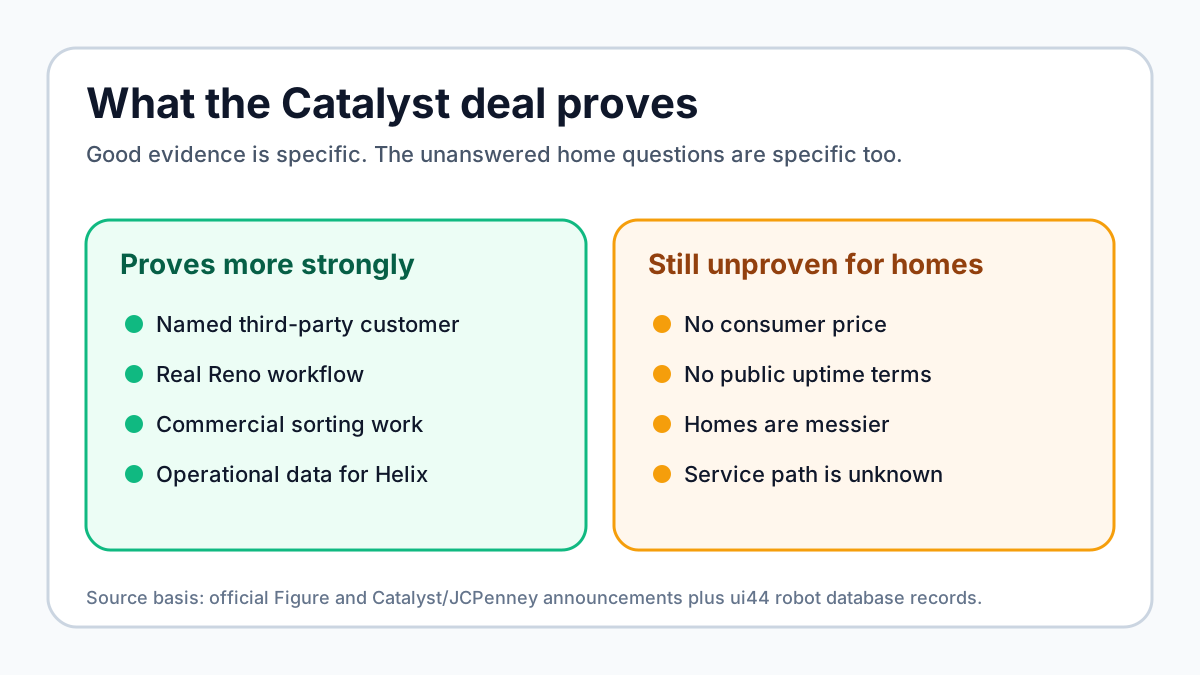
That is more concrete than a general "humanoids are coming to logistics" press quote. It gives us a named customer, a named facility, and a named workflow. It also gives us several limits. Neither Figure nor Catalyst disclosed the initial fleet size, contract value, target packages per hour, human intervention rate, shift schedule, safety criteria, or how quickly the robots will move beyond the first sequencing workflow.
Those missing numbers are not nitpicks. They are the difference between a real commercial pilot and a proven operating product.
Why a warehouse is a better proof step than another demo
A warehouse is still controlled compared with a home, but it is much harsher than a show-floor demo. A distribution center has throughput targets, human coworkers, lighting variation, missed scans, odd package shapes, damaged bags, maintenance windows, and consequences when a system blocks the line. If Figure humanoids can work there repeatedly, it gives buyers a better signal than a one-off video.
This is especially relevant because Figure has been building a logistics evidence stack around Helix. In its own logistics update, Figure said Helix improved from roughly 5.0 seconds per package to about 4.05 seconds in a package-handling task, while barcode orientation success rose to about 95%. The company also says Helix learned to handle poly bags, flat envelopes, and adaptive behaviors such as flattening wrinkled labels before scanning. Those are exactly the kinds of messy, contact-rich details that matter when a humanoid leaves a scripted demo loop.
The Catalyst site also matters because it is not Figure's own lab. Internal tests can be useful, especially when they are long and visible, but a customer facility adds new constraints: existing equipment, existing worker routines, customer peak seasons, and an operator that cares about output rather than robotics storytelling.
That is why this is a meaningful step toward the home, even though it is not a home proof. Homes will not care whether Figure can orient retail packages at a scanner. They will care whether the same system can navigate laundry baskets, charging cables, pets, toys, dropped cutlery, and people who do unpredictable things while the robot is moving.
What this proves for Figure's home-robot roadmap
ui44's database tracks Figure 03 as an active humanoid with no announced public price, about 173 cm height, 61 kg weight, roughly five hours of battery life, a 20 kg payload, stereo/depth vision, force sensors, tactile arrays, and Figure's Helix vision-language-action (VLA) system. That profile already made Figure 03 one of the strongest non-consumer humanoid reference points in the database. The Catalyst announcement strengthens Figure's broader roadmap in four ways.
First, it suggests Figure has a credible early customer path beyond BMW-style manufacturing and internal tests. Figure 02 already had industrial runtime history in our database: Figure 02 is marked discontinued, but its record notes work at BMW Group Plant Spartanburg, more than 1,250 hours of runtime, and contribution to over 30,000 vehicles. BMW's Leipzig humanoid pilot is a separate Hexagon AEON project, not a Figure 02 deployment. Catalyst gives Figure a new logistics lane for its next-generation humanoids.
Second, the workflow is a good match for humanoid learning. Sorting and packing are repetitive enough to collect lots of data, but varied enough to stress perception and manipulation. Every package is a small training example: label orientation, weight, shape, deformation, slipping, occlusion, and hand placement.
Third, the facility setting can test fleet operations. Figure 03's official launch materials emphasize wireless inductive charging, wireless data offload, customer uniforms, side screens for fleet identification, and high-volume BotQ manufacturing. Those features sound home-friendly, but they are easier to prove first in a warehouse where charging mats, shift breaks, and maintenance policies can be designed around the robot.
Fourth, Catalyst creates a clearer commercial feedback loop. If the robots slow down a line, need too much supervision, or fail on ordinary package variation, that will matter to the customer. Real operational pressure is useful because it punishes vague autonomy claims.
What it still does not prove about homes
The home gap remains large. A Reno distribution center is structured around work. A private home is structured around people. That changes almost everything.
A warehouse task can be narrowed: stand near a sorting system, manipulate packages, recover from known failure modes, and hand off to human associates when needed. A home task is usually underspecified. "Clean up the living room" might mean identify what belongs where, avoid fragile objects, respect privacy, infer which items are trash, keep children and pets safe, and stop when the situation is ambiguous.
Figure's Helix 02 demonstrations are relevant here. Figure says Helix 02 can run a four-minute kitchen task, coordinate walking and manipulation, use palm cameras and tactile sensors, and perform fine manipulation such as bottle caps, pills, syringes, and small metal pieces. That is impressive evidence for autonomy research. It still leaves buyer questions: how often does it fail, who takes liability, how does it ask for help, how does it avoid unsafe contact, and who repairs an unpriced enterprise robot with no announced public purchase or home-support channel when something breaks?
The business model is also unsolved. Figure has not announced a consumer price or general purchase channel for Figure 03. That puts it in a different category from 1X NEO, which ui44 tracks as a $20,000 pre-order home humanoid, or Stretch 4, which is available at $29,950 for research, enterprise, and assistive pilot buyers. Figure may ultimately choose leasing, services, enterprise-only deployment, or a long home waitlist. The Catalyst deal does not answer that.
How does Figure compare with other humanoid evidence?
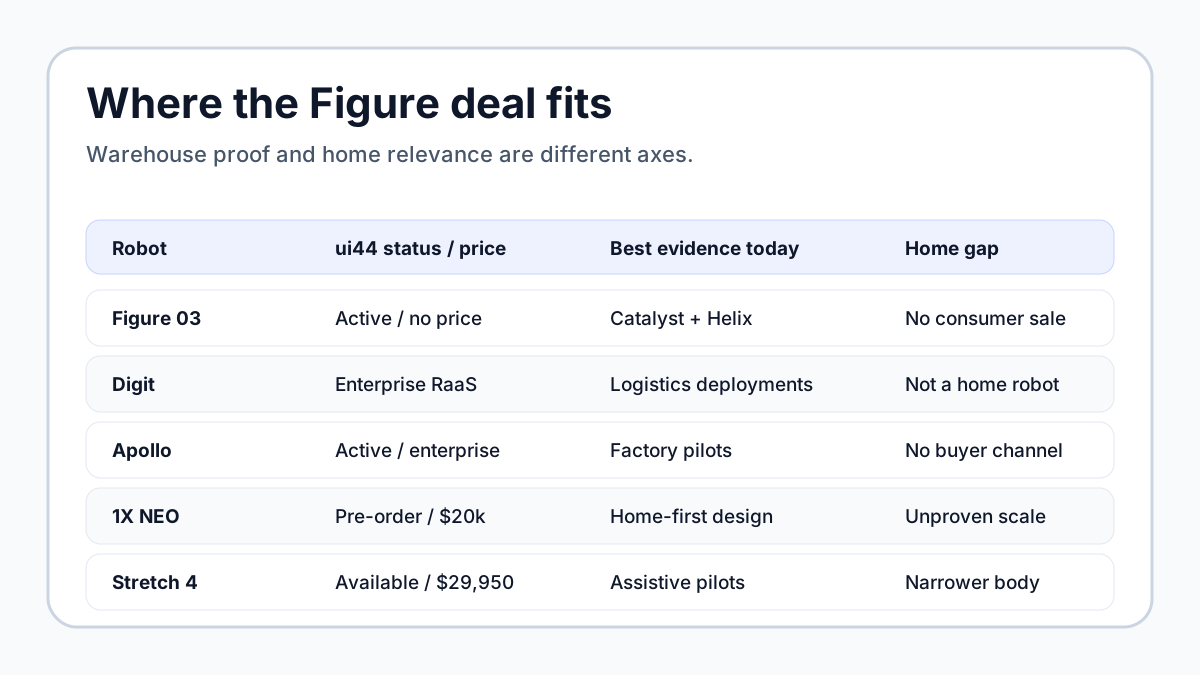
The most useful comparison is not "which robot is coolest?" It is which kind of evidence each robot has. Digit has logistics credibility and an enterprise robots-as-a-service (RaaS) model, but it is not a home robot. Apollo has factory-pilot positioning and a heavy-payload industrial story, but no public consumer pricing. Unitree G1 is available from about $13,500 as a compact research humanoid, yet that does not make it a reliable household worker. Stretch 4 is far more credible for assistive home pilot work, but it is a mobile manipulator rather than a full humanoid.
Robot
- ui44 status and price
- Active; no announced public price
- Strongest current evidence
- Helix demos, BotQ scale story, Figure logistics momentum
- Home-buyer caveat
- No consumer sale, pricing, or home service model
Robot
- ui44 status and price
- Active enterprise RaaS; no public price
- Strongest current evidence
- Warehouse/logistics deployments and fleet workflow focus
- Home-buyer caveat
- Purpose-built for commercial work, not homes
Robot
- ui44 status and price
- Active enterprise robot; no public price
- Strongest current evidence
- Factory and logistics pilots, about 25 kg payload
- Home-buyer caveat
- No consumer channel or home evidence
Robot
- ui44 status and price
- Pre-order; $20,000
- Strongest current evidence
- Home-first soft humanoid design
- Home-buyer caveat
- Must still prove delivery, autonomy, and support at scale
Robot
- ui44 status and price
- Available; $29,950
- Strongest current evidence
- Real-home assistive pilot direction, 8-hour light-load runtime
- Home-buyer caveat
- Narrower arm-on-base design, not a general humanoid
Robot
- ui44 status and price
- Available; from $13,500
- Strongest current evidence
- Affordable research platform, compact body
- Home-buyer caveat
- Developer platform; not a supported home helper
| Robot | ui44 status and price | Strongest current evidence | Home-buyer caveat |
|---|---|---|---|
| Figure 03 | Active; no announced public price | Helix demos, BotQ scale story, Figure logistics momentum | No consumer sale, pricing, or home service model |
| Digit | Active enterprise RaaS; no public price | Warehouse/logistics deployments and fleet workflow focus | Purpose-built for commercial work, not homes |
| Apptronik Apollo | Active enterprise robot; no public price | Factory and logistics pilots, about 25 kg payload | No consumer channel or home evidence |
| 1X NEO | Pre-order; $20,000 | Home-first soft humanoid design | Must still prove delivery, autonomy, and support at scale |
| Stretch 4 | Available; $29,950 | Real-home assistive pilot direction, 8-hour light-load runtime | Narrower arm-on-base design, not a general humanoid |
| Unitree G1 | Available; from $13,500 | Affordable research platform, compact body | Developer platform; not a supported home helper |
This is where the Catalyst deal is valuable. Figure now has a clearer bridge between lab autonomy and customer operations. It still has to cross a second bridge from customer operations to private homes.
Does the Catalyst deal mean a Figure home robot is ready?
No. It means Figure's humanoid program is becoming more commercially testable.
That is still a big deal. Home robots will not become trustworthy because a company publishes one perfect video. They will become trustworthy when they survive boring operating conditions: thousands of hours, predictable service, clear escalation, measurable safety, transparent pricing, and useful work that is repeated day after day.
A warehouse can generate some of that proof sooner than a home. It can show that a humanoid fleet charges itself, recovers from faults, works near people, handles object variation, and improves from real operational data. If Figure publishes those metrics from Catalyst, the deal becomes much more buyer-relevant.
Until then, treat the announcement as a strong signal, not a buying trigger. It raises Figure's credibility in commercial humanoid logistics. It does not change the current consumer answer: Figure humanoids are not something a household can buy, finance, insure, or schedule for repairs today.
What should buyers watch next?
Watch for operating numbers, not adjectives. The first useful disclosures would be fleet size, weekly robot hours, packages handled, packages per hour, barcode or task success rate, human intervention rate, injury or safety reporting, charging cadence, repair time, and whether the robots expand from sequencing support into more complete sorting and packing workflows.
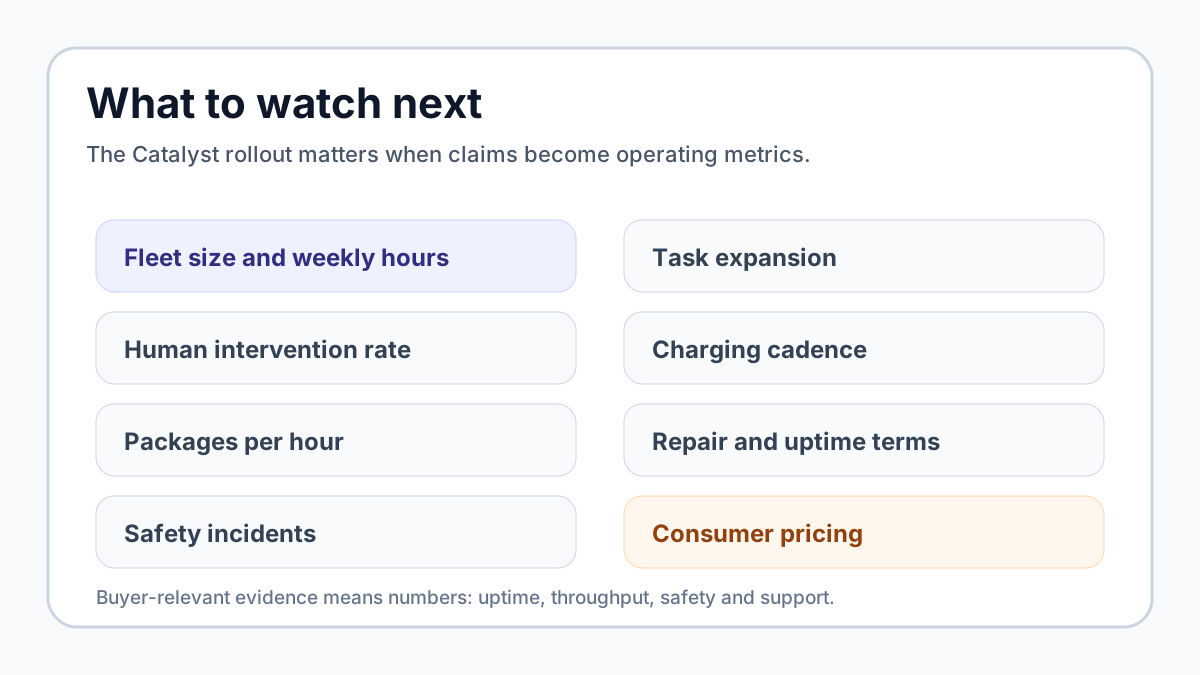
Also watch whether Figure connects Catalyst learnings back to the home-facing features in Figure 03: soft goods, lower mass than Figure 02, palm cameras, tactile fingertips, wireless charging, audio for voice interaction, and safer battery design. Those are the features that could matter in a house. The warehouse will mostly test whether the underlying autonomy, fleet operations, and hardware reliability are mature enough to deserve a home trial.
If you are comparing robots today, use /compare and focus on the body of evidence, not just the body shape. A humanoid with a customer deployment is more credible than a humanoid with only a launch video. A home robot with a shipping channel, price, and support path is more actionable than both.
Bottom line
The Figure-Catalyst deal is one of the better pieces of humanoid evidence in 2026 because it moves Figure humanoids into a named third-party logistics environment. It proves that Figure has a serious commercial test bed, a specific workflow, and a customer willing to connect humanoids to real operations.
It does not prove home readiness. For that, buyers still need disclosed uptime, safety, support, pricing, service, and task-performance data in environments that look more like houses than distribution centers.
That is the honest read: the Catalyst deal makes Figure's home-robot roadmap more credible, not consumer-ready.
Database context
Use this article as a privacy verification workflow
Turn the article into a real verification pass
Figure Catalyst Deal: What It Proves for Homes already points you toward 7 linked robots, 6 manufacturers, and 3 countries inside the ui44 database. That matters because strong buyer guidance is easier to apply when you can move immediately from a claim or warning into concrete product pages, manufacturer directories, component explainers, and country-level context instead of treating the article as an isolated opinion piece. The fastest next step is to turn the article into a shortlist workflow: open the linked robot pages, verify which specs are actually published for those models, then compare the surrounding manufacturer and component context before you decide whether the underlying claim changes your buying plan.
For this topic, the useful discipline is to separate the editorial lesson from the catalog evidence. The article gives you the framing, but the robot pages tell you what each product actually ships with today: sensor stack, connectivity methods, listed price, release timing, category, and support-relevant compatibility notes. The manufacturer pages then show whether you are looking at a one-off launch, a broader lineup pattern, or a company that spans multiple categories. That layered workflow reduces the risk of buying on a single marketing phrase or a single support FAQ.
Use the robot pages to confirm which products actually expose cameras, microphones, Wi-Fi, or voice systems, then use the manufacturer pages to decide how much of the privacy question seems product-specific versus brand-wide. On this route cluster, Figure 03, Figure 02, and NEO form the fastest reality check. If you want a quick working shortlist, open Compare Figure 03, Figure 02, and NEO next, then keep this article open as the reasoning layer while you compare structured data side by side.
Practical Takeaway
Every robot, manufacturer, category, component, and country reference below resolves to a real ui44 page, keeping the follow-up path grounded in database records rather than generic advice.
Suggested next steps in ui44
- Open Figure 03 and note the listed sensors, connectivity methods, and voice stack before you interpret any policy claim.
- Cross-check the wider brand context on Figure AI so you can see whether the privacy question touches one model or a broader lineup.
- Use the linked component pages to confirm how common the relevant sensors and connectivity layers are across the database.
- Keep a short note of which policy layers you checked, which device features are actually present on the robot page, and which items still depend on region- or app-level confirmation.
- Finish with Compare Figure 03, Figure 02, and NEO so the policy reading sits next to structured product data.
Database context
Robot profiles worth opening next
Use the linked product pages as the evidence layer
The linked robot pages are where this article becomes operational. Instead of asking whether the headline is interesting, use the robot entries to inspect the actual mix of sensors, connectivity options, batteries, pricing, release timing, and stated capabilities attached to the products mentioned in the article. That is the easiest way to see whether the warning or opportunity described here affects one product family, a specific design pattern, or an entire buying lane.
Figure 03 is tracked on ui44 as a active humanoid robot from Figure AI. The database currently records a listed price of Price TBA, a release date of 2025-10-09, ~5 hours battery life, Not disclosed charging time, and a published stack that includes Stereo Vision, Depth Cameras, and Force Sensors plus Wi-Fi and Bluetooth.
For privacy-focused reading, this page matters because it shows the concrete device surface behind the policy discussion. Use it to verify whether Figure 03 combines sensors and connectivity in a way that could change the in-home data footprint, and compare the listed capabilities such as Complex Manipulation, Warehouse Work, and Manufacturing Tasks with any cloud, app, or voice layers.
Figure 02 is tracked on ui44 as a discontinued humanoid robot from Figure AI. The database currently records a listed price of Price TBA, a release date of 2024-08-06, Not disclosed (50% greater capacity than Figure 01) battery life, Not disclosed charging time, and a published stack that includes 6 RGB Cameras, Onboard Vision Language Model, and Microphones plus Wi-Fi and Bluetooth.
For privacy-focused reading, this page matters because it shows the concrete device surface behind the policy discussion. Use it to verify whether Figure 02 combines sensors and connectivity in a way that could change the in-home data footprint, and compare the listed capabilities such as Autonomous Task Execution, Speech-to-Speech Conversation, and Pick and Place with any cloud, app, or voice layers, including OpenAI Custom Model.
NEO
1X Technologies · Humanoid · Pre-order
NEO is tracked on ui44 as a pre-order humanoid robot from 1X Technologies. The database currently records a listed price of $20,000, a release date of 2025-10-28, ~4 hours battery life, Not disclosed charging time, and a published stack that includes RGB Cameras, Depth Sensors, and Tactile Skin plus Wi-Fi and Bluetooth.
For privacy-focused reading, this page matters because it shows the concrete device surface behind the policy discussion. Use it to verify whether NEO combines sensors and connectivity in a way that could change the in-home data footprint, and compare the listed capabilities such as Household Chores, Tidying Up, and Safe Human Interaction with any cloud, app, or voice layers.
Stretch 4
Hello Robot · Home Assistants · Available
Stretch 4 is tracked on ui44 as a available home assistants robot from Hello Robot. The database currently records a listed price of $29,950, a release date of 2026-05-12, 8 hours (light CPU load) battery life, Not officially disclosed charging time, and a published stack that includes Wide-FOV depth sensing, High-resolution RGB cameras, and Calibrated RGB + depth perception plus its listed connectivity stack.
For privacy-focused reading, this page matters because it shows the concrete device surface behind the policy discussion. Use it to verify whether Stretch 4 combines sensors and connectivity in a way that could change the in-home data footprint, and compare the listed capabilities such as Mobile Manipulation, Omnidirectional Indoor Mobility, and Autonomous Mapping and Navigation with any cloud, app, or voice layers.
Digit is tracked on ui44 as a active humanoid robot from Agility. The database currently records a listed price of Price TBA, a release date of 2023, ~4 hours battery life, ~2 hours charging time, and a published stack that includes LiDAR, RGB-D Cameras, and IMU plus Wi-Fi and 5G.
For privacy-focused reading, this page matters because it shows the concrete device surface behind the policy discussion. Use it to verify whether Digit combines sensors and connectivity in a way that could change the in-home data footprint, and compare the listed capabilities such as Box Carrying (16kg), Stair Navigation, and Warehouse Operations with any cloud, app, or voice layers.
Database context
Manufacturer context behind the article
Check whether this is one product story or a broader company pattern
Manufacturer pages add the privacy context that individual product pages cannot show on their own. They help you check whether cameras, microphones, cloud accounts, app controls, and policy assumptions appear across a broader lineup or stay tied to one specific product story.
Figure AI
ui44 currently tracks 2 robots from Figure AI across 1 category. The company is grouped under USA, and the current catalog footprint on ui44 includes Figure 03, Figure 02.
That wider brand context matters because privacy questions rarely stop at one FAQ page. A manufacturer route helps you see whether the article is centered on one premium model or on a company that has several relevant products and therefore more than one place where the same policy or app assumptions might matter. The category mix here currently points toward Humanoid as the most useful next route if you want to see whether this article reflects a wider pattern inside the brand.
1X Technologies
ui44 currently tracks 2 robots from 1X Technologies across 1 category. The company is grouped under Norway, and the current catalog footprint on ui44 includes NEO, EVE.
That wider brand context matters because privacy questions rarely stop at one FAQ page. A manufacturer route helps you see whether the article is centered on one premium model or on a company that has several relevant products and therefore more than one place where the same policy or app assumptions might matter. The category mix here currently points toward Humanoid as the most useful next route if you want to see whether this article reflects a wider pattern inside the brand.
Hello Robot
ui44 currently tracks 2 robots from Hello Robot across 1 category. The company is grouped under USA, and the current catalog footprint on ui44 includes Stretch 3, Stretch 4.
That wider brand context matters because privacy questions rarely stop at one FAQ page. A manufacturer route helps you see whether the article is centered on one premium model or on a company that has several relevant products and therefore more than one place where the same policy or app assumptions might matter. The category mix here currently points toward Home Assistants as the most useful next route if you want to see whether this article reflects a wider pattern inside the brand.
Agility
ui44 currently tracks 1 robot from Agility across 1 category. The company is grouped under USA, and the current catalog footprint on ui44 includes Digit.
That wider brand context matters because privacy questions rarely stop at one FAQ page. A manufacturer route helps you see whether the article is centered on one premium model or on a company that has several relevant products and therefore more than one place where the same policy or app assumptions might matter. The category mix here currently points toward Humanoid as the most useful next route if you want to see whether this article reflects a wider pattern inside the brand.
Database context
Broaden the scan without leaving the database
Categories, components, and countries add the wider context
Category framing
Category pages are useful when the article touches a buying pattern that shows up across brands. A category route helps you confirm whether the linked products sit in a narrow niche or whether the same question should be tested across a larger field of alternatives.
Humanoid
The Humanoid category page currently groups 99 tracked robots from 70 manufacturers. ui44 describes this lane as: Full-size bipedal humanoid robots designed to work alongside humans. From factory floors to household tasks, these machines represent the cutting edge of robotics.
That makes the category route a practical follow-up when you want to check whether the products linked in this article are typical for the lane or whether they sit at one edge of the market. Useful starting examples currently include NEO, EVE, Mornine M1.
Home Assistants
The Home Assistants category page currently groups 15 tracked robots from 14 manufacturers. ui44 describes this lane as: Arm-based household helpers — laundry folders, kitchen robots, and mobile manipulators that handle physical tasks at home.
That makes the category route a practical follow-up when you want to check whether the products linked in this article are typical for the lane or whether they sit at one edge of the market. Useful starting examples currently include Robody, Futuring 2 (F2), Stretch 3.
Country and ecosystem context
Country pages give extra context when support practices, launch sequencing, regulatory posture, or manufacturer mix matter. They are not a substitute for model-level verification, but they do help you see which ecosystems cluster together and which manufacturers sit in the same regional field when you broaden the search beyond the article headline.
USA
The USA route currently groups 71 tracked robots from 56 manufacturers in ui44. That gives you a useful regional lens when the article points toward support practices, launch sequencing, or brand clusters that may share similar ecosystem assumptions.
On the current route, manufacturers like iRobot, Boston Dynamics, Faraday Future make the page a good way to broaden the scan without losing the regional context that often shapes availability, documentation style, and adjacent alternatives.
Norway
The Norway route currently groups 2 tracked robots from 1 manufacturers in ui44. That gives you a useful regional lens when the article points toward support practices, launch sequencing, or brand clusters that may share similar ecosystem assumptions.
On the current route, manufacturers like 1X Technologies make the page a good way to broaden the scan without losing the regional context that often shapes availability, documentation style, and adjacent alternatives.
China
The China route currently groups 157 tracked robots from 71 manufacturers in ui44. That gives you a useful regional lens when the article points toward support practices, launch sequencing, or brand clusters that may share similar ecosystem assumptions.
On the current route, manufacturers like AGIBOT, Dreame, Unitree Robotics make the page a good way to broaden the scan without losing the regional context that often shapes availability, documentation style, and adjacent alternatives.
Database context
Questions to answer before you move from reading to buying
A follow-up FAQ built from the entities already linked in this article
Frequently Asked Questions
Which page should I open first after reading “Figure Catalyst Deal: What It Proves for Homes”?
Start with Figure 03. That gives you a concrete product anchor for the article’s main claim. From there, branch into the manufacturer and component pages so you can tell whether the article is describing one specific model, a repeated brand pattern, or a wider technology issue that affects multiple shortlist options.
How do the manufacturer pages change the buying decision?
Figure AI help you zoom out from one article and one product. On ui44 they show lineup breadth, category spread, and the neighboring robots tied to the same company. That context is useful when you are deciding whether a risk belongs to a single model, whether it shows up across a brand’s portfolio, and whether you should keep looking at alternatives before committing.
When should I switch from reading to side-by-side comparison?
Move into Compare Figure 03, Figure 02, and NEO as soon as you understand the article’s main warning or promise. The article explains what to watch for, but the compare view is where you can check whether price, status, battery life, connectivity, sensors, and category fit still make the robot a good match for your own home and budget.
Database context
Where to go next in ui44
Keep the research chain inside the database
If you want to keep going, these follow-on pages give you the cleanest expansion path from article to research session. Open the comparison route first if you are deciding between products today. Open the manufacturer, category, and component routes if you still need to understand the broader pattern behind the claim.
Written by
ui44 Team
Published May 31, 2026
Share this article
Open a plain share link on X or Bluesky. No embeds, no widgets, no cookie baggage.