The short answer is that Figure 03 makes the demo more interesting, but not because it suddenly turns a humanoid into a consumer appliance. It matters because the new hardware claims line up with the weak spots that usually break home manipulation: occluded grasps, slipping objects, soft materials, household safety, docking, serviceability, and manufacturing cost.

That distinction is important for buyers. A robot that can tidy one staged room once is a demo. A robot with the sensors, hands, battery, charging, soft goods, and production plan to repeat that behavior in many homes is closer to a product roadmap. Figure is still on the roadmap side, not the shopping-cart side.
What is new compared with the older tidy benchmark?
The older living-room-tidy takeaway was about the task: clutter is a better test than dancing, backflips, or a single tabletop grasp. The newer question is about whether Figure 03's body fixes the specific reasons those demos usually fail.
Figure's official Figure 03 launch names three home-relevant changes that the previous benchmark could not evaluate directly:
- New hands and sensing: palm cameras, softer fingertips, and tactile sensors that Figure says can detect forces as small as three grams.
- Home usability work: soft textiles, multi-density foam near pinch points, washable/removable soft goods, better audio, wireless inductive charging, and battery safety work including UN38.3 certification.
- Manufacturing intent: a BotQ line that Figure says is initially capable of up to 12,000 humanoids per year, with a target of 100,000 robots over four years.
Those are not cosmetic claims. They are exactly the categories that separate a lab humanoid from a home robot. A household robot has to feel contact, see what its hand is doing when the head camera is blocked, survive contact with furniture, recharge without a human plugging it in, and be buildable at a cost that eventually reaches normal buyers.
The Figure 03 hardware claims that matter most
Figure's Helix 02 technical post says the system now combines a semantic reasoning layer, a fast visuomotor policy, and a learned whole-body controller. The headline numbers are useful: System 1 produces full-body joint targets at 200 Hz, System 0 runs at 1 kHz for balance and contact, and Figure says System 0 was trained on more than 1,000 hours of human motion data across more than 200,000 parallel simulation environments.
That architecture is interesting, but home buyers should anchor on the hardware claims because hardware is where household work gets messy.
Figure 03 feature
Palm cameras
- Why it matters at home
- A head camera may not see inside a cabinet, under a hand, or around a towel.
- Buyer caveat
- We still need repeatability data across many homes, not one video.
Figure 03 feature
Fingertip tactile sensors
- Why it matters at home
- Slip, pressure, and fragile-object handling require contact feedback.
- Buyer caveat
- Figure has not published consumer reliability or repair terms.
Figure 03 feature
Softer fingertips and textiles
- Why it matters at home
- Hard robot parts are a bad fit around furniture, people, and pets.
- Buyer caveat
- Soft goods wear out and need a service model.
Figure 03 feature
Wireless 2 kW inductive charging
- Why it matters at home
- A home robot should dock itself instead of waiting for manual charging.
- Buyer caveat
- Docking behavior in crowded homes is still unproven.
Figure 03 feature
Fleet data offload
- Why it matters at home
- More home examples could improve the model over time.
- Buyer caveat
- Privacy, data retention, and permission controls matter.
Figure 03 feature
BotQ manufacturing plan
- Why it matters at home
- A robot cannot become a home category if it stays a hand-built prototype.
- Buyer caveat
- Production capacity is not the same as consumer availability.
| Figure 03 feature | Why it matters at home | Buyer caveat |
|---|---|---|
| Palm cameras | A head camera may not see inside a cabinet, under a hand, or around a towel. | We still need repeatability data across many homes, not one video. |
| Fingertip tactile sensors | Slip, pressure, and fragile-object handling require contact feedback. | Figure has not published consumer reliability or repair terms. |
| Softer fingertips and textiles | Hard robot parts are a bad fit around furniture, people, and pets. | Soft goods wear out and need a service model. |
| Wireless 2 kW inductive charging | A home robot should dock itself instead of waiting for manual charging. | Docking behavior in crowded homes is still unproven. |
| Fleet data offload | More home examples could improve the model over time. | Privacy, data retention, and permission controls matter. |
| BotQ manufacturing plan | A robot cannot become a home category if it stays a hand-built prototype. | Production capacity is not the same as consumer availability. |
The most important thread is redundancy. A home robot needs multiple ways to know what is happening: vision from the head, close-range hand vision, tactile feedback, joint state, force sensing, and language-level task context. If one of those channels fails, the robot should slow down, ask, retry, or stop. That is a much higher bar than completing a clean take for a launch video.
What the living-room demo still proves
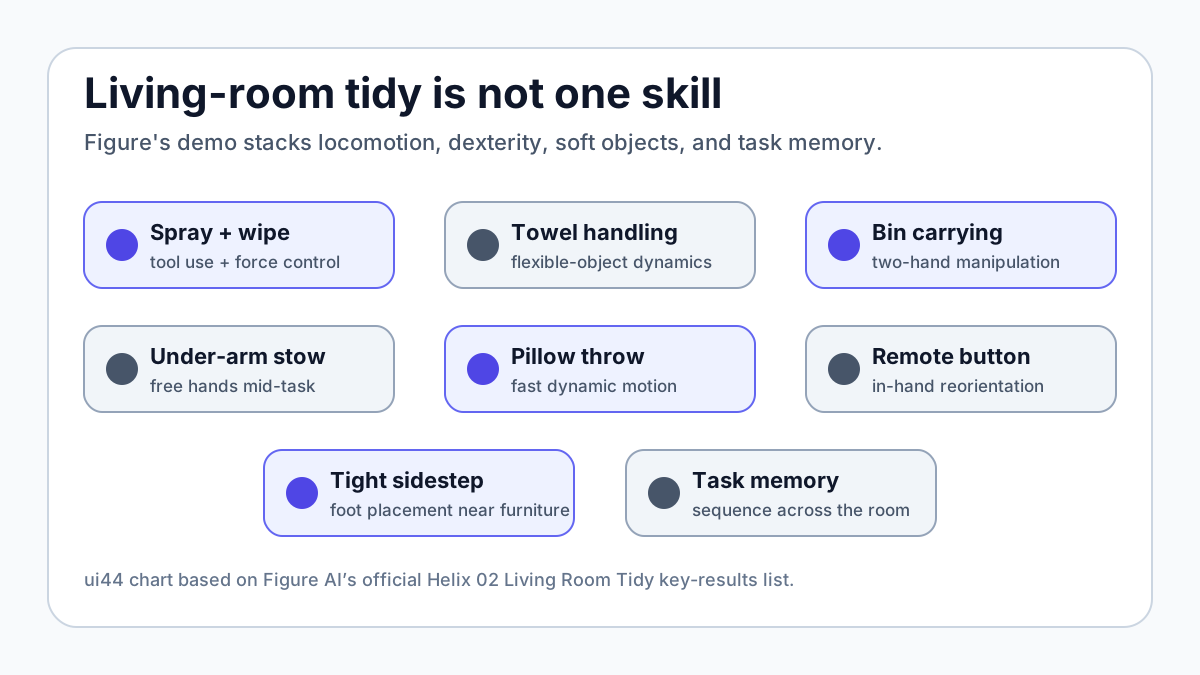
Figure's living-room clip is still worth taking seriously. The company says Helix 02 learned the new behavior by adding data, with no new algorithms or special-case engineering. In the demo, the robot uses a spray bottle, wipes a surface, manages a towel, holds a bin with two hands, scoops blocks into it, tucks a container under one arm, tosses a pillow, reorients a TV remote, presses a button, stows tools while walking, and side-steps through a narrow path.
Those actions are not random. They are the right primitives for a home humanoid:
- loco-manipulation, because the robot moves while carrying or using objects;
- bimanual handling, because many chores need both hands;
- soft-object interaction, because towels, pillows, clothing, and blankets do not behave like blocks;
- in-hand adjustment, because a remote, bottle, cup, or toy is rarely already aligned correctly;
- temporary object storage, because real chores often require freeing one hand in the middle of the task;
- tight-space navigation, because homes are not open factory aisles.
This is stronger evidence than a humanoid walking on stage. It is also not proof that Figure 03 can tidy your living room next year. The demo does not publish success rates, number of attempts, runtime, intervention count, child or pet interruptions, privacy settings, cleaning-material limits, fragile-object policies, or what happens when the room is rearranged.
The Figure 02 factory baseline helps, but only so much
Figure has one advantage many home-robot claims do not: an industrial deployment history. In the ui44 database, Figure 02 is marked as a retired industrial humanoid with a 168 cm body, 70 kg weight, 20 kg payload, 16-DOF hands, and a BMW Spartanburg deployment where Figure says the robot contributed to more than 30,000 cars across 1,250+ runtime hours.
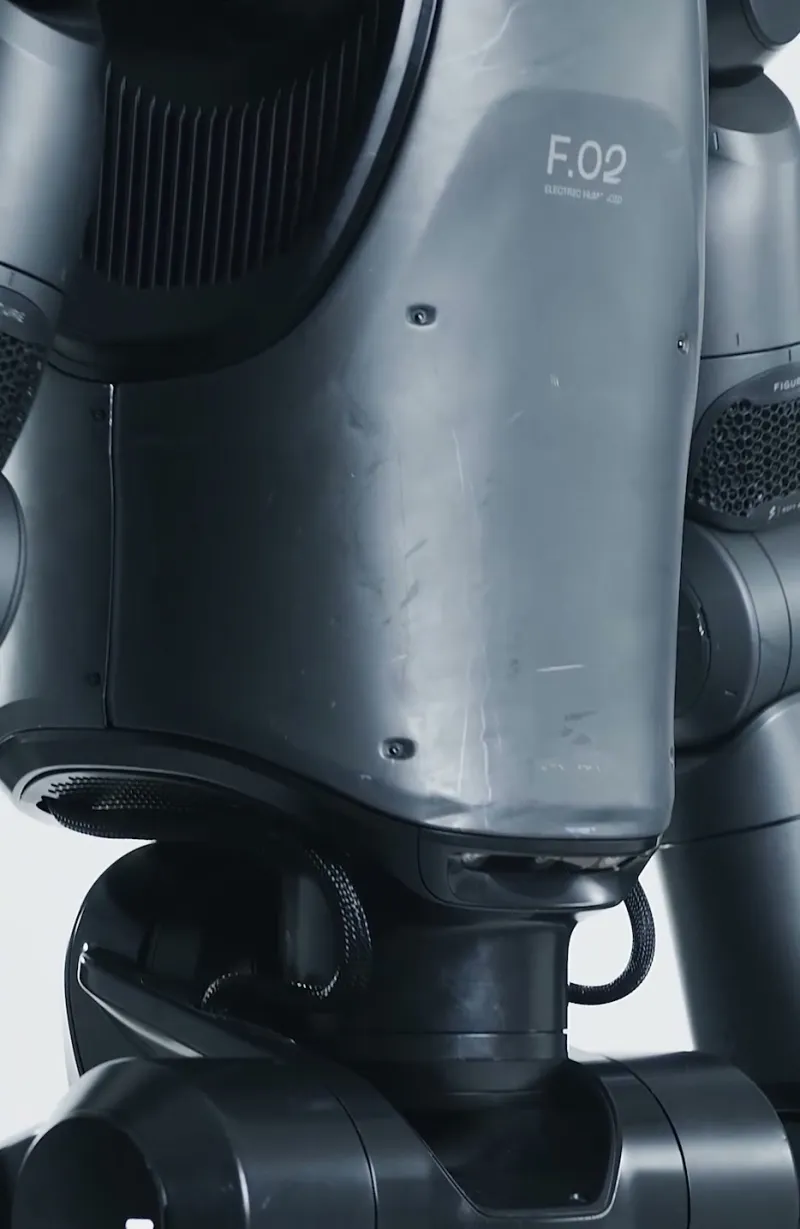
That matters because factory runtime is better than a pure lab reel. It suggests Figure can ship hardware into a controlled worksite, gather data, retire a platform, and iterate to a new generation.
But the home is less forgiving than a factory in different ways. A plant has trained staff, marked work cells, emergency procedures, known tasks, and a business case for supervision. A home has pets, glassware, loose cables, children, spilled food, awkward furniture, and objects the robot should not move at all. The home problem is not just manipulation. It is permission, judgment, and support.
How Figure 03 compares with other home-manipulation paths
The ui44 database is useful here because Figure is not the only route toward home manipulation. A walking humanoid is one architecture. A wheeled mobile manipulator, a lighter home humanoid, or a compact developer platform may be more realistic for early buyers.
Robot
- ui44 database snapshot
- Active humanoid; no public price; 173 cm; 61 kg; ~5h battery; 20 kg payload; tactile arrays, force sensors, stereo/depth vision, Helix VLA.
- What it tells buyers
- Best evidence story around whole-body humanoid autonomy, but not a consumer product.
Robot
- ui44 database snapshot
- Pre-order; $20,000 early-adopter price; 167 cm; 30 kg; ~4h battery; depth sensors and tactile skin.
- What it tells buyers
- More explicit home positioning and lighter body, but still needs delivered reliability.
Robot
- ui44 database snapshot
- Available; $29,950; 160 cm; 46 kg; 8h light-load runtime; self-charging; 2.5 kg extended / 4 kg retracted payload.
- What it tells buyers
- Less humanoid, more practical as a current mobile-manipulation baseline.
Robot
- ui44 database snapshot
- Available; starts at $13,500; 132 cm; 35 kg; ~2h battery; optional dexterous hands; research/developer orientation.
- What it tells buyers
- Lower price does not equal safe autonomous housework.
Robot
- ui44 database snapshot
- Pre-order; €19,999 Standard / €29,999 Pro; 132 cm; 36 kg; ~2.5h battery; 3 kg payload; Pro adds 12-DOF hands.
- What it tells buyers
- A compact Western humanoid path, but still pre-order and not a proven chore appliance.
| Robot | ui44 database snapshot | What it tells buyers |
|---|---|---|
| Figure 03 | Active humanoid; no public price; 173 cm; 61 kg; ~5h battery; 20 kg payload; tactile arrays, force sensors, stereo/depth vision, Helix VLA. | Best evidence story around whole-body humanoid autonomy, but not a consumer product. |
| 1X NEO | Pre-order; $20,000 early-adopter price; 167 cm; 30 kg; ~4h battery; depth sensors and tactile skin. | More explicit home positioning and lighter body, but still needs delivered reliability. |
| Hello Robot Stretch 4 | Available; $29,950; 160 cm; 46 kg; 8h light-load runtime; self-charging; 2.5 kg extended / 4 kg retracted payload. | Less humanoid, more practical as a current mobile-manipulation baseline. |
| Unitree G1 | Available; starts at $13,500; 132 cm; 35 kg; ~2h battery; optional dexterous hands; research/developer orientation. | Lower price does not equal safe autonomous housework. |
| NEURA 4NE-1 Mini | Pre-order; €19,999 Standard / €29,999 Pro; 132 cm; 36 kg; ~2.5h battery; 3 kg payload; Pro adds 12-DOF hands. | A compact Western humanoid path, but still pre-order and not a proven chore appliance. |
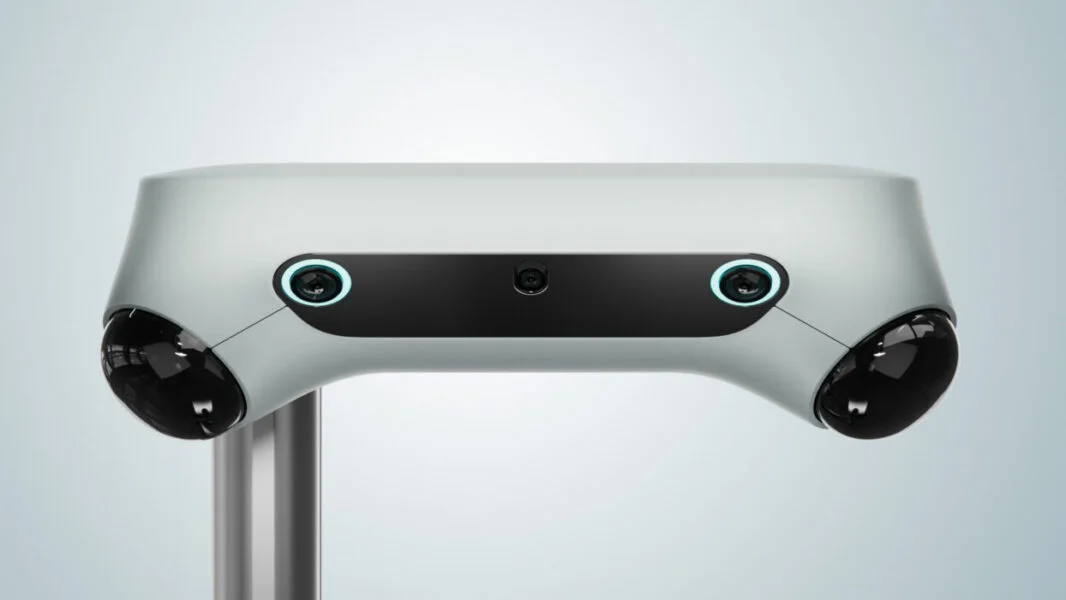
Stretch 4 is the useful reality check. It does not need legs to reach into a home environment. It has a real list price, a self-charging dock, open ROS 2 and Python tooling, and a clearer research/assistive pathway. If your question is "what can be tested in homes now?", a wheeled mobile manipulator may be more credible than a bipedal humanoid with a stronger video.
1X NEO is the other comparison because it is explicitly home-focused. In ui44, NEO is much lighter than Figure 03 at 30 kg versus 61 kg, with a soft body, tactile skin, and a public $20,000 early-adopter price. That does not make NEO solved, but it shows the trade-off: Figure's evidence is technically deeper around full-body autonomy, while 1X has clearer consumer positioning.

What evidence is still missing before this is a home product?
A publishable home-robot claim needs more than a chore list. For Figure 03, the next useful evidence would be:
- Repeat trials across different homes. The same task in ten ordinary rooms would mean more than one polished environment.
- Success and failure numbers. Buyers need completion rate, drop rate, collision rate, intervention rate, and average task time.
- Human-presence tests. The robot should show what happens when a person, child, or pet enters the scene.
- Permission controls. Cleaning, moving objects, pressing buttons, opening storage, and handling medicine need user-set boundaries.
- Privacy controls. Palm cameras, head cameras, audio, and data offload are powerful; they need clear retention and opt-out rules.
- Service terms. Hands, tactile fingertips, textiles, batteries, and docks will wear. The buyer question is who repairs them and at what cost.
- Launch terms. No public consumer price, support plan, delivery region, or in-home warranty means this is not yet a buying decision.
That is not a criticism of Figure specifically. It is the right bar for every home-humanoid company. The closer a robot gets to useful chores, the more it needs boring product answers.
Should home-robot buyers care now?
Yes, but as evidence, not as a purchase signal.
Figure 03 and Helix 02 deserve attention because the story is now more coherent than a typical humanoid hype cycle. The software demonstrates long-horizon, whole-body manipulation. The hardware adds tactile fingertips, palm cameras, softer materials, inductive charging, and home-safety design work. The company also has factory deployment experience with Figure 02 and a stated manufacturing plan through BotQ.
The caveat is just as clear: Figure 03 is not listed in the ui44 database as a consumer-available robot, has no public price, and has no published consumer support model. A buyer should not treat the living-room demo as proof that a robot can safely clean an arbitrary home unattended.
The practical takeaway is this: Figure has moved the conversation from "can a humanoid perform a neat trick?" to "can a humanoid hardware-and-AI stack become a repeatable home product?" That is real progress. It is also still a question, not an answer.
Sources & References
Database context
Use this article as a privacy verification workflow
Turn the article into a real verification pass
Figure 03 Home Robot: What the Helix Demo Proves already points you toward 6 linked robots, 5 manufacturers, and 4 countries inside the ui44 database. That matters because strong buyer guidance is easier to apply when you can move immediately from a claim or warning into concrete product pages, manufacturer directories, component explainers, and country-level context instead of treating the article as an isolated opinion piece. The fastest next step is to turn the article into a shortlist workflow: open the linked robot pages, verify which specs are actually published for those models, then compare the surrounding manufacturer and component context before you decide whether the underlying claim changes your buying plan.
For this topic, the useful discipline is to separate the editorial lesson from the catalog evidence. The article gives you the framing, but the robot pages tell you what each product actually ships with today: sensor stack, connectivity methods, listed price, release timing, category, and support-relevant compatibility notes. The manufacturer pages then show whether you are looking at a one-off launch, a broader lineup pattern, or a company that spans multiple categories. That layered workflow reduces the risk of buying on a single marketing phrase or a single support FAQ.
Use the robot pages to confirm which products actually expose cameras, microphones, Wi-Fi, or voice systems, then use the manufacturer pages to decide how much of the privacy question seems product-specific versus brand-wide. On this route cluster, Figure 02, Figure 03, and NEO form the fastest reality check. If you want a quick working shortlist, open Compare Figure 02, Figure 03, and NEO next, then keep this article open as the reasoning layer while you compare structured data side by side.
Practical Takeaway
Every robot, manufacturer, category, component, and country reference below resolves to a real ui44 page, keeping the follow-up path grounded in database records rather than generic advice.
Suggested next steps in ui44
- Open Figure 02 and note the listed sensors, connectivity methods, and voice stack before you interpret any policy claim.
- Cross-check the wider brand context on Figure AI so you can see whether the privacy question touches one model or a broader lineup.
- Use the linked component pages to confirm how common the relevant sensors and connectivity layers are across the database.
- Keep a short note of which policy layers you checked, which device features are actually present on the robot page, and which items still depend on region- or app-level confirmation.
- Finish with Compare Figure 02, Figure 03, and NEO so the policy reading sits next to structured product data.
Database context
Robot profiles worth opening next
Use the linked product pages as the evidence layer
The linked robot pages are where this article becomes operational. Instead of asking whether the headline is interesting, use the robot entries to inspect the actual mix of sensors, connectivity options, batteries, pricing, release timing, and stated capabilities attached to the products mentioned in the article. That is the easiest way to see whether the warning or opportunity described here affects one product family, a specific design pattern, or an entire buying lane.
Figure 02 is tracked on ui44 as a discontinued humanoid robot from Figure AI. The database currently records a listed price of Price TBA, a release date of 2024-08-06, Not disclosed (50% greater capacity than Figure 01) battery life, Not disclosed charging time, and a published stack that includes 6 RGB Cameras, Onboard Vision Language Model, and Microphones plus Wi-Fi and Bluetooth.
For privacy-focused reading, this page matters because it shows the concrete device surface behind the policy discussion. Use it to verify whether Figure 02 combines sensors and connectivity in a way that could change the in-home data footprint, and compare the listed capabilities such as Autonomous Task Execution, Speech-to-Speech Conversation, and Pick and Place with any cloud, app, or voice layers, including OpenAI Custom Model.
Figure 03 is tracked on ui44 as a active humanoid robot from Figure AI. The database currently records a listed price of Price TBA, a release date of 2025-10-09, ~5 hours battery life, Not disclosed charging time, and a published stack that includes Stereo Vision, Depth Cameras, and Force Sensors plus Wi-Fi and Bluetooth.
For privacy-focused reading, this page matters because it shows the concrete device surface behind the policy discussion. Use it to verify whether Figure 03 combines sensors and connectivity in a way that could change the in-home data footprint, and compare the listed capabilities such as Complex Manipulation, Warehouse Work, and Manufacturing Tasks with any cloud, app, or voice layers.
NEO
1X Technologies · Humanoid · Pre-order
NEO is tracked on ui44 as a pre-order humanoid robot from 1X Technologies. The database currently records a listed price of $20,000, a release date of 2025-10-28, ~4 hours battery life, Not disclosed charging time, and a published stack that includes RGB Cameras, Depth Sensors, and Tactile Skin plus Wi-Fi and Bluetooth.
For privacy-focused reading, this page matters because it shows the concrete device surface behind the policy discussion. Use it to verify whether NEO combines sensors and connectivity in a way that could change the in-home data footprint, and compare the listed capabilities such as Household Chores, Tidying Up, and Safe Human Interaction with any cloud, app, or voice layers.
Stretch 4
Hello Robot · Home Assistants · Available
Stretch 4 is tracked on ui44 as a available home assistants robot from Hello Robot. The database currently records a listed price of $29,950, a release date of 2026-05-12, 8 hours (light CPU load) battery life, Not officially disclosed charging time, and a published stack that includes Wide-FOV depth sensing, High-resolution RGB cameras, and Calibrated RGB + depth perception plus its listed connectivity stack.
For privacy-focused reading, this page matters because it shows the concrete device surface behind the policy discussion. Use it to verify whether Stretch 4 combines sensors and connectivity in a way that could change the in-home data footprint, and compare the listed capabilities such as Mobile Manipulation, Omnidirectional Indoor Mobility, and Autonomous Mapping and Navigation with any cloud, app, or voice layers.
G1 is tracked on ui44 as a available humanoid robot from Unitree. The database currently records a listed price of $13,500, a release date of 2024, ~2 hours battery life, Not disclosed charging time, and a published stack that includes Depth Camera, 3D LiDAR, and 4 Microphone Array plus Wi-Fi 6 and Bluetooth 5.2.
For privacy-focused reading, this page matters because it shows the concrete device surface behind the policy discussion. Use it to verify whether G1 combines sensors and connectivity in a way that could change the in-home data footprint, and compare the listed capabilities such as Bipedal Walking, Object Manipulation, and Dexterous Hands (optional Dex3-1) with any cloud, app, or voice layers.
Database context
Manufacturer context behind the article
Check whether this is one product story or a broader company pattern
Manufacturer pages add the privacy context that individual product pages cannot show on their own. They help you check whether cameras, microphones, cloud accounts, app controls, and policy assumptions appear across a broader lineup or stay tied to one specific product story.
Figure AI
ui44 currently tracks 2 robots from Figure AI across 1 category. The company is grouped under USA, and the current catalog footprint on ui44 includes Figure 03, Figure 02.
That wider brand context matters because privacy questions rarely stop at one FAQ page. A manufacturer route helps you see whether the article is centered on one premium model or on a company that has several relevant products and therefore more than one place where the same policy or app assumptions might matter. The category mix here currently points toward Humanoid as the most useful next route if you want to see whether this article reflects a wider pattern inside the brand.
1X Technologies
ui44 currently tracks 2 robots from 1X Technologies across 1 category. The company is grouped under Norway, and the current catalog footprint on ui44 includes NEO, EVE.
That wider brand context matters because privacy questions rarely stop at one FAQ page. A manufacturer route helps you see whether the article is centered on one premium model or on a company that has several relevant products and therefore more than one place where the same policy or app assumptions might matter. The category mix here currently points toward Humanoid as the most useful next route if you want to see whether this article reflects a wider pattern inside the brand.
Hello Robot
ui44 currently tracks 2 robots from Hello Robot across 1 category. The company is grouped under USA, and the current catalog footprint on ui44 includes Stretch 3, Stretch 4.
That wider brand context matters because privacy questions rarely stop at one FAQ page. A manufacturer route helps you see whether the article is centered on one premium model or on a company that has several relevant products and therefore more than one place where the same policy or app assumptions might matter. The category mix here currently points toward Home Assistants as the most useful next route if you want to see whether this article reflects a wider pattern inside the brand.
Unitree
ui44 currently tracks 2 robots from Unitree across 1 category. The company is grouped under China, and the current catalog footprint on ui44 includes H1, G1.
That wider brand context matters because privacy questions rarely stop at one FAQ page. A manufacturer route helps you see whether the article is centered on one premium model or on a company that has several relevant products and therefore more than one place where the same policy or app assumptions might matter. The category mix here currently points toward Humanoid as the most useful next route if you want to see whether this article reflects a wider pattern inside the brand.
Database context
Broaden the scan without leaving the database
Categories, components, and countries add the wider context
Category framing
Category pages are useful when the article touches a buying pattern that shows up across brands. A category route helps you confirm whether the linked products sit in a narrow niche or whether the same question should be tested across a larger field of alternatives.
Humanoid
The Humanoid category page currently groups 98 tracked robots from 70 manufacturers. ui44 describes this lane as: Full-size bipedal humanoid robots designed to work alongside humans. From factory floors to household tasks, these machines represent the cutting edge of robotics.
That makes the category route a practical follow-up when you want to check whether the products linked in this article are typical for the lane or whether they sit at one edge of the market. Useful starting examples currently include NEO, EVE, Mornine M1.
Home Assistants
The Home Assistants category page currently groups 15 tracked robots from 14 manufacturers. ui44 describes this lane as: Arm-based household helpers — laundry folders, kitchen robots, and mobile manipulators that handle physical tasks at home.
That makes the category route a practical follow-up when you want to check whether the products linked in this article are typical for the lane or whether they sit at one edge of the market. Useful starting examples currently include Robody, Futuring 2 (F2), Stretch 3.
Country and ecosystem context
Country pages give extra context when support practices, launch sequencing, regulatory posture, or manufacturer mix matter. They are not a substitute for model-level verification, but they do help you see which ecosystems cluster together and which manufacturers sit in the same regional field when you broaden the search beyond the article headline.
USA
The USA route currently groups 19 tracked robots from 13 manufacturers in ui44. That gives you a useful regional lens when the article points toward support practices, launch sequencing, or brand clusters that may share similar ecosystem assumptions.
On the current route, manufacturers like Boston Dynamics, Figure AI, Hello Robot make the page a good way to broaden the scan without losing the regional context that often shapes availability, documentation style, and adjacent alternatives.
Norway
The Norway route currently groups 2 tracked robots from 1 manufacturers in ui44. That gives you a useful regional lens when the article points toward support practices, launch sequencing, or brand clusters that may share similar ecosystem assumptions.
On the current route, manufacturers like 1X Technologies make the page a good way to broaden the scan without losing the regional context that often shapes availability, documentation style, and adjacent alternatives.
China
The China route currently groups 60 tracked robots from 15 manufacturers in ui44. That gives you a useful regional lens when the article points toward support practices, launch sequencing, or brand clusters that may share similar ecosystem assumptions.
On the current route, manufacturers like AGIBOT, Unitree Robotics, Pudu Robotics make the page a good way to broaden the scan without losing the regional context that often shapes availability, documentation style, and adjacent alternatives.
Database context
Questions to answer before you move from reading to buying
A follow-up FAQ built from the entities already linked in this article
Frequently Asked Questions
Which page should I open first after reading “Figure 03 Home Robot: What the Helix Demo Proves”?
Start with Figure 02. That gives you a concrete product anchor for the article’s main claim. From there, branch into the manufacturer and component pages so you can tell whether the article is describing one specific model, a repeated brand pattern, or a wider technology issue that affects multiple shortlist options.
How do the manufacturer pages change the buying decision?
Figure AI help you zoom out from one article and one product. On ui44 they show lineup breadth, category spread, and the neighboring robots tied to the same company. That context is useful when you are deciding whether a risk belongs to a single model, whether it shows up across a brand’s portfolio, and whether you should keep looking at alternatives before committing.
When should I switch from reading to side-by-side comparison?
Move into Compare Figure 02, Figure 03, and NEO as soon as you understand the article’s main warning or promise. The article explains what to watch for, but the compare view is where you can check whether price, status, battery life, connectivity, sensors, and category fit still make the robot a good match for your own home and budget.
Database context
Where to go next in ui44
Keep the research chain inside the database
If you want to keep going, these follow-on pages give you the cleanest expansion path from article to research session. Open the comparison route first if you are deciding between products today. Open the manufacturer, category, and component routes if you still need to understand the broader pattern behind the claim.
Written by
ui44 Team
Published May 29, 2026
Share this article
Open a plain share link on X or Bluesky. No embeds, no widgets, no cookie baggage.