That matters for home robots, but not because anyone needs a robot to score in the hallway. It matters because homes are full of the same movement problems in less theatrical form: stepping around laundry, reaching while off balance, carrying objects without falling, recovering from a bad foot placement, and coordinating arms, legs, sensors, and intent as one system.
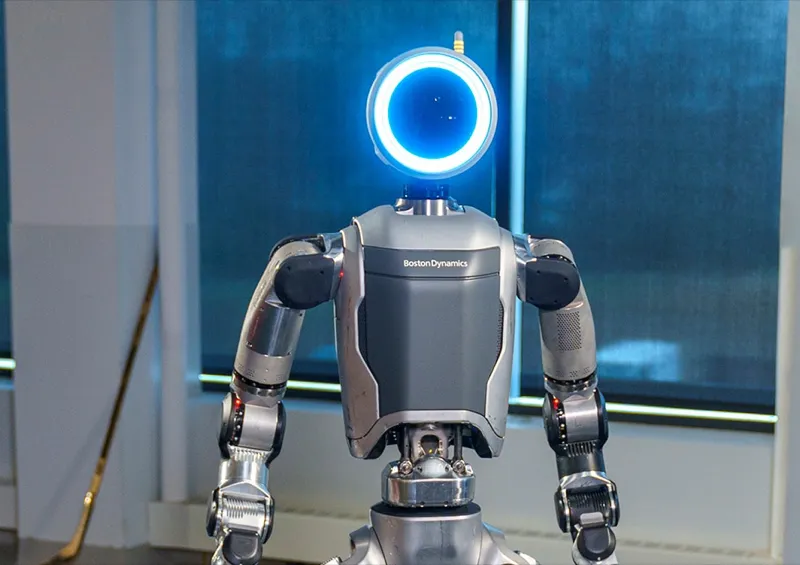
Boston Dynamics says Atlas learned the football move by starting from human demonstration, retargeting that motion to Atlas' body, training a policy in simulation, and then deploying it on hardware. The company also says the robot can compress the equivalent of a year of physical trial and error into roughly 24 hours of cloud simulation. That is the real signal. The future of home humanoids will not be programmed chore by chore with brittle scripts. It will depend on whether robots can turn demonstrations, simulation practice, and real-world correction into reliable household behavior.
What Atlas Actually Proved
The football move combines three capabilities that are hard to separate in a real home.
First, Atlas has to keep balance while moving quickly. A fake step, a crossed-leg kick, and a landing all shift the robot's center of mass. In a home, the same principle shows up when a robot reaches across a counter, bends to pick up a shoe, or steadies itself while carrying a laundry basket.
Second, the robot has to coordinate its whole body. The demo is not just a leg animation. It requires timing through ankles, knees, hips, torso, arms, and head. Whole-body coordination is what separates a useful humanoid from a mobile screen with hands.
Third, Atlas has to connect perception, planning, and actuation. Kicking a ball is simple to describe, but the robot still needs to approach the ball, place its feet, control force, and recover. Household manipulation has the same loop: locate the cup, reach without hitting the cabinet, grasp gently, move, release, and adjust when something shifts.
This is why the demo is relevant even if Atlas itself is not a home product. The robot in the ui44 database is an industrial humanoid: Atlas Electric is listed as active, with no public price, a 190 cm height, 90 kg weight, around 4 hours of battery life, and capabilities such as heavy lifting, precise manipulation, autonomous navigation, dynamic recovery, tool use, and self-swappable batteries. Those are not home-buyer specs. They are capability signals.
What Does This Mean for Home Robot Buyers?
Home robots have a different job than factory humanoids. They need to be safe around people, affordable enough to buy or lease, quiet enough to tolerate, and useful in a messy environment that changes every day. A football demo does not answer those buyer questions. It does, however, help define what to watch.
The most important question is not "Can this robot do a cool demo?" It is "Can the same learning pipeline turn into repeatable household skills?"
For buyers, the difference is huge. A robot that can only perform rehearsed behaviors in a clean demo space will disappoint quickly. A robot that can learn from repeated examples, recover from small failures, and adapt its motion to a different room has a path toward real usefulness.
That is why the Atlas demo belongs in the same conversation as home-focused humanoids like NEO, general-purpose humanoids such as Figure 03, and developer or industrial platforms such as Optimus Gen 2 and Booster T1. They are not all aimed at the same buyer, but they share the same core bottleneck: turning impressive embodied AI into dependable everyday action.

A Quick Comparison of the Buyer-Relevant Signals
Robot
- Market posture
- Industrial humanoid
- ui44 price data
- No official pricing
- Battery
- Around 4 hours
- What to watch
- Dynamic recovery, manipulation, simulation-trained skills
Robot
- Market posture
- Home-focused preorder
- ui44 price data
- $20,000 early access; $499/month later
- Battery
- Around 4 hours
- What to watch
- Safe household chores, gentle manipulation, adaptive learning
Robot
- Market posture
- General-purpose humanoid
- ui44 price data
- No pricing announced
- Battery
- Around 5 hours
- What to watch
- Helix VLA, multi-step planning, 20 kg payload
Robot
- Market posture
- Development
- ui44 price data
- Target often discussed around $30,000
- Battery
- Not officially disclosed
- What to watch
- Factory deployment, manipulation, Tesla AI stack
Robot
- Market posture
- Education and development
- ui44 price data
- Starts at $5,999
- Battery
- 30 to 80 minutes walking by version
- What to watch
- Low-cost biped platform, 22 degrees of freedom
Robot
- Market posture
- Research and competition
- ui44 price data
- Inquiry-only
- Battery
- 2 hours walking, 4 hours standing
- What to watch
- Biped running, self-recovery, ROS 2 compatibility
| Robot | Market posture | ui44 price data | Battery | What to watch |
|---|---|---|---|---|
| Atlas Electric | Industrial humanoid | No official pricing | Around 4 hours | Dynamic recovery, manipulation, simulation-trained skills |
| NEO | Home-focused preorder | $20,000 early access; $499/month later | Around 4 hours | Safe household chores, gentle manipulation, adaptive learning |
| Figure 03 | General-purpose humanoid | No pricing announced | Around 5 hours | Helix VLA, multi-step planning, 20 kg payload |
| Optimus Gen 2 | Development | Target often discussed around $30,000 | Not officially disclosed | Factory deployment, manipulation, Tesla AI stack |
| Booster K1 | Education and development | Starts at $5,999 | 30 to 80 minutes walking by version | Low-cost biped platform, 22 degrees of freedom |
| Booster T1 | Research and competition | Inquiry-only | 2 hours walking, 4 hours standing | Biped running, self-recovery, ROS 2 compatibility |
This table is the useful antidote to demo hype. Atlas is the movement benchmark, not the consumer benchmark. NEO is the clearest preorder product in this set, but its home promise depends on chore reliability, safe contact, and service quality more than acrobatics. Figure positions Figure 03 around household tasks and general-purpose use, while ui44 still treats it cautiously because public consumer pricing and purchase details are not announced. Optimus Gen 2 is better watched as an industrial-to-consumer pipeline. Booster K1 and Booster T1 are important because they make humanoid experimentation cheaper and more repeatable.
Why Sports Training Can Transfer
Boston Dynamics argues that football is a useful training domain because it combines locomotion and object interaction. That point is easy to overlook. Many robotics demos isolate one skill: walk here, pick this up, open that drawer. Football forces the robot to combine balance, timing, terrain awareness, and object control in one motion.
Homes are similar. The robot may need to stand partly sideways in a narrow kitchen, reach around an open dishwasher door, and pick up a slippery object without bumping a person or pet. None of that is a football trick, but it uses the same kind of whole-body control.
The important transfer is not the kick. It is the training pattern:
- Capture or generate a human-like motion.
- Retarget it to the robot's body.
- Train in simulation until the policy is stable.
- Deploy on hardware.
- Feed failures back into the training loop.
If that loop becomes cheap and repeatable, household skills can improve much faster than traditional hand-authored automation. Instead of asking an engineer to write a special case for every drawer, doorstep, toy, and laundry pile, a robot company can train categories of behavior and refine them from real usage.

What The Demo Does Not Prove
The Atlas football demo does not prove that humanoid robots are ready for ordinary homes. It does not prove affordability, safety certification, privacy handling, repairability, or customer support. It also does not prove that a robot can handle the long tail of household mess.
That matters because home robots fail in boring ways. They get stuck, misread objects, lose battery at the wrong moment, behave too loudly, or require too much supervision. A technically amazing behavior can still be a poor product if it needs a lab team nearby.
Home buyers should separate five claims:
Claim
Dynamic mobility
- What would count as evidence
- Recovering from bumps, bad footing, low clutter, and stairs or thresholds
Claim
Useful manipulation
- What would count as evidence
- Repeatedly handling varied household objects without damage
Claim
Learning
- What would count as evidence
- Improving from demonstrations, corrections, or fleet experience
Claim
Safety
- What would count as evidence
- Low-force contact, predictable motion, emergency stop, clear operating limits
Claim
Product readiness
- What would count as evidence
- Pricing, warranty, service, uptime, replacement parts, and delivery schedule
| Claim | What would count as evidence |
|---|---|
| Dynamic mobility | Recovering from bumps, bad footing, low clutter, and stairs or thresholds |
| Useful manipulation | Repeatedly handling varied household objects without damage |
| Learning | Improving from demonstrations, corrections, or fleet experience |
| Safety | Low-force contact, predictable motion, emergency stop, clear operating limits |
| Product readiness | Pricing, warranty, service, uptime, replacement parts, and delivery schedule |
Atlas speaks strongly to the first three. It says much less about the last two.
Why Smaller Humanoids Still Matter
The football conversation should not only be about full-size humanoids. Smaller platforms can teach the market quickly because they reduce risk and cost. Booster K1, for example, starts at $5,999 in the ui44 database and is a 95 cm, 19.5 kg humanoid development platform. Booster T1 is larger at 118 cm and 30 kg, with 2 hours of walking battery life and self-recovery capabilities.
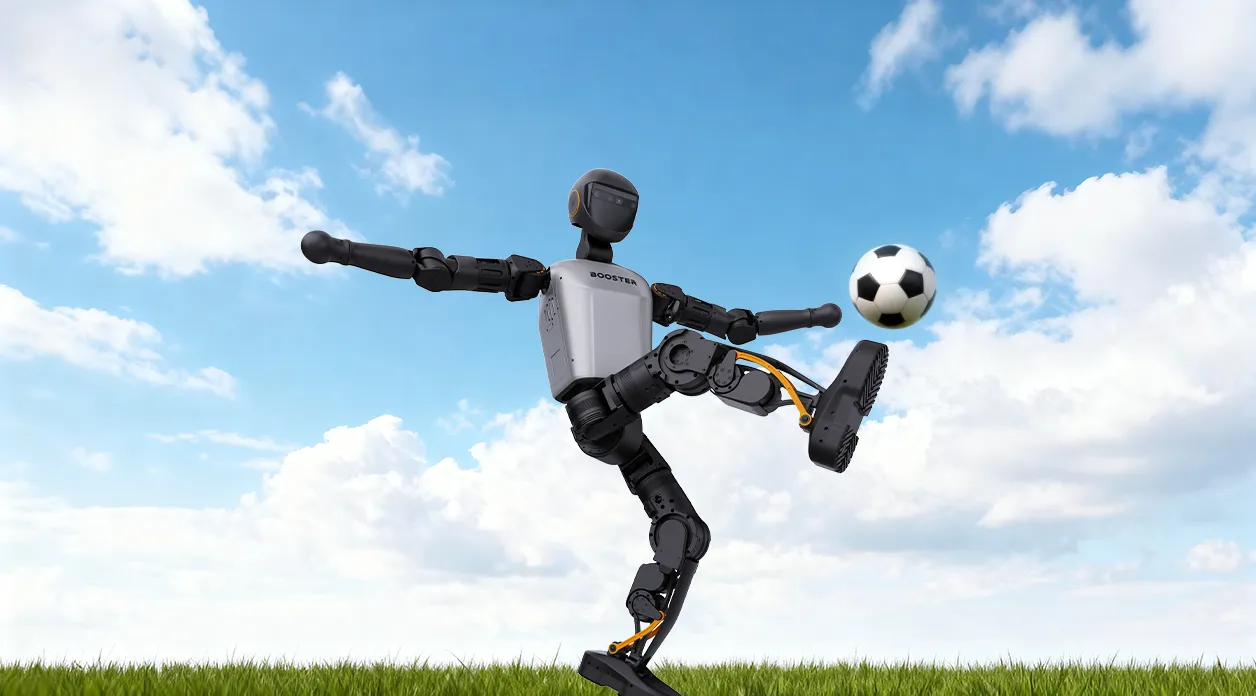
These are not general-purpose household workers. They are more useful as learning accelerators. Schools, labs, and robotics teams can use them to test locomotion, perception, voice, and manipulation ideas without waiting for a $20,000-plus home robot or an unavailable industrial platform.
That lower-cost experimentation matters. If home humanoids become real, many of the breakthroughs will come from thousands of small failures across many platforms, not only from polished launch videos. A $5,999 developer humanoid cannot clean your kitchen today, but it can help create the software habits that make future kitchen robots less fragile.
What Buyers Should Watch Next
For anyone evaluating home humanoids, the best takeaway from Atlas' football demo is a checklist, not a conclusion.
Watch for robots that can show the same skill in more than one room. A robot that can pick up the same object from the same table is not demonstrating household robustness. A more meaningful demo shows varied lighting, different object positions, interruptions, and recovery from small mistakes.
Watch battery and duty cycle. Atlas is listed around 4 hours. NEO is also listed around 4 hours. Figure 03 is around 5 hours. Those numbers are useful, but buyers should ask what the robot can do during that time. Walking, standing, manipulating, computing, streaming, and teleoperation have different energy costs.
Watch manipulation, not just walking. Humanoids attract attention because they move like people, but home value usually comes from hands. Can the robot lift, twist, stabilize, place, fold, wipe, or open without constant supervision?
Watch service models. NEO's $20,000 early access price and planned subscription path make it one of the first serious home humanoid buying decisions. The practical questions are not only whether it can tidy up, but how support works when the robot needs calibration, remote assistance, replacement parts, or software updates.
Watch privacy. Any home robot with cameras, microphones, remote assistance, or learning from user data needs clear controls. The more adaptive the robot is, the more important privacy design becomes.
The Bottom Line
Atlas kicking a football does not mean a home humanoid will be doing chores next month. It does mean that the movement stack is getting more general. Human demonstration, simulation practice, reinforcement learning, and hardware deployment are becoming a practical way to build robot behavior.
For ui44 readers, the right response is neither hype nor dismissal. Treat the Atlas demo as a signpost. The same training ideas that make a Ghost Rabona possible may eventually make a robot steadier around a messy laundry room, more graceful near a kitchen counter, and better at recovering when a real home refuses to behave like a lab.
The home robot market will be won by companies that can turn those movement breakthroughs into safe, boring, repeatable usefulness. Atlas showed one piece of that future. The next test is whether home-focused robots can make the same kind of learning feel ordinary.
Related in the database
Use this article as a privacy verification workflow
Turn the article into a privacy verification pass grounded in the robots, manufacturers, and components it actually references.
Atlas Football Demo: What It Means for Home Robots already points you toward 6 linked robots, 5 manufacturers, and 3 countries inside the ui44 database. That matters because strong buyer guidance is easier to apply when you can move immediately from a claim or warning into concrete product pages, manufacturer directories, component explainers, and country-level context instead of treating the article as an isolated opinion piece. The fastest next step is to turn the article into a shortlist workflow: open the linked robot pages, verify which specs are actually published for those models, then compare the surrounding manufacturer and component context before you decide whether the underlying claim changes your buying plan.
For this topic, the useful discipline is to separate the editorial lesson from the catalog evidence. The article gives you the framing, but the robot pages tell you what each product actually ships with today: sensor stack, connectivity methods, listed price, release timing, category, and support-relevant compatibility notes. The manufacturer pages then show whether you are looking at a one-off launch, a broader lineup pattern, or a company that spans multiple categories. That layered workflow reduces the risk of buying on a single marketing phrase or a single support FAQ.
Use the robot pages to confirm which products actually expose cameras, microphones, Wi-Fi, or voice systems, then use the manufacturer pages to decide how much of the privacy question seems product-specific versus brand-wide. On this route cluster, Atlas (Electric), NEO, and Figure 03 form the fastest reality check. If you want a quick working shortlist, open Compare Atlas (Electric), NEO, and Figure 03 next, then keep this article open as the reasoning layer while you compare structured data side by side.
Practical Takeaway
Every robot, manufacturer, category, component, and country reference below resolves to a real ui44 page, keeping the follow-up path grounded in database records rather than generic advice.
Suggested next steps in ui44
- Open Atlas (Electric) and note the listed sensors, connectivity methods, and voice stack before you interpret any policy claim.
- Cross-check the wider brand context on Boston Dynamics so you can see whether the privacy question touches one model or a broader lineup.
- Use the linked component pages to confirm how common the relevant sensors and connectivity layers are across the database.
- Keep a short note of which policy layers you checked, which device features are actually present on the robot page, and which items still depend on region- or app-level confirmation.
- Finish with Compare Atlas (Electric), NEO, and Figure 03 so the policy reading sits next to structured product data.
Robot profiles worth opening next
Use the linked product pages as the evidence layer
The linked robot pages are where this article becomes operational. Instead of asking whether the headline is interesting, use the robot entries to inspect the actual mix of sensors, connectivity options, batteries, pricing, release timing, and stated capabilities attached to the products mentioned in the article. That is the easiest way to see whether the warning or opportunity described here affects one product family, a specific design pattern, or an entire buying lane.
Atlas (Electric)
Boston Dynamics · Humanoid · Active
Atlas (Electric) is tracked on ui44 as a active humanoid robot from Boston Dynamics. The database currently records a listed price of Price TBA, a release date of 2026, ~4 hours battery life, Not disclosed charging time, and a published stack that includes 360° camera view and Tactile plus Wi-Fi and Ethernet.
For privacy-focused reading, this page matters because it shows the concrete device surface behind the policy discussion. Use it to verify whether Atlas (Electric) combines sensors and connectivity in a way that could change the in-home data footprint, and compare the listed capabilities such as Heavy Lifting (50kg Instant, 30kg Sustained), Precise Manipulation, and Dynamic Recovery with any cloud, app, or voice layers.
NEO
1X Technologies · Humanoid · Pre-order
NEO is tracked on ui44 as a pre-order humanoid robot from 1X Technologies. The database currently records a listed price of $20,000, a release date of 2025-10-28, ~4 hours battery life, Not disclosed charging time, and a published stack that includes RGB Cameras, Depth Sensors, and Tactile Skin plus Wi-Fi and Bluetooth.
For privacy-focused reading, this page matters because it shows the concrete device surface behind the policy discussion. Use it to verify whether NEO combines sensors and connectivity in a way that could change the in-home data footprint, and compare the listed capabilities such as Household Chores, Tidying Up, and Safe Human Interaction with any cloud, app, or voice layers.
Figure 03 is tracked on ui44 as a active humanoid robot from Figure AI. The database currently records a listed price of Price TBA, a release date of 2025-10-09, ~5 hours battery life, Not disclosed charging time, and a published stack that includes Stereo Vision, Depth Cameras, and Force Sensors plus Wi-Fi and Bluetooth.
For privacy-focused reading, this page matters because it shows the concrete device surface behind the policy discussion. Use it to verify whether Figure 03 combines sensors and connectivity in a way that could change the in-home data footprint, and compare the listed capabilities such as Complex Manipulation, Warehouse Work, and Manufacturing Tasks with any cloud, app, or voice layers.
Optimus Gen 2
Tesla · Humanoid · Development
Optimus Gen 2 is tracked on ui44 as a development humanoid robot from Tesla. The database currently records a listed price of Price TBA, a release date of 2023-12-13, Not officially disclosed battery life, Not officially disclosed charging time, and a published stack that includes Cameras, Force/Torque Sensors, and IMU plus Wi-Fi and Bluetooth.
For privacy-focused reading, this page matters because it shows the concrete device surface behind the policy discussion. Use it to verify whether Optimus Gen 2 combines sensors and connectivity in a way that could change the in-home data footprint, and compare the listed capabilities such as Bipedal Walking, Object Manipulation, and Factory Tasks with any cloud, app, or voice layers.
Booster K1
Booster Robotics · Humanoid · Available
Booster K1 is tracked on ui44 as a available humanoid robot from Booster Robotics. The database currently records a listed price of $5,999, a release date of 2025-10-24, 30 min walking at 0.4 m/s (Geek, 2Ah); 80 min walking at 0.4 m/s (Education/Professional, 5Ah) battery life, Not disclosed charging time, and a published stack that includes Stereo Depth Camera, 9-axis IMU, and Circular 6-Mic Array plus Wi-Fi (Geek) and Wi-Fi 6 (Education/Professional).
For privacy-focused reading, this page matters because it shows the concrete device surface behind the policy discussion. Use it to verify whether Booster K1 combines sensors and connectivity in a way that could change the in-home data footprint, and compare the listed capabilities such as 22 Degrees of Freedom, Bipedal Walking Platform, and Booster GYM 2.0 Locomotion Development with any cloud, app, or voice layers.
Manufacturer context behind the article
Check whether this is one product story or a broader company pattern
Manufacturer pages add the privacy context that individual product pages cannot show on their own. They help you check whether cameras, microphones, cloud accounts, app controls, and policy assumptions appear across a broader lineup or stay tied to one specific product story.
Boston Dynamics
ui44 currently tracks 3 robots from Boston Dynamics across 2 categorys. The company is grouped under USA, and the current catalog footprint on ui44 includes Atlas (Electric), Spot, Stretch.
That wider brand context matters because privacy questions rarely stop at one FAQ page. A manufacturer route helps you see whether the article is centered on one premium model or on a company that has several relevant products and therefore more than one place where the same policy or app assumptions might matter. The category mix here currently points toward Humanoid, Commercial as the most useful next route if you want to see whether this article reflects a wider pattern inside the brand.
1X Technologies
ui44 currently tracks 2 robots from 1X Technologies across 1 category. The company is grouped under Norway, and the current catalog footprint on ui44 includes NEO, EVE.
That wider brand context matters because privacy questions rarely stop at one FAQ page. A manufacturer route helps you see whether the article is centered on one premium model or on a company that has several relevant products and therefore more than one place where the same policy or app assumptions might matter. The category mix here currently points toward Humanoid as the most useful next route if you want to see whether this article reflects a wider pattern inside the brand.
Figure AI
ui44 currently tracks 2 robots from Figure AI across 1 category. The company is grouped under USA, and the current catalog footprint on ui44 includes Figure 03, Figure 02.
That wider brand context matters because privacy questions rarely stop at one FAQ page. A manufacturer route helps you see whether the article is centered on one premium model or on a company that has several relevant products and therefore more than one place where the same policy or app assumptions might matter. The category mix here currently points toward Humanoid as the most useful next route if you want to see whether this article reflects a wider pattern inside the brand.
Tesla
ui44 currently tracks 2 robots from Tesla across 1 category. The company is grouped under USA, and the current catalog footprint on ui44 includes Optimus Gen 2, Optimus Gen 1.
That wider brand context matters because privacy questions rarely stop at one FAQ page. A manufacturer route helps you see whether the article is centered on one premium model or on a company that has several relevant products and therefore more than one place where the same policy or app assumptions might matter. The category mix here currently points toward Humanoid as the most useful next route if you want to see whether this article reflects a wider pattern inside the brand.
Broaden the scan without leaving the database
Categories, components, and countries add the wider context
Category framing
Category pages are useful when the article touches a buying pattern that shows up across brands. A category route helps you confirm whether the linked products sit in a narrow niche or whether the same question should be tested across a larger field of alternatives.
Humanoid
The Humanoid category page currently groups 129 tracked robots from 92 manufacturers. ui44 describes this lane as: Full-size bipedal humanoid robots built to work alongside people — from factory floors to household tasks. Compare the cutting edge of humanoid robotics.
That makes the category route a practical follow-up when you want to check whether the products linked in this article are typical for the lane or whether they sit at one edge of the market. Useful starting examples currently include NEO, EVE, Mornine M1.
Country and ecosystem context
Country pages give extra context when support practices, launch sequencing, regulatory posture, or manufacturer mix matter. They are not a substitute for model-level verification, but they do help you see which ecosystems cluster together and which manufacturers sit in the same regional field when you broaden the search beyond the article headline.
USA
The USA route currently groups 89 tracked robots from 69 manufacturers in ui44. That gives you a useful regional lens when the article points toward support practices, launch sequencing, or brand clusters that may share similar ecosystem assumptions.
On the current route, manufacturers like Faraday Future, iRobot, Boston Dynamics make the page a good way to broaden the scan without losing the regional context that often shapes availability, documentation style, and adjacent alternatives.
Norway
The Norway route currently groups 2 tracked robots from 1 manufacturers in ui44. That gives you a useful regional lens when the article points toward support practices, launch sequencing, or brand clusters that may share similar ecosystem assumptions.
On the current route, manufacturers like 1X Technologies make the page a good way to broaden the scan without losing the regional context that often shapes availability, documentation style, and adjacent alternatives.
China
The China route currently groups 189 tracked robots from 87 manufacturers in ui44. That gives you a useful regional lens when the article points toward support practices, launch sequencing, or brand clusters that may share similar ecosystem assumptions.
On the current route, manufacturers like AGIBOT, Dreame, Unitree Robotics make the page a good way to broaden the scan without losing the regional context that often shapes availability, documentation style, and adjacent alternatives.
Questions to answer before you move from reading to buying
A follow-up FAQ built from the entities already linked in this article
Frequently Asked Questions
Which page should I open first after reading “Atlas Football Demo: What It Means for Home Robots”?
Start with Atlas (Electric). That gives you a concrete product anchor for the article’s main claim. From there, branch into the manufacturer and component pages so you can tell whether the article is describing one specific model, a repeated brand pattern, or a wider technology issue that affects multiple shortlist options.
How do the manufacturer pages change the buying decision?
Boston Dynamics help you zoom out from one article and one product. On ui44 they show lineup breadth, category spread, and the neighboring robots tied to the same company. That context is useful when you are deciding whether a risk belongs to a single model, whether it shows up across a brand’s portfolio, and whether you should keep looking at alternatives before committing.
When should I switch from reading to side-by-side comparison?
Move into Compare Atlas (Electric), NEO, and Figure 03 as soon as you understand the article’s main warning or promise. The article explains what to watch for, but the compare view is where you can check whether price, status, battery life, connectivity, sensors, and category fit still make the robot a good match for your own home and budget.
Where to go next in ui44
Keep the research chain inside the database
If you want to keep going, these follow-on pages give you the cleanest expansion path from article to research session. Open the comparison route first if you are deciding between products today. Open the manufacturer, category, and component routes if you still need to understand the broader pattern behind the claim.
Written by
ui44 Team
Published July 11, 2026
Share this article
Open a plain share link on X or Bluesky. No embeds, no widgets, no cookie baggage.