KAIST
1 robot tracked on ui44 with a growing manufacturer profile with pricing still largely handled through direct quotes.
- No active models flagged yet
- Research leads the lineup
- Updated Apr 1, 2026
Coverage snapshot
- Tracked robots
- 1
- Categories
- 1
- Available now
- 0
- Price view
- Quote based
Why this page matters
Use this route to scan the lineup, open the best in-brand comparisons, and jump into pricing, specs, and competitive context without leaving the manufacturer view.
Built to work for both multi-model brands and thinner manufacturer records.
What stands out about KAIST
KAIST currently spans 1 robot in the ui44 database. The portfolio leans toward research with 1 model leading the lineup. The lineup is still early-stage, with no robots currently marked available or active. Pricing is largely handled through direct sales or undisclosed quotes.
1 Research
KAIST is most concentrated in research robotics, with 1 category represented overall.
0/1
None of the tracked robots are marked available or active yet, so treat this lineup as earlier-stage.
Quote-based
Public pricing is limited, so the commercial picture depends on direct sales conversations or enterprise quotes.
What this manufacturer actually covers
KAIST needs an at-a-glance summary before the page branches into deeper editorial content. This chapter brings the company snapshot, compare entry points, and model gallery into one clean first read.
About KAIST
KAIST is a robotics company. The company currently has 1 robot tracked in the ui44 Home Robot Database, spanning the Research category.
Key Capabilities
At a Glance
Browse all robotics companies on the manufacturers directory.
KAIST Robot
Model coverage
The tracked KAIST robot is grouped here so the catalog can be scanned quickly before diving deeper into pricing, specs, and context.
Lineup structure and platform signals
A premium manufacturer page should make it easy to understand how the lineup is organized and what technical patterns show up across the portfolio, not just list robots one by one.
Technology & Capabilities
KAIST's robots combine a range of technologies and capabilities. Here is a consolidated look at the sensors, connectivity, AI platforms, and capabilities found across their product line.
Key Capabilities
-
Bipedal Walking 1/1 (100%)
-
Wheeled Locomotion (knee wheels) 1/1 (100%)
-
Walking-to-Wheeled Transformation 1/1 (100%)
-
Stair Climbing 1/1 (100%)
-
Door Opening 1/1 (100%)
-
Valve Turning 1/1 (100%)
-
Power Tool Operation 1/1 (100%)
-
Vehicle Driving 1/1 (100%)
-
Debris Traversal 1/1 (100%)
-
32 Degrees of Freedom (Head: 1, Arms+Hands: 8×2, Legs+Wheels: 7×2, Waist: 1) 1/1 (100%)
Sensor Technology
-
Stereo Cameras 1/1 (100%)
-
LIDAR 1/1 (100%)
-
IMU 1/1 (100%)
-
Gyroscopes 1/1 (100%)
-
Accelerometers 1/1 (100%)
-
Force/Torque Sensors (feet) 1/1 (100%)
-
Encoders 1/1 (100%)
Connectivity
-
Wireless (tethered control link for DRC) 1/1 (100%)
AI & Intelligence
Explore these technologies across all robots:
Pricing, availability, and hard specs
Decision-making gets easier when pricing, availability, and comparable specs are presented as a coherent buying surface instead of disconnected blocks.
Pricing & Availability
0/1
Available now
KAIST does not currently list public pricing for any of its model. This is common for enterprise-focused and research robotics companies that operate on custom quotes or contact-sales pricing.
Buyer guidance and plain-language spec decoding
This section translates the raw database into practical evaluation advice, which helps the page feel like expert editorial rather than a raw export.
Buying Guide: Is a KAIST Robot Right for You?
Choosing the right robot depends on your use case, budget, and technical needs. Here's what to consider when evaluating KAIST's product line.
Who Should Consider KAIST Robots
Enterprise & Research Buyers
KAIST serves enterprise and research customers. 1 of their models require contacting sales for pricing, indicating enterprise-tier products with custom deployment support.
Key Factors to Evaluate
Availability
0 of 1 models are currently available. Check individual robot pages for the latest status.
Category Fit
Make sure the robot's category matches your primary use case. Browse all categories.
Sensor Ecosystem
Review the technology section to understand what sensing and connectivity each model offers.
Price Transparency
0 of 1 models list public pricing. For unlisted models, request quotes early.
Ecosystem Compatibility
Some KAIST robots integrate with third-party platforms. Check compatibility on each robot's page.
Compare Before You Buy
Evaluate KAIST robots head-to-head or against competitors with our comparison tool.
KAIST Specifications Explained
Raw numbers only tell part of the story. Here is a plain-language explanation of what each specification means for the KAIST robot — and what it means for you as a buyer or researcher.
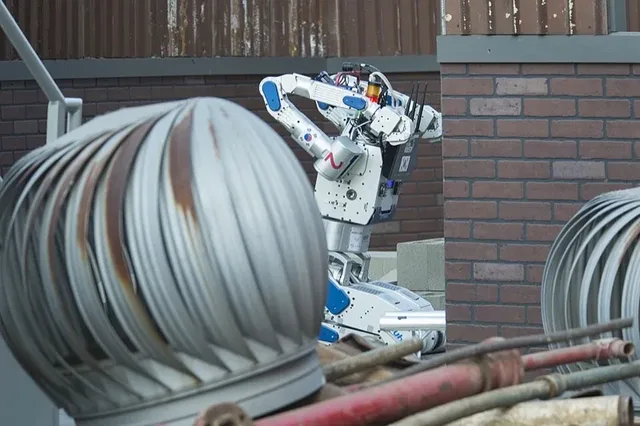
DRC-HUBO+
Specifications Breakdown
Height
170cmAt 170cm, the DRC-HUBO+ is roughly the height of an average adult human, which allows it to interact naturally with human-designed environments including countertops, doorways, and shelving at standard heights. This size is important for robots that need to work alongside people in factories, warehouses, or homes.
Weight
80kgWeighing 80kg, the DRC-HUBO+ is a substantial machine. This weight provides stability during physical tasks and manipulation but means it requires careful consideration for floor loading and may need dedicated charging infrastructure. Industrial-weight robots typically offer higher payload capacity and more robust construction.
Battery Life
~60 min (task-dependent)The DRC-HUBO+ offers ~60 min (task-dependent) of battery life per charge. Battery life is one of the most critical real-world performance metrics for any mobile robot. It determines how much work the robot can accomplish in a single session before needing to recharge. For research robots, this runtime should be evaluated against the size of the area you need covered and the intensity of the tasks involved. Robots with self-charging capability can partially compensate for shorter battery life by autonomously returning to their dock.
Max Speed
~3 km/h (wheeled mode), ~1.5 km/h (walking)The DRC-HUBO+ can move at up to ~3 km/h (wheeled mode), ~1.5 km/h (walking). Maximum speed affects how quickly the robot can traverse its operating area, respond to commands, and complete tasks. For research robots, speed must be balanced against safety — faster robots need better obstacle detection and stopping capabilities to prevent collisions and ensure safe operation around people and pets.
AI Platform
Semi-autonomous with human operator interface; FPGA-based 200Hz control loopThe DRC-HUBO+ runs on Semi-autonomous with human operator interface; FPGA-based 200Hz control loop for its artificial intelligence capabilities. The AI platform determines how intelligently the robot behaves — from basic reactive responses to sophisticated scene understanding, natural language processing, and adaptive learning. A more advanced AI platform generally means better obstacle avoidance, more natural interaction, and the ability to improve performance over time through software updates.
Sourced from official KAIST docs · Full DRC-HUBO+ specs →
Use cases and category landscape
A strong manufacturer page should explain where the lineup fits in the broader robotics market, including who these robots are for and how the surrounding category is moving.
Real-World Use Cases for KAIST Robots
Understanding how a robot fits into your specific situation is more important than any single specification. Here are the real-world scenarios where KAIST robots can make a meaningful impact.
Research and Education Platform
Academic and research teams need robot platforms that offer deep programmability, well-documented APIs, and active community support.
- Research robots should provide access to raw sensor data, support standard robotics frameworks (ROS/ROS2), and offer simulation environments for algorithm development before deploying on hardware.
- Consider the platform's track record in published research, available documentation, and whether the manufacturer provides academic pricing or grants.
Child Education and Development
Educational robots help children develop STEM skills, coding literacy, and social interaction capabilities.
- The best educational robots combine engaging personality with genuine learning outcomes, offering age-appropriate programming interfaces and curriculum-aligned content.
- Consider the robot's content library, parental controls, screen-time management features, and whether it offers progressive learning paths that grow with the child.
Not sure which type of robot fits your needs? Browse our categories guide or use the comparison tool to evaluate options side-by-side.
KAIST in the Robotics Industry
KAIST operates in the research robotics segment.
Research Market Landscape
Market Overview
Research robots serve as platforms for advancing the science of robotics, AI, and human-robot interaction. Used in universities, government labs, and corporate R&D departments, these robots prioritize flexibility, programmability, and access to low-level control over commercial polish. Many concepts proven on research platforms eventually find their way into consumer and commercial products.
KAIST competes in this space with DRC-HUBO+.
Key Industry Trends
Common Use Cases for Research Robots
Buyer Considerations
Future Outlook
Research robotics is becoming more accessible through lower-cost platforms and better simulation tools. The line between research and commercial robots is blurring as companies release developer editions of commercial products. Cloud robotics and shared datasets will accelerate the pace of discovery.
Capabilities, sensors, and connectivity
For serious buyers and researchers, the important question is how the stack hangs together: capabilities, sensing, and integration depth all need to read as a coherent system.
Sensor Technology in KAIST Robots
Sensors are the eyes, ears, and sense of touch that allow robots to perceive and interact with the world. KAIST's robot uses 7 different sensor types. Here is a detailed explanation of each sensor technology, how it works, and its role in robotics.
IMU
Used in 1 model
Inertial Measurement Unit — combines accelerometers, gyroscopes, and sometimes magnetometers to measure the robot's orientation, acceleration, and angular velocity.
How it works
Accelerometers detect linear acceleration, gyroscopes measure rotational velocity, and magnetometers sense magnetic heading. Combined, they provide a comprehensive picture of the robot's motion state.
In robotics
IMUs are critical for balance control in legged robots, stabilizing cameras, dead-reckoning navigation, and detecting falls or collisions. Nearly every mobile robot includes an IMU.
Learn more about robot sensors and components in our components directory or read the components glossary.
Connectivity & Smart Home Integration
How a robot connects to your network and integrates with your existing smart home determines how useful it will be in practice. KAIST's robot supports 1 connectivity technology, and third-party integrations.
Third-Party Compatibility
Learn more about robot connectivity options in our connectivity components guide or browse the full components directory.
Competitive posture and regional context
Manufacturer research is stronger when the page moves beyond specs and helps frame strategic position, regional ecosystem, and how the portfolio sits versus peers.
How KAIST Compares in the Market
How KAIST positions itself in the competitive landscape — beyond individual products.
Price positioning: KAIST does not publicly disclose pricing, which is typical for enterprise-focused robotics companies that customize solutions for each deployment. Contact-sales pricing usually indicates a higher-touch customer relationship and tailored support.
Category focus: KAIST is a specialist focused entirely on the research category. Category specialists often develop deeper expertise and more refined products in their focus area compared to multi-category companies that spread their R&D across different robot types.
Technology breadth: Across its product line, KAIST integrates 7 unique sensor types and 10 distinct capabilities. This technology stack determines the range of tasks and environments their robots can handle, and indicates the depth of the company's engineering investment.
Market maturity: KAIST's robot is currently in prototype stage. This is common for robotics companies working on next-generation technology that isn't yet ready for general availability.
Compare Side by Side
Use the comparison tool or browse the manufacturers directory.
Ownership planning and final takeaways
The page should close with practical ownership guidance, supporting editorial, and a concise summary so the route ends with momentum instead of fatigue.
Owning a KAIST Robot: What to Expect
Purchasing a robot is the start of an ongoing relationship with technology that requires setup, maintenance, and periodic attention.
Setting Up Your Robot
First-time robot setup varies significantly by category and complexity. Consumer robots like vacuums and lawn mowers typically involve downloading a companion app, connecting to Wi-Fi, and running an initial mapping or boundary setup routine. More complex robots like humanoids or quadrupeds may require professional installation, calibration, and training. Allow extra time for the first session — the robot needs to learn your space, and you need to learn its controls. Most modern robots improve their performance over the first few uses as their maps and AI models refine based on your specific environment.
Ongoing Maintenance Requirements
Every robot requires some level of maintenance to operate at peak performance. For cleaning robots, this includes emptying dustbins, washing filters, replacing brush rolls, and cleaning sensors — typically a few minutes per week. Lawn mowing robots need periodic blade replacements and seasonal cleaning. Legged robots may require joint lubrication and firmware updates. Check the manufacturer's recommended maintenance schedule and factor replacement part costs into your total cost of ownership. Establishing a regular maintenance routine significantly extends the robot's useful life and maintains cleaning or task performance over time.
Software Updates and Long-Term Support
Modern robots receive regular software updates that can add features, improve navigation, fix bugs, and enhance security. When evaluating any robot, consider the manufacturer's track record for software support — how frequently do they release updates, and for how long do they support older models? Some companies provide updates for years after purchase, while others may discontinue support sooner. Cloud-dependent features are particularly important to evaluate: if the manufacturer shuts down cloud services, will your robot still function? Prefer robots with strong local processing capability for long-term reliability.
Safety Considerations
Robot safety encompasses both physical safety (preventing collisions, falls, and injuries) and digital safety (data privacy, network security, camera access). Physically, look for robots with emergency stop mechanisms, collision detection, cliff sensors, and speed-limiting features when operating near people or pets. Digitally, understand what data the robot collects, where it is stored, who can access it, and whether the manufacturer has a clear privacy policy. For robots with cameras and microphones, hardware privacy indicators (LED lights when recording) and physical mute switches provide important transparency and control.
Warranty and After-Sales Support
Robotics purchases represent significant investments, making warranty terms and after-sales support critical evaluation criteria. Standard warranties in the industry range from one to three years, with some manufacturers offering extended warranty options. Beyond warranty length, consider what the warranty covers — some exclude consumable parts like brushes and filters. Also evaluate the manufacturer's service infrastructure: do they have authorized repair centers in your region? Is support available by phone, email, or chat? Response times and repair turnaround times can vary significantly between companies. User community forums and third-party repair guides can supplement official support.
Total Cost of Ownership
The sticker price of a robot is just the beginning. Total cost of ownership includes the initial purchase price, replacement parts and consumables, electricity for charging, any subscription fees for cloud or premium features, and potential repair costs. For commercial robots, add integration, training, and downtime costs. For consumer robots, factor in accessories like extra mop pads, replacement brushes, or boundary accessories. A thorough TCO analysis over the expected product lifetime — typically three to five years for consumer robots and longer for commercial platforms — provides a much more accurate picture of value than purchase price alone.
For model-specific ownership details, visit individual robot pages or contact KAIST directly.
Deployment Planning for KAIST Robots
Successful robot deployment depends on preparation that goes well beyond selecting the right model.
Readiness Assessment
1
Laboratory and research environment preparation
Research deployments require controlled conditions that differ from commercial settings. Verify that the lab space meets the robot's power requirements, including dedicated circuits for charging stations and any auxiliary computing hardware. Plan for motion capture or external sensor arrays if your research protocol requires ground-truth positioning data. Establish clear demarcation between the robot's active workspace and personnel areas, especially for platforms with manipulator arms or high-speed locomotion capabilities. Document the software development environment requirements, including supported operating systems, SDK dependencies, and network configurations needed for remote operation and data collection.
2
Network infrastructure and cybersecurity planning
Modern robots are networked devices that require thoughtful integration with existing IT infrastructure. Plan a dedicated network segment or VLAN for robot operations to isolate robot traffic from critical business systems. Implement certificate-based authentication where supported, and verify that firmware update mechanisms use signed packages. Establish a security review cadence for robot software components, especially for robots that process camera feeds, microphone input, or personal data. Create an incident response plan specific to robot compromise scenarios — what happens if a robot's navigation system is tampered with, or if sensor data is intercepted? These questions are easier to answer before deployment than during an active incident.
3
Operator training and workflow integration
Even highly autonomous robots require human operators who understand normal behavior, can recognize anomalies, and know when and how to intervene. Develop a training program that covers daily operations (startup, shutdown, charging), routine maintenance (cleaning sensors, checking mechanical wear), and emergency procedures (manual override, safe power-down, physical recovery from stuck positions). Integrate robot operations into existing workflow documentation so that robot tasks and human tasks have clear handoff points. Track operator confidence levels over time and provide refresher training when procedures change or new capabilities are deployed through software updates.
4
Performance benchmarking and acceptance criteria
Define measurable success criteria before the robot arrives. For cleaning robots, this might be coverage percentage and cleaning quality scores. For commercial service robots, track task completion rates, customer interaction quality, and mean time between interventions. For research platforms, establish reproducibility metrics and data quality thresholds. Having objective benchmarks prevents the common failure mode where a robot is judged impressive in demos but disappointing in sustained operation. Create a 30-60-90 day evaluation framework with specific milestones at each stage, and define clear decision points for scaling up, adjusting configuration, or discontinuing the deployment.
5
Long-term maintenance and total cost modeling
The purchase price of a robot is typically a fraction of the total cost of ownership over its operational lifetime. Model the full cost picture including consumables (filters, brushes, wheels, batteries), scheduled maintenance (sensor calibration, actuator inspection, firmware updates), unscheduled repairs (motor replacement, sensor failure, structural damage), and operational costs (electricity, network bandwidth, operator time). Request maintenance schedules and spare-part pricing from the manufacturer before purchase. For commercial deployments, calculate the break-even point against the labor or service cost the robot replaces, factoring in realistic uptime assumptions rather than manufacturer-stated maximums. Revisit the cost model quarterly as real operating data replaces initial estimates.
Deployment planning is iterative — capture lessons learned and refine your approach as you progress with KAIST products.
KAIST: Summary and Key Takeaways
Next Steps
Frequently Asked Questions
What robots does KAIST make?
How much do KAIST robots cost?
Are KAIST robots available to buy?
What can KAIST robots do?
What sensors do KAIST robots use?
How current is the KAIST data on ui44?
Data Integrity
All KAIST robot data on ui44 is verified against official manufacturer sources, spec sheets, and press releases. Most recent verification: 2026-04-01. If you notice outdated or incorrect data, please let us know — accuracy is our top priority.
Related Categories
Key Components
Go beyond the spec sheet
Full specifications, side-by-side comparisons, and buyer guides for every robot.