MIXI's latest Romi updates make that question unusually concrete. The Japanese Romi Lacatan model now combines ChatRomi 2.0 conversation, long-term memory, optional visual understanding, wake-word controls, face and voice recognition, app diaries, and a required cloud service plan. That is exactly the bundle buyers should inspect before treating any companion robot as a household presence.
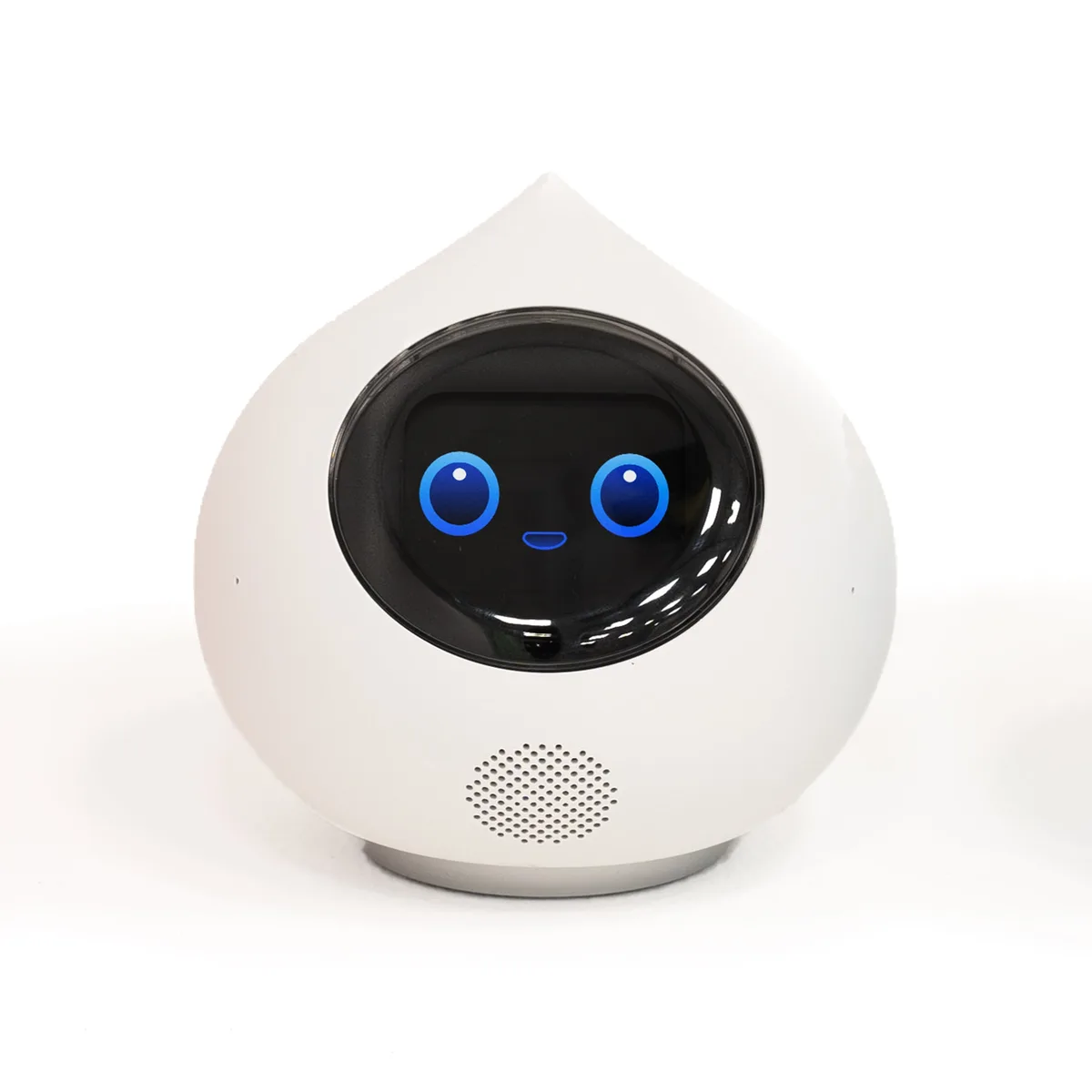
What is Romi Lacatan?
Romi Lacatan is the newer model of MIXI's Japanese conversational AI robot Romi. It is not a mobile humanoid, a vacuum, or a chore robot. It is a hand-sized communication robot built around daily conversation, expressive eyes, small body movements, voice interaction, touch response, and a cloud-connected AI service.
Official MIXI material says the Lacatan model went on general sale in Japan on July 25, 2025. The listed body price is ¥89,800 before tax / ¥98,780 including tax, and the product requires a monthly service fee for normal conversation features: ¥1,780/month before tax / ¥1,958 including tax, or an annual plan of ¥17,800 before tax / ¥19,580 including tax. The official store currently lists color variants including natural white, sky blue, sakura pink, and moon gray.
The practical buyer point is simple: Romi is not a one-time gadget purchase. It is a body plus an ongoing AI service. MIXI's price page explains that the fee pays for cloud systems that listen, generate replies, and store memories. Romi has a limited free/simple mode, but normal conversation and features depend on the paid mode.
Romi Lacatan detail
Product type
- Officially stated value
- Conversational AI companion robot
Romi Lacatan detail
Japan general sale
- Officially stated value
- July 25, 2025
Romi Lacatan detail
Body price
- Officially stated value
- ¥98,780 including tax
Romi Lacatan detail
Service fee
- Officially stated value
- ¥1,958/month including tax or ¥19,580/year including tax
Romi Lacatan detail
Conversation models
- Officially stated value
- ChatRomi 1.0 and ChatRomi 2.0
Romi Lacatan detail
Required setup
- Officially stated value
- Wi-Fi, smartphone/tablet app, cloud service plan
Romi Lacatan detail
Notable controls
- Officially stated value
- Memory toggles, visual-function toggle, wake-word behavior
| Romi Lacatan detail | Officially stated value |
|---|---|
| Product type | Conversational AI companion robot |
| Japan general sale | July 25, 2025 |
| Body price | ¥98,780 including tax |
| Service fee | ¥1,958/month including tax or ¥19,580/year including tax |
| Conversation models | ChatRomi 1.0 and ChatRomi 2.0 |
| Required setup | Wi-Fi, smartphone/tablet app, cloud service plan |
| Notable controls | Memory toggles, visual-function toggle, wake-word behavior |
That puts Romi Lacatan closer to ElliQ 3, LOVOT, KATA Friends, and Loona than to a smart speaker. The product is selling an ongoing relationship, not just a voice command interface.
What does Romi actually remember?
Romi's memory system is more specific than the usual "AI remembers you" claim. The official guidebook describes two separate long-term memory toggles in the Romi app: long-term memory (remember) and long-term memory (speak). When remembering is on, Romi can store selected important memories from conversation. When speaking is on, Romi can use stored memories in later conversation.
That separation matters. A buyer may want Romi to stop saving new memories but still refer to existing ones, or to stop using memories in speech. The guidebook also says memory is not a transcript of everything said. It is framed as selected memories: hobbies, pets, trips, important events, and conversation material that may help future dialogue.
The unresolved part is retention. Romi's guidebook says the maximum storage period for remembered content was not yet fixed, and that the company is considering a human-like approach where more important memories remain longer. For a companion robot, that is both charming and important to verify. A memory feature is useful only if owners understand what is stored, how it is used, and how much control they have later.
Romi also has a diary feature. If the owner has at least four conversation turns in a day, the app can generate a short diary summary after midnight, usually available the next morning. That is a different product experience from a robot that merely answers isolated questions. It turns conversation into a personal record.
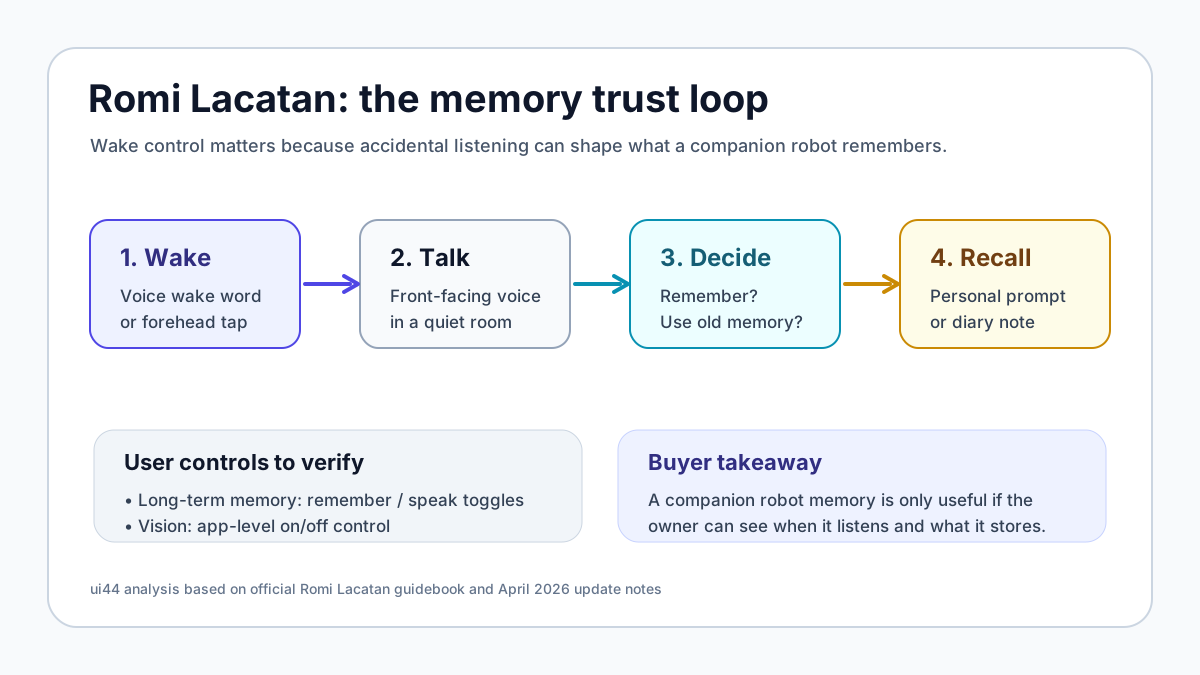
There is one documentation wrinkle buyers should notice. Some older guidebook text says ChatRomi 2.0 did not yet use long-term memory in conversation. The newer April 21, 2026 Romi Lacatan update says ChatRomi 2.0 can now use long-term memory. That is a normal moving-target issue for an AI product, but it means buyers should check the current firmware, app version, and model mode instead of relying on any single static feature list.
Why do wake words matter for a companion robot memory?
Wake words are not just convenience. On a memory-enabled robot, wake behavior is part of data hygiene.
Romi's April 21, 2026 update added voice wake support for the Lacatan model. In addition to a forehead double-tap, owners can wake Romi with specific Japanese phrases: 起きて, 話そう, or おはよう. MIXI says this reduces cases where television or surrounding sounds accidentally start a conversation. The company explicitly connects that to two risks: unwanted content entering Romi's memory and unnecessary load on the robot.
That is unusually honest, and it is exactly the kind of detail companion-robot buyers should reward. A robot with long-term memory needs an easy answer to: "When is it listening?" Romi's guidebook says the bottom LED turns blue as a listening signal and that Romi prioritizes voices from the front. It recommends speaking from about 50-70 cm away and within roughly ±45 degrees of the front, in a quiet room.
Those limits are not failures. They are operating conditions. If your home has constant TV audio, open-plan kitchen noise, or multiple people talking over one another, Romi's memory may be less reliable. That matters more than whether the robot can produce a cute reply in a demo.
How is ChatRomi 2.0 different from ordinary robot chat?
ChatRomi 2.0 is Romi Lacatan's newer conversation model. MIXI says it improves speed, web search, multimodal understanding, and personality customization. The official guidebook says ChatRomi 2.0 uses OpenAI's Realtime API, while MIXI's release material says RomiCore and external AI API integration reduce the delay from speech recognition through response generation.
For buyers, the important difference is not the model name. It is the conversation loop:
- faster responses should make turn-taking feel less awkward;
- web search should help Romi answer questions about current information;
- visual understanding can let Romi talk about what it sees;
- tone/personality settings can change the style of replies;
- memory can make future responses feel more personal.
Romi's official pages also describe vision controls. The about page says visual understanding can be turned on or off in the app and is triggered when the owner asks Romi to look. The ChatRomi 2.0 guidebook adds a stronger detail: in 2.0, Romi may activate vision automatically if the conversation makes it judge that looking would help. If owners do not want that, they can turn the visual function off in the app.
That makes Romi more capable, but also raises a buyer question: do you want a companion robot that can decide when to look? Some owners will like the more natural flow. Others will prefer strict manual vision triggers.
There are also safety and moderation details to understand. The ChatRomi 2.0 guidebook says app-level "words not to say" settings do not apply in the same way to ChatRomi 2.0, and that inappropriate content is controlled according to the external model's standards. Owners can try to encode forbidden words or style rules into Romi's speaking-character settings, but exact suppression is not guaranteed. That is not unique to Romi; it is a broader issue with large language model (LLM)-powered companion robots.
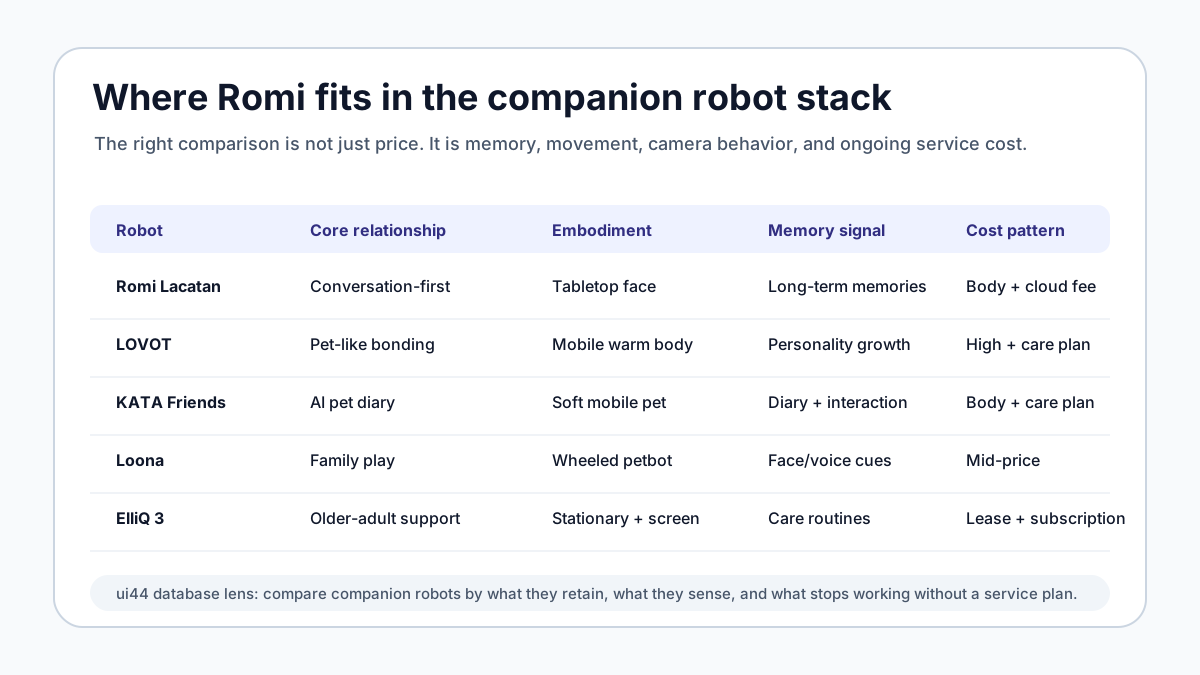
How does Romi compare with other companion robots in ui44's database?
Romi's closest competitors are not necessarily Japanese robots. They are the products that ask a household to trust a robot with attention, emotion, memory, voice, or camera context.
LOVOT is the premium emotional-companion reference point in ui44's database: ¥577,500 for LOVOT 3.0 in Japan, a required monthly care plan from ¥9,900/month, more than 50 sensors, a warm mobile body, and person-recognition behavior. LOVOT is more physically present than Romi, but it is much more expensive.
SwitchBot KATA Friends is a newer AI pet line: about $699, soft mobile bodies, on-device LLM interaction, face and emotion cues, interaction memories, diary behavior, local photo storage, and ongoing Companion Care plan options. It is more pet-like and mobile than Romi, while Romi is more conversation-tabletop focused.
Loona costs about $429 in ui44's current database, uses a 720p camera, 3D time-of-flight sensor, four-microphone array, face recognition, voice commands, autonomous navigation, auto-docking, and ChatGPT-4o conversation integration. Loona is a play-and-family robot; Romi is more about sustained talk and personal memory.
ElliQ 3 is the care-companion comparison: a stationary robot for older adults with proactive conversation, reminders, video calls, an 8-inch screen, camera, microphone array, and subscription-style pricing. Romi is not positioned as a medical or elder-care device, but both products show how ongoing service, routines, and relationship memory can become the real product.
Moflin and Miko 3 show the two other edges of the category. Moflin is a $429 palm-sized emotional pet with up to 5 hours of battery life and voice/touch recognition. Miko 3 is a kid-focused educational companion with face and voice recognition, a touchscreen, navigation sensors, parental controls, and ui44's current official-store price of about €173.
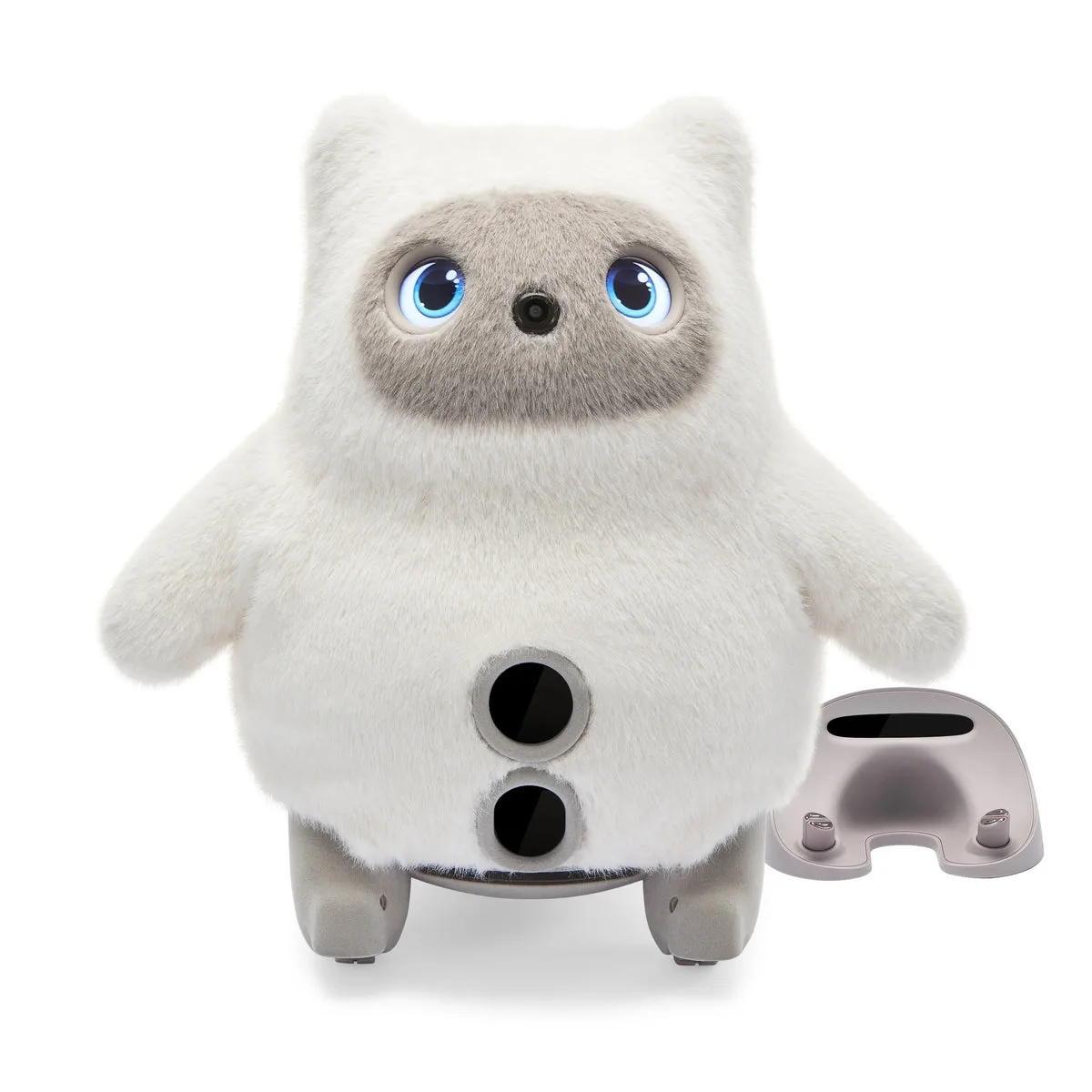
The pattern is clear: companion robots are splitting into conversation-first, pet-like, care-support, kid-learning, and mobile monitoring products. Romi belongs in the conversation-first branch, but with enough memory, vision, and diary behavior that it starts to overlap the emotional-companion branch too.
Which Romi buyer questions matter most?
If you are considering Romi Lacatan, do not start with "Is it cute?" Start with these buyer checks:
Buyer question
Is your use case mainly Japanese conversation?
- Why it matters
- Romi is a Japan-market product with Japanese official support and documentation.
Buyer question
Are you comfortable with a required cloud fee?
- Why it matters
- Normal conversation, reply generation, and memory rely on the paid service.
Buyer question
Can the intended user manage app settings?
- Why it matters
- Memory, vision, family registration, and conversation model settings live in the app.
Buyer question
Is the room quiet enough?
- Why it matters
- Official guidance warns that TV and background noise can affect recognition and memory.
Buyer question
Do you want automatic visual understanding?
- Why it matters
- ChatRomi 2.0 may use vision when it judges that looking would help, unless disabled.
Buyer question
Do you understand memory controls?
- Why it matters
- Separate remember/speak toggles change what Romi stores and reuses.
Buyer question
Is the robot meant for companionship, not chores?
- Why it matters
- Romi does not move through the home or manipulate objects.
| Buyer question | Why it matters |
|---|---|
| Is your use case mainly Japanese conversation? | Romi is a Japan-market product with Japanese official support and documentation. |
| Are you comfortable with a required cloud fee? | Normal conversation, reply generation, and memory rely on the paid service. |
| Can the intended user manage app settings? | Memory, vision, family registration, and conversation model settings live in the app. |
| Is the room quiet enough? | Official guidance warns that TV and background noise can affect recognition and memory. |
| Do you want automatic visual understanding? | ChatRomi 2.0 may use vision when it judges that looking would help, unless disabled. |
| Do you understand memory controls? | Separate remember/speak toggles change what Romi stores and reuses. |
| Is the robot meant for companionship, not chores? | Romi does not move through the home or manipulate objects. |
The strongest reason to watch Romi is not that it claims to be emotionally intelligent. Many robots claim that. Romi is interesting because its official docs expose the messy details: wake words, memory contamination, visual toggles, conversation-model switching, monthly cloud service, and app-level controls. Those are the boring pieces that decide whether a companion robot feels trustworthy after the novelty wears off.
Is Romi Lacatan a good home robot buy?
For the right buyer in Japan, Romi Lacatan looks like one of the more mature conversation-first companion robots available today. It has a real product, an official store, listed pricing, retail availability, app documentation, update notes, and a clear paid-service model. That is more grounded than many companion-robot announcements.
But Romi is not a general home robot. It will not patrol rooms like Amazon Astro, move like LOVOT, teach kids like Miko 3, or act as a physical helper. It is best understood as a conversational presence: a robot that sits nearby, talks, reacts, remembers selected details, writes diary summaries, and gradually becomes more personal if the owner keeps talking to it.
That makes Romi a useful test case for the next wave of home robots. The future of companion AI will not be decided only by bigger models. It will be decided by small trust mechanics: when the robot wakes, what it hears, what it writes down, when it looks, whether you can turn those things off, and whether the monthly service still feels worth paying after six months.
For now, Romi Lacatan's best lesson for buyers is this: a companion robot's memory is not magic. It is a product policy. Read it before you bond with it.
Related in the database
Use this article as a privacy verification workflow
Turn the article into a privacy verification pass grounded in the robots, manufacturers, and components it actually references.
Romi Lacatan: What Its AI Memory Actually Does already points you toward 8 linked robots, 8 manufacturers, and 4 countries inside the ui44 database. That matters because strong buyer guidance is easier to apply when you can move immediately from a claim or warning into concrete product pages, manufacturer directories, component explainers, and country-level context instead of treating the article as an isolated opinion piece. The fastest next step is to turn the article into a shortlist workflow: open the linked robot pages, verify which specs are actually published for those models, then compare the surrounding manufacturer and component context before you decide whether the underlying claim changes your buying plan.
For this topic, the useful discipline is to separate the editorial lesson from the catalog evidence. The article gives you the framing, but the robot pages tell you what each product actually ships with today: sensor stack, connectivity methods, listed price, release timing, category, and support-relevant compatibility notes. The manufacturer pages then show whether you are looking at a one-off launch, a broader lineup pattern, or a company that spans multiple categories. That layered workflow reduces the risk of buying on a single marketing phrase or a single support FAQ.
Use the robot pages to confirm which products actually expose cameras, microphones, Wi-Fi, or voice systems, then use the manufacturer pages to decide how much of the privacy question seems product-specific versus brand-wide. On this route cluster, Romi Lacatan, ElliQ 3, and LOVOT form the fastest reality check. If you want a quick working shortlist, open Compare Romi Lacatan, ElliQ 3, and LOVOT next, then keep this article open as the reasoning layer while you compare structured data side by side.
Practical Takeaway
Every robot, manufacturer, category, component, and country reference below resolves to a real ui44 page, keeping the follow-up path grounded in database records rather than generic advice.
Suggested next steps in ui44
- Open Romi Lacatan and note the listed sensors, connectivity methods, and voice stack before you interpret any policy claim.
- Cross-check the wider brand context on MIXI so you can see whether the privacy question touches one model or a broader lineup.
- Use the linked component pages to confirm how common the relevant sensors and connectivity layers are across the database.
- Keep a short note of which policy layers you checked, which device features are actually present on the robot page, and which items still depend on region- or app-level confirmation.
- Finish with Compare Romi Lacatan, ElliQ 3, and LOVOT so the policy reading sits next to structured product data.
Robot profiles worth opening next
Use the linked product pages as the evidence layer
The linked robot pages are where this article becomes operational. Instead of asking whether the headline is interesting, use the robot entries to inspect the actual mix of sensors, connectivity options, batteries, pricing, release timing, and stated capabilities attached to the products mentioned in the article. That is the easiest way to see whether the warning or opportunity described here affects one product family, a specific design pattern, or an entire buying lane.
Romi Lacatan
MIXI · Companions · Available
Romi Lacatan is tracked on ui44 as a available companions robot from MIXI. The database currently records a listed price of ¥98,780, a release date of 2025-07-25, 2,875 mAh lithium-ion battery; runtime not officially disclosed battery life, Not officially disclosed; USB-C power, DC 5V/3A charging time, and a published stack that includes 3 microphones, Camera for face detection and visual features, and Touch sensor plus Wi-Fi 802.11a/b/g/n/ac/ax (2.4GHz and 5GHz) and Bluetooth 5.4.
For privacy-focused reading, this page matters because it shows the concrete device surface behind the policy discussion. Use it to verify whether Romi Lacatan combines sensors and connectivity in a way that could change the in-home data footprint, and compare the listed capabilities such as Conversational AI companionship, Long-term memory with separate remember/speak app toggles, and Wake-word conversation start with any cloud, app, or voice layers, including ChatRomi 1.0 and ChatRomi 2.0.
ElliQ 3
Intuition Robotics · Companions · Available
ElliQ 3 is tracked on ui44 as a available companions robot from Intuition Robotics. The database currently records a listed price of Price TBA, a release date of 2024-01, Mains powered battery life, N/A (plugged in) charging time, and a published stack that includes 4-mic array, 12 MP camera for images, and 1080p HD video at 30 fps with 120° horizontal FoV plus Wi-Fi 802.11b/g/n/ac (2.4 GHz and 5 GHz) and Bluetooth 5+.
For privacy-focused reading, this page matters because it shows the concrete device surface behind the policy discussion. Use it to verify whether ElliQ 3 combines sensors and connectivity in a way that could change the in-home data footprint, and compare the listed capabilities such as Proactive Conversation, Medication Reminders, and Health & Pain Tracking with any cloud, app, or voice layers, including ElliQ Voice AI.
LOVOT is tracked on ui44 as a available companions robot from GROOVE X. The database currently records a listed price of ¥577,500, a release date of 2019, 30-45 minutes active, then returns to nest battery life, 15-30 minutes (on charging nest) charging time, and a published stack that includes Horn Top Camera (half-sphere), Horn Front Camera, and Depth Camera plus Wi-Fi and Bluetooth.
For privacy-focused reading, this page matters because it shows the concrete device surface behind the policy discussion. Use it to verify whether LOVOT combines sensors and connectivity in a way that could change the in-home data footprint, and compare the listed capabilities such as Emotional Companionship, Person Recognition, and Touch Response (full body sensors) with any cloud, app, or voice layers.
KATA Friends
SwitchBot · Companions · Available
KATA Friends is tracked on ui44 as a available companions robot from SwitchBot. The database currently records a listed price of $699, a release date of 2026-05-12, Not officially disclosed battery life, Not officially disclosed; CNET reports an 8-hour sleep/charge schedule charging time, and a published stack that includes Cameras, Microphones, and Touch sensors in ears, hands, tummy, and back plus SwitchBot companion app and On-device/offline AI interaction for core responses.
For privacy-focused reading, this page matters because it shows the concrete device surface behind the policy discussion. Use it to verify whether KATA Friends combines sensors and connectivity in a way that could change the in-home data footprint, and compare the listed capabilities such as AI pet companionship, Autonomous indoor movement, and Obstacle avoidance with any cloud, app, or voice layers.
Loona is tracked on ui44 as a available companions robot from KEYi Tech. The database currently records a listed price of $442, a release date of 2023, 2 hours continuous playtime; 1350 mAh, 11.1 V lithium-ion rechargeable battery battery life, Not officially disclosed charging time, and a published stack that includes 3D Time-of-Flight (ToF) Sensor, 720p RGB Camera, and Touch Sensor plus Wi-Fi (Dual-band 2.4G/5.8G, 802.11a/b/g/n) and USB Type-C (charging).
For privacy-focused reading, this page matters because it shows the concrete device surface behind the policy discussion. Use it to verify whether Loona combines sensors and connectivity in a way that could change the in-home data footprint, and compare the listed capabilities such as Face Recognition, Voice Commands, and Emotion Expression (LCD face) with any cloud, app, or voice layers.
Manufacturer context behind the article
Check whether this is one product story or a broader company pattern
Manufacturer pages add the privacy context that individual product pages cannot show on their own. They help you check whether cameras, microphones, cloud accounts, app controls, and policy assumptions appear across a broader lineup or stay tied to one specific product story.
MIXI
ui44 currently tracks 1 robot from MIXI across 1 category. The company is grouped under Japan, and the current catalog footprint on ui44 includes Romi Lacatan.
That wider brand context matters because privacy questions rarely stop at one FAQ page. A manufacturer route helps you see whether the article is centered on one premium model or on a company that has several relevant products and therefore more than one place where the same policy or app assumptions might matter. The category mix here currently points toward Companions as the most useful next route if you want to see whether this article reflects a wider pattern inside the brand.
Intuition Robotics
ui44 currently tracks 1 robot from Intuition Robotics across 1 category. The company is grouped under Israel, and the current catalog footprint on ui44 includes ElliQ 3.
That wider brand context matters because privacy questions rarely stop at one FAQ page. A manufacturer route helps you see whether the article is centered on one premium model or on a company that has several relevant products and therefore more than one place where the same policy or app assumptions might matter. The category mix here currently points toward Companions as the most useful next route if you want to see whether this article reflects a wider pattern inside the brand.
GROOVE X
ui44 currently tracks 1 robot from GROOVE X across 1 category. The company is grouped under Japan, and the current catalog footprint on ui44 includes LOVOT.
That wider brand context matters because privacy questions rarely stop at one FAQ page. A manufacturer route helps you see whether the article is centered on one premium model or on a company that has several relevant products and therefore more than one place where the same policy or app assumptions might matter. The category mix here currently points toward Companions as the most useful next route if you want to see whether this article reflects a wider pattern inside the brand.
SwitchBot
ui44 currently tracks 3 robots from SwitchBot across 3 categorys. The company is grouped under USA, and the current catalog footprint on ui44 includes K20+ Pro, onero H1, KATA Friends.
That wider brand context matters because privacy questions rarely stop at one FAQ page. A manufacturer route helps you see whether the article is centered on one premium model or on a company that has several relevant products and therefore more than one place where the same policy or app assumptions might matter. The category mix here currently points toward Cleaning, Home Assistants, Companions as the most useful next route if you want to see whether this article reflects a wider pattern inside the brand.
Broaden the scan without leaving the database
Categories, components, and countries add the wider context
Category framing
Category pages are useful when the article touches a buying pattern that shows up across brands. A category route helps you confirm whether the linked products sit in a narrow niche or whether the same question should be tested across a larger field of alternatives.
Companions
The Companions category page currently groups 53 tracked robots from 48 manufacturers. ui44 describes this lane as: Social robots, robot pets, and elderly-care companions designed for emotional connection and everyday support at home.
That makes the category route a practical follow-up when you want to check whether the products linked in this article are typical for the lane or whether they sit at one edge of the market. Useful starting examples currently include PARO, Abi, Next-Generation Companion Robot.
Security & Patrol
The Security & Patrol category page currently groups 5 tracked robots from 5 manufacturers. ui44 describes this lane as: Autonomous surveillance and patrol robots that monitor homes, businesses, and perimeters — keeping watch without an operator on site.
That makes the category route a practical follow-up when you want to check whether the products linked in this article are typical for the lane or whether they sit at one edge of the market. Useful starting examples currently include Astro, Vision 60, K7 Autonomous Security Robot.
Country and ecosystem context
Country pages give extra context when support practices, launch sequencing, regulatory posture, or manufacturer mix matter. They are not a substitute for model-level verification, but they do help you see which ecosystems cluster together and which manufacturers sit in the same regional field when you broaden the search beyond the article headline.
Japan
The Japan route currently groups 26 tracked robots from 17 manufacturers in ui44. That gives you a useful regional lens when the article points toward support practices, launch sequencing, or brand clusters that may share similar ecosystem assumptions.
On the current route, manufacturers like AIST, SoftBank Robotics, Toyota make the page a good way to broaden the scan without losing the regional context that often shapes availability, documentation style, and adjacent alternatives.
Israel
The Israel route currently groups 5 tracked robots from 5 manufacturers in ui44. That gives you a useful regional lens when the article points toward support practices, launch sequencing, or brand clusters that may share similar ecosystem assumptions.
On the current route, manufacturers like Flytrex, Intuition Robotics, Maytronics make the page a good way to broaden the scan without losing the regional context that often shapes availability, documentation style, and adjacent alternatives.
USA
The USA route currently groups 89 tracked robots from 69 manufacturers in ui44. That gives you a useful regional lens when the article points toward support practices, launch sequencing, or brand clusters that may share similar ecosystem assumptions.
On the current route, manufacturers like Faraday Future, iRobot, Boston Dynamics make the page a good way to broaden the scan without losing the regional context that often shapes availability, documentation style, and adjacent alternatives.
Questions to answer before you move from reading to buying
A follow-up FAQ built from the entities already linked in this article
Frequently Asked Questions
Which page should I open first after reading “Romi Lacatan: What Its AI Memory Actually Does”?
Start with Romi Lacatan. That gives you a concrete product anchor for the article’s main claim. From there, branch into the manufacturer and component pages so you can tell whether the article is describing one specific model, a repeated brand pattern, or a wider technology issue that affects multiple shortlist options.
How do the manufacturer pages change the buying decision?
MIXI help you zoom out from one article and one product. On ui44 they show lineup breadth, category spread, and the neighboring robots tied to the same company. That context is useful when you are deciding whether a risk belongs to a single model, whether it shows up across a brand’s portfolio, and whether you should keep looking at alternatives before committing.
When should I switch from reading to side-by-side comparison?
Move into Compare Romi Lacatan, ElliQ 3, and LOVOT as soon as you understand the article’s main warning or promise. The article explains what to watch for, but the compare view is where you can check whether price, status, battery life, connectivity, sensors, and category fit still make the robot a good match for your own home and budget.
Where to go next in ui44
Keep the research chain inside the database
If you want to keep going, these follow-on pages give you the cleanest expansion path from article to research session. Open the comparison route first if you are deciding between products today. Open the manufacturer, category, and component routes if you still need to understand the broader pattern behind the claim.
Written by
ui44 Team
Published May 19, 2026
Share this article
Open a plain share link on X or Bluesky. No embeds, no widgets, no cookie baggage.