That matters for anyone waiting for a useful robot maid. The most credible path to home robots may not be one $20,000 humanoid dropped into a chaotic kitchen on day one. It may be a service loop: deploy in a mapped building, automate a few boring chores, use human assistance when autonomy fails, collect real task data, and improve the fleet before shrinking the model into homes.
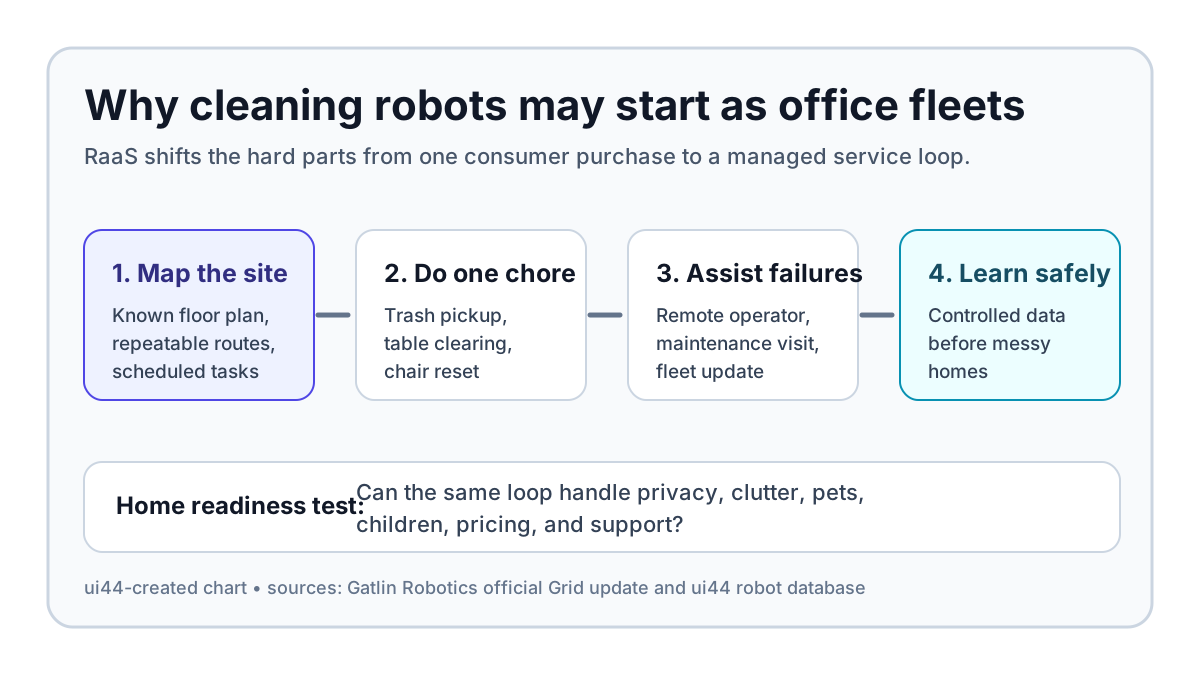
The question is not whether offices are more exciting than homes. They are not. The question is whether offices are easier places to turn robot manipulation into a supportable service.
What is robot-as-a-service cleaning?
Robot-as-a-service, or RaaS, means the customer buys an outcome or subscription rather than owning the robot outright. In cleaning, that can mean a provider installs robots, maps the site, monitors the fleet, handles maintenance, updates software, and may provide remote human assistance when a task is too hard for the autonomy stack.
Gatlin Robotics is a useful current example because its April 2026 official Grid post is not about another floor-cleaning puck. The Pasadena company says it is building practical mobile manipulators and humanoid robots for facility cleaning through a RaaS model. Its first commercial demonstration shows office mapping, scheduled tasks from a tablet interface, light trash pickup such as aluminum cans and paper cups, table-debris clearing, chair pushing, and a G1 humanoid being tested for surface wiping with a sponge.
The important phrase is not "humanoid." It is "everything a vacuum robot does not do." Floors are already the easiest part of cleaning automation. The next useful layer is manipulation: objects, furniture, surfaces, and exceptions. For context, ui44 tracks Unitree G1 as a $13,500 research humanoid; an affordable body still does not equal a supported cleaning service.
Why might offices come before homes?
Offices are not simple, but they are more serviceable than homes in five ways.
First, the map is more stable. A facility manager can define rooms, routes, cleaning zones, after-hours windows, no-go areas, charging locations, and handoff rules. Homes change constantly: shoes move, pets nap in doorways, toys appear under tables, and one person's "trash" may be another person's receipt.
Second, the buyer is different. A company can justify a monthly service if it fills a labor gap, improves consistency, or reduces overnight cleaning pressure. A homeowner compares the same robot against a vacuum, a cleaner, a teenager with a chore chart, and the risk of an expensive machine making a mess.
Third, support can be built into the contract. If a robot fails in an office, the provider can dispatch a technician, remote in, or update the fleet. If a consumer robot fails at 11 p.m. with a wet sponge near a wooden table, support expectations are less forgiving.
Fourth, privacy is easier to scope. Offices still have serious privacy issues, but customers can define business zones, policies, and employee notices. A home robot sees bedrooms, medicine cabinets, children's toys, and personal routines. That makes remote assist and fleet learning much harder to normalize.
Fifth, one office teaches many offices. A service fleet can learn from repeated conference rooms, kitchens, lobbies, bins, chairs, and tabletops. Home layouts are more diverse and emotionally loaded.
What does ui44 robot data say about the current hardware?
The hardware already exists in pieces. The gap is not "can a robot move an object?" The gap is whether the whole service can do useful work reliably enough to pay for itself.
Robot
- Current model
- Buy the platform
- Key ui44 data point
- $24,950, 24.5 kg, 2-5 hour runtime, 2 kg payload
- What it teaches
- Compact mobile manipulation is real, but still research/support heavy
Robot
- Current model
- Home purchase or subscription
- Key ui44 data point
- $7,999 or $450/mo, 30-90 minutes per laundry load, remote assist
- What it teaches
- Narrow chores plus human backup can reach homes earlier
Robot
- Current model
- Pre-order home humanoid
- Key ui44 data point
- $20,000, 167 cm, 30 kg, about 4 hours runtime
- What it teaches
- General-purpose home positioning still needs Expert Mode-style fallback
Robot
- Current model
- Contact-sales service platform
- Key ui44 data point
- 164 cm wheeled humanoid, 62 DOF, 6 kg single-arm payload
- What it teaches
- Home-service trials and commercial cleaning can share hardware
Robot
- Current model
- Commercial service robot
- Key ui44 data point
- Two 7-DOF arms, DH11 dexterous hands, 15 kg delivery capacity
- What it teaches
- Service robots are adding arms before homes get general humanoids
| Robot | Current model | Key ui44 data point | What it teaches |
|---|---|---|---|
| Hello Robot Stretch 3 | Buy the platform | $24,950, 24.5 kg, 2-5 hour runtime, 2 kg payload | Compact mobile manipulation is real, but still research/support heavy |
| Weave Isaac 0 | Home purchase or subscription | $7,999 or $450/mo, 30-90 minutes per laundry load, remote assist | Narrow chores plus human backup can reach homes earlier |
| 1X NEO | Pre-order home humanoid | $20,000, 167 cm, 30 kg, about 4 hours runtime | General-purpose home positioning still needs Expert Mode-style fallback |
| Quanta X2 | Contact-sales service platform | 164 cm wheeled humanoid, 62 DOF, 6 kg single-arm payload | Home-service trials and commercial cleaning can share hardware |
| PUDU FlashBot Arm | Commercial service robot | Two 7-DOF arms, DH11 dexterous hands, 15 kg delivery capacity | Service robots are adding arms before homes get general humanoids |
The pattern is clear. Robots with arms are either expensive platforms, subscription-backed narrow appliances, commercial contact-sales machines, or pre-order humanoids with human-assist escape hatches. That is exactly why RaaS is interesting: it hides some of the messy operational burden from the customer.
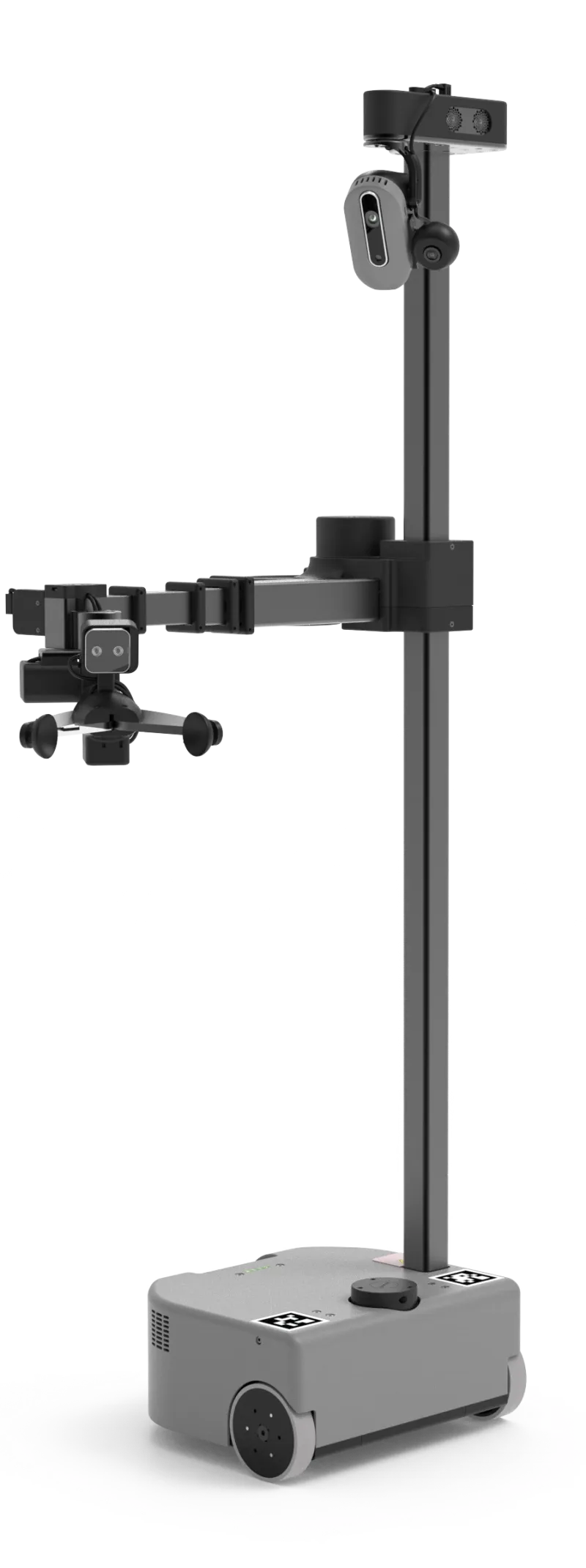
Stretch 3 is the cleanest example of the hardware category. It is not a janitor robot, and it is not sold as a mass-market home appliance. But at 24.5 kg, with a 33 × 34 cm footprint, a telescoping arm, RGBD cameras, LiDAR, ROS 2 support, Python SDK, web teleoperation, and a 2 kg payload, it shows why a mobile manipulator can operate in real rooms rather than only in factory cells.
The catch is cost and support. A $24,950 research-and-assistive platform makes sense for labs, institutions, and specialized deployments. It is a hard sell as a consumer cleaning gadget. A service model can spread training, maintenance, and supervision across many customers.
Why narrow home robots still matter
RaaS does not mean homes have to wait for offices forever. The better lesson is that narrow, well-supported chores beat vague generality.
Weave Isaac 0 is useful because it does one hated home chore: laundry folding. ui44 tracks it at $7,999 upfront or $450 per month. It is stationary, mains powered, and built around a constrained workflow: shirts, long sleeves, sweaters, pants, and towels in about 30-90 minutes per load. Weave also says a specialist can step in remotely when the robot gets stuck, and that models are updated weekly from interactions.
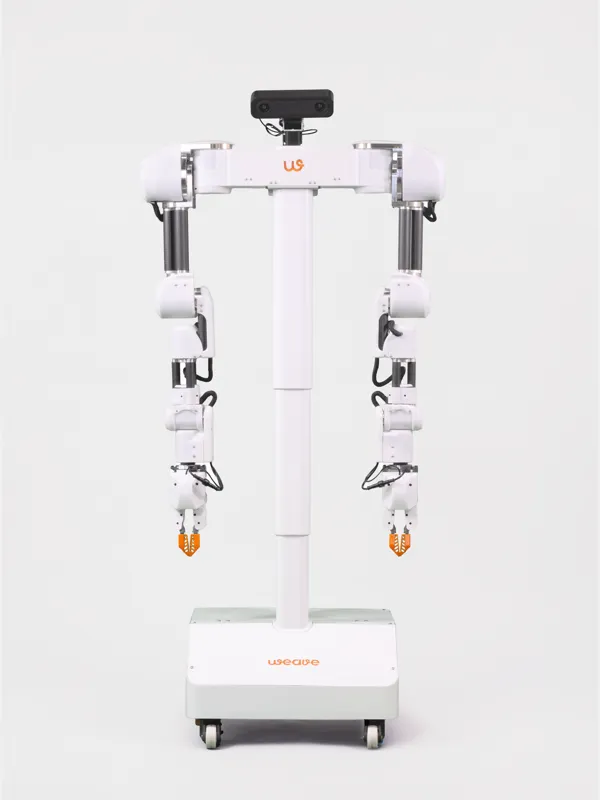
That looks less glamorous than a humanoid walking through a house, but it is closer to a serviceable product. The task is bounded. The robot does not need to understand every object in the home. The customer knows what success looks like. Remote assist is easier to explain because the robot is not wandering into every private room.
This is also why the office-cleaning path is plausible. A robot that first handles cups, cans, tables, and chairs in a controlled building is learning the same kind of intermediate manipulation that a future home robot will need. It is just doing it where support, scheduling, and economics are easier.
How does this compare with home humanoids?
Home humanoids promise a broader shortcut: build a human-shaped robot, teach it household chores, and let it use spaces designed for people. That may work, but current product data argues for caution.
1X NEO is one of the most explicitly home-focused humanoids in ui44's database. It is listed at $20,000 for early adopters, with a $200 deposit, a 167 cm height, 30 kg weight, roughly four hours of runtime, RGB/depth sensing, tactile skin, microphones, Wi-Fi, Bluetooth, and household chore positioning. 1X also describes Expert Mode: for chores NEO does not know, a scheduled 1X Expert can guide it while the robot learns.

That is not a weakness. It is an honest clue about the near-term market. Useful robots will need fallback paths. Whether the body is a humanoid, a wheeled mobile manipulator, or a semi-humanoid service robot, the product has to answer: what happens when autonomy fails?
For offices, the answer can be hidden inside the RaaS contract. For homes, the answer becomes part of the buyer decision. Are you comfortable with remote assistance? Can the robot pause safely? Who pays when it damages something? How fast does support respond? Does the robot improve after failures, or does it just repeat them?
What service robots already know
Commercial service robots have one underrated advantage: they are already operating around people, schedules, elevators, narrow passages, battery swaps, and fleet dashboards.
Pudu is a good example. BellaBot is not a home robot, but ui44 tracks it as deployed across 60+ countries and 600+ cities, with up to 40 kg tray payload, RGBD cameras, LiDAR, dual SLAM navigation, and hot-swappable batteries. PUDU FlashBot Arm moves the category closer to manipulation with two 7-DOF arms, PUDU DH11 dexterous hands, a 15 kg delivery compartment, VSLAM plus LiDAR SLAM, RGBD cameras, pressure-sensitive skin, automatic recharging, and multi-robot collaboration.
PUDU D9, meanwhile, is a development-stage bipedal humanoid with a 170 cm height, up to 2 m/s speed, stair and slope navigation, multimodal perception, and payload handling over 20 kg. Its official sources currently vary by iteration on weight, so ui44 records both the 65 kg product-page spec and the 58 kg latest-iteration update.
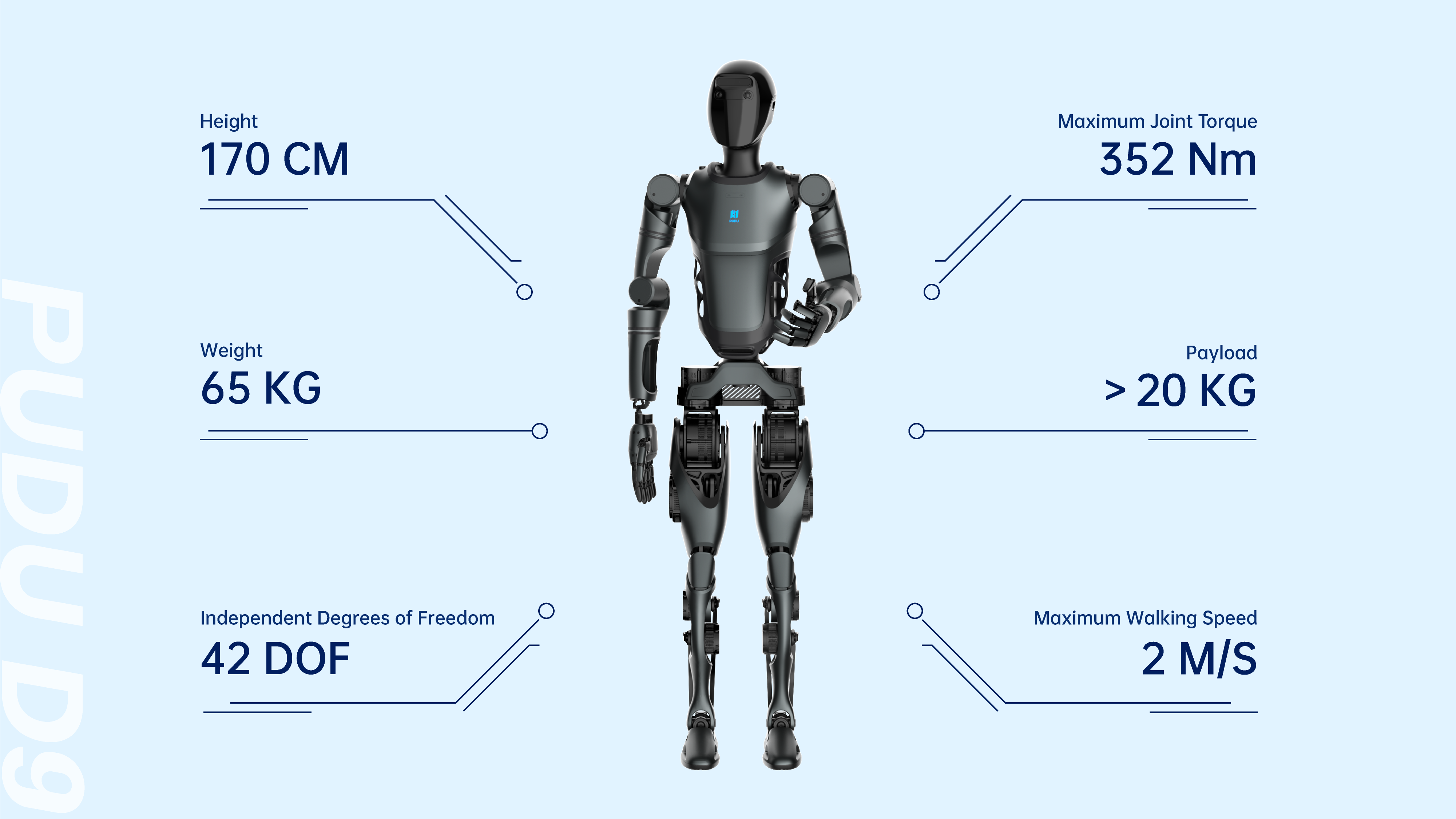
None of that proves Pudu, Gatlin, or any other service-robot company will win the home. It does show why service deployments are strategically important. They force robots to deal with messy-but-repeatable environments before they are asked to handle every edge case in a private house.
What should buyers watch before believing the robot-maid pitch?
If RaaS cleaning fleets are the bridge to home robots, the useful buyer checklist is not "does it look like a person?" It is this:
- Task portfolio: Can the robot do more than floors? Look for pickup, surface wiping, chair reset, loading, sorting, and object handoff.
- Failure handling: Is there remote assist, safe pause, local recovery, or a maintenance guarantee?
- Real deployment environment: Is the robot working in offices, hotels, homes, labs, or only in edited demos?
- Cost model: Is the customer buying hardware, leasing a fleet, paying per month, or paying for an outcome?
- Privacy boundary: What cameras are on, who can see them, and when?
- Learning loop: Does the company explain how failures improve the system, or only promise future autonomy?
- Support burden: Who cleans the robot, swaps batteries, replaces grippers, remaps rooms, and handles accidents?
The best early home robots may look boring because they choose a narrow service loop. The worst ones may look magical because they skip the support model.
Should homes wait for robot-as-a-service?
For most households, yes, at least for general cleaning manipulation. A robot vacuum is already a consumer appliance. A robot that tidies, wipes, resets, folds, carries, and handles exceptions is closer to a managed service than a simple gadget.
That does not mean homeowners should ignore the category. Watch RaaS cleaning fleets closely because they are a live test bed for the boring details that will make or break home robots: scheduling, supervision, privacy, uptime, maintenance, fleet learning, and whether mobile manipulators can do useful work after the demo ends.
The practical forecast is simple: offices may get the first useful robot maids, but homes get the lessons. When a company can prove that robots handle cups, chairs, surfaces, laundry, and failures in paid deployments, then the home robot pitch becomes less about science fiction and more about service quality.
Until then, use ui44's robot database and comparison tools to separate three very different things: a floor-cleaning appliance, a robot with an arm, and a supported service that actually cleans up after people.
Related in the database
Use this article as a privacy verification workflow
Turn the article into a privacy verification pass grounded in the robots, manufacturers, and components it actually references.
Robot-as-a-Service Cleaning Robots: Offices First already points you toward 8 linked robots, 6 manufacturers, and 4 countries inside the ui44 database. That matters because strong buyer guidance is easier to apply when you can move immediately from a claim or warning into concrete product pages, manufacturer directories, component explainers, and country-level context instead of treating the article as an isolated opinion piece. The fastest next step is to turn the article into a shortlist workflow: open the linked robot pages, verify which specs are actually published for those models, then compare the surrounding manufacturer and component context before you decide whether the underlying claim changes your buying plan.
For this topic, the useful discipline is to separate the editorial lesson from the catalog evidence. The article gives you the framing, but the robot pages tell you what each product actually ships with today: sensor stack, connectivity methods, listed price, release timing, category, and support-relevant compatibility notes. The manufacturer pages then show whether you are looking at a one-off launch, a broader lineup pattern, or a company that spans multiple categories. That layered workflow reduces the risk of buying on a single marketing phrase or a single support FAQ.
Use the robot pages to confirm which products actually expose cameras, microphones, Wi-Fi, or voice systems, then use the manufacturer pages to decide how much of the privacy question seems product-specific versus brand-wide. On this route cluster, G1, Stretch 3, and Isaac 0 form the fastest reality check. If you want a quick working shortlist, open Compare G1, Stretch 3, and Isaac 0 next, then keep this article open as the reasoning layer while you compare structured data side by side.
Practical Takeaway
Every robot, manufacturer, category, component, and country reference below resolves to a real ui44 page, keeping the follow-up path grounded in database records rather than generic advice.
Suggested next steps in ui44
- Open G1 and note the listed sensors, connectivity methods, and voice stack before you interpret any policy claim.
- Cross-check the wider brand context on Unitree so you can see whether the privacy question touches one model or a broader lineup.
- Use the linked component pages to confirm how common the relevant sensors and connectivity layers are across the database.
- Keep a short note of which policy layers you checked, which device features are actually present on the robot page, and which items still depend on region- or app-level confirmation.
- Finish with Compare G1, Stretch 3, and Isaac 0 so the policy reading sits next to structured product data.
Robot profiles worth opening next
Use the linked product pages as the evidence layer
The linked robot pages are where this article becomes operational. Instead of asking whether the headline is interesting, use the robot entries to inspect the actual mix of sensors, connectivity options, batteries, pricing, release timing, and stated capabilities attached to the products mentioned in the article. That is the easiest way to see whether the warning or opportunity described here affects one product family, a specific design pattern, or an entire buying lane.
G1 is tracked on ui44 as a available humanoid robot from Unitree. The database currently records a listed price of $13,500, a release date of 2024-05-13, ~2 hours battery life, Not disclosed charging time, and a published stack that includes Depth Camera, 3D LiDAR, and 4 Microphone Array plus Wi-Fi 6 and Bluetooth 5.2.
For privacy-focused reading, this page matters because it shows the concrete device surface behind the policy discussion. Use it to verify whether G1 combines sensors and connectivity in a way that could change the in-home data footprint, and compare the listed capabilities such as Bipedal Walking, Object Manipulation, and Dexterous Hands (optional Dex3-1) with any cloud, app, or voice layers.
Stretch 3
Hello Robot · Home Assistants · Active
Stretch 3 is tracked on ui44 as a active home assistants robot from Hello Robot. The database currently records a listed price of $24,950, a release date of 2024, 2–5 hours battery life, Not disclosed charging time, and a published stack that includes Intel D405 RGBD Camera (gripper), Intel D435if RGBD Camera (head), and Wide-Angle RGB Camera (head) plus Wi-Fi 6E and Bluetooth.
For privacy-focused reading, this page matters because it shows the concrete device surface behind the policy discussion. Use it to verify whether Stretch 3 combines sensors and connectivity in a way that could change the in-home data footprint, and compare the listed capabilities such as Mobile Manipulation, Autonomous Navigation, and Teleoperation (Web / Gamepad / Dexterous) with any cloud, app, or voice layers.
Isaac 0
Weave Robotics · Home Assistants · Available
Isaac 0 is tracked on ui44 as a available home assistants robot from Weave Robotics. The database currently records a listed price of $3,999, a release date of 2026-02, Mains powered (600W, 120V) battery life, N/A (plugged in) charging time, and a published stack that includes Vision System and Proprioceptive Sensors plus Wi-Fi 2.4GHz/5GHz and Ethernet.
For privacy-focused reading, this page matters because it shows the concrete device surface behind the policy discussion. Use it to verify whether Isaac 0 combines sensors and connectivity in a way that could change the in-home data footprint, and compare the listed capabilities such as Laundry Folding, T-shirts, Long Sleeves, Sweaters, and Pants and Towels with any cloud, app, or voice layers.
NEO
1X Technologies · Humanoid · Pre-order
NEO is tracked on ui44 as a pre-order humanoid robot from 1X Technologies. The database currently records a listed price of $20,000, a release date of 2025-10-28, ~4 hours battery life, Not disclosed charging time, and a published stack that includes RGB Cameras, Depth Sensors, and Tactile Skin plus Wi-Fi and Bluetooth.
For privacy-focused reading, this page matters because it shows the concrete device surface behind the policy discussion. Use it to verify whether NEO combines sensors and connectivity in a way that could change the in-home data footprint, and compare the listed capabilities such as Household Chores, Tidying Up, and Safe Human Interaction with any cloud, app, or voice layers.
Quanta X2
X Square Robot · Humanoid · Active
Quanta X2 is tracked on ui44 as a active humanoid robot from X Square Robot. The database currently records a listed price of Price TBA, a release date of 2025-08, Not officially disclosed battery life, Not officially disclosed charging time, and a published stack that includes 2D LiDAR, Ultrasonic Sensors, and RGB-D Camera plus Not officially disclosed.
For privacy-focused reading, this page matters because it shows the concrete device surface behind the policy discussion. Use it to verify whether Quanta X2 combines sensors and connectivity in a way that could change the in-home data footprint, and compare the listed capabilities such as Wheeled Humanoid Mobility, 62-DOF Whole-Body Motion, and 6-DOF Torso with any cloud, app, or voice layers.
Manufacturer context behind the article
Check whether this is one product story or a broader company pattern
Manufacturer pages add the privacy context that individual product pages cannot show on their own. They help you check whether cameras, microphones, cloud accounts, app controls, and policy assumptions appear across a broader lineup or stay tied to one specific product story.
Unitree
ui44 currently tracks 2 robots from Unitree across 1 category. The company is grouped under China, and the current catalog footprint on ui44 includes H1, G1.
That wider brand context matters because privacy questions rarely stop at one FAQ page. A manufacturer route helps you see whether the article is centered on one premium model or on a company that has several relevant products and therefore more than one place where the same policy or app assumptions might matter. The category mix here currently points toward Humanoid as the most useful next route if you want to see whether this article reflects a wider pattern inside the brand.
Hello Robot
ui44 currently tracks 2 robots from Hello Robot across 1 category. The company is grouped under USA, and the current catalog footprint on ui44 includes Stretch 3, Stretch 4.
That wider brand context matters because privacy questions rarely stop at one FAQ page. A manufacturer route helps you see whether the article is centered on one premium model or on a company that has several relevant products and therefore more than one place where the same policy or app assumptions might matter. The category mix here currently points toward Home Assistants as the most useful next route if you want to see whether this article reflects a wider pattern inside the brand.
Weave Robotics
ui44 currently tracks 2 robots from Weave Robotics across 1 category. The company is grouped under Denmark, and the current catalog footprint on ui44 includes Isaac 0, Isaac 1.
That wider brand context matters because privacy questions rarely stop at one FAQ page. A manufacturer route helps you see whether the article is centered on one premium model or on a company that has several relevant products and therefore more than one place where the same policy or app assumptions might matter. The category mix here currently points toward Home Assistants as the most useful next route if you want to see whether this article reflects a wider pattern inside the brand.
1X Technologies
ui44 currently tracks 2 robots from 1X Technologies across 1 category. The company is grouped under Norway, and the current catalog footprint on ui44 includes NEO, EVE.
That wider brand context matters because privacy questions rarely stop at one FAQ page. A manufacturer route helps you see whether the article is centered on one premium model or on a company that has several relevant products and therefore more than one place where the same policy or app assumptions might matter. The category mix here currently points toward Humanoid as the most useful next route if you want to see whether this article reflects a wider pattern inside the brand.
Broaden the scan without leaving the database
Categories, components, and countries add the wider context
Category framing
Category pages are useful when the article touches a buying pattern that shows up across brands. A category route helps you confirm whether the linked products sit in a narrow niche or whether the same question should be tested across a larger field of alternatives.
Humanoid
The Humanoid category page currently groups 129 tracked robots from 92 manufacturers. ui44 describes this lane as: Full-size bipedal humanoid robots built to work alongside people — from factory floors to household tasks. Compare the cutting edge of humanoid robotics.
That makes the category route a practical follow-up when you want to check whether the products linked in this article are typical for the lane or whether they sit at one edge of the market. Useful starting examples currently include NEO, EVE, Mornine M1.
Home Assistants
The Home Assistants category page currently groups 16 tracked robots from 14 manufacturers. ui44 describes this lane as: Arm-based household helpers — laundry folders, kitchen robots, and mobile manipulators that take on hands-on physical tasks around the home.
That makes the category route a practical follow-up when you want to check whether the products linked in this article are typical for the lane or whether they sit at one edge of the market. Useful starting examples currently include Robody, Futuring 2 (F2), Stretch 3.
Country and ecosystem context
Country pages give extra context when support practices, launch sequencing, regulatory posture, or manufacturer mix matter. They are not a substitute for model-level verification, but they do help you see which ecosystems cluster together and which manufacturers sit in the same regional field when you broaden the search beyond the article headline.
China
The China route currently groups 189 tracked robots from 87 manufacturers in ui44. That gives you a useful regional lens when the article points toward support practices, launch sequencing, or brand clusters that may share similar ecosystem assumptions.
On the current route, manufacturers like AGIBOT, Dreame, Unitree Robotics make the page a good way to broaden the scan without losing the regional context that often shapes availability, documentation style, and adjacent alternatives.
USA
The USA route currently groups 89 tracked robots from 69 manufacturers in ui44. That gives you a useful regional lens when the article points toward support practices, launch sequencing, or brand clusters that may share similar ecosystem assumptions.
On the current route, manufacturers like Faraday Future, iRobot, Boston Dynamics make the page a good way to broaden the scan without losing the regional context that often shapes availability, documentation style, and adjacent alternatives.
Denmark
The Denmark route currently groups 2 tracked robots from 1 manufacturers in ui44. That gives you a useful regional lens when the article points toward support practices, launch sequencing, or brand clusters that may share similar ecosystem assumptions.
On the current route, manufacturers like Weave Robotics make the page a good way to broaden the scan without losing the regional context that often shapes availability, documentation style, and adjacent alternatives.
Questions to answer before you move from reading to buying
A follow-up FAQ built from the entities already linked in this article
Frequently Asked Questions
Which page should I open first after reading “Robot-as-a-Service Cleaning Robots: Offices First”?
Start with G1. That gives you a concrete product anchor for the article’s main claim. From there, branch into the manufacturer and component pages so you can tell whether the article is describing one specific model, a repeated brand pattern, or a wider technology issue that affects multiple shortlist options.
How do the manufacturer pages change the buying decision?
Unitree help you zoom out from one article and one product. On ui44 they show lineup breadth, category spread, and the neighboring robots tied to the same company. That context is useful when you are deciding whether a risk belongs to a single model, whether it shows up across a brand’s portfolio, and whether you should keep looking at alternatives before committing.
When should I switch from reading to side-by-side comparison?
Move into Compare G1, Stretch 3, and Isaac 0 as soon as you understand the article’s main warning or promise. The article explains what to watch for, but the compare view is where you can check whether price, status, battery life, connectivity, sensors, and category fit still make the robot a good match for your own home and budget.
Where to go next in ui44
Keep the research chain inside the database
If you want to keep going, these follow-on pages give you the cleanest expansion path from article to research session. Open the comparison route first if you are deciding between products today. Open the manufacturer, category, and component routes if you still need to understand the broader pattern behind the claim.
Written by
ui44 Team
Published May 1, 2026
Share this article
Open a plain share link on X or Bluesky. No embeds, no widgets, no cookie baggage.