Haier's HIVA Haiwa is the most interesting home humanoid you probably can't buy yet. Not because of breakthrough mobility or cutting-edge AI, but because of who's building it: a company that already sells refrigerators, washing machines, and air conditioners to over one billion families worldwide (per Haier's own global website). That appliance ecosystem is something no robotics startup can replicate.
Here's what we know from the ui44 database, what Haier showed at AWE 2026 in Shanghai, and where the HIVA Haiwa actually stands compared to other home robots in development.
What Is the HIVA Haiwa?
Haier unveiled the HIVA Haiwa (also written as "HIVA 海娃") as a household service humanoid at AWE 2026 in Shanghai. The robot was previously shown in prototype form at Haier's Smart Home Scenario Lab during the World Artificial Intelligence Conference (WAIC) in China in 2025.
The robot is built as part of Haier's broader "Robotics Industry Ecosystem," one of six major industrial ecosystems the company lists on its global website.
What our database confirms from official and independent sources:
Spec
Height
- HIVA Haiwa
- 165 cm (5'5")
Spec
Weight
- HIVA Haiwa
- 70 kg (154 lbs)
Spec
Base type
- HIVA Haiwa
- Wheeled (not bipedal)
Spec
Status
- HIVA Haiwa
- Prototype / teleoperated demos
Spec
Official price
- HIVA Haiwa
- Not announced
Spec
Battery life
- HIVA Haiwa
- Not officially disclosed
Spec
Max speed
- HIVA Haiwa
- Not officially disclosed
Spec
Arm payload
- HIVA Haiwa
- Not officially disclosed
Spec
Degrees of freedom
- HIVA Haiwa
- Not officially disclosed
| Spec | HIVA Haiwa |
|---|---|
| Height | 165 cm (5'5") |
| Weight | 70 kg (154 lbs) |
| Base type | Wheeled (not bipedal) |
| Status | Prototype / teleoperated demos |
| Official price | Not announced |
| Battery life | Not officially disclosed |
| Max speed | Not officially disclosed |
| Arm payload | Not officially disclosed |
| Degrees of freedom | Not officially disclosed |
What third-party sources report (not confirmed by Haier):
Independent tracking by Humanoid Press lists the robot at approximately 44 total degrees of freedom (including 12 per hand), a 4 kg per-arm payload, a top speed of 0.7 m/s (2.5 km/h), roughly 1 hour of battery life for the current prototype, and a listed price around $80,000. These figures are useful for understanding the ballpark, but Haier has not published any of them officially, and they should be treated as unconfirmed estimates.
The wheeled base is a deliberate design choice. Haier is not trying to build a walking robot that climbs stairs — it's building a robot that rolls around a flat home and uses its upper body for tasks like cooking assistance, cleaning, laundry, and appliance operation.
What the specs don't tell you: Haier has not published grip force, joint torque, joint speed, camera resolution, depth sensor type, compute specifications, battery capacity, charge time, IP rating, or operating temperature range. The robot is still deep in prototype territory.
The Appliance Integration Advantage
Here's what makes Haier genuinely different from every humanoid startup in the space: it already owns the appliances.
At AWE 2026, Haier didn't just show a robot in isolation. It showed a system with three layers:
- AI Eye 2.0 — computer vision built into Haier appliances. Haier's official AWE coverage describes refrigerators with expanded ingredient recognition (now extending from the冷藏区 to the冷冻区), washing machines that combine visual and voice input to better understand user needs, and air conditioners that dynamically track and follow people for targeted airflow.
- UHomeOS smart home brain — a platform that connects appliances, understands household routines, and coordinates tasks. Haier describes this as the "家庭大脑" (home brain) and positions it as the core platform carrying home knowledge, spatial modeling, agent scheduling, and cross-device coordination.
- HIVA Haiwa — the physical "hands" that execute tasks in the real world
The idea is that the refrigerator tells the robot what needs to go where. The washing machine signals when a cycle is done. The robot moves between appliances and performs the physical tasks — moving groceries, sorting food, loading laundry, ironing clothes, even cooking simple dishes.

Haier's own Chinese-language press release framed the Haiwa as the transition from "聪明家电" (smart appliances) to "会干活的家" (a home that can do chores), describing a move from device intelligence to spatial intelligence. The HIVA Haiwa is the physical executor in a system that already perceives and understands your home — a position no standalone robotics startup can match.
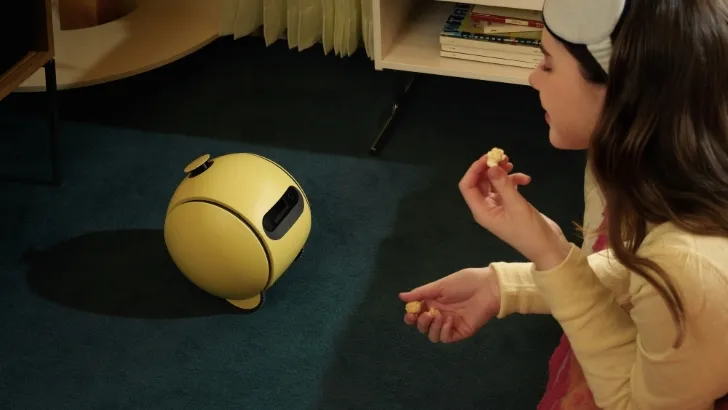
Samsung Ballie has SmartThings integration, and Samsung is the closest parallel, but Haier's appliance portfolio runs deeper and broader across major home categories.
This kind of integration is hard for a robotics startup to replicate because it requires owning the appliance ecosystem, not just building API hooks.
What Can It Actually Do Right Now?
This is where the story gets more grounded. Based on Haier's official AWE 2026 coverage and independent reporting:
What Haier has shown:
- Peeling a banana (a popular demo task across humanoid companies)
- Carrying groceries and sorting food into a refrigerator using barcode recognition
- Operating Haier appliances via the UHomeOS platform
- Basic cleaning, organizing, and laundry-related tasks
- Voice and gesture command response
What Haier has NOT shown:
- Fully autonomous operation — all demos to date appear to involve teleoperation or close human supervision
- Real homes — demonstrations have been in controlled lab/stage environments
- Multi-hour operation — battery life is unconfirmed, and no sustained task sequence has been demonstrated
- Stair navigation — the wheeled base is flat-floor only
- Self-charging capability — no dock or auto-charge system has been demonstrated
Haier's own press materials acknowledge that the goal of "无人家务" (unmanned housework) is still on the road, noting that home environments are vastly more complex than factory settings and that cost, stability, privacy, and cross-brand compatibility all remain open challenges.
Haier's Three-Robot Strategy
One detail that makes Haier's approach more credible than a single concept robot: the company announced three types of home service robots at AWE 2026, covering different household segments including cleaning and companionship. HIVA Haiwa is the flagship humanoid, but the broader lineup suggests Haier is thinking about this as a product category, not a one-off publicity stunt.
The fact that Haier chose wheels for its flagship home robot — rather than the bipedal design that dominates humanoid headlines — is itself a practical signal. Wheels are simpler, cheaper, more reliable, and sufficient for most single-story homes.
How It Compares: HIVA Haiwa vs. Other Home Robots
Using data from the ui44 database, here's how the HIVA Haiwa stacks up against other home robots currently in development or available for preorder:
Type
- HIVA Haiwa
- Wheeled humanoid
- SwitchBot onero H1
- Wheeled robot with arms
- Sunday Memo
- Wheeled robot
- 1X NEO
- Bipedal humanoid
- Samsung Ballie
- Spherical companion
Price
- HIVA Haiwa
- Not announced
- SwitchBot onero H1
- $9,999
- Sunday Memo
- Not announced
- 1X NEO
- $20,000
- Samsung Ballie
- Not announced
DOF
- HIVA Haiwa
- Not officially disclosed
- SwitchBot onero H1
- 22
- Sunday Memo
- Not disclosed
- 1X NEO
- Not disclosed
- Samsung Ballie
- N/A
Battery
- HIVA Haiwa
- Not officially disclosed
- SwitchBot onero H1
- Not disclosed
- Sunday Memo
- Not disclosed
- 1X NEO
- ~4 hours
- Samsung Ballie
- Not disclosed
Appliance integration
- HIVA Haiwa
- Full (Haier ecosystem)
- SwitchBot onero H1
- SwitchBot ecosystem
- Sunday Memo
- None
- 1X NEO
- None
- Samsung Ballie
- Samsung SmartThings
Status
- HIVA Haiwa
- Prototype
- SwitchBot onero H1
- Pre-order / coming soon
- Sunday Memo
- Beta late 2026
- 1X NEO
- Pre-order
- Samsung Ballie
- Development (TBD)
Physical tasks
- HIVA Haiwa
- Full-body manipulation
- SwitchBot onero H1
- Arms + household tasks
- Sunday Memo
- Table clearing, folding, coffee
- 1X NEO
- Household chores
- Samsung Ballie
- Projection + monitoring only
| HIVA Haiwa | SwitchBot onero H1 | Sunday Memo | 1X NEO | Samsung Ballie | |
|---|---|---|---|---|---|
| Type | Wheeled humanoid | Wheeled robot with arms | Wheeled robot | Bipedal humanoid | Spherical companion |
| Price | Not announced | $9,999 | Not announced | $20,000 | Not announced |
| DOF | Not officially disclosed | 22 | Not disclosed | Not disclosed | N/A |
| Battery | Not officially disclosed | Not disclosed | Not disclosed | ~4 hours | Not disclosed |
| Appliance integration | Full (Haier ecosystem) | SwitchBot ecosystem | None | None | Samsung SmartThings |
| Status | Prototype | Pre-order / coming soon | Beta late 2026 | Pre-order | Development (TBD) |
| Physical tasks | Full-body manipulation | Arms + household tasks | Table clearing, folding, coffee | Household chores | Projection + monitoring only |
The comparison reveals Haier's core advantage and its core limitation. On the advantage side: no other robot on this list has deep appliance integration. On the limitation side: with no confirmed pricing, no published battery life, and only teleoperated demos, it's the least commercially ready option in this group.
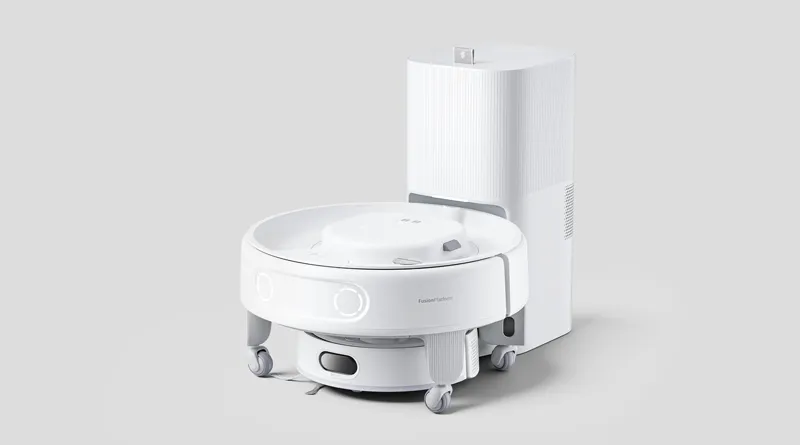
SwitchBot onero H1's approach is instructive as a contrast. Rather than building a full humanoid, SwitchBot made a modular platform (the K20+ Pro) that can carry different attachments — air purifier, camera, stick vacuum. The onero H1 is their step up into arm-based manipulation at $9,999. It's less ambitious than Haier's full-body humanoid but potentially more practical and far more affordable.
1X NEO remains the closest thing to a shipping home humanoid at $20,000, with bipedal locomotion and a focus on gentle manipulation. It's lighter (30 kg vs 70 kg) and has longer battery life (~4 hours), but it doesn't integrate with any appliance ecosystem.
Samsung Ballie was originally announced for Summer 2025 but has been repeatedly delayed. As of early 2026, no release date or pricing has been confirmed, and its status remains "Development." Ballie is primarily a companion and monitoring device (with a built-in projector) rather than a manipulation robot — a different category entirely.
The Pricing Question
Haier has not officially announced pricing or commercialization timing for the HIVA Haiwa. Third-party trackers have listed it at approximately $80,000, but this figure does not come from Haier's own press materials or product pages.
For context on what a credible consumer price would need to look like:
- A 1X NEO costs $20,000 — already far beyond what most households would spend on a single appliance
- A SwitchBot onero H1 is $9,999 — closer to premium appliance pricing
- Haier's own global appliance revenue passed RMB 300 billion (~$41 billion) in 2025, driven by mass-market pricing, not luxury products
The gap between any prototype-stage price and a consumer-accessible price is enormous, and no appliance company — not even one with Haier's manufacturing scale — has demonstrated a credible path to sub-$10,000 humanoids with real autonomy.
Haier's official positioning suggests the company aims to bring humanoid robots "closer to mainstream households" over time, but no concrete pricing timeline exists.
Why Haier Matters Anyway
Even if you never buy an HIVA Haiwa, Haier's entry into home humanoids matters for three reasons:
1. Distribution scale. Haier sells appliances globally through existing retail channels in over 200 countries and districts, through 230,000+ retail outlets. If and when it has a viable home robot, it doesn't need to build a new distribution network from scratch. That's something no robotics startup can say.
2. Appliance integration as a differentiator. The most compelling home robot use case isn't a standalone machine doing tasks in isolation — it's a robot that coordinates with the appliances already in your home. Haier is the first company positioned to do this end-to-end.
3. Validation of the category. When the world's largest appliance company lists "Robotics Industry Ecosystem" as one of six major business divisions and commits real engineering resources to home humanoids, it signals that the category is moving beyond VC-funded moonshots into mainstream product planning. That doesn't mean it'll work — but it means serious companies believe it might.
What to Watch For
If you're tracking whether Haier's home humanoid becomes real, here are the milestones that matter:
- Autonomous demos without teleoperation — until we see the robot completing tasks without a human steering it, the "autonomous household assistant" claim is unverified
- Battery life improvements — without a published figure, the robot's viability for sustained household workflows is an open question. If Haier can't get to 3-4 hours minimum, the product can't function as advertised
- Official pricing — any price at or above $20,000 puts this firmly in enterprise/research territory. The path to a consumer-accessible price requires either dramatic cost reduction or a fundamentally different business model (leasing, subscription, robot-as-a-service)
- Real home trials — lab demos are necessary but not sufficient. The robot needs to work in actual apartments and houses with real clutter, pets, children, and unpredictable layouts
- Multi-floor capability — the wheeled base means this robot is single-story only. For markets with multi-story homes (most of Europe and North America), this is a significant limitation
Bottom Line
Haier's HIVA Haiwa is the most strategically interesting home humanoid on the market — not because of its specs (which are prototype-grade at best), but because of the company behind it. Appliance integration, global distribution, and an installed base of over a billion family connections give Haier a structural advantage that pure robotics companies don't have.
But structural advantages don't ship products. The current HIVA Haiwa is a teleoperated prototype with unconfirmed pricing, unconfirmed battery life, and no autonomous demos. It's years away from anything a normal household would consider, and the gap between Haier's "unmanned housework" vision and the current reality is measured in years of engineering, not months.
The right way to think about Haier's home humanoid: it's not a product you should plan around buying. It's a signal that the world's biggest appliance company believes home humanoids will eventually be real products. When and at what price — that's still completely open.
_Data in this article comes from the ui44 home robot database, Haier's official AWE 2026 press release, Haier's global website, and Humanoid Press. Specs reflect the latest verified information as of May 2026. Compare all robots mentioned at ui44.com/compare._
Related in the database
Use this article as a privacy verification workflow
Turn the article into a privacy verification pass grounded in the robots, manufacturers, and components it actually references.
Haier HIVA Haiwa: Appliance Giant's Home Humanoid Reality Check already points you toward 4 linked robots, 4 manufacturers, and 4 countries inside the ui44 database. That matters because strong buyer guidance is easier to apply when you can move immediately from a claim or warning into concrete product pages, manufacturer directories, component explainers, and country-level context instead of treating the article as an isolated opinion piece. The fastest next step is to turn the article into a shortlist workflow: open the linked robot pages, verify which specs are actually published for those models, then compare the surrounding manufacturer and component context before you decide whether the underlying claim changes your buying plan.
For this topic, the useful discipline is to separate the editorial lesson from the catalog evidence. The article gives you the framing, but the robot pages tell you what each product actually ships with today: sensor stack, connectivity methods, listed price, release timing, category, and support-relevant compatibility notes. The manufacturer pages then show whether you are looking at a one-off launch, a broader lineup pattern, or a company that spans multiple categories. That layered workflow reduces the risk of buying on a single marketing phrase or a single support FAQ.
Use the robot pages to confirm which products actually expose cameras, microphones, Wi-Fi, or voice systems, then use the manufacturer pages to decide how much of the privacy question seems product-specific versus brand-wide. On this route cluster, HIVA Haiwa, Ballie, and onero H1 form the fastest reality check. If you want a quick working shortlist, open Compare HIVA Haiwa, Ballie, and onero H1 next, then keep this article open as the reasoning layer while you compare structured data side by side.
Practical Takeaway
Every robot, manufacturer, category, component, and country reference below resolves to a real ui44 page, keeping the follow-up path grounded in database records rather than generic advice.
Suggested next steps in ui44
- Open HIVA Haiwa and note the listed sensors, connectivity methods, and voice stack before you interpret any policy claim.
- Cross-check the wider brand context on Haier so you can see whether the privacy question touches one model or a broader lineup.
- Use the linked component pages to confirm how common the relevant sensors and connectivity layers are across the database.
- Keep a short note of which policy layers you checked, which device features are actually present on the robot page, and which items still depend on region- or app-level confirmation.
- Finish with Compare HIVA Haiwa, Ballie, and onero H1 so the policy reading sits next to structured product data.
Robot profiles worth opening next
Use the linked product pages as the evidence layer
The linked robot pages are where this article becomes operational. Instead of asking whether the headline is interesting, use the robot entries to inspect the actual mix of sensors, connectivity options, batteries, pricing, release timing, and stated capabilities attached to the products mentioned in the article. That is the easiest way to see whether the warning or opportunity described here affects one product family, a specific design pattern, or an entire buying lane.
HIVA Haiwa
Haier · Humanoid · Prototype
HIVA Haiwa is tracked on ui44 as a prototype humanoid robot from Haier. The database currently records a listed price of Price TBA, a release date of 2026-02, Not officially disclosed battery life, Not officially disclosed charging time, and a published stack that includes Computer vision, Barcode recognition, and Environmental perception plus its listed connectivity stack.
For privacy-focused reading, this page matters because it shows the concrete device surface behind the policy discussion. Use it to verify whether HIVA Haiwa combines sensors and connectivity in a way that could change the in-home data footprint, and compare the listed capabilities such as Household chore assistance, Grocery transport, and Food sorting for refrigeration with any cloud, app, or voice layers.
Ballie is tracked on ui44 as a development companions robot from Samsung. The database currently records a listed price of Price TBA, a release date of TBD, Not officially disclosed battery life, Not officially disclosed charging time, and a published stack that includes Camera, Spatial Sensors, and Environmental Sensors plus Wi-Fi and SmartThings.
For privacy-focused reading, this page matters because it shows the concrete device surface behind the policy discussion. Use it to verify whether Ballie combines sensors and connectivity in a way that could change the in-home data footprint, and compare the listed capabilities such as Autonomous Home Navigation, Built-in Projector (Wall & Floor), and Smart Home Control via SmartThings with any cloud, app, or voice layers, including Bixby.
onero H1 is tracked on ui44 as a development home assistants robot from SwitchBot. The database currently records a listed price of $9,999, a release date of 2026-01-04, Not officially disclosed battery life, Not officially disclosed charging time, and a published stack that includes Multiple cameras, Depth sensing, and Tactile feedback sensing plus its listed connectivity stack.
For privacy-focused reading, this page matters because it shows the concrete device surface behind the policy discussion. Use it to verify whether onero H1 combines sensors and connectivity in a way that could change the in-home data footprint, and compare the listed capabilities such as Indoor wheeled home navigation, Household object manipulation, and Grasping, pushing, opening, and organizing tasks with any cloud, app, or voice layers.
NEO
1X Technologies · Humanoid · Pre-order
NEO is tracked on ui44 as a pre-order humanoid robot from 1X Technologies. The database currently records a listed price of $20,000, a release date of 2025-10-28, ~4 hours battery life, Not disclosed charging time, and a published stack that includes RGB Cameras, Depth Sensors, and Tactile Skin plus Wi-Fi and Bluetooth.
For privacy-focused reading, this page matters because it shows the concrete device surface behind the policy discussion. Use it to verify whether NEO combines sensors and connectivity in a way that could change the in-home data footprint, and compare the listed capabilities such as Household Chores, Tidying Up, and Safe Human Interaction with any cloud, app, or voice layers.
Manufacturer context behind the article
Check whether this is one product story or a broader company pattern
Manufacturer pages add the privacy context that individual product pages cannot show on their own. They help you check whether cameras, microphones, cloud accounts, app controls, and policy assumptions appear across a broader lineup or stay tied to one specific product story.
Haier
ui44 currently tracks 1 robot from Haier across 1 category. The company is grouped under China, and the current catalog footprint on ui44 includes HIVA Haiwa.
That wider brand context matters because privacy questions rarely stop at one FAQ page. A manufacturer route helps you see whether the article is centered on one premium model or on a company that has several relevant products and therefore more than one place where the same policy or app assumptions might matter. The category mix here currently points toward Humanoid as the most useful next route if you want to see whether this article reflects a wider pattern inside the brand.
Samsung
ui44 currently tracks 2 robots from Samsung across 2 categorys. The company is grouped under South Korea, and the current catalog footprint on ui44 includes Ballie, Bespoke AI Jet Bot Steam Ultra.
That wider brand context matters because privacy questions rarely stop at one FAQ page. A manufacturer route helps you see whether the article is centered on one premium model or on a company that has several relevant products and therefore more than one place where the same policy or app assumptions might matter. The category mix here currently points toward Companions, Cleaning as the most useful next route if you want to see whether this article reflects a wider pattern inside the brand.
SwitchBot
ui44 currently tracks 3 robots from SwitchBot across 3 categorys. The company is grouped under USA, and the current catalog footprint on ui44 includes K20+ Pro, onero H1, KATA Friends.
That wider brand context matters because privacy questions rarely stop at one FAQ page. A manufacturer route helps you see whether the article is centered on one premium model or on a company that has several relevant products and therefore more than one place where the same policy or app assumptions might matter. The category mix here currently points toward Cleaning, Home Assistants, Companions as the most useful next route if you want to see whether this article reflects a wider pattern inside the brand.
1X Technologies
ui44 currently tracks 2 robots from 1X Technologies across 1 category. The company is grouped under Norway, and the current catalog footprint on ui44 includes NEO, EVE.
That wider brand context matters because privacy questions rarely stop at one FAQ page. A manufacturer route helps you see whether the article is centered on one premium model or on a company that has several relevant products and therefore more than one place where the same policy or app assumptions might matter. The category mix here currently points toward Humanoid as the most useful next route if you want to see whether this article reflects a wider pattern inside the brand.
Broaden the scan without leaving the database
Categories, components, and countries add the wider context
Category framing
Category pages are useful when the article touches a buying pattern that shows up across brands. A category route helps you confirm whether the linked products sit in a narrow niche or whether the same question should be tested across a larger field of alternatives.
Humanoid
The Humanoid category page currently groups 129 tracked robots from 92 manufacturers. ui44 describes this lane as: Full-size bipedal humanoid robots built to work alongside people — from factory floors to household tasks. Compare the cutting edge of humanoid robotics.
That makes the category route a practical follow-up when you want to check whether the products linked in this article are typical for the lane or whether they sit at one edge of the market. Useful starting examples currently include NEO, EVE, Mornine M1.
Companions
The Companions category page currently groups 53 tracked robots from 48 manufacturers. ui44 describes this lane as: Social robots, robot pets, and elderly-care companions designed for emotional connection and everyday support at home.
That makes the category route a practical follow-up when you want to check whether the products linked in this article are typical for the lane or whether they sit at one edge of the market. Useful starting examples currently include PARO, Abi, Next-Generation Companion Robot.
Country and ecosystem context
Country pages give extra context when support practices, launch sequencing, regulatory posture, or manufacturer mix matter. They are not a substitute for model-level verification, but they do help you see which ecosystems cluster together and which manufacturers sit in the same regional field when you broaden the search beyond the article headline.
China
The China route currently groups 189 tracked robots from 87 manufacturers in ui44. That gives you a useful regional lens when the article points toward support practices, launch sequencing, or brand clusters that may share similar ecosystem assumptions.
On the current route, manufacturers like AGIBOT, Dreame, Unitree Robotics make the page a good way to broaden the scan without losing the regional context that often shapes availability, documentation style, and adjacent alternatives.
South Korea
The South Korea route currently groups 9 tracked robots from 7 manufacturers in ui44. That gives you a useful regional lens when the article points toward support practices, launch sequencing, or brand clusters that may share similar ecosystem assumptions.
On the current route, manufacturers like ROBOTIS, Samsung, GenON make the page a good way to broaden the scan without losing the regional context that often shapes availability, documentation style, and adjacent alternatives.
USA
The USA route currently groups 89 tracked robots from 69 manufacturers in ui44. That gives you a useful regional lens when the article points toward support practices, launch sequencing, or brand clusters that may share similar ecosystem assumptions.
On the current route, manufacturers like Faraday Future, iRobot, Boston Dynamics make the page a good way to broaden the scan without losing the regional context that often shapes availability, documentation style, and adjacent alternatives.
Questions to answer before you move from reading to buying
A follow-up FAQ built from the entities already linked in this article
Frequently Asked Questions
Which page should I open first after reading “Haier HIVA Haiwa: Appliance Giant's Home Humanoid Reality Check”?
Start with HIVA Haiwa. That gives you a concrete product anchor for the article’s main claim. From there, branch into the manufacturer and component pages so you can tell whether the article is describing one specific model, a repeated brand pattern, or a wider technology issue that affects multiple shortlist options.
How do the manufacturer pages change the buying decision?
Haier help you zoom out from one article and one product. On ui44 they show lineup breadth, category spread, and the neighboring robots tied to the same company. That context is useful when you are deciding whether a risk belongs to a single model, whether it shows up across a brand’s portfolio, and whether you should keep looking at alternatives before committing.
When should I switch from reading to side-by-side comparison?
Move into Compare HIVA Haiwa, Ballie, and onero H1 as soon as you understand the article’s main warning or promise. The article explains what to watch for, but the compare view is where you can check whether price, status, battery life, connectivity, sensors, and category fit still make the robot a good match for your own home and budget.
Where to go next in ui44
Keep the research chain inside the database
If you want to keep going, these follow-on pages give you the cleanest expansion path from article to research session. Open the comparison route first if you are deciding between products today. Open the manufacturer, category, and component routes if you still need to understand the broader pattern behind the claim.
Written by
ui44 Team
Published May 5, 2026
Share this article
Open a plain share link on X or Bluesky. No embeds, no widgets, no cookie baggage.