That distinction is what makes the San Francisco startup worth watching. The company says users can open an iOS app, book a time, and have a full-size humanoid robot show up to clean an apartment for $150 per visit. Its site frames the offer bluntly: click a button, robot arrives, cleans, leaves.

That is a more interesting claim than another humanoid demo video. If true at repeatable quality, Gatsby points to a near-term path for home robots that does not require households to buy a $20,000 machine, update it, insure it, repair it, and hope the autonomy catches up. The customer buys an outcome. The operator absorbs the hardware and service complexity.
The catch is that a robot cleaning service has to be judged differently from a robot spec sheet. Gatsby has an app, a flat price, a San Francisco launch, and a bold claim that it performed a U.S. consumer apartment cleaning with no human cleaner physically inside. It also says harder parts of the clean are teleoperated by real humans. That is not a disqualifier. It may be exactly how early household robots become useful. But it changes the buyer question from "Can a humanoid clean?" to who supervises it, what tasks are autonomous, what data leaves the apartment, and what proof exists beyond the booking screen?
What is Gatsby robot cleaning?
Gatsby describes itself as an on-demand cleaning service in San Francisco that uses humanoid robots instead of human cleaners. The official flow is simple: open the app, set an address, book a cleaning, and let the robot do the rest. The App Store listing says Gatsby is available now in San Francisco, CA, with New York, Los Angeles, Chicago, Austin, and Miami listed as coming soon.
The pricing is also simple: $150 flat per clean, regardless of apartment size, with no hidden fees, tips, or surcharges. Gatsby compares that with a San Francisco human-cleaning average of $150-$300. Its site shows an example clean running from 8:42 to 11:47, or 3 hours and 5 minutes, and says a typical clean takes around three hours.
The claimed scope is broad. Gatsby says the robot can handle dishes, surfaces, floors, making the bed, and folding laundry. The About page adds kitchens, bathrooms, countertops, stovetops, mirrors, and surfaces. That is real housekeeping language, not just robot-vacuum language.
The App Store corroborates that Gatsby is a real iPhone app from West Egg Labs Company, released April 3, 2026, with version 1.0.2 updated April 23. It also lists the app as free, lifestyle/utilities, and currently rated 5.0 from one rating. That proves the app exists. It does not prove fleet scale, cleaning quality, autonomy rate, safety record, or repeat customer satisfaction.
Is Gatsby fully autonomous?
This is the most important question, and the honest answer is: not always, based on Gatsby's own wording.
The homepage and App Store copy use strong language such as "fully autonomous" and "no humans present." The press page says Gatsby ran a consumer cleaning with "no humans inside." Those claims matter, because eliminating the physical presence of a stranger is one of the main emotional appeals of a robot cleaning service.
But Gatsby's About page is more precise. It says routine cleaning is fully autonomous, while harder parts are teleoperated by real humans to make sure everything is done right. It also says that if the robot has a question mid-clean — such as where to put something — it can text the customer, and the customer's reply tells it what to do.
That is a workable model. In fact, it may be the most realistic model for early home robots. Many household chores contain a long tail of ambiguous decisions: where a mug belongs, whether a shirt is clean, whether a paper should be thrown away, whether a pet bowl can be moved, or whether a closed bedroom is off-limits. A remote operator or customer-confirmation loop can keep the job moving when autonomy is not ready.
The buyer translation is simple: "no human physically in the apartment" is not the same as "no human involved." A good service should disclose when remote operators can see, hear, guide, pause, or override the robot.
Why the service model may matter more than the robot
Most home robot conversations assume the customer buys the machine. That is the model behind 1X NEO, a home-focused humanoid listed in the ui44 database at $20,000 for early adopters. NEO is a 167 cm, 30 kg preorder robot with about four hours of battery life, depth sensors, tactile skin, and capabilities such as household chores, tidying, safe human interaction, and gentle manipulation.

That is exciting, but ownership pushes a lot of risk onto the household. The buyer has to bet on software updates, support, parts, privacy settings, and the robot becoming more useful over time.
Gatsby flips that. The customer pays per clean, while the operator chooses the robot, maintains the fleet, decides when teleoperation is needed, handles training data, and absorbs at least some service risk. Gatsby says it is robot-agnostic: a consumer distribution platform for humanoid robotics rather than the maker of a single robot model. In plain terms, that means Gatsby wants to be the layer between robot builders and households.
That could be powerful. A cleaning service can swap hardware as robots improve. It can learn from many homes instead of one. It can price the outcome instead of asking a household to finance the robot. It can also discover, very quickly, what people actually expect from a robot in a kitchen, bathroom, or bedroom.
It also creates new trust questions. A robot-agnostic service should tell customers which robot is coming, what data it records, who can access the feed, how building entry works, whether pets are allowed, how remote operation is handled, and what happens if the robot gets stuck or damages something.
How Gatsby compares with current home robots
The ui44 database shows why Gatsby is interesting even without knowing the exact robot model. The hardware landscape is moving fast, but very few robots are both home-capable and consumer-available.

Robot or model
- ui44 status
- Service claim, not a ui44 robot record
- Price signal
- $150 per clean
- Why it matters for Gatsby
- Tests whether households will buy robot labor before buying robots
Robot or model
- ui44 status
- Pre-order
- Price signal
- $20,000
- Why it matters for Gatsby
- Strong buy-the-home-humanoid contrast
Robot or model
- ui44 status
- Active, not consumer purchase
- Price signal
- No pricing announced
- Why it matters for Gatsby
- Strong manipulation/autonomy reference, but not bookable by households
Robot or model
- ui44 status
- Development
- Price signal
- No public price
- Why it matters for Gatsby
- Closest chore-first home robot positioning, with late-2026 beta plans
Robot or model
- ui44 status
- Active/contact-sales
- Price signal
- Not publicly disclosed
- Why it matters for Gatsby
- Similar robot-maid-service direction in home-service trials
Robot or model
- ui44 status
- Available
- Price signal
- $29,950
- Why it matters for Gatsby
- Practical mobile-manipulator baseline for real homes and assistive pilots
Robot or model
- ui44 status
- Available
- Price signal
- $1,699.99
- Why it matters for Gatsby
- Shipping bounded cleaner with a small arm, not broad housekeeping
| Robot or model | ui44 status | Price signal | Why it matters for Gatsby |
|---|---|---|---|
| Gatsby service | Service claim, not a ui44 robot record | $150 per clean | Tests whether households will buy robot labor before buying robots |
| 1X NEO | Pre-order | $20,000 | Strong buy-the-home-humanoid contrast |
| Figure 03 | Active, not consumer purchase | No pricing announced | Strong manipulation/autonomy reference, but not bookable by households |
| Sunday Memo | Development | No public price | Closest chore-first home robot positioning, with late-2026 beta plans |
| Quanta X2 | Active/contact-sales | Not publicly disclosed | Similar robot-maid-service direction in home-service trials |
| Hello Robot Stretch 4 | Available | $29,950 | Practical mobile-manipulator baseline for real homes and assistive pilots |
| Roborock Saros Z70 | Available | $1,699.99 | Shipping bounded cleaner with a small arm, not broad housekeeping |
Figure 03 is the premium humanoid reference point. ui44 tracks it as a 173 cm, 61 kg humanoid with about five hours of battery life, 4.3 km/h speed, a 20 kg payload, stereo vision, depth cameras, force sensors, tactile arrays, and Figure's Helix VLA system. It is important because Figure is pushing whole-body autonomy and home-relevant manipulation. It is not, however, a consumer robot someone can currently buy or book for an apartment clean.
Sunday Memo is arguably closer to Gatsby's chore story. Sunday positions Memo around household tasks such as clearing tables, dishwasher loading, laundry folding, coffee preparation, and voice/app-directed scheduling. But ui44 tracks Memo as development-stage, with no public retail price and a limited Founding Family beta expected in late 2026.
Quanta X2 from X Square Robot is the closest service-model comparison. ui44 lists it as an active wheeled humanoid for home-based services, research, commercial cleaning, and logistics, with 164 cm height, 62 whole-body degrees of freedom, 765 mm arm reach, and 6 kg single-arm payload. X Square has also described home-service deployments. The lesson is similar: robot maids may arrive first as managed services, not boxed consumer products.
Hello Robot Stretch 4 is a different kind of reality check. It is not a humanoid maid, but it is an available mobile manipulator built for real homes, research labs, and assistive pilots. ui44 tracks it at $29,950, with a 160 cm working height, 46 kg weight, eight-hour light-load runtime, self-charging, wide-field depth sensing, LiDAR, and a 2.5-4 kg arm payload depending on extension. That is the kind of practical, less-sci-fi hardware that often teaches the hardest home lessons first.
The Roborock counterpoint: narrow tasks ship first
The strongest consumer counterexample to Gatsby is not another humanoid. It is a shipping robot cleaner with a very narrow job.
Roborock Saros Z70 is available at $1,699.99 in ui44's current database. It is a robot vacuum/mop with the OmniGrip five-axis arm, 22,000 Pa suction, LiDAR navigation, RGB camera, structured light, and a claimed ability to pick up small items up to 300 g such as socks, sandals, crumpled tissues, and towels. Roborock's own examples cite roughly 2h10+ of vacuuming/mopping with the arm enabled while tidying 10 items.
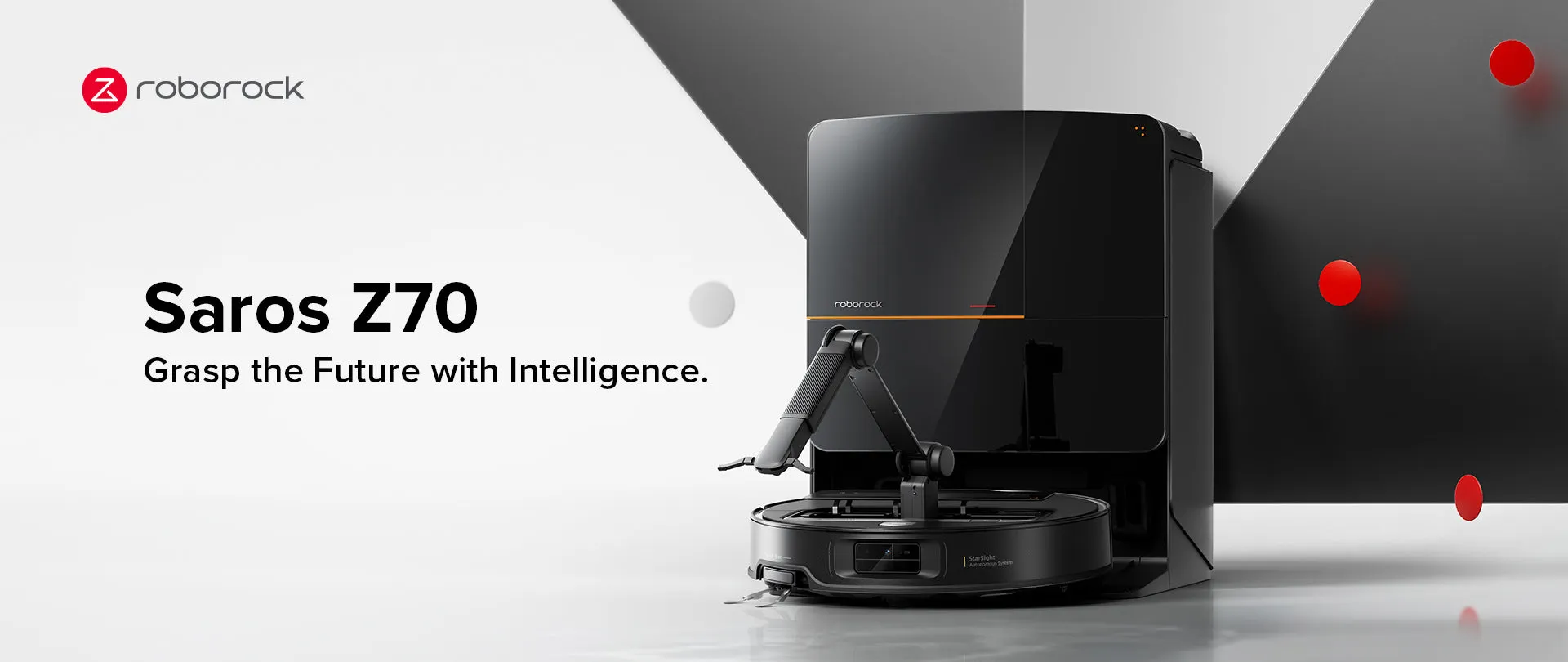
That is much less ambitious than humanoid housekeeping, but it has advantages: it is priced, shipping, bounded, measurable, and built around a task consumers already understand. A vacuum either cleans the floor or it does not. A humanoid cleaner has to satisfy a far fuzzier standard: was the apartment actually clean, were items put where the resident expected, was anything handled that should not have been touched, and was remote assistance acceptable?
This is why Gatsby's service model matters. Broad housekeeping is too messy to fit neatly into a consumer spec sheet. A managed service can define the task, collect feedback, handle exceptions, and improve the fleet. But the service also needs proof that it can produce repeatable results without hiding the human labor, data collection, or operational constraints behind the word "robot."
The privacy question is not solved by "no strangers"
Gatsby's pitch leans on the emotional appeal of no human cleaner in the home: no strangers, no awkward small talk, no worry about something going missing. That is a real consumer pain point. But privacy does not disappear when the person is remote or when the worker is a robot.
Gatsby's privacy policy says the app collects phone number, full name, email, city, home address, unit or apartment number, payment information handled by Stripe, account identifiers, booking history, authentication data, device and network data, and address-search information sent to Google Places API. The App Store privacy section lists data linked to the user including location, contact info, and identifiers.
That is not unusual for an on-demand home service. But a cleaning robot can also need perception data from inside the home to navigate, manipulate objects, and ask for help. Gatsby's public pages do not yet provide enough operational detail for a careful buyer to understand camera visibility, remote-operator access, retention, redaction, or whether users can create no-go rooms and private zones.
A good robot cleaning service should answer these questions plainly:
- Can a remote operator view live video from inside the apartment?
- Is audio captured, and if so, when?
- Are images or maps retained for training?
- Can residents exclude bedrooms, desks, paperwork, medicine, or children's areas?
- What is visible to robot partners if Gatsby uses third-party hardware?
- How are building access codes, keys, elevators, pets, and roommates handled?
None of those questions means Gatsby is doing something wrong. They are the normal questions that appear when robotics moves from a lab video into someone's home.

What buyers should ask before booking
If you are in San Francisco and tempted by Gatsby, the right posture is cautious curiosity. This is exactly the kind of experiment that could make home robots real faster. It is also early enough that customers should ask direct questions.
Start with the robot: which manufacturer and model will enter the apartment, what safety certifications or internal tests does it have, what is its payload, how does it stop, and what surfaces or objects is it forbidden to touch?
Then ask about the clean: what tasks are guaranteed, what is skipped, whether laundry folding includes all garment types, whether dishes means loading a dishwasher or hand-washing, whether bathrooms are included, and whether floors mean vacuuming, mopping, or both.
Ask about supervision: which parts are autonomous, which parts are teleoperated, when a human operator can intervene, whether the operator sees live video, and whether the robot pauses if the customer does not answer a question.
Ask about risk: Gatsby says if it breaks something, it replaces it. That is a strong promise. Buyers should still look for the operational details: claim limits, documentation requirements, insurance, refunds, and what happens if the robot cannot complete the clean.
Finally, ask about proof. One successful apartment clean is a milestone. A consumer service needs repeatability: many cleans, varied apartments, pets, elevators, clutter, fragile objects, late cancellations, robot failures, and customers who would book again.
So, is on-demand humanoid housekeeping real?
Yes, but only in the early-service sense.
Gatsby appears to be a real app-backed attempt to sell humanoid apartment cleaning in San Francisco for $150 per clean. Its public materials make the right commercial bet: people do not necessarily want a robot; they want the chore gone. A managed service could be a better bridge to useful home robotics than asking every household to become a robotics lab.
But the strongest version of the story is not "robot maids have arrived." It is more careful: robot housekeeping is entering the service-experiment phase. The robot may do routine work autonomously, harder parts may still involve remote humans, and the most important product may be the operating layer around the robot: scheduling, supervision, exception handling, privacy, liability, and feedback.
That is still meaningful. If Gatsby can prove repeatable cleans, clear remote assistance rules, transparent privacy controls, and reliable damage coverage, it will tell us something important about the future of home robots. The first useful home humanoid may not be the one you buy. It may be the one that shows up for three hours, does a narrow job under supervision, and leaves.
Related in the database
Use this article as a privacy verification workflow
Turn the article into a privacy verification pass grounded in the robots, manufacturers, and components it actually references.
Gatsby Robot Cleaning: Is It Real? already points you toward 6 linked robots, 6 manufacturers, and 3 countries inside the ui44 database. That matters because strong buyer guidance is easier to apply when you can move immediately from a claim or warning into concrete product pages, manufacturer directories, component explainers, and country-level context instead of treating the article as an isolated opinion piece. The fastest next step is to turn the article into a shortlist workflow: open the linked robot pages, verify which specs are actually published for those models, then compare the surrounding manufacturer and component context before you decide whether the underlying claim changes your buying plan.
For this topic, the useful discipline is to separate the editorial lesson from the catalog evidence. The article gives you the framing, but the robot pages tell you what each product actually ships with today: sensor stack, connectivity methods, listed price, release timing, category, and support-relevant compatibility notes. The manufacturer pages then show whether you are looking at a one-off launch, a broader lineup pattern, or a company that spans multiple categories. That layered workflow reduces the risk of buying on a single marketing phrase or a single support FAQ.
Use the robot pages to confirm which products actually expose cameras, microphones, Wi-Fi, or voice systems, then use the manufacturer pages to decide how much of the privacy question seems product-specific versus brand-wide. On this route cluster, NEO, Figure 03, and Memo form the fastest reality check. If you want a quick working shortlist, open Compare NEO, Figure 03, and Memo next, then keep this article open as the reasoning layer while you compare structured data side by side.
Practical Takeaway
Every robot, manufacturer, category, component, and country reference below resolves to a real ui44 page, keeping the follow-up path grounded in database records rather than generic advice.
Suggested next steps in ui44
- Open NEO and note the listed sensors, connectivity methods, and voice stack before you interpret any policy claim.
- Cross-check the wider brand context on 1X Technologies so you can see whether the privacy question touches one model or a broader lineup.
- Use the linked component pages to confirm how common the relevant sensors and connectivity layers are across the database.
- Keep a short note of which policy layers you checked, which device features are actually present on the robot page, and which items still depend on region- or app-level confirmation.
- Finish with Compare NEO, Figure 03, and Memo so the policy reading sits next to structured product data.
Robot profiles worth opening next
Use the linked product pages as the evidence layer
The linked robot pages are where this article becomes operational. Instead of asking whether the headline is interesting, use the robot entries to inspect the actual mix of sensors, connectivity options, batteries, pricing, release timing, and stated capabilities attached to the products mentioned in the article. That is the easiest way to see whether the warning or opportunity described here affects one product family, a specific design pattern, or an entire buying lane.
NEO
1X Technologies · Humanoid · Pre-order
NEO is tracked on ui44 as a pre-order humanoid robot from 1X Technologies. The database currently records a listed price of $20,000, a release date of 2025-10-28, ~4 hours battery life, Not disclosed charging time, and a published stack that includes RGB Cameras, Depth Sensors, and Tactile Skin plus Wi-Fi and Bluetooth.
For privacy-focused reading, this page matters because it shows the concrete device surface behind the policy discussion. Use it to verify whether NEO combines sensors and connectivity in a way that could change the in-home data footprint, and compare the listed capabilities such as Household Chores, Tidying Up, and Safe Human Interaction with any cloud, app, or voice layers.
Figure 03 is tracked on ui44 as a active humanoid robot from Figure AI. The database currently records a listed price of Price TBA, a release date of 2025-10-09, ~5 hours battery life, Not disclosed charging time, and a published stack that includes Stereo Vision, Depth Cameras, and Force Sensors plus Wi-Fi and Bluetooth.
For privacy-focused reading, this page matters because it shows the concrete device surface behind the policy discussion. Use it to verify whether Figure 03 combines sensors and connectivity in a way that could change the in-home data footprint, and compare the listed capabilities such as Complex Manipulation, Warehouse Work, and Manufacturing Tasks with any cloud, app, or voice layers.
Memo is tracked on ui44 as a development home assistants robot from Sunday. The database currently records a listed price of Price TBA, a release date of 2026-03-12, 4 hours battery life, 1 hour (self-charging planned for the beta program) charging time, and a published stack that includes its published sensor stack plus its listed connectivity stack.
For privacy-focused reading, this page matters because it shows the concrete device surface behind the policy discussion. Use it to verify whether Memo combines sensors and connectivity in a way that could change the in-home data footprint, and compare the listed capabilities such as Autonomous table clearing, Dishwasher loading, and Laundry folding with any cloud, app, or voice layers.
Quanta X2
X Square Robot · Humanoid · Active
Quanta X2 is tracked on ui44 as a active humanoid robot from X Square Robot. The database currently records a listed price of Price TBA, a release date of 2025-08, Not officially disclosed battery life, Not officially disclosed charging time, and a published stack that includes 2D LiDAR, Ultrasonic Sensors, and RGB-D Camera plus Not officially disclosed.
For privacy-focused reading, this page matters because it shows the concrete device surface behind the policy discussion. Use it to verify whether Quanta X2 combines sensors and connectivity in a way that could change the in-home data footprint, and compare the listed capabilities such as Wheeled Humanoid Mobility, 62-DOF Whole-Body Motion, and 6-DOF Torso with any cloud, app, or voice layers.
Stretch 4
Hello Robot · Home Assistants · Available
Stretch 4 is tracked on ui44 as a available home assistants robot from Hello Robot. The database currently records a listed price of $29,950, a release date of 2026-05-12, 8 hours (light CPU load) battery life, Not officially disclosed charging time, and a published stack that includes Wide-FOV depth sensing, High-resolution RGB cameras, and Calibrated RGB + depth perception plus its listed connectivity stack.
For privacy-focused reading, this page matters because it shows the concrete device surface behind the policy discussion. Use it to verify whether Stretch 4 combines sensors and connectivity in a way that could change the in-home data footprint, and compare the listed capabilities such as Mobile Manipulation, Omnidirectional Indoor Mobility, and Autonomous Mapping and Navigation with any cloud, app, or voice layers.
Manufacturer context behind the article
Check whether this is one product story or a broader company pattern
Manufacturer pages add the privacy context that individual product pages cannot show on their own. They help you check whether cameras, microphones, cloud accounts, app controls, and policy assumptions appear across a broader lineup or stay tied to one specific product story.
1X Technologies
ui44 currently tracks 2 robots from 1X Technologies across 1 category. The company is grouped under Norway, and the current catalog footprint on ui44 includes NEO, EVE.
That wider brand context matters because privacy questions rarely stop at one FAQ page. A manufacturer route helps you see whether the article is centered on one premium model or on a company that has several relevant products and therefore more than one place where the same policy or app assumptions might matter. The category mix here currently points toward Humanoid as the most useful next route if you want to see whether this article reflects a wider pattern inside the brand.
Figure AI
ui44 currently tracks 2 robots from Figure AI across 1 category. The company is grouped under USA, and the current catalog footprint on ui44 includes Figure 03, Figure 02.
That wider brand context matters because privacy questions rarely stop at one FAQ page. A manufacturer route helps you see whether the article is centered on one premium model or on a company that has several relevant products and therefore more than one place where the same policy or app assumptions might matter. The category mix here currently points toward Humanoid as the most useful next route if you want to see whether this article reflects a wider pattern inside the brand.
Sunday
ui44 currently tracks 1 robot from Sunday across 1 category. The company is grouped under USA, and the current catalog footprint on ui44 includes Memo.
That wider brand context matters because privacy questions rarely stop at one FAQ page. A manufacturer route helps you see whether the article is centered on one premium model or on a company that has several relevant products and therefore more than one place where the same policy or app assumptions might matter. The category mix here currently points toward Home Assistants as the most useful next route if you want to see whether this article reflects a wider pattern inside the brand.
X Square Robot
ui44 currently tracks 1 robot from X Square Robot across 1 category. The company is grouped under China, and the current catalog footprint on ui44 includes Quanta X2.
That wider brand context matters because privacy questions rarely stop at one FAQ page. A manufacturer route helps you see whether the article is centered on one premium model or on a company that has several relevant products and therefore more than one place where the same policy or app assumptions might matter. The category mix here currently points toward Humanoid as the most useful next route if you want to see whether this article reflects a wider pattern inside the brand.
Broaden the scan without leaving the database
Categories, components, and countries add the wider context
Category framing
Category pages are useful when the article touches a buying pattern that shows up across brands. A category route helps you confirm whether the linked products sit in a narrow niche or whether the same question should be tested across a larger field of alternatives.
Humanoid
The Humanoid category page currently groups 129 tracked robots from 92 manufacturers. ui44 describes this lane as: Full-size bipedal humanoid robots built to work alongside people — from factory floors to household tasks. Compare the cutting edge of humanoid robotics.
That makes the category route a practical follow-up when you want to check whether the products linked in this article are typical for the lane or whether they sit at one edge of the market. Useful starting examples currently include NEO, EVE, Mornine M1.
Home Assistants
The Home Assistants category page currently groups 16 tracked robots from 14 manufacturers. ui44 describes this lane as: Arm-based household helpers — laundry folders, kitchen robots, and mobile manipulators that take on hands-on physical tasks around the home.
That makes the category route a practical follow-up when you want to check whether the products linked in this article are typical for the lane or whether they sit at one edge of the market. Useful starting examples currently include Robody, Futuring 2 (F2), Stretch 3.
Country and ecosystem context
Country pages give extra context when support practices, launch sequencing, regulatory posture, or manufacturer mix matter. They are not a substitute for model-level verification, but they do help you see which ecosystems cluster together and which manufacturers sit in the same regional field when you broaden the search beyond the article headline.
Norway
The Norway route currently groups 2 tracked robots from 1 manufacturers in ui44. That gives you a useful regional lens when the article points toward support practices, launch sequencing, or brand clusters that may share similar ecosystem assumptions.
On the current route, manufacturers like 1X Technologies make the page a good way to broaden the scan without losing the regional context that often shapes availability, documentation style, and adjacent alternatives.
USA
The USA route currently groups 89 tracked robots from 69 manufacturers in ui44. That gives you a useful regional lens when the article points toward support practices, launch sequencing, or brand clusters that may share similar ecosystem assumptions.
On the current route, manufacturers like Faraday Future, iRobot, Boston Dynamics make the page a good way to broaden the scan without losing the regional context that often shapes availability, documentation style, and adjacent alternatives.
China
The China route currently groups 189 tracked robots from 87 manufacturers in ui44. That gives you a useful regional lens when the article points toward support practices, launch sequencing, or brand clusters that may share similar ecosystem assumptions.
On the current route, manufacturers like AGIBOT, Dreame, Unitree Robotics make the page a good way to broaden the scan without losing the regional context that often shapes availability, documentation style, and adjacent alternatives.
Questions to answer before you move from reading to buying
A follow-up FAQ built from the entities already linked in this article
Frequently Asked Questions
Which page should I open first after reading “Gatsby Robot Cleaning: Is It Real?”?
Start with NEO. That gives you a concrete product anchor for the article’s main claim. From there, branch into the manufacturer and component pages so you can tell whether the article is describing one specific model, a repeated brand pattern, or a wider technology issue that affects multiple shortlist options.
How do the manufacturer pages change the buying decision?
1X Technologies help you zoom out from one article and one product. On ui44 they show lineup breadth, category spread, and the neighboring robots tied to the same company. That context is useful when you are deciding whether a risk belongs to a single model, whether it shows up across a brand’s portfolio, and whether you should keep looking at alternatives before committing.
When should I switch from reading to side-by-side comparison?
Move into Compare NEO, Figure 03, and Memo as soon as you understand the article’s main warning or promise. The article explains what to watch for, but the compare view is where you can check whether price, status, battery life, connectivity, sensors, and category fit still make the robot a good match for your own home and budget.
Where to go next in ui44
Keep the research chain inside the database
If you want to keep going, these follow-on pages give you the cleanest expansion path from article to research session. Open the comparison route first if you are deciding between products today. Open the manufacturer, category, and component routes if you still need to understand the broader pattern behind the claim.
Written by
ui44 Team
Published May 25, 2026
Share this article
Open a plain share link on X or Bluesky. No embeds, no widgets, no cookie baggage.