That makes plant care a better benchmark than it sounds. If a future home robot can reliably care for a basil plant, a strawberry runner, or a fragile orchid without drowning it, snapping it, or mistaking one stem for another, it has solved a lot of the same problems behind laundry, tidying, cooking prep, and eldercare support.
The short answer: no mainstream home robot can truly take care of houseplants today. Some robots are getting close to the necessary ingredients, and research projects are making the problem clearer. But the current buying reality is still closer to reminders, monitoring, and supervised manipulation than autonomous plant care.
Can home robots take care of houseplants today?
Not in the full sense most people mean. A smart speaker can remind you to water. A moisture sensor can report dry soil. A robot vacuum can avoid a pot if its obstacle model is good. A few upcoming home robots claim plant or pet care as a future lifestyle feature. None of that is the same as a robot that understands a specific plant, touches it safely, prunes correctly, waters the right amount, checks for damage, and knows when to stop.
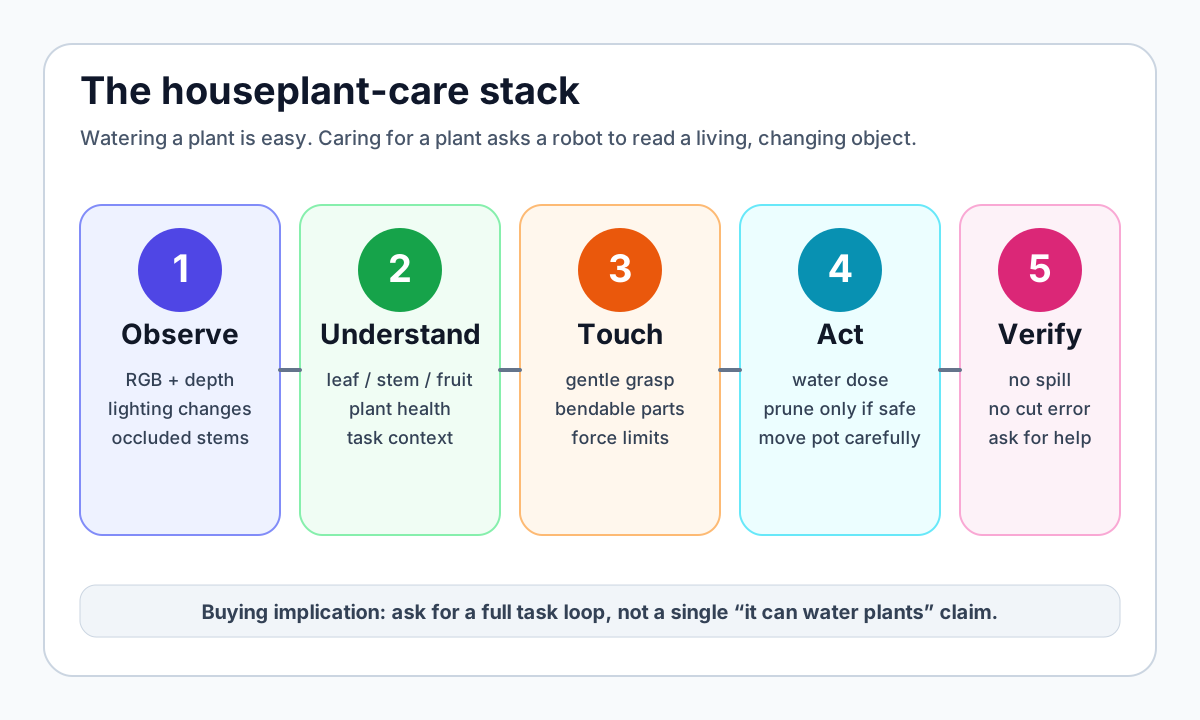
This distinction matters because plant care is not one task. It is a task loop:
Plant-care step
Observe the plant
- What the robot must do
- See leaves, stems, fruit, soil, pot edge, water, and obstacles
- Why this is hard at home
- Lighting changes, leaves occlude each other, plants grow over time
Plant-care step
Understand the action
- What the robot must do
- Decide whether to water, prune, rotate, clean, or leave it alone
- Why this is hard at home
- Different species need different rules and symptoms can be subtle
Plant-care step
Touch safely
- What the robot must do
- Move leaves, hold a stem, lift a pot, or manipulate a watering can
- Why this is hard at home
- Plant parts bend, tear, and spring back unpredictably
Plant-care step
Act with precision
- What the robot must do
- Dose water, cut the right growth, avoid spilling or crushing
- Why this is hard at home
- A one-centimeter mistake can damage the plant or the home
Plant-care step
Verify the result
- What the robot must do
- Check what changed and whether follow-up is needed
- Why this is hard at home
- The consequence may not be obvious until later
| Plant-care step | What the robot must do | Why this is hard at home |
|---|---|---|
| Observe the plant | See leaves, stems, fruit, soil, pot edge, water, and obstacles | Lighting changes, leaves occlude each other, plants grow over time |
| Understand the action | Decide whether to water, prune, rotate, clean, or leave it alone | Different species need different rules and symptoms can be subtle |
| Touch safely | Move leaves, hold a stem, lift a pot, or manipulate a watering can | Plant parts bend, tear, and spring back unpredictably |
| Act with precision | Dose water, cut the right growth, avoid spilling or crushing | A one-centimeter mistake can damage the plant or the home |
| Verify the result | Check what changed and whether follow-up is needed | The consequence may not be obvious until later |
That is why plant care is more than a cute smart-home feature. It is a compact version of the home-robot manipulation problem.
What ROBOFARMER teaches home robot buyers
The clearest current evidence comes from agriculture research, not from a consumer product page. In the Norwegian ROBOFARMER project, researchers from SINTEF, NMBU, Graminor, Njøs fruit and berry center, and robotics partners are studying how robots can learn plant-care work in greenhouse and field settings. The SINTEF project page frames the challenge as safe, reliable sensing, learning, control, and multi-arm robotic interaction with crops. That is very close to the same stack a home plant-care robot would need, just at a different scale.
Gemini.no and TU.no describe a useful example: strawberry plants with runners that need pruning. Picking ripe fruit is already hard, but pruning and care are harder because the robot has to understand the structure of the plant. It needs to know which parts can be bent, which should be cut, which should stay, and how the plant sits in 3D space.
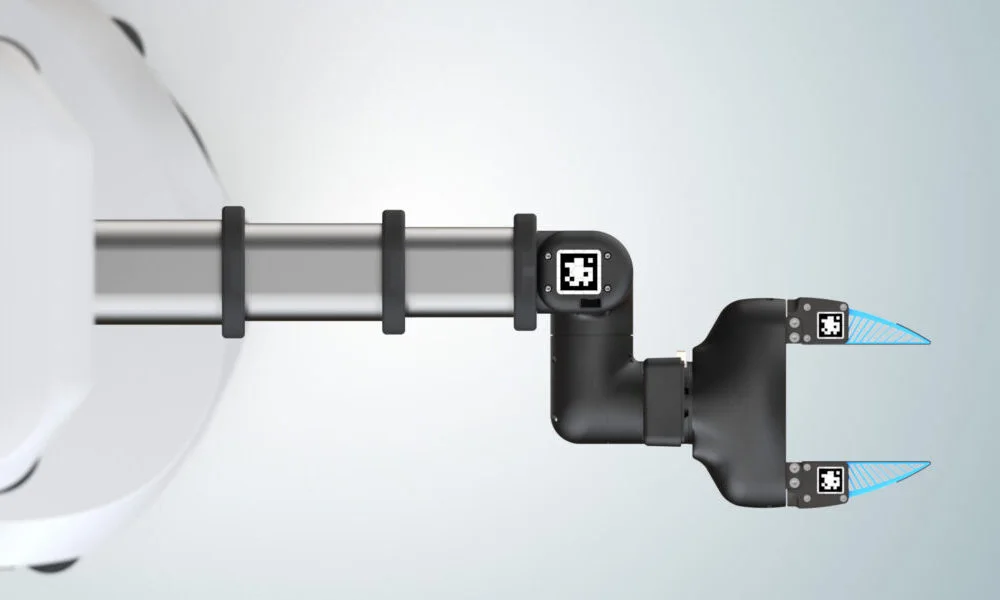
The most interesting detail is how the researchers collect training data. Graminor's project note says ROBOFARMER uses eye-tracking glasses with four cameras that follow the expert's eyes and another camera that follows hand movement. A 3D sensor constructs a model of the strawberry plant so the system can distinguish leaves, berries, stems, and other parts. The goal is not just to copy motion. It is to learn what the gardener looks at, when they decide a part is relevant, and how they move when pruning a runner.
That lesson transfers directly to homes. A robot does not become good at plant care because it has a gripper. It becomes useful only if perception, task knowledge, gentle manipulation, and verification work together.
The home robot database view: which robots are closest?
ui44's database is useful here because it separates plant-care marketing from hardware evidence. The nearest candidates are not necessarily the most humanoid-looking robots. They are robots with indoor mobility, reachable arms, RGB/depth perception, some form of force control or tactile feedback, and a clear path for task-specific learning.
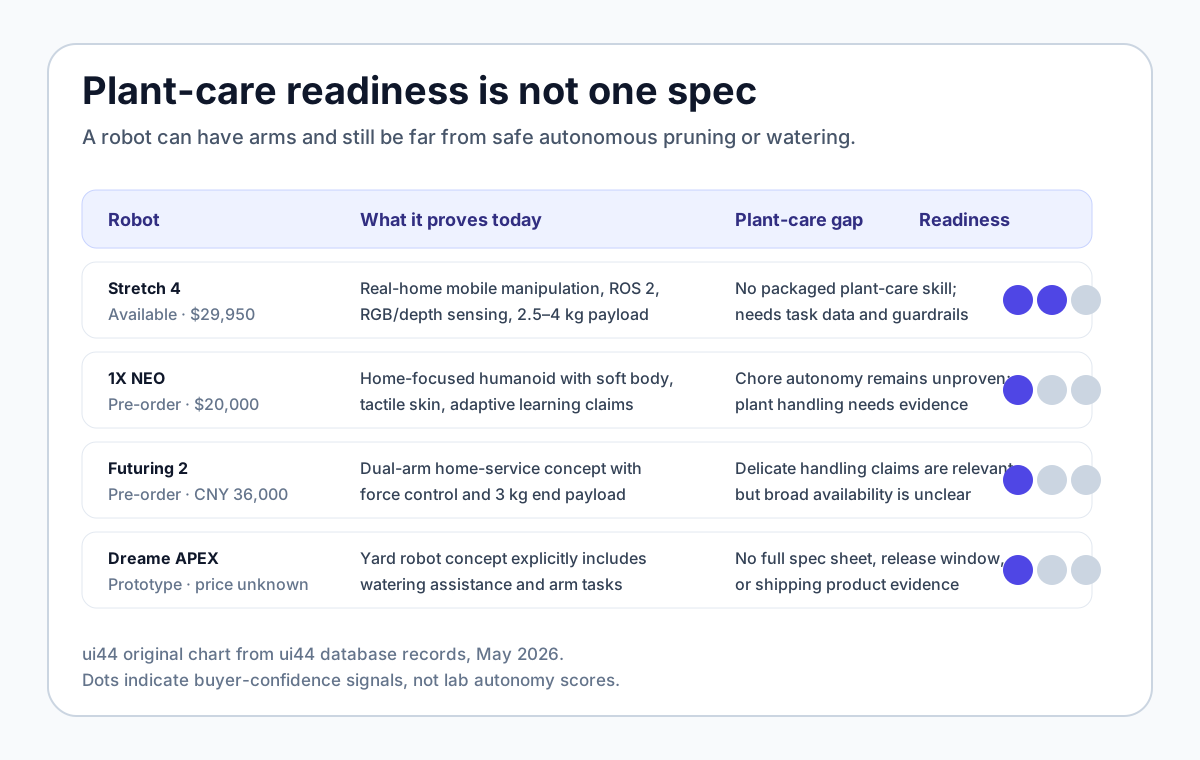
Hello Robot Stretch 4 is the most practical near-term reference point. ui44 lists it as Available at $29,950, with a 160 cm working height, 45 cm diameter footprint, self-charging, an 8-hour light-load runtime, calibrated RGB/depth perception, wide-FOV depth sensing, hemispherical LiDAR, a wrist-mounted depth camera, ROS 2/Python tools, and a telescoping arm rated for 2.5 kg extended or 4 kg retracted. That is not a houseplant appliance, but it is shaped for real indoor mobile manipulation in ways a generic humanoid demo often is not.
1X NEO is the most consumer-facing humanoid reference. ui44 tracks it as a $20,000 pre-order robot with a 167 cm, 30 kg soft body, around 4 hours of battery life, RGB cameras, depth sensors, tactile skin, a microphone array, Wi-Fi, Bluetooth, adaptive learning claims, and gentle household-manipulation positioning. If a home humanoid is eventually going to water plants, NEO's soft-body and tactile-sensing direction is relevant. The missing piece is public evidence that it can perform a plant-care task loop rather than a general household demo.
Futuring 2 (F2) is another useful comparison because its public positioning is explicitly domestic. ui44 lists it as a CNY 36,000 pre-order home-service robot with dual-arm manipulation, a 3 kg end-effector payload, a 360-degree sensing system, multimodal perception, tactile sensing, force control, and advertised delicate handling such as eggs, drinks, clothing, and appliance operation. That force-control emphasis is the kind of spec plant care needs, but broad availability and independent task proof are still unclear.
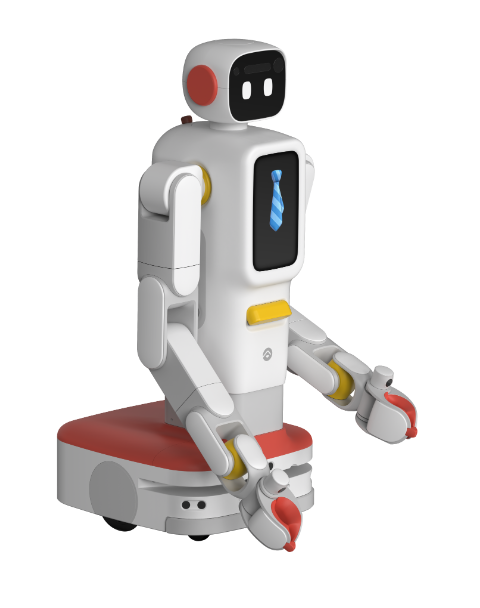
MyMemo ONE is interesting for a different reason: the company's CES positioning includes plant and pet care, but ui44 currently tracks it as a development-stage four-foot home humanoid with no final pricing, no shipping timing, and many key specs undisclosed. That is exactly the type of claim buyers should treat as a watchlist item, not a purchase reason.
Dreame Roboticmower APEX is outdoor rather than houseplant-focused, but it shows where the category may go. ui44 tracks it as a prototype yard robot concept with a multi-function arm and listed exploratory tasks including watering assistance, obstacle pickup, leaf sweeping, tool switching, and delicate edge-trimming. The caveat is large: no public pricing, retail timing, or full spec sheet has been announced.
Roborock Saros Z70 is the opposite kind of example. It is available, priced in ui44 at $1,299.99, and has a foldable five-axis OmniGrip arm for socks, shoes, and small-item pickup. That proves a narrow arm can ship in a consumer robot. It does not prove plant care, because a plant is not a sock. The useful buyer lesson is that limited manipulation may arrive in appliances before full plant-care autonomy arrives in humanoids.
Why plants are harder than socks, cups, and toys
Home robot demos often use objects with clear boundaries: a cup, a bottle, a sock, a toy, a towel. Plants break that assumption. Leaves overlap. Stems bend. A healthy part and a part that should be removed can look similar. A vine can be supported by another stem, hidden behind a pot, or tangled with a plant stake. Wet soil changes color. Sunlight from a window can wash out camera detail. Pets, curtains, shelf edges, and trailing cables make the scene messier.
That is why the ROBOFARMER data story matters. Gemini.no quotes SINTEF researcher Marianne Bakken explaining that today's AI has huge amounts of city imagery from the web, but not enough varied image material from greenhouses and fields. For plant care, the researchers combine images and video with 3D sensor data. They also use expert gaze and hand-motion data because the robot needs a training target, not just pictures.
A houseplant robot would need the same discipline. If a company only shows a robot pouring water into a pot, that is a watering demo. It is not plant care. The more meaningful proof would be a repeatable sequence across several plant species, pot heights, lighting conditions, soil conditions, and shelf layouts.
The buying checklist for future plant-care robots
What would count as real progress?
A convincing plant-care demo would not need to be cinematic. In fact, the more boring it looks, the better. The ideal test would show one robot caring for several ordinary home plants across multiple weeks, not one edited clip.
The minimum evidence should include:
- plant identification or at least plant-specific care profiles;
- 3D perception of the pot, soil, stems, leaves, and surrounding furniture;
- safe water handling with spill detection;
- gentle leaf movement or plant-part contact;
- a human approval step for pruning;
- logs of actions taken and outcomes observed;
- clear failure cases where the robot refuses to act.
That last bullet is important. A good home plant-care robot should be willing to say no. If it cannot tell the difference between a dead leaf and a healthy new shoot, it should not improvise with scissors.

This is where broader home robots could matter. Figure 03 shows the industrial side of high-payload humanoid manipulation: ui44 tracks it with a 173 cm body, 61 kg weight, about 5 hours of battery life, and a 20 kg payload, but no consumer purchase path. LG CLOiD and SwitchBot onero H1 are development-stage household robots with arms, vision-language-action positioning, and smart-home integration. Quanta X2 is an active wheeled humanoid with a 164 cm height, a 765 mm arm reach, 6 kg single-arm payload, optional 20-DOF dexterous hands, and home-service positioning.
Those robots are not plant-care products today. But they show the direction: home robots are moving from navigation-only machines toward systems that can perceive, reach, grasp, remember, and coordinate with the home.
Bottom line: plant care is a readiness test, not a product category yet
For buyers, the practical answer is simple: do not buy a robot today because it promises plant care unless the company shows the full task loop. Reminders, monitoring, and simple watering aids can be useful, but they are not the same as a mobile home robot that understands living plants.
The better way to use plant care is as a filter for future claims. If a robot can only move rigid objects on a clean counter, it is not ready for delicate home chores. If it can observe a plant in 3D, ask before pruning, handle leaves with force limits, dose water safely, verify the result, and remember what happened last week, then the robot is probably closer to being useful in many other parts of the home too.
That is why houseplants deserve attention. They are not the most important home robot job. They are a small, living stress test for whether a robot understands the difference between moving through a house and actually helping in one.
Related in the database
Use this article as a buyer workflow
Turn the article into a real verification pass grounded in the robots, manufacturers, categories, components, and countries it actually references.
Can Home Robots Care for Houseplants? already points you toward 10 linked robots, 10 manufacturers, and 4 countries inside the ui44 database. That matters because strong buyer guidance is easier to apply when you can move immediately from a claim or warning into concrete product pages, manufacturer directories, component explainers, and country-level context instead of treating the article as an isolated opinion piece. The fastest next step is to turn the article into a shortlist workflow: open the linked robot pages, verify which specs are actually published for those models, then compare the surrounding manufacturer and component context before you decide whether the underlying claim changes your buying plan.
For this topic, the useful discipline is to separate the editorial lesson from the catalog evidence. The article gives you the framing, but the robot pages tell you what each product actually ships with today: sensor stack, connectivity methods, listed price, release timing, category, and support-relevant compatibility notes. The manufacturer pages then show whether you are looking at a one-off launch, a broader lineup pattern, or a company that spans multiple categories. That layered workflow reduces the risk of buying on a single marketing phrase or a single support FAQ.
The fastest win is to keep the article’s editorial framing tied to real product pages. That way you can test whether Stretch 4, NEO, and Futuring 2 (F2) still make sense once price, category, release timing, and surrounding manufacturer context are visible in one place. If you want a quick working shortlist, open Compare Stretch 4, NEO, and Futuring 2 (F2) next, then keep this article open as the reasoning layer while you compare structured data side by side.
Practical Takeaway
Every robot, manufacturer, category, component, and country reference below resolves to a real ui44 page, keeping the follow-up path grounded in database records rather than generic advice.
Suggested next steps in ui44
- Open Stretch 4 first so the article’s main point is anchored to a real robot page.
- Use Hello Robot to see the broader company context around the products linked in the article.
- Open the linked component pages when you want to separate a shared technology pattern from a single-brand story.
- Build a working shortlist with Compare Stretch 4, NEO, and Futuring 2 (F2).
- Keep a short note of what is already verified in the article and what still needs live confirmation from current vendor documentation.
Robot profiles worth opening next
Use the linked product pages as the evidence layer
The linked robot pages are where this article becomes operational. Instead of asking whether the headline is interesting, use the robot entries to inspect the actual mix of sensors, connectivity options, batteries, pricing, release timing, and stated capabilities attached to the products mentioned in the article. That is the easiest way to see whether the warning or opportunity described here affects one product family, a specific design pattern, or an entire buying lane.
Stretch 4
Hello Robot · Home Assistants · Available
Stretch 4 is tracked on ui44 as a available home assistants robot from Hello Robot. The database currently records a listed price of $29,950, a release date of 2026-05-12, 8 hours (light CPU load) battery life, Not officially disclosed charging time, and a published stack that includes Wide-FOV depth sensing, High-resolution RGB cameras, and Calibrated RGB + depth perception plus its listed connectivity stack.
For general buyer research, this route gives you the concrete profile that the article alone cannot. Compare the published capabilities of Mobile Manipulation, Omnidirectional Indoor Mobility, and Autonomous Mapping and Navigation with the linked alternatives so the final decision is based on actual product fit, not just the framing of the article.
NEO
1X Technologies · Humanoid · Pre-order
NEO is tracked on ui44 as a pre-order humanoid robot from 1X Technologies. The database currently records a listed price of $20,000, a release date of 2025-10-28, ~4 hours battery life, Not disclosed charging time, and a published stack that includes RGB Cameras, Depth Sensors, and Tactile Skin plus Wi-Fi and Bluetooth.
For general buyer research, this route gives you the concrete profile that the article alone cannot. Compare the published capabilities of Household Chores, Tidying Up, and Safe Human Interaction with the linked alternatives so the final decision is based on actual product fit, not just the framing of the article.
Futuring 2 (F2)
Futuring Robot · Home Assistants · Pre-order
Futuring 2 (F2) is tracked on ui44 as a pre-order home assistants robot from Futuring Robot. The database currently records a listed price of ¥36,000, a release date of 2026-04-09, High-intensity work: >8h; standby: >24h battery life, Not officially disclosed charging time, and a published stack that includes 24 sensors, 360° omnidirectional sensing system, and Multimodal perception system plus Not officially disclosed.
For general buyer research, this route gives you the concrete profile that the article alone cannot. Compare the published capabilities of Dual-arm household manipulation, Toy and clothing tidying, and Appliance operation assistance with the linked alternatives so the final decision is based on actual product fit, not just the framing of the article.
MyMemo ONE
MyMemo AI · Humanoid · Development
MyMemo ONE is tracked on ui44 as a development humanoid robot from MyMemo AI. The database currently records a listed price of Price TBA, a release date of 2026-01, Not officially disclosed battery life, Not officially disclosed charging time, and a published stack that includes Multimodal interaction system and Smart-home integration sensors not individually disclosed plus Smart home integration.
For general buyer research, this route gives you the concrete profile that the article alone cannot. Compare the published capabilities of AI memory and personalized recall, Multimodal interaction, and Listening Mode for memory preservation with the linked alternatives so the final decision is based on actual product fit, not just the framing of the article.
Roboticmower APEX
Dreame · Lawn & Garden · Prototype
Roboticmower APEX is tracked on ui44 as a prototype lawn & garden robot from Dreame. The database currently records a listed price of Price TBA, a release date of 2026-04, Not officially disclosed battery life, Not officially disclosed charging time, and a published stack that includes Not officially disclosed plus Not officially disclosed.
For general buyer research, this route gives you the concrete profile that the article alone cannot. Compare the published capabilities of Autonomous robotic lawn mowing, Multi-function robotic arm, and Object tidying in the yard with the linked alternatives so the final decision is based on actual product fit, not just the framing of the article.
Manufacturer context behind the article
Check whether this is one product story or a broader company pattern
Manufacturer pages add the market context that individual product pages cannot show on their own. They help you check whether the article is centered on a brand with a deep lineup, whether that brand spans several categories, and how much of its ui44 footprint depends on one flagship model versus a broader product strategy.
Hello Robot
ui44 currently tracks 2 robots from Hello Robot across 1 category. The company is grouped under USA, and the current catalog footprint on ui44 includes Stretch 3, Stretch 4.
That wider brand context matters because the best buying decision usually depends on lineup depth and adjacent options, not just the one model featured most prominently in the article. The category mix here currently points toward Home Assistants as the most useful next route if you want to see whether this article reflects a wider pattern inside the brand.
1X Technologies
ui44 currently tracks 2 robots from 1X Technologies across 1 category. The company is grouped under Norway, and the current catalog footprint on ui44 includes NEO, EVE.
That wider brand context matters because the best buying decision usually depends on lineup depth and adjacent options, not just the one model featured most prominently in the article. The category mix here currently points toward Humanoid as the most useful next route if you want to see whether this article reflects a wider pattern inside the brand.
Futuring Robot
ui44 currently tracks 1 robot from Futuring Robot across 1 category. The company is grouped under China, and the current catalog footprint on ui44 includes Futuring 2 (F2).
That wider brand context matters because the best buying decision usually depends on lineup depth and adjacent options, not just the one model featured most prominently in the article. The category mix here currently points toward Home Assistants as the most useful next route if you want to see whether this article reflects a wider pattern inside the brand.
MyMemo AI
ui44 currently tracks 1 robot from MyMemo AI across 1 category. The company is grouped under USA, and the current catalog footprint on ui44 includes MyMemo ONE.
That wider brand context matters because the best buying decision usually depends on lineup depth and adjacent options, not just the one model featured most prominently in the article. The category mix here currently points toward Humanoid as the most useful next route if you want to see whether this article reflects a wider pattern inside the brand.
Broaden the scan without leaving the database
Categories, components, and countries add the wider context
Category framing
Category pages are useful when the article touches a buying pattern that shows up across brands. A category route helps you confirm whether the linked products sit in a narrow niche or whether the same question should be tested across a larger field of alternatives.
Home Assistants
The Home Assistants category page currently groups 16 tracked robots from 14 manufacturers. ui44 describes this lane as: Arm-based household helpers — laundry folders, kitchen robots, and mobile manipulators that take on hands-on physical tasks around the home.
That makes the category route a practical follow-up when you want to check whether the products linked in this article are typical for the lane or whether they sit at one edge of the market. Useful starting examples currently include Robody, Futuring 2 (F2), Stretch 3.
Humanoid
The Humanoid category page currently groups 129 tracked robots from 92 manufacturers. ui44 describes this lane as: Full-size bipedal humanoid robots built to work alongside people — from factory floors to household tasks. Compare the cutting edge of humanoid robotics.
That makes the category route a practical follow-up when you want to check whether the products linked in this article are typical for the lane or whether they sit at one edge of the market. Useful starting examples currently include NEO, EVE, Mornine M1.
Country and ecosystem context
Country pages give extra context when support practices, launch sequencing, regulatory posture, or manufacturer mix matter. They are not a substitute for model-level verification, but they do help you see which ecosystems cluster together and which manufacturers sit in the same regional field when you broaden the search beyond the article headline.
USA
The USA route currently groups 89 tracked robots from 69 manufacturers in ui44. That gives you a useful regional lens when the article points toward support practices, launch sequencing, or brand clusters that may share similar ecosystem assumptions.
On the current route, manufacturers like Faraday Future, iRobot, Boston Dynamics make the page a good way to broaden the scan without losing the regional context that often shapes availability, documentation style, and adjacent alternatives.
Norway
The Norway route currently groups 2 tracked robots from 1 manufacturers in ui44. That gives you a useful regional lens when the article points toward support practices, launch sequencing, or brand clusters that may share similar ecosystem assumptions.
On the current route, manufacturers like 1X Technologies make the page a good way to broaden the scan without losing the regional context that often shapes availability, documentation style, and adjacent alternatives.
China
The China route currently groups 189 tracked robots from 87 manufacturers in ui44. That gives you a useful regional lens when the article points toward support practices, launch sequencing, or brand clusters that may share similar ecosystem assumptions.
On the current route, manufacturers like AGIBOT, Dreame, Unitree Robotics make the page a good way to broaden the scan without losing the regional context that often shapes availability, documentation style, and adjacent alternatives.
Questions to answer before you move from reading to buying
A follow-up FAQ built from the entities already linked in this article
Frequently Asked Questions
Which page should I open first after reading “Can Home Robots Care for Houseplants?”?
Start with Stretch 4. That gives you a concrete product anchor for the article’s main claim. From there, branch into the manufacturer and component pages so you can tell whether the article is describing one specific model, a repeated brand pattern, or a wider technology issue that affects multiple shortlist options.
How do the manufacturer pages change the buying decision?
Hello Robot help you zoom out from one article and one product. On ui44 they show lineup breadth, category spread, and the neighboring robots tied to the same company. That context is useful when you are deciding whether a risk belongs to a single model, whether it shows up across a brand’s portfolio, and whether you should keep looking at alternatives before committing.
When should I switch from reading to side-by-side comparison?
Move into Compare Stretch 4, NEO, and Futuring 2 (F2) as soon as you understand the article’s main warning or promise. The article explains what to watch for, but the compare view is where you can check whether price, status, battery life, connectivity, sensors, and category fit still make the robot a good match for your own home and budget.
Where to go next in ui44
Keep the research chain inside the database
If you want to keep going, these follow-on pages give you the cleanest expansion path from article to research session. Open the comparison route first if you are deciding between products today. Open the manufacturer, category, and component routes if you still need to understand the broader pattern behind the claim.
Written by
ui44 Team
Published May 15, 2026
Share this article
Open a plain share link on X or Bluesky. No embeds, no widgets, no cookie baggage.