The clearest automaker humanoid robot in 2026 is Chery's AiMOGA Mornine M1, because ui44 tracks a public price, a live JD.com listing, and expected stock after May 23. XPeng looks more ambitious on raw AI and payload. GAC looks more practical on locomotion. Tesla still matters, but mostly as the brand everyone compares against rather than a robot you can actually order.
That is the real state of the automaker humanoid race. It is no longer just Tesla making stage promises. Chinese automakers are turning existing EV supply chains, battery expertise, and factory discipline into actual robot products, and ui44's database makes the gap between "interesting prototype" and "something you can buy" much easier to see.
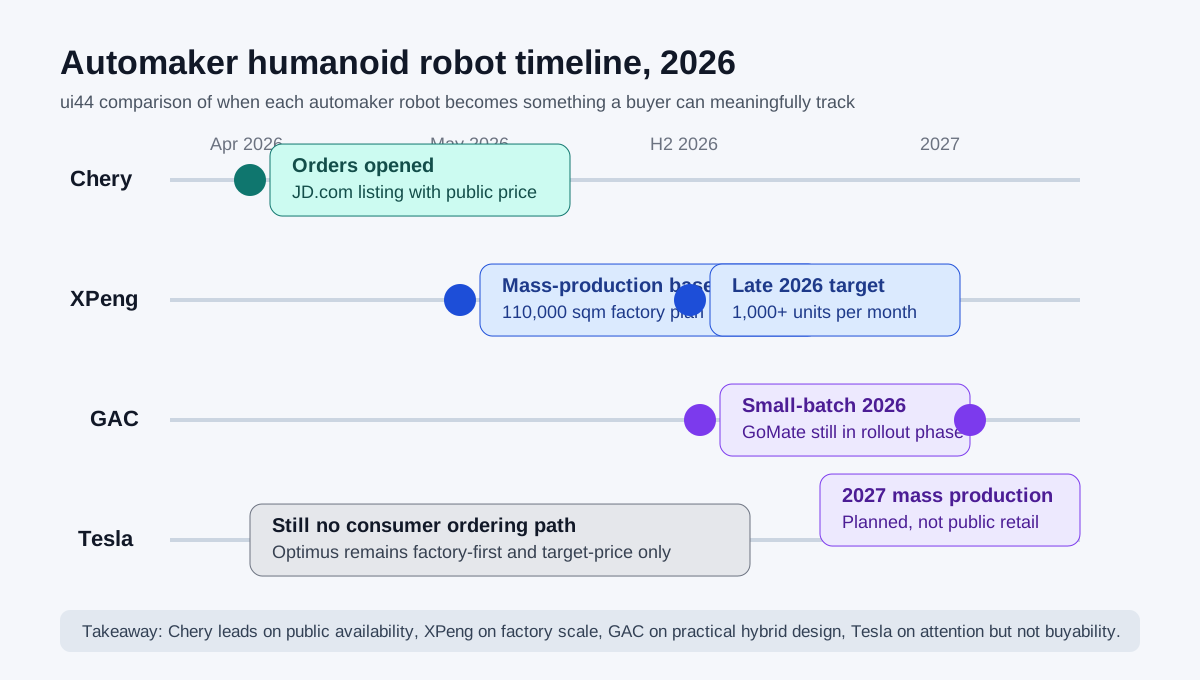
Readable timeline
Automaker humanoid maturity, 2026
- CheryPublic price, JD.com order path, and stock-window signal.
- XPengFactory-scale roadmap and AI stack; no consumer sale path.
- GACWheel-leg service-body experiment, still development-stage.
- TeslaCategory reference brand, but buyers still wait for ordering.
Why are car companies suddenly credible robot makers?
Automakers are not automatically good at home robotics, but they do start with advantages that most robotics startups would love to have.
First, they already know how to manufacture electromechanical products at scale. A humanoid robot is not a car, but it still depends on batteries, motors, sensors, thermal management, power electronics, quality control, and supply-chain discipline. That does not mean an EV factory can instantly become a robot factory, but it does mean Chery, XPeng, GAC, and Tesla all start with hard-won experience shipping safety-critical hardware in volume.
Second, they already operate real distribution and service networks. That matters more than many robot demos admit. A buyer does not just need a robot. They need a price, ordering path, support story, spare parts path, and some confidence that the company behind the product will still exist a year later.
Third, automakers are used to living with regulation, certification, and long product-development cycles. That does not guarantee home-robot success, but it does make them better positioned than demo-first robotics startups when the work shifts from viral videos to boring things like safety documentation and after-sales service.
The honest counterpoint is that these companies are still early. None of the robots in this article looks ready to become a mainstream home helper next month. But automakers have moved the conversation from "someday maybe" to "what kind of first-wave product is this actually going to be?"
Which automaker humanoid can you actually buy?
Right now, the only clear answer is Chery.
Readable spec card
AiMOGA Mornine M1, current sales test
- Price
- About $41,400
- Status
- Pre-order
- Battery
- 2 hours
- Payload
- 1.5 kg per arm
Visible price, stock timing, and certification are the buyer signal; chores still look later.
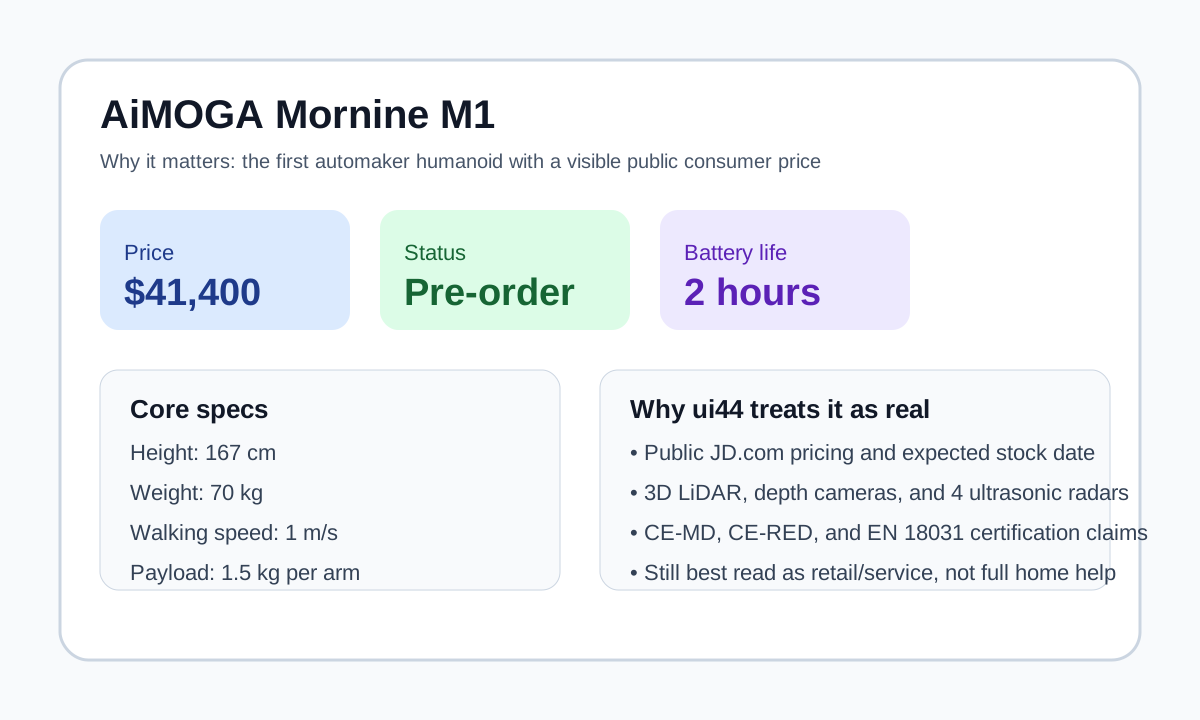
Chery AiMOGA Mornine M1, the first real sales test
According to ui44's Mornine M1 entry, Chery's robotics subsidiary AiMOGA is selling the Mornine M1 at about $41,400 (285,800 yuan) with stock expected after May 23, 2026. That does not make it affordable, but it does make it real in a way most humanoid announcements are not.
The hardware looks like an early commercial platform, not a fantasy home butler:
Spec
Price
- AiMOGA Mornine M1
- $41,400
Spec
Status
- AiMOGA Mornine M1
- Pre-order
Spec
Height
- AiMOGA Mornine M1
- 167 cm
Spec
Weight
- AiMOGA Mornine M1
- 70 kg
Spec
Battery life
- AiMOGA Mornine M1
- 2 hours
Spec
Charge time
- AiMOGA Mornine M1
- 2 hours
Spec
Walking speed
- AiMOGA Mornine M1
- 1 m/s
Spec
Payload
- AiMOGA Mornine M1
- 1.5 kg per arm
Spec
Sensors
- AiMOGA Mornine M1
- 3D LiDAR, 2 depth cameras, wide-angle camera, 4 ultrasonic radars
Spec
Connectivity
- AiMOGA Mornine M1
- Wi-Fi, 4G
Spec
Certifications
- AiMOGA Mornine M1
- CE-MD, CE-RED, EN 18031
| Spec | AiMOGA Mornine M1 |
|---|---|
| Price | $41,400 |
| Status | Pre-order |
| Height | 167 cm |
| Weight | 70 kg |
| Battery life | 2 hours |
| Charge time | 2 hours |
| Walking speed | 1 m/s |
| Payload | 1.5 kg per arm |
| Sensors | 3D LiDAR, 2 depth cameras, wide-angle camera, 4 ultrasonic radars |
| Connectivity | Wi-Fi, 4G |
| Certifications | CE-MD, CE-RED, EN 18031 |
Two details matter more than the raw spec sheet.
The first is certification. AiMOGA says Mornine M1 has full EU CE certification coverage across machinery safety, radio equipment, and cybersecurity. For a category full of concept videos, that is a materially more serious signal than vague "launching soon" language.
The second is that it has a real public ordering signal. Even if most households should not buy one, a posted price and stock window tell you more than another humanoid keynote ever will.
The limitation is equally clear. A 1.5 kg payload per arm and two-hour battery life point to reception, showroom, retail, and guided-service roles long before laundry folding or kitchen chores. In other words, Mornine M1 looks like a commercial humanoid with a consumer order button, not a mature household robot.
Readable comparison
Automaker humanoids, buyer read
Chery Mornine M1
$41,400 preorder; strongest current retail signal.
XPeng Iron
~$150k estimate; scale bet, not a home order path.
GAC GoMate
No price yet; practical wheel-leg design experiment.
Tesla Optimus
Mindshare leader; consumer availability remains unclear.
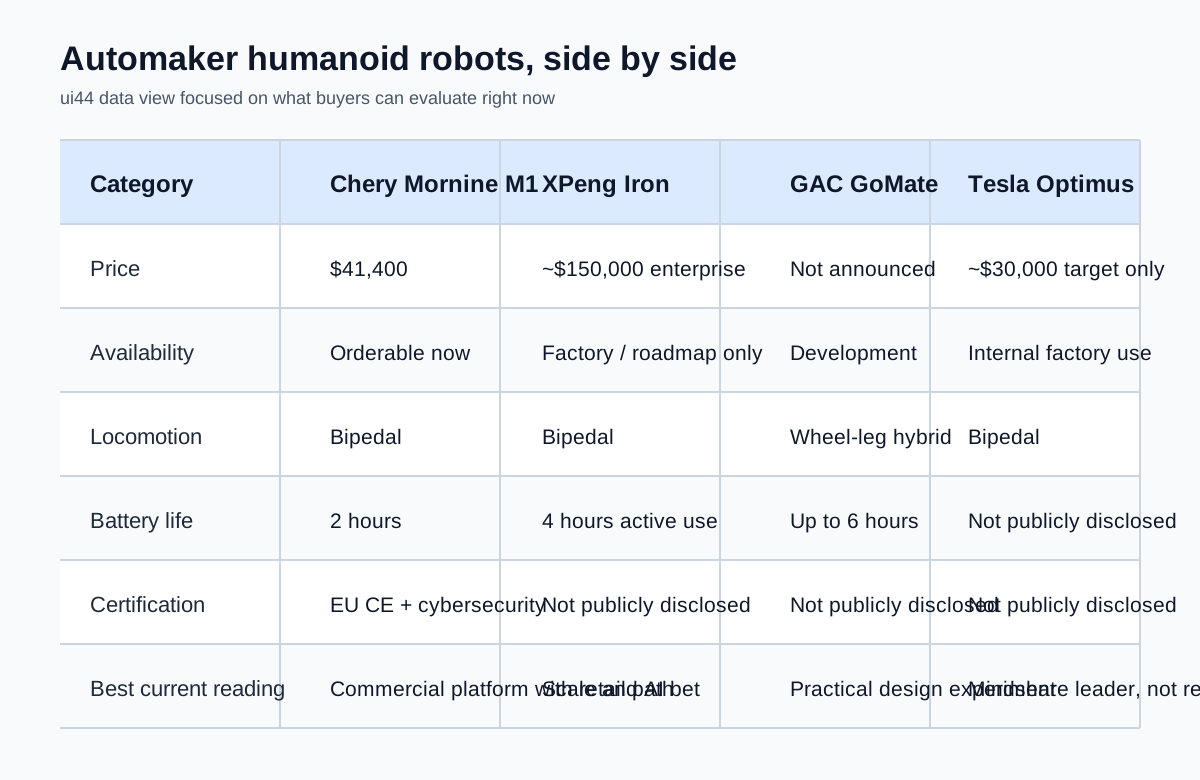
XPeng Iron, the scale bet
If Chery has the clearest sales story, XPeng has the strongest "this could scale fast" story.
ui44's XPeng Iron entry lists Iron as a development-stage humanoid with an estimated enterprise price around $150,000, 173 cm height, 70 kg weight, 4 hours of active battery life, 6 km/h walking speed, 20 kg payload per hand, and a much more aggressive AI stack than Mornine M1.
ui44's source-of-truth data describes Iron's AI stack as an XPENG Turing AI Chip (3,000 TOPS), a 30-billion-parameter AI model, and a 720-degree AI vision system derived from the same autonomous-driving push that built XPeng's EV brand. The same entry describes Iron as a development-stage humanoid targeted for mass production in late 2026.
That combination makes Iron the most serious automaker humanoid from a manufacturing-readiness angle, even though ordinary buyers cannot purchase one yet.

The trade-off is familiar: XPeng looks advanced on paper, but it is still mostly a factory and enterprise story. If you are a household buyer, Iron is not a product. It is a roadmap.
That said, it is a more concrete roadmap than many robot companies offer. XPeng is talking in factory terms, not just keynote terms. For ui44 readers, that is the key distinction to watch.
GAC GoMate, the practical design experiment
GAC GoMate in ui44's database is the most mechanically unusual robot in this group. Instead of betting entirely on standard bipedal walking, GAC uses a variable wheel-leg platform that can shift between a lower, more efficient wheeled posture and a taller upright working posture.
That matters because the basic home-robot question is not "can it look like a human?" It is "can it move safely and efficiently through real spaces without becoming exhausting to power or painfully slow?"
GoMate's current public profile looks more realistic than glamorous:
Spec
Price
- GAC GoMate
- Not announced
Spec
Status
- GAC GoMate
- Development
Spec
Height
- GAC GoMate
- ~140 cm to ~175 cm depending on posture
Spec
Battery life
- GAC GoMate
- Up to 6 hours
Spec
Locomotion
- GAC GoMate
- Variable wheel-leg platform
Spec
AI
- GAC GoMate
- GAC in-house embodied AI, pure-vision autonomy
Spec
Stated use cases
- GAC GoMate
- Security patrol, elder-care support, inspection, automotive service
| Spec | GAC GoMate |
|---|---|
| Price | Not announced |
| Status | Development |
| Height | ~140 cm to ~175 cm depending on posture |
| Battery life | Up to 6 hours |
| Locomotion | Variable wheel-leg platform |
| AI | GAC in-house embodied AI, pure-vision autonomy |
| Stated use cases | Security patrol, elder-care support, inspection, automotive service |
This is not positioned as a general-purpose home robot today. The official use-case mix still leans toward patrol, inspection, and assisted-service scenarios. GAC's official December 2024 launch materials also said the company is aiming for small-batch production in 2026, which is still early but more concrete than a lot of household-robot rhetoric.
GoMate is not pretending the first useful household robot must look like a sci-fi servant at all times. It is experimenting with a hybrid body that might be less elegant, but more practical.
For buyers, that is worth tracking. Wheels are uncool right up until they make the product cheaper, more stable, quieter, and easier to live with.
Where does Tesla actually stand?
Tesla still owns the global mindshare in this category, but on consumer readiness it trails the story it helped create.
According to ui44's Optimus Gen 2 page, Tesla's humanoid remains a development-stage robot with no public retail price, no consumer ordering flow, and no pre-order page. The often-cited roughly $30,000 price is still just Elon Musk's long-term target, not a posted market offer.
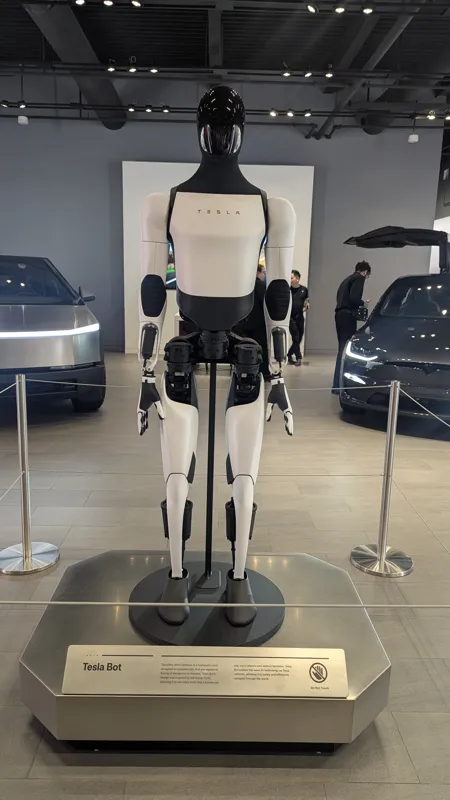
That does not mean Tesla is weak. Optimus still sets the comparison point because Tesla has the strongest brand, the loudest narrative, and a credible internal factory use case. But if the question is which automaker has crossed furthest into actual commercialization, Tesla is not the answer right now.
Here is the simplest buyer framing:
- Chery leads on public availability.
- XPeng leads on disclosed production ambition and AI compute.
- GAC leads on trying a more practical locomotion compromise.
- Tesla still leads on attention, but not on buyability.
That gap between narrative leadership and commercial leadership is the most useful thing this whole automaker humanoid wave reveals.
What does this mean for home robot buyers?
In the short term, not much if you want a robot to do real housework.
These machines are still expensive, power-limited, and mostly pointed at controlled environments. Mornine M1 is the only one with a public consumer sales path, but its current specs still look much better for showroom greeting, guided tours, and light service than for high-variance home chores. XPeng Iron looks stronger technically, but it is not a household product today. GAC GoMate is intriguing, but still early. Tesla Optimus is famous, but unavailable.
That means the right 2026 buyer takeaway is not "buy an automaker humanoid now." It is this:
- Public price beats demo hype. Chery clears this test. The others mostly do not.
- Certification and support matter. That is where automakers may end up beating startups.
- Factory deployment is not the same as home readiness. A robot can be useful on a controlled line long before it works in your kitchen.
- Mechanical practicality may matter more than humanoid theater. GAC's wheel-leg hybrid is easier to take seriously than another glossy promise about folding laundry.
Readable checklist
Home-readiness signals, 2026
- CheryPrice + order path + certification story: strongest commercial signal.
- XPengFactory roadmap, but no consumer ordering or support details.
- GACUseful design lane; price and certification still missing.
- TeslaFactory story and target price, but no public home order path.
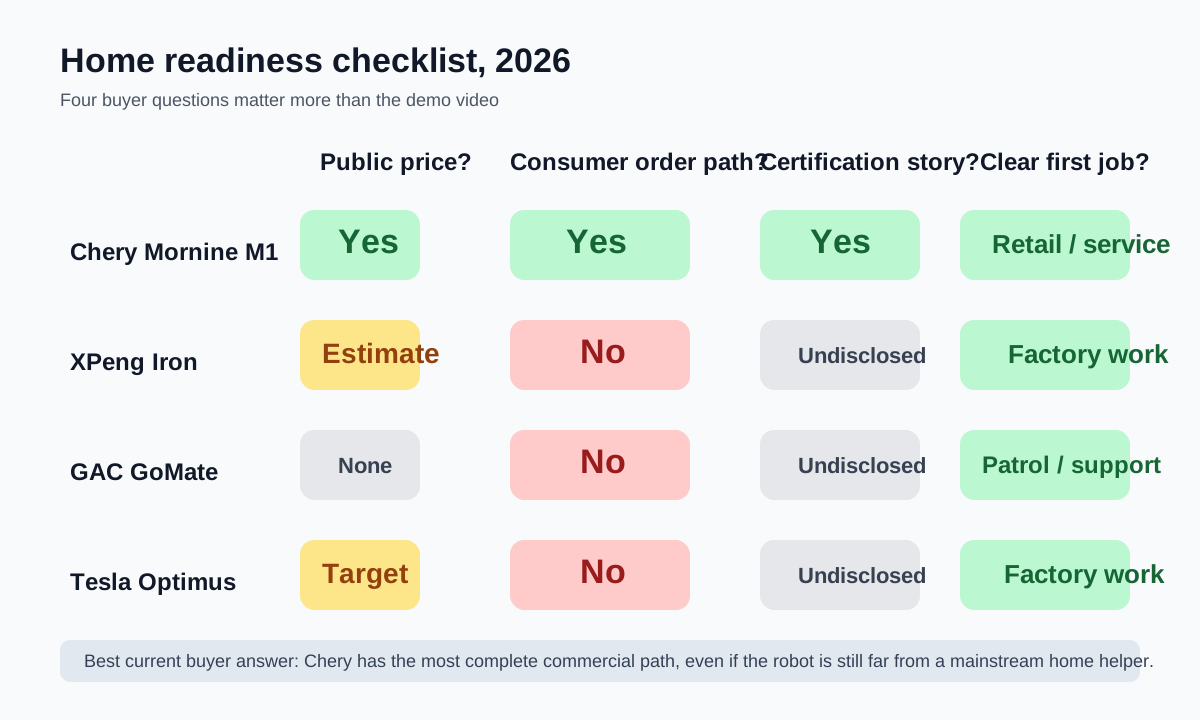
The broader market signal is still big. Once car companies seriously enter robotics, price pressure and supply-chain pressure usually follow. That does not mean mainstream home humanoids arrive next year. It does mean the category is moving from speculative robotics startup theater into a more industrial phase, where manufacturing capacity, channel strategy, and support infrastructure start mattering as much as locomotion demos.
If you want the wider context beyond automakers, ui44's guide to humanoid robots that might actually ship in 2026 is the best companion read.
For ui44, that is the differentiator worth watching. Plenty of coverage will tell you which robot looks coolest. Much less coverage will tell you who has a price, a shipping path, a certification story, and a realistic first job.
Right now, Chery has the best answer to that question. XPeng looks like the company most likely to push volume next. GAC may have the most practical body concept of the group. Tesla still has time to win, but it no longer has the field to itself.
If you want to compare the current field, start with the robot pages for AiMOGA Mornine M1, XPeng Iron, GAC GoMate, and Optimus Gen 2, or jump straight into ui44's comparison tool.
How do these automaker robots compare on the details that matter?
The most useful ui44 lens is not "which demo looks coolest?" It is "which robot already has the boring evidence a real product needs?"
That means looking past humanoid aesthetics and into product signals:
Question buyers should ask
Is there a public price?
- Chery Mornine M1
- Yes, about $41,400
- XPeng Iron
- No public retail price, ui44 tracks estimate
- GAC GoMate
- No public price
- Tesla Optimus Gen 2
- No public retail price
Question buyers should ask
Is there an order path?
- Chery Mornine M1
- Yes, public sales signal / stock window
- XPeng Iron
- No consumer ordering path
- GAC GoMate
- No consumer ordering path
- Tesla Optimus Gen 2
- No consumer ordering path
Question buyers should ask
Is there certification?
- Chery Mornine M1
- Yes, public CE-related certification set
- XPeng Iron
- Not disclosed as consumer certification
- GAC GoMate
- Not disclosed as consumer certification
- Tesla Optimus Gen 2
- Not disclosed as consumer certification
Question buyers should ask
First likely environment
- Chery Mornine M1
- Showroom, retail, guided service
- XPeng Iron
- Factory and enterprise
- GAC GoMate
- Patrol, inspection, assisted service
- Tesla Optimus Gen 2
- Internal Tesla/industrial first
Question buyers should ask
Core body strategy
- Chery Mornine M1
- Standard biped
- XPeng Iron
- Standard biped
- GAC GoMate
- Variable wheel-leg
- Tesla Optimus Gen 2
- Standard biped
Question buyers should ask
Main current strength
- Chery Mornine M1
- Best commercialization signal
- XPeng Iron
- Strongest disclosed compute and volume story
- GAC GoMate
- Most practical locomotion experiment
- Tesla Optimus Gen 2
- Strongest brand and public attention
Question buyers should ask
Main buyer weakness
- Chery Mornine M1
- Still limited for home chores
- XPeng Iron
- Not buyable
- GAC GoMate
- Early and undefined for home
- Tesla Optimus Gen 2
- Famous, but still not orderable
| Question buyers should ask | Chery Mornine M1 | XPeng Iron | GAC GoMate | Tesla Optimus Gen 2 |
|---|---|---|---|---|
| Is there a public price? | Yes, about $41,400 | No public retail price, ui44 tracks estimate | No public price | No public retail price |
| Is there an order path? | Yes, public sales signal / stock window | No consumer ordering path | No consumer ordering path | No consumer ordering path |
| Is there certification? | Yes, public CE-related certification set | Not disclosed as consumer certification | Not disclosed as consumer certification | Not disclosed as consumer certification |
| First likely environment | Showroom, retail, guided service | Factory and enterprise | Patrol, inspection, assisted service | Internal Tesla/industrial first |
| Core body strategy | Standard biped | Standard biped | Variable wheel-leg | Standard biped |
| Main current strength | Best commercialization signal | Strongest disclosed compute and volume story | Most practical locomotion experiment | Strongest brand and public attention |
| Main buyer weakness | Still limited for home chores | Not buyable | Early and undefined for home | Famous, but still not orderable |
That table is why the Chery story matters. It is not that Mornine M1 is the best home robot. It is that Chery is the only company in this group currently showing enough product scaffolding for buyers to evaluate anything concrete.
XPeng is almost the opposite. It looks more advanced as a robotics platform, but less mature as a buyable product. ui44's tracked specs show stronger speed, battery life, payload, and AI ambition. The AI chip figures and model size also sound more impressive. If you are new to that language, TOPS means tera operations per second, a rough way of describing compute throughput. It does not by itself prove real-world usefulness, but it does hint at how much onboard AI work a robot may be able to do.
The important catch is that compute is not the same as product readiness. A household cannot buy "3,000 TOPS." It can only buy a robot with a real sales path, clear support terms, and performance that holds up in messy homes.
GAC is interesting for a different reason. GoMate quietly asks one of the best questions in the whole category: what if the first useful home-adjacent robot should not commit to pure bipedal walking all the time? ui44 already tracks lots of wheeled home robots because wheels solve a huge number of real problems, including power use, stability, noise, and cost. A hybrid wheel-leg system is less cinematic than a fully human gait, but it may fit elder care, assisted mobility, patrol, or light service roles much better.
Tesla remains the benchmark example of why public attention can distort buyer understanding. Optimus is still hugely important because Tesla has the manufacturing brand, software reputation, and public narrative force to pull the whole category forward. But ui44's data makes something plain: as of today, Optimus is still something you follow, not something you can order.
What should buyers verify before believing any humanoid launch claim?
This is the section most coverage skips.
If a company says its humanoid is coming soon, there are a few checks that tell you whether the claim is moving toward product reality or still living in the marketing layer.
1) Is there a real price, not just a target?
A real price is not a CEO aspiration or a future cost-down goal. It is a live number attached to a real product page, dealer listing, or ordering workflow.
That is why Chery's public pricing signal matters so much. Even if the robot is far from mass-market, a visible number forces a company to reveal where it sees this product in the market. Tesla's often-repeated long-term target around $30,000 is still not the same thing.
2) Is there an actual availability signal?
"Launching in 2026" is weak. A stock window, preorder path, or region-specific sales page is stronger. A robot with no clear ordering path may still be real, but it is not yet a buyer product.
This matters because many humanoid stories blur together enterprise pilots, internal factory deployments, press demos, and consumer sales. Those are very different stages. ui44 treats them differently because buyers should too.
3) What is the first job the robot is actually built for?
The easiest way to get misled by humanoid marketing is to assume the most human-looking robot must also be the most home-ready. Usually the opposite is true. Early robots become useful in narrower, more repetitive jobs first.
For Mornine M1, the tracked clues point toward reception, greeting, guided service, and public-facing assistance. For XPeng Iron, the strongest signal is factory and enterprise scaling. For GoMate, it is inspection, patrol, and supported-service scenarios. For Optimus, it is still internal industrial use and future ambition rather than household task proof.
When a company cannot answer "what is this robot's first believable job?" that is usually a warning sign.
4) Are certification and compliance mentioned clearly?
Certification is not glamorous, but it is one of the clearest markers that a company is moving beyond demo theater. AiMOGA's public CE-related disclosures do not prove home readiness by themselves, but they are far more concrete than a vague promise about safety. Certification, radio compliance, and cybersecurity claims are exactly the kind of details that serious buyers and channel partners need before trusting hardware in public or semi-public spaces.
5) What do battery life and payload really imply?
Battery life and payload are where humanoid hype gets humbled fast.
A two-hour battery and 1.5 kg payload per arm can still be useful, but it tells you the robot is not a general-purpose household labor machine yet. It is much better suited to short guided tasks, scripted service, or light interaction.
Likewise, a higher payload or longer runtime does not automatically mean "ready for your home." It may only mean "better suited to an enterprise environment" where pathways, tasks, and supervision are more controlled.
6) Is the support story visible?
Automakers have a possible long-term advantage here. They already understand service networks, parts logistics, recalls, documentation, and channel support. That does not guarantee a good robot experience, but it does matter.
A startup can impress you with a demo. A durable product company needs to think about repair, maintenance, software updates, liability, onboarding, training, and what happens when the machine fails in front of a customer or family member. That is where the automaker angle gets more interesting than the average robot announcement.
Frequently Asked Questions
Is Chery's Mornine M1 really a home robot?
Not in the normal household-helper sense.
It is closer to a commercially oriented humanoid that happens to show a real
consumer-facing sales signal. That is still meaningful. It shows Chery is
willing to move from concept language into product language. But the current
payload, battery life, and use-case fit all suggest a first-wave service robot,
not a robot that can manage open-ended home chores.
Why does XPeng Iron matter if people cannot buy it yet?
Because XPeng is thinking in manufacturing terms, and that often predicts who
can move fastest once the category matures.
Iron matters less as a 2026 buying option and more as evidence that a major EV
maker is treating embodied AI as a platform-scale project. Embodied AI is
just AI that controls a physical system in the real world rather than only
producing text, images, or software output. In practice, that means the robot
has to perceive, decide, move, and recover from messy physical situations.
XPeng's stronger compute story, battery story, and production language suggest
it is trying to build that stack seriously. The risk is that serious internal
platform work can still take a long time to turn into a real buyer product.
Does GAC's wheel-leg design make more sense than a classic humanoid body?
For many real tasks, yes, it might.
A lot of robot coverage still treats full bipedal walking as the prestige form
factor. In homes and assisted-service environments, that may not be the right
priority. A wheel-leg hybrid can lower energy use, improve stability, and make
routine movement less fragile. The downside is that it may handle stairs,
thresholds, or tightly human-shaped environments differently than a pure biped.
The bigger ui44 takeaway is that body design should be judged by the job, not by
how closely it matches science-fiction expectations.
Is Tesla actually behind?
On consumer buyability, yes. On category influence, no.
Tesla is behind Chery on public ordering signals. It is also behind all real,
posted commercial paths because it still does not offer a retail purchase flow
for Optimus. But Tesla remains one of the most influential companies in the
space because investor attention, media attention, and supplier attention still
move around its roadmap.
So the fair answer is that Tesla leads the narrative, but not the current buyer
checklist.
Which automaker robot should households watch most closely over the next year?
If your lens is "what might become a real product category first," watch all
four for different reasons:
- Chery for whether public sales signals turn into repeatable delivery and
support.
- XPeng for whether late-2026 production claims become visible deployment
reality.
- GAC for whether hybrid locomotion proves more useful than pure humanoid
theater.
- Tesla for whether public price, ordering, or support disclosures finally
catch up with the brand story.
If your lens is "what should I buy for my home this year," the honest answer is
still none of them.
What is the smartest way to follow this market without getting fooled?
Track boring evidence.
Look for posted prices, region-specific sales language, certification details,
service-channel clues, battery and payload disclosures, and clear first-job
positioning. Ignore vague launch windows unless they are backed by a real order
path.
That is the simplest ui44 rule for early humanoid coverage: treat every robot as
part product, part promise, then compare how much of each remains.
Sources & References
- AiMOGA official Mornine page: https://www.aimoga-robot.com/mornine/
- ui44 robot pages: /robots/aimoga-mornine-m1, /robots/xpeng-iron, /robots/gac-gomate, /robots/optimus-gen2
- XPENG AI Day 2024 official announcement: https://www.xpeng.com/news/019301d2135392fa562d8a0282200016
- XPENG AI Day 2025 official announcement: https://www.xpeng.com/news/019a56f54fe99a2a0a8d8a0282e402b7
- GAC official GoMate launch page: https://www.gacgroup.com/cn/news/detail?baseid=18961
- CarNewsChina, April 13, 2026: https://carnewschina.com/2026/04/13/chery-begins-online-sales-of-humanoid-robot-with-a-0-7-kwh-battery-at-41400-usd/
- Tesla official Optimus page: https://www.tesla.com/optimus
Written by
ui44 Team
Published April 17, 2026
Share this article
Open a plain share link on X or Bluesky. No embeds, no widgets, no cookie baggage.