Figure's public Figure 03 package-sorting stream raises the bar because it shows speed, stamina, task recovery, fleet rotation, and the messy parts of real-time robotics instead of only a polished highlight reel. The mistake would be reading it as proof that a humanoid can now handle kitchens, laundry, pets, children, doors, stairs, dropped socks, and unpredictable people.

The right conclusion is narrower and more valuable: a livestream like this helps buyers separate robot endurance proof from home autonomy proof. Those are not the same claim.
What did the Figure 03 livestream actually show?
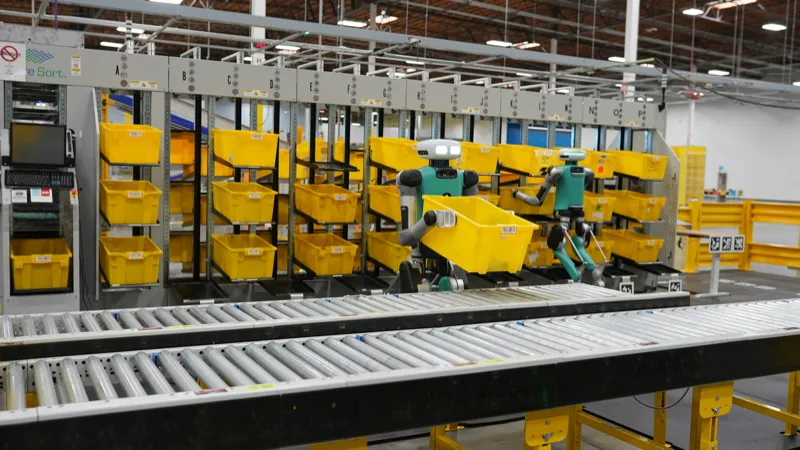
The livestream centered on one logistics task: Figure 03 humanoids standing at a conveyor and reorienting packages so labels could be scanned. Humanoids Daily reported that Figure extended the original 8-hour test beyond 24 hours, with three Figure 03 robots processing more than 33,137 packages after roughly 26 hours of continuous operation. Its earlier live report said the stream showed 230 packages in the first 10 minutes, roughly 2.6 seconds per item.
Figure's own official logistics write-up gives the more conservative technical baseline. In its Scaling Helix logistics report, Figure says Helix improved to about 4.05 seconds per package while maintaining barcode-orientation success above 90%. The same post says scaling demonstrations from 10 to 60 hours reduced package handling time from ~6.84 seconds to 4.31 seconds and improved barcode success from 88.2% to 94.4%.
That combination matters. It means the livestream was not just a single lucky clip. It was a public stress test on top of a task Figure has been measuring, iterating, and publishing about for months.
Evidence from the stream and official Figure material
24+ hours of live operation
- What it supports
- Endurance under one repeated workflow
- What it does not support
- Whole-home autonomy
Evidence from the stream and official Figure material
Three Figure 03 robots rotating through the task
- What it supports
- Fleet operations and uptime planning
- What it does not support
- One robot doing every task alone
Evidence from the stream and official Figure material
Package drops and label errors visible on stream
- What it supports
- Honest task-error visibility
- What it does not support
- Perfect reliability
Evidence from the stream and official Figure material
Autonomous resets instead of full stoppages
- What it supports
- Recovery behavior
- What it does not support
- Guaranteed safety around people
Evidence from the stream and official Figure material
4.05s/package official logistics metric
- What it supports
- High-speed manipulation in a structured cell
- What it does not support
- Kitchen, laundry, bedroom, or elder-care readiness
Evidence from the stream and official Figure material
No public consumer price for Figure 03 in ui44's database
- What it supports
- Not a normal buyer product yet
- What it does not support
- A near-term retail home robot
| Evidence from the stream and official Figure material | What it supports | What it does not support |
|---|---|---|
| 24+ hours of live operation | Endurance under one repeated workflow | Whole-home autonomy |
| Three Figure 03 robots rotating through the task | Fleet operations and uptime planning | One robot doing every task alone |
| Package drops and label errors visible on stream | Honest task-error visibility | Perfect reliability |
| Autonomous resets instead of full stoppages | Recovery behavior | Guaranteed safety around people |
| 4.05s/package official logistics metric | High-speed manipulation in a structured cell | Kitchen, laundry, bedroom, or elder-care readiness |
| No public consumer price for Figure 03 in ui44's database | Not a normal buyer product yet | A near-term retail home robot |
The strongest part of the livestream was not that nothing weird happened. Weird things did happen. Packages fell, some objects were not oriented perfectly, and viewers saw resets. The useful part was that the system kept going.
The six proof signals that actually matter
A serious robot demo should answer six questions. Figure's livestream answered some of them better than most public humanoid videos.
1. Can the robot run long enough to expose boring failures? A five-minute clip can hide motor heating, calibration drift, gripper wear, sensor dirt, software memory problems, network hiccups, and balance issues. A full-day stream is more useful because boredom is the test. Repetition exposes failures that short videos can edit away.
2. Does the robot recover, or does a human quietly rescue it? For a home robot, the recovery policy is often more important than the hero task. When a robot misses a grasp, bumps an object, loses task state, or gets stuck, the buyer needs to know whether it stops safely, retries intelligently, asks for help, or invents a dangerous shortcut. The Figure stream showed resets and continuation, which is meaningful even though it is not the same as solving a home scene.
3. Are task errors separated from robot failures? A package falling off a conveyor is a task error. A robot requiring human intervention, losing balance, crashing its autonomy stack, or being removed from service is a robot failure. Buyers should demand that companies define both numbers. "Zero failures" is too vague unless it says zero of what.
4. Is uptime achieved by one robot or by fleet rotation? Figure used multiple robots. That is not cheating; it is how serious automation works. But it changes the claim. A rotating fleet can keep a workcell online while individual units charge, inspect, or leave for maintenance. A home buyer usually imagines one robot. One robot with a four- or five-hour battery is a different product truth than a managed fleet with replacements.
5. Is the environment varied enough to matter? Deformable poly bags, padded envelopes, rigid boxes, moving conveyors, and imperfect labels are real manipulation challenges. They are not the same as a living room. A package cell is structured, repeatable, instrumented, and optimized around the robot. A home is cluttered, personal, socially complicated, and rarely reset to the same state between attempts.
6. Can the company publish metrics without hiding the denominator? A useful robot claim includes time, number of attempts, number of objects, number of robots, interventions, resets, success criteria, and failure classes. The more a company publishes those numbers, the easier it is to compare progress instead of arguing over hype.

What the livestream does not prove about home robots
The livestream does not prove that Figure 03 is ready to be a household helper. That is not a criticism; it is just the boundary of the evidence.
A package-sorting cell is narrow. The robot sees a constrained object stream, uses a known workstation, repeats one kind of manipulation, and has a clear success condition: orient the label for scanning. A home chore has more hidden state. "Clean the living room" can include recognizing what belongs where, avoiding a pet, deciding whether a mug is dirty, knowing not to throw away a receipt, opening storage, moving around people, and stopping when a toddler runs through the room.
Figure's official Helix 02 living room tidy demo is more directly home-shaped. It includes wiping, handling towels, picking up toys, using bins, throwing a pillow back onto a couch, pressing a remote, and moving through tight spaces. But it is still a demo. The livestream proves endurance on a commercial task; the living-room demo shows the direction of home autonomy. Neither by itself proves daily household reliability.
The ui44 database helps keep the claims grounded. Figure 03 is listed as an active humanoid with no public price, about 173 cm height, 61 kg weight, about 5 hours of battery life, 20 kg payload, and the Helix VLA system. That is an impressive industrial platform. It is not a retail home robot with a support plan, published service terms, a consumer warranty, room-by-room task list, or a known price.
The support model matters as much as the AI. Figure's official production post says BotQ has produced more than 350 Figure 03 robots, moved from one robot per day to one per hour, shipped over 500 battery packs, produced over 9,000 actuators, and performs more than 80 functional verification tests on each robot. Those are serious scaling signals. For a home buyer, they raise the next questions: who repairs the robot, how fast, where, under what warranty, and what happens if a 61 kg humanoid fails in a hallway?
How to grade any robot livestream
Use this checklist whenever a company claims a humanoid robot demo proves home readiness.
Buyer question
How long did it run?
- Strong evidence
- Continuous unedited hours, not clips
- Weak evidence
- A montage or selected best run
Buyer question
How many robots were involved?
- Strong evidence
- Robot count, swaps, charging, and maintenance disclosed
- Weak evidence
- One camera angle with unclear fleet support
Buyer question
What counted as failure?
- Strong evidence
- Separate task errors, resets, hardware faults, human interventions
- Weak evidence
- A broad "no failures" claim
Buyer question
Was the task representative?
- Strong evidence
- Messy objects, changing scenes, clear success metric
- Weak evidence
- A staged object in a known pose
Buyer question
Did it recover?
- Strong evidence
- Visible retries, safe stops, fallback ladders, or help requests
- Weak evidence
- Hidden cuts or staff intervention off-camera
Buyer question
Are the metrics repeatable?
- Strong evidence
- Published object count, success rate, duration, and denominator
- Weak evidence
- One viral moment with no denominator
Buyer question
Does it map to home use?
- Strong evidence
- Home-like spaces, people, pets, furniture, doors, storage, fragile items
- Weak evidence
- Warehouse-only proof presented as home proof
| Buyer question | Strong evidence | Weak evidence |
|---|---|---|
| How long did it run? | Continuous unedited hours, not clips | A montage or selected best run |
| How many robots were involved? | Robot count, swaps, charging, and maintenance disclosed | One camera angle with unclear fleet support |
| What counted as failure? | Separate task errors, resets, hardware faults, human interventions | A broad "no failures" claim |
| Was the task representative? | Messy objects, changing scenes, clear success metric | A staged object in a known pose |
| Did it recover? | Visible retries, safe stops, fallback ladders, or help requests | Hidden cuts or staff intervention off-camera |
| Are the metrics repeatable? | Published object count, success rate, duration, and denominator | One viral moment with no denominator |
| Does it map to home use? | Home-like spaces, people, pets, furniture, doors, storage, fragile items | Warehouse-only proof presented as home proof |
This is why livestreams are useful. They make it harder to sell a fantasy. They also make it easier to overreact to a single visible mistake. A dropped package is not proof that the robot is useless. A long stream is not proof that it is ready for your apartment. The useful reading sits between those extremes.
How Figure 03 compares with robots in the ui44 database
The best comparison is not "which humanoid looks coolest?" It is "what kind of proof does each robot have?"
Robot
- ui44 database snapshot
- Active; no public price; 173 cm; 61 kg; ~5h battery; 20 kg payload; Helix VLA
- What the proof means
- Strong public evidence for industrial manipulation progress, but not a consumer home product yet
Robot
- ui44 database snapshot
- Discontinued predecessor; 168 cm; 70 kg; 20 kg payload; BMW plant history touching 30,000+ cars across 1,250+ runtime hours
- What the proof means
- Real industrial lineage, but older hardware and not the current home-focused platform
Robot
- ui44 database snapshot
- Enterprise/RaaS only; 175 cm; 65 kg; ~4h battery; 16 kg box-carrying use case; Agility Arc
- What the proof means
- More mature logistics deployment story, but not shaped around private homes
Robot
- ui44 database snapshot
- $20,000 early-adopter preorder; 167 cm; 30 kg; ~4h battery; soft home-focused body
- What the proof means
- Most explicitly home-positioned humanoid in this comparison, but buyers still need daily task proof
Robot
- ui44 database snapshot
- $29,950; available; 160 cm; 8h light-load runtime; self-charging; 2.5 kg extended / 4 kg retracted payload
- What the proof means
- Less humanoid hype, more concrete mobile-manipulator availability for pilots and research
| Robot | ui44 database snapshot | What the proof means |
|---|---|---|
| Figure 03 | Active; no public price; 173 cm; 61 kg; ~5h battery; 20 kg payload; Helix VLA | Strong public evidence for industrial manipulation progress, but not a consumer home product yet |
| Figure 02 | Discontinued predecessor; 168 cm; 70 kg; 20 kg payload; BMW plant history touching 30,000+ cars across 1,250+ runtime hours | Real industrial lineage, but older hardware and not the current home-focused platform |
| Digit | Enterprise/RaaS only; 175 cm; 65 kg; ~4h battery; 16 kg box-carrying use case; Agility Arc | More mature logistics deployment story, but not shaped around private homes |
| 1X NEO | $20,000 early-adopter preorder; 167 cm; 30 kg; ~4h battery; soft home-focused body | Most explicitly home-positioned humanoid in this comparison, but buyers still need daily task proof |
| Hello Robot Stretch 4 | $29,950; available; 160 cm; 8h light-load runtime; self-charging; 2.5 kg extended / 4 kg retracted payload | Less humanoid hype, more concrete mobile-manipulator availability for pilots and research |
The pattern is clear. Logistics robots can show better endurance because the work is narrower and the environment is controlled. Home robots need broader judgment, softer failure modes, clearer privacy controls, and better support promises.
That does not make warehouse demos irrelevant. The opposite is true. Warehouse work is where humanoid companies can collect hours, expose hardware faults, train recovery, test fleet management, and earn revenue before asking normal households to trust a machine around people and furniture. The buyer mistake is not caring about industrial proof. The buyer mistake is treating industrial proof as the final home proof.
What should buyers ask before trusting a home robot claim?
Before a preorder, pilot, or deposit, ask for evidence at the same level of specificity as Figure's livestream — but for your actual use case.
Ask for task duration. If the company says the robot can tidy a room, ask how many continuous minutes or hours it has done that exact task without a hidden reset.
Ask for interventions. Human assistance is not automatically bad. In fact, supervised autonomy may be safer for early home robots. But the company should say how often a person helps, what they can see, what they can control, and what happens to your home data.
Ask for recovery behavior. A robot that fails safely is better than one that tries to improvise around a blocked path, jammed drawer, or fragile object. Home robots need conservative fallback behavior, not just bold demos.
Ask for battery truth. Figure 03 is listed around five hours in ui44's database. 1X NEO is around four hours. Hello Robot Stretch 4 lists eight hours under light CPU load. Runtime claims need context: task load, walking time, compute load, charging behavior, and whether the robot can resume work after docking.

Ask for support. A home robot is not a phone. If it weighs 30-70 kg, moves near people, and manipulates objects, support is part of safety. Look for repair coverage, remote diagnostics, parts availability, local service, recall handling, and a way to disable risky capabilities.
Ask for the denominator. Ten successful chores sounds impressive until you learn there were 200 attempts. A 24-hour run sounds impressive until you learn nothing about intervention rate. The denominator is where robot marketing becomes robot evidence.
The honest takeaway
Figure's 24-hour-plus livestream is good evidence for the thing it actually showed: humanoid endurance on a repeated logistics manipulation task, with visible task errors, recoveries, fleet rotation, and high public transparency. That is a meaningful step forward.
It is not proof that a humanoid robot is ready to live unsupervised in a normal home. Household work is more ambiguous, more personal, less structured, and more safety-sensitive than flipping packages on a conveyor. The livestream should make buyers more optimistic about the pace of robot learning and more demanding about evidence.
That is the right posture for 2026: curious, not gullible. A good robot demo is not one that looks perfect. A good robot demo tells you exactly what failed, how often, how the system recovered, and what claim it is not making.
Related in the database
Use this article as a privacy verification workflow
Turn the article into a privacy verification pass grounded in the robots, manufacturers, and components it actually references.
What a 24-Hour Figure 03 Livestream Proves already points you toward 5 linked robots, 4 manufacturers, and 2 countries inside the ui44 database. That matters because strong buyer guidance is easier to apply when you can move immediately from a claim or warning into concrete product pages, manufacturer directories, component explainers, and country-level context instead of treating the article as an isolated opinion piece. The fastest next step is to turn the article into a shortlist workflow: open the linked robot pages, verify which specs are actually published for those models, then compare the surrounding manufacturer and component context before you decide whether the underlying claim changes your buying plan.
For this topic, the useful discipline is to separate the editorial lesson from the catalog evidence. The article gives you the framing, but the robot pages tell you what each product actually ships with today: sensor stack, connectivity methods, listed price, release timing, category, and support-relevant compatibility notes. The manufacturer pages then show whether you are looking at a one-off launch, a broader lineup pattern, or a company that spans multiple categories. That layered workflow reduces the risk of buying on a single marketing phrase or a single support FAQ.
Use the robot pages to confirm which products actually expose cameras, microphones, Wi-Fi, or voice systems, then use the manufacturer pages to decide how much of the privacy question seems product-specific versus brand-wide. On this route cluster, Figure 03, Figure 02, and Digit form the fastest reality check. If you want a quick working shortlist, open Compare Figure 03, Figure 02, and Digit next, then keep this article open as the reasoning layer while you compare structured data side by side.
Practical Takeaway
Every robot, manufacturer, category, component, and country reference below resolves to a real ui44 page, keeping the follow-up path grounded in database records rather than generic advice.
Suggested next steps in ui44
- Open Figure 03 and note the listed sensors, connectivity methods, and voice stack before you interpret any policy claim.
- Cross-check the wider brand context on Figure AI so you can see whether the privacy question touches one model or a broader lineup.
- Use the linked component pages to confirm how common the relevant sensors and connectivity layers are across the database.
- Keep a short note of which policy layers you checked, which device features are actually present on the robot page, and which items still depend on region- or app-level confirmation.
- Finish with Compare Figure 03, Figure 02, and Digit so the policy reading sits next to structured product data.
Robot profiles worth opening next
Use the linked product pages as the evidence layer
The linked robot pages are where this article becomes operational. Instead of asking whether the headline is interesting, use the robot entries to inspect the actual mix of sensors, connectivity options, batteries, pricing, release timing, and stated capabilities attached to the products mentioned in the article. That is the easiest way to see whether the warning or opportunity described here affects one product family, a specific design pattern, or an entire buying lane.
Figure 03 is tracked on ui44 as a active humanoid robot from Figure AI. The database currently records a listed price of Price TBA, a release date of 2025-10-09, ~5 hours battery life, Not disclosed charging time, and a published stack that includes Stereo Vision, Depth Cameras, and Force Sensors plus Wi-Fi and Bluetooth.
For privacy-focused reading, this page matters because it shows the concrete device surface behind the policy discussion. Use it to verify whether Figure 03 combines sensors and connectivity in a way that could change the in-home data footprint, and compare the listed capabilities such as Complex Manipulation, Warehouse Work, and Manufacturing Tasks with any cloud, app, or voice layers.
Figure 02 is tracked on ui44 as a discontinued humanoid robot from Figure AI. The database currently records a listed price of Price TBA, a release date of 2024-08-06, Not disclosed (50% greater capacity than Figure 01) battery life, Not disclosed charging time, and a published stack that includes 6 RGB Cameras, Onboard Vision Language Model, and Microphones plus Wi-Fi and Bluetooth.
For privacy-focused reading, this page matters because it shows the concrete device surface behind the policy discussion. Use it to verify whether Figure 02 combines sensors and connectivity in a way that could change the in-home data footprint, and compare the listed capabilities such as Autonomous Task Execution, Speech-to-Speech Conversation, and Pick and Place with any cloud, app, or voice layers, including OpenAI Custom Model.
Digit is tracked on ui44 as a active humanoid robot from Agility. The database currently records a listed price of Price TBA, a release date of 2023, ~4 hours battery life, ~2 hours charging time, and a published stack that includes LiDAR, RGB-D Cameras, and IMU plus Wi-Fi and 5G.
For privacy-focused reading, this page matters because it shows the concrete device surface behind the policy discussion. Use it to verify whether Digit combines sensors and connectivity in a way that could change the in-home data footprint, and compare the listed capabilities such as Box Carrying (16kg), Stair Navigation, and Warehouse Operations with any cloud, app, or voice layers.
NEO
1X Technologies · Humanoid · Pre-order
NEO is tracked on ui44 as a pre-order humanoid robot from 1X Technologies. The database currently records a listed price of $20,000, a release date of 2025-10-28, ~4 hours battery life, Not disclosed charging time, and a published stack that includes RGB Cameras, Depth Sensors, and Tactile Skin plus Wi-Fi and Bluetooth.
For privacy-focused reading, this page matters because it shows the concrete device surface behind the policy discussion. Use it to verify whether NEO combines sensors and connectivity in a way that could change the in-home data footprint, and compare the listed capabilities such as Household Chores, Tidying Up, and Safe Human Interaction with any cloud, app, or voice layers.
Stretch 4
Hello Robot · Home Assistants · Available
Stretch 4 is tracked on ui44 as a available home assistants robot from Hello Robot. The database currently records a listed price of $29,950, a release date of 2026-05-12, 8 hours (light CPU load) battery life, Not officially disclosed charging time, and a published stack that includes Wide-FOV depth sensing, High-resolution RGB cameras, and Calibrated RGB + depth perception plus its listed connectivity stack.
For privacy-focused reading, this page matters because it shows the concrete device surface behind the policy discussion. Use it to verify whether Stretch 4 combines sensors and connectivity in a way that could change the in-home data footprint, and compare the listed capabilities such as Mobile Manipulation, Omnidirectional Indoor Mobility, and Autonomous Mapping and Navigation with any cloud, app, or voice layers.
Manufacturer context behind the article
Check whether this is one product story or a broader company pattern
Manufacturer pages add the privacy context that individual product pages cannot show on their own. They help you check whether cameras, microphones, cloud accounts, app controls, and policy assumptions appear across a broader lineup or stay tied to one specific product story.
Figure AI
ui44 currently tracks 2 robots from Figure AI across 1 category. The company is grouped under USA, and the current catalog footprint on ui44 includes Figure 03, Figure 02.
That wider brand context matters because privacy questions rarely stop at one FAQ page. A manufacturer route helps you see whether the article is centered on one premium model or on a company that has several relevant products and therefore more than one place where the same policy or app assumptions might matter. The category mix here currently points toward Humanoid as the most useful next route if you want to see whether this article reflects a wider pattern inside the brand.
Agility
ui44 currently tracks 1 robot from Agility across 1 category. The company is grouped under USA, and the current catalog footprint on ui44 includes Digit.
That wider brand context matters because privacy questions rarely stop at one FAQ page. A manufacturer route helps you see whether the article is centered on one premium model or on a company that has several relevant products and therefore more than one place where the same policy or app assumptions might matter. The category mix here currently points toward Humanoid as the most useful next route if you want to see whether this article reflects a wider pattern inside the brand.
1X Technologies
ui44 currently tracks 2 robots from 1X Technologies across 1 category. The company is grouped under Norway, and the current catalog footprint on ui44 includes NEO, EVE.
That wider brand context matters because privacy questions rarely stop at one FAQ page. A manufacturer route helps you see whether the article is centered on one premium model or on a company that has several relevant products and therefore more than one place where the same policy or app assumptions might matter. The category mix here currently points toward Humanoid as the most useful next route if you want to see whether this article reflects a wider pattern inside the brand.
Hello Robot
ui44 currently tracks 2 robots from Hello Robot across 1 category. The company is grouped under USA, and the current catalog footprint on ui44 includes Stretch 3, Stretch 4.
That wider brand context matters because privacy questions rarely stop at one FAQ page. A manufacturer route helps you see whether the article is centered on one premium model or on a company that has several relevant products and therefore more than one place where the same policy or app assumptions might matter. The category mix here currently points toward Home Assistants as the most useful next route if you want to see whether this article reflects a wider pattern inside the brand.
Broaden the scan without leaving the database
Categories, components, and countries add the wider context
Category framing
Category pages are useful when the article touches a buying pattern that shows up across brands. A category route helps you confirm whether the linked products sit in a narrow niche or whether the same question should be tested across a larger field of alternatives.
Humanoid
The Humanoid category page currently groups 129 tracked robots from 92 manufacturers. ui44 describes this lane as: Full-size bipedal humanoid robots built to work alongside people — from factory floors to household tasks. Compare the cutting edge of humanoid robotics.
That makes the category route a practical follow-up when you want to check whether the products linked in this article are typical for the lane or whether they sit at one edge of the market. Useful starting examples currently include NEO, EVE, Mornine M1.
Home Assistants
The Home Assistants category page currently groups 16 tracked robots from 14 manufacturers. ui44 describes this lane as: Arm-based household helpers — laundry folders, kitchen robots, and mobile manipulators that take on hands-on physical tasks around the home.
That makes the category route a practical follow-up when you want to check whether the products linked in this article are typical for the lane or whether they sit at one edge of the market. Useful starting examples currently include Robody, Futuring 2 (F2), Stretch 3.
Country and ecosystem context
Country pages give extra context when support practices, launch sequencing, regulatory posture, or manufacturer mix matter. They are not a substitute for model-level verification, but they do help you see which ecosystems cluster together and which manufacturers sit in the same regional field when you broaden the search beyond the article headline.
USA
The USA route currently groups 89 tracked robots from 69 manufacturers in ui44. That gives you a useful regional lens when the article points toward support practices, launch sequencing, or brand clusters that may share similar ecosystem assumptions.
On the current route, manufacturers like Faraday Future, iRobot, Boston Dynamics make the page a good way to broaden the scan without losing the regional context that often shapes availability, documentation style, and adjacent alternatives.
Norway
The Norway route currently groups 2 tracked robots from 1 manufacturers in ui44. That gives you a useful regional lens when the article points toward support practices, launch sequencing, or brand clusters that may share similar ecosystem assumptions.
On the current route, manufacturers like 1X Technologies make the page a good way to broaden the scan without losing the regional context that often shapes availability, documentation style, and adjacent alternatives.
Questions to answer before you move from reading to buying
A follow-up FAQ built from the entities already linked in this article
Frequently Asked Questions
Which page should I open first after reading “What a 24-Hour Figure 03 Livestream Proves”?
Start with Figure 03. That gives you a concrete product anchor for the article’s main claim. From there, branch into the manufacturer and component pages so you can tell whether the article is describing one specific model, a repeated brand pattern, or a wider technology issue that affects multiple shortlist options.
How do the manufacturer pages change the buying decision?
Figure AI help you zoom out from one article and one product. On ui44 they show lineup breadth, category spread, and the neighboring robots tied to the same company. That context is useful when you are deciding whether a risk belongs to a single model, whether it shows up across a brand’s portfolio, and whether you should keep looking at alternatives before committing.
When should I switch from reading to side-by-side comparison?
Move into Compare Figure 03, Figure 02, and Digit as soon as you understand the article’s main warning or promise. The article explains what to watch for, but the compare view is where you can check whether price, status, battery life, connectivity, sensors, and category fit still make the robot a good match for your own home and budget.
Where to go next in ui44
Keep the research chain inside the database
If you want to keep going, these follow-on pages give you the cleanest expansion path from article to research session. Open the comparison route first if you are deciding between products today. Open the manufacturer, category, and component routes if you still need to understand the broader pattern behind the claim.
Written by
ui44 Team
Published May 16, 2026
Share this article
Open a plain share link on X or Bluesky. No embeds, no widgets, no cookie baggage.