That makes Isaac 1 one of the more serious home-robot preorder signals of 2026. It is not a bipedal humanoid, and that is part of why it is worth watching. The claim is more practical: a fabric-covered mobile robot with an 8-hour battery, a 20.5 x 22 inch footprint, an 80 inch vertical reach, autonomous-by-default operation, and human assistance when needed. Weave describes two headline workflows, Laundry Flow and Daily Reset, which means Isaac 1 is being sold less as a novelty robot and more as a household labor product.
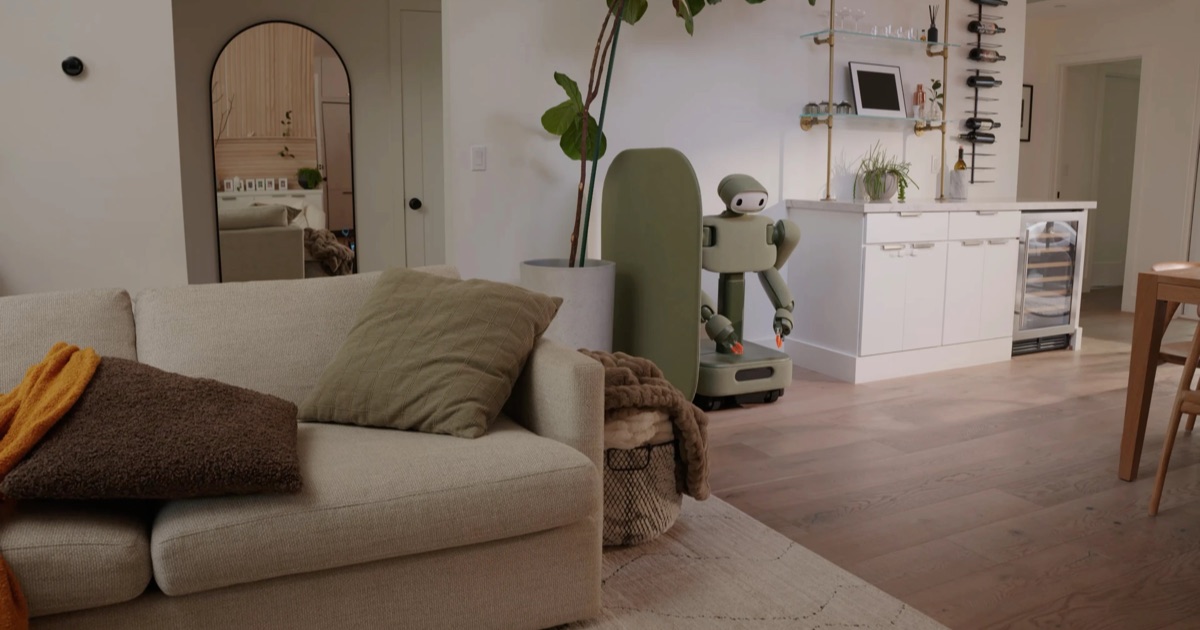
The short version: Isaac 1 looks like a real upgrade from Isaac 0, but only for the right buyer. It expands from one fixed laundry station into a mobile reset robot, which is exactly the kind of jump home robotics needs. It also raises the risk. A stationary robot that folds laundry in a prepared workspace is hard enough. A mobile robot that moves through lived-in rooms, touches personal objects, and may need remote help has to prove reliability, privacy, service coverage, and value before it deserves the same confidence as a finished appliance.
What Weave is actually selling
The useful way to read the preorder is not "general home robot arrives." It is "specific home workflow platform enters a limited rollout." Weave is not claiming Isaac 1 can cook dinner, carry groceries upstairs, babysit, or replace every household task. The official language centers on everyday reset work: laundry handling, tidying, and returning rooms toward a normal baseline.
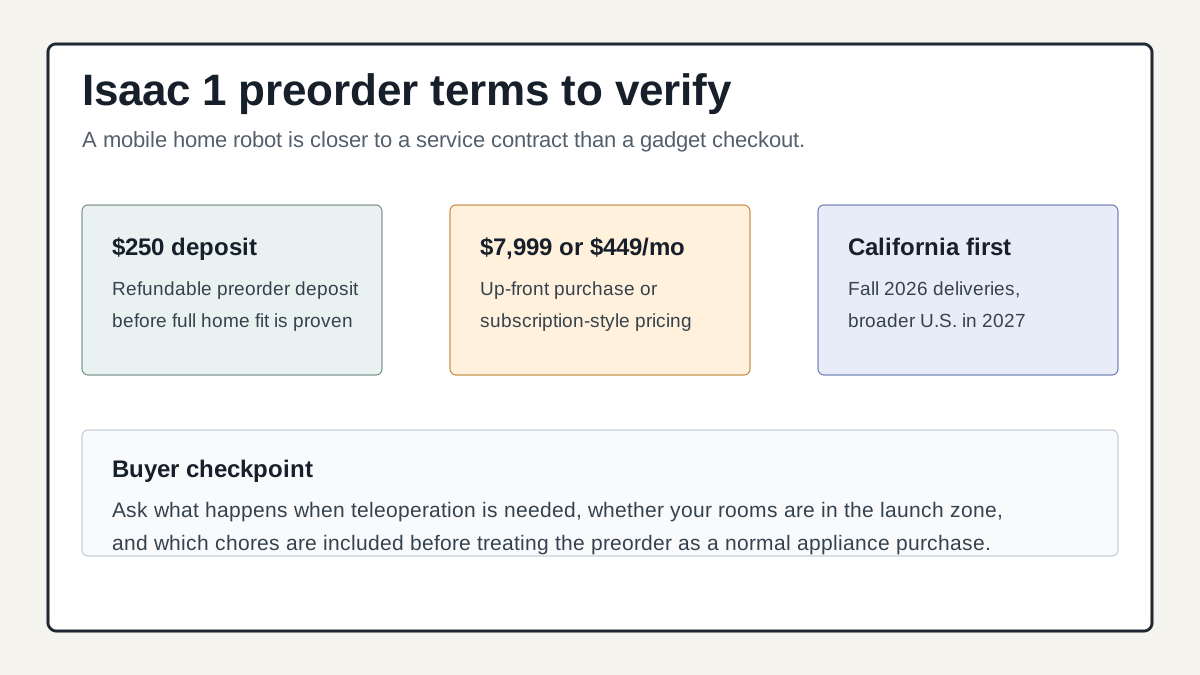
The pricing tells the same story. At $7,999, Isaac 1 costs more like a major home system than a consumer gadget. The $449/month option makes the purchase feel more like a service plan, which is probably honest for this stage of home robotics. If a robot needs remote assistance, updates, replacement parts, and careful launch geography, the business model cannot be judged like a robot vacuum checkout page.
The delivery language matters too. California-first fall 2026 availability is a stronger signal than a vague waitlist, but it is still not mass retail. Buyers outside the initial service area should treat the 2027 broader U.S. target as a watch item, not a guarantee. For a physical robot, where service and home setup matter, geography is part of the product.
Is Isaac 1 a real upgrade from Isaac 0?
The upgrade is not simply that Isaac 1 is newer. It changes what kind of home robot Weave is trying to build.
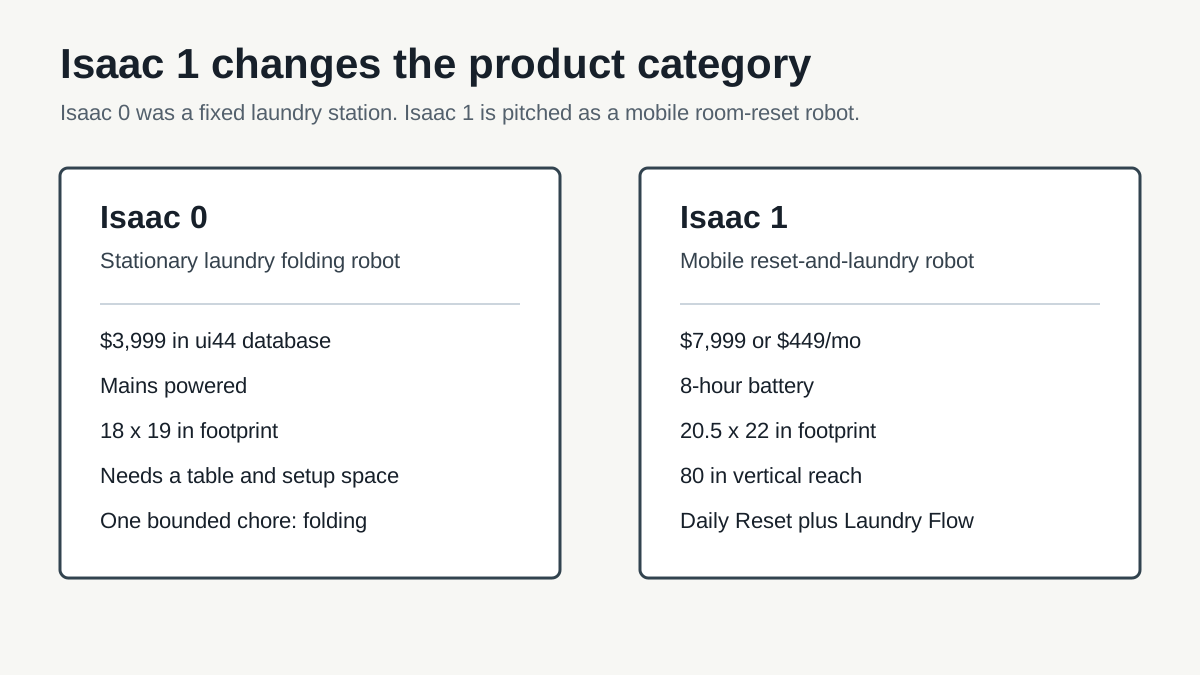
Isaac 0, as tracked in the ui44 database, is a stationary laundry-folding robot. It has an 18 x 19 inch footprint, adjustable height, mains power, and a recommended table/workspace around it. That is a disciplined product shape. It narrows the world so the robot can focus on one valuable household pain point.
Isaac 1 keeps laundry in the pitch but adds mobility, battery operation, and room-reset behavior. The ui44 database currently lists Isaac 1 with an 8-hour battery, a 20.5 x 22 inch footprint, 38 inches of horizontal reach, and 80 inches of vertical reach. Those numbers matter because they describe a robot that can work around furniture, shelves, baskets, and household surfaces rather than only one fixed table.
That is a meaningful leap, but it is also the hard part. Laundry folding is already deformable-object manipulation: shirts bunch up, socks disappear, towels fold differently from jeans, and every household has its own habits. Daily reset work adds even more variation. A coffee mug, toy, charger cable, dog leash, pillow, and crumpled hoodie are not one task. They are a rotating set of edge cases.
So the key buyer question is not "does Isaac 1 have arms?" It is "how often does Isaac 1 complete the boring parts without turning my home into a support session?" If the robot handles 80 percent of resets quietly and asks for help only in reasonable edge cases, it could be valuable. If remote assistance is a frequent part of normal use, the experience becomes less like owning a robot and more like hosting a pilot program.
How it compares with other home robots
Isaac 1 is easiest to understand beside products that are already in the ui44 database, not beside futuristic humanoid videos. The closest comparison is not one perfect rival. It sits between single-purpose household robots, companion robots, and expensive mobile manipulators.
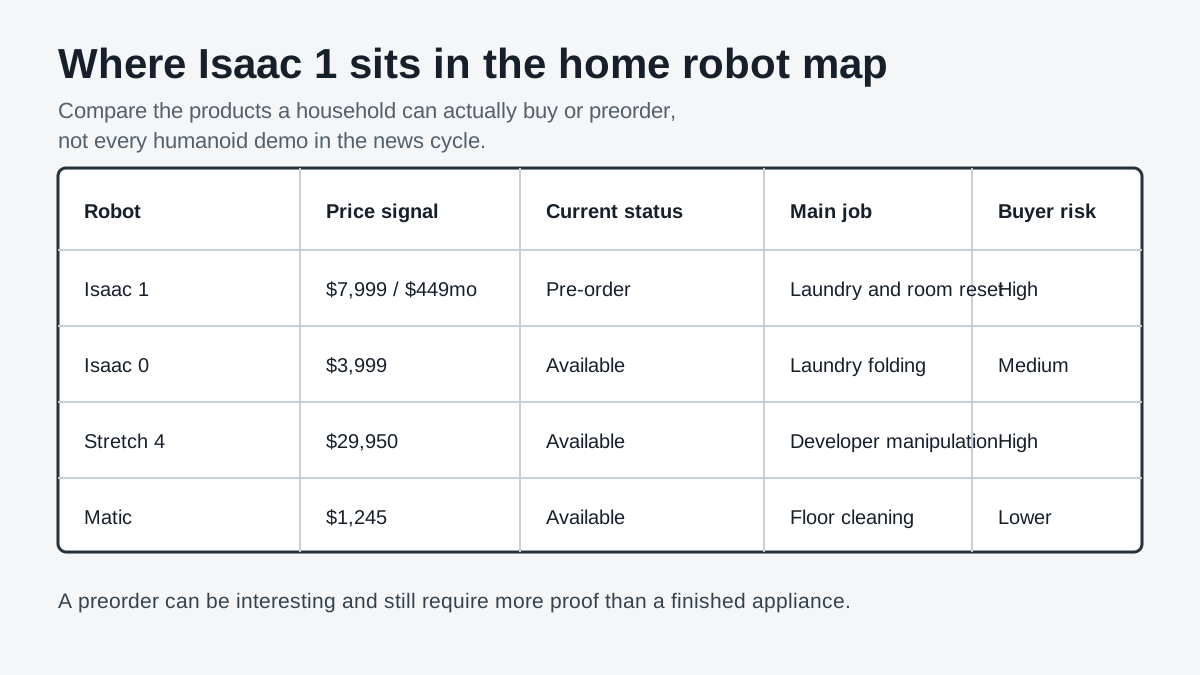
Hello Robot Stretch 4 is the clearest mobile manipulation reference point in the database. Stretch 4 is available, has an 8-hour light-load runtime, a 45 cm diameter footprint, and a 160 cm working height, but it is a $29,950 developer and assistive robotics platform. That makes it important technically, not a normal household purchase for most families.
Matic is almost the opposite. It is available at $1,245 in the database and focuses on floor cleaning with a vision-first design, local processing, mapping, and automatic vacuum/mop switching. It is useful because it shows how narrow focus reduces risk. Matic does one household category; Isaac 1 is trying to step into manipulation and room reset, where messes are less predictable and the cost is much higher.
Companion robots like ElliQ 3 and LOVOT show another side of the market. They can be emotionally meaningful and easier to place in a home, but they do not solve physical chores. Isaac 1 is making the harder bet: people may pay more when a robot actually changes the state of the house.
That is why Isaac 1 belongs on a home-robot shortlist even if it is risky. It is not a generic robot vacuum, and it is not a far-off humanoid concept. It is a priced, preorderable attempt to sell physical household labor.
The questions buyers should ask before preordering
The refundable $250 deposit lowers the initial risk, but it does not answer the important questions. Anyone considering Isaac 1 should ask Weave for specifics in five areas before treating the preorder as a purchase decision.
First, define the service area. California-first deliveries are helpful, but a robot like this is only as good as its support model. Ask whether your exact city is covered, what installation looks like, how repairs work, and what happens if you move outside the launch region.
Second, define the chore boundary. Laundry Flow and Daily Reset sound useful, but buyers need examples: which laundry steps are supported, what kinds of items are excluded, whether the robot can handle piles on beds or floors, and what "reset" means in a room with mixed personal objects.
Third, define teleoperation. Weave says Isaac 1 is autonomous by default with teleoperation assistance when needed. That can be a sensible bridge technology, but it should be transparent. Ask when a remote specialist can connect, what they can see, whether video is stored, how approvals work, and how often human help is expected in normal operation.
Fourth, define the subscription. At $449 per month, the service price is material. Buyers should know whether that includes hardware, repairs, remote assistance, software updates, delivery, cancellation terms, minimum commitment, and replacement rules.
Fifth, define home fit. The 20.5 x 22 inch footprint is compact for a mobile manipulator, but not invisible. The 80 inch vertical reach is promising, but reach does not equal safe access to every shelf, hanger, basket, or bed. Ask what floor types, thresholds, lighting conditions, room sizes, and clutter levels Weave supports at launch.
Who should consider Isaac 1 now
The best early Isaac 1 customer is not someone who wants a robot because robots are exciting. It is someone in the launch geography with a clear household pain point, enough disposable budget, tolerance for early product limits, and a realistic view of what remote assistance means.
That might be a California household where laundry and clutter are constant friction, where stairs are not central to the job, and where the buyer is comfortable giving a young robotics company feedback. For that buyer, a refundable deposit can be a reasonable way to stay near the front of the line.
Most other buyers should watch rather than preorder. If you live outside the initial region, are uncomfortable with remote assistance in private rooms or unclear data-handling terms, expect a fully autonomous butler, or need a robot that can handle stairs and every object type, Isaac 1 is not proven enough yet. Waiting for real home videos, service terms, cancellation details, and first-customer reliability reports is the safer move.
The most important thing Isaac 1 can prove in 2026 is not that a home robot can look friendly. It is whether a mobile robot can do enough repeated household work, in enough normal homes, at a price that people will keep paying after the novelty fades. That is the real upgrade from Isaac 0, and it is exactly the question ui44 will track as deliveries begin.
Related in the database
Use this article as a privacy verification workflow
Turn the article into a privacy verification pass grounded in the robots, manufacturers, and components it actually references.
Weave Isaac 1 Preorders: $7,999 Home Robot Check already points you toward 6 linked robots, 5 manufacturers, and 4 countries inside the ui44 database. That matters because strong buyer guidance is easier to apply when you can move immediately from a claim or warning into concrete product pages, manufacturer directories, component explainers, and country-level context instead of treating the article as an isolated opinion piece. The fastest next step is to turn the article into a shortlist workflow: open the linked robot pages, verify which specs are actually published for those models, then compare the surrounding manufacturer and component context before you decide whether the underlying claim changes your buying plan.
For this topic, the useful discipline is to separate the editorial lesson from the catalog evidence. The article gives you the framing, but the robot pages tell you what each product actually ships with today: sensor stack, connectivity methods, listed price, release timing, category, and support-relevant compatibility notes. The manufacturer pages then show whether you are looking at a one-off launch, a broader lineup pattern, or a company that spans multiple categories. That layered workflow reduces the risk of buying on a single marketing phrase or a single support FAQ.
Use the robot pages to confirm which products actually expose cameras, microphones, Wi-Fi, or voice systems, then use the manufacturer pages to decide how much of the privacy question seems product-specific versus brand-wide. On this route cluster, Isaac 1, Isaac 0, and Stretch 4 form the fastest reality check. If you want a quick working shortlist, open Compare Isaac 1, Isaac 0, and Stretch 4 next, then keep this article open as the reasoning layer while you compare structured data side by side.
Practical Takeaway
Every robot, manufacturer, category, component, and country reference below resolves to a real ui44 page, keeping the follow-up path grounded in database records rather than generic advice.
Suggested next steps in ui44
- Open Isaac 1 and note the listed sensors, connectivity methods, and voice stack before you interpret any policy claim.
- Cross-check the wider brand context on Weave Robotics so you can see whether the privacy question touches one model or a broader lineup.
- Use the linked component pages to confirm how common the relevant sensors and connectivity layers are across the database.
- Keep a short note of which policy layers you checked, which device features are actually present on the robot page, and which items still depend on region- or app-level confirmation.
- Finish with Compare Isaac 1, Isaac 0, and Stretch 4 so the policy reading sits next to structured product data.
Robot profiles worth opening next
Use the linked product pages as the evidence layer
The linked robot pages are where this article becomes operational. Instead of asking whether the headline is interesting, use the robot entries to inspect the actual mix of sensors, connectivity options, batteries, pricing, release timing, and stated capabilities attached to the products mentioned in the article. That is the easiest way to see whether the warning or opportunity described here affects one product family, a specific design pattern, or an entire buying lane.
Isaac 1
Weave Robotics · Home Assistants · Pre-order
Isaac 1 is tracked on ui44 as a pre-order home assistants robot from Weave Robotics. The database currently records a listed price of $7,999, a release date of 2026-07-01, 8 hours battery life, 2 hours charging time, and a published stack that includes Not officially disclosed plus Wi-Fi.
For privacy-focused reading, this page matters because it shows the concrete device surface behind the policy discussion. Use it to verify whether Isaac 1 combines sensors and connectivity in a way that could change the in-home data footprint, and compare the listed capabilities such as Mobile home task robot, Laundry Flow for finding and picking up dirty clothes, and Loaded hamper handling with any cloud, app, or voice layers.
Isaac 0
Weave Robotics · Home Assistants · Available
Isaac 0 is tracked on ui44 as a available home assistants robot from Weave Robotics. The database currently records a listed price of $3,999, a release date of 2026-02, Mains powered (600W, 120V) battery life, N/A (plugged in) charging time, and a published stack that includes Vision System and Proprioceptive Sensors plus Wi-Fi 2.4GHz/5GHz and Ethernet.
For privacy-focused reading, this page matters because it shows the concrete device surface behind the policy discussion. Use it to verify whether Isaac 0 combines sensors and connectivity in a way that could change the in-home data footprint, and compare the listed capabilities such as Laundry Folding, T-shirts, Long Sleeves, Sweaters, and Pants and Towels with any cloud, app, or voice layers.
Stretch 4
Hello Robot · Home Assistants · Available
Stretch 4 is tracked on ui44 as a available home assistants robot from Hello Robot. The database currently records a listed price of $29,950, a release date of 2026-05-12, 8 hours (light CPU load) battery life, Not officially disclosed charging time, and a published stack that includes Wide-FOV depth sensing, High-resolution RGB cameras, and Calibrated RGB + depth perception plus its listed connectivity stack.
For privacy-focused reading, this page matters because it shows the concrete device surface behind the policy discussion. Use it to verify whether Stretch 4 combines sensors and connectivity in a way that could change the in-home data footprint, and compare the listed capabilities such as Mobile Manipulation, Omnidirectional Indoor Mobility, and Autonomous Mapping and Navigation with any cloud, app, or voice layers.
Matic
Matic Robots · Cleaning · Available
Matic is tracked on ui44 as a available cleaning robot from Matic Robots. The database currently records a listed price of $1,245, a release date of 2026-04, Not officially disclosed; official materials say Matic can run for hours autonomously battery life, Not officially disclosed charging time, and a published stack that includes On-device computer-vision cameras, Real-time 3D floor mapping, and Surface and mess detection for automatic cleaning-mode switching plus Matic mobile app control and scheduling and iOS app listed in official product-page copy.
For privacy-focused reading, this page matters because it shows the concrete device surface behind the policy discussion. Use it to verify whether Matic combines sensors and connectivity in a way that could change the in-home data footprint, and compare the listed capabilities such as Vacuuming, Mopping, and Automatic Vacuum/Mop Switching with any cloud, app, or voice layers.
ElliQ 3
Intuition Robotics · Companions · Available
ElliQ 3 is tracked on ui44 as a available companions robot from Intuition Robotics. The database currently records a listed price of Price TBA, a release date of 2024-01, Mains powered battery life, N/A (plugged in) charging time, and a published stack that includes 4-mic array, 12 MP camera for images, and 1080p HD video at 30 fps with 120° horizontal FoV plus Wi-Fi 802.11b/g/n/ac (2.4 GHz and 5 GHz) and Bluetooth 5+.
For privacy-focused reading, this page matters because it shows the concrete device surface behind the policy discussion. Use it to verify whether ElliQ 3 combines sensors and connectivity in a way that could change the in-home data footprint, and compare the listed capabilities such as Proactive Conversation, Medication Reminders, and Health & Pain Tracking with any cloud, app, or voice layers, including ElliQ Voice AI.
Manufacturer context behind the article
Check whether this is one product story or a broader company pattern
Manufacturer pages add the privacy context that individual product pages cannot show on their own. They help you check whether cameras, microphones, cloud accounts, app controls, and policy assumptions appear across a broader lineup or stay tied to one specific product story.
Weave Robotics
ui44 currently tracks 2 robots from Weave Robotics across 1 category. The company is grouped under Denmark, and the current catalog footprint on ui44 includes Isaac 0, Isaac 1.
That wider brand context matters because privacy questions rarely stop at one FAQ page. A manufacturer route helps you see whether the article is centered on one premium model or on a company that has several relevant products and therefore more than one place where the same policy or app assumptions might matter. The category mix here currently points toward Home Assistants as the most useful next route if you want to see whether this article reflects a wider pattern inside the brand.
Hello Robot
ui44 currently tracks 2 robots from Hello Robot across 1 category. The company is grouped under USA, and the current catalog footprint on ui44 includes Stretch 3, Stretch 4.
That wider brand context matters because privacy questions rarely stop at one FAQ page. A manufacturer route helps you see whether the article is centered on one premium model or on a company that has several relevant products and therefore more than one place where the same policy or app assumptions might matter. The category mix here currently points toward Home Assistants as the most useful next route if you want to see whether this article reflects a wider pattern inside the brand.
Matic Robots
ui44 currently tracks 1 robot from Matic Robots across 1 category. The company is grouped under USA, and the current catalog footprint on ui44 includes Matic.
That wider brand context matters because privacy questions rarely stop at one FAQ page. A manufacturer route helps you see whether the article is centered on one premium model or on a company that has several relevant products and therefore more than one place where the same policy or app assumptions might matter. The category mix here currently points toward Cleaning as the most useful next route if you want to see whether this article reflects a wider pattern inside the brand.
Intuition Robotics
ui44 currently tracks 1 robot from Intuition Robotics across 1 category. The company is grouped under Israel, and the current catalog footprint on ui44 includes ElliQ 3.
That wider brand context matters because privacy questions rarely stop at one FAQ page. A manufacturer route helps you see whether the article is centered on one premium model or on a company that has several relevant products and therefore more than one place where the same policy or app assumptions might matter. The category mix here currently points toward Companions as the most useful next route if you want to see whether this article reflects a wider pattern inside the brand.
Broaden the scan without leaving the database
Categories, components, and countries add the wider context
Category framing
Category pages are useful when the article touches a buying pattern that shows up across brands. A category route helps you confirm whether the linked products sit in a narrow niche or whether the same question should be tested across a larger field of alternatives.
Home Assistants
The Home Assistants category page currently groups 16 tracked robots from 14 manufacturers. ui44 describes this lane as: Arm-based household helpers — laundry folders, kitchen robots, and mobile manipulators that take on hands-on physical tasks around the home.
That makes the category route a practical follow-up when you want to check whether the products linked in this article are typical for the lane or whether they sit at one edge of the market. Useful starting examples currently include Robody, Futuring 2 (F2), Stretch 3.
Cleaning
The Cleaning category page currently groups 62 tracked robots from 27 manufacturers. ui44 describes this lane as: Robot vacuums, mops, pool cleaners, and window cleaners — the workhorses of home automation that keep every surface spotless.
That makes the category route a practical follow-up when you want to check whether the products linked in this article are typical for the lane or whether they sit at one edge of the market. Useful starting examples currently include Scuba V3, EcoSurfer S2, Scuba V3 Ultra.
Country and ecosystem context
Country pages give extra context when support practices, launch sequencing, regulatory posture, or manufacturer mix matter. They are not a substitute for model-level verification, but they do help you see which ecosystems cluster together and which manufacturers sit in the same regional field when you broaden the search beyond the article headline.
Denmark
The Denmark route currently groups 2 tracked robots from 1 manufacturers in ui44. That gives you a useful regional lens when the article points toward support practices, launch sequencing, or brand clusters that may share similar ecosystem assumptions.
On the current route, manufacturers like Weave Robotics make the page a good way to broaden the scan without losing the regional context that often shapes availability, documentation style, and adjacent alternatives.
USA
The USA route currently groups 89 tracked robots from 69 manufacturers in ui44. That gives you a useful regional lens when the article points toward support practices, launch sequencing, or brand clusters that may share similar ecosystem assumptions.
On the current route, manufacturers like Faraday Future, iRobot, Boston Dynamics make the page a good way to broaden the scan without losing the regional context that often shapes availability, documentation style, and adjacent alternatives.
Israel
The Israel route currently groups 5 tracked robots from 5 manufacturers in ui44. That gives you a useful regional lens when the article points toward support practices, launch sequencing, or brand clusters that may share similar ecosystem assumptions.
On the current route, manufacturers like Flytrex, Intuition Robotics, Maytronics make the page a good way to broaden the scan without losing the regional context that often shapes availability, documentation style, and adjacent alternatives.
Questions to answer before you move from reading to buying
A follow-up FAQ built from the entities already linked in this article
Frequently Asked Questions
Which page should I open first after reading “Weave Isaac 1 Preorders: $7,999 Home Robot Check”?
Start with Isaac 1. That gives you a concrete product anchor for the article’s main claim. From there, branch into the manufacturer and component pages so you can tell whether the article is describing one specific model, a repeated brand pattern, or a wider technology issue that affects multiple shortlist options.
How do the manufacturer pages change the buying decision?
Weave Robotics help you zoom out from one article and one product. On ui44 they show lineup breadth, category spread, and the neighboring robots tied to the same company. That context is useful when you are deciding whether a risk belongs to a single model, whether it shows up across a brand’s portfolio, and whether you should keep looking at alternatives before committing.
When should I switch from reading to side-by-side comparison?
Move into Compare Isaac 1, Isaac 0, and Stretch 4 as soon as you understand the article’s main warning or promise. The article explains what to watch for, but the compare view is where you can check whether price, status, battery life, connectivity, sensors, and category fit still make the robot a good match for your own home and budget.
Where to go next in ui44
Keep the research chain inside the database
If you want to keep going, these follow-on pages give you the cleanest expansion path from article to research session. Open the comparison route first if you are deciding between products today. Open the manufacturer, category, and component routes if you still need to understand the broader pattern behind the claim.
Written by
ui44 Team
Published July 6, 2026
Share this article
Open a plain share link on X or Bluesky. No embeds, no widgets, no cookie baggage.