That puts Eve right on the edge of ui44's definition of a home robot. It is a robotic mobility system meant to work in daily environments, but it is also assistive medical technology, not a normal consumer gadget. The honest answer is that Eve can be a home robot in the same way a powered wheelchair can be home mobility technology: the value is personal independence, not chore automation.
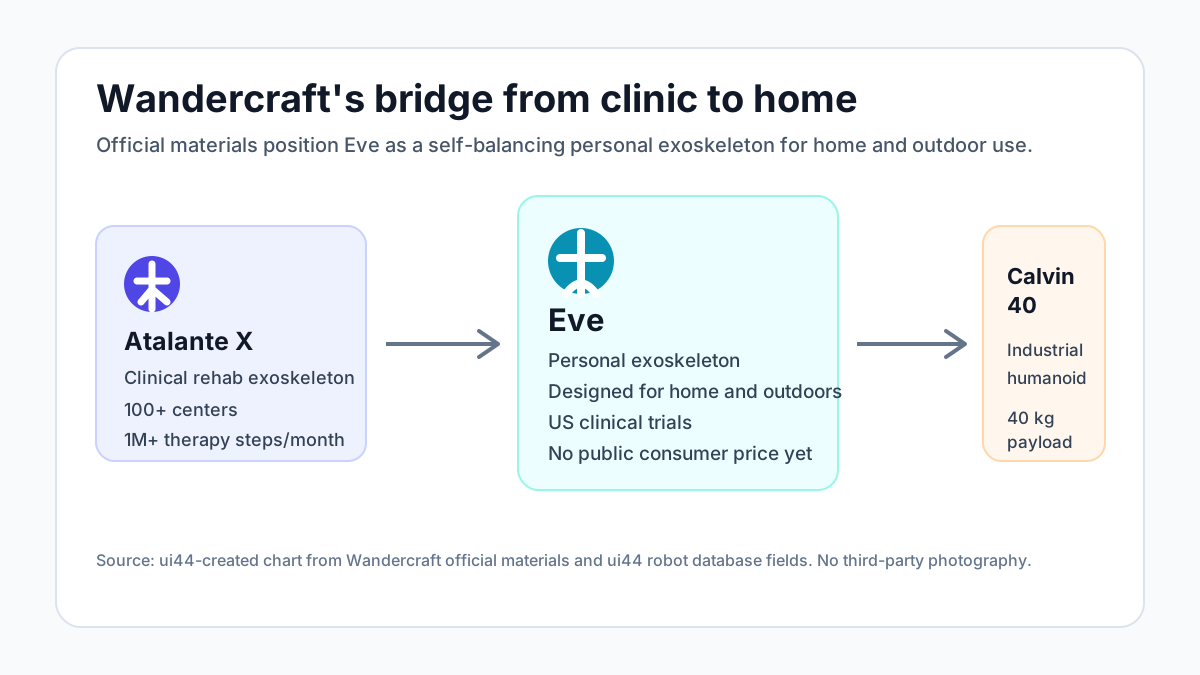
This is why Eve matters. The home robot category is usually framed around machines that clean, carry, patrol, or talk. Eve reframes the question around what a robot lets a person do. If a robotic device helps someone stand, walk, move through familiar rooms, and engage with people at eye level, it belongs in the home robotics conversation even if it does not have hands.
What Wandercraft Says Eve Is
Wandercraft's own wording is careful. In its article about moving "from clinic to home," the company describes Eve as a self-balancing personal exoskeleton designed for use at home and outdoors. It also says Eve is currently in clinical trials in the United States.
That tells buyers three important things.
First, Eve is not just a rehab-room prototype. Wandercraft is explicitly talking about use beyond the rehabilitation center, which is the point where a medical robot starts to overlap with home robotics.
Second, Eve is not being pitched as a replacement for wheelchairs. Wandercraft frames it as a way to give people the choice to stand, walk, and interact with their environment in ways that matter to them. That distinction matters because the right question is not "Will this replace every other mobility device?" It is "What situations could this make possible that a seated mobility device does not cover as well?"
Third, the clinical-trial status means buyers should treat Eve as emerging regulated technology. Until clearance, pricing, service, training, insurance, and home deployment requirements are public, it is too early to evaluate Eve like a normal home robot purchase.
Why Wandercraft Has More Credibility Than a Demo Video
The reason Eve deserves attention is not just that it looks futuristic. It is that Wandercraft already has a clinical exoskeleton platform in the field.
The company's Atalante X system is deployed in more than 100 rehabilitation and research centers across four continents, according to Wandercraft's official materials. The company says those systems support more than 1 million therapy steps per month. Wandercraft also says Atalante X has expanded FDA clearance and CE-mark certification for a broader range of neurological conditions, including stroke, spinal cord injury, and multiple sclerosis.
That does not prove Eve will work well in homes. Clinics and homes are very different places. Clinics have trained staff, controlled spaces, repeatable protocols, and a clear therapy purpose. Homes have rugs, thresholds, narrow doorways, pets, uneven outdoor paths, family routines, and little patience for equipment that needs expert handling every day.
But it does mean Eve is not arriving from nowhere. Wandercraft is trying to move a self-balancing robotic walking stack from supervised rehabilitation into daily life. That is a harder and more meaningful home-robot story than another company promising a household humanoid with no deployments behind it.
The Home Robot Fit Check
The best way to classify Eve is to separate "home use" from "consumer gadget." Those are not the same thing.
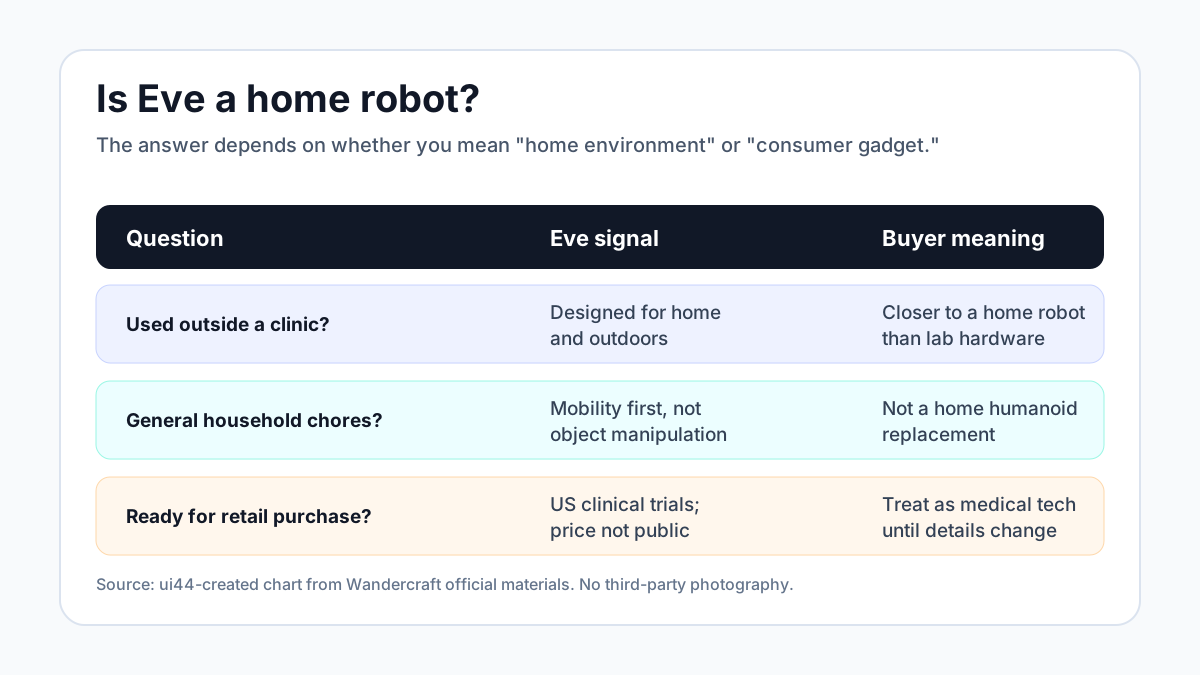
Question
Can it operate outside a clinic?
- Eve signal
- Wandercraft says Eve is designed for home and outdoor use
- What it means
- It belongs in the home mobility conversation
Question
Is it a general home assistant?
- Eve signal
- No public claim that it cleans, carries, cooks, or manipulates objects
- What it means
- It is not a humanoid replacement
Question
Is it consumer-ready?
- Eve signal
- US clinical trials; no public retail price
- What it means
- Treat it as medical mobility tech
Question
Does it use proven robotics technology?
- Eve signal
- Built on Wandercraft's self-balancing exoskeleton platform
- What it means
- More credible than a standalone concept demo
Question
Is it in the ui44 database yet?
- Eve signal
- Calvin-40 is tracked; Eve is not yet a database robot entry
- What it means
- The public product data is still incomplete
| Question | Eve signal | What it means |
|---|---|---|
| Can it operate outside a clinic? | Wandercraft says Eve is designed for home and outdoor use | It belongs in the home mobility conversation |
| Is it a general home assistant? | No public claim that it cleans, carries, cooks, or manipulates objects | It is not a humanoid replacement |
| Is it consumer-ready? | US clinical trials; no public retail price | Treat it as medical mobility tech |
| Does it use proven robotics technology? | Built on Wandercraft's self-balancing exoskeleton platform | More credible than a standalone concept demo |
| Is it in the ui44 database yet? | Calvin-40 is tracked; Eve is not yet a database robot entry | The public product data is still incomplete |
By that standard, Eve is best described as a personal mobility robot for the home, not a home service robot. It solves a human movement problem, not a household labor problem.
That difference changes the buyer lens. For a humanoid, you ask whether the robot can recognize objects, plan chores, use tools, avoid people, and recover from mistakes. For Eve, you ask whether the user can don it safely, stand comfortably, walk through real domestic spaces, handle fatigue, recover from edge cases, and get service when the system fails.
What ui44 Tracks Today: Calvin-40
Eve is the home-relevant product, but the Wandercraft robot currently tracked in the ui44 database is Calvin-40, an industrial humanoid that Wandercraft announced with Renault Group.
Calvin-40 matters because it shows how Wandercraft is reusing its exoskeleton technology outside medical rehabilitation. In our database, Calvin-40 is listed as an active humanoid from Wandercraft with no public purchase price. The official product page describes it as an autonomous industrial humanoid for factory and logistics tasks, with a carrying capacity of up to 40 kg.
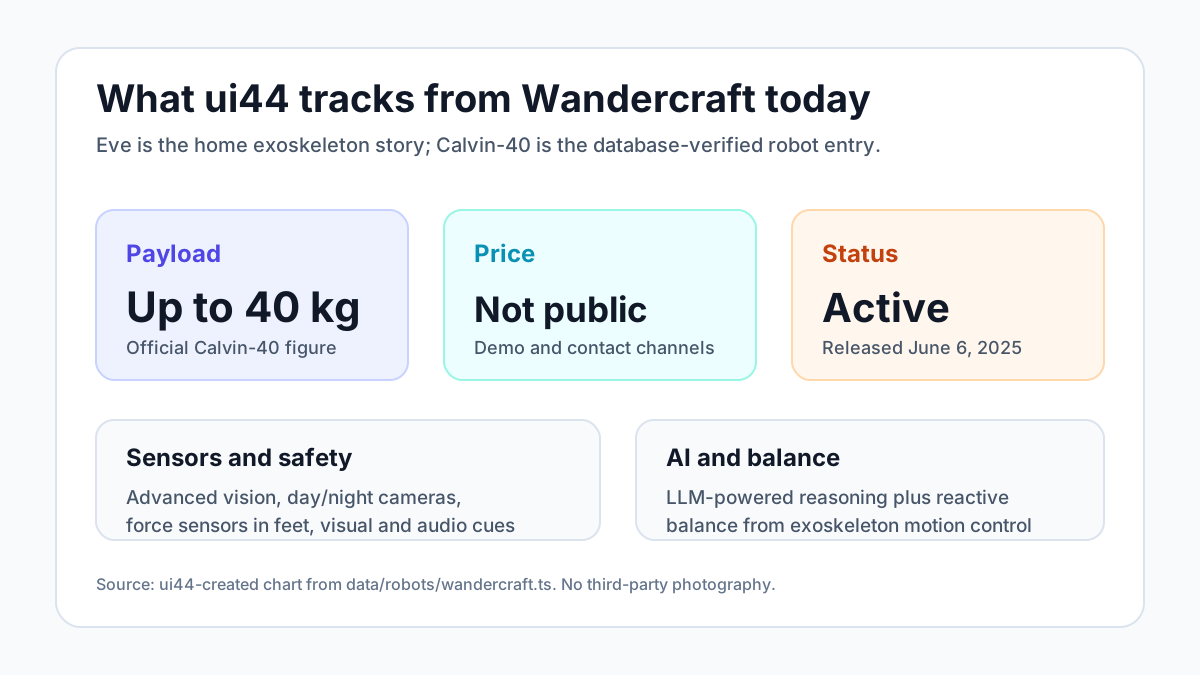
The ui44 record for Calvin-40 includes:
Field
Category
- Calvin-40 data in ui44
- Humanoid
Field
Status
- Calvin-40 data in ui44
- Active
Field
Release date
- Calvin-40 data in ui44
- June 6, 2025
Field
Price
- Calvin-40 data in ui44
- Not publicly announced
Field
Payload
- Calvin-40 data in ui44
- Up to 40 kg carrying capacity
Field
Sensors
- Calvin-40 data in ui44
- Advanced vision, day/night cameras, force sensors in feet, visual and auditory safety features
Field
AI
- Calvin-40 data in ui44
- LLM-powered reasoning with Wandercraft motion-control software trained from real-world exoskeleton movement data
Field
Compatibility
- Calvin-40 data in ui44
- Renault Group industrial partnership; SAPA industrial deployment partnership
| Field | Calvin-40 data in ui44 |
|---|---|
| Category | Humanoid |
| Status | Active |
| Release date | June 6, 2025 |
| Price | Not publicly announced |
| Payload | Up to 40 kg carrying capacity |
| Sensors | Advanced vision, day/night cameras, force sensors in feet, visual and auditory safety features |
| AI | LLM-powered reasoning with Wandercraft motion-control software trained from real-world exoskeleton movement data |
| Compatibility | Renault Group industrial partnership; SAPA industrial deployment partnership |
The most interesting line is not the 40 kg payload. It is the phrase "motion-control software trained from real-world exoskeleton movement data." For home robotics, that is the bigger signal. Wandercraft is not only building a walking aid; it is treating self-balancing human-adjacent movement as a robotics platform that can branch into medical, personal, and industrial products.
Renault's Role: Scaling Is the Hidden Question
Wandercraft's Renault Group partnership is relevant to Eve even though the headline product was Calvin. Renault announced a minority investment and a partnership with Wandercraft to develop next-generation robots, initially for industrial uses. The same announcement said Renault's industrialization, design-to-cost, and scaling expertise would help Wandercraft bring Eve to market.
That is important because personal exoskeletons have two hard problems: making them work and making them manufacturable at a price and reliability level that real people can access.
The robotics industry often celebrates a demo long before the manufacturing system exists. With assistive mobility, that gap is even more serious. A device used by a person with reduced mobility cannot be treated like an experimental toy. It needs predictable support, repair logistics, replacement parts, fitment, training, and a clear safety case. Automotive manufacturing experience does not solve all of that, but it does address the boring part that determines whether a robot becomes a product.
What Should Buyers Ask Before Getting Excited?
If you are watching Eve because you or someone in your family might benefit from robotic mobility, the right questions are practical:
- What exact user profiles will Eve support after clinical trials?
- What regulatory clearances will apply in the United States and Europe?
- Will it require clinician prescription, therapist training, or supervised fitting?
- How long does it take to put on and take off?
- What happens on thresholds, ramps, carpets, bathrooms, and outdoor surfaces?
- Is there a seated fallback or companion mobility device for longer distances?
- How are falls, loss of balance, and emergency stops handled?
- What maintenance is required, and who services it?
- What is the purchase, lease, or insurance pathway?
- Can it be used alone, or does it require a caregiver nearby?
Those questions are less glamorous than "Can it walk?" but they are the difference between a meaningful home robot and a beautiful trade-show machine.
How Eve Compares With Home Humanoids
Eve and a home humanoid are almost opposites.
A home humanoid such as 1X NEO or Figure 03 tries to bring a robot body into the home so it can act on the environment. The buyer is hoping the machine will eventually clear tables, carry laundry, fetch items, and use tools.
Eve brings robotics onto the person. The buyer is not asking the robot to do the task independently. The buyer is asking whether the robot can restore enough standing and walking capability that the person can do more of life directly.
That makes Eve less general, but potentially more valuable for the right user. A robot that folds towels badly is a convenience problem. A robot that helps someone stand at a kitchen counter, move through a doorway, or meet another person at eye level is a quality-of-life product.
The trade-off is that the tolerance for failure is lower. If a home humanoid gets confused while sorting laundry, the worst outcome is usually annoyance or damage. If an exoskeleton makes a balance, fatigue, or emergency-stop mistake, the stakes are much higher. That is why the clinical-trial and regulatory path is not a footnote. It is central to whether Eve should be trusted at home.
The Bottom Line
Wandercraft Eve is not the kind of home robot most people picture. It will not replace a cleaner, a caregiver, or a general-purpose humanoid. It is a personal exoskeleton aimed at mobility, independence, and upright interaction beyond the clinic.
That still makes it one of the more important home robotics ideas to watch. Robots do not have to perform chores to matter at home. Sometimes the most valuable robot is the one that changes what a person can do in their own space.
For now, the cautious conclusion is simple: Eve is a serious home-adjacent robot concept backed by real Wandercraft exoskeleton deployment experience, but it is not yet a normal consumer product. Wait for clinical-trial results, regulatory details, pricing, service terms, and home-use evidence before treating it as something you can buy like a robot vacuum or preorder like a humanoid.
Until then, Eve belongs on the shortlist of robots that could expand what "home robot" means.
Written by
ui44 Team
Published June 3, 2026
Share this article
Open a plain share link on X or Bluesky. No embeds, no widgets, no cookie baggage.