That is the interesting part of Japan's MW Living Home concept. MW is not simply pitching a better robot arm or a more charming humanoid. It is asking whether the home itself should be redesigned for physical AI: ceiling and wall rails, built-in sensors, a robot "nest," cargo modules, and work zones that are easier for machines to understand. Instead of forcing a full-size humanoid to dodge cables, pets, narrow furniture, and messy floors, MW wants the room to share the job.
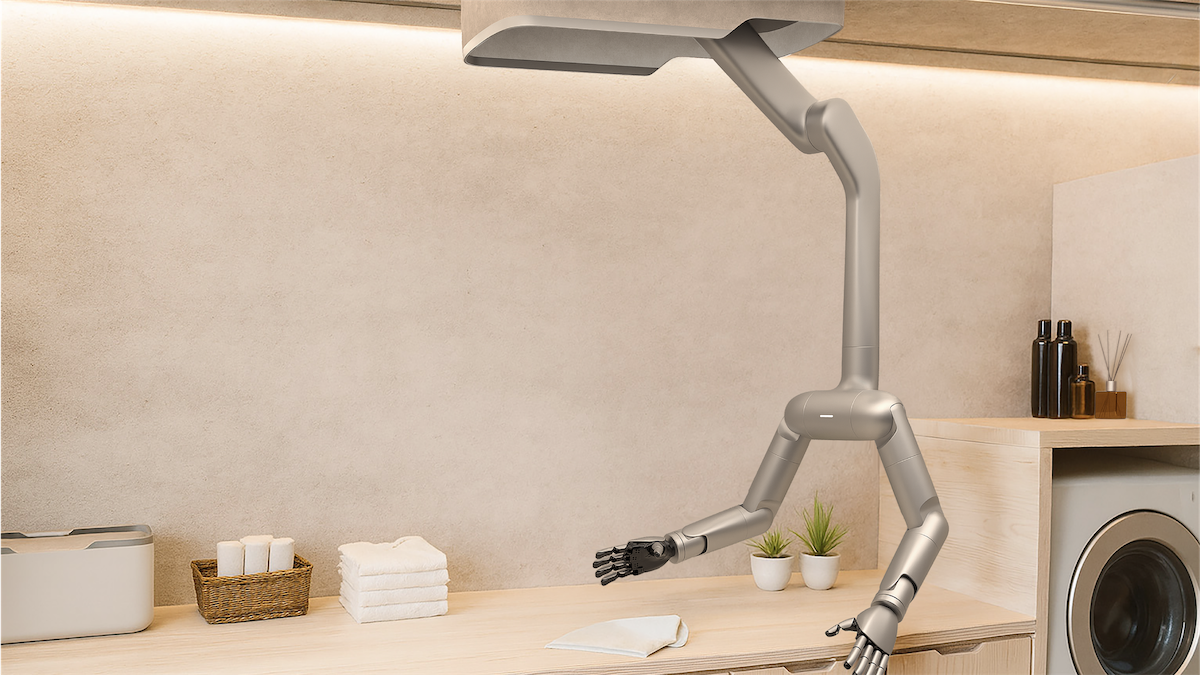
That sounds futuristic, but it is also practical. A household robot has two problems: the robot has to get smarter, and the environment has to become less chaotic. Most home-robot marketing talks only about the first half. Robot-ready houses talk about the second.
Do home robots need robot-ready houses?
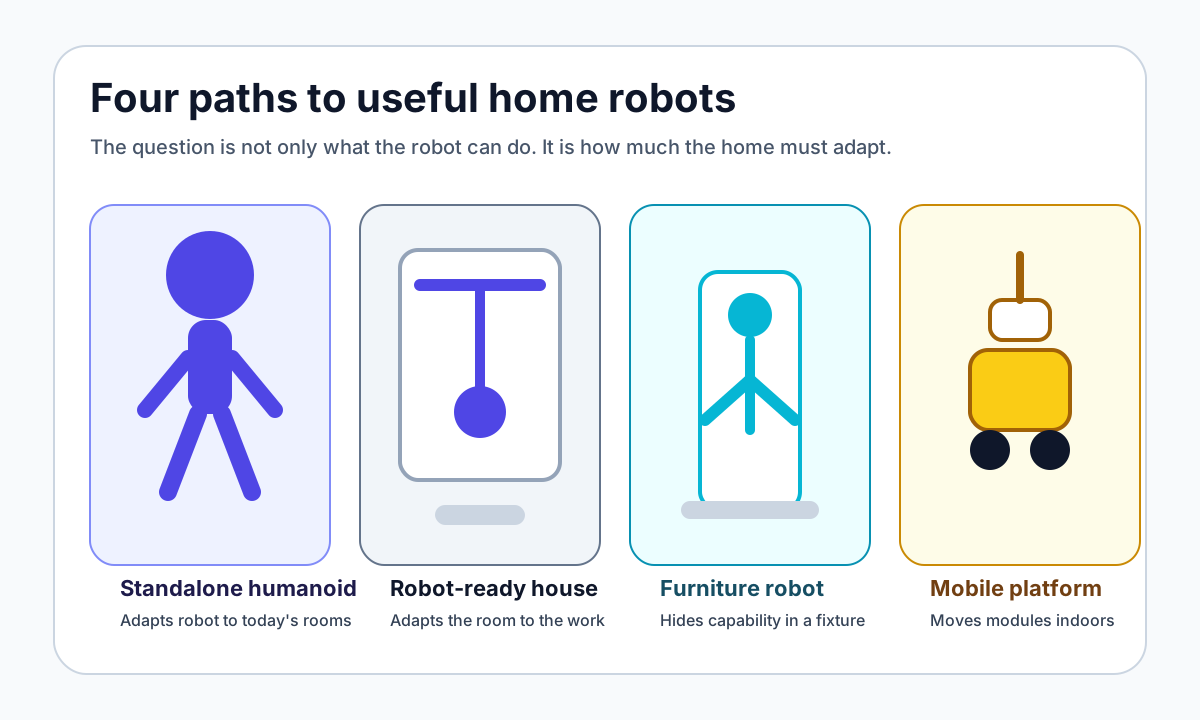
Not all of them. A robot vacuum, pet companion, security patrol robot, or stationary laundry-folding appliance can be useful without rebuilding the home. But the harder the chore becomes, the more the room starts to matter.
A robot that only cleans floors can stay low, map the floor, and return to a dock. A robot that folds laundry can be a dedicated station. A robot that makes a bed, clears a table, moves groceries, picks up clothes, replaces towels, and loads a dishwasher has to reach into the whole room. It needs repeatable positions, predictable handoff points, safe movement paths, and a way to recover when something is not where it expected.
MW's answer is to make those support systems part of the home. In a long Japanese interview with Robot Start, MW described a "Living Home" where an AI robot travels on ceiling and wall rails, returns to a stored "nest" when not in use, and works with a separate MW Cargo transport module. The company said the first phase is not a robot that does every household task. It is a system that improves the visible comfort of the home: clothes put away, bags moved to the right place, shoes aligned, dishes cleared, beds made, bathroom items returned to shelves, and towels refreshed.
That is a different buyer promise than "a humanoid can do anything." It is more like: the home can be engineered so the first useful tasks are easier.
MW's idea: change the room, not just the robot
MW's Japanese source material is worth treating as a country-specific signal, not as a generic concept render. The company is based in Japan, where smaller 60–70 square meter homes make the idea of a full-size bipedal humanoid more awkward than it might look in a spacious demo house. MW's leadership explicitly questioned whether a tall humanoid is the desired form for domestic work, pointing to intimidation, fall risk, wall and floor damage, and the difficulty of tasks like bed-making.
The company's proposed alternative has four pieces:
- A robot-ready shell: rails in the ceiling and walls, with room layouts designed around robotic reach and safe motion.
- Built-in sensing and control: sensors, IoT, apps, and voice interfaces so the house knows more than a standalone robot could know from its own cameras.
- Specialized robots: MW bot for manipulation and MW Cargo for moving bags, laundry, trash, groceries, or supplies.
- A training pipeline: teleoperation and imitation learning first, then simulation and reinforcement learning to improve repeatable household tasks.
Robot Start reported MW milestones of a robot-equipped trailer-house demo in 2026, a robot-equipped wooden model room in 2027, and MW bot Home sales targeted for 2028. Startup DB also describes MW as a 2024-founded startup developing a semi-humanoid service robot that blends with residential space, plus an indoor cargo robot system and a smart-home control app.
None of that makes MW a product you can compare against a shipping robot today. It does make the concept useful for buyers, because it exposes a question every home robot should answer: what does the robot require from the room around it?
Why normal homes are hard robot environments
A normal home is designed around human bodies. We have hands, knees, balance, soft judgment, and the ability to step around clutter without thinking about it. Robots do not get that for free.
For a machine, a home is full of small traps:
- cables, socks, toys, and pet bowls on the floor;
- soft objects that change shape when grasped;
- beds, chairs, and tables that vary by household;
- doors, drawers, handles, and shelves at inconsistent heights;
- fragile objects mixed with trash or laundry;
- people and pets moving unpredictably through the workspace.
This is why demos often focus on one chore in one carefully prepared room. The moment the robot has to do the same chore in a different home, the problem changes. A ceiling rail does not solve manipulation, but it removes some of the hardest mobility problems. A built-in sensor grid does not make a robot wise, but it may reduce the amount of guessing the robot has to do. A fixed handoff station does not turn a robot into a butler, but it gives the system a known place to start and end.
That is the trade: robot-ready houses move some complexity out of the robot and into the environment.
What the ui44 database says about the alternatives
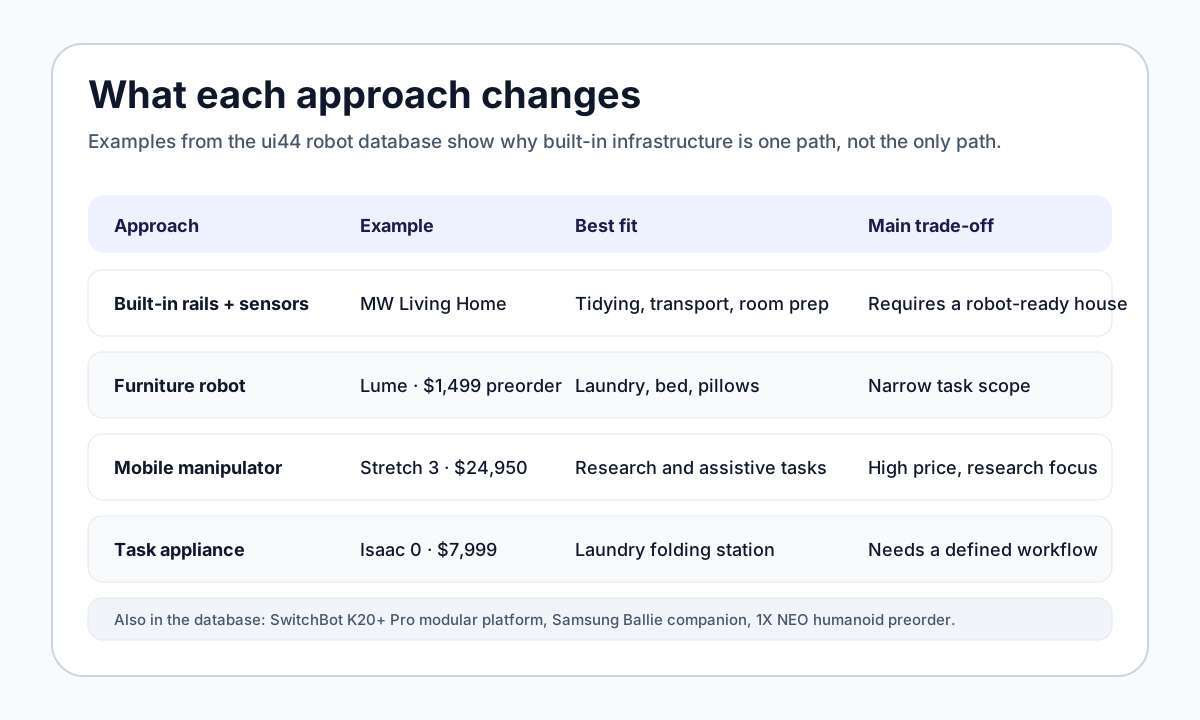
MW bot is not in the ui44 database yet because it is still a concept and roadmap signal, not a product with enough public specifications. But the database does show the surrounding design space.
Approach
Built-in home infrastructure
- ui44 example
- MW Living Home concept
- What it avoids
- Floor navigation, full humanoid balance, random room layouts
- What it still needs
- New construction, retrofit work, vendor integration
Approach
Furniture robot
- ui44 example
- Lume
- What it avoids
- A general robot body; hides an arm in a lamp-like fixture
- What it still needs
- Narrow chore scope and a known work zone
Approach
Mobile manipulator
- ui44 example
- Stretch 3
- What it avoids
- Full humanoid legs; focuses on reach and manipulation
- What it still needs
- High price, setup skill, research/assistive framing
Approach
Dedicated task appliance
- ui44 example
- Isaac 0
- What it avoids
- Whole-home autonomy; focuses on laundry folding
- What it still needs
- A station, prepared laundry flow, and acceptance of one main job
Approach
Modular mobile platform
- ui44 example
- SwitchBot K20+ Pro
- What it avoids
- One fixed robot identity; uses attachments
- What it still needs
- Payload and task limits; still mostly floor-based
Approach
Full humanoid
- ui44 example
- 1X NEO
- What it avoids
- House modification; uses human-like form
- What it still needs
- Safety, cost, reliability, real chore breadth
| Approach | ui44 example | What it avoids | What it still needs |
|---|---|---|---|
| Built-in home infrastructure | MW Living Home concept | Floor navigation, full humanoid balance, random room layouts | New construction, retrofit work, vendor integration |
| Furniture robot | Lume | A general robot body; hides an arm in a lamp-like fixture | Narrow chore scope and a known work zone |
| Mobile manipulator | Stretch 3 | Full humanoid legs; focuses on reach and manipulation | High price, setup skill, research/assistive framing |
| Dedicated task appliance | Isaac 0 | Whole-home autonomy; focuses on laundry folding | A station, prepared laundry flow, and acceptance of one main job |
| Modular mobile platform | SwitchBot K20+ Pro | One fixed robot identity; uses attachments | Payload and task limits; still mostly floor-based |
| Full humanoid | 1X NEO | House modification; uses human-like form | Safety, cost, reliability, real chore breadth |
The numbers make the split clearer. Lume is a $1,499 preorder that hides a home-assistant arm in a 45-inch floor-lamp form factor and targets laundry, bed-making, pillow resetting, and simple tidying. Stretch 3 is a $24,950 mobile manipulator with a 2 kg payload and 2–5 hours of battery life, but it is still primarily a research and assistive robotics platform. Isaac 0 is a $7,999 laundry-folding robot or $450/month subscription appliance, designed around a defined workflow rather than whole-home autonomy. SwitchBot's K20+ Pro starts around $699.99 and uses a compact mobile base with modular attachments, including delivery, security patrol, air circulation, and air purification kits.
Those are very different bets. They all make the same admission in different ways: a useful home robot becomes easier when the job is constrained.
Where robot-ready homes could win first
Robot-ready houses make the most sense where the buyer already expects a major installation or service relationship. That probably means new homes, high-income households, assisted living pilots, premium rentals, hotels, showrooms, and perhaps compact urban housing where floor space is too valuable for a roaming humanoid.
In those settings, built-in infrastructure can do things standalone robots struggle with:
- Keep the floor clear. Ceiling rails avoid toys, pets, thresholds, rugs, and dropped objects.
- Create reliable handoff points. A cargo module can always bring items to the same kitchen, closet, laundry, or trash zone.
- Hide the robot when inactive. A ceiling nest may feel less intrusive than a 1.6-meter humanoid standing in the hallway.
- Share sensing with the room. The robot does not have to discover every object from a single onboard viewpoint.
- Reduce falling risk. A rail system can trade walking spectacle for safer, constrained movement.
The same logic already appears in less dramatic products. Amazon Astro works as a patrol and video robot because it stays close to floor navigation and monitoring. Samsung Ballie is pitched around SmartThings control, reminders, projection, and family or pet monitoring rather than heavy manipulation. temi V3 is a commercial telepresence/navigation robot, not a laundry robot. The harder the physical work, the narrower the environment usually becomes.
The hard questions for buyers
A robot-ready home is not automatically better. It can also mean vendor lock-in, higher construction cost, more cameras and sensors, harder repairs, and a home that ages badly if the robot roadmap stalls.
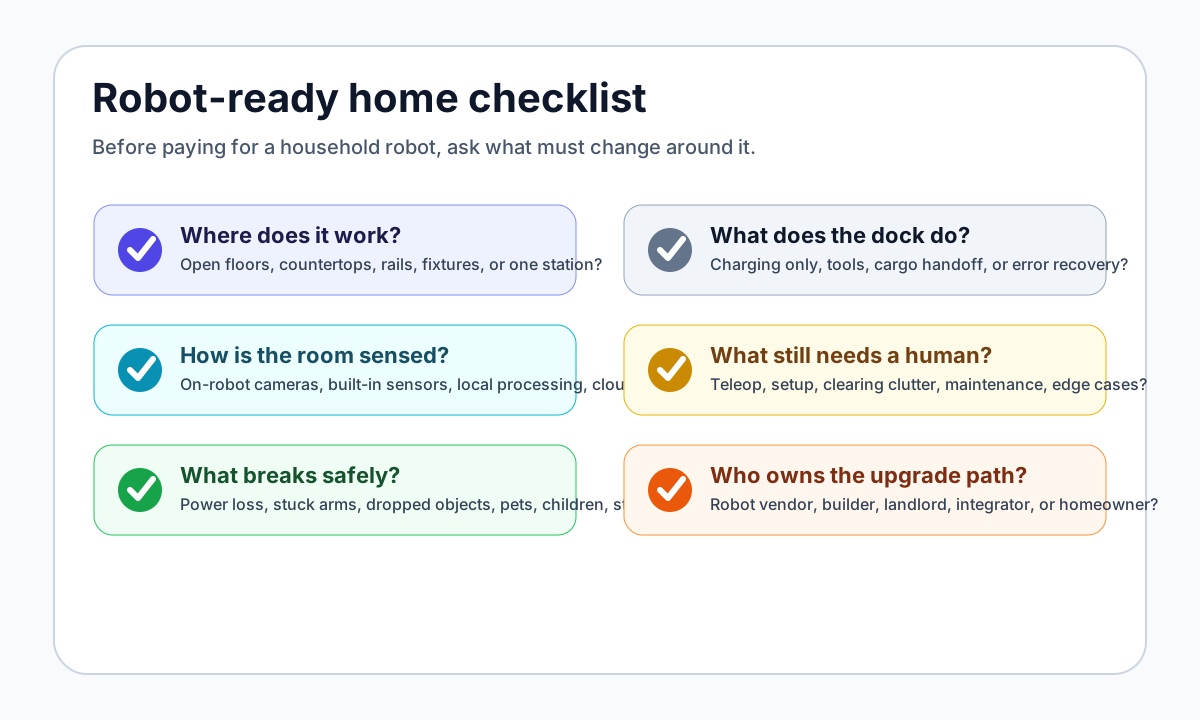
Before treating built-in robotics as a selling point, ask these questions:
- What still works if the robot service shuts down? Lights, locks, appliances, and rails should not become dead infrastructure.
- Can the system be repaired by normal tradespeople? A house that requires one robotics vendor for every fault is a maintenance risk.
- Where is the data processed? Built-in sensing may be more powerful than a robot camera, but it also raises privacy stakes.
- Can the robot fail safely? Power loss, stuck arms, dropped objects, and blocked rails need boring, well-documented answers.
- Is the chore real or just theatrical? "The robot moved a cup once" is not the same as clearing a breakfast table every morning.
- Can the home be upgraded? Robot hardware will change faster than the walls, rails, cabinets, and wiring around it.
That last point matters. A phone or robot vacuum can be replaced in a few years. A house is a decades-long object. If robot-ready infrastructure becomes real, the best versions should look more like open utilities than one-off gadgets.
The most likely future is hybrid
The robot-ready-house idea should not be read as a defeat for standalone home robots. It is more likely to become one layer in a hybrid market.
Some homes will use ordinary robots: vacuums, mowers, companion robots, security patrol devices, and single-task appliances. Some premium homes may have robot-ready zones: a laundry station, a bed-making rail, a kitchen handoff counter, or a ceiling track in a compact apartment. Some assistive-care homes may combine teleoperation, fixtures, and mobile manipulators so a robot does not have to solve every physical problem alone.
That hybrid view is healthier than the current humanoid-or-nothing framing. A future home robot does not have to imitate a person to be useful. It has to make a task reliably disappear.
MW's Living Home is still early, and its 2028 target should be treated as a roadmap, not a buyer promise. But the idea deserves attention because it shifts the conversation from "how human should the robot look?" to "what would make the work repeatable, safe, and worth paying for?"
That is the more useful question. If a robot needs the room to change, buyers should know that before they buy the robot. If the room does not need to change, the robot should be able to prove it with real tasks, not just a demo video.
Related in the database
Use this article as a setup-friction workflow
Turn the article into a first-day setup pass grounded in the robots, manufacturers, and countries it actually references.
Do Home Robots Need Robot-Ready Houses? already points you toward 8 linked robots, 8 manufacturers, and 5 countries inside the ui44 database. Treat those links as a first-day setup trail: open the robot pages, check what is actually published about charging, battery life, control method, app or OTA support, and recovery, then use the surrounding manufacturer and country context to judge whether the article describes a low-friction product path or a still-specialist deployment.
For setup topics, the useful discipline is to separate a polished demo from the work required after the box arrives. The article gives you the narrative, but the robot pages show the operational clues: dimensions, weight, battery runtime, charging time, controller support, listed availability, and the capabilities that might need supervision. Manufacturer pages then reveal whether the same setup assumptions repeat across a wider lineup.
Use the robot pages to verify what happens between delivery and the first useful task: size, weight, battery, charger or dock path, controller, app, OTA support, and recovery cues. On this route cluster, Lume, Stretch 3, and Isaac 0 form the fastest setup-friction reality check. If you want a quick working shortlist, open Compare Lume, Stretch 3, and Isaac 0 next, then keep this article open while you compare first-day setup evidence side by side.
Practical Takeaway
The links below stay tied to the robots, manufacturers, and countries actually referenced by this setup article, so the checklist remains grounded in published ui44 records rather than generic humanoid advice.
Suggested next steps in ui44
- Open Lume and check the concrete first-day fields: box contents, charger or dock path, battery life, controller, app, OTA support, and recovery options.
- Use Syncere to see whether the company’s broader lineup looks appliance-like, developer-first, or still closer to a pilot deployment.
- Run Compare Lume, Stretch 3, and Isaac 0 with the article open and compare battery, size, weight, price path, status, and support cues side by side.
- Write down the first realistic task each robot can plausibly attempt on day one, then separate low-friction setup signals from impressive but still lab-style demos.
Robot profiles worth opening next
Use the linked product pages as the evidence layer
The linked robot pages are where this setup article becomes operational. Use the robot entries to inspect the actual mix of size, weight, battery runtime, charging path, control method, pricing, availability, and stated capabilities attached to the products mentioned in the article. That is the easiest way to see whether the first useful task looks appliance-like, developer-led, or still dependent on supervised experimentation.
Lume is tracked on ui44 as a pre-order home assistants robot from Syncere. The database currently records a listed price of $1,999, a release date of 2026-04-15, Not officially disclosed battery life, Not officially disclosed charging time, and a published stack that includes Vision system (officially referenced as part of ClearTouch) plus its listed connectivity stack.
For setup-friction reading, this page matters because it shows the physical and support burden behind the demo. Use it to verify whether Lume has a credible day-one path across charging, control, recovery, battery limits, and listed capabilities such as Laundry folding, Bed making, and Pillow resetting.
Stretch 3
Hello Robot · Home Assistants · Active
Stretch 3 is tracked on ui44 as a active home assistants robot from Hello Robot. The database currently records a listed price of $24,950, a release date of 2024, 2–5 hours battery life, Not disclosed charging time, and a published stack that includes Intel D405 RGBD Camera (gripper), Intel D435if RGBD Camera (head), and Wide-Angle RGB Camera (head) plus Wi-Fi 6E and Bluetooth.
For setup-friction reading, this page matters because it shows the physical and support burden behind the demo. Use it to verify whether Stretch 3 has a credible day-one path across charging, control, recovery, battery limits, and listed capabilities such as Mobile Manipulation, Autonomous Navigation, and Teleoperation (Web / Gamepad / Dexterous).
Isaac 0
Weave Robotics · Home Assistants · Available
Isaac 0 is tracked on ui44 as a available home assistants robot from Weave Robotics. The database currently records a listed price of $3,999, a release date of 2026-02, Mains powered (600W, 120V) battery life, N/A (plugged in) charging time, and a published stack that includes Vision System and Proprioceptive Sensors plus Wi-Fi 2.4GHz/5GHz and Ethernet.
For setup-friction reading, this page matters because it shows the physical and support burden behind the demo. Use it to verify whether Isaac 0 has a credible day-one path across charging, control, recovery, battery limits, and listed capabilities such as Laundry Folding, T-shirts, Long Sleeves, Sweaters, and Pants and Towels.
K20+ Pro is tracked on ui44 as a available cleaning robot from SwitchBot. The database currently records a listed price of $699, a release date of 2025-06, 3500 mAh battery capacity; runtime not officially disclosed battery life, About 4 hours charging time, and a published stack that includes DToF laser radar, Triple laser obstacle-avoidance sensors, and Cliff/fall-prevention sensors plus Wi-Fi (2.4GHz / 5GHz) and Bluetooth.
For setup-friction reading, this page matters because it shows the physical and support burden behind the demo. Use it to verify whether K20+ Pro has a credible day-one path across charging, control, recovery, battery limits, and listed capabilities such as Robot Vacuum Cleaning, FusionPlatform Modular System (ClawLock attachment), and Smart Delivery (up to 8 kg payload), with voice support noted as Amazon Alexa and Google Assistant.
NEO
1X Technologies · Humanoid · Pre-order
NEO is tracked on ui44 as a pre-order humanoid robot from 1X Technologies. The database currently records a listed price of $20,000, a release date of 2025-10-28, ~4 hours battery life, Not disclosed charging time, and a published stack that includes RGB Cameras, Depth Sensors, and Tactile Skin plus Wi-Fi and Bluetooth.
For setup-friction reading, this page matters because it shows the physical and support burden behind the demo. Use it to verify whether NEO has a credible day-one path across charging, control, recovery, battery limits, and listed capabilities such as Household Chores, Tidying Up, and Safe Human Interaction.
Manufacturer context behind the article
Check whether this is one product story or a broader company pattern
Manufacturer pages add the setup context that individual product pages cannot show on their own. They help you check whether a brand repeats the same controller, battery, update, support, and availability patterns across multiple robots, or whether the article is really describing one early product path. That matters for humanoids because first-day friction usually comes from the surrounding ecosystem as much as from the robot itself.
Syncere
ui44 currently tracks 1 robot from Syncere across 1 category. The company is grouped under USA, and the current catalog footprint on ui44 includes Lume.
That wider brand context matters because setup friction is rarely just a box problem. A manufacturer route helps you see whether the company has repeated controller, battery, support, and update patterns across its lineup, or whether the article is really about one early product story. The category mix here currently points toward Home Assistants as the most useful next route if you want to see whether this article reflects a wider pattern inside the brand.
Hello Robot
ui44 currently tracks 2 robots from Hello Robot across 1 category. The company is grouped under USA, and the current catalog footprint on ui44 includes Stretch 3, Stretch 4.
That wider brand context matters because setup friction is rarely just a box problem. A manufacturer route helps you see whether the company has repeated controller, battery, support, and update patterns across its lineup, or whether the article is really about one early product story. The category mix here currently points toward Home Assistants as the most useful next route if you want to see whether this article reflects a wider pattern inside the brand.
Weave Robotics
ui44 currently tracks 2 robots from Weave Robotics across 1 category. The company is grouped under Denmark, and the current catalog footprint on ui44 includes Isaac 0, Isaac 1.
That wider brand context matters because setup friction is rarely just a box problem. A manufacturer route helps you see whether the company has repeated controller, battery, support, and update patterns across its lineup, or whether the article is really about one early product story. The category mix here currently points toward Home Assistants as the most useful next route if you want to see whether this article reflects a wider pattern inside the brand.
SwitchBot
ui44 currently tracks 3 robots from SwitchBot across 3 categorys. The company is grouped under USA, and the current catalog footprint on ui44 includes K20+ Pro, onero H1, KATA Friends.
That wider brand context matters because setup friction is rarely just a box problem. A manufacturer route helps you see whether the company has repeated controller, battery, support, and update patterns across its lineup, or whether the article is really about one early product story. The category mix here currently points toward Cleaning, Home Assistants, Companions as the most useful next route if you want to see whether this article reflects a wider pattern inside the brand.
Broaden the scan without leaving the database
Categories, components, and countries add the wider context
Category framing
Category pages are useful when the article touches a buying pattern that shows up across brands. A category route helps you confirm whether the linked products sit in a narrow niche or whether the same question should be tested across a larger field of alternatives.
Home Assistants
The Home Assistants category page currently groups 16 tracked robots from 14 manufacturers. ui44 describes this lane as: Arm-based household helpers — laundry folders, kitchen robots, and mobile manipulators that take on hands-on physical tasks around the home.
That makes the category route a practical follow-up when you want to check whether the products linked in this article are typical for the lane or whether they sit at one edge of the market. Useful starting examples currently include Robody, Futuring 2 (F2), Stretch 3.
Cleaning
The Cleaning category page currently groups 62 tracked robots from 27 manufacturers. ui44 describes this lane as: Robot vacuums, mops, pool cleaners, and window cleaners — the workhorses of home automation that keep every surface spotless.
That makes the category route a practical follow-up when you want to check whether the products linked in this article are typical for the lane or whether they sit at one edge of the market. Useful starting examples currently include Scuba V3, EcoSurfer S2, Scuba V3 Ultra.
Country and ecosystem context
Country pages give extra context when support practices, launch sequencing, regulatory posture, or manufacturer mix matter. They are not a substitute for model-level verification, but they do help you see which ecosystems cluster together and which manufacturers sit in the same regional field when you broaden the search beyond the article headline.
USA
The USA route currently groups 89 tracked robots from 69 manufacturers in ui44. That gives you a useful regional lens when the article points toward support practices, launch sequencing, or brand clusters that may share similar ecosystem assumptions.
On the current route, manufacturers like Faraday Future, iRobot, Boston Dynamics make the page a good way to broaden the scan without losing the regional context that often shapes availability, documentation style, and adjacent alternatives.
Denmark
The Denmark route currently groups 2 tracked robots from 1 manufacturers in ui44. That gives you a useful regional lens when the article points toward support practices, launch sequencing, or brand clusters that may share similar ecosystem assumptions.
On the current route, manufacturers like Weave Robotics make the page a good way to broaden the scan without losing the regional context that often shapes availability, documentation style, and adjacent alternatives.
Norway
The Norway route currently groups 2 tracked robots from 1 manufacturers in ui44. That gives you a useful regional lens when the article points toward support practices, launch sequencing, or brand clusters that may share similar ecosystem assumptions.
On the current route, manufacturers like 1X Technologies make the page a good way to broaden the scan without losing the regional context that often shapes availability, documentation style, and adjacent alternatives.
Questions to answer before you move from reading to buying
A follow-up FAQ built from the entities already linked in this article
Frequently Asked Questions
Which page should I open first after reading “Do Home Robots Need Robot-Ready Houses?”?
Start with Lume. That gives you a concrete product anchor for the article’s main claim. From there, branch into the manufacturer and component pages so you can tell whether the article is describing one specific model, a repeated brand pattern, or a wider technology issue that affects multiple shortlist options.
How do the manufacturer pages change the buying decision?
Syncere help you zoom out from one article and one product. On ui44 they show lineup breadth, category spread, and the neighboring robots tied to the same company. That context is useful when you are deciding whether a risk belongs to a single model, whether it shows up across a brand’s portfolio, and whether you should keep looking at alternatives before committing.
When should I switch from reading to side-by-side comparison?
Move into Compare Lume, Stretch 3, and Isaac 0 as soon as you understand the article’s main warning or promise. The article explains what to watch for, but the compare view is where you can check whether price, status, battery life, connectivity, sensors, and category fit still make the robot a good match for your own home and budget.
Where to go next in ui44
Keep the research chain inside the database
If you want to keep going, these follow-on pages give you the cleanest expansion path from article to research session. Open the comparison route first if you are deciding between products today. Open the manufacturer, category, and component routes if you still need to understand the broader pattern behind the claim.
Written by
ui44 Team
Published May 1, 2026
Share this article
Open a plain share link on X or Bluesky. No embeds, no widgets, no cookie baggage.