That matters because missed under-furniture dust is one of the quiet reasons buyers become disappointed. A robot can map the house perfectly and still leave gray lines under the sofa if its sensor tower is too tall.
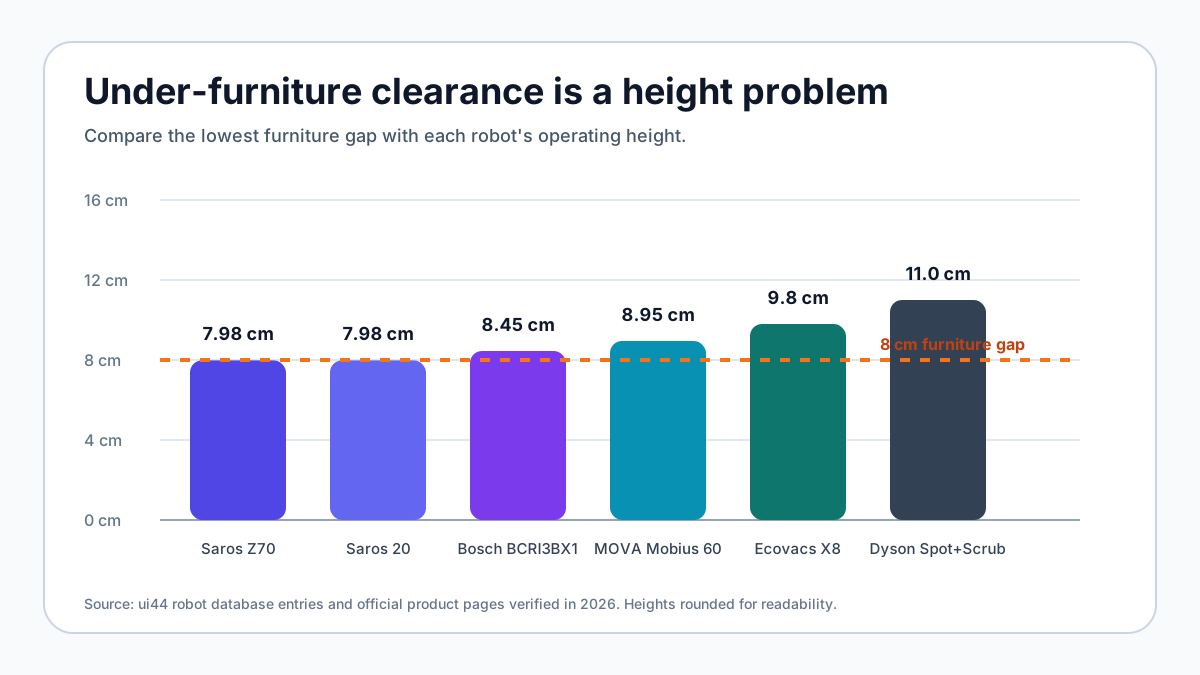
The short version: if your furniture has only 8 cm of usable clearance, even the best low-profile flagships are still tight. If you have 9-10 cm, the new class of embedded, solid-state, or retractable LiDAR robots becomes much more useful. If you have 11-12 cm, height stops being the main problem and obstacle avoidance, dock size, carpet behavior, and maintenance cost matter more.
Which low-profile robot vacuums fit under common furniture?
Here are the most relevant models in ui44's database right now, sorted by the height number a buyer should check first.
Robot
- Listed low height
- 7.98 cm / 3.14 in
- Navigation approach
- StarSight 2.0 LiDAR + 3D structured light + RGB camera
- Price/status in ui44
- $1,299; Available
- Practical under-furniture read
- One of the safest bets for 8-9 cm gaps, with the unusual bonus of a foldable arm for moving small objects.
Robot
- Listed low height
- ~7.98 cm / 3.14 in
- Navigation approach
- Embedded 3D ToF LiDAR + RGB camera
- Price/status in ui44
- $1,599.99; Available
- Practical under-furniture read
- A low body with 36,000 Pa suction and 300+ object recognition; better for buyers who want low clearance plus flagship cleaning specs.
Robot
- Listed low height
- 7.98 cm with LiDAR retracted
- Navigation approach
- RetractSense retractable spinning LiDAR
- Price/status in ui44
- AUD $2,799; US pricing not confirmed
- Practical under-furniture read
- Promising if sold in your market, but check whether it can keep useful perception when the tower is down.
Robot
- Listed low height
- 8.4 cm
- Navigation approach
- Laser navigation + camera + cross-laser + infrared
- Price/status in ui44
- Available in Germany; no MSRP disclosed
- Practical under-furniture read
- A different answer: hide the robot in a kitchen plinth, then use the low body for kitchen toe-kick cleaning.
Robot
- Listed low height
- 79.5 mm retracted / 102.8 mm lifted
- Navigation approach
- VersaLift retractable DToF + dual AI cameras
- Price/status in ui44
- $1,699.99; Available
- Practical under-furniture read
- Very strong on paper if you have mixed clearance: low enough when retracted, richer sensing when the module lifts.
Robot
- Listed low height
- 89.5 mm retracted / 111.5 mm raised
- Navigation approach
- FlexScope retractable DToF + AI SmartSight
- Price/status in ui44
- $1,299 MSRP; Available
- Practical under-furniture read
- A little taller than the thinnest Roborocks, but combines low-profile cleaning with 80 mm threshold claims and automatic mop-pad selection.
Robot
- Listed low height
- 9.8 cm / 3.86 in
- Navigation approach
- Embedded dToF LiDAR + AIVI 3D camera
- Price/status in ui44
- $1,099.99; Available
- Practical under-furniture read
- Still slim compared with old turret robots, but a 9 cm sofa gap is probably not enough.
Robot
- Listed low height
- 110 mm
- Navigation approach
- LiDAR + AI camera + floor sensors
- Price/status in ui44
- $1,199.99; Available
- Practical under-furniture read
- Interesting stain AI, but not the right first pick if low beds are the job.
| Robot | Listed low height | Navigation approach | Price/status in ui44 | Practical under-furniture read |
|---|---|---|---|---|
| Roborock Saros Z70 | 7.98 cm / 3.14 in | StarSight 2.0 LiDAR + 3D structured light + RGB camera | $1,299; Available | One of the safest bets for 8-9 cm gaps, with the unusual bonus of a foldable arm for moving small objects. |
| Roborock Saros 20 | ~7.98 cm / 3.14 in | Embedded 3D ToF LiDAR + RGB camera | $1,599.99; Available | A low body with 36,000 Pa suction and 300+ object recognition; better for buyers who want low clearance plus flagship cleaning specs. |
| Roborock Qrevo Edge 2 Pro | 7.98 cm with LiDAR retracted | RetractSense retractable spinning LiDAR | AUD $2,799; US pricing not confirmed | Promising if sold in your market, but check whether it can keep useful perception when the tower is down. |
| Bosch BCRI3BX1 | 8.4 cm | Laser navigation + camera + cross-laser + infrared | Available in Germany; no MSRP disclosed | A different answer: hide the robot in a kitchen plinth, then use the low body for kitchen toe-kick cleaning. |
| Dreame X60 Max Ultra Complete | 79.5 mm retracted / 102.8 mm lifted | VersaLift retractable DToF + dual AI cameras | $1,699.99; Available | Very strong on paper if you have mixed clearance: low enough when retracted, richer sensing when the module lifts. |
| MOVA Mobius 60 | 89.5 mm retracted / 111.5 mm raised | FlexScope retractable DToF + AI SmartSight | $1,299 MSRP; Available | A little taller than the thinnest Roborocks, but combines low-profile cleaning with 80 mm threshold claims and automatic mop-pad selection. |
| Ecovacs Deebot X8 Pro Omni | 9.8 cm / 3.86 in | Embedded dToF LiDAR + AIVI 3D camera | $1,099.99; Available | Still slim compared with old turret robots, but a 9 cm sofa gap is probably not enough. |
| Dyson Spot+Scrub Ai | 110 mm | LiDAR + AI camera + floor sensors | $1,199.99; Available | Interesting stain AI, but not the right first pick if low beds are the job. |
The important pattern is not that one brand wins every room. It is that the old "LiDAR tower equals premium navigation" rule is breaking. Roborock's Saros 20 uses embedded 3D ToF LiDAR. Dreame and MOVA use retractable sensor modules. Ecovacs has already shown that embedded dToF can sit in a 9.8 cm body. Bosch goes another direction and makes the whole appliance disappear into cabinetry.
That is a real smart-hardware shift, not just a cleaning spec race.
Why does the LiDAR tower matter so much?
Traditional robot vacuums often put a spinning laser rangefinder in a raised puck on top of the robot. That is a great place to see the room, but a terrible place to fit under a bed frame. The tower becomes the highest point, so a robot with a normal 8-9 cm body can effectively become an 11-12 cm robot once the sensor is included.
The newer designs attack the problem three ways.
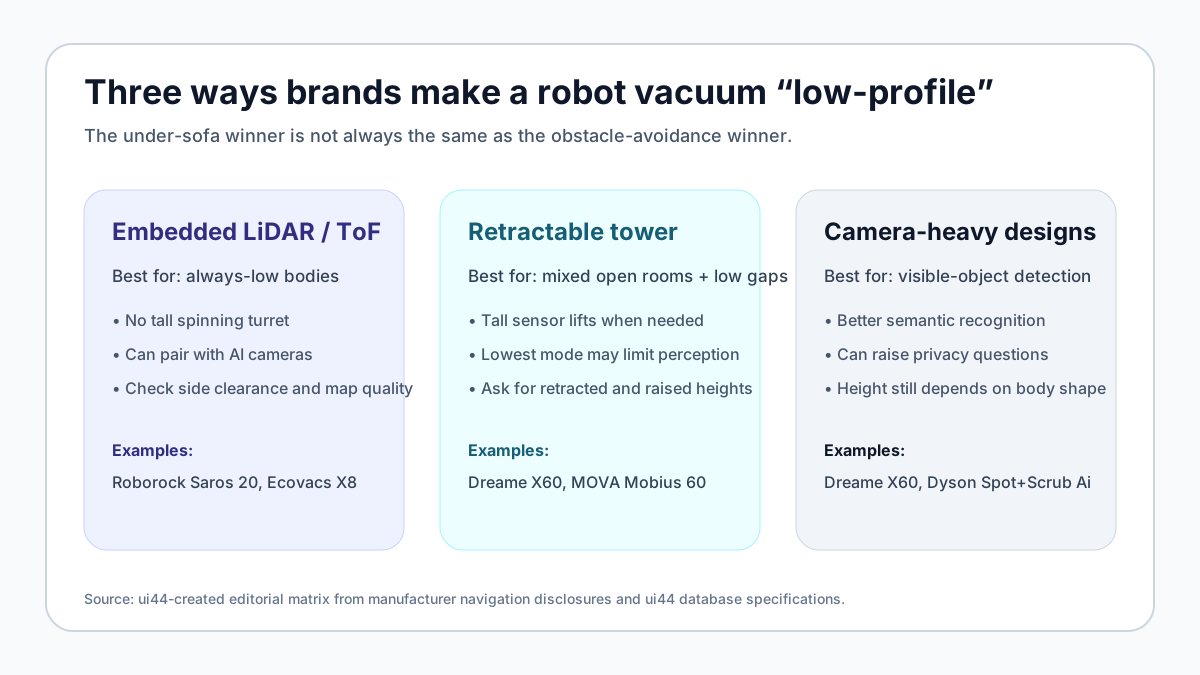
Embedded LiDAR or 3D ToF keeps the body consistently low. The Roborock Saros 20 is the cleanest example in the database: roughly 7.98 cm tall, 36,000 Pa suction, StarSight 2.0 with embedded 3D ToF LiDAR, VertiBeam lateral avoidance, and recognition for more than 300 object types. RTINGS also singled out the Saros 10R family as a strong example of solid-state LiDAR and obstacle recognition without a tall profile. The tradeoff is that buyers should look carefully at reviews for mapping stability around black furniture, mirrors, floor-length curtains, and chair legs.
Retractable LiDAR gives you two heights. Dreame X60 Max Ultra Complete is 79.5 mm with its VersaLift DToF sensor retracted and 102.8 mm when raised. MOVA Mobius 60 lists 89.5 mm retracted and 111.5 mm raised. This design makes sense in real homes: the robot can lower itself under furniture, then raise the sensor in open spaces. The question to ask is whether obstacle detection, mapping confidence, or cleaning behavior changes when the module is down.
Camera-heavy systems add semantic understanding. Dyson's Spot+Scrub Ai is not especially short at 110 mm, but its AI-powered camera can identify nearly 200 household substances and stains, then adjust cleaning passes. Dreame's X60 and MOVA's Mobius 60 combine retractable depth sensing with AI cameras. That is useful if the space under the sofa also contains charging cables, toys, pet bowls, or slippers. It also means privacy settings and image-processing policies deserve more attention.
What should you measure before buying?
Do not measure the front lip of the sofa and call it done. The lowest part is often a rear rail, a center support, a caster bracket, or a sagging fabric panel. A robot that enters from the front can still wedge itself deeper inside.
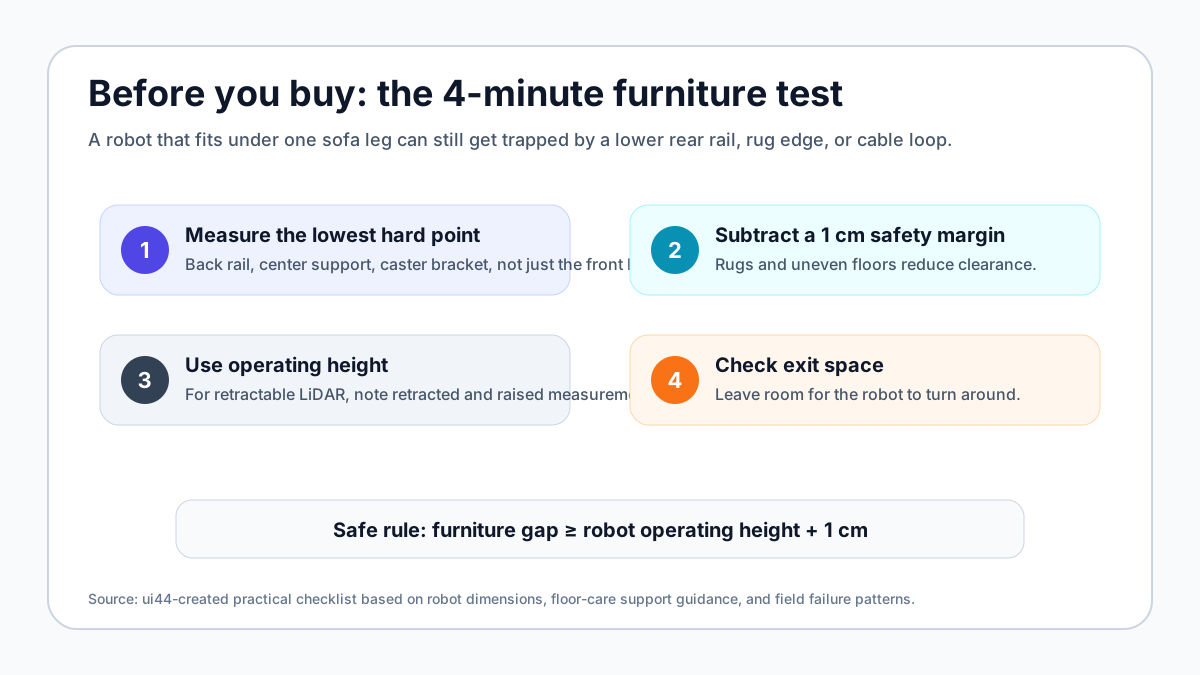
Use this simple rule:
Furniture gap should be at least the robot's operating height plus 1 cm.
That margin matters because floors are not perfectly flat, rugs add height, upholstery sags, and the robot may pitch slightly while crossing a threshold. If your sofa gap is exactly 8.0 cm, a 7.98 cm robot is technically short enough but practically risky. A 9.0 cm gap is much safer.
For retractable designs, write down both heights:
- The retracted height tells you whether it can physically enter.
- The raised height tells you how tall it becomes in open mapping mode.
- The behavior under furniture tells you whether the robot still navigates intelligently when the sensor is down.
That third point is the one spec sheets often hide. A robot that lowers itself but becomes less confident under a sofa may still clean, but it may also slow down, miss edges, or avoid the area after a few bumps.
How do the top low-profile designs compare?
The three most interesting low-profile approaches right now are Roborock's always-low Saros design, Dreame's retractable VersaLift design, and Bosch's built-in kitchen approach.
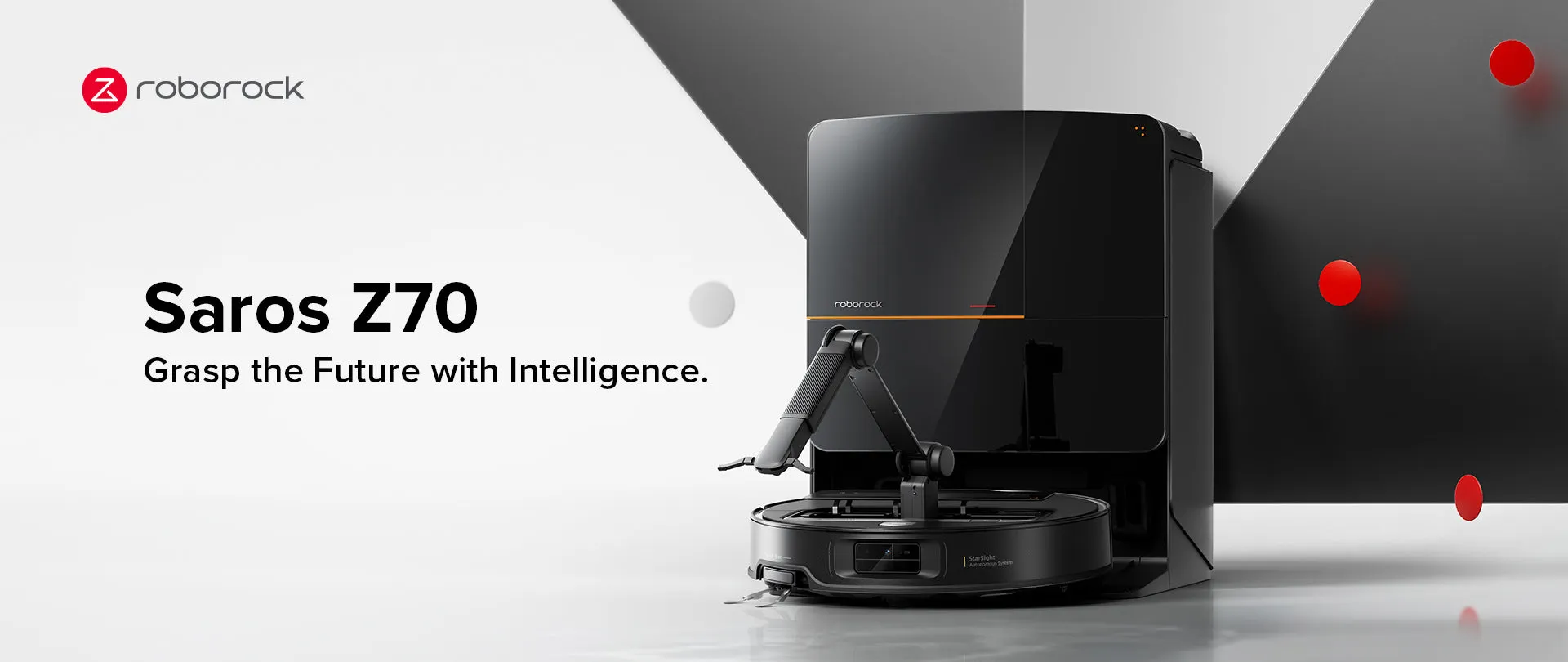
Roborock Saros Z70 and Saros 20: thin body, premium feature set
The Saros Z70 is 7.98 cm tall, includes StarSight 2.0 LiDAR, 3D structured light, an RGB camera, 22,000 Pa suction, and Roborock's OmniGrip five-axis mechanical arm. The arm is not a reason to buy a vacuum by itself, but it is relevant to low-clearance cleaning because socks, small toys, and shoes are exactly the objects that block a robot from reaching under furniture.
The Saros 20 is the more pure cleaning-spec version: roughly the same low body height, 36,000 Pa suction, embedded 3D ToF LiDAR, object recognition for 300+ object types, and AdaptiLift Chassis 3.0 for thresholds up to about 8.8 cm. That makes it a better fit if your problem is not just getting under beds, but moving between thick rugs, threshold strips, and hard floors without needing rescue.
The caution: ultra-slim flagships can be expensive, and not every home needs the full spec sheet. If your sofa clearance is 11 cm and your floors are mostly hardwood, the low-profile premium may be less important than reliable mopping, simple maintenance, or a smaller dock.
Dreame X60 and MOVA Mobius 60: retractable sensors plus obstacle AI
The Dreame X60 Max Ultra Complete is one of the clearest examples of a two-height strategy. It lists a 79.5 mm body when the sensor is retracted, 102.8 mm when raised, 35,000 Pa suction, dual AI cameras, lateral 3D structured light, and recognition for more than 280 object types. It also claims double-layer threshold crossing up to 8.8 cm.
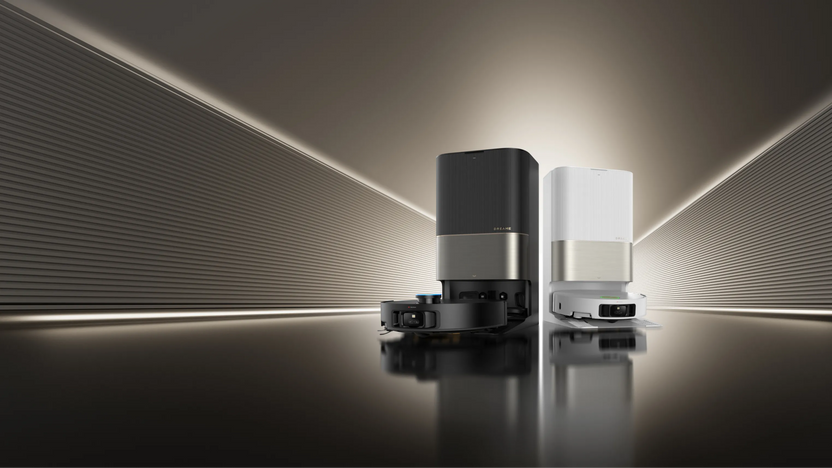
MOVA Mobius 60 takes a similar path with FlexScope retractable DToF LiDAR: 89.5 mm retracted, 111.5 mm raised, 30,000 Pa suction, AI SmartSight, structured-light sensing, and claimed recognition for more than 240 object types. Its separate smart angle is MopSwap, which automatically selects among three mop pads by room type.
These retractable systems are attractive if your home is mixed: low sofas in one room, thick thresholds elsewhere, and plenty of loose objects. The raised mode can help in open areas; the lowered mode can reach where a fixed tower cannot. The buyer question is reliability: will the robot consistently remember those under-sofa zones, or does it treat them as risky spaces to avoid?
Bosch BCRI3BX1: the kitchen-plinth answer
The Bosch BCRI3BX1 is easy to overlook because it is not a normal freestanding flagship. It is a built-in vacuum-and-mop robot designed to live inside a kitchen plinth, with a connected full-service station for dust emptying, mop washing at 70 °C, 45 °C hot-air drying, and station self-cleaning.
At 8.4 cm tall, it is relevant to low-profile buyers for a different reason: kitchens have toe kicks, cabinet bases, and appliance edges that standard docked robot vacuums often handle awkwardly. Bosch is saying the robot should be part of the room architecture. That will not help renters or anyone who wants one robot for the whole home, but it is a useful signal for where premium floor care is heading: lower, more integrated, and less visually intrusive.
Is a low-profile robot vacuum always better?
No. Low height solves one failure mode and can create others.
A very short robot still needs enough room for airflow, dustbin volume, mop lift, water tanks, wheel travel, and sensors. If the design gets thin by shrinking battery or bin capacity, you may trade under-bed reach for more frequent dock visits or weaker carpet performance. If it gets thin by changing the navigation stack, you need confidence that the new sensors handle dark furniture, reflective chair legs, and clutter as well as an older tower LiDAR design.
Independent testing also keeps reminding buyers not to over-read headline specs. The Hook Up's 2026 flagship comparison found that large suction numbers do not automatically decide carpet pickup; brush design, bin emptying, and airflow path still matter. That is why a low-profile buying decision should not be "shortest wins." It should be "short enough for my furniture, then best at the cleaning job I actually need."
What is the best low-profile robot vacuum for most homes?
For most buyers, the best target is a robot that is clearly below your lowest furniture by at least 1 cm and still has modern obstacle avoidance. That usually means:
- Choose Roborock Saros Z70 or Saros 20 if you need the lowest premium body and your budget allows it. Saros Z70 adds object pickup; Saros 20 pushes cleaning specs harder.
- Choose Dreame X60 Max Ultra Complete if you like the retractable-sensor approach and also care about high suction, threshold handling, and AI object recognition.
- Choose MOVA Mobius 60 if the room-by-room mop-pad idea matters and your furniture clearance is closer to 10 cm than 8 cm.
- Consider Bosch BCRI3BX1 only if you are planning a kitchen integration and accept that it is a dealer/install product rather than a normal consumer robot vacuum.
- Do not choose by height alone if your main issues are pet hair, carpet depth, privacy, or app simplicity. A taller robot may be the better home robot if it cleans your actual floors more reliably.
If your bed or sofa has at least 10 cm of true clearance, the market is finally giving you good options. If it has only 8 cm, be cautious: the numbers are close enough that one uneven rug edge can turn a "fits under furniture" feature into a stuck-robot notification.
The smart move is simple. Measure first, filter by height second, then compare navigation and cleaning. Low-profile robot vacuums are no longer a compromise category, but they are still robots with bodies. The tape measure is the cheapest compatibility test you can run.
Related in the database
Use this article as a privacy verification workflow
Turn the article into a privacy verification pass grounded in the robots, manufacturers, and components it actually references.
Low-Profile Robot Vacuums: What Fits Under Furniture already points you toward 10 linked robots, 7 manufacturers, and 3 countries inside the ui44 database. That matters because strong buyer guidance is easier to apply when you can move immediately from a claim or warning into concrete product pages, manufacturer directories, component explainers, and country-level context instead of treating the article as an isolated opinion piece. The fastest next step is to turn the article into a shortlist workflow: open the linked robot pages, verify which specs are actually published for those models, then compare the surrounding manufacturer and component context before you decide whether the underlying claim changes your buying plan.
For this topic, the useful discipline is to separate the editorial lesson from the catalog evidence. The article gives you the framing, but the robot pages tell you what each product actually ships with today: sensor stack, connectivity methods, listed price, release timing, category, and support-relevant compatibility notes. The manufacturer pages then show whether you are looking at a one-off launch, a broader lineup pattern, or a company that spans multiple categories. That layered workflow reduces the risk of buying on a single marketing phrase or a single support FAQ.
Use the robot pages to confirm which products actually expose cameras, microphones, Wi-Fi, or voice systems, then use the manufacturer pages to decide how much of the privacy question seems product-specific versus brand-wide. On this route cluster, Saros Z70, Saros 20, and Qrevo Edge 2 Pro form the fastest reality check. If you want a quick working shortlist, open Compare Saros Z70, Saros 20, and Qrevo Edge 2 Pro next, then keep this article open as the reasoning layer while you compare structured data side by side.
Practical Takeaway
Every robot, manufacturer, category, component, and country reference below resolves to a real ui44 page, keeping the follow-up path grounded in database records rather than generic advice.
Suggested next steps in ui44
- Open Saros Z70 and note the listed sensors, connectivity methods, and voice stack before you interpret any policy claim.
- Cross-check the wider brand context on Roborock so you can see whether the privacy question touches one model or a broader lineup.
- Use the linked component pages to confirm how common the relevant sensors and connectivity layers are across the database.
- Keep a short note of which policy layers you checked, which device features are actually present on the robot page, and which items still depend on region- or app-level confirmation.
- Finish with Compare Saros Z70, Saros 20, and Qrevo Edge 2 Pro so the policy reading sits next to structured product data.
Robot profiles worth opening next
Use the linked product pages as the evidence layer
The linked robot pages are where this article becomes operational. Instead of asking whether the headline is interesting, use the robot entries to inspect the actual mix of sensors, connectivity options, batteries, pricing, release timing, and stated capabilities attached to the products mentioned in the article. That is the easiest way to see whether the warning or opportunity described here affects one product family, a specific design pattern, or an entire buying lane.
Saros Z70 is tracked on ui44 as a available cleaning robot from Roborock. The database currently records a listed price of $1,000, a release date of 2025-05, 6,400 mAh Li-ion; official FAQ says about 2h15+ vacuuming/mopping with the arm disabled, or about 2h10+ with the arm enabled while tidying 10 items (Mop Wash Frequency set to 15 minutes). battery life, 2.5-hour fast charging charging time, and a published stack that includes LiDAR (StarSight 2.0), 3D Structured Light, and RGB Camera plus Wi-Fi and Bluetooth.
For privacy-focused reading, this page matters because it shows the concrete device surface behind the policy discussion. Use it to verify whether Saros Z70 combines sensors and connectivity in a way that could change the in-home data footprint, and compare the listed capabilities such as OmniGrip 5-Axis Mechanical Arm, Object Pickup up to 300 g (socks, sandals, crumpled tissues, towels; more items planned via OTA), and Obstacle Relocation with any cloud, app, or voice layers, including Amazon Alexa and Google Assistant.
Saros 20 is tracked on ui44 as a available cleaning robot from Roborock. The database currently records a listed price of $1,600, a release date of 2026-03, Up to 190 minutes battery life, Not officially disclosed charging time, and a published stack that includes Embedded 3D ToF LiDAR (StarSight 2.0), VertiBeam Lateral Obstacle Avoidance, and RGB Camera plus Wi-Fi and Bluetooth.
For privacy-focused reading, this page matters because it shows the concrete device surface behind the policy discussion. Use it to verify whether Saros 20 combines sensors and connectivity in a way that could change the in-home data footprint, and compare the listed capabilities such as 36,000 Pa HyperForce Suction, AdaptiLift Chassis 3.0 (wheel lifting + climbing arm), and Double-Layer Threshold Crossing (up to ~3.46 in / 8.8 cm) with any cloud, app, or voice layers, including Hello Rocky (onboard) and Amazon Alexa.
Qrevo Edge 2 Pro
Roborock · Cleaning · Available
Qrevo Edge 2 Pro is tracked on ui44 as a available cleaning robot from Roborock. The database currently records a listed price of Price TBA, a release date of 2026-02, Up to 240 minutes (runtime varies by mode) battery life, ~4 hours charging time, and a published stack that includes PreciSense Spinning LiDAR (RetractSense), 3D Structured Light, and RGB Camera plus Wi-Fi and Bluetooth.
For privacy-focused reading, this page matters because it shows the concrete device surface behind the policy discussion. Use it to verify whether Qrevo Edge 2 Pro combines sensors and connectivity in a way that could change the in-home data footprint, and compare the listed capabilities such as 25,000 Pa HyperForce Suction, RetractSense Retractable LiDAR Tower, and 7.98 cm Ultra-Slim Design with any cloud, app, or voice layers, including Hello Rocky (onboard, offline) and Amazon Alexa.
X60 Max Ultra Complete
Dreame · Cleaning · Available
X60 Max Ultra Complete is tracked on ui44 as a available cleaning robot from Dreame. The database currently records a listed price of $1,700, a release date of 2026-02, 6,400 mAh battery battery life, 80 minutes (official fast-charge claim) charging time, and a published stack that includes VersaLift DToF, Dual AI Cameras, and Lateral 3D Structured Light plus its listed connectivity stack.
For privacy-focused reading, this page matters because it shows the concrete device surface behind the policy discussion. Use it to verify whether X60 Max Ultra Complete combines sensors and connectivity in a way that could change the in-home data footprint, and compare the listed capabilities such as 35,000 Pa Vormax Suction, 79.5 mm Ultra-Slim Body, and VersaLift Retractable DToF Navigation with any cloud, app, or voice layers, including Built-in 'OK, Dreame' and Amazon Alexa.
Mobius 60 is tracked on ui44 as a available cleaning robot from MOVA. The database currently records a listed price of $1,169, a release date of 2026-01, Not officially disclosed (6,400mAh battery) battery life, Not officially disclosed charging time, and a published stack that includes FlexScope retractable DToF LiDAR, AI SmartSight camera, and Structured-light 3D scanner plus WiFi and MOVAhome app.
For privacy-focused reading, this page matters because it shows the concrete device surface behind the policy discussion. Use it to verify whether Mobius 60 combines sensors and connectivity in a way that could change the in-home data footprint, and compare the listed capabilities such as MopSwap™ automatic three-pad selection, 30,000Pa suction with carpet pressure-retention baffle, and TroboWave DuoBrush dual-brush system with any cloud, app, or voice layers, including Hey, MOVA.
Manufacturer context behind the article
Check whether this is one product story or a broader company pattern
Manufacturer pages add the privacy context that individual product pages cannot show on their own. They help you check whether cameras, microphones, cloud accounts, app controls, and policy assumptions appear across a broader lineup or stay tied to one specific product story.
Roborock
ui44 currently tracks 6 robots from Roborock across 2 categorys. The company is grouped under China, and the current catalog footprint on ui44 includes Saros Z70, Saros Rover, Saros 20.
That wider brand context matters because privacy questions rarely stop at one FAQ page. A manufacturer route helps you see whether the article is centered on one premium model or on a company that has several relevant products and therefore more than one place where the same policy or app assumptions might matter. The category mix here currently points toward Cleaning, Lawn & Garden as the most useful next route if you want to see whether this article reflects a wider pattern inside the brand.
Dreame
ui44 currently tracks 10 robots from Dreame across 2 categorys. The company is grouped under China, and the current catalog footprint on ui44 includes X50 Ultra, A3 AWD Pro, X60 Max Ultra Complete.
That wider brand context matters because privacy questions rarely stop at one FAQ page. A manufacturer route helps you see whether the article is centered on one premium model or on a company that has several relevant products and therefore more than one place where the same policy or app assumptions might matter. The category mix here currently points toward Cleaning, Lawn & Garden as the most useful next route if you want to see whether this article reflects a wider pattern inside the brand.
MOVA
ui44 currently tracks 5 robots from MOVA across 2 categorys. The company is grouped under China, and the current catalog footprint on ui44 includes LiDAX Ultra 3000 AWD, Rover X10, Mobius 60.
That wider brand context matters because privacy questions rarely stop at one FAQ page. A manufacturer route helps you see whether the article is centered on one premium model or on a company that has several relevant products and therefore more than one place where the same policy or app assumptions might matter. The category mix here currently points toward Lawn & Garden, Cleaning as the most useful next route if you want to see whether this article reflects a wider pattern inside the brand.
Bosch
ui44 currently tracks 2 robots from Bosch across 2 categorys. The company is grouped under Germany, and the current catalog footprint on ui44 includes VISIMOW18V-100, Built-In Vacuum and Mop Robot BCRI3BX1.
That wider brand context matters because privacy questions rarely stop at one FAQ page. A manufacturer route helps you see whether the article is centered on one premium model or on a company that has several relevant products and therefore more than one place where the same policy or app assumptions might matter. The category mix here currently points toward Lawn & Garden, Cleaning as the most useful next route if you want to see whether this article reflects a wider pattern inside the brand.
Broaden the scan without leaving the database
Categories, components, and countries add the wider context
Category framing
Category pages are useful when the article touches a buying pattern that shows up across brands. A category route helps you confirm whether the linked products sit in a narrow niche or whether the same question should be tested across a larger field of alternatives.
Cleaning
The Cleaning category page currently groups 62 tracked robots from 27 manufacturers. ui44 describes this lane as: Robot vacuums, mops, pool cleaners, and window cleaners — the workhorses of home automation that keep every surface spotless.
That makes the category route a practical follow-up when you want to check whether the products linked in this article are typical for the lane or whether they sit at one edge of the market. Useful starting examples currently include Scuba V3, EcoSurfer S2, Scuba V3 Ultra.
Country and ecosystem context
Country pages give extra context when support practices, launch sequencing, regulatory posture, or manufacturer mix matter. They are not a substitute for model-level verification, but they do help you see which ecosystems cluster together and which manufacturers sit in the same regional field when you broaden the search beyond the article headline.
China
The China route currently groups 189 tracked robots from 87 manufacturers in ui44. That gives you a useful regional lens when the article points toward support practices, launch sequencing, or brand clusters that may share similar ecosystem assumptions.
On the current route, manufacturers like AGIBOT, Dreame, Unitree Robotics make the page a good way to broaden the scan without losing the regional context that often shapes availability, documentation style, and adjacent alternatives.
Germany
The Germany route currently groups 13 tracked robots from 9 manufacturers in ui44. That gives you a useful regional lens when the article points toward support practices, launch sequencing, or brand clusters that may share similar ecosystem assumptions.
On the current route, manufacturers like NEURA Robotics, Bosch, Agile Robots make the page a good way to broaden the scan without losing the regional context that often shapes availability, documentation style, and adjacent alternatives.
Singapore
The Singapore route currently groups 11 tracked robots from 6 manufacturers in ui44. That gives you a useful regional lens when the article points toward support practices, launch sequencing, or brand clusters that may share similar ecosystem assumptions.
On the current route, manufacturers like eufy, Dyson, InsBotics make the page a good way to broaden the scan without losing the regional context that often shapes availability, documentation style, and adjacent alternatives.
Questions to answer before you move from reading to buying
A follow-up FAQ built from the entities already linked in this article
Frequently Asked Questions
Which page should I open first after reading “Low-Profile Robot Vacuums: What Fits Under Furniture”?
Start with Saros Z70. That gives you a concrete product anchor for the article’s main claim. From there, branch into the manufacturer and component pages so you can tell whether the article is describing one specific model, a repeated brand pattern, or a wider technology issue that affects multiple shortlist options.
How do the manufacturer pages change the buying decision?
Roborock help you zoom out from one article and one product. On ui44 they show lineup breadth, category spread, and the neighboring robots tied to the same company. That context is useful when you are deciding whether a risk belongs to a single model, whether it shows up across a brand’s portfolio, and whether you should keep looking at alternatives before committing.
When should I switch from reading to side-by-side comparison?
Move into Compare Saros Z70, Saros 20, and Qrevo Edge 2 Pro as soon as you understand the article’s main warning or promise. The article explains what to watch for, but the compare view is where you can check whether price, status, battery life, connectivity, sensors, and category fit still make the robot a good match for your own home and budget.
Where to go next in ui44
Keep the research chain inside the database
If you want to keep going, these follow-on pages give you the cleanest expansion path from article to research session. Open the comparison route first if you are deciding between products today. Open the manufacturer, category, and component routes if you still need to understand the broader pattern behind the claim.
Written by
ui44 Team
Published May 17, 2026
Share this article
Open a plain share link on X or Bluesky. No embeds, no widgets, no cookie baggage.