Article 20 min read 4,588 words

Can Home Robots Be Teammates?

The most useful home robot may not arrive as a silent servant that does every chore end to end. It may arrive as a teammate: a machine that can plan part of a task, ask for help, hand off the messy bit, recover from mistakes, and remember enough context to make tomorrow's run easier.

ui44 Team All articles

That sounds less magical than "a robot does the housework." It is also a more credible near-term buying frame. Homes are full of shared chores: one person loads the dishwasher while another clears the table; someone brings the laundry basket while someone else folds; a caregiver checks on medication while a family member handles the human conversation. Early home robots will probably fit into that pattern before they replace it.

1X NEO home robot as an early example of a shared-chore household robot teammate

Can home robots be teammates?

Yes, but only if "teammate" means something concrete. A teammate robot is not a cute label for any device with a chatbot. It needs four abilities that matter in real homes:

  1. Task planning: breaking "clean up after dinner" into smaller steps.
  2. Role awareness: knowing which steps the robot can safely do and which steps still belong to a human.
  3. Communication: asking for clarification instead of bluffing through an unsafe action.
  4. Recovery: noticing when the plan failed, stopping, and explaining what it needs next.

That is a different standard from the usual autonomy checklist. A robot vacuum can be autonomous in a narrow sense because the task is repetitive and the tool is built into the robot. A general home assistant has to deal with forks, cups, clothes, pets, children, guests, stairs, wet floors, private rooms, and household preferences that are obvious to people but invisible to a model unless the system is designed to ask.

The practical question for buyers is therefore not "is this robot fully autonomous?" It is: can the robot coordinate with the household when full autonomy fails?

What PARTNR says about household collaboration

Meta's PARTNR benchmark is useful because it studies exactly this middle ground. PARTNR stands for Planning And Reasoning Tasks in humaN-Robot collaboration, and the official AI Habitat page describes it as a benchmark for planning and reasoning in embodied multi-agent tasks. The arXiv abstract says the benchmark contains 100,000 natural-language tasks across 60 houses and 5,819 unique objects.

The important point is not that PARTNR is a product. It is not. It is a research framework for simulated household coordination. The useful point is the failure mode it exposes. The paper says current large language models still struggle with coordination, task tracking, perception, skill execution, and recovery from errors. When paired with real humans in the benchmark, the models needed 1.5x as many steps as two humans collaborating and 1.1x more steps than a single human.

That is a good reality check for home-robot marketing. If a model has trouble tracking a shared plan in simulation, buyers should be skeptical when a product video implies the robot can understand every kitchen, closet, and routine after a short voice command.
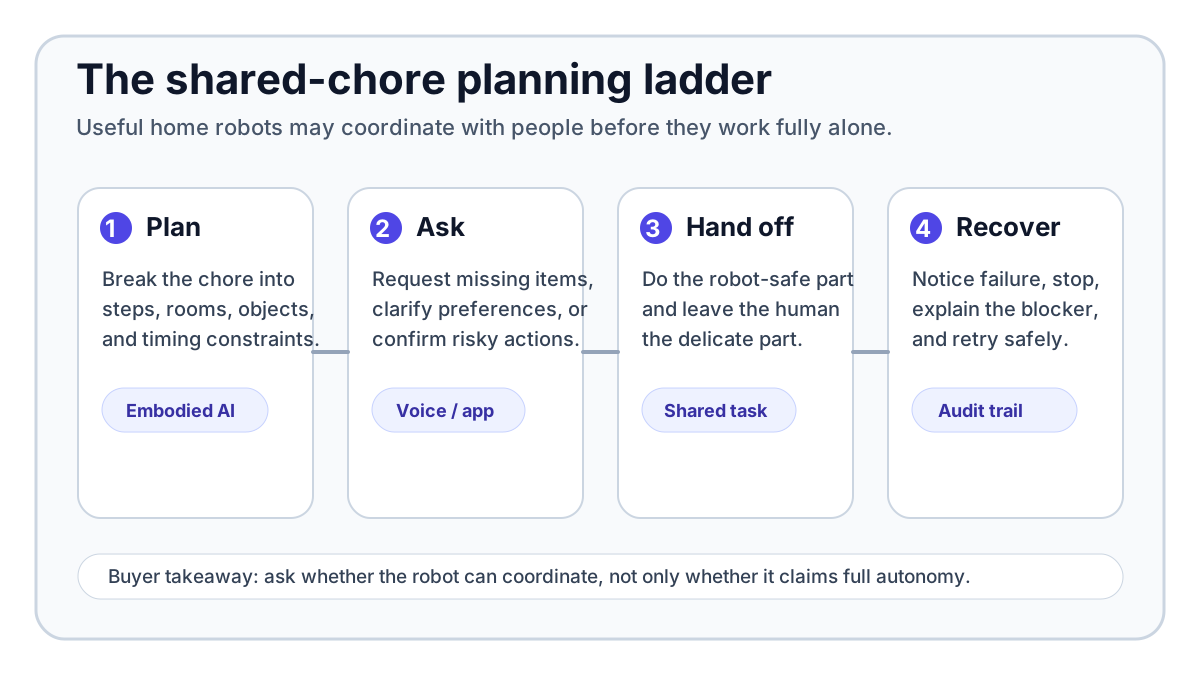
Home robot shared-chore planning ladder from planning to recovery
Scroll sideways to inspect the full chart.

PARTNR also points to a better product direction. The benchmark includes spatial, temporal, and heterogeneous-agent constraints. In plain English: where objects are, when steps need to happen, and which agent can do which part. That is what real households require. A small rolling robot may be excellent at patrolling but useless at lifting. A mobile manipulator may reach a counter but need help opening a child-proof latch. A humanoid may carry a plate but should ask before entering a bedroom.

Why shared chores may arrive before full autonomy

Full autonomy is hard because the home is not one task. It is thousands of tiny judgments. "Put away the groceries" includes reading labels, opening cabinets, knowing what goes in the fridge, avoiding eggs under heavy items, and respecting the fact that one household member hides snacks in a different place.

Shared-chore planning lowers the bar without making the robot useless. A robot could move the laundry basket, identify that towels are safe to fold, and ask a person what to do with delicate clothing. It could clear plastic cups from a coffee table but stop before handling a wine glass. It could patrol the hallway, notice a package at the door, and ask whether to notify someone or ignore it.

That model also matches how serious early robots are already being built. 1X NEO is tracked in ui44 as a $20,000 pre-order home humanoid with a roughly 167 cm / 30 kg body, about 4 hours of runtime, cameras, depth sensors, tactile skin, microphones, and a soft body designed for safe human coexistence. Its promise is household chores and adaptive learning, but the more honest buyer question is how it asks, learns, and hands off when a chore is too novel.

Sunday Memo is another useful signal. It is still in development, with no public retail price, but Sunday's official positioning is about clearing tables, loading dishwashers, folding laundry, making coffee, and training from real-home task data. Those chores are not one-click tasks. They are coordination problems, especially in a lived-in kitchen.

Which current robots already fit the teammate model?

The teammate idea is not limited to humanoids. In fact, some of the best current examples are narrower machines that admit their boundaries.
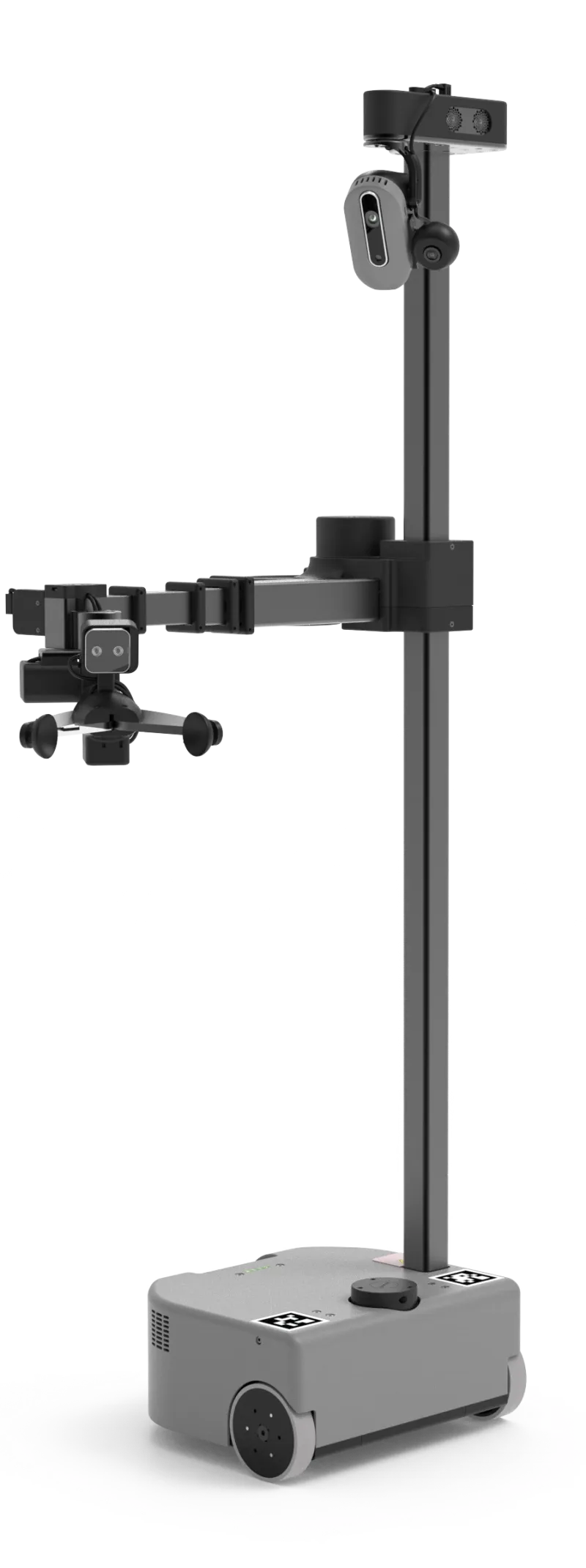
Hello Robot Stretch 3 mobile manipulator showing why shared-chore planning needs arms, reach, and teleoperation

Robot

1X NEO

ui44 status and price
Pre-order, $20,000
Why it matters for shared chores
Home-focused humanoid with cameras, depth sensing, tactile skin, microphones, and gentle manipulation claims
What to verify
What happens when it cannot finish a chore; session logs; room boundaries; learning controls

Robot

Hello Robot Stretch 3

ui44 status and price
Active, $24,950
Why it matters for shared chores
Research-grade home mobile manipulator with ROS 2, Python SDK, 2 kg payload, 10 total DoF, autonomous navigation, and web/gamepad/dexterous teleoperation
What to verify
Whether you want a developer platform, not a polished appliance

Robot

Weave Isaac 0

ui44 status and price
Available, $7,999 or $450/mo
Why it matters for shared chores
Narrow home laundry robot that folds many garments in 30-90 minutes per load and can use remote assist when stuck
What to verify
Which garments are supported; correction privacy; service coverage

Robot

Amazon Astro

ui44 status and price
Active, $1,599.99 invitation pricing
Why it matters for shared chores
Mobile home patrol robot with Alexa, Visual ID, Ring integration, room-to-room navigation, and remote check-ins
What to verify
Whether monitoring features need subscriptions; privacy controls; floor-plan limits

Robot

Samsung Ballie

ui44 status and price
Development, no price
Why it matters for shared chores
Companion-style planning around SmartThings, projection, video updates, reminders, and multimodal AI
What to verify
Whether Samsung ships it, what autonomy is local, and what actions it can actually take

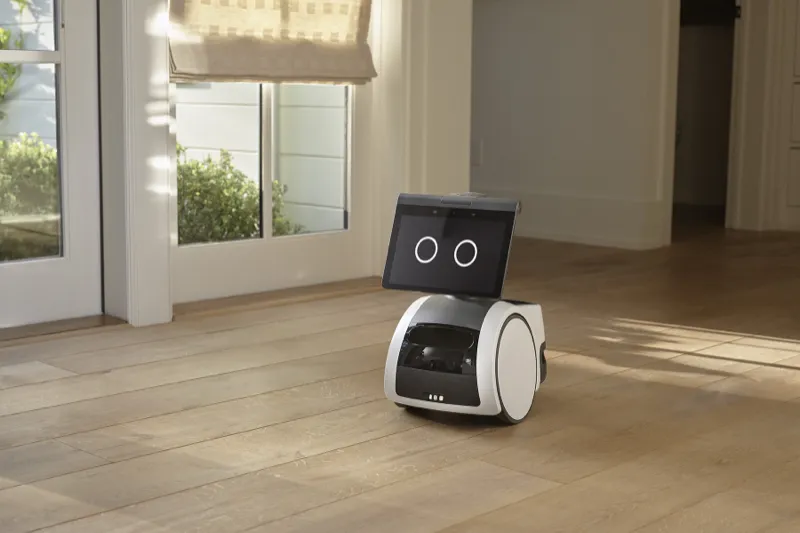
This comparison shows the spectrum. Stretch 3 is the most honest robot in the table if you want to experiment with manipulation, because it is sold as a platform and makes teleoperation part of the story. Isaac 0 is narrow but useful: laundry folding is a bounded shared chore, and a remote correction is easier to understand than a humanoid roaming the house with vague autonomy. Astro does not fold laundry, but it already behaves like a household presence that can be sent to a room, follow someone, raise a camera, and report back.

The lesson is simple: "teammate" is not a form factor. It is a product contract. The robot should make clear what it can do alone, what it can do with help, and what it will refuse.
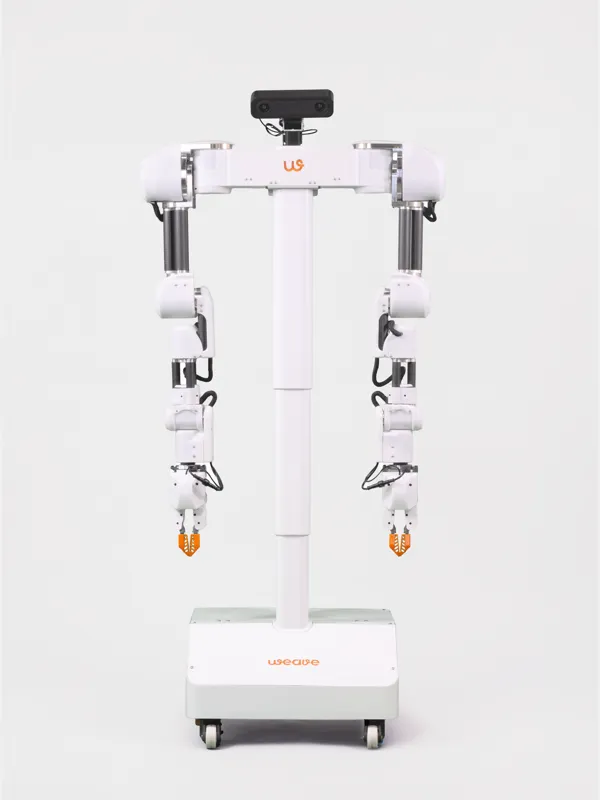
Weave Isaac 0 laundry robot as a narrow shared-chore robot with remote correction and continuous learning

The buyer checklist for a home robot teammate

What this means for the next wave of home robots

Shared-chore planning changes how to judge robot demos. Instead of asking, "Did it complete the whole chore in one take?" ask:

  • Did it know which parts were safe for the robot?
  • Did it ask before crossing a privacy or safety boundary?
  • Did it recover when an object was missing or moved?
  • Did it track what the human had already done?
  • Did it leave the home in a safer, clearer state than before?

That is especially important for humanoids. A humanoid form factor only matters when the robot can coordinate with a human-shaped environment: handles, shelves, chairs, cabinets, appliances, and social space. If it cannot plan and recover, two arms become a liability. If it can coordinate well, even limited hardware can be useful.

This is also why imitation learning for new chores and shared planning belong together. A robot can learn a motion from a demonstration, but a household task is more than a motion. It includes preferences, order, permissions, exceptions, and cleanup. The breakthrough is not only "the robot learned to fold a towel." It is "the robot knows when towels are the right thing to fold, when to stop, and when to ask."

Bottom line: buy the handoff, not the fantasy

The teammate model is less flashy than full autonomy, but it is more useful for 2026 buyers. A good home robot should not pretend every chore is solved. It should make its role clear: what it can do, what it needs from you, how it recovers, and what data leaves the home.

For now, the strongest products and research signals point toward collaboration. Stretch 3 shows the value of honest teleoperation and manipulation tooling. Isaac 0 shows why narrow tasks plus remote correction may ship before general-purpose robots. Astro shows that mobile presence and monitoring can be useful without arms. NEO and Memo show where the industry wants to go next: household helpers that learn from real homes.

So yes, home robots can be teammates. But the word should be earned. If a robot cannot explain its plan, ask for help, respect boundaries, and recover from errors, it is not a teammate yet. It is just an appliance with better marketing.

Database context

Use this article as a privacy verification workflow

Turn the article into a real verification pass

Can Home Robots Be Teammates? already points you toward 6 linked robots, 6 manufacturers, and 4 countries inside the ui44 database. That matters because strong buyer guidance is easier to apply when you can move immediately from a claim or warning into concrete product pages, manufacturer directories, component explainers, and country-level context instead of treating the article as an isolated opinion piece. The fastest next step is to turn the article into a shortlist workflow: open the linked robot pages, verify which specs are actually published for those models, then compare the surrounding manufacturer and component context before you decide whether the underlying claim changes your buying plan.

For this topic, the useful discipline is to separate the editorial lesson from the catalog evidence. The article gives you the framing, but the robot pages tell you what each product actually ships with today: sensor stack, connectivity methods, listed price, release timing, category, and support-relevant compatibility notes. The manufacturer pages then show whether you are looking at a one-off launch, a broader lineup pattern, or a company that spans multiple categories. That layered workflow reduces the risk of buying on a single marketing phrase or a single support FAQ.

Use the robot pages to confirm which products actually expose cameras, microphones, Wi-Fi, or voice systems, then use the manufacturer pages to decide how much of the privacy question seems product-specific versus brand-wide. On this route cluster, NEO, Memo, and Stretch 3 form the fastest reality check. If you want a quick working shortlist, open Compare NEO, Memo, and Stretch 3 next, then keep this article open as the reasoning layer while you compare structured data side by side.

Practical Takeaway

Every robot, manufacturer, category, component, and country reference below resolves to a real ui44 page, keeping the follow-up path grounded in database records rather than generic advice.

Suggested next steps in ui44

  1. Open NEO and note the listed sensors, connectivity methods, and voice stack before you interpret any policy claim.
  2. Cross-check the wider brand context on 1X Technologies so you can see whether the privacy question touches one model or a broader lineup.
  3. Use the linked component pages to confirm how common the relevant sensors and connectivity layers are across the database.
  4. Keep a short note of which policy layers you checked, which device features are actually present on the robot page, and which items still depend on region- or app-level confirmation.
  5. Finish with Compare NEO, Memo, and Stretch 3 so the policy reading sits next to structured product data.

Database context

Robot profiles worth opening next

Use the linked product pages as the evidence layer

The linked robot pages are where this article becomes operational. Instead of asking whether the headline is interesting, use the robot entries to inspect the actual mix of sensors, connectivity options, batteries, pricing, release timing, and stated capabilities attached to the products mentioned in the article. That is the easiest way to see whether the warning or opportunity described here affects one product family, a specific design pattern, or an entire buying lane.

NEO

1X Technologies · Humanoid · Pre-order

$20,000

NEO is tracked on ui44 as a pre-order humanoid robot from 1X Technologies. The database currently records a listed price of $20,000, a release date of 2025-10-28, ~4 hours battery life, Not disclosed charging time, and a published stack that includes RGB Cameras, Depth Sensors, and Tactile Skin plus Wi-Fi and Bluetooth.

For privacy-focused reading, this page matters because it shows the concrete device surface behind the policy discussion. Use it to verify whether NEO combines sensors and connectivity in a way that could change the in-home data footprint, and compare the listed capabilities such as Household Chores, Tidying Up, and Safe Human Interaction with any cloud, app, or voice layers.

Memo

Sunday · Home Assistants · Development

Price TBA

Memo is tracked on ui44 as a development home assistants robot from Sunday. The database currently records a listed price of Price TBA, a release date of 2026-03-12, Not officially disclosed battery life, Not officially disclosed charging time, and a published stack that includes its published sensor stack plus its listed connectivity stack.

For privacy-focused reading, this page matters because it shows the concrete device surface behind the policy discussion. Use it to verify whether Memo combines sensors and connectivity in a way that could change the in-home data footprint, and compare the listed capabilities such as Autonomous table clearing, Dishwasher loading, and Laundry folding with any cloud, app, or voice layers.

Stretch 3

Hello Robot · Home Assistants · Active

$24,950

Stretch 3 is tracked on ui44 as a active home assistants robot from Hello Robot. The database currently records a listed price of $24,950, a release date of 2024, 2–5 hours battery life, Not disclosed charging time, and a published stack that includes Intel D405 RGBD Camera (gripper), Intel D435if RGBD Camera (head), and Wide-Angle RGB Camera (head) plus Wi-Fi and Ethernet.

For privacy-focused reading, this page matters because it shows the concrete device surface behind the policy discussion. Use it to verify whether Stretch 3 combines sensors and connectivity in a way that could change the in-home data footprint, and compare the listed capabilities such as Mobile Manipulation, Autonomous Navigation, and Teleoperation (Web / Gamepad / Dexterous) with any cloud, app, or voice layers.

Isaac 0

Weave Robotics · Home Assistants · Available

$7,999

Isaac 0 is tracked on ui44 as a available home assistants robot from Weave Robotics. The database currently records a listed price of $7,999, a release date of 2026-02, Mains powered (600W, 120V) battery life, N/A (plugged in) charging time, and a published stack that includes Vision System and Proprioceptive Sensors plus Wi-Fi 2.4GHz/5GHz and Ethernet.

For privacy-focused reading, this page matters because it shows the concrete device surface behind the policy discussion. Use it to verify whether Isaac 0 combines sensors and connectivity in a way that could change the in-home data footprint, and compare the listed capabilities such as Laundry Folding, T-shirts, Long Sleeves, Sweaters, and Pants and Towels with any cloud, app, or voice layers.

Astro

Amazon · Security & Patrol · Active

$1,599

Astro is tracked on ui44 as a active security & patrol robot from Amazon. The database currently records a listed price of $1,599, a release date of 2021, Not officially disclosed battery life, Not officially disclosed charging time, and a published stack that includes 5MP Bezel Camera, 1080p Periscope Camera (132° FOV), and Infrared Vision plus Wi-Fi 802.11ac and Bluetooth.

For privacy-focused reading, this page matters because it shows the concrete device surface behind the policy discussion. Use it to verify whether Astro combines sensors and connectivity in a way that could change the in-home data footprint, and compare the listed capabilities such as Autonomous Home Patrol, Visual ID (face recognition), and Remote Home Monitoring with any cloud, app, or voice layers, including Amazon Alexa.

Database context

Manufacturer context behind the article

Check whether this is one product story or a broader company pattern

Manufacturer pages add the privacy context that individual product pages cannot show on their own. They help you check whether cameras, microphones, cloud accounts, app controls, and policy assumptions appear across a broader lineup or stay tied to one specific product story.

1X Technologies

ui44 currently tracks 2 robots from 1X Technologies across 1 category. The company is grouped under Norway, and the current catalog footprint on ui44 includes NEO, EVE.

That wider brand context matters because privacy questions rarely stop at one FAQ page. A manufacturer route helps you see whether the article is centered on one premium model or on a company that has several relevant products and therefore more than one place where the same policy or app assumptions might matter. The category mix here currently points toward Humanoid as the most useful next route if you want to see whether this article reflects a wider pattern inside the brand.

Sunday

ui44 currently tracks 1 robot from Sunday across 1 category. The current catalog footprint on ui44 includes Memo.

That wider brand context matters because privacy questions rarely stop at one FAQ page. A manufacturer route helps you see whether the article is centered on one premium model or on a company that has several relevant products and therefore more than one place where the same policy or app assumptions might matter. The category mix here currently points toward Home Assistants as the most useful next route if you want to see whether this article reflects a wider pattern inside the brand.

Hello Robot

ui44 currently tracks 1 robot from Hello Robot across 1 category. The company is grouped under USA, and the current catalog footprint on ui44 includes Stretch 3.

That wider brand context matters because privacy questions rarely stop at one FAQ page. A manufacturer route helps you see whether the article is centered on one premium model or on a company that has several relevant products and therefore more than one place where the same policy or app assumptions might matter. The category mix here currently points toward Home Assistants as the most useful next route if you want to see whether this article reflects a wider pattern inside the brand.

Weave Robotics

ui44 currently tracks 1 robot from Weave Robotics across 1 category. The company is grouped under Denmark, and the current catalog footprint on ui44 includes Isaac 0.

That wider brand context matters because privacy questions rarely stop at one FAQ page. A manufacturer route helps you see whether the article is centered on one premium model or on a company that has several relevant products and therefore more than one place where the same policy or app assumptions might matter. The category mix here currently points toward Home Assistants as the most useful next route if you want to see whether this article reflects a wider pattern inside the brand.

Database context

Broaden the scan without leaving the database

Categories, components, and countries add the wider context

Category framing

Category pages are useful when the article touches a buying pattern that shows up across brands. A category route helps you confirm whether the linked products sit in a narrow niche or whether the same question should be tested across a larger field of alternatives.

Humanoid

The Humanoid category page currently groups 65 tracked robots from 47 manufacturers. ui44 describes this lane as: Full-size bipedal humanoid robots designed to work alongside humans. From factory floors to household tasks, these machines represent the cutting edge of robotics.

That makes the category route a practical follow-up when you want to check whether the products linked in this article are typical for the lane or whether they sit at one edge of the market. Useful starting examples currently include NEO, EVE, Mornine M1.

Home Assistants

The Home Assistants category page currently groups 12 tracked robots from 12 manufacturers. ui44 describes this lane as: Arm-based household helpers — laundry folders, kitchen robots, and mobile manipulators that handle physical tasks at home.

That makes the category route a practical follow-up when you want to check whether the products linked in this article are typical for the lane or whether they sit at one edge of the market. Useful starting examples currently include Robody, Futuring 2 (F2), Stretch 3.

Country and ecosystem context

Country pages give extra context when support practices, launch sequencing, regulatory posture, or manufacturer mix matter. They are not a substitute for model-level verification, but they do help you see which ecosystems cluster together and which manufacturers sit in the same regional field when you broaden the search beyond the article headline.

Norway

The Norway route currently groups 2 tracked robots from 1 manufacturers in ui44. That gives you a useful regional lens when the article points toward support practices, launch sequencing, or brand clusters that may share similar ecosystem assumptions.

On the current route, manufacturers like 1X Technologies make the page a good way to broaden the scan without losing the regional context that often shapes availability, documentation style, and adjacent alternatives.

USA

The USA route currently groups 16 tracked robots from 12 manufacturers in ui44. That gives you a useful regional lens when the article points toward support practices, launch sequencing, or brand clusters that may share similar ecosystem assumptions.

On the current route, manufacturers like Boston Dynamics, Figure AI, Tesla make the page a good way to broaden the scan without losing the regional context that often shapes availability, documentation style, and adjacent alternatives.

Denmark

The Denmark route currently groups 1 tracked robots from 1 manufacturers in ui44. That gives you a useful regional lens when the article points toward support practices, launch sequencing, or brand clusters that may share similar ecosystem assumptions.

On the current route, manufacturers like Weave Robotics make the page a good way to broaden the scan without losing the regional context that often shapes availability, documentation style, and adjacent alternatives.

Database context

Questions to answer before you move from reading to buying

A follow-up FAQ built from the entities already linked in this article

Frequently Asked Questions

Which page should I open first after reading “Can Home Robots Be Teammates?”?

Start with NEO. That gives you a concrete product anchor for the article’s main claim. From there, branch into the manufacturer and component pages so you can tell whether the article is describing one specific model, a repeated brand pattern, or a wider technology issue that affects multiple shortlist options.

How do the manufacturer pages change the buying decision?

1X Technologies help you zoom out from one article and one product. On ui44 they show lineup breadth, category spread, and the neighboring robots tied to the same company. That context is useful when you are deciding whether a risk belongs to a single model, whether it shows up across a brand’s portfolio, and whether you should keep looking at alternatives before committing.

When should I switch from reading to side-by-side comparison?

Move into Compare NEO, Memo, and Stretch 3 as soon as you understand the article’s main warning or promise. The article explains what to watch for, but the compare view is where you can check whether price, status, battery life, connectivity, sensors, and category fit still make the robot a good match for your own home and budget.

Database context

Where to go next in ui44

Keep the research chain inside the database

If you want to keep going, these follow-on pages give you the cleanest expansion path from article to research session. Open the comparison route first if you are deciding between products today. Open the manufacturer, category, and component routes if you still need to understand the broader pattern behind the claim.

UT

Written by

ui44 Team

Published April 30, 2026

Share this article

Open a plain share link on X or Bluesky. No embeds, no widgets, no cookie baggage.

Explore the database

Go beyond the headlines

Compare specs, features, and prices across 100+ robots from leading manufacturers worldwide.