That does not automatically make the robot unsafe or deceptive. It does mean buyers should stop treating autonomy as a yes/no label. The real question is whether remote human help is scheduled, visible, narrow, logged, and easy to refuse.

The best current hook is 1X NEO. 1X's official order page says NEO works autonomously by default, but for chores it does not know, owners can schedule a 1X Expert to remotely supervise actions at scheduled times. The same FAQ says an Expert cannot simply connect at any time: the owner has to schedule support and accept the Expert into the robot using voice or the mobile app, and NEO's ear rings change color while a 1X Expert Operator is active.
That is exactly the kind of disclosure home robots need. It is also only the start of the buyer checklist.
What is home robot Expert Mode?
Expert Mode is a human-in-the-loop support model. Instead of pretending the robot can solve every household edge case alone, the manufacturer admits that some tasks may need a trained person watching, guiding, or taking over part of the session.
In 1X's wording, NEO arrives with basic autonomy for early owners and is meant to grow in capability over time. The official order page lists a $20,000 ownership option, a $499/month subscription option, a $200 refundable deposit, and U.S. deliveries starting in 2026. In the ui44 database, NEO is a pre-order home humanoid with a roughly 167 cm / 30 kg body, about 4 hours of runtime, cameras, depth sensing, tactile skin, microphones, and compatibility with the 1X app.
Those specs matter because Expert Mode is not just a video-call feature. A humanoid with cameras, microphones, mobile navigation, and hands is physically present in private rooms. If a remote person can help it fold laundry, carry objects, or recover from a stuck state, the privacy policy has to cover more than a cloud login.
The encouraging part: 1X states that owners keep session control. The FAQ says owners actively schedule support, accept it by voice or app, receive a visible ear-ring indicator, and have full control over each session. It also says the Experts are 1X employees physically present in the United States. On data, 1X says NEO works without the need for data sharing, that limited sensor data may be sent to fulfill an autonomous request and is not stored, and that owners can opt out of sharing data for performance improvement. A separate FAQ answer says real-world task data can refine NEO's base intelligence and safety, but that 1X does not use it to build a profile of the owner or sell that data.
For a buyer, that is a strong baseline. It still leaves details worth asking about before placing a deposit: room-level boundaries, session recordings, retention windows, audit logs, guest consent, child and elder-care rules, liability, and what exactly happens when an owner ends a session mid-task.
Why remote help may be normal for early home robots
Homes are harder than demo stages. A kitchen has slippery floors, pets underfoot, half-open drawers, fragile glasses, poor lighting, and objects that move between every run. A laundry basket can contain socks, towels, shirts, cables, toys, and one item that should never go into the wash. Even an excellent model can fail because the robot is a new body in a new environment.
That is why remote help appears across several serious home-robot categories in the ui44 database.
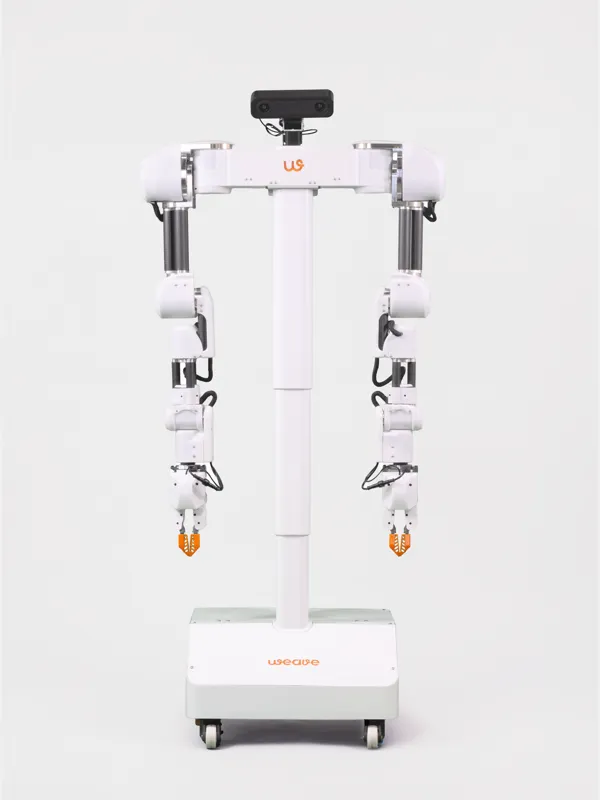
Weave Isaac 0 is a stationary home laundry robot priced at $7,999 upfront or $450/month. It is designed to fold shirts, sweaters, pants, and towels in 30–90 minutes per load, and the ui44 record notes a blend of autonomy and remote teleoperation: if Isaac gets stuck, a Weave specialist can sub in for a quick correction.
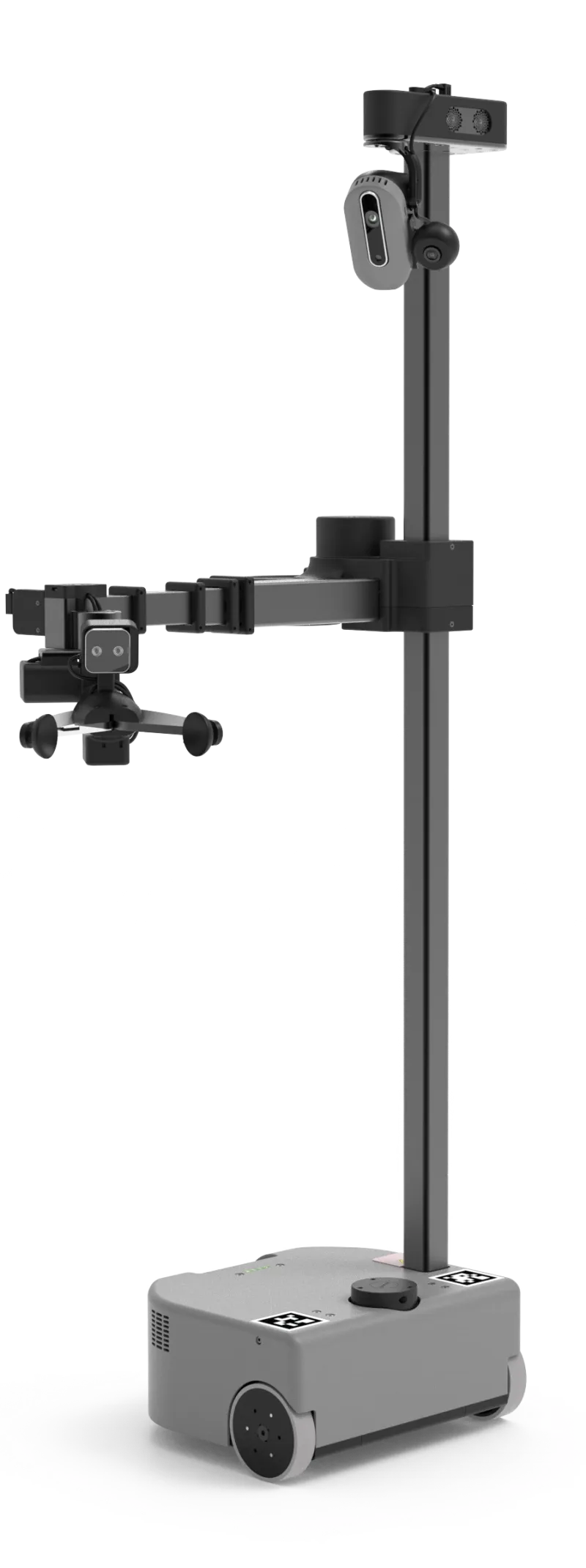
Hello Robot Stretch 3 is a $24,950 open-source mobile manipulator, not a mass-market appliance. But it shows why remote operation is useful. Stretch weighs 24.5 kg, runs for 2–5 hours, has a compact 33 × 34 cm footprint, and officially supports web, gamepad, and dexterous teleoperation. Hello Robot describes the web interface as a way to manipulate objects across a home or across the world while monitoring camera feeds.
Devanthro Robody takes a different route: it is a home-care robotic avatar. The current Robody Cares offer is framed around a €690/month service plan, a 1.65 m / 60 kg robot, about 6 hours of battery life, 5G and Wi-Fi 6, and VR telepresence for caregivers and family members. This is not hidden autonomy. The remote person is the product.
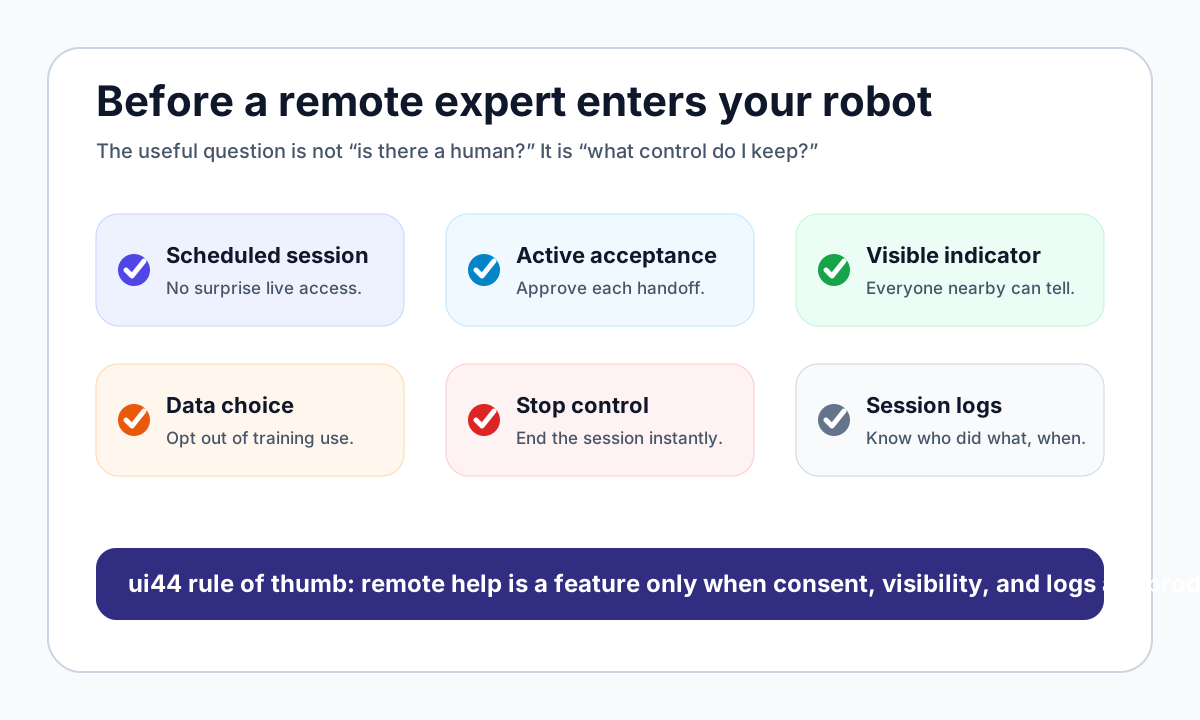
Remote help, then, is not inherently a red flag. It can be a sensible bridge between today's robot capability and tomorrow's more reliable autonomy. The red flags are surprise access, vague data use, no visible indicator, no clear end-session control, and no explanation of who the operator is.
The privacy risk changes by robot type
Not every connected robot creates the same privacy problem. A remote-control toy, a mobile camera, and a humanoid with hands should not be evaluated with one generic smart-home checklist.
Robot
- Human-in-loop or remote feature
- Scheduled 1X Expert Mode for unknown chores
- Why privacy review matters
- A remote Expert may supervise a mobile humanoid with cameras, microphones, and manipulation ability in the home.
Robot
- Human-in-loop or remote feature
- Remote teleoperation assist when stuck
- Why privacy review matters
- Narrower task scope, but laundry is still a private household context.
Robot
- Human-in-loop or remote feature
- VR telepresence for caregivers/family; human backup
- Why privacy review matters
- The value proposition is human presence, so consent and access rules matter for care recipients.
Robot
- Human-in-loop or remote feature
- Web/gamepad/dexterous teleoperation
- Why privacy review matters
- Designed for research and assistive control, with live camera feeds and a manipulator.
Robot
- Human-in-loop or remote feature
- Remote home monitoring, patrol, Visual ID, Ring integration
- Why privacy review matters
- Less about task teleoperation, more about mobile camera, face recognition, and household surveillance boundaries.
Robot
- Human-in-loop or remote feature
- Two-way video communication and home patrol
- Why privacy review matters
- Lower physical risk than a humanoid, but still a rolling 4K camera with family and pet monitoring.
| Robot | Human-in-loop or remote feature | Why privacy review matters |
|---|---|---|
| 1X NEO | Scheduled 1X Expert Mode for unknown chores | A remote Expert may supervise a mobile humanoid with cameras, microphones, and manipulation ability in the home. |
| Weave Isaac 0 | Remote teleoperation assist when stuck | Narrower task scope, but laundry is still a private household context. |
| Robody | VR telepresence for caregivers/family; human backup | The value proposition is human presence, so consent and access rules matter for care recipients. |
| Stretch 3 | Web/gamepad/dexterous teleoperation | Designed for research and assistive control, with live camera feeds and a manipulator. |
| Amazon Astro | Remote home monitoring, patrol, Visual ID, Ring integration | Less about task teleoperation, more about mobile camera, face recognition, and household surveillance boundaries. |
| Enabot EBO X | Two-way video communication and home patrol | Lower physical risk than a humanoid, but still a rolling 4K camera with family and pet monitoring. |
The table shows the spectrum. A remote family check-in on EBO X is not the same as a paid operator guiding a humanoid hand. Amazon Astro is not marketed as a chore humanoid, but it still combines autonomous home patrol, Visual ID face recognition, remote monitoring, a 1080p periscope camera, and Ring integration. That creates privacy questions even without a robot arm.
By contrast, Toyota HSR and Stretch 3 are closer to assistive or research platforms. Toyota's HSR record notes remote teleoperation by family or caregivers, voice-command support, and a compact home-assistance design for elderly and disabled users. The home value is obvious: a remote caregiver could help retrieve an object or check in. The privacy question is equally obvious: who has access, when, and how is the person in the room informed?
The buyer checklist: what should be disclosed?
Before buying a robot that offers Expert Mode, teleoperation, remote monitoring, or caregiver access, ask for answers in writing. Marketing pages often mention autonomy, AI, and support. The purchase decision depends on the operational details.
1. Can a human connect only by appointment?
The safest default is appointment-only access. 1X says NEO owners have to actively schedule an Expert and accept them into the robot using voice or mobile. That is the right pattern. A robot should not allow open-ended staff access just because support is available.
For care robots, the model may be different. Robody markets family and caregiver remote presence as a core service. In that case, the schedule should be controlled by the person receiving care or by a clearly authorized caregiver arrangement, not by a vague family account everyone can use at will.
2. Is there a visible indicator in the room?
The person standing near the robot should not need to open an app to know a remote person is present. 1X says NEO's emotive ear rings change color while a 1X Expert Operator is active. That is better than a hidden cloud session.
For robots with screens, cameras, speakers, or projectors, the indicator should be obvious: light, audio cue, screen banner, and app notice. A small icon buried in settings is not enough when the robot is in a bedroom, kitchen, or elder-care apartment.
3. Can you stop the session immediately?
A good system needs a hard end-session path from the app, voice, and preferably a physical control. It should tell the remote operator to stop, return the robot to a safe pose, and prevent immediate reconnection unless the owner approves again.
This matters more for robots with manipulators. A wheeled camera that stops moving is one thing. A humanoid holding a glass, laundry basket, or kitchen tool needs a safe handoff state.
4. What data is sent, stored, and used for training?
1X's current disclosure is unusually concrete for a pre-order home humanoid: it says NEO can work without data sharing, limited sensor data may be sent to fulfill an autonomous request and is not stored, and owners can opt out of sharing data for performance improvement. It also says real-world task data improves NEO's base intelligence and safety, while not being sold or used to build an owner profile.
That still leaves practical follow-ups: Are Expert sessions recorded? Are audio and video stored differently from robot telemetry? How long are logs kept? Can guests request deletion? Does opting out reduce features, support priority, or model updates? Are there different rules for children, older adults, or health-related moments?
5. Who is the operator, and where are they?
1X says its Experts are employees physically present in the United States. That is more specific than “trained support staff.” Buyers should still ask about background checks, supervision, access tiers, subcontractors, and whether a session can ever be reviewed by people outside the stated support group.
For robots marketed to elder care, operator identity is even more important. A professional caregiver, a family member, and a manufacturer support agent are three different trust models. The robot should make that difference visible.
6. Can you set private zones?
The best version of Expert Mode should support room and object boundaries: never enter this bedroom, never open this drawer, never record this area, never operate when a child is present, never move this category of object. Many robot vacuums already support no-go zones. A humanoid with hands needs a richer version of that idea.
If a manufacturer does not offer private zones yet, treat that as a major limitation. It may be acceptable for a narrow robot like Isaac 0 if the task is confined to a laundry station. It is harder to accept for a mobile humanoid intended to roam the home.
Expert Mode versus remote monitoring
It helps to separate three different concepts.
Expert Mode means a trained person helps the robot perform or learn a task. 1X NEO and Weave Isaac 0 are the consumer-facing examples to watch. The privacy issue is access to the robot's senses and actions during a scheduled task.
Telepresence means a person is intentionally using the robot as a remote body. Robody and research platforms like Stretch 3 fit here. The privacy model should look more like a care visit or remote assistive device than like background AI.
Remote monitoring means the owner uses the robot as a mobile camera, patrol device, or family check-in tool. Amazon Astro and EBO X fit here. The robot may not have a remote staff operator, but it still creates household surveillance questions: face recognition, visitor alerts, guest consent, map storage, and who can watch the live feed.
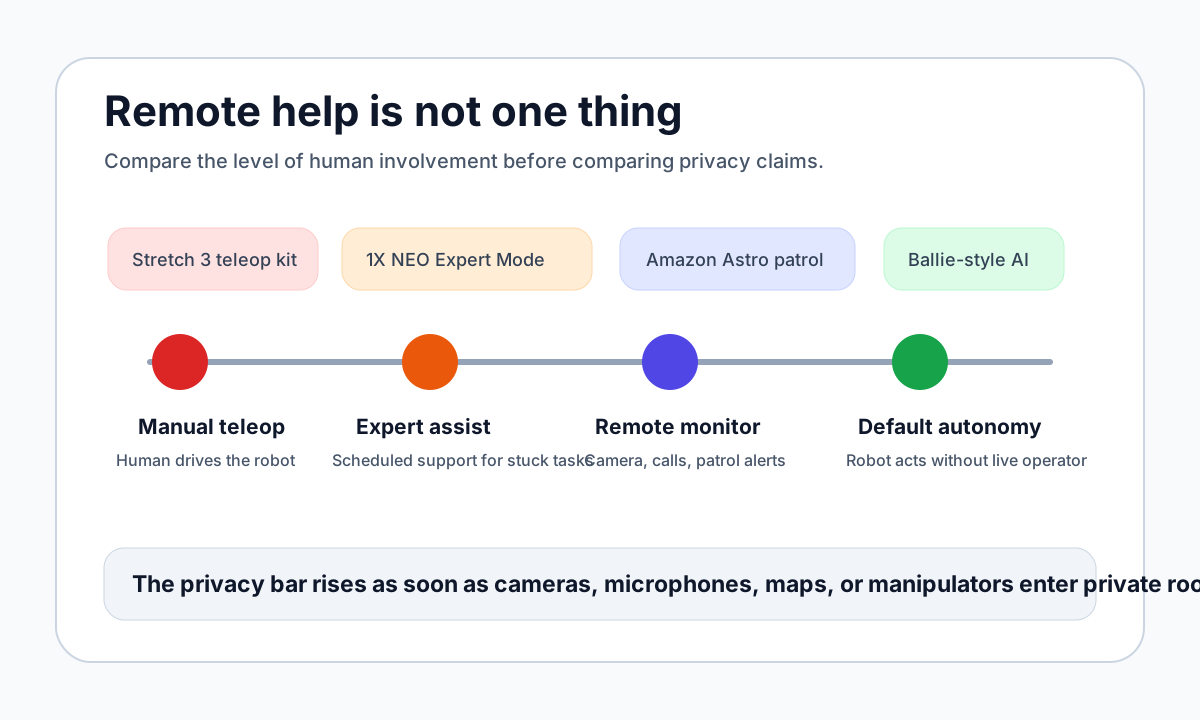
This distinction prevents two common mistakes. The first is panic: assuming any remote help means the robot is fake. The second is complacency: assuming a camera-only robot is harmless because it cannot pick anything up. A mobile camera can still expose a home. A manipulator can add physical risk. A care robot can make the consent boundary emotionally complex.
How 1X NEO looks through the privacy lens
NEO is one of the clearest products to evaluate because 1X is explicit about the human loop. The positive signs are real:
- Expert support is scheduled, not always-on.
- The owner must accept the Expert by voice or app.
- The robot gives a visible active-operator indicator.
- 1X identifies Experts as employees physically present in the United States.
- 1X says NEO works without required data sharing.
- 1X says owners can opt out of data sharing for improvement.
The unresolved buyer questions are also real:
- Will owners receive a session transcript or activity log?
- Are Expert sessions recorded by default?
- Can a guest, child, or care recipient veto a session?
- Can the owner block specific rooms, people, objects, or times of day?
- Does the subscription version change support or data handling?
- What happens if a remote session drops while NEO is holding an object?
- How does insurance handle property damage or injury during an Expert-guided session?
That is not a reason to dismiss NEO. It is a reason to evaluate it as an early-access home robot, not as a finished appliance. A $20,000 or $499/month humanoid deserves a privacy and support review as careful as the hardware review.
What about robots that do not advertise Expert Mode?
Absence of the phrase “Expert Mode” does not mean absence of human involvement. Some robots use remote support for troubleshooting. Some developer platforms make teleoperation explicit. Some commercial humanoids use remote operation for demos, data collection, or customer pilots. Some companion robots allow family members to watch, talk, or steer remotely.
That is why the practical shopping question should be broader: Can any person outside my home see through, hear through, control, or train from this robot? If yes, the next questions are who, when, how visible, how logged, and how revocable.
NEURA 4NE-1 Mini is a good example of why the wording matters. The Standard tier starts at €19,999, while the Pro tier is listed at €29,999 and adds dexterous hands, SDK access, digital twin access, and teleoperation. For a developer, that is useful. For a home buyer, it means the Pro version has a different privacy and safety profile from a simpler companion device.
The same logic applies to robots that are not sold as humanoids. A mobile companion with a camera, like EBO X, may never have a manufacturer operator, but it can still be used for two-way video communication and home patrol. A security robot may be mostly autonomous, but if it integrates with monitoring services, the camera rules matter as much as the drive motors.
The bottom line
Remote human help is probably part of the first useful wave of home robots. Laundry, elder care, object retrieval, and general household manipulation are too variable for every robot to be fully autonomous immediately. A well-designed Expert Mode can make a robot more useful, safer, and faster to improve.
But it has to be treated as a first-class product feature, not fine print. The minimum bar is simple: scheduled access, explicit acceptance, visible in-room indicators, clear operator identity, easy stop controls, private-zone rules, understandable data retention, and the ability to opt out of model-improvement sharing.
If a manufacturer can answer those questions, remote help may be a strength. If it cannot, the robot is not ready for your home — no matter how impressive the demo looks.
Related in the database
Use this article as a privacy verification workflow
Turn the article into a privacy verification pass grounded in the robots, manufacturers, and components it actually references.
Home Robot Expert Mode: Privacy Guide already points you toward 8 linked robots, 8 manufacturers, and 6 countries inside the ui44 database. That matters because strong buyer guidance is easier to apply when you can move immediately from a claim or warning into concrete product pages, manufacturer directories, component explainers, and country-level context instead of treating the article as an isolated opinion piece. The fastest next step is to turn the article into a shortlist workflow: open the linked robot pages, verify which specs are actually published for those models, then compare the surrounding manufacturer and component context before you decide whether the underlying claim changes your buying plan.
For this topic, the useful discipline is to separate the editorial lesson from the catalog evidence. The article gives you the framing, but the robot pages tell you what each product actually ships with today: sensor stack, connectivity methods, listed price, release timing, category, and support-relevant compatibility notes. The manufacturer pages then show whether you are looking at a one-off launch, a broader lineup pattern, or a company that spans multiple categories. That layered workflow reduces the risk of buying on a single marketing phrase or a single support FAQ.
Use the robot pages to confirm which products actually expose cameras, microphones, Wi-Fi, or voice systems, then use the manufacturer pages to decide how much of the privacy question seems product-specific versus brand-wide. On this route cluster, NEO, Isaac 0, and Stretch 3 form the fastest reality check. If you want a quick working shortlist, open Compare NEO, Isaac 0, and Stretch 3 next, then keep this article open as the reasoning layer while you compare structured data side by side.
Practical Takeaway
Every robot, manufacturer, category, component, and country reference below resolves to a real ui44 page, keeping the follow-up path grounded in database records rather than generic advice.
Suggested next steps in ui44
- Open NEO and note the listed sensors, connectivity methods, and voice stack before you interpret any policy claim.
- Cross-check the wider brand context on 1X Technologies so you can see whether the privacy question touches one model or a broader lineup.
- Use the linked component pages to confirm how common the relevant sensors and connectivity layers are across the database.
- Keep a short note of which policy layers you checked, which device features are actually present on the robot page, and which items still depend on region- or app-level confirmation.
- Finish with Compare NEO, Isaac 0, and Stretch 3 so the policy reading sits next to structured product data.
Robot profiles worth opening next
Use the linked product pages as the evidence layer
The linked robot pages are where this article becomes operational. Instead of asking whether the headline is interesting, use the robot entries to inspect the actual mix of sensors, connectivity options, batteries, pricing, release timing, and stated capabilities attached to the products mentioned in the article. That is the easiest way to see whether the warning or opportunity described here affects one product family, a specific design pattern, or an entire buying lane.
NEO
1X Technologies · Humanoid · Pre-order
NEO is tracked on ui44 as a pre-order humanoid robot from 1X Technologies. The database currently records a listed price of $20,000, a release date of 2025-10-28, ~4 hours battery life, Not disclosed charging time, and a published stack that includes RGB Cameras, Depth Sensors, and Tactile Skin plus Wi-Fi and Bluetooth.
For privacy-focused reading, this page matters because it shows the concrete device surface behind the policy discussion. Use it to verify whether NEO combines sensors and connectivity in a way that could change the in-home data footprint, and compare the listed capabilities such as Household Chores, Tidying Up, and Safe Human Interaction with any cloud, app, or voice layers.
Isaac 0
Weave Robotics · Home Assistants · Available
Isaac 0 is tracked on ui44 as a available home assistants robot from Weave Robotics. The database currently records a listed price of $3,999, a release date of 2026-02, Mains powered (600W, 120V) battery life, N/A (plugged in) charging time, and a published stack that includes Vision System and Proprioceptive Sensors plus Wi-Fi 2.4GHz/5GHz and Ethernet.
For privacy-focused reading, this page matters because it shows the concrete device surface behind the policy discussion. Use it to verify whether Isaac 0 combines sensors and connectivity in a way that could change the in-home data footprint, and compare the listed capabilities such as Laundry Folding, T-shirts, Long Sleeves, Sweaters, and Pants and Towels with any cloud, app, or voice layers.
Stretch 3
Hello Robot · Home Assistants · Active
Stretch 3 is tracked on ui44 as a active home assistants robot from Hello Robot. The database currently records a listed price of $24,950, a release date of 2024, 2–5 hours battery life, Not disclosed charging time, and a published stack that includes Intel D405 RGBD Camera (gripper), Intel D435if RGBD Camera (head), and Wide-Angle RGB Camera (head) plus Wi-Fi 6E and Bluetooth.
For privacy-focused reading, this page matters because it shows the concrete device surface behind the policy discussion. Use it to verify whether Stretch 3 combines sensors and connectivity in a way that could change the in-home data footprint, and compare the listed capabilities such as Mobile Manipulation, Autonomous Navigation, and Teleoperation (Web / Gamepad / Dexterous) with any cloud, app, or voice layers.
Robody is tracked on ui44 as a pre-order home assistants robot from Devanthro. The database currently records a listed price of Price TBA, a release date of 2024-11, 6 hours battery life, Self-docking; full charge time not officially disclosed charging time, and a published stack that includes 4K fisheye RGB cameras, mm-wave radar, and Stereo microphones plus 5G and Wi-Fi 6.
For privacy-focused reading, this page matters because it shows the concrete device surface behind the policy discussion. Use it to verify whether Robody combines sensors and connectivity in a way that could change the in-home data footprint, and compare the listed capabilities such as VR telepresence for family members and caregivers, Medication reminders, and Meal preparation assistance with any cloud, app, or voice layers.
Astro is tracked on ui44 as a active security & patrol robot from Amazon. The database currently records a listed price of $1,599, a release date of 2021, Not officially disclosed battery life, Not officially disclosed charging time, and a published stack that includes 5MP Bezel Camera, 1080p Periscope Camera (132° FOV), and Infrared Vision plus Wi-Fi 802.11ac and Bluetooth.
For privacy-focused reading, this page matters because it shows the concrete device surface behind the policy discussion. Use it to verify whether Astro combines sensors and connectivity in a way that could change the in-home data footprint, and compare the listed capabilities such as Autonomous Home Patrol, Visual ID (face recognition), and Remote Home Monitoring with any cloud, app, or voice layers, including Amazon Alexa.
Manufacturer context behind the article
Check whether this is one product story or a broader company pattern
Manufacturer pages add the privacy context that individual product pages cannot show on their own. They help you check whether cameras, microphones, cloud accounts, app controls, and policy assumptions appear across a broader lineup or stay tied to one specific product story.
1X Technologies
ui44 currently tracks 2 robots from 1X Technologies across 1 category. The company is grouped under Norway, and the current catalog footprint on ui44 includes NEO, EVE.
That wider brand context matters because privacy questions rarely stop at one FAQ page. A manufacturer route helps you see whether the article is centered on one premium model or on a company that has several relevant products and therefore more than one place where the same policy or app assumptions might matter. The category mix here currently points toward Humanoid as the most useful next route if you want to see whether this article reflects a wider pattern inside the brand.
Weave Robotics
ui44 currently tracks 2 robots from Weave Robotics across 1 category. The company is grouped under Denmark, and the current catalog footprint on ui44 includes Isaac 0, Isaac 1.
That wider brand context matters because privacy questions rarely stop at one FAQ page. A manufacturer route helps you see whether the article is centered on one premium model or on a company that has several relevant products and therefore more than one place where the same policy or app assumptions might matter. The category mix here currently points toward Home Assistants as the most useful next route if you want to see whether this article reflects a wider pattern inside the brand.
Hello Robot
ui44 currently tracks 2 robots from Hello Robot across 1 category. The company is grouped under USA, and the current catalog footprint on ui44 includes Stretch 3, Stretch 4.
That wider brand context matters because privacy questions rarely stop at one FAQ page. A manufacturer route helps you see whether the article is centered on one premium model or on a company that has several relevant products and therefore more than one place where the same policy or app assumptions might matter. The category mix here currently points toward Home Assistants as the most useful next route if you want to see whether this article reflects a wider pattern inside the brand.
Devanthro
ui44 currently tracks 1 robot from Devanthro across 1 category. The company is grouped under Germany, and the current catalog footprint on ui44 includes Robody.
That wider brand context matters because privacy questions rarely stop at one FAQ page. A manufacturer route helps you see whether the article is centered on one premium model or on a company that has several relevant products and therefore more than one place where the same policy or app assumptions might matter. The category mix here currently points toward Home Assistants as the most useful next route if you want to see whether this article reflects a wider pattern inside the brand.
Broaden the scan without leaving the database
Categories, components, and countries add the wider context
Category framing
Category pages are useful when the article touches a buying pattern that shows up across brands. A category route helps you confirm whether the linked products sit in a narrow niche or whether the same question should be tested across a larger field of alternatives.
Humanoid
The Humanoid category page currently groups 129 tracked robots from 91 manufacturers. ui44 describes this lane as: Full-size bipedal humanoid robots built to work alongside people — from factory floors to household tasks. Compare the cutting edge of humanoid robotics.
That makes the category route a practical follow-up when you want to check whether the products linked in this article are typical for the lane or whether they sit at one edge of the market. Useful starting examples currently include NEO, EVE, Mornine M1.
Home Assistants
The Home Assistants category page currently groups 16 tracked robots from 14 manufacturers. ui44 describes this lane as: Arm-based household helpers — laundry folders, kitchen robots, and mobile manipulators that take on hands-on physical tasks around the home.
That makes the category route a practical follow-up when you want to check whether the products linked in this article are typical for the lane or whether they sit at one edge of the market. Useful starting examples currently include Robody, Futuring 2 (F2), Stretch 3.
Country and ecosystem context
Country pages give extra context when support practices, launch sequencing, regulatory posture, or manufacturer mix matter. They are not a substitute for model-level verification, but they do help you see which ecosystems cluster together and which manufacturers sit in the same regional field when you broaden the search beyond the article headline.
Norway
The Norway route currently groups 2 tracked robots from 1 manufacturers in ui44. That gives you a useful regional lens when the article points toward support practices, launch sequencing, or brand clusters that may share similar ecosystem assumptions.
On the current route, manufacturers like 1X Technologies make the page a good way to broaden the scan without losing the regional context that often shapes availability, documentation style, and adjacent alternatives.
Denmark
The Denmark route currently groups 2 tracked robots from 1 manufacturers in ui44. That gives you a useful regional lens when the article points toward support practices, launch sequencing, or brand clusters that may share similar ecosystem assumptions.
On the current route, manufacturers like Weave Robotics make the page a good way to broaden the scan without losing the regional context that often shapes availability, documentation style, and adjacent alternatives.
USA
The USA route currently groups 89 tracked robots from 69 manufacturers in ui44. That gives you a useful regional lens when the article points toward support practices, launch sequencing, or brand clusters that may share similar ecosystem assumptions.
On the current route, manufacturers like Faraday Future, iRobot, Boston Dynamics make the page a good way to broaden the scan without losing the regional context that often shapes availability, documentation style, and adjacent alternatives.
Questions to answer before you move from reading to buying
A follow-up FAQ built from the entities already linked in this article
Frequently Asked Questions
Which page should I open first after reading “Home Robot Expert Mode: Privacy Guide”?
Start with NEO. That gives you a concrete product anchor for the article’s main claim. From there, branch into the manufacturer and component pages so you can tell whether the article is describing one specific model, a repeated brand pattern, or a wider technology issue that affects multiple shortlist options.
How do the manufacturer pages change the buying decision?
1X Technologies help you zoom out from one article and one product. On ui44 they show lineup breadth, category spread, and the neighboring robots tied to the same company. That context is useful when you are deciding whether a risk belongs to a single model, whether it shows up across a brand’s portfolio, and whether you should keep looking at alternatives before committing.
When should I switch from reading to side-by-side comparison?
Move into Compare NEO, Isaac 0, and Stretch 3 as soon as you understand the article’s main warning or promise. The article explains what to watch for, but the compare view is where you can check whether price, status, battery life, connectivity, sensors, and category fit still make the robot a good match for your own home and budget.
Where to go next in ui44
Keep the research chain inside the database
If you want to keep going, these follow-on pages give you the cleanest expansion path from article to research session. Open the comparison route first if you are deciding between products today. Open the manufacturer, category, and component routes if you still need to understand the broader pattern behind the claim.
Written by
ui44 Team
Published April 29, 2026
Share this article
Open a plain share link on X or Bluesky. No embeds, no widgets, no cookie baggage.