That is why Hello Robot Stretch 3 is such a useful case study. Stretch is not a mass-market appliance. ui44 lists it as a $24,950 open-source mobile manipulator with a compact 33 x 34 cm footprint, 24.5 kg body, 2 kg payload, 2-5 hour runtime, ROS 2, Python SDK support, depth cameras, navigation LiDAR, and web/gamepad/dexterous teleoperation. But because it is built around real homes, assistive research, and configurable teleoperation, it exposes the interface questions that every future assistive home robot will have to answer.
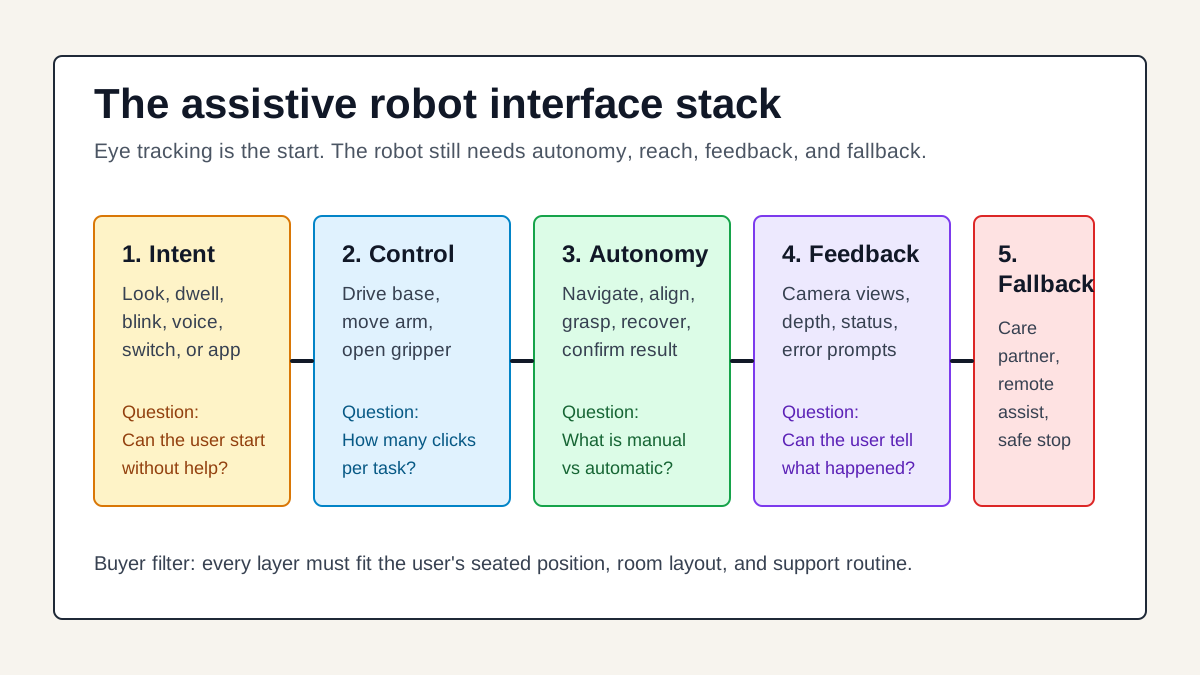
The buyer lesson is simple: eye control is not the product. Eye control is one input layer in a larger assistive robot system. The robot still needs enough reach, runtime, feedback, autonomy, and safe fallback to make the command worth issuing.
What Eye Control Actually Solves
Eye tracking can solve a very specific problem: it gives a user a way to express intent when a touchscreen, joystick, keyboard, or phone app is not practical. That intent might be "drive forward," "turn toward the counter," "raise the arm," "open the gripper," or "bring me the item." For some users, gaze plus dwell selection can be faster and less fatiguing than repeated switch scanning. For others, voice may be easier until privacy, speech fatigue, noise, or inconsistent recognition gets in the way.
The hard part is everything after the command. If the user has to select dozens of small motions to retrieve a bottle, scratch an itch, carry a printed page, or move through a crowded room, the interface becomes a burden. A useful robot must compress low-level motions into higher-level actions. The user should not have to micromanage every centimeter of the arm unless they choose to.
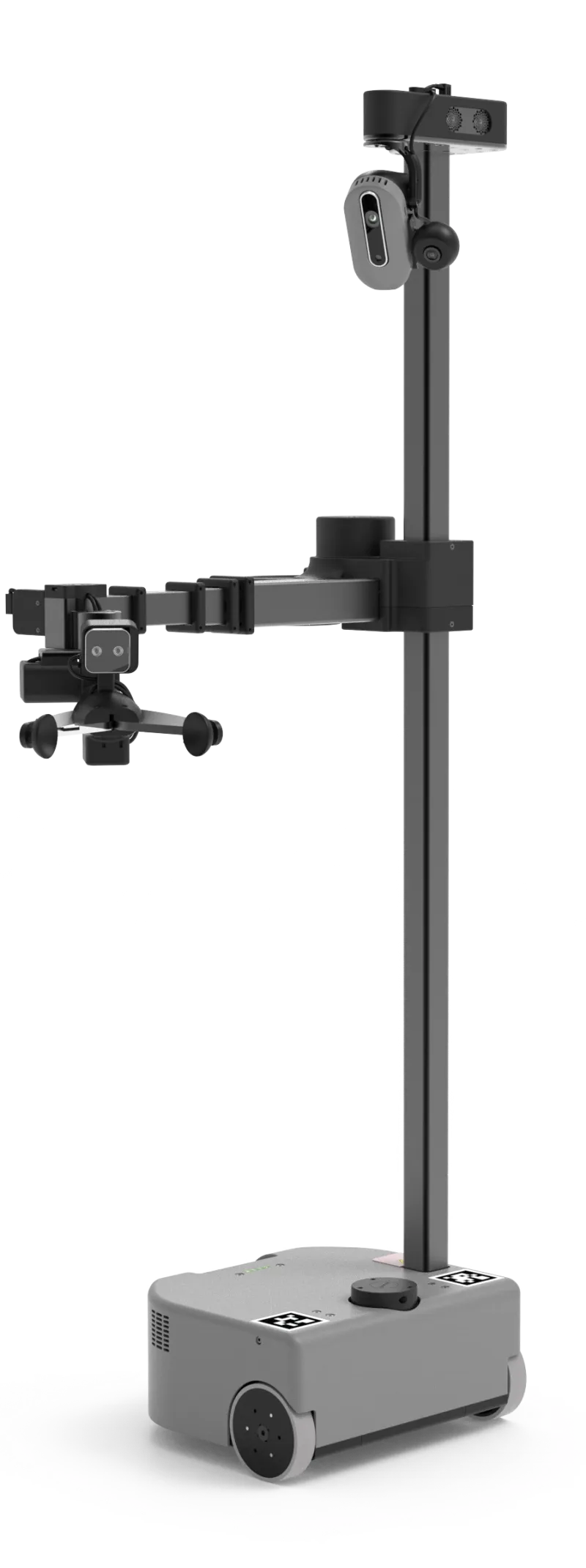
Stretch shows the shape of that stack. The official Stretch 3 materials describe web teleoperation, gamepad teleoperation, dexterous teleoperation, and open ROS 2/Python autonomy demos. Hello Robot's assistive materials also describe collaborative pilot work with users and care partners, including remote testing and in-home co-design. The important point for buyers is not that one vendor has solved every daily activity. It is that assistive control is a loop: user intent, accessible input, robot execution, feedback, error recovery, and caregiver or remote fallback.
Stretch Is a Better Baseline Than a Humanoid Demo
A humanoid video can look more natural than a wheeled manipulator, but the interface may be less clear. Does the robot understand spoken commands? Does a remote operator step in? Can the user see what the robot sees? Can it be stopped without standing nearby? Can it reach a shelf, table, floor, and cabinet from a seated user's real home layout?
Stretch is visually modest, which is part of its value. The ui44 database records a 141 cm height for Stretch 3, floor-to-cabinet reach, a compliant gripper, gripper and head RGBD cameras, a wide-angle RGB camera, LiDAR, microphone array, Wi-Fi 6E, Bluetooth, Ethernet, and USB. The platform is not pretending to be a general household employee. It is a mobile arm with explicit controls and published limitations.
That matters for accessible control because every hidden assumption becomes a support burden. If a future home humanoid accepts eye commands but cannot reliably align with the counter, detect the target, or recover from a failed grasp, the user still waits for a human. If a wheeled arm is slower but gives a clear camera view, an accessible web interface, and a safe way to stop, it may be more useful for a narrow set of daily tasks.
Robot
- ui44 status
- Active, $24,950
- Interface lesson
- Transparent teleoperation and open software make it easier to adapt inputs such as eye tracking, switches, or caregiver control.
Robot
- ui44 status
- Available, $29,950
- Interface lesson
- Longer runtime, self-charging, stronger payload, and omnidirectional mobility show where assistive pilots are heading.
Robot
- ui44 status
- Pre-order, $7,999 or subscription
- Interface lesson
- A task-specific home robot can hide much of the interface burden if the task is narrow enough.
Robot
- ui44 status
- Pre-order, $20,000 early-adopter price
- Interface lesson
- A soft humanoid form may be appealing, but buyers still need clear disclosure about app control, autonomy, and recovery.
Robot
- ui44 status
- Pre-order, EUR19,999 standard / EUR29,999 Pro
- Interface lesson
- Teleoperation and dexterous hands may require the higher tier, so interface claims need SKU-level reading.
| Robot | ui44 status | Interface lesson |
|---|---|---|
| Hello Robot Stretch 3 | Active, $24,950 | Transparent teleoperation and open software make it easier to adapt inputs such as eye tracking, switches, or caregiver control. |
| Hello Robot Stretch 4 | Available, $29,950 | Longer runtime, self-charging, stronger payload, and omnidirectional mobility show where assistive pilots are heading. |
| Weave Isaac 1 | Pre-order, $7,999 or subscription | A task-specific home robot can hide much of the interface burden if the task is narrow enough. |
| 1X NEO | Pre-order, $20,000 early-adopter price | A soft humanoid form may be appealing, but buyers still need clear disclosure about app control, autonomy, and recovery. |
| NEURA 4NE-1 Mini | Pre-order, EUR19,999 standard / EUR29,999 Pro | Teleoperation and dexterous hands may require the higher tier, so interface claims need SKU-level reading. |
The table is not saying these robots compete directly. They do not. It is showing the buyer frame: form factor matters less than the control contract. A laundry robot, a mobile manipulator, and a humanoid all need to answer who is in control, how the user gives intent, what the robot does autonomously, and how failures are handled.
Stretch 3 vs Stretch 4: Why Hardware Still Matters
Interface discussions can become software-only very quickly. That is a mistake. Accessible control lives inside physical constraints.
Stretch 3 is light and compact. Hello Robot's official Stretch 3 page lists a 2 kg payload, 24.5 kg weight, 33 x 34 x 141 cm size, 2-5 hour runtime, ROS 2/Python SDK support, web manipulation from a browser, and teleoperation choices. For a home user, those specs translate into a robot that can fit through tight passages, be rolled out of the way, and work near tables, counters, and cabinets. The trade-off is that the payload and runtime define the task envelope.
Stretch 4 moves the platform toward pilot deployment. ui44 records a $29,950 list price, 160 cm height, 45 cm diameter footprint, 46 kg weight, self-charging, 8 hour light-load runtime, 2.5 kg payload with the arm extended, and 4 kg with the arm retracted. Hello Robot's current page emphasizes inclusive design, robust perception of people, contact sensitivity, a simple mobile UI, mapping/navigation, 3D SLAM, data collection, and VLM grasping demos.
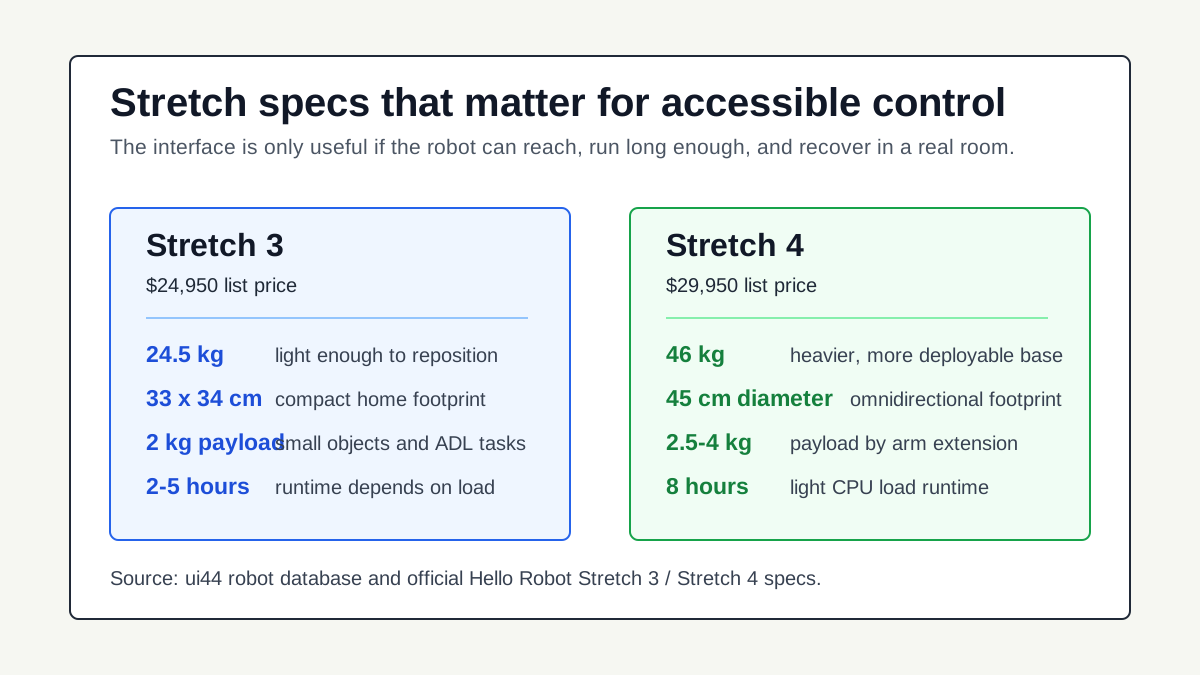
For eye control, these details are not trivia. A longer runtime means the robot can stay useful across a larger part of the day. Self-charging reduces the care partner burden. A stronger arm expands the set of objects that can be moved. Omnidirectional mobility can make positioning easier in tight rooms. But the heavier body and larger footprint may also change where the robot can go. The right question is not "which robot has the better spec sheet?" It is "which spec removes a real dependency in this home?"
The Case Study Buyers Should Notice
Hello Robot's official people-story material describes Stretch being used with an eye-tracking system on a power-chair tablet, including a quick tutorial and later co-design to make the interface more intuitive. It also describes use beyond a single room: participation at events, outdoor access around a home, museum exploration, and small daily activities.
That story is powerful, but buyers should read it carefully. A case study is evidence of possibility, not proof of plug-and-play reliability. It involved a motivated user, Hello Robot staff, an occupational-therapy context, and active co-design. That is exactly the point. For assistive robotics in 2026, the most honest deployments look like partnerships, not shrink-wrapped appliances.
The user-facing question is therefore more specific:
- Can the robot be operated through the user's existing eye-tracking setup, not just a vendor demo tablet?
- Can the interface be reconfigured without a custom engineering project every time the user's needs change?
- Does the robot support high-level actions, or does the user have to drive every movement manually?
- What happens if the robot drops an object, loses network access, or blocks a path?
- Who can take over, what can they see, and what data is stored?
For a wheelchair user, care partner, occupational therapist, or assistive-technology buyer, those questions matter more than whether the robot looks humanoid.
Shared Autonomy Is the Real Goal
Pure manual eye control is valuable, but it can become tiring. Pure autonomy is attractive, but it is rarely reliable enough for open-ended home assistance. The practical middle ground is shared autonomy.
In shared autonomy, the user gives intent and permission while the robot handles parts of the task: aligning to an object, maintaining a safe distance, grasping with a compliant gripper, navigating to a known location, or stopping when contact is unexpected. The user remains in charge of goals. The robot reduces the amount of repetitive control needed to reach those goals.
This is why Stretch's open stack matters. ROS 2, Python SDK access, calibrated cameras, web teleoperation, and published autonomy demos give researchers and assistive developers surfaces to adapt. That does not make Stretch simple. It makes the difference between a closed appliance that either works or does not, and a platform that can be tuned for a user, room, and task.
Task-specific robots can take the opposite route. Weave Isaac 1, for example, is not an assistive eye-control robot, but its ui44 record is useful because it frames autonomy around named jobs: laundry flow, room reset, bed making, pillow and blanket fixing, and returning clutter. If those jobs work, the interface can be simpler because the action space is narrow. A user might only need to schedule, approve, pause, or correct.
That distinction is the core buyer trade-off. A general mobile manipulator gives flexibility but demands setup and control literacy. A narrow home robot may be easier to command but less adaptable. Eye control helps most when the product is honest about where it sits on that spectrum.
A Buyer Checklist for Accessible Robot Interfaces
What Would Make Eye-Controlled Robots Ready for More Homes?
The next useful milestone is not a robot that obeys gaze like magic. It is a robot that can accept accessible intent, reduce low-level control burden, and make errors recoverable.
For Stretch-like platforms, that means better task templates: "bring this from the counter," "open this drawer if safe," "follow me to the doorway," "move the cup closer," "scratch here with this tool," or "go dock now." Each template needs clear permissions and a visible state machine. The user should know whether the robot is navigating, aligning, grasping, waiting, or asking for help.
For humanoids, it means disclosure. A humanoid intended for home assistance should state which interfaces exist on day one: voice, app, joystick, eye-gaze integration, caregiver dashboard, remote operator, or autonomous routine library. It should also state which tasks are independent, which are supervised, and which require company support.
For buyers, the practical near-term strategy is to match the interface to a small number of high-value tasks. The best first task is not always the flashiest. It may be getting to a backyard door, reaching a counter item, moving a light object, participating in a family activity, or reducing the number of times a care partner is interrupted for a minor action.
Bottom Line
Eye-controlled home robots are plausible because the pieces already exist: eye-gaze computers, web interfaces, mobile manipulators, depth cameras, compliant grippers, remote support, and shared autonomy research. Stretch shows how those pieces can meet in a real assistive context.
But Stretch also shows why buyers should be skeptical of simple claims. The interface is not a checkbox. It is the full path from a user's intent to a robot action and back to a recoverable state. If a company can explain that path clearly, show the hardware limits, disclose the support model, and adapt the controls to the user's actual setup, eye control becomes more than a demo. It becomes a way to turn a robot arm into a little more independence.
Sources & References
- Hello Robot Stretch 3 product page: https://hello-stretch3.com/stretch-3-product
- Hello Robot Stretch 4 product page: https://hello-robot.com/stretch-4/
- Hello Robot Stretch Assist page: https://hello-robot.com/assist/
- Hello Robot people story on Stretch and eye-tracking control: https://hello-robot.com/people-stories-georgena-and-sharon/
- ui44 robot database records for Stretch 3, Stretch 4, Weave Isaac 1, 1X NEO, and NEURA 4NE-1 Mini
Related in the database
Use this article as a privacy verification workflow
Turn the article into a privacy verification pass grounded in the robots, manufacturers, and components it actually references.
Eye-Controlled Robots: What Stretch Shows already points you toward 5 linked robots, 4 manufacturers, and 4 countries inside the ui44 database. That matters because strong buyer guidance is easier to apply when you can move immediately from a claim or warning into concrete product pages, manufacturer directories, component explainers, and country-level context instead of treating the article as an isolated opinion piece. The fastest next step is to turn the article into a shortlist workflow: open the linked robot pages, verify which specs are actually published for those models, then compare the surrounding manufacturer and component context before you decide whether the underlying claim changes your buying plan.
For this topic, the useful discipline is to separate the editorial lesson from the catalog evidence. The article gives you the framing, but the robot pages tell you what each product actually ships with today: sensor stack, connectivity methods, listed price, release timing, category, and support-relevant compatibility notes. The manufacturer pages then show whether you are looking at a one-off launch, a broader lineup pattern, or a company that spans multiple categories. That layered workflow reduces the risk of buying on a single marketing phrase or a single support FAQ.
Use the robot pages to confirm which products actually expose cameras, microphones, Wi-Fi, or voice systems, then use the manufacturer pages to decide how much of the privacy question seems product-specific versus brand-wide. On this route cluster, Stretch 3, Stretch 4, and Isaac 1 form the fastest reality check. If you want a quick working shortlist, open Compare Stretch 3, Stretch 4, and Isaac 1 next, then keep this article open as the reasoning layer while you compare structured data side by side.
Practical Takeaway
Every robot, manufacturer, category, component, and country reference below resolves to a real ui44 page, keeping the follow-up path grounded in database records rather than generic advice.
Suggested next steps in ui44
- Open Stretch 3 and note the listed sensors, connectivity methods, and voice stack before you interpret any policy claim.
- Cross-check the wider brand context on Hello Robot so you can see whether the privacy question touches one model or a broader lineup.
- Use the linked component pages to confirm how common the relevant sensors and connectivity layers are across the database.
- Keep a short note of which policy layers you checked, which device features are actually present on the robot page, and which items still depend on region- or app-level confirmation.
- Finish with Compare Stretch 3, Stretch 4, and Isaac 1 so the policy reading sits next to structured product data.
Robot profiles worth opening next
Use the linked product pages as the evidence layer
The linked robot pages are where this article becomes operational. Instead of asking whether the headline is interesting, use the robot entries to inspect the actual mix of sensors, connectivity options, batteries, pricing, release timing, and stated capabilities attached to the products mentioned in the article. That is the easiest way to see whether the warning or opportunity described here affects one product family, a specific design pattern, or an entire buying lane.
Stretch 3
Hello Robot · Home Assistants · Active
Stretch 3 is tracked on ui44 as a active home assistants robot from Hello Robot. The database currently records a listed price of $24,950, a release date of 2024, 2–5 hours battery life, Not disclosed charging time, and a published stack that includes Intel D405 RGBD Camera (gripper), Intel D435if RGBD Camera (head), and Wide-Angle RGB Camera (head) plus Wi-Fi 6E and Bluetooth.
For privacy-focused reading, this page matters because it shows the concrete device surface behind the policy discussion. Use it to verify whether Stretch 3 combines sensors and connectivity in a way that could change the in-home data footprint, and compare the listed capabilities such as Mobile Manipulation, Autonomous Navigation, and Teleoperation (Web / Gamepad / Dexterous) with any cloud, app, or voice layers.
Stretch 4
Hello Robot · Home Assistants · Available
Stretch 4 is tracked on ui44 as a available home assistants robot from Hello Robot. The database currently records a listed price of $29,950, a release date of 2026-05-12, 8 hours (light CPU load) battery life, Not officially disclosed charging time, and a published stack that includes Wide-FOV depth sensing, High-resolution RGB cameras, and Calibrated RGB + depth perception plus its listed connectivity stack.
For privacy-focused reading, this page matters because it shows the concrete device surface behind the policy discussion. Use it to verify whether Stretch 4 combines sensors and connectivity in a way that could change the in-home data footprint, and compare the listed capabilities such as Mobile Manipulation, Omnidirectional Indoor Mobility, and Autonomous Mapping and Navigation with any cloud, app, or voice layers.
Isaac 1
Weave Robotics · Home Assistants · Pre-order
Isaac 1 is tracked on ui44 as a pre-order home assistants robot from Weave Robotics. The database currently records a listed price of $7,999, a release date of 2026-07-01, 8 hours battery life, 2 hours charging time, and a published stack that includes Not officially disclosed plus Wi-Fi.
For privacy-focused reading, this page matters because it shows the concrete device surface behind the policy discussion. Use it to verify whether Isaac 1 combines sensors and connectivity in a way that could change the in-home data footprint, and compare the listed capabilities such as Mobile home task robot, Laundry Flow for finding and picking up dirty clothes, and Loaded hamper handling with any cloud, app, or voice layers.
NEO
1X Technologies · Humanoid · Pre-order
NEO is tracked on ui44 as a pre-order humanoid robot from 1X Technologies. The database currently records a listed price of $20,000, a release date of 2025-10-28, ~4 hours battery life, Not disclosed charging time, and a published stack that includes RGB Cameras, Depth Sensors, and Tactile Skin plus Wi-Fi and Bluetooth.
For privacy-focused reading, this page matters because it shows the concrete device surface behind the policy discussion. Use it to verify whether NEO combines sensors and connectivity in a way that could change the in-home data footprint, and compare the listed capabilities such as Household Chores, Tidying Up, and Safe Human Interaction with any cloud, app, or voice layers.
4NE-1 Mini
NEURA Robotics · Humanoid · Pre-order
4NE-1 Mini is tracked on ui44 as a pre-order humanoid robot from NEURA Robotics. The database currently records a listed price of €19,999, a release date of 2026-01-05, ~2.5 hours battery life, Not disclosed charging time, and a published stack that includes Multi-camera Array, Force/Torque Sensors, and 3D Vision plus Wi-Fi 6 and Gigabit Ethernet.
For privacy-focused reading, this page matters because it shows the concrete device surface behind the policy discussion. Use it to verify whether 4NE-1 Mini combines sensors and connectivity in a way that could change the in-home data footprint, and compare the listed capabilities such as 25 Degrees of Freedom, Autonomous Navigation, and Object Manipulation (Pro tier: 12-DOF dexterous hands) with any cloud, app, or voice layers, including Built-in Multi-language Voice Recognition.
Manufacturer context behind the article
Check whether this is one product story or a broader company pattern
Manufacturer pages add the privacy context that individual product pages cannot show on their own. They help you check whether cameras, microphones, cloud accounts, app controls, and policy assumptions appear across a broader lineup or stay tied to one specific product story.
Hello Robot
ui44 currently tracks 2 robots from Hello Robot across 1 category. The company is grouped under USA, and the current catalog footprint on ui44 includes Stretch 3, Stretch 4.
That wider brand context matters because privacy questions rarely stop at one FAQ page. A manufacturer route helps you see whether the article is centered on one premium model or on a company that has several relevant products and therefore more than one place where the same policy or app assumptions might matter. The category mix here currently points toward Home Assistants as the most useful next route if you want to see whether this article reflects a wider pattern inside the brand.
Weave Robotics
ui44 currently tracks 2 robots from Weave Robotics across 1 category. The company is grouped under Denmark, and the current catalog footprint on ui44 includes Isaac 0, Isaac 1.
That wider brand context matters because privacy questions rarely stop at one FAQ page. A manufacturer route helps you see whether the article is centered on one premium model or on a company that has several relevant products and therefore more than one place where the same policy or app assumptions might matter. The category mix here currently points toward Home Assistants as the most useful next route if you want to see whether this article reflects a wider pattern inside the brand.
1X Technologies
ui44 currently tracks 2 robots from 1X Technologies across 1 category. The company is grouped under Norway, and the current catalog footprint on ui44 includes NEO, EVE.
That wider brand context matters because privacy questions rarely stop at one FAQ page. A manufacturer route helps you see whether the article is centered on one premium model or on a company that has several relevant products and therefore more than one place where the same policy or app assumptions might matter. The category mix here currently points toward Humanoid as the most useful next route if you want to see whether this article reflects a wider pattern inside the brand.
NEURA Robotics
ui44 currently tracks 4 robots from NEURA Robotics across 3 categorys. The company is grouped under Germany, and the current catalog footprint on ui44 includes 4NE-1, 4NE-1 Mini, MiPA.
That wider brand context matters because privacy questions rarely stop at one FAQ page. A manufacturer route helps you see whether the article is centered on one premium model or on a company that has several relevant products and therefore more than one place where the same policy or app assumptions might matter. The category mix here currently points toward Humanoid, Home Assistants, Quadruped as the most useful next route if you want to see whether this article reflects a wider pattern inside the brand.
Broaden the scan without leaving the database
Categories, components, and countries add the wider context
Category framing
Category pages are useful when the article touches a buying pattern that shows up across brands. A category route helps you confirm whether the linked products sit in a narrow niche or whether the same question should be tested across a larger field of alternatives.
Home Assistants
The Home Assistants category page currently groups 16 tracked robots from 14 manufacturers. ui44 describes this lane as: Arm-based household helpers — laundry folders, kitchen robots, and mobile manipulators that take on hands-on physical tasks around the home.
That makes the category route a practical follow-up when you want to check whether the products linked in this article are typical for the lane or whether they sit at one edge of the market. Useful starting examples currently include Robody, Futuring 2 (F2), Stretch 3.
Humanoid
The Humanoid category page currently groups 129 tracked robots from 92 manufacturers. ui44 describes this lane as: Full-size bipedal humanoid robots built to work alongside people — from factory floors to household tasks. Compare the cutting edge of humanoid robotics.
That makes the category route a practical follow-up when you want to check whether the products linked in this article are typical for the lane or whether they sit at one edge of the market. Useful starting examples currently include NEO, EVE, Mornine M1.
Country and ecosystem context
Country pages give extra context when support practices, launch sequencing, regulatory posture, or manufacturer mix matter. They are not a substitute for model-level verification, but they do help you see which ecosystems cluster together and which manufacturers sit in the same regional field when you broaden the search beyond the article headline.
USA
The USA route currently groups 89 tracked robots from 69 manufacturers in ui44. That gives you a useful regional lens when the article points toward support practices, launch sequencing, or brand clusters that may share similar ecosystem assumptions.
On the current route, manufacturers like Faraday Future, iRobot, Boston Dynamics make the page a good way to broaden the scan without losing the regional context that often shapes availability, documentation style, and adjacent alternatives.
Denmark
The Denmark route currently groups 2 tracked robots from 1 manufacturers in ui44. That gives you a useful regional lens when the article points toward support practices, launch sequencing, or brand clusters that may share similar ecosystem assumptions.
On the current route, manufacturers like Weave Robotics make the page a good way to broaden the scan without losing the regional context that often shapes availability, documentation style, and adjacent alternatives.
Norway
The Norway route currently groups 2 tracked robots from 1 manufacturers in ui44. That gives you a useful regional lens when the article points toward support practices, launch sequencing, or brand clusters that may share similar ecosystem assumptions.
On the current route, manufacturers like 1X Technologies make the page a good way to broaden the scan without losing the regional context that often shapes availability, documentation style, and adjacent alternatives.
Questions to answer before you move from reading to buying
A follow-up FAQ built from the entities already linked in this article
Frequently Asked Questions
Which page should I open first after reading “Eye-Controlled Robots: What Stretch Shows”?
Start with Stretch 3. That gives you a concrete product anchor for the article’s main claim. From there, branch into the manufacturer and component pages so you can tell whether the article is describing one specific model, a repeated brand pattern, or a wider technology issue that affects multiple shortlist options.
How do the manufacturer pages change the buying decision?
Hello Robot help you zoom out from one article and one product. On ui44 they show lineup breadth, category spread, and the neighboring robots tied to the same company. That context is useful when you are deciding whether a risk belongs to a single model, whether it shows up across a brand’s portfolio, and whether you should keep looking at alternatives before committing.
When should I switch from reading to side-by-side comparison?
Move into Compare Stretch 3, Stretch 4, and Isaac 1 as soon as you understand the article’s main warning or promise. The article explains what to watch for, but the compare view is where you can check whether price, status, battery life, connectivity, sensors, and category fit still make the robot a good match for your own home and budget.
Where to go next in ui44
Keep the research chain inside the database
If you want to keep going, these follow-on pages give you the cleanest expansion path from article to research session. Open the comparison route first if you are deciding between products today. Open the manufacturer, category, and component routes if you still need to understand the broader pattern behind the claim.
Written by
ui44 Team
Published July 8, 2026
Share this article
Open a plain share link on X or Bluesky. No embeds, no widgets, no cookie baggage.