That matters because the newest robot lawn mowers are no longer simple timer machines. They combine RTK, LiDAR, cameras, app maps, geofences, theft tracking, voice integrations, cellular plans, and over-the-air updates. Those features can make a mower far better. They also create more places where a cloud account, server outage, weak garden Wi-Fi, or aggressive third-party automation can break the experience.
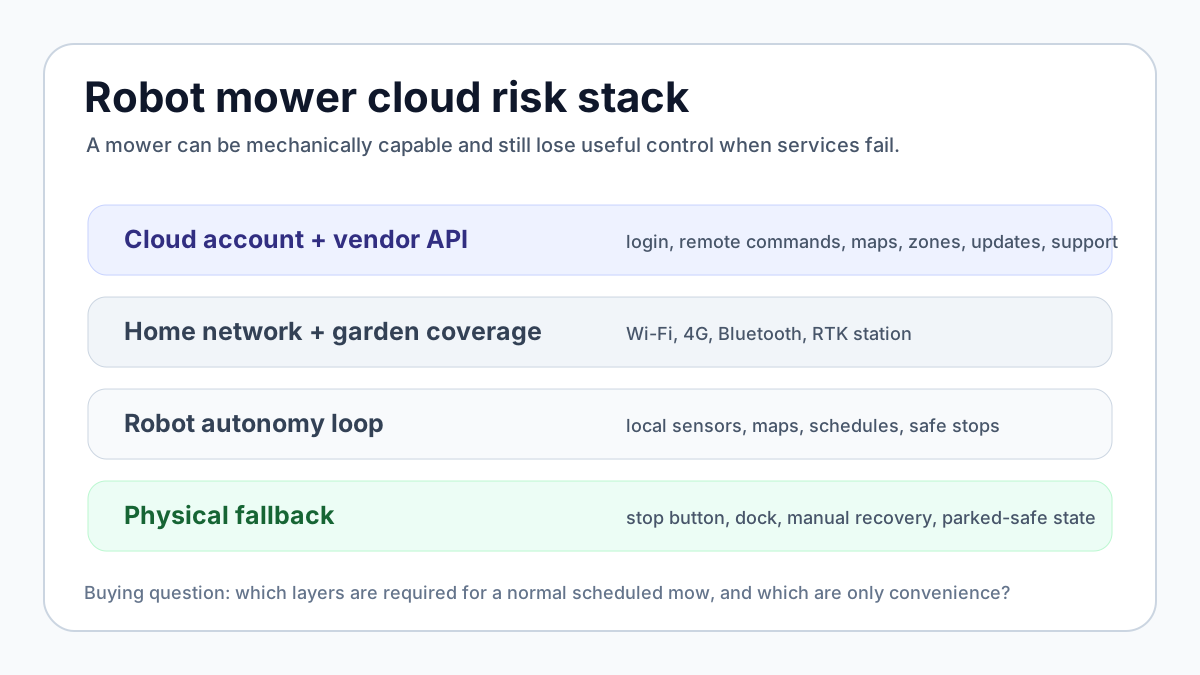
The practical question is not "should every mower be offline-only?" A connected mower can be safer and easier to own when remote alerts, anti-theft tracking, weather-aware scheduling, and firmware updates work well. The better buyer question is: what still works when the cloud does not?
Can a robot mower still work when the cloud is down?
Sometimes, partly, and not always in the way the spec sheet suggests.
In April 2026, The Verge reported that European Mammotion owners had complained about expensive robot lawn mowers being offline for three days. Mammotion reportedly said a fix was in progress, but had not yet explained the full root cause publicly. The same report noted that one third-party Home Assistant integration maintainer claimed a bug in an integration may have contributed to the load problem. A public integration commit around that time reduced update frequency: the default interval moved from one minute to five minutes, the working interval from five seconds to 15 seconds, and report polling from one minute to five minutes.
That is not enough evidence to blame Home Assistant, Mammotion, or any single piece of infrastructure for the whole incident. The useful lesson is broader: when a robot mower depends on vendor cloud APIs for status, maps, scheduling, or remote commands, a failure outside your yard can become a failure in your yard. A mower may still have local sensors and a map. But if the owner cannot log in, change a schedule, start a zone, receive an alert, or recover a stuck mower remotely, the robot has effectively lost part of its autonomy.
The most resilient design separates three things:
- Safety-critical motion, which should stop safely without an internet round trip.
- Routine mowing, which ideally continues from a stored schedule and local map.
- Convenience control, such as app edits, cloud history, voice commands, remote video, anti-theft tracking, and firmware updates.
The trouble is that many product pages do not explain that split clearly. They list Wi-Fi, Bluetooth, 4G, app control, or smart-home compatibility, but not the failure modes.
What does the ui44 database show about connected mowers?
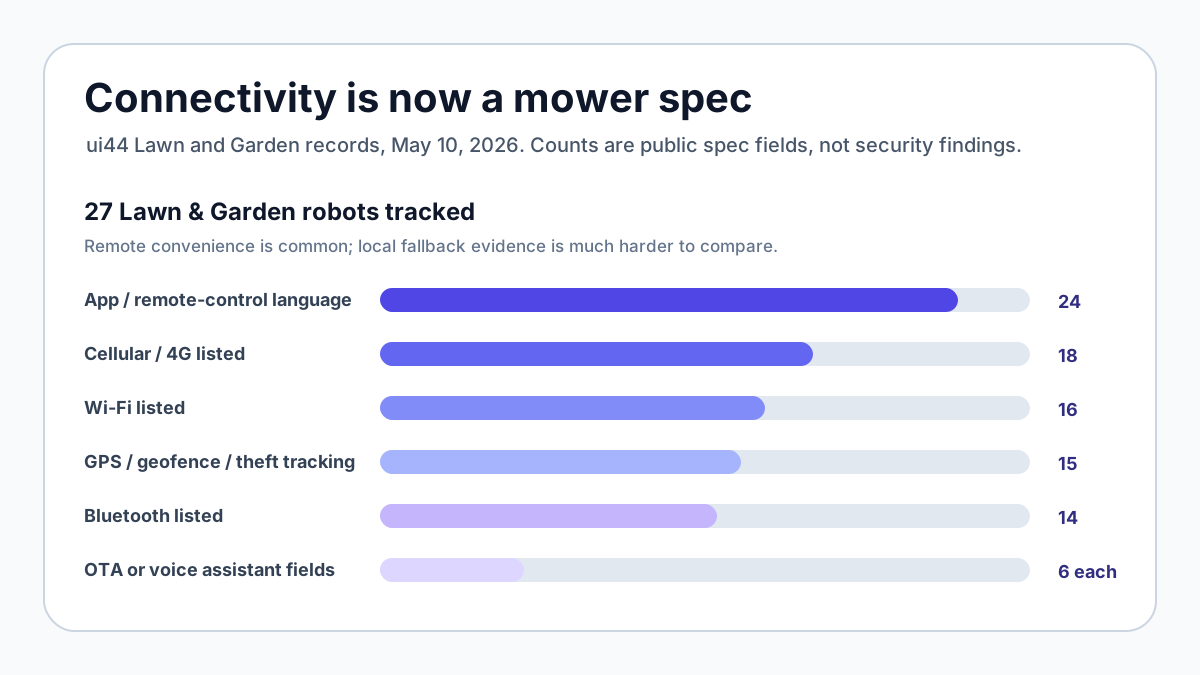
ui44 currently tracks 274 robots, including 27 Lawn & Garden robots. In that Lawn & Garden set, 24 have app or remote-control language in their public records, 18 list cellular or 4G, 16 list Wi-Fi, 14 list Bluetooth, 15 mention GPS, geofence, Find My, or theft tracking, and 6 mention OTA or firmware-update language.
Those counts are not vulnerability findings. They are a dependency map. A mower with more connectivity is not automatically worse. It may be easier to monitor, easier to recover, and more likely to improve after purchase. But every connected feature should make you ask whether it is optional, required, paid, region-limited, or tied to a vendor account.
Here is the buyer-relevant pattern: the mower market is moving from perimeter wire and simple schedules toward software-defined yards. That is good for setup. The Mammotion LUBA 3 AWD 5000 uses 360° LiDAR, NetRTK, and dual-camera AI vision. The Segway Navimow X430 uses tri-frequency Network RTK, 360° VSLAM, visual-inertial odometry, panoramic AI obstacle avoidance, Wi-Fi, Bluetooth, and integrated 4G. The Husqvarna Automower 450X NERA supports Bluetooth, Wi-Fi, cellular, Automower Connect, smart-home integration, and optional EPOS wire-free satellite navigation.
Those are serious robots. They are also software products with blades attached. The more a mower relies on maps, accounts, remote services, and updates, the more local-control evidence should matter next to slope rating, cutting width, and battery life.
Which robot mowers have the clearest fallback signals?
No public database can prove how every firmware build behaves during every outage. What ui44 can do is separate stronger resilience signals from vague connectivity claims.
Robot
- Public price signal in ui44
- $3,299
- Connectivity listed
- Wi-Fi, optional 4G
- Useful resilience signal
- Local sensing stack: 360° LiDAR, NetRTK, dual cameras; up to 50 smart zones
- Question to ask before buying
- Which schedule, map, and zone actions work without cloud login?
Robot
- Public price signal in ui44
- $2,899 reference
- Connectivity listed
- 4G, Wi-Fi, Bluetooth
- Useful resilience signal
- RTK-GNSS, 3D binocular vision, ultrasonic radar, bumper; OTA updates
- Question to ask before buying
- What exactly was affected in the reported European outage?
Robot
- Public price signal in ui44
- $2,299 current ui44 tracking
- Connectivity listed
- Bluetooth, Wi-Fi, integrated 4G
- Useful resilience signal
- GPS/geofence alarm, Apple Find My support, panoramic obstacle sensing
- Question to ask before buying
- What features remain after 4G service lapses or the app cannot reach servers?
Robot
- Public price signal in ui44
- $799
- Connectivity listed
- Bluetooth, Wi-Fi, optional 4G
- Useful resilience signal
- Lower-cost wire-free mower with app scheduling and remote status
- Question to ask before buying
- Is Bluetooth enough for start/stop, map edits, and recovery?
Robot
- Public price signal in ui44
- €4,999 DE / £3,824.15 UK signal
- Connectivity listed
- Bluetooth, Wi-Fi, cellular
- Useful resilience signal
- Physical-boundary or EPOS options; mature Automower Connect ecosystem
- Question to ask before buying
- Which controls work from the mower panel versus the cloud app?
Robot
- Public price signal in ui44
- $2,199 Kickstarter early-bird mower-module tier
- Connectivity listed
- Wi-Fi, Bluetooth, HaLow, optional 4G
- Useful resilience signal
- Official security response says offline use would not affect warranty while awaiting a security update
- Question to ask before buying
- How will credential rotation, remote diagnostics, and OTA updates work long term?
Robot
- Public price signal in ui44
- €2,599+ / $2,649.99+ variants
- Connectivity listed
- Wi-Fi, Bluetooth
- Useful resilience signal
- 360° 3D LiDAR, binocular AI camera, live video streaming via app
- Question to ask before buying
- Does live video add security and privacy requirements beyond mowing?
| Robot | Public price signal in ui44 | Connectivity listed | Useful resilience signal | Question to ask before buying |
|---|---|---|---|---|
| Mammotion LUBA 3 AWD 5000 | $3,299 | Wi-Fi, optional 4G | Local sensing stack: 360° LiDAR, NetRTK, dual cameras; up to 50 smart zones | Which schedule, map, and zone actions work without cloud login? |
| Mammotion LUBA 2 AWD 5000 | $2,899 reference | 4G, Wi-Fi, Bluetooth | RTK-GNSS, 3D binocular vision, ultrasonic radar, bumper; OTA updates | What exactly was affected in the reported European outage? |
| Segway Navimow X430 | $2,299 current ui44 tracking | Bluetooth, Wi-Fi, integrated 4G | GPS/geofence alarm, Apple Find My support, panoramic obstacle sensing | What features remain after 4G service lapses or the app cannot reach servers? |
| Segway Navimow i105 | $799 | Bluetooth, Wi-Fi, optional 4G | Lower-cost wire-free mower with app scheduling and remote status | Is Bluetooth enough for start/stop, map edits, and recovery? |
| Husqvarna Automower 450X NERA | €4,999 DE / £3,824.15 UK signal | Bluetooth, Wi-Fi, cellular | Physical-boundary or EPOS options; mature Automower Connect ecosystem | Which controls work from the mower panel versus the cloud app? |
| Yarbo M | $2,199 Kickstarter early-bird mower-module tier | Wi-Fi, Bluetooth, HaLow, optional 4G | Official security response says offline use would not affect warranty while awaiting a security update | How will credential rotation, remote diagnostics, and OTA updates work long term? |
| Dreame A3 AWD Pro | €2,599+ / $2,649.99+ variants | Wi-Fi, Bluetooth | 360° 3D LiDAR, binocular AI camera, live video streaming via app | Does live video add security and privacy requirements beyond mowing? |
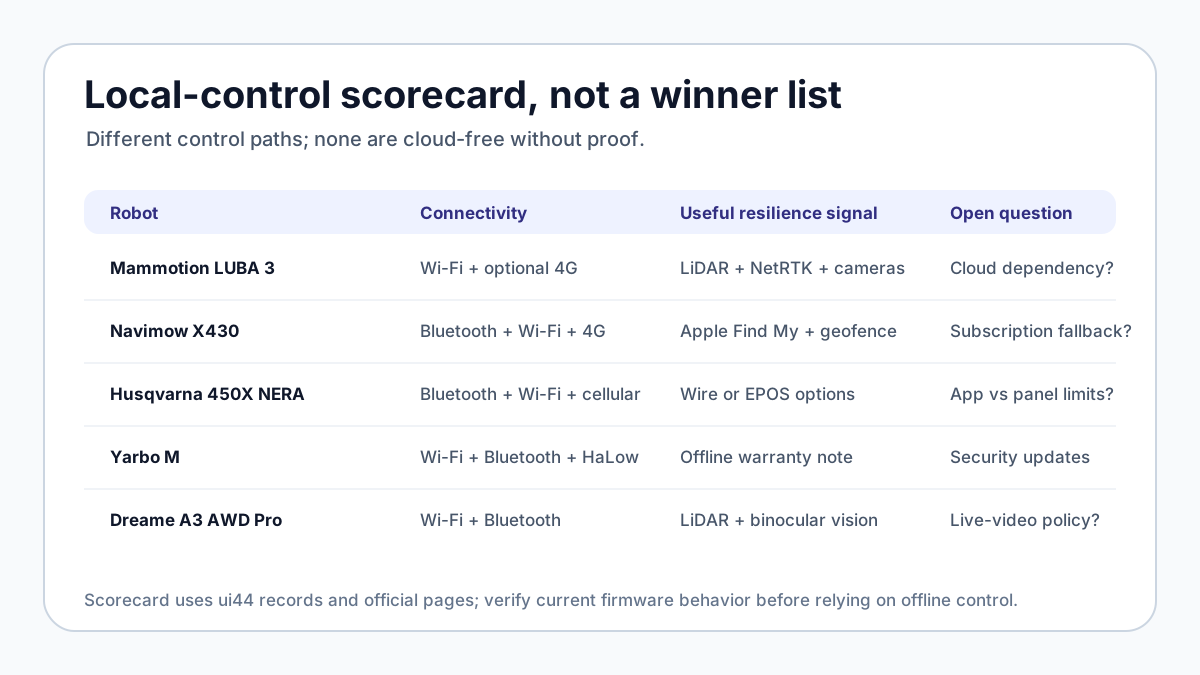
The table is intentionally not a ranking. A mower with cellular tracking may be more recoverable after theft. A mower with Bluetooth may be easier to reach when home Wi-Fi fails. A mower with a physical boundary option may be less elegant but more predictable in a poor-signal yard. The right answer depends on the yard, network, and owner.
What should buyers ask before paying?
The best robot mower manufacturers should be able to answer local-control questions plainly. If the answer is only "use the app," keep asking.
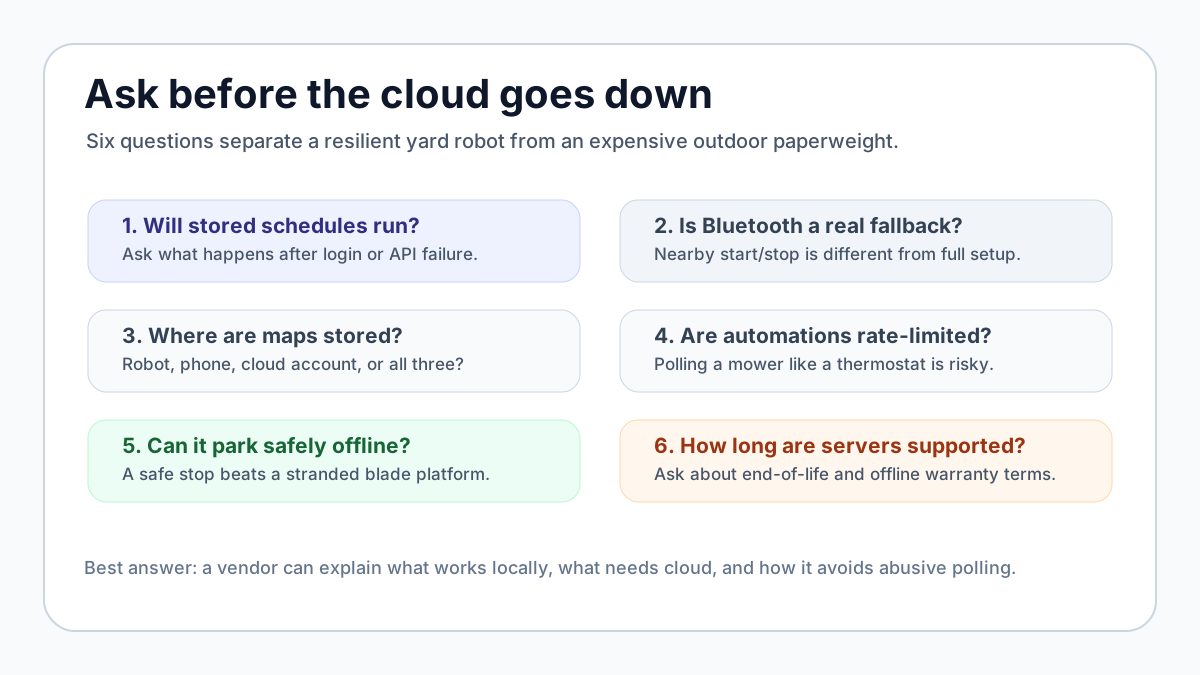
Start with these six questions:
- Will stored schedules run if the cloud account is unreachable? A mower that can keep yesterday's schedule is very different from one that waits for fresh cloud authorization.
- Is Bluetooth a real fallback or just a setup tool? Bluetooth on a spec sheet may mean nearby pairing, emergency start/stop, map editing, or almost nothing useful after setup. Ask for the exact behavior.
- Where are maps and zones stored? The robot, phone, dock, account, cloud, or a combination may hold different parts of the yard model. Recovery depends on knowing which copy is authoritative.
- What happens when 4G service expires? Cellular often powers theft tracking, remote status, alerts, and geofence tools. It may not be required for mowing, but buyers should not guess.
- How are third-party integrations rate-limited? A mower should not be polled like a light bulb. If a vendor offers an API or tolerates unofficial integrations, it needs sane update intervals, backoff behavior, and clear limits.
- What is the end-of-life plan? Robot mowers live outdoors for years. Ask whether the mower still has basic local operation if an app is retired, a region loses service, or a company stops supporting a model.
Yarbo's May 2026 security response shows why these questions are not theoretical. Yarbo acknowledged serious issues around remote diagnostics, credential management, and data handling, then said it had temporarily disabled relevant remote diagnostic tunnels, reset device root passwords, restricted some endpoints, and was moving toward user-authorized, auditable remote diagnostics and device-level credentials. It also told users that they could keep devices offline temporarily without affecting warranty or service coverage while waiting for a security update.
That is a security story, not a cloud-outage story. But it points to the same standard: a connected yard robot should give owners visibility and control, not just remote convenience.
How should you set up a mower for outage resilience?
After purchase, the goal is not to make a connected mower pretend to be offline. The goal is to reduce single points of failure.
First, treat the garden network as part of the installation. The Verge's 2024 head-to-head mower testing noted that connectivity matters because many yards do not have strong Wi-Fi, and that without Wi-Fi some mowers lose smart-home or remote app features unless the owner gets within Bluetooth range. That is still true. If your router barely reaches the patio, do not assume it will reach the far side of a wet lawn, a dock behind a shed, or an RTK station under tree cover.
Second, test the fallback path while the return window is open. Turn off garden Wi-Fi, stand near the mower, and see what the app can do over Bluetooth. Check whether you can stop, dock, start a saved zone, see the current state, or edit a schedule. Do not test anything unsafe near people, pets, or obstacles; the point is to learn the control path, not to stress the robot.
Third, avoid brittle automations. If you connect a mower to Home Assistant or another automation system, use conservative polling intervals and respect vendor limits. A mower does not need second-by-second state checks while it is asleep, docked, or outside a mowing window. Automation should reduce friction, not create server load that harms everyone.
Fourth, write down your recovery basics: account email, mower serial number, dock location, RTK station position, saved map names, blade part number, and how to manually carry or roll the mower safely. That sounds boring until the app is unavailable and the robot is stopped in the rain.
Should local control change which robot mower you buy?
Yes, but it should not be the only spec.
If you have a simple yard, good Wi-Fi coverage, and you mainly want scheduled mowing, a lower-cost connected mower such as the Segway Navimow i105 may be enough if its fallback behavior fits your comfort level. If you have a large, steep, signal-challenged yard, the hardware stack on mowers such as the Mammotion LUBA 3 AWD 5000, Lymow One Plus, or Navimow X430 may matter more than the cheapest price. If you care about mature dealer support and physical-boundary options, Husqvarna's NERA line deserves a different kind of comparison than newer app-first brands.
But do not buy only the slope rating, suction-style headline number, or camera count. Buy the control model. For a robot that lives outdoors with blades, connectivity is part of reliability.
The safest buying rule is simple: before you pay, ask the manufacturer or dealer to explain what happens in four cases: vendor cloud outage, home Wi-Fi outage, expired cellular plan, and retired app support. If the answers are specific, that is a good sign. If the answers are vague, treat the mower as cloud-dependent until proven otherwise.
For broader shortlisting, use the ui44 robot database and /compare view to compare price, status, sensors, connectivity, and official product links across robot mowers. The most future-proof robot mower is not necessarily the one with the most radios. It is the one whose maker can tell you exactly which parts of the robot still work when those radios go quiet.
Related in the database
Use this article as a privacy verification workflow
Turn the article into a privacy verification pass grounded in the robots, manufacturers, and components it actually references.
Robot Mower Cloud Outage: Local Control Checklist already points you toward 8 linked robots, 6 manufacturers, and 3 countries inside the ui44 database. That matters because strong buyer guidance is easier to apply when you can move immediately from a claim or warning into concrete product pages, manufacturer directories, component explainers, and country-level context instead of treating the article as an isolated opinion piece. The fastest next step is to turn the article into a shortlist workflow: open the linked robot pages, verify which specs are actually published for those models, then compare the surrounding manufacturer and component context before you decide whether the underlying claim changes your buying plan.
For this topic, the useful discipline is to separate the editorial lesson from the catalog evidence. The article gives you the framing, but the robot pages tell you what each product actually ships with today: sensor stack, connectivity methods, listed price, release timing, category, and support-relevant compatibility notes. The manufacturer pages then show whether you are looking at a one-off launch, a broader lineup pattern, or a company that spans multiple categories. That layered workflow reduces the risk of buying on a single marketing phrase or a single support FAQ.
Use the robot pages to confirm which products actually expose cameras, microphones, Wi-Fi, or voice systems, then use the manufacturer pages to decide how much of the privacy question seems product-specific versus brand-wide. On this route cluster, LUBA 3 AWD 5000, Navimow X430, and Automower 450X NERA form the fastest reality check. If you want a quick working shortlist, open Compare LUBA 3 AWD 5000, Navimow X430, and Automower 450X NERA next, then keep this article open as the reasoning layer while you compare structured data side by side.
Practical Takeaway
Every robot, manufacturer, category, component, and country reference below resolves to a real ui44 page, keeping the follow-up path grounded in database records rather than generic advice.
Suggested next steps in ui44
- Open LUBA 3 AWD 5000 and note the listed sensors, connectivity methods, and voice stack before you interpret any policy claim.
- Cross-check the wider brand context on Mammotion so you can see whether the privacy question touches one model or a broader lineup.
- Use the linked component pages to confirm how common the relevant sensors and connectivity layers are across the database.
- Keep a short note of which policy layers you checked, which device features are actually present on the robot page, and which items still depend on region- or app-level confirmation.
- Finish with Compare LUBA 3 AWD 5000, Navimow X430, and Automower 450X NERA so the policy reading sits next to structured product data.
Robot profiles worth opening next
Use the linked product pages as the evidence layer
The linked robot pages are where this article becomes operational. Instead of asking whether the headline is interesting, use the robot entries to inspect the actual mix of sensors, connectivity options, batteries, pricing, release timing, and stated capabilities attached to the products mentioned in the article. That is the easiest way to see whether the warning or opportunity described here affects one product family, a specific design pattern, or an entire buying lane.
LUBA 3 AWD 5000
Mammotion · Lawn & Garden · Available
LUBA 3 AWD 5000 is tracked on ui44 as a available lawn & garden robot from Mammotion. The database currently records a listed price of $2,899, a release date of 2026-01, Up to 215 min per charge battery life, Not officially disclosed charging time, and a published stack that includes 360° LiDAR, Dual 1080p AI cameras, and NetRTK positioning plus Wi-Fi and Optional 4G service.
For privacy-focused reading, this page matters because it shows the concrete device surface behind the policy discussion. Use it to verify whether LUBA 3 AWD 5000 combines sensors and connectivity in a way that could change the in-home data footprint, and compare the listed capabilities such as Wire-free mowing up to 5,000 m², 80% (38.6°) slope handling, and Adaptive cutting power control with any cloud, app, or voice layers.
Navimow X430
Segway Navimow · Lawn & Garden · Available
Navimow X430 is tracked on ui44 as a available lawn & garden robot from Segway Navimow. The database currently records a listed price of $2,499, a release date of 2026-02, Not officially disclosed battery life, As fast as 90 minutes charging time, and a published stack that includes Triple panoramic cameras, ToF sensors, and Tri-frequency Network RTK plus Bluetooth and Wi-Fi.
For privacy-focused reading, this page matters because it shows the concrete device surface behind the policy discussion. Use it to verify whether Navimow X430 combines sensors and connectivity in a way that could change the in-home data footprint, and compare the listed capabilities such as Wire-Free Large-Lawn Mowing, Xero-Turn AWD, and 84% (40°) Slope Capability with any cloud, app, or voice layers, including Alexa and Google Home.
Automower 450X NERA
Husqvarna · Lawn & Garden · Available
Automower 450X NERA is tracked on ui44 as a available lawn & garden robot from Husqvarna. The database currently records a listed price of €4,999, a release date of 2023-03, 145 min per charge battery life, 40 min charging time, and a published stack that includes Radar (object detection), Lift Sensor, and Tilt Sensor plus Bluetooth and Wi-Fi.
For privacy-focused reading, this page matters because it shows the concrete device surface behind the policy discussion. Use it to verify whether Automower 450X NERA combines sensors and connectivity in a way that could change the in-home data footprint, and compare the listed capabilities such as Autonomous Lawn Mowing (up to 5,000 m² random / 7,500 m² systematic), Radar Object Avoidance, and 50% Slope Handling with any cloud, app, or voice layers.
LUBA 2 AWD 5000
Mammotion · Lawn & Garden · Active
LUBA 2 AWD 5000 is tracked on ui44 as a active lawn & garden robot from Mammotion. The database currently records a listed price of $2,999, a release date of 2024, 190 min per charge battery life, 120 min charging time, and a published stack that includes UltraSense AI Vision (5 TOPS AI chip), RTK-GNSS Satellite Positioning, and 3D Binocular Vision plus 4G Cellular and Wi-Fi.
For privacy-focused reading, this page matters because it shows the concrete device surface behind the policy discussion. Use it to verify whether LUBA 2 AWD 5000 combines sensors and connectivity in a way that could change the in-home data footprint, and compare the listed capabilities such as Wire-Free Autonomous Mowing (up to 5,000 m²), RTK + AI Vision Navigation (no boundary wire), and All-Wheel Drive — 80% Slope Climbing with any cloud, app, or voice layers, including Amazon Alexa and Google Home.
Navimow i105
Segway Navimow · Lawn & Garden · Available
Navimow i105 is tracked on ui44 as a available lawn & garden robot from Segway Navimow. The database currently records a listed price of $799, a release date of 2024-03, Up to 60 minutes full-charge mowing time battery life, 90 minutes charging time, and a published stack that includes 140° RGB Fisheye Camera and RTK/GNSS Positioning plus Bluetooth and Wi-Fi.
For privacy-focused reading, this page matters because it shows the concrete device surface behind the policy discussion. Use it to verify whether Navimow i105 combines sensors and connectivity in a way that could change the in-home data footprint, and compare the listed capabilities such as Wire-Free Lawn Mowing, AI-Assisted Mapping, and Multi-Zone Management with any cloud, app, or voice layers, including Alexa and Google Assistant.
Manufacturer context behind the article
Check whether this is one product story or a broader company pattern
Manufacturer pages add the privacy context that individual product pages cannot show on their own. They help you check whether cameras, microphones, cloud accounts, app controls, and policy assumptions appear across a broader lineup or stay tied to one specific product story.
Mammotion
ui44 currently tracks 5 robots from Mammotion across 2 categorys. The company is grouped under China, and the current catalog footprint on ui44 includes LUBA 2 AWD 5000, LUBA 3 AWD 5000, LUBA mini 2 AWD 1500.
That wider brand context matters because privacy questions rarely stop at one FAQ page. A manufacturer route helps you see whether the article is centered on one premium model or on a company that has several relevant products and therefore more than one place where the same policy or app assumptions might matter. The category mix here currently points toward Lawn & Garden, Cleaning as the most useful next route if you want to see whether this article reflects a wider pattern inside the brand.
Segway Navimow
ui44 currently tracks 4 robots from Segway Navimow across 1 category. The company is grouped under China, and the current catalog footprint on ui44 includes Navimow i105, Navimow X350, Navimow i2 LiDAR Pro.
That wider brand context matters because privacy questions rarely stop at one FAQ page. A manufacturer route helps you see whether the article is centered on one premium model or on a company that has several relevant products and therefore more than one place where the same policy or app assumptions might matter. The category mix here currently points toward Lawn & Garden as the most useful next route if you want to see whether this article reflects a wider pattern inside the brand.
Husqvarna
ui44 currently tracks 3 robots from Husqvarna across 1 category. The company is grouped under Sweden, and the current catalog footprint on ui44 includes Automower 450X NERA, Automower 535 AWD EPOS, Automower 540 EPOS.
That wider brand context matters because privacy questions rarely stop at one FAQ page. A manufacturer route helps you see whether the article is centered on one premium model or on a company that has several relevant products and therefore more than one place where the same policy or app assumptions might matter. The category mix here currently points toward Lawn & Garden as the most useful next route if you want to see whether this article reflects a wider pattern inside the brand.
Yarbo
ui44 currently tracks 1 robot from Yarbo across 1 category. The company is grouped under USA, and the current catalog footprint on ui44 includes Yarbo M.
That wider brand context matters because privacy questions rarely stop at one FAQ page. A manufacturer route helps you see whether the article is centered on one premium model or on a company that has several relevant products and therefore more than one place where the same policy or app assumptions might matter. The category mix here currently points toward Lawn & Garden as the most useful next route if you want to see whether this article reflects a wider pattern inside the brand.
Broaden the scan without leaving the database
Categories, components, and countries add the wider context
Category framing
Category pages are useful when the article touches a buying pattern that shows up across brands. A category route helps you confirm whether the linked products sit in a narrow niche or whether the same question should be tested across a larger field of alternatives.
Lawn & Garden
The Lawn & Garden category page currently groups 29 tracked robots from 19 manufacturers. ui44 describes this lane as: Autonomous robot lawn mowers and garden robots that maintain your yard and outdoor spaces without supervision.
That makes the category route a practical follow-up when you want to check whether the products linked in this article are typical for the lane or whether they sit at one edge of the market. Useful starting examples currently include N8 LiDAR, VISIMOW18V-100, A3 AWD Pro.
Country and ecosystem context
Country pages give extra context when support practices, launch sequencing, regulatory posture, or manufacturer mix matter. They are not a substitute for model-level verification, but they do help you see which ecosystems cluster together and which manufacturers sit in the same regional field when you broaden the search beyond the article headline.
China
The China route currently groups 189 tracked robots from 87 manufacturers in ui44. That gives you a useful regional lens when the article points toward support practices, launch sequencing, or brand clusters that may share similar ecosystem assumptions.
On the current route, manufacturers like AGIBOT, Dreame, Unitree Robotics make the page a good way to broaden the scan without losing the regional context that often shapes availability, documentation style, and adjacent alternatives.
Sweden
The Sweden route currently groups 3 tracked robots from 1 manufacturers in ui44. That gives you a useful regional lens when the article points toward support practices, launch sequencing, or brand clusters that may share similar ecosystem assumptions.
On the current route, manufacturers like Husqvarna make the page a good way to broaden the scan without losing the regional context that often shapes availability, documentation style, and adjacent alternatives.
USA
The USA route currently groups 89 tracked robots from 69 manufacturers in ui44. That gives you a useful regional lens when the article points toward support practices, launch sequencing, or brand clusters that may share similar ecosystem assumptions.
On the current route, manufacturers like Faraday Future, iRobot, Boston Dynamics make the page a good way to broaden the scan without losing the regional context that often shapes availability, documentation style, and adjacent alternatives.
Questions to answer before you move from reading to buying
A follow-up FAQ built from the entities already linked in this article
Frequently Asked Questions
Which page should I open first after reading “Robot Mower Cloud Outage: Local Control Checklist”?
Start with LUBA 3 AWD 5000. That gives you a concrete product anchor for the article’s main claim. From there, branch into the manufacturer and component pages so you can tell whether the article is describing one specific model, a repeated brand pattern, or a wider technology issue that affects multiple shortlist options.
How do the manufacturer pages change the buying decision?
Mammotion help you zoom out from one article and one product. On ui44 they show lineup breadth, category spread, and the neighboring robots tied to the same company. That context is useful when you are deciding whether a risk belongs to a single model, whether it shows up across a brand’s portfolio, and whether you should keep looking at alternatives before committing.
When should I switch from reading to side-by-side comparison?
Move into Compare LUBA 3 AWD 5000, Navimow X430, and Automower 450X NERA as soon as you understand the article’s main warning or promise. The article explains what to watch for, but the compare view is where you can check whether price, status, battery life, connectivity, sensors, and category fit still make the robot a good match for your own home and budget.
Where to go next in ui44
Keep the research chain inside the database
If you want to keep going, these follow-on pages give you the cleanest expansion path from article to research session. Open the comparison route first if you are deciding between products today. Open the manufacturer, category, and component routes if you still need to understand the broader pattern behind the claim.
Written by
ui44 Team
Published May 12, 2026
Share this article
Open a plain share link on X or Bluesky. No embeds, no widgets, no cookie baggage.