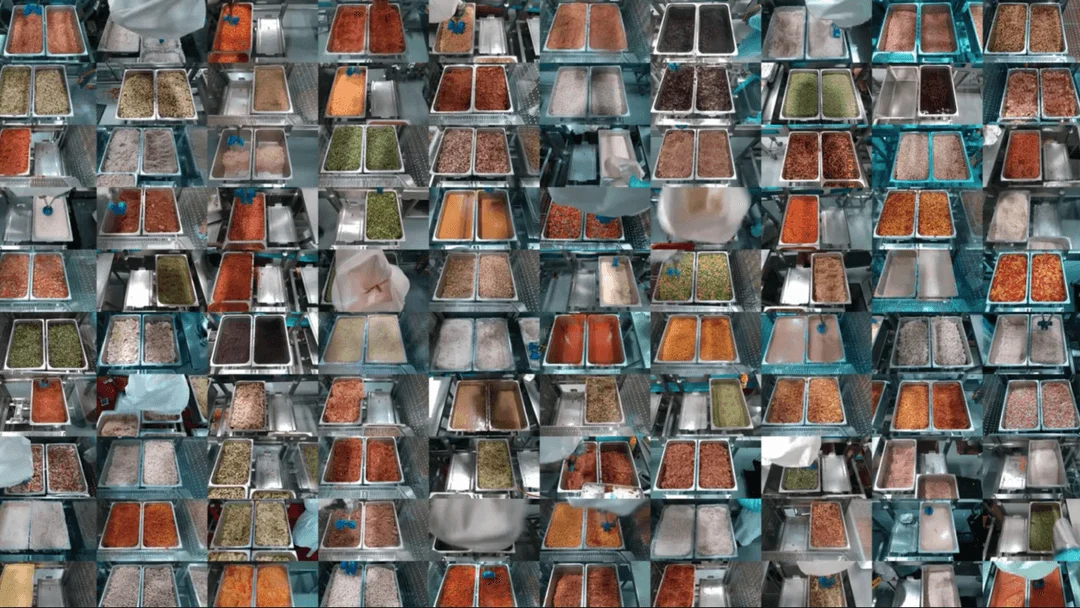
Chef Robotics told TechCrunch it has passed 100 million servings after moving away from restaurant automation and into large-scale food manufacturing. A "serving" is not a finished meal. It is a portion of food a robot deposits into a tray. That distinction is the whole story. The robots are succeeding because they are not trying to run an ordinary home kitchen.
For home buyers, this is not disappointing news. It is a useful reality check. The path to a capable home cooking robot probably runs through tray lines, commercial kitchens, countertop appliances, and supervised manipulation long before a humanoid casually chops onions next to your dog.
Why do robot chefs reach factories before home kitchens?
Chef Robotics is not a home-robot company. Its progress matters because food is a brutal robotics problem even before you add a family kitchen.
TechCrunch's April 2026 profile says Chef found traction after pivoting from fast-casual restaurants into food manufacturing, serving customers such as Amy's Kitchen, Chef Bombay, and a large school-lunch provider. The company's own April updates describe AI-enabled food-handling robots that can automate meatpacking-style tasks, produce packing, and meal assembly: placing chicken breasts, lamb chops, sausage links, oranges, apples, pears, corn, and other items into trays before packaging.
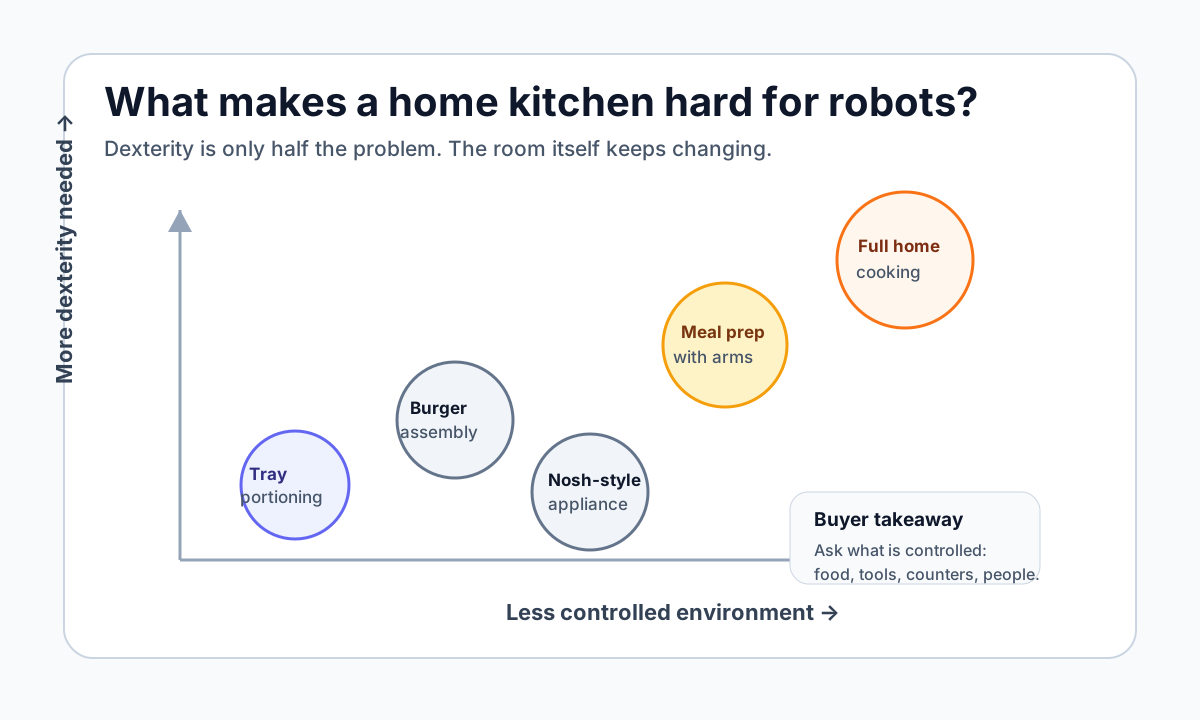
That is real progress. It is also a constrained environment. The robot station, tray shape, ingredient flow, hygiene process, supervisor, and success criteria can all be designed around the machine. If a robot drops one portion, the system can measure it, retrain it, and run the same job thousands of more times.
Chef's newer food-manipulation post is even more interesting. The company says its Food Manipulation Model learned to pick, place, and stack a burger with buns, patty, cheese, lettuce, and tomato in under a minute using just over 26 hours of demonstration data. That sounds home-relevant, but the demo still happens inside a robot workcell with known camera views, tools, and ingredients. It is closer to a repeatable production skill than to "make whatever is left in my fridge."
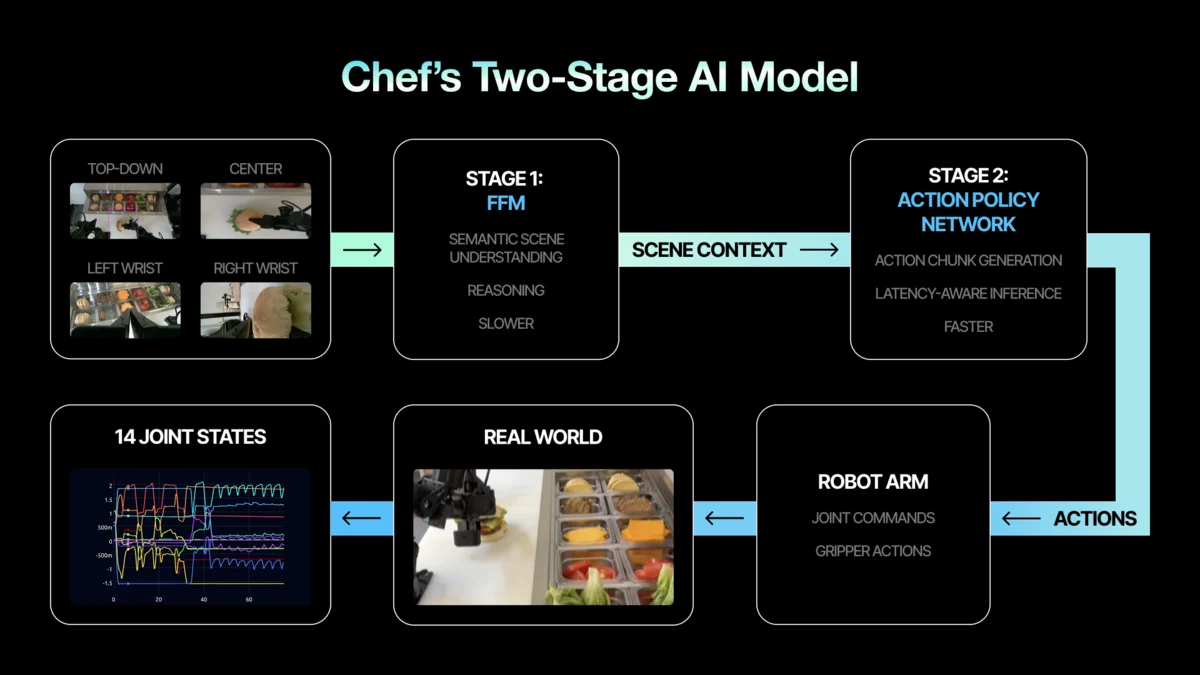
The buyer takeaway is simple: the first good robot chefs will probably be boring on purpose. They will do one food-handling workflow well, in a space where humans can standardize everything around them.
The kitchen is not one problem
When people ask for a robot chef, they usually bundle five different tasks together.
A robot might need to identify ingredients, retrieve them, cut them, cook them, plate them, clean the pan, wipe the counter, put tools away, avoid children, work around pets, and decide whether a tomato is still usable. Each step requires different sensors, manipulation, safety limits, and food knowledge.
A factory tray line removes many of those variables. Ingredients arrive in known containers. The robot picks from a fixed location. The tray is always in the same place. Human staff maintain the station. The robot can focus on one high-value action: portion accurately and keep the line moving.
A home kitchen does the opposite. Counter space changes by the hour. Utensils move. Food packaging varies. A wet cutting board behaves differently from a dry one. Steam, grease, reflective pans, knives, loose sleeves, and glassware all add risk. The room is also social: someone may reach across the robot, a child may interrupt, or a pet may wander underfoot.
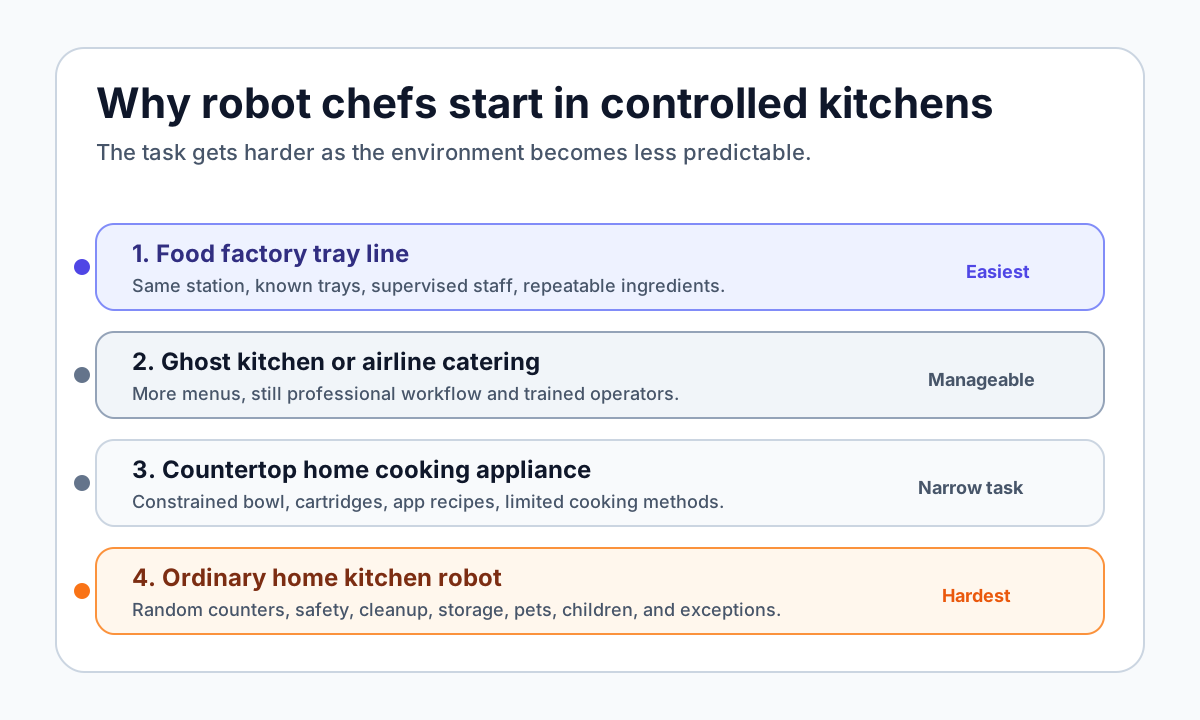
That is why the near-term market splits into two paths. One path makes the kitchen more robot-ready. The other narrows the robot's job until the messiness is manageable.
What ui44's robot database says
ui44 tracks more than 240 robots, and the pattern is consistent: cooking-adjacent robots become credible when they control either the environment, the task, or the human fallback.
Robot
- Current status
- Pre-order
- Key ui44 data
- $1,499 Kickstarter pre-order; 57 lb / 26 kg countertop appliance; 5 ingredient compartments, 8 spice compartments, water/oil container; 500+ recipes
- What it teaches about robot chefs
- A real home cooking robot starts by becoming a sealed appliance, not a free-roaming arm
Robot
- Current status
- Pre-order / service waitlist
- Key ui44 data
- €690/month service plan; 1.65 m, 60 kg; 6-hour battery; VR teleoperation plus AI; meal-prep assistance
- What it teaches about robot chefs
- Home kitchens may need human-in-the-loop help before full autonomy is safe
Robot
- Current status
- Development
- Key ui44 data
- Wheeled dual-arm home robot concept; LG ThinQ integration; meal prep and laundry demos; no price or launch date
- What it teaches about robot chefs
- Appliance coordination matters, but a CES demo is not a retail cooking robot
Robot
- Current status
- Prototype
- Key ui44 data
- Haier humanoid; 1.65 m, 70 kg; food sorting, kitchen assistance, appliance collaboration
- What it teaches about robot chefs
- Smart-home companies see the kitchen as a robot workflow, not a standalone gadget
Robot
- Current status
- Active commercial robot
- Key ui44 data
- 13-hour no-load battery; 40 kg max tray payload; LiDAR plus RGBD obstacle avoidance
- What it teaches about robot chefs
- Food-service robots already scale when they deliver trays instead of manipulating ingredients
Robot
- Current status
- Pre-order
- Key ui44 data
- Estimated €98,000; 180 cm, 80 kg; ~2-hour battery; 15 kg payload; food prep listed among chores
- What it teaches about robot chefs
- General humanoids are exciting, expensive, and still early for ordinary kitchens
Robot
- Current status
- Available
- Key ui44 data
- $7,999 or $450/month; stationary laundry robot; 30–90 min/load; remote assist
- What it teaches about robot chefs
- The strongest home-chore products often win by fixing one task in one place
| Robot | Current status | Key ui44 data | What it teaches about robot chefs |
|---|---|---|---|
| Nosh One | Pre-order | $1,499 Kickstarter pre-order; 57 lb / 26 kg countertop appliance; 5 ingredient compartments, 8 spice compartments, water/oil container; 500+ recipes | A real home cooking robot starts by becoming a sealed appliance, not a free-roaming arm |
| Devanthro Robody | Pre-order / service waitlist | €690/month service plan; 1.65 m, 60 kg; 6-hour battery; VR teleoperation plus AI; meal-prep assistance | Home kitchens may need human-in-the-loop help before full autonomy is safe |
| LG CLOiD | Development | Wheeled dual-arm home robot concept; LG ThinQ integration; meal prep and laundry demos; no price or launch date | Appliance coordination matters, but a CES demo is not a retail cooking robot |
| HIVA Haiwa | Prototype | Haier humanoid; 1.65 m, 70 kg; food sorting, kitchen assistance, appliance collaboration | Smart-home companies see the kitchen as a robot workflow, not a standalone gadget |
| Pudu BellaBot | Active commercial robot | 13-hour no-load battery; 40 kg max tray payload; LiDAR plus RGBD obstacle avoidance | Food-service robots already scale when they deliver trays instead of manipulating ingredients |
| NEURA 4NE-1 | Pre-order | Estimated €98,000; 180 cm, 80 kg; ~2-hour battery; 15 kg payload; food prep listed among chores | General humanoids are exciting, expensive, and still early for ordinary kitchens |
| Weave Isaac 0 | Available | $7,999 or $450/month; stationary laundry robot; 30–90 min/load; remote assist | The strongest home-chore products often win by fixing one task in one place |
The Nosh One is the most direct home comparison. It is not a robot arm roaming around the kitchen. It is a countertop appliance that portions ingredients, sautés, stirs, plates, and cleans itself inside a chamber. Its limitations are part of the design: ui44 records that it cannot bake, roast, boil, sear, or steam. It uses cartridges and a pan because that is how a home cooking task becomes bounded enough for automation.
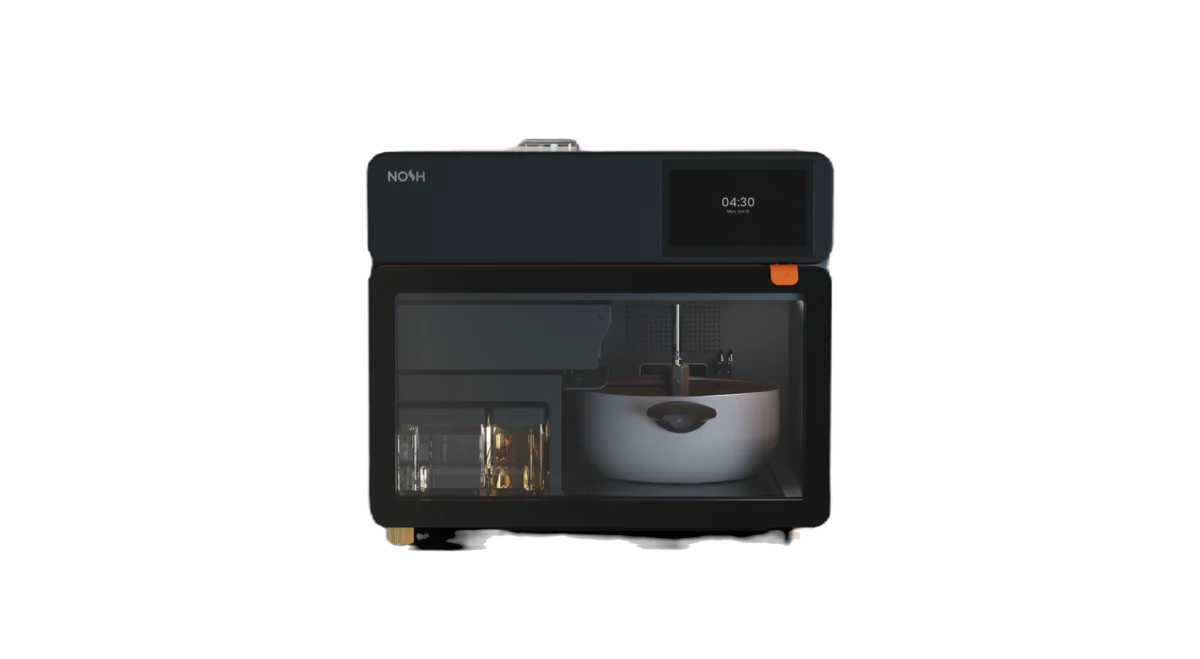
That makes Nosh more honest than a vague humanoid kitchen demo. It does not claim to replace a person who can improvise through any recipe. It turns a subset of cooking into an appliance workflow.
Why restaurants are not the easy middle step
It is tempting to assume robot chefs will move from factories to restaurants to homes. Chef's story suggests the middle step is not so simple.
Restaurants have less control than food factories. Orders arrive in waves. Menus change. Staff move quickly in tight spaces. Ingredients run out. A chef may adjust texture, seasoning, and timing by feel. The robot must also earn its space during peak hours, where a reset or calibration delay is expensive.
That is why Chef's next "smaller kitchens" still sound commercial and controlled. TechCrunch reported that one of its smaller customers is a major airline catering company, with ghost kitchens, stadiums, prisons, and fast casual restaurants as possible future targets. Those are not private homes. They are high-volume workflows where a robot can repeat a task, generate data, and justify its cost.
Home kitchens add a different burden: no trained operator. The customer is not a plant manager or kitchen automation buyer. The customer is a person who wants dinner, does not want to clean a sensor, and may not know how to recover the robot when it fails. Any robot that requires constant setup starts to feel less like help and more like another appliance to babysit.
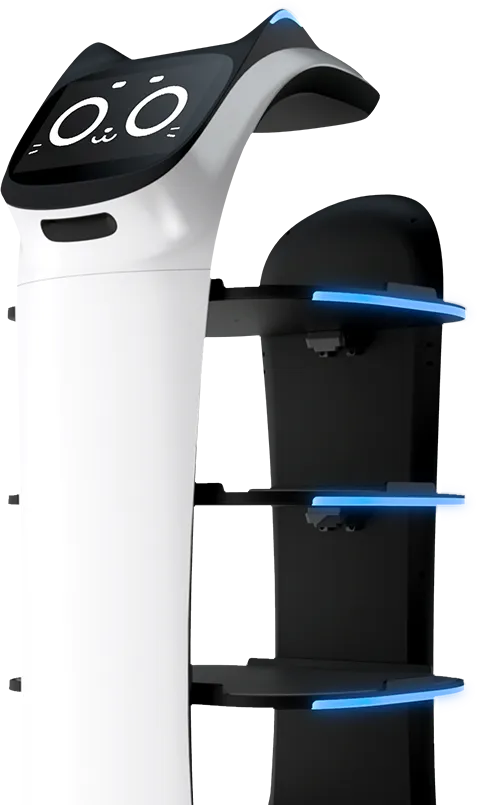
This is also why delivery robots have scaled faster than cooking robots. Pudu BellaBot can carry food through restaurants because it does not need to decide how crisp a vegetable should be. It navigates, waits, avoids people, and delivers trays. That is valuable, but it is not cooking.
What to buy today if you want cooking help
If you want a robot to help with food at home in 2026, the practical options are narrower than the hype.
A countertop cooking robot is the closest real category. Nosh One is the best ui44 example because it is aimed directly at home meals and has concrete specs. The trade-off is scope. You are buying an appliance workflow: load the right ingredients, use compatible cooking modes, clean the removable parts, and accept that the machine is not a universal cook.
A care or telepresence robot may help with meal routines, not full cooking. Robody is interesting because Devanthro frames it as a service: AI for routine help and monitoring, plus professional caregivers or family members joining through VR when human judgment is needed. That model is more plausible for older-adult care than a fully autonomous chef, but it is also a service commitment, not a one-time gadget purchase.
A home humanoid kitchen demo is still a readiness signal, not a buying signal. LG CLOiD, Haier HIVA Haiwa, NEURA 4NE-1, and Pudu D9 all point toward the same future: mobile robots with arms that coordinate with appliances, recognize objects, and eventually handle more household workflows. Today, the priced or available products are either expensive, early, commercial, or highly bounded.
A normal kitchen appliance may still beat a robot. For many households, an air fryer, smart oven, meal kit, or human meal-prep service solves more of the real dinner problem than a robot arm does. That is not anti-robot. It is the same deployment lesson Chef Robotics learned: constrain the job first.
Signals that a home robot chef is getting real
Do not judge a robot chef by a single polished cooking video. Watch for these signals instead.
- Ingredient range: Can it handle soft, wet, sticky, and irregular foods, or only pre-cut demo items?
- Tool use: Does it use normal pans, knives, and counters, or a custom station built for the demo?
- Cleanup: Can it clean the mess it creates, or does the human become the dishwasher?
- Failure recovery: What happens when it drops food, burns something, or misidentifies an ingredient?
- Safety boundaries: How does it behave around knives, heat, children, pets, and human hands?
- Human fallback: Is there remote assist, local confirmation, or a clear stop behavior for risky actions?
- Cost model: Is this a product you own, a subscription, a managed service, or a commercial deployment that never reaches consumers?
Those questions are more useful than asking whether the robot is humanoid. A sealed appliance can be more useful in a kitchen than a walking robot if the appliance reliably cooks dinner. A humanoid can be more useful later if it can use the kitchen you already have. In 2026, the reliable part matters more.
Bottom line
Chef Robotics is a good sign for robot cooking because it shows food manipulation can improve with real deployment data. It is also a warning. The company escaped the robot-cooking graveyard by moving into controlled food production, not by pretending a robot can handle every kitchen.
For home buyers, the honest timeline is staged. First come tray lines, commercial food workflows, and delivery robots. Then come countertop cooking appliances that make the task smaller. After that, supervised home assistants may help with meal prep. A general-purpose home robot chef comes last, because ordinary kitchens combine dexterity, safety, mess, taste, privacy, and human routines in one unforgiving room.
The robot chef is coming. The question is not whether robots can touch food. They already can. The question is how much of the kitchen has to become robot-ready before the robot is ready for your kitchen.
Related in the database
Use this article as a privacy verification workflow
Turn the article into a privacy verification pass grounded in the robots, manufacturers, and components it actually references.
Robot Chefs: Why Factories Come Before Kitchens already points you toward 7 linked robots, 7 manufacturers, and 5 countries inside the ui44 database. That matters because strong buyer guidance is easier to apply when you can move immediately from a claim or warning into concrete product pages, manufacturer directories, component explainers, and country-level context instead of treating the article as an isolated opinion piece. The fastest next step is to turn the article into a shortlist workflow: open the linked robot pages, verify which specs are actually published for those models, then compare the surrounding manufacturer and component context before you decide whether the underlying claim changes your buying plan.
For this topic, the useful discipline is to separate the editorial lesson from the catalog evidence. The article gives you the framing, but the robot pages tell you what each product actually ships with today: sensor stack, connectivity methods, listed price, release timing, category, and support-relevant compatibility notes. The manufacturer pages then show whether you are looking at a one-off launch, a broader lineup pattern, or a company that spans multiple categories. That layered workflow reduces the risk of buying on a single marketing phrase or a single support FAQ.
Use the robot pages to confirm which products actually expose cameras, microphones, Wi-Fi, or voice systems, then use the manufacturer pages to decide how much of the privacy question seems product-specific versus brand-wide. On this route cluster, Nosh One, Robody, and CLOiD form the fastest reality check. If you want a quick working shortlist, open Compare Nosh One, Robody, and CLOiD next, then keep this article open as the reasoning layer while you compare structured data side by side.
Practical Takeaway
Every robot, manufacturer, category, component, and country reference below resolves to a real ui44 page, keeping the follow-up path grounded in database records rather than generic advice.
Suggested next steps in ui44
- Open Nosh One and note the listed sensors, connectivity methods, and voice stack before you interpret any policy claim.
- Cross-check the wider brand context on Nosh Robotics so you can see whether the privacy question touches one model or a broader lineup.
- Use the linked component pages to confirm how common the relevant sensors and connectivity layers are across the database.
- Keep a short note of which policy layers you checked, which device features are actually present on the robot page, and which items still depend on region- or app-level confirmation.
- Finish with Compare Nosh One, Robody, and CLOiD so the policy reading sits next to structured product data.
Robot profiles worth opening next
Use the linked product pages as the evidence layer
The linked robot pages are where this article becomes operational. Instead of asking whether the headline is interesting, use the robot entries to inspect the actual mix of sensors, connectivity options, batteries, pricing, release timing, and stated capabilities attached to the products mentioned in the article. That is the easiest way to see whether the warning or opportunity described here affects one product family, a specific design pattern, or an entire buying lane.
Nosh One
Nosh Robotics · Home Assistants · Pre-order
Nosh One is tracked on ui44 as a pre-order home assistants robot from Nosh Robotics. The database currently records a listed price of $1,499, a release date of 2026-03, Not applicable (plug-in appliance) battery life, Not applicable charging time, and a published stack that includes AI camera (machine vision for ingredient identification and real-time cooking monitoring), Texture sensor, and Moisture sensor plus 2.4GHz and 5.0GHz Wi-Fi and Nosh mobile app (iOS/Android).
For privacy-focused reading, this page matters because it shows the concrete device surface behind the policy discussion. Use it to verify whether Nosh One combines sensors and connectivity in a way that could change the in-home data footprint, and compare the listed capabilities such as Autonomous cooking (portioning, sautéing, stirring, plating), Real-time AI cooking monitoring and adjustment, and 500+ built-in global recipes with any cloud, app, or voice layers.
Robody is tracked on ui44 as a pre-order home assistants robot from Devanthro. The database currently records a listed price of Price TBA, a release date of 2024-11, 6 hours battery life, Self-docking; full charge time not officially disclosed charging time, and a published stack that includes 4K fisheye RGB cameras, mm-wave radar, and Stereo microphones plus 5G and Wi-Fi 6.
For privacy-focused reading, this page matters because it shows the concrete device surface behind the policy discussion. Use it to verify whether Robody combines sensors and connectivity in a way that could change the in-home data footprint, and compare the listed capabilities such as VR telepresence for family members and caregivers, Medication reminders, and Meal preparation assistance with any cloud, app, or voice layers.
CLOiD
LG Electronics · Home Assistants · Development
CLOiD is tracked on ui44 as a development home assistants robot from LG Electronics. The database currently records a listed price of Price TBA, a release date of 2026-01-04, Not officially disclosed battery life, Not officially disclosed charging time, and a published stack that includes Cameras and Various onboard sensors plus LG ThinQ and ThinQ ON.
For privacy-focused reading, this page matters because it shows the concrete device surface behind the policy discussion. Use it to verify whether CLOiD combines sensors and connectivity in a way that could change the in-home data footprint, and compare the listed capabilities such as Autonomous indoor wheeled navigation, Dual-arm household manipulation, and Appliance coordination via LG ThinQ with any cloud, app, or voice layers.
HIVA Haiwa
Haier · Humanoid · Prototype
HIVA Haiwa is tracked on ui44 as a prototype humanoid robot from Haier. The database currently records a listed price of Price TBA, a release date of 2026-02, Not officially disclosed battery life, Not officially disclosed charging time, and a published stack that includes Computer vision, Barcode recognition, and Environmental perception plus its listed connectivity stack.
For privacy-focused reading, this page matters because it shows the concrete device surface behind the policy discussion. Use it to verify whether HIVA Haiwa combines sensors and connectivity in a way that could change the in-home data footprint, and compare the listed capabilities such as Household chore assistance, Grocery transport, and Food sorting for refrigeration with any cloud, app, or voice layers.
BellaBot
Pudu Robotics · Commercial · Active
BellaBot is tracked on ui44 as a active commercial robot from Pudu Robotics. The database currently records a listed price of Price TBA, a release date of 2020-01, 13 hours (no load) battery life, 4.5 hours (or instant with battery swap) charging time, and a published stack that includes LiDAR, 3 × RGBD Depth Cameras, and Cliff Sensors plus Wi-Fi.
For privacy-focused reading, this page matters because it shows the concrete device surface behind the policy discussion. Use it to verify whether BellaBot combines sensors and connectivity in a way that could change the in-home data footprint, and compare the listed capabilities such as Autonomous Food & Item Delivery, Dual SLAM Navigation (LiDAR + Visual), and 3D Omnidirectional Obstacle Avoidance with any cloud, app, or voice layers.
Manufacturer context behind the article
Check whether this is one product story or a broader company pattern
Manufacturer pages add the privacy context that individual product pages cannot show on their own. They help you check whether cameras, microphones, cloud accounts, app controls, and policy assumptions appear across a broader lineup or stay tied to one specific product story.
Nosh Robotics
ui44 currently tracks 1 robot from Nosh Robotics across 1 category. The company is grouped under India, and the current catalog footprint on ui44 includes Nosh One.
That wider brand context matters because privacy questions rarely stop at one FAQ page. A manufacturer route helps you see whether the article is centered on one premium model or on a company that has several relevant products and therefore more than one place where the same policy or app assumptions might matter. The category mix here currently points toward Home Assistants as the most useful next route if you want to see whether this article reflects a wider pattern inside the brand.
Devanthro
ui44 currently tracks 1 robot from Devanthro across 1 category. The company is grouped under Germany, and the current catalog footprint on ui44 includes Robody.
That wider brand context matters because privacy questions rarely stop at one FAQ page. A manufacturer route helps you see whether the article is centered on one premium model or on a company that has several relevant products and therefore more than one place where the same policy or app assumptions might matter. The category mix here currently points toward Home Assistants as the most useful next route if you want to see whether this article reflects a wider pattern inside the brand.
LG Electronics
ui44 currently tracks 1 robot from LG Electronics across 1 category. The company is grouped under South Korea, and the current catalog footprint on ui44 includes CLOiD.
That wider brand context matters because privacy questions rarely stop at one FAQ page. A manufacturer route helps you see whether the article is centered on one premium model or on a company that has several relevant products and therefore more than one place where the same policy or app assumptions might matter. The category mix here currently points toward Home Assistants as the most useful next route if you want to see whether this article reflects a wider pattern inside the brand.
Haier
ui44 currently tracks 1 robot from Haier across 1 category. The company is grouped under China, and the current catalog footprint on ui44 includes HIVA Haiwa.
That wider brand context matters because privacy questions rarely stop at one FAQ page. A manufacturer route helps you see whether the article is centered on one premium model or on a company that has several relevant products and therefore more than one place where the same policy or app assumptions might matter. The category mix here currently points toward Humanoid as the most useful next route if you want to see whether this article reflects a wider pattern inside the brand.
Broaden the scan without leaving the database
Categories, components, and countries add the wider context
Category framing
Category pages are useful when the article touches a buying pattern that shows up across brands. A category route helps you confirm whether the linked products sit in a narrow niche or whether the same question should be tested across a larger field of alternatives.
Home Assistants
The Home Assistants category page currently groups 16 tracked robots from 14 manufacturers. ui44 describes this lane as: Arm-based household helpers — laundry folders, kitchen robots, and mobile manipulators that take on hands-on physical tasks around the home.
That makes the category route a practical follow-up when you want to check whether the products linked in this article are typical for the lane or whether they sit at one edge of the market. Useful starting examples currently include Robody, Futuring 2 (F2), Stretch 3.
Humanoid
The Humanoid category page currently groups 129 tracked robots from 92 manufacturers. ui44 describes this lane as: Full-size bipedal humanoid robots built to work alongside people — from factory floors to household tasks. Compare the cutting edge of humanoid robotics.
That makes the category route a practical follow-up when you want to check whether the products linked in this article are typical for the lane or whether they sit at one edge of the market. Useful starting examples currently include NEO, EVE, Mornine M1.
Country and ecosystem context
Country pages give extra context when support practices, launch sequencing, regulatory posture, or manufacturer mix matter. They are not a substitute for model-level verification, but they do help you see which ecosystems cluster together and which manufacturers sit in the same regional field when you broaden the search beyond the article headline.
India
The India route currently groups 6 tracked robots from 5 manufacturers in ui44. That gives you a useful regional lens when the article points toward support practices, launch sequencing, or brand clusters that may share similar ecosystem assumptions.
On the current route, manufacturers like Miko, Addverb Technologies, iHub Robotics make the page a good way to broaden the scan without losing the regional context that often shapes availability, documentation style, and adjacent alternatives.
Germany
The Germany route currently groups 13 tracked robots from 9 manufacturers in ui44. That gives you a useful regional lens when the article points toward support practices, launch sequencing, or brand clusters that may share similar ecosystem assumptions.
On the current route, manufacturers like NEURA Robotics, Bosch, Agile Robots make the page a good way to broaden the scan without losing the regional context that often shapes availability, documentation style, and adjacent alternatives.
South Korea
The South Korea route currently groups 9 tracked robots from 7 manufacturers in ui44. That gives you a useful regional lens when the article points toward support practices, launch sequencing, or brand clusters that may share similar ecosystem assumptions.
On the current route, manufacturers like ROBOTIS, Samsung, GenON make the page a good way to broaden the scan without losing the regional context that often shapes availability, documentation style, and adjacent alternatives.
Questions to answer before you move from reading to buying
A follow-up FAQ built from the entities already linked in this article
Frequently Asked Questions
Which page should I open first after reading “Robot Chefs: Why Factories Come Before Kitchens”?
Start with Nosh One. That gives you a concrete product anchor for the article’s main claim. From there, branch into the manufacturer and component pages so you can tell whether the article is describing one specific model, a repeated brand pattern, or a wider technology issue that affects multiple shortlist options.
How do the manufacturer pages change the buying decision?
Nosh Robotics help you zoom out from one article and one product. On ui44 they show lineup breadth, category spread, and the neighboring robots tied to the same company. That context is useful when you are deciding whether a risk belongs to a single model, whether it shows up across a brand’s portfolio, and whether you should keep looking at alternatives before committing.
When should I switch from reading to side-by-side comparison?
Move into Compare Nosh One, Robody, and CLOiD as soon as you understand the article’s main warning or promise. The article explains what to watch for, but the compare view is where you can check whether price, status, battery life, connectivity, sensors, and category fit still make the robot a good match for your own home and budget.
Where to go next in ui44
Keep the research chain inside the database
If you want to keep going, these follow-on pages give you the cleanest expansion path from article to research session. Open the comparison route first if you are deciding between products today. Open the manufacturer, category, and component routes if you still need to understand the broader pattern behind the claim.
Written by
ui44 Team
Published May 1, 2026
Share this article
Open a plain share link on X or Bluesky. No embeds, no widgets, no cookie baggage.