That makes KATA Friends easy to dismiss as a cute toy. It also makes it worth taking seriously. The home robot market is not only waiting for machines that fold laundry. It is also testing whether people will pay for robots that feel present, remember the household, and become part of daily routines.
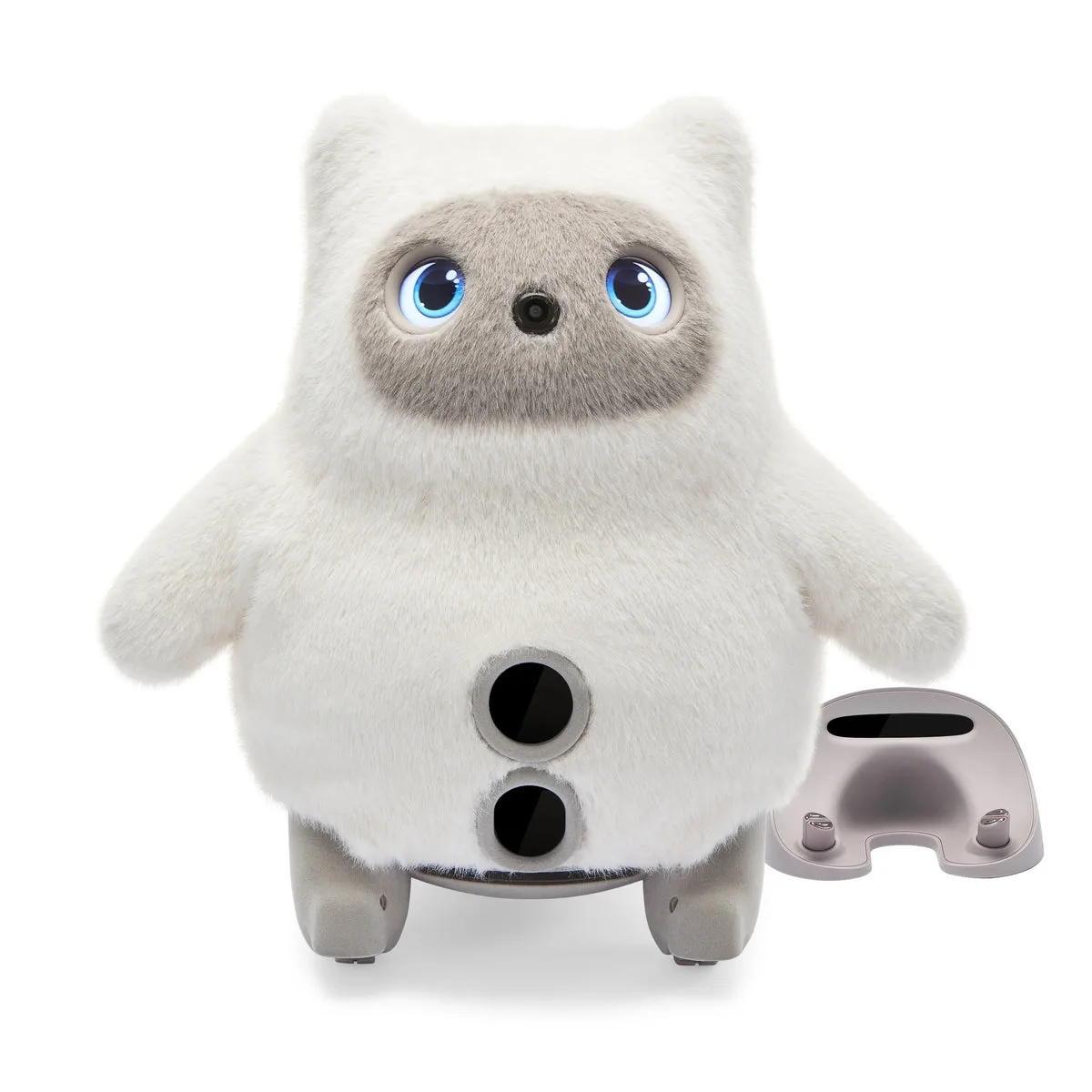
The short version: KATA Friends looks like a real new entry in the companion robot category, not a chore robot. Its strongest ideas are local intelligence, family memory, physical affection, and a lower price than LOVOT. Its biggest unknowns are independent testing, repair, battery life, long-term subscription costs, and what happens to memories if the service changes.
What is SwitchBot KATA Friends?
KATA Friends is SwitchBot's new AI pet line, with two character models: Noa and Niko. The official product page describes Noa as a white-fur model with gray features and Niko as a gray-fur model with a white face. The product schema lists KATA Friends at $699.00, while the selector copy on the same page shows Noa and Niko at $699.99. For buyers, the clean reading is "about $699" until checkout confirms the exact price.
The important part is not the fur color. It is the feature stack SwitchBot is claiming:
- On-device AI and offline operation. SwitchBot says KATA Friends has an on-device LLM and can keep responding without relying on the internet.
- Touch sensors. The product page mentions touch sensing in the ears, hands, tummy, and back.
- Voice, gesture, action, and emotion understanding. The examples include voice commands, beckoning, thumbs-up, heart signs, following when you stand, and mood recognition from cheerful or sad interaction.
- Face recognition and family memory. SwitchBot says KATA Friends remembers family members including parents, kids, and grandparents.
- Local photo storage. The official page says it can take photos and store up to 100,000 photos in 64GB of internal storage.
- Care plans. The product page presents Companion Care plans, including an Essential monthly option and Premium annual option.
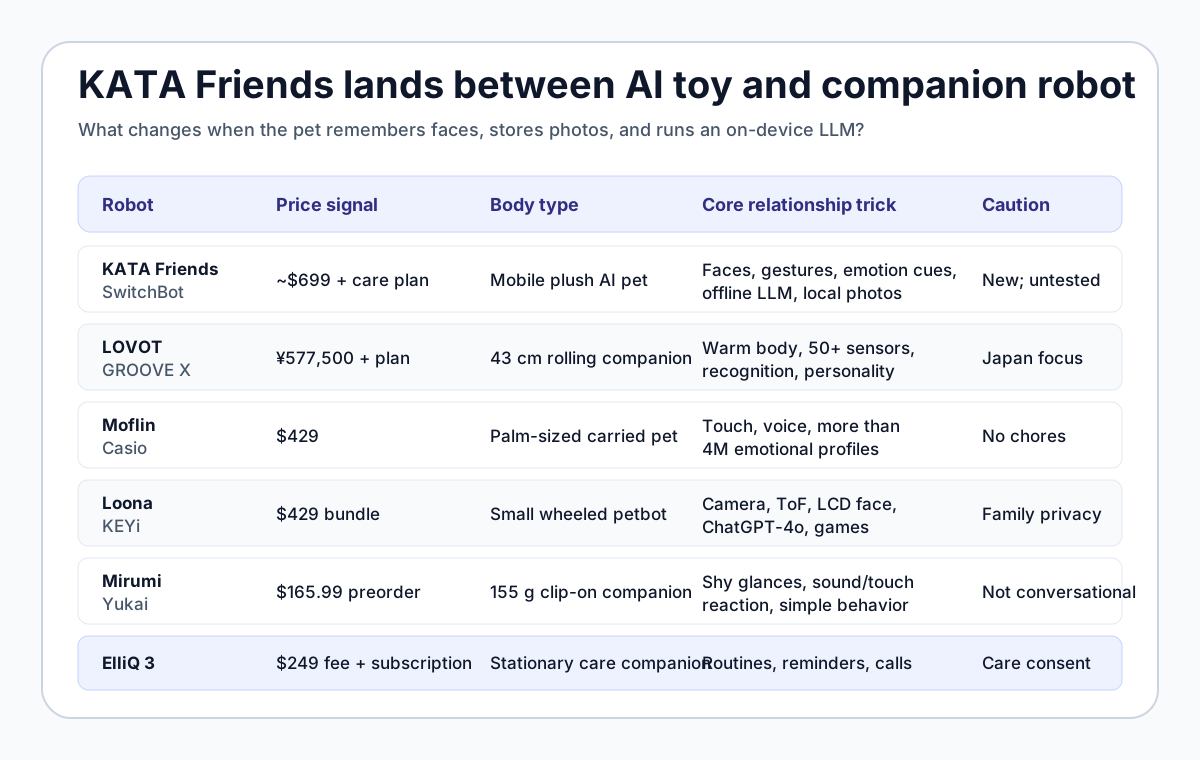
That is a very different product from a robot vacuum, smart speaker, or simple plush toy. It is closer to the emotional companion line that already includes LOVOT, Moflin, Loona, Mirumi, PARO, and ElliQ.
Why the on-device AI claim matters
Most companion robots become more intimate as they become more useful. A robot that remembers faces, reacts to touch, responds to gestures, takes photos, and learns interaction patterns is handling household context, not just commands. That is why the on-device AI claim matters.
If KATA Friends really can do its core relationship work locally, it addresses one of the biggest objections to AI pets: people do not want every family moment sent to the cloud just so a robot can act affectionate. Offline operation also matters for a portable pet. SwitchBot explicitly pitches use in the car, at the park, or near the sea, where a normal cloud assistant would be unreliable.
But "on-device" is not the same as "no account, no app, no plan, no updates, and no cloud ever." Buyers should separate the claims:
Question
Can it respond offline?
- What SwitchBot says
- The product page says the on-device AI does not rely on the internet.
- What still needs verification
- Which features still require app setup, activation, updates, or account checks?
Question
Does it store photos locally?
- What SwitchBot says
- Up to 100,000 photos in 64GB internal storage.
- What still needs verification
- Can owners export, delete, encrypt, or reset those photos easily?
Question
Does it remember faces?
- What SwitchBot says
- It recognizes and remembers family members' faces.
- What still needs verification
- How are guest faces handled, and how visible are consent controls?
Question
Does memory shape behavior?
- What SwitchBot says
- SwitchBot says behavior adapts based on memories of interactions.
- What still needs verification
- Can memory be edited, paused, transferred, or wiped before resale?
| Question | What SwitchBot says | What still needs verification |
|---|---|---|
| Can it respond offline? | The product page says the on-device AI does not rely on the internet. | Which features still require app setup, activation, updates, or account checks? |
| Does it store photos locally? | Up to 100,000 photos in 64GB internal storage. | Can owners export, delete, encrypt, or reset those photos easily? |
| Does it remember faces? | It recognizes and remembers family members' faces. | How are guest faces handled, and how visible are consent controls? |
| Does memory shape behavior? | SwitchBot says behavior adapts based on memories of interactions. | Can memory be edited, paused, transferred, or wiped before resale? |
This is the right direction for home robotics. It is also the point where a cute pet becomes a privacy device.
The price is not just the $699 robot
KATA Friends is priced like a premium gadget, but the service model is where the real cost can change. On the official product page, SwitchBot shows:
Item
KATA Friends hardware
- Official page signal
- About $699 for Noa or Niko
- Why it matters
- Lower than LOVOT, higher than Loona or Moflin
Item
Essential Plan
- Official page signal
- $14.99/month shown in product-page copy
- Why it matters
- Adds recurring cost after the initial purchase
Item
Premium Plan
- Official page signal
- $399.99/year shown as the recommended annual plan
- Why it matters
- Works out to about $33.33/month before any future changes
Item
One-Time Purchase Plan
- Official page signal
- $999.99 with AI/software included for life, plus first-year Premium benefits
- Why it matters
- More expensive up front, but clearer for people who dislike subscriptions
Item
Hardware only
- Official page signal
- The page includes a "Purchase KATA Friends Only" option
- Why it matters
- The same page also says a plan is required after the free trial or complimentary period ends
| Item | Official page signal | Why it matters |
|---|---|---|
| KATA Friends hardware | About $699 for Noa or Niko | Lower than LOVOT, higher than Loona or Moflin |
| Essential Plan | $14.99/month shown in product-page copy | Adds recurring cost after the initial purchase |
| Premium Plan | $399.99/year shown as the recommended annual plan | Works out to about $33.33/month before any future changes |
| One-Time Purchase Plan | $999.99 with AI/software included for life, plus first-year Premium benefits | More expensive up front, but clearer for people who dislike subscriptions |
| Hardware only | The page includes a "Purchase KATA Friends Only" option | The same page also says a plan is required after the free trial or complimentary period ends |
That last row is the one to read twice. If the full experience requires a care plan after a trial, KATA Friends is not really a simple $699 toy. It is a hardware-and-service companion. That may be acceptable if the software keeps improving, the memory system is transparent, and support is strong. It is a problem if owners discover that the charming parts are locked behind a plan they did not budget for.
This is not unique to SwitchBot. LOVOT also has a required care plan in Japan, and ElliQ 3 is explicitly a subscription-based older-adult companion. The lesson is broader: companion robots sell continuity, and continuity costs money.
KATA Friends vs LOVOT, Moflin, Loona, Mirumi, and ElliQ
The best way to judge KATA Friends is not "is it the smartest robot pet?" The better question is: which relationship job is it designed to do?
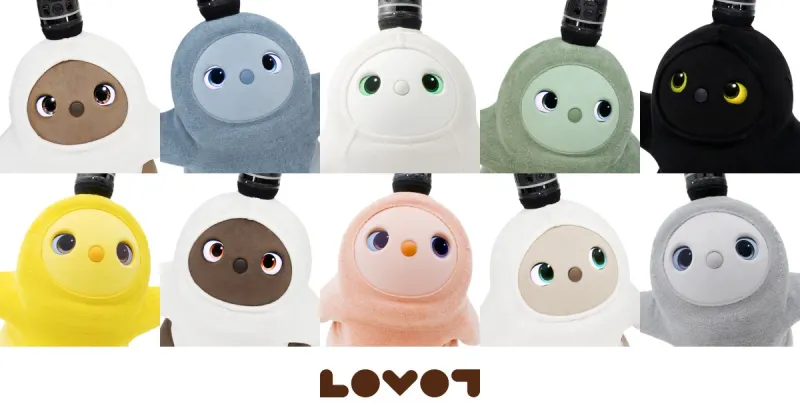
LOVOT is still the high-end emotional benchmark in the ui44 database. LOVOT 3.0 is listed at ¥577,500 in Japan, with a care plan from ¥9,900/month. It is 43 cm tall, weighs 4.6 kg, has over 50 sensors, uses a warm body temperature, returns to its nest, recognizes people, and is designed almost entirely around being loved. It is more physically robotic than KATA Friends appears to be, but it is also more expensive and Japan-focused.
Casio Moflin is the opposite end of the pet-robot spectrum. ui44 lists Moflin at $429, with a 260 g body, touch sensors, voice recognition, and more than 4 million possible emotional profiles. It is carried or placed nearby rather than navigating the house. If you want a soft, low-pressure emotional object, Moflin is simpler. If you want face memory, photos, gestures, and a more active social presence, KATA Friends is aiming higher.
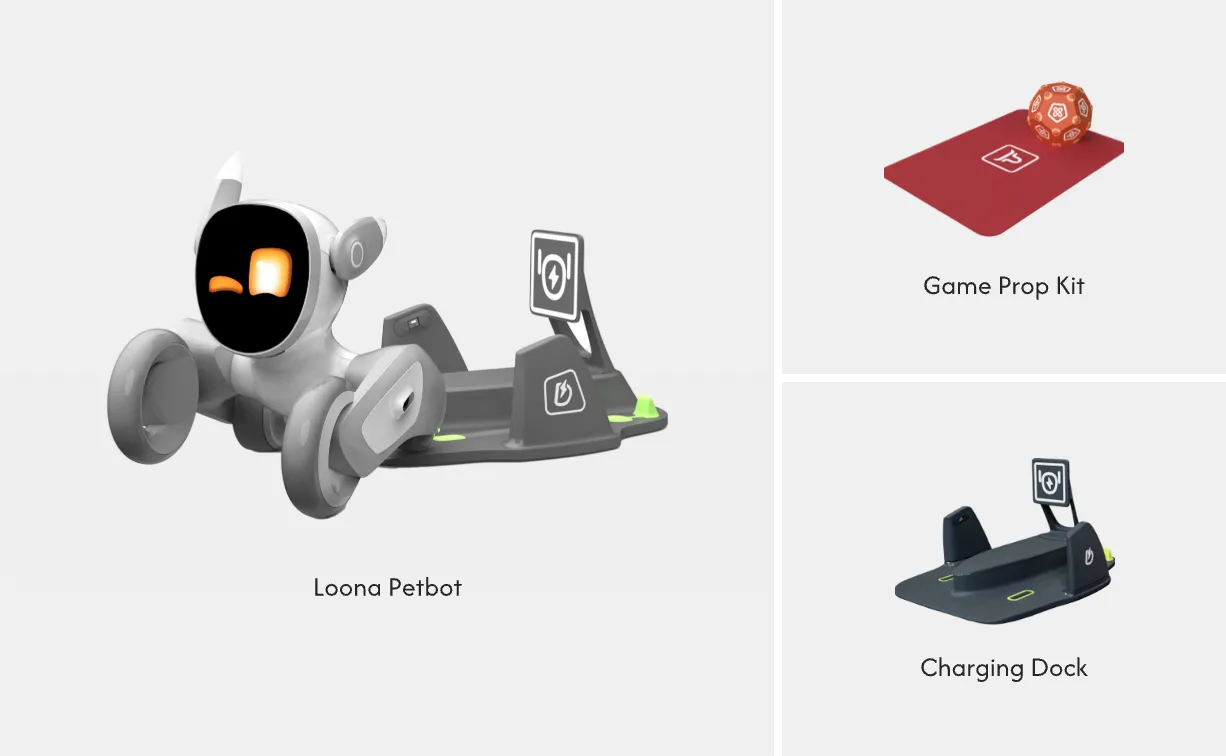
Loona is the closest current comparison for families. ui44 lists Loona at $429 for the current bundle, with a 17.3 cm, 1.1 kg wheeled body, a 720p camera, a 3D ToF sensor, a 4-mic array, an LCD face, auto-docking, games, programming, remote monitoring, and ChatGPT-4o integration. Loona feels more like an animated family petbot. KATA Friends looks less like a screen-faced robot and more like a plush emotional companion with local memory.
Mirumi is much smaller and intentionally less ambitious. ui44 lists the U.S. preorder at $165.99, with a 155 g clip-on body, about 8 hours of battery life, touch and sound sensing, and shy glance behavior. It is a social spark, not a household companion. KATA Friends is trying to be a relationship device.
ElliQ 3 is the most serious care-oriented comparison. It is not pet-like, but it is one of the few companion robots with real older-adult program deployment. ui44 tracks ElliQ's current pricing as a $249 lease initiation fee plus subscription options, with proactive conversation, medication reminders, wellness programs, video calling, and caregiver features. KATA Friends should not be treated as an ElliQ alternative for elder care unless SwitchBot provides equally clear safeguards, support, and care workflows.
PARO is another important boundary marker. PARO is an FDA Class II therapeutic baby-seal robot used in clinical and care settings. It is not a general AI pet, but it shows why supervised emotional robotics can be valuable when expectations are narrow and staff understand the role.
The privacy question is the product question
KATA Friends has three features that should make privacy-conscious buyers pause: face recognition, local photos, and memory-shaped behavior. Those features are not automatically bad. They may be exactly what makes an AI pet feel alive. But they need clear household rules.
Before buying, decide:
- Who is allowed to be remembered? Family members may opt in, but visitors, babysitters, cleaners, caregivers, and children's friends are different.
- Where do photos live? The official page says 64GB local storage and up to 100,000 photos. Owners should still know whether photos sync to an app, backup service, support tool, or account.
- How do you delete history? A companion robot that grows from interaction needs a simple memory reset and selective deletion path.
- What happens if the subscription ends? Does the robot keep basic local behavior, lose advanced personality, stop updates, or lose access to stored memories?
- What happens if the robot breaks? A pet-like robot is emotionally different from a dead light bulb. Repair, replacement, and memory transfer are part of the real product.
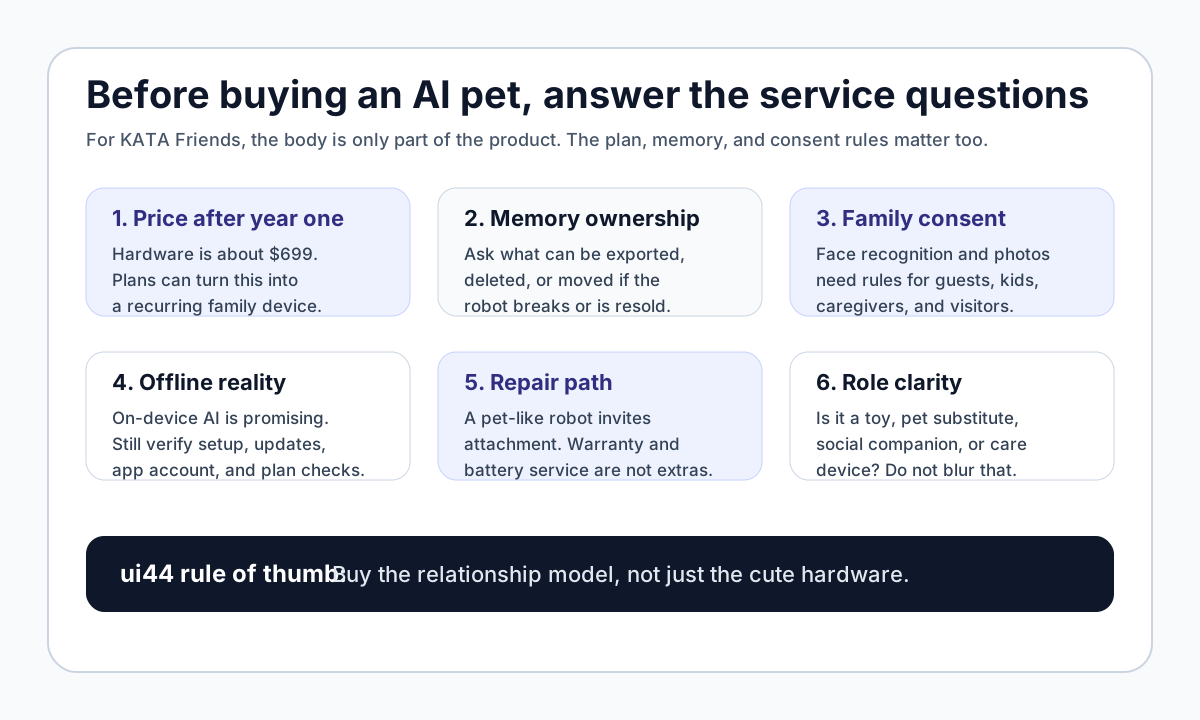
This is where KATA Friends could be better than many cloud-first companions if SwitchBot executes well. Local AI, local photo storage, and offline interaction are the right ingredients. The question is whether the user controls are as good as the marketing copy.
Who should consider KATA Friends?
KATA Friends makes the most sense if you want a companion robot for presence, affection, playful interaction, and household memory, not chores.
Consider it if:
- you want an AI pet but do not want a screen-first robot;
- you care about offline operation and on-device processing;
- you are comfortable setting rules around photos and face recognition;
- you are willing to pay for a service plan if the full experience requires it;
- you want something more expressive than Moflin or Mirumi but less costly than LOVOT.
Wait if:
- you need independent reviews before trusting battery life, navigation, or durability;
- you dislike subscriptions on principle;
- you need elder-care workflows, medication reminders, or caregiver reporting;
- you want a robot that can pick things up, clean, patrol, or operate smart-home devices directly;
- you cannot get clear answers about memory deletion, repair, and photo export.
That last point matters. The more emotionally convincing a robot is, the more important boring support details become.
Buyer checklist before preorder or purchase
Bottom line
SwitchBot KATA Friends is not the robot that makes your bed or clears the dinner table. It is a test of a different home-robot category: the AI pet that carries memory, affection, face recognition, photos, and personality in a soft body.
That category is real. LOVOT, Moflin, Loona, Mirumi, ElliQ, and PARO all show that companionship is not a side quest in home robotics. For many people, the first robot they bond with may be the one that greets them, reacts to touch, and remembers the household, not the one that performs a chore.
KATA Friends looks promising because it pushes the companion robot toward on-device AI and local memory. It also deserves scrutiny because relationship features are not harmless extras. They define the privacy, consent, repair, and subscription questions.
If SwitchBot proves the offline AI, gives owners strong memory controls, and keeps the care-plan economics clear, KATA Friends could be one of the more important AI pet robots of 2026. If those details stay fuzzy, it is safer to wait for reviews and treat the $699 price as only the beginning of the decision.
Related in the database
Use this article as a privacy verification workflow
Turn the article into a privacy verification pass grounded in the robots, manufacturers, and components it actually references.
SwitchBot KATA Friends: $699 AI Pet Robot Guide already points you toward 6 linked robots, 6 manufacturers, and 3 countries inside the ui44 database. That matters because strong buyer guidance is easier to apply when you can move immediately from a claim or warning into concrete product pages, manufacturer directories, component explainers, and country-level context instead of treating the article as an isolated opinion piece. The fastest next step is to turn the article into a shortlist workflow: open the linked robot pages, verify which specs are actually published for those models, then compare the surrounding manufacturer and component context before you decide whether the underlying claim changes your buying plan.
For this topic, the useful discipline is to separate the editorial lesson from the catalog evidence. The article gives you the framing, but the robot pages tell you what each product actually ships with today: sensor stack, connectivity methods, listed price, release timing, category, and support-relevant compatibility notes. The manufacturer pages then show whether you are looking at a one-off launch, a broader lineup pattern, or a company that spans multiple categories. That layered workflow reduces the risk of buying on a single marketing phrase or a single support FAQ.
Use the robot pages to confirm which products actually expose cameras, microphones, Wi-Fi, or voice systems, then use the manufacturer pages to decide how much of the privacy question seems product-specific versus brand-wide. On this route cluster, LOVOT, ElliQ 3, and Moflin form the fastest reality check. If you want a quick working shortlist, open Compare LOVOT, ElliQ 3, and Moflin next, then keep this article open as the reasoning layer while you compare structured data side by side.
Practical Takeaway
Every robot, manufacturer, category, component, and country reference below resolves to a real ui44 page, keeping the follow-up path grounded in database records rather than generic advice.
Suggested next steps in ui44
- Open LOVOT and note the listed sensors, connectivity methods, and voice stack before you interpret any policy claim.
- Cross-check the wider brand context on GROOVE X so you can see whether the privacy question touches one model or a broader lineup.
- Use the linked component pages to confirm how common the relevant sensors and connectivity layers are across the database.
- Keep a short note of which policy layers you checked, which device features are actually present on the robot page, and which items still depend on region- or app-level confirmation.
- Finish with Compare LOVOT, ElliQ 3, and Moflin so the policy reading sits next to structured product data.
Robot profiles worth opening next
Use the linked product pages as the evidence layer
The linked robot pages are where this article becomes operational. Instead of asking whether the headline is interesting, use the robot entries to inspect the actual mix of sensors, connectivity options, batteries, pricing, release timing, and stated capabilities attached to the products mentioned in the article. That is the easiest way to see whether the warning or opportunity described here affects one product family, a specific design pattern, or an entire buying lane.
LOVOT is tracked on ui44 as a available companions robot from GROOVE X. The database currently records a listed price of ¥577,500, a release date of 2019, 30-45 minutes active, then returns to nest battery life, 15-30 minutes (on charging nest) charging time, and a published stack that includes Horn Top Camera (half-sphere), Horn Front Camera, and Depth Camera plus Wi-Fi and Bluetooth.
For privacy-focused reading, this page matters because it shows the concrete device surface behind the policy discussion. Use it to verify whether LOVOT combines sensors and connectivity in a way that could change the in-home data footprint, and compare the listed capabilities such as Emotional Companionship, Person Recognition, and Touch Response (full body sensors) with any cloud, app, or voice layers.
ElliQ 3
Intuition Robotics · Companions · Available
ElliQ 3 is tracked on ui44 as a available companions robot from Intuition Robotics. The database currently records a listed price of Price TBA, a release date of 2024-01, Mains powered battery life, N/A (plugged in) charging time, and a published stack that includes 4-mic array, 12 MP camera for images, and 1080p HD video at 30 fps with 120° horizontal FoV plus Wi-Fi 802.11b/g/n/ac (2.4 GHz and 5 GHz) and Bluetooth 5+.
For privacy-focused reading, this page matters because it shows the concrete device surface behind the policy discussion. Use it to verify whether ElliQ 3 combines sensors and connectivity in a way that could change the in-home data footprint, and compare the listed capabilities such as Proactive Conversation, Medication Reminders, and Health & Pain Tracking with any cloud, app, or voice layers, including ElliQ Voice AI.
Moflin is tracked on ui44 as a available companions robot from Casio. The database currently records a listed price of $429, a release date of 2025-10-01, Up to 5 hours battery life, Approx. 3.5 hours charging time, and a published stack that includes Microphone, Illuminance sensor, and Touch sensors plus its listed connectivity stack.
For privacy-focused reading, this page matters because it shows the concrete device surface behind the policy discussion. Use it to verify whether Moflin combines sensors and connectivity in a way that could change the in-home data footprint, and compare the listed capabilities such as Emotional companionship, Touch response, and Voice recognition with any cloud, app, or voice layers.
Loona is tracked on ui44 as a available companions robot from KEYi Tech. The database currently records a listed price of $442, a release date of 2023, 2 hours continuous playtime; 1350 mAh, 11.1 V lithium-ion rechargeable battery battery life, Not officially disclosed charging time, and a published stack that includes 3D Time-of-Flight (ToF) Sensor, 720p RGB Camera, and Touch Sensor plus Wi-Fi (Dual-band 2.4G/5.8G, 802.11a/b/g/n) and USB Type-C (charging).
For privacy-focused reading, this page matters because it shows the concrete device surface behind the policy discussion. Use it to verify whether Loona combines sensors and connectivity in a way that could change the in-home data footprint, and compare the listed capabilities such as Face Recognition, Voice Commands, and Emotion Expression (LCD face) with any cloud, app, or voice layers.
Mirumi
Yukai Engineering · Companions · Available
Mirumi is tracked on ui44 as a available companions robot from Yukai Engineering. The database currently records a listed price of ¥19,800, a release date of 2026-04-23, Approximately 8 hours battery life, Approximately 2 hours charging time, and a published stack that includes Touch Sensor (head) and Microphone (sound/voice response) plus USB-C (charging).
For privacy-focused reading, this page matters because it shows the concrete device surface behind the policy discussion. Use it to verify whether Mirumi combines sensors and connectivity in a way that could change the in-home data footprint, and compare the listed capabilities such as Shy Glance and Head-Turn Reactions, Sound and Voice Response, and Touch Response with any cloud, app, or voice layers.
Manufacturer context behind the article
Check whether this is one product story or a broader company pattern
Manufacturer pages add the privacy context that individual product pages cannot show on their own. They help you check whether cameras, microphones, cloud accounts, app controls, and policy assumptions appear across a broader lineup or stay tied to one specific product story.
GROOVE X
ui44 currently tracks 1 robot from GROOVE X across 1 category. The company is grouped under Japan, and the current catalog footprint on ui44 includes LOVOT.
That wider brand context matters because privacy questions rarely stop at one FAQ page. A manufacturer route helps you see whether the article is centered on one premium model or on a company that has several relevant products and therefore more than one place where the same policy or app assumptions might matter. The category mix here currently points toward Companions as the most useful next route if you want to see whether this article reflects a wider pattern inside the brand.
Intuition Robotics
ui44 currently tracks 1 robot from Intuition Robotics across 1 category. The company is grouped under Israel, and the current catalog footprint on ui44 includes ElliQ 3.
That wider brand context matters because privacy questions rarely stop at one FAQ page. A manufacturer route helps you see whether the article is centered on one premium model or on a company that has several relevant products and therefore more than one place where the same policy or app assumptions might matter. The category mix here currently points toward Companions as the most useful next route if you want to see whether this article reflects a wider pattern inside the brand.
Casio
ui44 currently tracks 1 robot from Casio across 1 category. The company is grouped under Japan, and the current catalog footprint on ui44 includes Moflin.
That wider brand context matters because privacy questions rarely stop at one FAQ page. A manufacturer route helps you see whether the article is centered on one premium model or on a company that has several relevant products and therefore more than one place where the same policy or app assumptions might matter. The category mix here currently points toward Companions as the most useful next route if you want to see whether this article reflects a wider pattern inside the brand.
KEYi Tech
ui44 currently tracks 2 robots from KEYi Tech across 1 category. The company is grouped under USA, and the current catalog footprint on ui44 includes Loona, Loona DeskMate.
That wider brand context matters because privacy questions rarely stop at one FAQ page. A manufacturer route helps you see whether the article is centered on one premium model or on a company that has several relevant products and therefore more than one place where the same policy or app assumptions might matter. The category mix here currently points toward Companions as the most useful next route if you want to see whether this article reflects a wider pattern inside the brand.
Broaden the scan without leaving the database
Categories, components, and countries add the wider context
Category framing
Category pages are useful when the article touches a buying pattern that shows up across brands. A category route helps you confirm whether the linked products sit in a narrow niche or whether the same question should be tested across a larger field of alternatives.
Companions
The Companions category page currently groups 53 tracked robots from 48 manufacturers. ui44 describes this lane as: Social robots, robot pets, and elderly-care companions designed for emotional connection and everyday support at home.
That makes the category route a practical follow-up when you want to check whether the products linked in this article are typical for the lane or whether they sit at one edge of the market. Useful starting examples currently include PARO, Abi, Next-Generation Companion Robot.
Country and ecosystem context
Country pages give extra context when support practices, launch sequencing, regulatory posture, or manufacturer mix matter. They are not a substitute for model-level verification, but they do help you see which ecosystems cluster together and which manufacturers sit in the same regional field when you broaden the search beyond the article headline.
Japan
The Japan route currently groups 26 tracked robots from 17 manufacturers in ui44. That gives you a useful regional lens when the article points toward support practices, launch sequencing, or brand clusters that may share similar ecosystem assumptions.
On the current route, manufacturers like AIST, SoftBank Robotics, Toyota make the page a good way to broaden the scan without losing the regional context that often shapes availability, documentation style, and adjacent alternatives.
Israel
The Israel route currently groups 5 tracked robots from 5 manufacturers in ui44. That gives you a useful regional lens when the article points toward support practices, launch sequencing, or brand clusters that may share similar ecosystem assumptions.
On the current route, manufacturers like Flytrex, Intuition Robotics, Maytronics make the page a good way to broaden the scan without losing the regional context that often shapes availability, documentation style, and adjacent alternatives.
USA
The USA route currently groups 89 tracked robots from 69 manufacturers in ui44. That gives you a useful regional lens when the article points toward support practices, launch sequencing, or brand clusters that may share similar ecosystem assumptions.
On the current route, manufacturers like Faraday Future, iRobot, Boston Dynamics make the page a good way to broaden the scan without losing the regional context that often shapes availability, documentation style, and adjacent alternatives.
Questions to answer before you move from reading to buying
A follow-up FAQ built from the entities already linked in this article
Frequently Asked Questions
Which page should I open first after reading “SwitchBot KATA Friends: $699 AI Pet Robot Guide”?
Start with LOVOT. That gives you a concrete product anchor for the article’s main claim. From there, branch into the manufacturer and component pages so you can tell whether the article is describing one specific model, a repeated brand pattern, or a wider technology issue that affects multiple shortlist options.
How do the manufacturer pages change the buying decision?
GROOVE X help you zoom out from one article and one product. On ui44 they show lineup breadth, category spread, and the neighboring robots tied to the same company. That context is useful when you are deciding whether a risk belongs to a single model, whether it shows up across a brand’s portfolio, and whether you should keep looking at alternatives before committing.
When should I switch from reading to side-by-side comparison?
Move into Compare LOVOT, ElliQ 3, and Moflin as soon as you understand the article’s main warning or promise. The article explains what to watch for, but the compare view is where you can check whether price, status, battery life, connectivity, sensors, and category fit still make the robot a good match for your own home and budget.
Where to go next in ui44
Keep the research chain inside the database
If you want to keep going, these follow-on pages give you the cleanest expansion path from article to research session. Open the comparison route first if you are deciding between products today. Open the manufacturer, category, and component routes if you still need to understand the broader pattern behind the claim.
Written by
ui44 Team
Published May 13, 2026
Share this article
Open a plain share link on X or Bluesky. No embeds, no widgets, no cookie baggage.