The short version: Roomba can survive, but probably not by pretending it is still the default robot vacuum choice. The reset only works if iRobot turns its reputation for reliability, mapping, privacy, and support into products that feel sharper than the spec-sheet monsters around them.
What actually happened to iRobot?
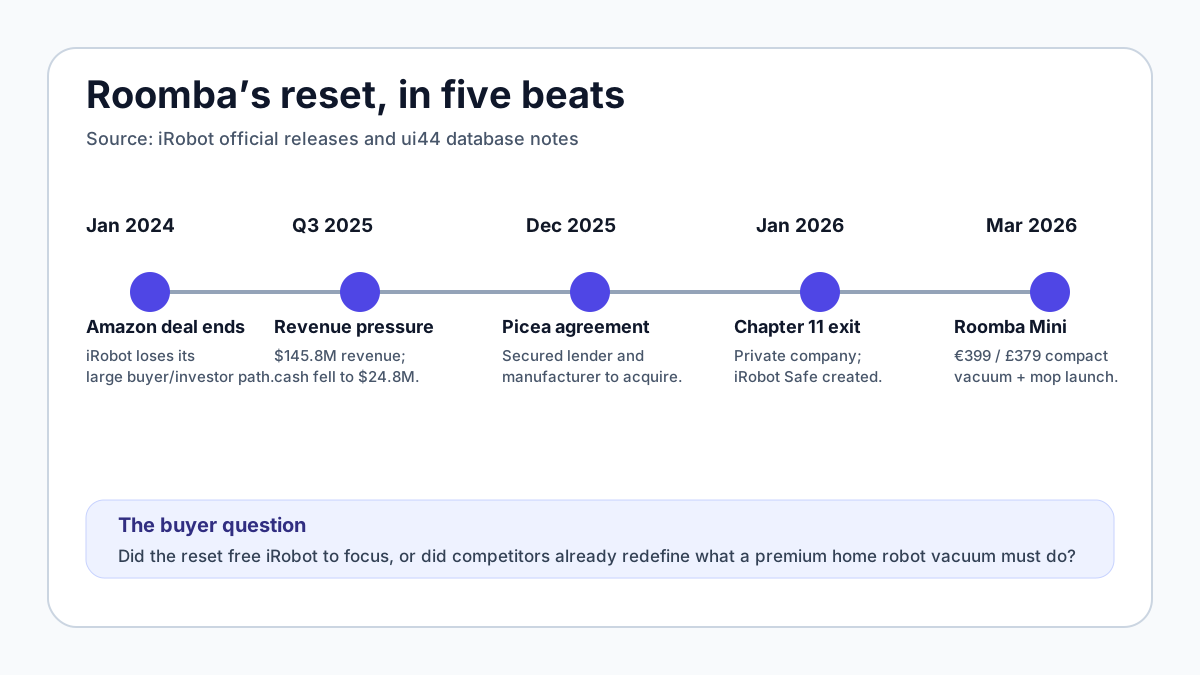
The sequence is unusually clear because iRobot documented the major steps in public releases. In January 2024, the planned Amazon acquisition was terminated after the companies said there was no path to regulatory approval in the European Union. That left iRobot standing alone after a long merger process, at a time when premium robot vacuum competition was accelerating.
By the third quarter of 2025, the pressure was visible in the numbers. iRobot reported $145.8 million of Q3 revenue, down from $193.4 million a year earlier. The company said revenue was hurt by market headwinds, production delays, and shipping disruptions. Cash and cash equivalents fell to $24.8 million, compared with $40.6 million at the end of the prior quarter.
iRobot then announced a strategic transaction in December 2025. Picea, described by iRobot as both its secured lender and primary contract manufacturer, would acquire the company through a pre-packaged Chapter 11 process. In January 2026, iRobot said the transaction was complete: Picea acquired 100% of the equity, iRobot emerged as a private company, and the company created a separate U.S. subsidiary called iRobot Safe for data protection and governance.
That is not a normal product-cycle hiccup. It is a balance-sheet reset, a change of ownership, and a trust reset all at once.
The first post-bankruptcy signal: Roomba Mini
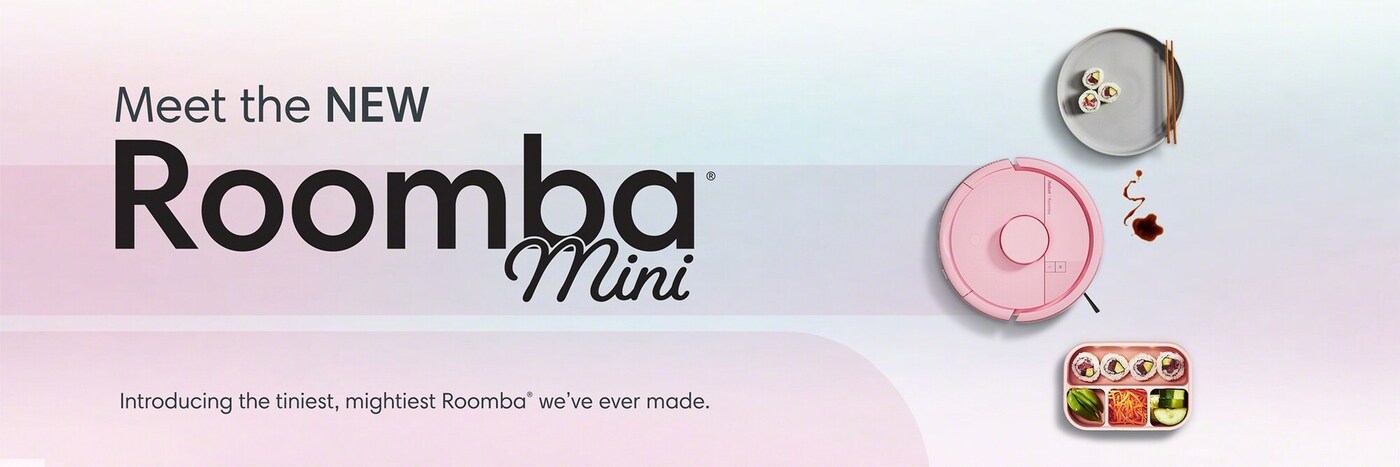
The first genuinely interesting product signal after the transaction is Roomba Mini. It is not a flagship. That is the point.
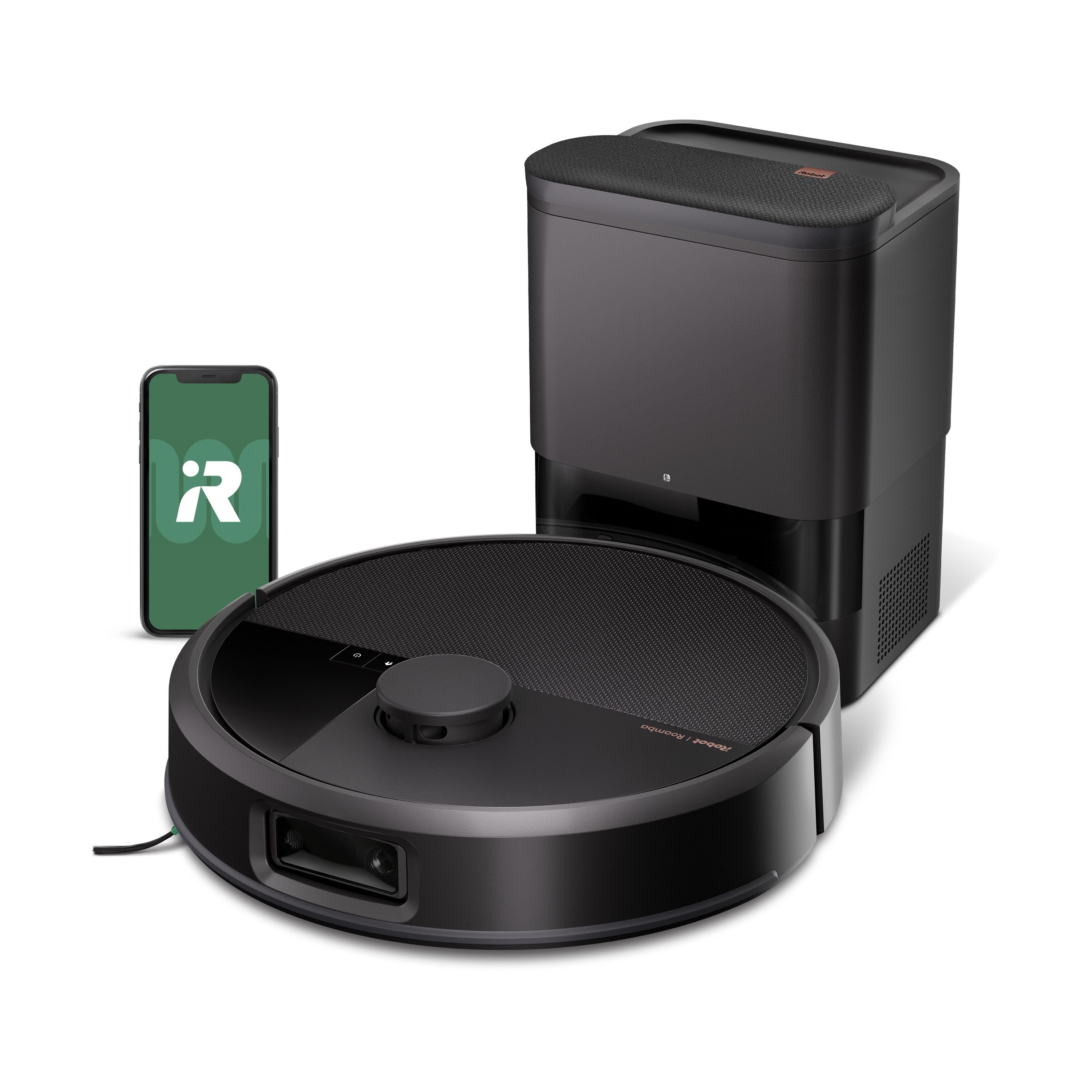
Roomba Mini launched in Japan first, then in the UK and Europe in March 2026 at €399 and £379. In the ui44 database, the model is listed at 24.5 cm in diameter, 9.2 cm tall, and 2 kg, with ClearView LiDAR, Carpet Detect, voice-assistant support, up to three floor plans, and an AutoEmpty Dock rated for up to 90 days of debris storage. It can vacuum or mop, though not at the same time; the mopping mode uses disposable pads.
That is a very different bet from chasing the biggest suction number. Roomba Mini says iRobot sees a gap in smaller homes, apartments, tight furniture layouts, and buyers who want a low-maintenance robot without a giant base station dominating the room. If iRobot can make compact robots feel dependable, quiet, and easy to own, that is a defensible lane.
But Roomba Mini also shows the limits of the reset. It is Europe/Japan-focused for now, uses disposable mop pads, and does not try to match the most advanced roller-mop or hot-water dock systems from rivals. It is a smart product idea, not proof that Roomba has regained the premium crown.
Roomba's current lineup is coherent, but uneven
The ui44 database now shows an iRobot lineup with three different stories.
Robot
- ui44 price/status note
- €399, available in Europe
- What it tells buyers
- Compact reset product with LiDAR and AutoEmpty
Robot
- ui44 price/status note
- $499.99 sale price, $899.99 list
- What it tells buyers
- Vacuum-only value play with LiDAR and AI camera avoidance
Robot
- ui44 price/status note
- $1,399.99, in stock
- What it tells buyers
- Premium vacuum/mop with AutoWash Dock and Matter
Robot
- ui44 price/status note
- $899.99 schema price, out of stock on iRobot US page when checked
- What it tells buyers
- Older premium vacuum-only Roomba with PrecisionVision
Robot
- ui44 price/status note
- $729.99, select-retailer availability
- What it tells buyers
- Midrange vacuum/mop with swappable bin
| Robot | ui44 price/status note | What it tells buyers |
|---|---|---|
| Roomba Mini | €399, available in Europe | Compact reset product with LiDAR and AutoEmpty |
| Roomba Max 705 Vac | $499.99 sale price, $899.99 list | Vacuum-only value play with LiDAR and AI camera avoidance |
| Roomba Combo 10 Max | $1,399.99, in stock | Premium vacuum/mop with AutoWash Dock and Matter |
| Roomba j9+ | $899.99 schema price, out of stock on iRobot US page when checked | Older premium vacuum-only Roomba with PrecisionVision |
| Roomba Combo j5+ | $729.99, select-retailer availability | Midrange vacuum/mop with swappable bin |
The strongest Roomba argument is still ownership experience. The Combo 10 Max has the kind of dock buyers now expect: it can empty debris, refill water, wash and dry the mop pad, and self-clean. It also supports Enhanced Dirt Detect, PrecisionVision obstacle avoidance, Dirt Detective room prioritization, voice control, Matter, and Apple Home integration.
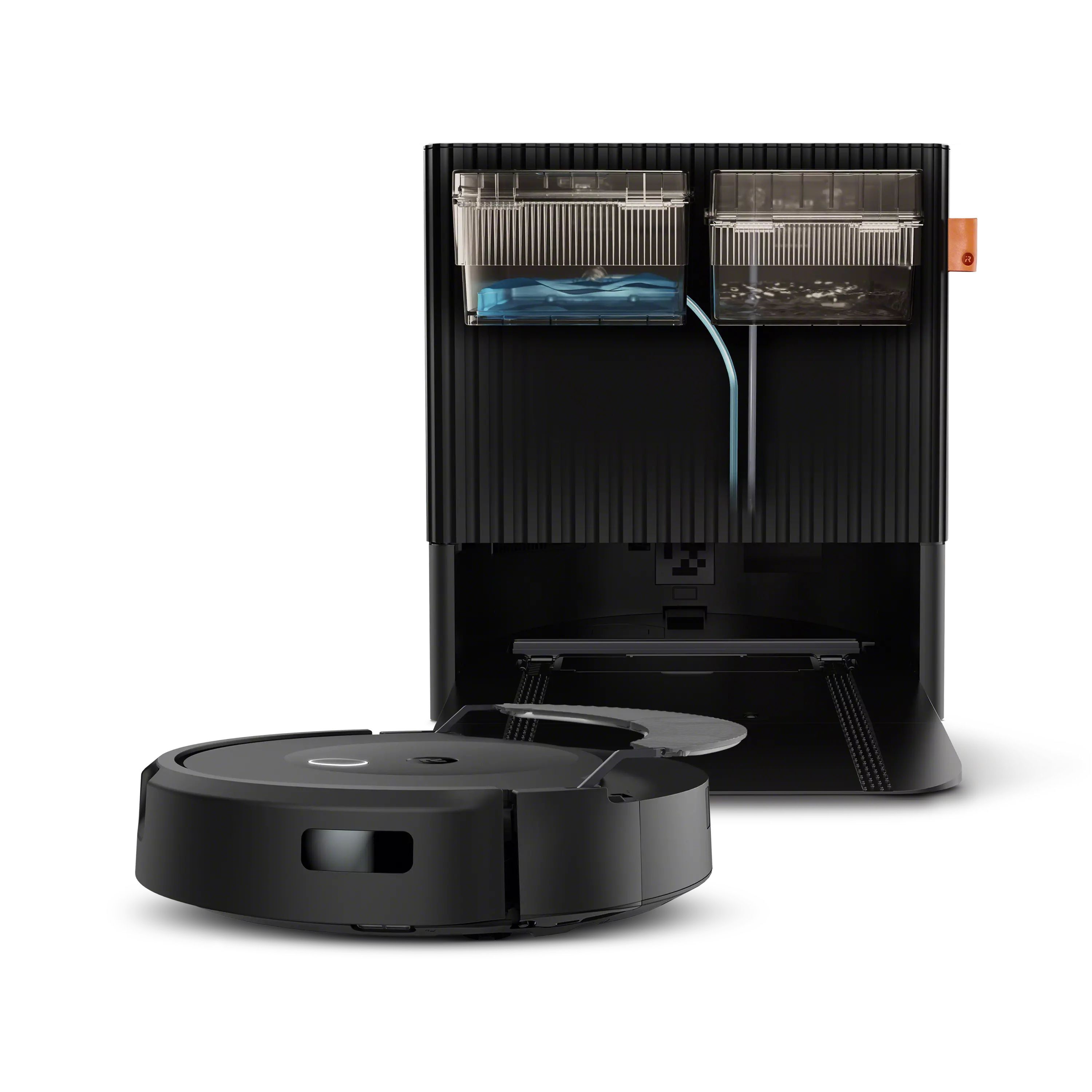
The Roomba Max 705 Vac is more interesting than its vacuum-only label suggests. The database lists a $499.99 sale price against an $899.99 list price, with ClearView Pro LiDAR, PrecisionVision AI camera avoidance, Dirt Detect repeat passes, anti-tangle dual rubber brushes, Matter, and an AutoEmpty Dock rated for up to 75 days of debris storage. If that price holds, Roomba has a credible value argument.
The weakness is that iRobot's lineup no longer feels like the unquestioned technology ceiling. Some models are out of stock or retailer-dependent. The newest product is clever but small. The premium model is solid, but rivals are using the same price band to sell more dramatic hardware.
The rival problem is real
This is the part that makes the survival question hard. Roomba is not just competing with cheap generic vacuums. It is competing with companies treating the robot vacuum as a flagship home robotics platform.
Roborock Saros 20, for example, is listed in ui44 at $1,599.99 with 36,000 Pa suction, StarSight 2.0 navigation, recognition for more than 300 object types, and threshold crossing up to about 8.8 cm. Dreame X60 Max Ultra Complete is listed at $1,699.99 with 35,000 Pa suction, a 79.5 mm ultra-slim body, retractable navigation, dual robotic legs, automatic mop removal, and a 212°F dock cleaning system.
Ecovacs Deebot X12 OmniCyclone takes a different route: $1,249, a bagless PureCyclone 2.0 dock, a 27 cm roller mop, FocusJet stain pre-dissolving, and AGENT YIKO 2.0 cleaning plans. MOVA Mobius 60 is listed at $1,299 with MopSwap pads, 30,000 Pa suction, retractable legs for up to 80 mm threshold crossing, and 100°C hot-water mop washing.
Suction numbers are not perfectly comparable across brands, so buyers should not treat Pa ratings as a scoreboard. But the broader pattern is real: rivals are making the premium robot vacuum feel more mechanical, more self-maintaining, and more autonomous every year.
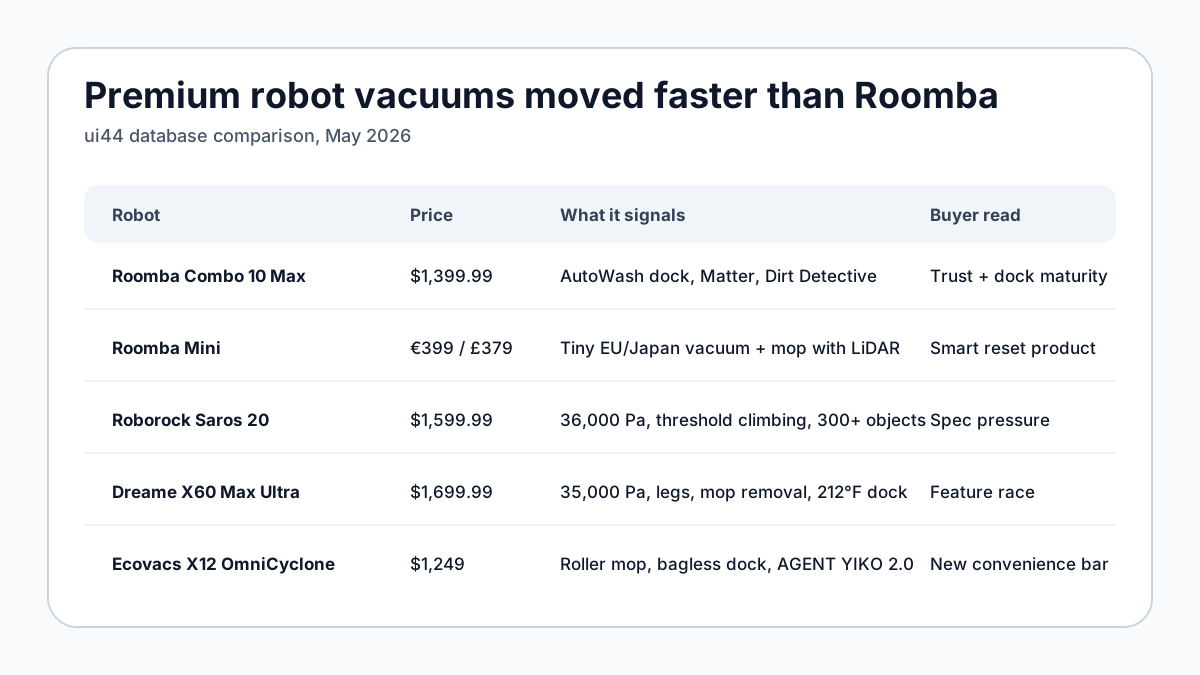
That is why a normal comeback story is not enough. Roomba does not merely need new ownership. It needs a clearer reason to choose iRobot instead of the most feature-rich Roborock, Dreame, Ecovacs, or MOVA model at the same price.
The trust question is now part of the product
The iRobot Safe subsidiary is one of the most important details in the January 2026 announcement. Robot vacuums are not just appliances. They map homes, see floor plans, touch voice assistants, sometimes use cameras, and increasingly act as sensors inside private spaces.
If iRobot wants to defend the Roomba brand, data governance cannot be hidden in legal copy. It has to become a buyer-visible promise: clear account controls, local-friendly defaults where possible, transparent camera handling, long app support windows, and plain-language explanations of what happens when ownership, cloud services, or regional rules change.
This is where iRobot may still have an opening. A lot of buyers do not actually want the wildest robot vacuum. They want a robot they can trust near pets, children, cords, rugs, stairs, and private rooms. If Roomba becomes the boringly reliable, privacy-clear, easy-service option, that is not a bad brand position. It is just less glamorous than being the spec leader.
What buyers should do now
If you already own a recent Roomba and it works, there is no immediate reason to panic. The company completed the Chapter 11 process, continues to operate from its U.S. base, and is still launching products. App functionality and product support were explicitly part of iRobot's continuity messaging during the restructuring.
If you are buying a new robot vacuum, be more selective:
- Do not pay extra only for the Roomba name. Compare the actual dock, mopping system, object avoidance, app support, and return policy.
- Consider Roomba Mini if you live in a smaller European or Japanese home. Its compact size is the most distinctive new iRobot idea.
- Consider Roomba Max 705 Vac if the discounted price is real and you want a vacuum-first robot. It looks stronger as a value pick than as an $899 flagship.
- Consider Combo 10 Max if you prioritize Roomba's dock experience, Matter, and familiar app flow. At $1,399.99, it must be judged against very capable rivals.
- Use the robot's support story as part of the price. A cheaper or flashier robot is not a bargain if consumables, repairs, app updates, or warranty handling become painful.
For side-by-side specs, use the ui44 comparison tool and check the Cleaning category rather than relying on a single launch headline.
So, can Roomba survive?
Yes, but the comeback has to be more specific than nostalgia.
iRobot still has one of the strongest names in home robotics. It has sold millions of robots worldwide, has deep experience with household edge cases, a recognizable app and accessory ecosystem, and a post-bankruptcy owner that already knows the manufacturing side of robot vacuums. The launch of Roomba Mini suggests there is still product imagination inside the company.
The risk is that the premium market has changed faster than Roomba's identity. A flagship robot vacuum in 2026 is expected to wash itself, avoid more objects, handle hair, mop intelligently, cross awkward thresholds, integrate with smart homes, and explain its privacy posture. Roomba can still win buyers, but it has to win them deliberately.
The brand that made robot vacuums mainstream does not need to be the loudest spec sheet. It does need to be the robot people trust enough to keep in their homes after the headlines fade.
Related in the database
Use this article as a privacy verification workflow
Turn the article into a privacy verification pass grounded in the robots, manufacturers, and components it actually references.
iRobot After Bankruptcy: Can Roomba Survive? already points you toward 9 linked robots, 5 manufacturers, and 2 countries inside the ui44 database. That matters because strong buyer guidance is easier to apply when you can move immediately from a claim or warning into concrete product pages, manufacturer directories, component explainers, and country-level context instead of treating the article as an isolated opinion piece. The fastest next step is to turn the article into a shortlist workflow: open the linked robot pages, verify which specs are actually published for those models, then compare the surrounding manufacturer and component context before you decide whether the underlying claim changes your buying plan.
For this topic, the useful discipline is to separate the editorial lesson from the catalog evidence. The article gives you the framing, but the robot pages tell you what each product actually ships with today: sensor stack, connectivity methods, listed price, release timing, category, and support-relevant compatibility notes. The manufacturer pages then show whether you are looking at a one-off launch, a broader lineup pattern, or a company that spans multiple categories. That layered workflow reduces the risk of buying on a single marketing phrase or a single support FAQ.
Use the robot pages to confirm which products actually expose cameras, microphones, Wi-Fi, or voice systems, then use the manufacturer pages to decide how much of the privacy question seems product-specific versus brand-wide. On this route cluster, Roomba Mini, Roomba Combo 10 Max, and Roomba Max 705 Vac form the fastest reality check. If you want a quick working shortlist, open Compare Roomba Mini, Roomba Combo 10 Max, and Roomba Max 705 Vac next, then keep this article open as the reasoning layer while you compare structured data side by side.
Practical Takeaway
Every robot, manufacturer, category, component, and country reference below resolves to a real ui44 page, keeping the follow-up path grounded in database records rather than generic advice.
Suggested next steps in ui44
- Open Roomba Mini and note the listed sensors, connectivity methods, and voice stack before you interpret any policy claim.
- Cross-check the wider brand context on iRobot so you can see whether the privacy question touches one model or a broader lineup.
- Use the linked component pages to confirm how common the relevant sensors and connectivity layers are across the database.
- Keep a short note of which policy layers you checked, which device features are actually present on the robot page, and which items still depend on region- or app-level confirmation.
- Finish with Compare Roomba Mini, Roomba Combo 10 Max, and Roomba Max 705 Vac so the policy reading sits next to structured product data.
Robot profiles worth opening next
Use the linked product pages as the evidence layer
The linked robot pages are where this article becomes operational. Instead of asking whether the headline is interesting, use the robot entries to inspect the actual mix of sensors, connectivity options, batteries, pricing, release timing, and stated capabilities attached to the products mentioned in the article. That is the easiest way to see whether the warning or opportunity described here affects one product family, a specific design pattern, or an entire buying lane.
Roomba Mini
iRobot · Cleaning · Available
Roomba Mini is tracked on ui44 as a available cleaning robot from iRobot. The database currently records a listed price of €299, a release date of 2026-03, Not officially disclosed battery life, Automatically recharges via AutoEmpty Dock charging time, and a published stack that includes ClearView LiDAR and Carpet Detect sensor plus Wi-Fi and Roomba Home App.
For privacy-focused reading, this page matters because it shows the concrete device surface behind the policy discussion. Use it to verify whether Roomba Mini combines sensors and connectivity in a way that could change the in-home data footprint, and compare the listed capabilities such as Vacuum or Mop (switchable, not simultaneous), 70x suction power vs Roomba 600 series, and Single flexible bristle brush + edge-sweeping brush with any cloud, app, or voice layers, including Amazon Alexa and Google Assistant.
Roomba Combo 10 Max
iRobot · Cleaning · Available
Roomba Combo 10 Max is tracked on ui44 as a available cleaning robot from iRobot. The database currently records a listed price of $1,400, a release date of 2024-07, Not officially disclosed battery life, Automatically recharges via AutoWash Dock charging time, and a published stack that includes Camera, Detection Sensors, and PrecisionVision Navigation plus Wi-Fi and iRobot Home App.
For privacy-focused reading, this page matters because it shows the concrete device surface behind the policy discussion. Use it to verify whether Roomba Combo 10 Max combines sensors and connectivity in a way that could change the in-home data footprint, and compare the listed capabilities such as Vacuum + Mop (2-in-1), Cleaning modes: Vacuum only, Mop only, or Vacuum & Mop simultaneously, and AutoWash Dock (empty, refill, wash, dry, self-clean) with any cloud, app, or voice layers, including Amazon Alexa and Google Assistant.
Roomba Max 705 Vac
iRobot · Cleaning · Available
Roomba Max 705 Vac is tracked on ui44 as a available cleaning robot from iRobot. The database currently records a listed price of $500, a release date of 2025-04, Not officially disclosed battery life, Automatically recharges via dock charging time, and a published stack that includes ClearView Pro LiDAR, PrecisionVision AI camera system, and Cliff sensors plus Wi-Fi and Roomba Home App.
For privacy-focused reading, this page matters because it shows the concrete device surface behind the policy discussion. Use it to verify whether Roomba Max 705 Vac combines sensors and connectivity in a way that could change the in-home data footprint, and compare the listed capabilities such as Vacuum-only cleaning, 180x power-lifting suction (iRobot reference baseline), and Dual anti-tangle rubber brushes with any cloud, app, or voice layers, including Amazon Alexa and Google Assistant.
Roomba j9+
iRobot · Cleaning · Available
Roomba j9+ is tracked on ui44 as a available cleaning robot from iRobot. The database currently records a listed price of $900, a release date of 2023-09, Up to 120 minutes (Li-ion) battery life, ~3 hours charging time, and a published stack that includes PrecisionVision Camera (front-facing), Cliff Sensors, and Bump Sensors plus Wi-Fi (2.4 GHz & 5 GHz) and Bluetooth.
For privacy-focused reading, this page matters because it shows the concrete device surface behind the policy discussion. Use it to verify whether Roomba j9+ combines sensors and connectivity in a way that could change the in-home data footprint, and compare the listed capabilities such as 3-Stage Cleaning System, 100% Stronger Power-Lifting Suction, and Dual Multi-Surface Rubber Brushes with any cloud, app, or voice layers, including Amazon Alexa and Google Assistant.
Roomba Combo j5+
iRobot · Cleaning · Available
Roomba Combo j5+ is tracked on ui44 as a available cleaning robot from iRobot. The database currently records a listed price of $730, a release date of 2023-08, Not officially disclosed battery life, Not officially disclosed charging time, and a published stack that includes Front Obstacle Recognition Camera, Cliff Sensors, and Bump Sensors plus Wi-Fi and Amazon Alexa.
For privacy-focused reading, this page matters because it shows the concrete device surface behind the policy discussion. Use it to verify whether Roomba Combo j5+ combines sensors and connectivity in a way that could change the in-home data footprint, and compare the listed capabilities such as Vacuum + Mop via swappable bin, 4-Stage Cleaning System, and Dual Multi-Surface Rubber Brushes with any cloud, app, or voice layers, including Amazon Alexa and Google Assistant.
Manufacturer context behind the article
Check whether this is one product story or a broader company pattern
Manufacturer pages add the privacy context that individual product pages cannot show on their own. They help you check whether cameras, microphones, cloud accounts, app controls, and policy assumptions appear across a broader lineup or stay tied to one specific product story.
iRobot
ui44 currently tracks 5 robots from iRobot across 1 category. The company is grouped under USA, and the current catalog footprint on ui44 includes Roomba j9+, Roomba Combo j5+, Roomba Combo 10 Max.
That wider brand context matters because privacy questions rarely stop at one FAQ page. A manufacturer route helps you see whether the article is centered on one premium model or on a company that has several relevant products and therefore more than one place where the same policy or app assumptions might matter. The category mix here currently points toward Cleaning as the most useful next route if you want to see whether this article reflects a wider pattern inside the brand.
Roborock
ui44 currently tracks 6 robots from Roborock across 2 categorys. The company is grouped under China, and the current catalog footprint on ui44 includes Saros Z70, Saros Rover, Saros 20.
That wider brand context matters because privacy questions rarely stop at one FAQ page. A manufacturer route helps you see whether the article is centered on one premium model or on a company that has several relevant products and therefore more than one place where the same policy or app assumptions might matter. The category mix here currently points toward Cleaning, Lawn & Garden as the most useful next route if you want to see whether this article reflects a wider pattern inside the brand.
Dreame
ui44 currently tracks 10 robots from Dreame across 2 categorys. The company is grouped under China, and the current catalog footprint on ui44 includes X50 Ultra, A3 AWD Pro, X60 Max Ultra Complete.
That wider brand context matters because privacy questions rarely stop at one FAQ page. A manufacturer route helps you see whether the article is centered on one premium model or on a company that has several relevant products and therefore more than one place where the same policy or app assumptions might matter. The category mix here currently points toward Cleaning, Lawn & Garden as the most useful next route if you want to see whether this article reflects a wider pattern inside the brand.
Ecovacs
ui44 currently tracks 7 robots from Ecovacs across 3 categorys. The company is grouped under China, and the current catalog footprint on ui44 includes Deebot X8 Pro Omni, Deebot X12 OmniCyclone, Deebot T90 Pro Omni.
That wider brand context matters because privacy questions rarely stop at one FAQ page. A manufacturer route helps you see whether the article is centered on one premium model or on a company that has several relevant products and therefore more than one place where the same policy or app assumptions might matter. The category mix here currently points toward Cleaning, Lawn & Garden, Companions as the most useful next route if you want to see whether this article reflects a wider pattern inside the brand.
Broaden the scan without leaving the database
Categories, components, and countries add the wider context
Category framing
Category pages are useful when the article touches a buying pattern that shows up across brands. A category route helps you confirm whether the linked products sit in a narrow niche or whether the same question should be tested across a larger field of alternatives.
Cleaning
The Cleaning category page currently groups 62 tracked robots from 27 manufacturers. ui44 describes this lane as: Robot vacuums, mops, pool cleaners, and window cleaners — the workhorses of home automation that keep every surface spotless.
That makes the category route a practical follow-up when you want to check whether the products linked in this article are typical for the lane or whether they sit at one edge of the market. Useful starting examples currently include Scuba V3, EcoSurfer S2, Scuba V3 Ultra.
Country and ecosystem context
Country pages give extra context when support practices, launch sequencing, regulatory posture, or manufacturer mix matter. They are not a substitute for model-level verification, but they do help you see which ecosystems cluster together and which manufacturers sit in the same regional field when you broaden the search beyond the article headline.
USA
The USA route currently groups 89 tracked robots from 69 manufacturers in ui44. That gives you a useful regional lens when the article points toward support practices, launch sequencing, or brand clusters that may share similar ecosystem assumptions.
On the current route, manufacturers like Faraday Future, iRobot, Boston Dynamics make the page a good way to broaden the scan without losing the regional context that often shapes availability, documentation style, and adjacent alternatives.
China
The China route currently groups 189 tracked robots from 87 manufacturers in ui44. That gives you a useful regional lens when the article points toward support practices, launch sequencing, or brand clusters that may share similar ecosystem assumptions.
On the current route, manufacturers like AGIBOT, Dreame, Unitree Robotics make the page a good way to broaden the scan without losing the regional context that often shapes availability, documentation style, and adjacent alternatives.
Questions to answer before you move from reading to buying
A follow-up FAQ built from the entities already linked in this article
Frequently Asked Questions
Which page should I open first after reading “iRobot After Bankruptcy: Can Roomba Survive?”?
Start with Roomba Mini. That gives you a concrete product anchor for the article’s main claim. From there, branch into the manufacturer and component pages so you can tell whether the article is describing one specific model, a repeated brand pattern, or a wider technology issue that affects multiple shortlist options.
How do the manufacturer pages change the buying decision?
iRobot help you zoom out from one article and one product. On ui44 they show lineup breadth, category spread, and the neighboring robots tied to the same company. That context is useful when you are deciding whether a risk belongs to a single model, whether it shows up across a brand’s portfolio, and whether you should keep looking at alternatives before committing.
When should I switch from reading to side-by-side comparison?
Move into Compare Roomba Mini, Roomba Combo 10 Max, and Roomba Max 705 Vac as soon as you understand the article’s main warning or promise. The article explains what to watch for, but the compare view is where you can check whether price, status, battery life, connectivity, sensors, and category fit still make the robot a good match for your own home and budget.
Where to go next in ui44
Keep the research chain inside the database
If you want to keep going, these follow-on pages give you the cleanest expansion path from article to research session. Open the comparison route first if you are deciding between products today. Open the manufacturer, category, and component routes if you still need to understand the broader pattern behind the claim.
Written by
ui44 Team
Published May 17, 2026
Share this article
Open a plain share link on X or Bluesky. No embeds, no widgets, no cookie baggage.