The useful question is not "Which deposit is cheapest?" It is: which company has the clearest path from deposit to a robot that can actually help at home? The answer changes depending on whether you want a managed home humanoid, a wheeled personal assistant, a compact developer platform, or a serious commercial humanoid.
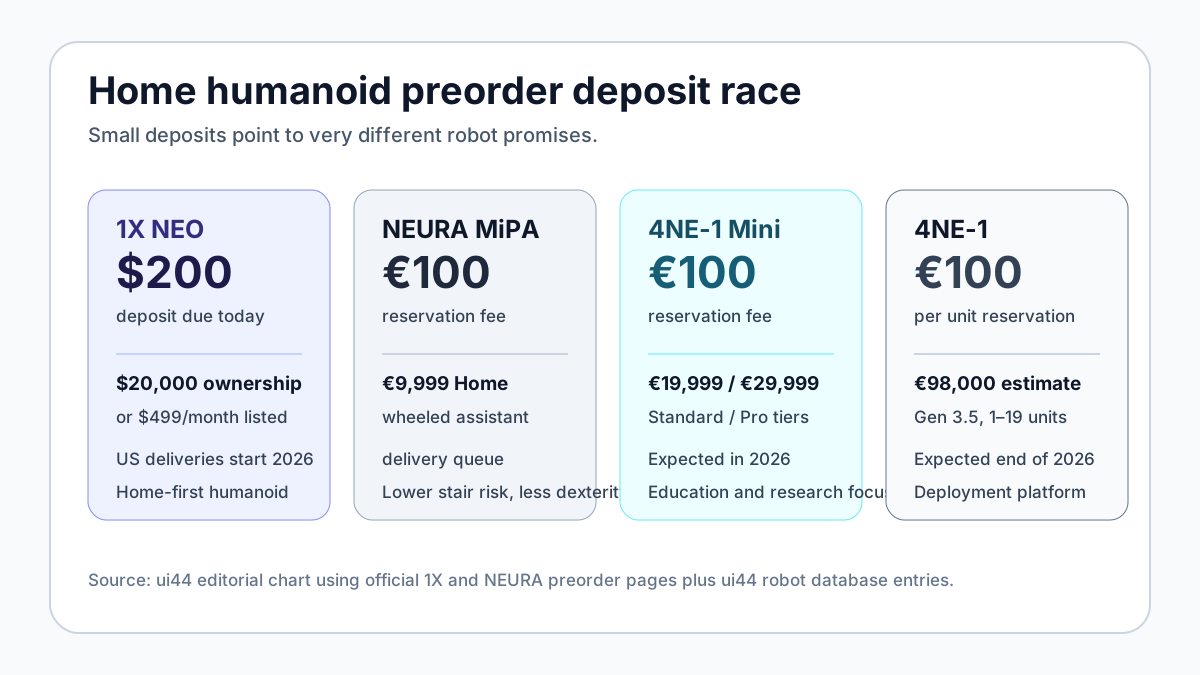
Here is the short version: 1X has the clearest home-first product and the strongest public factory signal, but it also asks buyers to accept early-access autonomy and future order terms. MiPA may be the more practical home shape, but its public reservation details are less specific about timing. 4NE-1 Mini looks like a compact research and education humanoid before it looks like a household helper. The full 4NE-1 is impressive, but its price and deployment framing put it outside normal home-buyer territory.
What are these preorder deposits actually buying?
A preorder deposit does not buy a finished household robot. It buys position, attention, and an option to evaluate the real purchase later. The details matter because these robots range from a $20,000 home humanoid to a €98,000 deployment platform.
Robot
- Current deposit signal
- $200
- Price signal
- $20,000 ownership, plus $499/month subscription listed by 1X
- What the deposit really means
- Waitlist for an order invitation; U.S. deliveries start in 2026 according to 1X
Robot
NEURA MiPA Home
- Current deposit signal
- €100 per unit
- Price signal
- €9,999 introductory Home price
- What the deposit really means
- Place in NEURA's delivery queue for a wheeled personal assistant
Robot
- Current deposit signal
- €100
- Price signal
- €19,999 Standard / €29,999 Pro
- What the deposit really means
- Reservation for a compact humanoid expected to be available in 2026
Robot
- Current deposit signal
- €100 per unit
- Price signal
- €98,000 estimate for 1-19 units
- What the deposit really means
- Reservation for NEURA's Gen 3.5 full-size humanoid, expected end of 2026
| Robot | Current deposit signal | Price signal | What the deposit really means |
|---|---|---|---|
| 1X NEO | $200 | $20,000 ownership, plus $499/month subscription listed by 1X | Waitlist for an order invitation; U.S. deliveries start in 2026 according to 1X |
| NEURA MiPA Home | €100 per unit | €9,999 introductory Home price | Place in NEURA's delivery queue for a wheeled personal assistant |
| NEURA 4NE-1 Mini | €100 | €19,999 Standard / €29,999 Pro | Reservation for a compact humanoid expected to be available in 2026 |
| NEURA 4NE-1 | €100 per unit | €98,000 estimate for 1-19 units | Reservation for NEURA's Gen 3.5 full-size humanoid, expected end of 2026 |
The small number is psychologically powerful. A €100 or $200 deposit is easy to justify if you are excited about home robots. But the robot purchase is not the same size. 1X NEO is tracked in the ui44 database at $20,000, 167 cm tall, 30 kg, and roughly 4 hours of battery life. NEURA 4NE-1 Mini is tracked at 132 cm, 36 kg, 25 degrees of freedom, roughly 2.5 hours of battery life, and a 3 kg payload. The full 4NE-1 is 180 cm, 80 kg, with a 15 kg payload and an official reservation estimate of €98,000.
MiPA is the outlier. It is not a bipedal humanoid in the ui44 robot database today, and that is part of the point. NEURA's own reservation page positions it as a modular, wheeled personal assistant with 16 DoF, touch/display/mic/ speaker/projector interaction, environmental sensors, Neuraverse integration, and home, elderly-care, hospitality, workplace, kitchen, and healthcare use cases. That is less glamorous than a walking humanoid, but it may be closer to a first useful home helper.
Is 1X NEO the strongest home-humanoid bet?
1X NEO is the most direct answer if your question is specifically "Can I get a home humanoid?" The official order page lists an Early Access ownership path at $20,000, a monthly subscription path at $499/month, a $200 deposit due today, and U.S. deliveries starting in 2026. It also says NEO arrives with basic or foundational autonomy and grows over time, with scheduled Expert Mode for tasks the robot does not yet know.

The manufacturing signal is unusually concrete. In its NEO Factory update, 1X says the Hayward, California factory is 58,000 square feet, has more than 200 team members, has commenced full-scale NEO production, and has capacity for up to 10,000 NEOs per year, with planned automation scaling toward 100,000+ units annually by the end of 2027. It also says the first NEOs will ship in 2026 and that current factory robots are being prioritized for internal home testing and development.
That does not make NEO low-risk. It makes the risk more legible. NEO is trying to be a managed home product: soft body, app, cameras, microphones, Redwood AI, remote control, Expert Mode, warranty, support, and future capability updates. If it works, it is the most relevant robot in this comparison for ordinary home-robot buyers. If it misses, it will probably miss for exactly the hard reasons buyers care about: autonomy, privacy, repair, service coverage, and the messiness of real homes.
For a deeper 1X-only checklist, see our 1X NEO deposit and refund guide. This comparison is about the broader choice: whether NEO is the best preorder risk compared with NEURA's different bets.
Could MiPA ship useful home help before a humanoid does?
MiPA is the sleeper candidate because it avoids the hardest humanoid problem: legs. A wheeled robot with modular attachments does not have to climb stairs, recover from bipedal balance errors, or prove that human-like movement is worth the cost. It can focus on moving objects, acting as a home interface, guiding, carrying, or supporting simple routines.
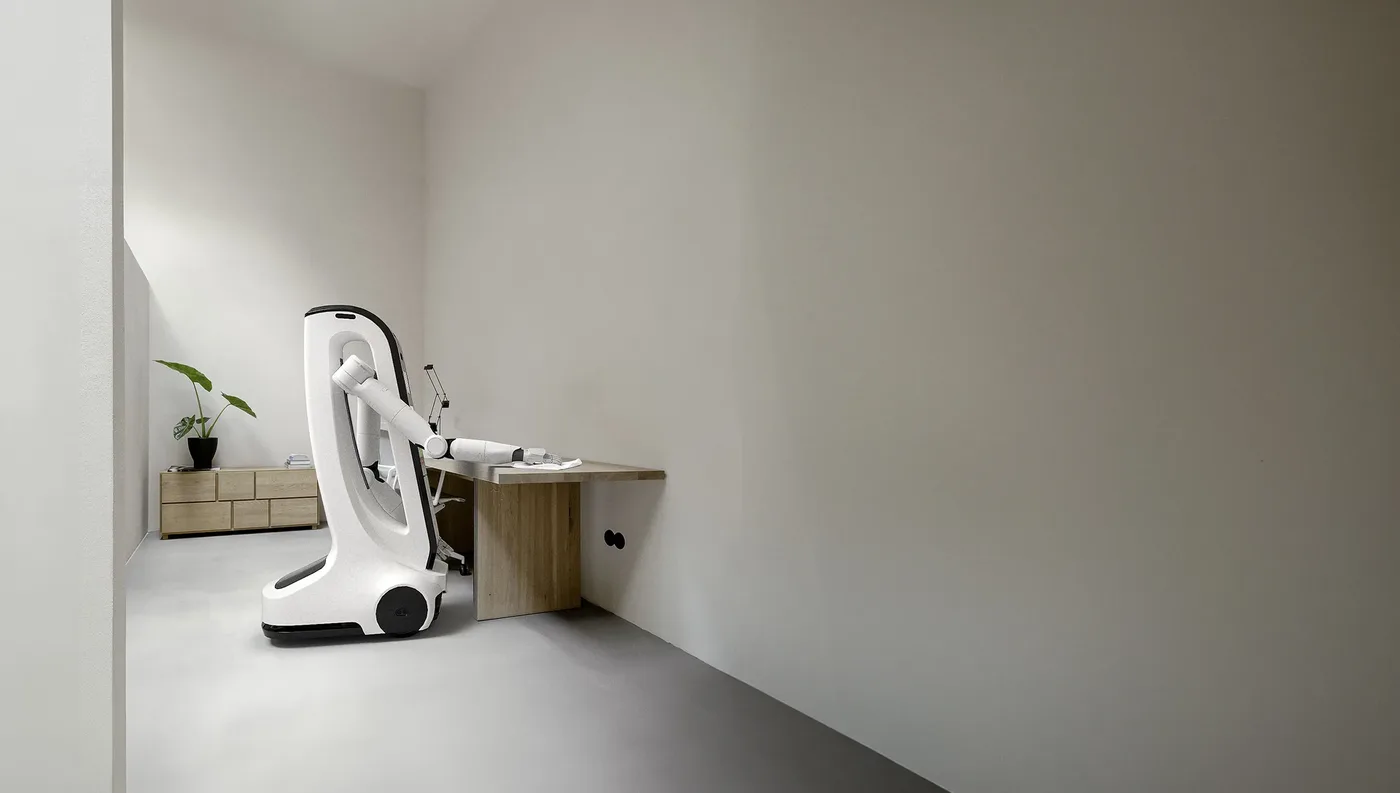
NEURA's reservation page says the €100 reservation fee is fully refundable any time before the final purchase agreement is signed and will be applied to the final purchase price. It lists MiPA Home at €9,999 for private households. That is still expensive, but it is half the entry price of 4NE-1 Mini and far below full-size humanoid territory.
The tradeoff is ambition. MiPA does not answer the buyer who wants a walking robot that can reach upper cabinets, handle stairs, or perform human-shaped manipulation. It answers the buyer who wants a plausible first-generation home assistant and is willing to accept a more limited body. For many homes, a tray, shelf, hook, clip system, projector, microphones, speakers, and room-to-room navigation may matter more than knees.
The missing piece is delivery visibility. The page secures a place in the delivery queue, but the public timing signal is not as strong as 1X's factory update or NEURA's 2026 wording for 4NE-1 Mini. That does not mean MiPA is weak. It means buyers should treat the reservation as an option, not proof that a polished home robot is imminent.
Is 4NE-1 Mini a home robot or a developer robot?
4NE-1 Mini is the most comparable NEURA humanoid to 1X NEO on headline price. The Standard tier is €19,999 before taxes and shipping, and the Pro tier is €29,999. Both require a €100 reservation fee. NEURA says both Standard and Pro are expected to be available in 2026.
The buyer mistake would be assuming that same-price means same-purpose. The Mini's official table is much more developer- and research-oriented than NEO's home pitch. Standard covers education, basic voice interaction, and entertainment. Pro adds 12-DoF dexterous hands, C++ SDK, digital twin access, teleoperation, and readiness for Neura Gym training. Those are serious platform features, not appliance-like guarantees.
That can still be valuable. If you are a university lab, robotics developer, integrator, or early adopter who wants ROS 2, Python SDK access, teleoperation, and a compact humanoid body, 4NE-1 Mini may be the cleaner tool. If you are a household expecting laundry, tidying, and scheduled chores, NEO's service model is closer to your problem.
The full-size 4NE-1 reinforces the distinction. NEURA's reservation page lists Gen 3.5 at €98,000 per unit for 1-19 units and €60,000 per unit for 20-plus units, with a €100 per-unit reservation fee. That is a deployment and research signal more than a normal family purchase signal. It belongs in the comparison because it shows how wide the gap is between a humanoid reservation and a home-ready robot.
Which company is most likely to ship first?
There is no honest single winner from public data alone. The better ranking is by type of evidence.
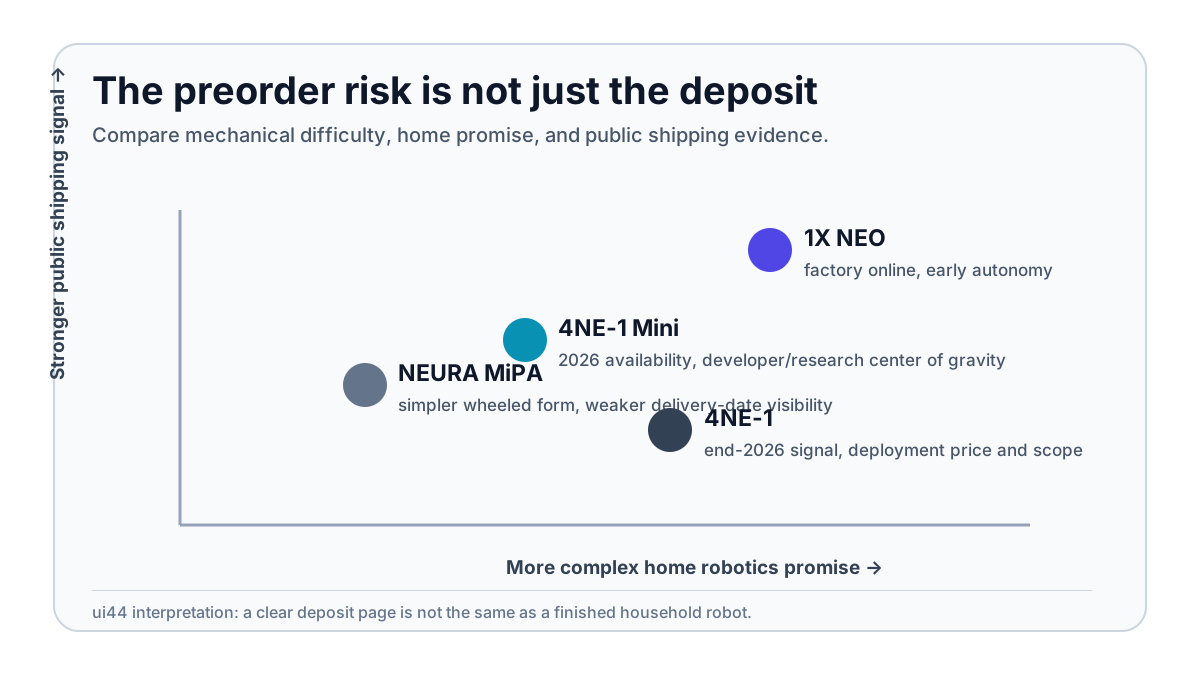
Strongest home-first shipping signal: 1X NEO. 1X has a live order page, a legal preorder framework, a named U.S. delivery-start year, and a detailed factory update. It also has the most difficult product promise: a mobile humanoid in private homes, with privacy-sensitive sensing and remote-help features.
Most practical home form factor: NEURA MiPA. MiPA is not the robot people imagine when they say "humanoid," but wheels and modular attachments reduce some technical risk. Its weakness is not concept fit; it is that buyers need more public detail on timing, supported homes, setup, service, and day-one functions.
Clearest compact-humanoid platform: NEURA 4NE-1 Mini. The Mini has a 2026 availability signal and concrete Standard/Pro tiers. But its best-fit buyer is not necessarily a normal household. It looks strongest for education, research, interaction, and manipulation development.
Most serious NEURA humanoid, least normal home purchase: 4NE-1. The full 4NE-1 has richer deployment language and a late-2026 expectation, but the €98,000 estimate moves it out of ordinary consumer preorder logic.
What should buyers check before the deposit becomes the real purchase?
The deposit is not the expensive part. The expensive part is accepting the final robot purchase without clear answers.
For 1X, the legal preorder terms are unusually important. They say a preorder places the buyer on a waitlist for an Order Invitation, that invitation order may vary by geography and whether the customer chooses purchase or subscription, and buyers can cancel for a full refund until 14 days after the Order Invitation is sent. After that, the deposit becomes non-refundable even if the buyer does not complete the robot order. Final pricing, add-ons, shipping, delivery, warranty, and cancellation details can appear later in the Order Invitation or Terms of Sale.
For NEURA's reservation pages, the repeated useful term is that the €100 fee is fully refundable before the final purchase agreement is signed and is credited toward the final purchase price. That is buyer-friendly as a deposit mechanic. It still leaves the big practical questions: final delivery date, supported countries, taxes and shipping, warranty, setup, software updates, repair coverage, data handling, and what capabilities are actually delivered on day one.
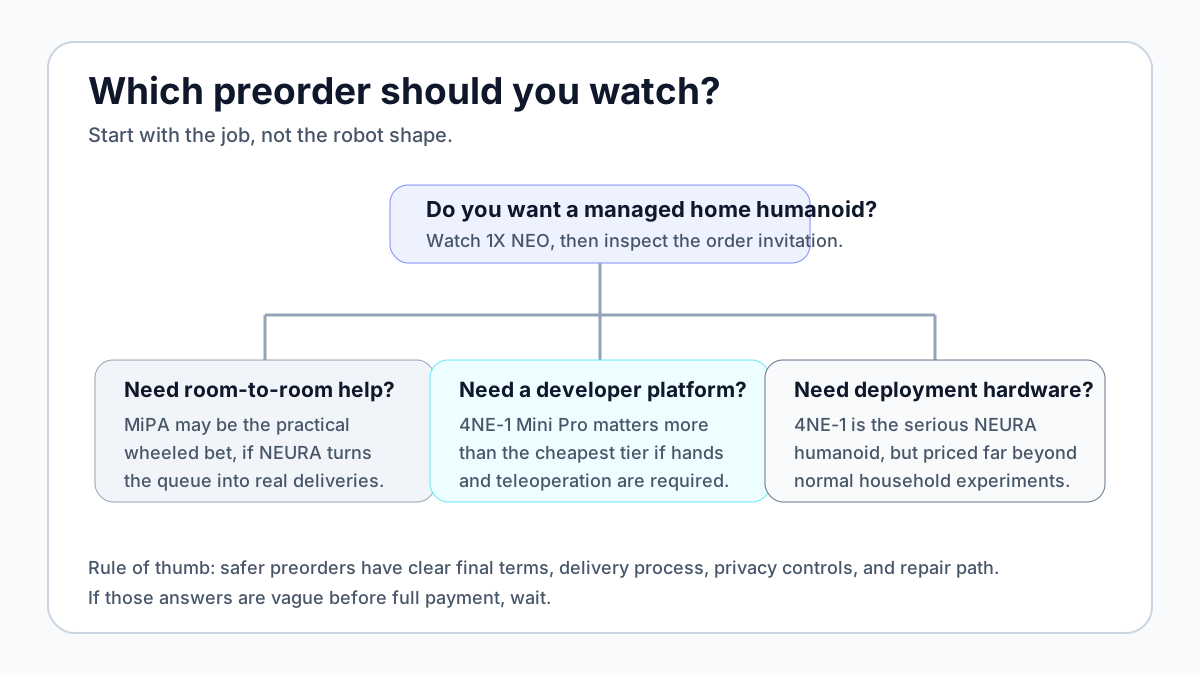
Before paying the full price, ask five boring questions:
- What exact robot configuration am I buying?
- Which chores or tasks are supported at delivery, not promised later?
- Who can remotely access the robot, under what consent model, and with what data retention?
- How will repairs, battery service, software failures, and worn manipulators be handled?
- What happens if delivery slips or the robot cannot operate safely in my home?
If those answers are vague, the best move is not to argue about the deposit. It is to wait.
The verdict: which preorder is the least speculative?
For a buyer who specifically wants a home humanoid, 1X NEO is the most direct bet. It has the clearest consumer-home positioning, the strongest public manufacturing update, and a purchase path ordinary buyers can at least enter. It is also the preorder that most urgently needs scrutiny because the final product depends on autonomy, remote assistance, privacy choices, support, and repair logistics.
For a buyer who wants useful home help rather than humanoid symbolism, NEURA MiPA may be the more realistic shape. It costs less, avoids legs, and focuses on modular service. It should be watched closely, but the reservation page does not yet answer enough delivery and service questions to treat it as a finished near-term appliance.
For developers, labs, and serious experimenters, 4NE-1 Mini is the most interesting NEURA preorder. The Pro tier especially looks like a compact humanoid platform rather than a robot butler. For ordinary households, that is a reason to be cautious, not dismissive.
The safe buyer posture is simple: use the deposit only to preserve optionality. Do not let a small refundable fee turn into emotional commitment. The real test comes when the company asks for the remaining $20,000, €9,999, €19,999, or more. At that point, the right question is not who had the best video. It is who can show the clearest delivery path, terms, support model, and home-use evidence.
Related in the database
Use this article as a privacy verification workflow
Turn the article into a privacy verification pass grounded in the robots, manufacturers, and components it actually references.
Home Humanoid Preorders: 1X vs NEURA already points you toward 3 linked robots, 2 manufacturers, and 2 countries inside the ui44 database. That matters because strong buyer guidance is easier to apply when you can move immediately from a claim or warning into concrete product pages, manufacturer directories, component explainers, and country-level context instead of treating the article as an isolated opinion piece. The fastest next step is to turn the article into a shortlist workflow: open the linked robot pages, verify which specs are actually published for those models, then compare the surrounding manufacturer and component context before you decide whether the underlying claim changes your buying plan.
For this topic, the useful discipline is to separate the editorial lesson from the catalog evidence. The article gives you the framing, but the robot pages tell you what each product actually ships with today: sensor stack, connectivity methods, listed price, release timing, category, and support-relevant compatibility notes. The manufacturer pages then show whether you are looking at a one-off launch, a broader lineup pattern, or a company that spans multiple categories. That layered workflow reduces the risk of buying on a single marketing phrase or a single support FAQ.
Use the robot pages to confirm which products actually expose cameras, microphones, Wi-Fi, or voice systems, then use the manufacturer pages to decide how much of the privacy question seems product-specific versus brand-wide. On this route cluster, NEO, 4NE-1 Mini, and 4NE-1 form the fastest reality check. If you want a quick working shortlist, open Compare NEO, 4NE-1 Mini, and 4NE-1 next, then keep this article open as the reasoning layer while you compare structured data side by side.
Practical Takeaway
Every robot, manufacturer, category, component, and country reference below resolves to a real ui44 page, keeping the follow-up path grounded in database records rather than generic advice.
Suggested next steps in ui44
- Open NEO and note the listed sensors, connectivity methods, and voice stack before you interpret any policy claim.
- Cross-check the wider brand context on 1X Technologies so you can see whether the privacy question touches one model or a broader lineup.
- Use the linked component pages to confirm how common the relevant sensors and connectivity layers are across the database.
- Keep a short note of which policy layers you checked, which device features are actually present on the robot page, and which items still depend on region- or app-level confirmation.
- Finish with Compare NEO, 4NE-1 Mini, and 4NE-1 so the policy reading sits next to structured product data.
Robot profiles worth opening next
Use the linked product pages as the evidence layer
The linked robot pages are where this article becomes operational. Instead of asking whether the headline is interesting, use the robot entries to inspect the actual mix of sensors, connectivity options, batteries, pricing, release timing, and stated capabilities attached to the products mentioned in the article. That is the easiest way to see whether the warning or opportunity described here affects one product family, a specific design pattern, or an entire buying lane.
NEO
1X Technologies · Humanoid · Pre-order
NEO is tracked on ui44 as a pre-order humanoid robot from 1X Technologies. The database currently records a listed price of $20,000, a release date of 2025-10-28, ~4 hours battery life, Not disclosed charging time, and a published stack that includes RGB Cameras, Depth Sensors, and Tactile Skin plus Wi-Fi and Bluetooth.
For privacy-focused reading, this page matters because it shows the concrete device surface behind the policy discussion. Use it to verify whether NEO combines sensors and connectivity in a way that could change the in-home data footprint, and compare the listed capabilities such as Household Chores, Tidying Up, and Safe Human Interaction with any cloud, app, or voice layers.
4NE-1 Mini
NEURA Robotics · Humanoid · Pre-order
4NE-1 Mini is tracked on ui44 as a pre-order humanoid robot from NEURA Robotics. The database currently records a listed price of €19,999, a release date of 2026-01-05, ~2.5 hours battery life, Not disclosed charging time, and a published stack that includes Multi-camera Array, Force/Torque Sensors, and 3D Vision plus Wi-Fi 6 and Gigabit Ethernet.
For privacy-focused reading, this page matters because it shows the concrete device surface behind the policy discussion. Use it to verify whether 4NE-1 Mini combines sensors and connectivity in a way that could change the in-home data footprint, and compare the listed capabilities such as 25 Degrees of Freedom, Autonomous Navigation, and Object Manipulation (Pro tier: 12-DOF dexterous hands) with any cloud, app, or voice layers, including Built-in Multi-language Voice Recognition.
4NE-1
NEURA Robotics · Humanoid · Pre-order
4NE-1 is tracked on ui44 as a pre-order humanoid robot from NEURA Robotics. The database currently records a listed price of €98,000, a release date of 2024, ~2 hours battery life, Not disclosed charging time, and a published stack that includes 3D Vision (360°), Force/Torque Sensors (all joints), and Sensor Skin plus Wi-Fi 6 and Ethernet.
For privacy-focused reading, this page matters because it shows the concrete device surface behind the policy discussion. Use it to verify whether 4NE-1 combines sensors and connectivity in a way that could change the in-home data footprint, and compare the listed capabilities such as 25 Degrees of Freedom, Autonomous Navigation, and Object Manipulation with any cloud, app, or voice layers, including Built-in Voice Recognition.
Manufacturer context behind the article
Check whether this is one product story or a broader company pattern
Manufacturer pages add the privacy context that individual product pages cannot show on their own. They help you check whether cameras, microphones, cloud accounts, app controls, and policy assumptions appear across a broader lineup or stay tied to one specific product story.
1X Technologies
ui44 currently tracks 2 robots from 1X Technologies across 1 category. The company is grouped under Norway, and the current catalog footprint on ui44 includes NEO, EVE.
That wider brand context matters because privacy questions rarely stop at one FAQ page. A manufacturer route helps you see whether the article is centered on one premium model or on a company that has several relevant products and therefore more than one place where the same policy or app assumptions might matter. The category mix here currently points toward Humanoid as the most useful next route if you want to see whether this article reflects a wider pattern inside the brand.
NEURA Robotics
ui44 currently tracks 4 robots from NEURA Robotics across 3 categorys. The company is grouped under Germany, and the current catalog footprint on ui44 includes 4NE-1, 4NE-1 Mini, MiPA.
That wider brand context matters because privacy questions rarely stop at one FAQ page. A manufacturer route helps you see whether the article is centered on one premium model or on a company that has several relevant products and therefore more than one place where the same policy or app assumptions might matter. The category mix here currently points toward Humanoid, Home Assistants, Quadruped as the most useful next route if you want to see whether this article reflects a wider pattern inside the brand.
Broaden the scan without leaving the database
Categories, components, and countries add the wider context
Category framing
Category pages are useful when the article touches a buying pattern that shows up across brands. A category route helps you confirm whether the linked products sit in a narrow niche or whether the same question should be tested across a larger field of alternatives.
Humanoid
The Humanoid category page currently groups 129 tracked robots from 92 manufacturers. ui44 describes this lane as: Full-size bipedal humanoid robots built to work alongside people — from factory floors to household tasks. Compare the cutting edge of humanoid robotics.
That makes the category route a practical follow-up when you want to check whether the products linked in this article are typical for the lane or whether they sit at one edge of the market. Useful starting examples currently include NEO, EVE, Mornine M1.
Country and ecosystem context
Country pages give extra context when support practices, launch sequencing, regulatory posture, or manufacturer mix matter. They are not a substitute for model-level verification, but they do help you see which ecosystems cluster together and which manufacturers sit in the same regional field when you broaden the search beyond the article headline.
Norway
The Norway route currently groups 2 tracked robots from 1 manufacturers in ui44. That gives you a useful regional lens when the article points toward support practices, launch sequencing, or brand clusters that may share similar ecosystem assumptions.
On the current route, manufacturers like 1X Technologies make the page a good way to broaden the scan without losing the regional context that often shapes availability, documentation style, and adjacent alternatives.
Germany
The Germany route currently groups 13 tracked robots from 9 manufacturers in ui44. That gives you a useful regional lens when the article points toward support practices, launch sequencing, or brand clusters that may share similar ecosystem assumptions.
On the current route, manufacturers like NEURA Robotics, Bosch, Agile Robots make the page a good way to broaden the scan without losing the regional context that often shapes availability, documentation style, and adjacent alternatives.
Questions to answer before you move from reading to buying
A follow-up FAQ built from the entities already linked in this article
Frequently Asked Questions
Which page should I open first after reading “Home Humanoid Preorders: 1X vs NEURA”?
Start with NEO. That gives you a concrete product anchor for the article’s main claim. From there, branch into the manufacturer and component pages so you can tell whether the article is describing one specific model, a repeated brand pattern, or a wider technology issue that affects multiple shortlist options.
How do the manufacturer pages change the buying decision?
1X Technologies help you zoom out from one article and one product. On ui44 they show lineup breadth, category spread, and the neighboring robots tied to the same company. That context is useful when you are deciding whether a risk belongs to a single model, whether it shows up across a brand’s portfolio, and whether you should keep looking at alternatives before committing.
When should I switch from reading to side-by-side comparison?
Move into Compare NEO, 4NE-1 Mini, and 4NE-1 as soon as you understand the article’s main warning or promise. The article explains what to watch for, but the compare view is where you can check whether price, status, battery life, connectivity, sensors, and category fit still make the robot a good match for your own home and budget.
Where to go next in ui44
Keep the research chain inside the database
If you want to keep going, these follow-on pages give you the cleanest expansion path from article to research session. Open the comparison route first if you are deciding between products today. Open the manufacturer, category, and component routes if you still need to understand the broader pattern behind the claim.
Written by
ui44 Team
Published May 9, 2026
Share this article
Open a plain share link on X or Bluesky. No embeds, no widgets, no cookie baggage.