Commercial model
$379 list price
A published price gives buyers a starting point for budgeting, ROI modeling, and peer comparison before deeper vendor conversations begin.
Robot dossier
Gogobot D1
Release
Jun 1, 2026
Price
$379
Connectivity
4
Status
Pre-order
Height
188 mm (7.4 in)
Weight
800 g (1.76 lbs)
Battery
Approx. 70-90 minutes of intensive continuous movement; up to 3 hours of typical standby plus normal interaction
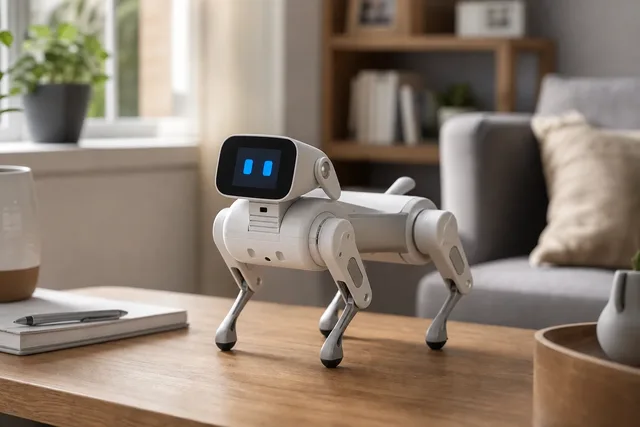
Gogobot D1 is a compact AI companion robot dog from Gogobot, a Changba-backed consumer robotics brand. The official store positions D1 as a pre-order social robot for families and kids, with voice, app, and remote control, a 2.4-inch screen face, movable ears and tail, touch reactions, obstacle avoidance, and fall recovery. Official specs list a 255 × 137 × 188 mm body, 800 g weight, dual ToF sensors, a 6-axis IMU, two capacitive touch sensors, four microphones, Wi-Fi, BLE 6.0, and a 7.4 V 2600 mAh battery rated for about 70-90 minutes of continuous movement or up to 3 hours of typical interaction. Independent launch coverage corroborates the AI robot-dog identity and conversational-companion positioning, but Gogobot has not publicly disclosed the underlying language-model provider or long-term retail pricing beyond the current pre-order offer.
Listed price
$379
Official Gogobot store lists D1 pre-order pricing at $379 during a limited 20% launch discount, with a $479 compare-at price. D1 EDU is listed at $439 during the same promotion, and Gogobot says estimated shipping begins in June 2026.
Release window
Jun 1, 2026
Current status
Pre-order
Gogobot
Last verified
May 28, 2026
Share this robot
Open a plain share composer on X or Bluesky for this robot profile.
Technical overview
A fast read on the mechanical profile, sensing package, and platform integrations behind Gogobot D1.
Height
188 mm (7.4 in)
Weight
800 g (1.76 lbs)
Dimensions
255 × 137 × 188 mm (L×W×H)
Battery Life
Approx. 70-90 minutes of intensive continuous movement; up to 3 hours of typical standby plus normal interaction
Charging Time
2-3 hours via USB Type-C
Max Speed
Not officially disclosed
Operational profile
Capabilities
12
Connectivity
4
Key capabilities
Ecosystem fit
Explore further
Benchmark set
Shortcuts to the closest alternatives in the current ui44 set.
Companions
Moflin
Casio
$429
Companions
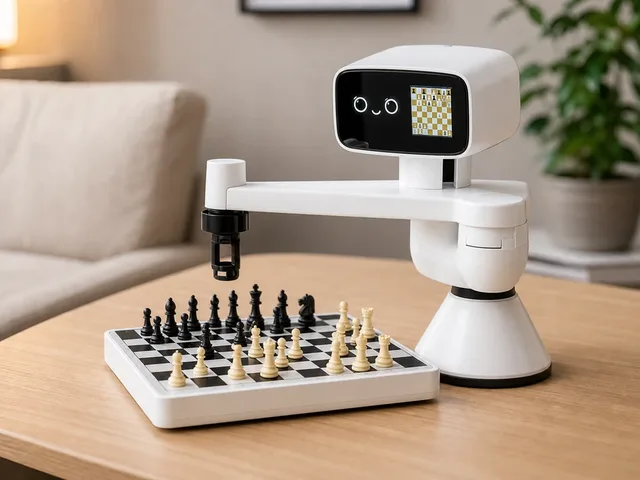
Chess Mini
SenseRobot
$328
Companions
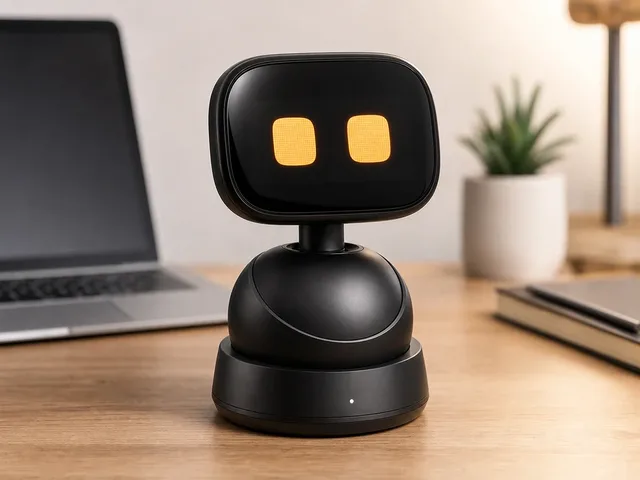
Loona DeskMate
KEYi Tech
$219
Companions
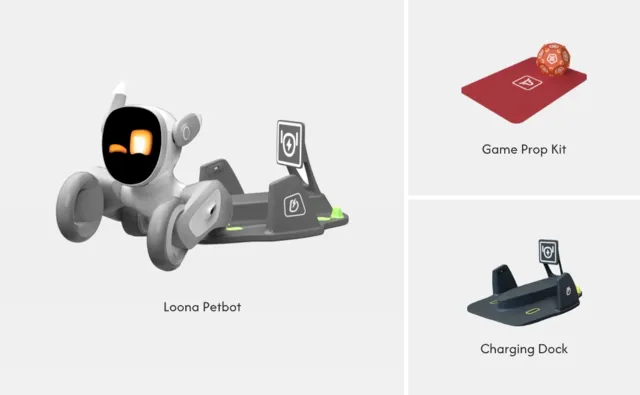
Loona
KEYi Tech
$409
The Gogobot D1 is a Companions robot built by Gogobot. Gogobot D1 is a compact AI companion robot dog from Gogobot, a Changba-backed consumer robotics brand. The official store positions D1 as a pre-order social robot for families and kids, with voice, app, and remote control, a 2.4-inch screen face, movable ears and tail, touch reactions, obstacle avoidance, and fall recovery. Official specs list a 255 × 137 × 188 mm body, 800 g weight, dual ToF sensors, a 6-axis IMU, two capacitive touch sensors, four microphones, Wi-Fi, BLE 6.0, and a 7.4 V 2600 mAh battery rated for about 70-90 minutes of continuous movement or up to 3 hours of typical interaction. Independent launch coverage corroborates the AI robot-dog identity and conversational-companion positioning, but Gogobot has not publicly disclosed the underlying language-model provider or long-term retail pricing beyond the current pre-order offer.

At a listed price of $379, it positions itself in the consumer-accessible segment of the companions market. See all Gogobot robots on the Gogobot page.
Detailed specifications for the Gogobot D1
Height
188 mm (7.4 in)At 188 mm (7.4 in), the Gogobot D1 is sized for its intended operating environment and use cases.
Weight
800 g (1.76 lbs)Weighing 800 g (1.76 lbs), the Gogobot D1 balances structural integrity with portability and maneuverability.
Dimensions
255 × 137 × 188 mm (L×W×H)The overall dimensions of 255 × 137 × 188 mm (L×W×H) define the robot's physical footprint and determine what spaces it can navigate and what clearances it requires for operation.
Battery Life
Approx. 70-90 minutes of intensive continuous movement; up to 3 hours of typical standby plus normal interactionWith a battery life of Approx. 70-90 minutes of intensive continuous movement; up to 3 hours of typical standby plus normal interaction, the Gogobot D1 can operate for sustained periods before requiring a recharge. Battery life is measured under typical operating conditions and may vary based on workload intensity and environmental factors.
Charging Time
2-3 hours via USB Type-CA charging time of 2-3 hours via USB Type-C means the ratio of operation to downtime is an important consideration for applications requiring near-continuous availability. Some deployments use multiple robots in rotation to maintain uninterrupted service.
The Gogobot D1 uses Official materials describe voice interaction, personality-style responses, smart motion, and app-based EDU programming support; independent launch coverage describes AI-powered conversation, but the exact model/provider is not officially disclosed. as its intelligence backbone. This AI platform powers the robot's decision-making, perception processing, and autonomous behavior. The sophistication of the AI stack directly impacts how well the robot handles unexpected situations and adapts to new environments.
The Gogobot D1 integrates 4 sensor types, forming the perceptual foundation that enables autonomous operation.
This sensor configuration enables the Gogobot D1 to perceive its environment and operate autonomously in its intended use cases. Multiple sensor modalities provide redundancy and more robust perception than any single sensor type alone.
Explore sensor technologies: components glossary · full components directory
Companion robots provide social interaction, emotional support, and entertainment. Unlike utility robots, their primary value proposition is the relationship they build with their owner. The best companions learn preferences, develop personalities, and create genuine emotional connections.
The Gogobot D1 offers 12 distinct capabilities, each contributing to the robot's practical utility.
These capabilities work together with the robot's 4 onboard sensor types and Official materials describe voice interaction, personality-style responses, smart motion, and app-based EDU programming support; independent launch coverage describes AI-powered conversation, but the exact model/provider is not officially disclosed. AI platform to deliver practical, real-world performance.
The Gogobot D1 integrates with the following platforms and ecosystems, extending its utility beyond standalone operation.
This ecosystem compatibility enables the Gogobot D1 to work as part of a broader automation setup rather than operating in isolation.
12
Capabilities
4
Sensor Types
AI
Official materials describe …
How the Gogobot D1 communicates with your network, smart home devices, cloud services, and companion apps.
The Gogobot D1 by Gogobot integrates 9 distinct technology components across sensing, connectivity, intelligence, and interaction layers. The physical platform features a height of 188 mm (7.4 in), a weight of 800 g (1.76 lbs), providing the foundation on which this technology stack operates.
The perception layer is built on 2× capacitive touch sensors, 6-axis IMU (gyroscope and accelerometer), 2× Time-of-Flight laser sensors, 4× bottom-port digital silicon microphones. These work in concert to give the robot a detailed understanding of its operating environment. This multi-sensor approach provides redundancy and enables the robot to function reliably even when individual sensors encounter challenging conditions such as low light, reflective surfaces, or cluttered spaces.
For communications, the Gogobot D1 relies on 2.4 GHz Wi-Fi, Bluetooth Low Energy 6.0, USB Type-C charging, Mobile app / remote control. This connectivity stack ensures the robot can communicate with cloud services, local smart home devices, mobile apps, and other networked systems in its environment.
Official materials describe voice interaction, personality-style responses, smart motion, and app-based EDU programming support; independent launch coverage describes AI-powered conversation, but the exact model/provider is not officially disclosed. serves as the computational brain, processing sensor data, making navigation decisions, and orchestrating the robot's autonomous behaviors. The quality of this AI platform directly influences how well the robot handles novel situations, adapts to changes in its environment, and improves its performance over time through learning.
Social and companion robots are purchased by families, elderly individuals, and tech enthusiasts looking for interactive, emotionally engaging robotic pets or social companions. They are particularly popular in Japan and increasingly in senior care contexts worldwide.
Emotional expressiveness, interaction quality, voice recognition, personality development over time, and durability (especially for children) are what matter most. Privacy controls for cameras and microphones are increasingly important. Battery life determines how available the companion is throughout the day.
Price Context
The Gogobot D1 is available for pre-order. Pre-ordering secures your position in the delivery queue, though actual ship dates may vary.
Engineering compromises and where this companions robot excels
The Gogobot D1 integrates 4 sensor types, providing good perceptual coverage for its intended applications. This sensor complement covers the essential modalities needed for effective companions operation while keeping complexity manageable.
Supporting 4 connectivity protocols gives the Gogobot D1 flexible integration options. Whether connecting to local smart home networks, cloud services, or companion devices, the breadth of connectivity ensures compatibility across a wide range of deployment scenarios and reduces the risk of network-related limitations.
With 12 distinct capabilities, the Gogobot D1 is designed as a versatile platform rather than a single-task device. This breadth means the robot can handle varied scenarios and workflows, reducing the need for multiple specialized robots and increasing its utility across different situations.
A battery life of Approx. 70-90 minutes of intensive continuous movement; up to 3 hours of typical standby plus normal interaction provides substantial operational runway. For companions applications, this means longer work sessions between charges, fewer interruptions, and the ability to complete larger tasks or cover more area in a single charge cycle.
At $379, the Gogobot D1 is competitively priced within the companions market. This price point makes the technology accessible to a broader audience and represents a lower barrier to entry for those exploring companions robotics.
The Gogobot D1 is not yet available as a finished, shipping product. While pre-ordering secures a position in the delivery queue, actual delivery timelines and final specifications should be confirmed with the manufacturer.
Note: This strengths and trade-offs assessment is based on the Gogobot D1's documented specifications as tracked in the ui44 database. Real-world performance depends on deployment conditions, firmware maturity, and environmental factors. For the most current information, check the Gogobot manufacturer page or visit the official product page. Use the comparison tool to evaluate these trade-offs against competing robots in the same category.
Understanding the engineering behind this category
Companion robots sit at the intersection of engineering and emotional design. Unlike utility robots measured by specifications like suction power or payload capacity, companion robots are judged by how well they make people feel — their expressiveness, responsiveness, personality, and ability to form genuine-seeming bonds with their owners. The technology behind these emotional machines is surprisingly sophisticated, drawing from psychology, animation, and cutting-edge AI.
Companion robots typically operate in confined indoor spaces and prioritize safe, predictable movement over sophisticated mapping. Most use simple but effective navigation combining bump sensors, cliff detection, and basic obstacle avoidance. Some advanced models incorporate camera-based person-following — the ability to track and follow a specific person through rooms. Unlike utility robots that need systematic coverage, companion robots navigate toward social engagement: moving toward voices, approaching detected family members, or positioning themselves for optimal interaction. The movement itself is often designed to convey personality — a curious robot might lean forward when exploring, while a timid one might approach cautiously.
AI is the heart of a companion robot's appeal. Emotion recognition systems analyze facial expressions, voice tone, and behavioral patterns to infer the user's emotional state and respond appropriately. Natural language processing enables conversational interaction that goes beyond simple command-response patterns. Personality systems create consistent behavioral traits that make the robot feel like an individual rather than a generic device. Machine learning allows the robot to adapt to its owner's preferences, schedule, and interaction style over time. The most advanced companion robots use generative AI to create novel responses and behaviors rather than relying solely on pre-programmed scripts, making interactions feel more natural and less repetitive.
Companion robot sensors prioritize social perception over environmental mapping. Cameras detect faces, read expressions, and enable recognition of family members. Microphone arrays with beamforming capture and localize voice from across a room, enabling natural conversation without shouting. Touch sensors across the body detect petting, hugging, and other physical interaction, triggering appropriate emotional responses. Some models include heart-rate or breathing-rate sensors in their touch surfaces, enabling health-monitoring features for elderly users. Temperature and light sensors help the robot understand context — bedtime versus activity time — and adjust its behavior accordingly.
Companion robots need to be available throughout the day to maintain the social bond with their owner. Battery life of eight hours or more is typical, with automatic return-to-charging-dock behavior when levels drop. Power management is designed to be invisible — the robot should seem always available and never interrupt a social moment to announce low battery. Some companion robots use sleep modes during inactive periods, with motion or sound detection to wake instantly when the owner approaches. Charging docks often double as the robot's designated resting spot, making the charging behavior feel natural rather than mechanical.
Companion robots prioritize child and elderly safety with rounded corners, pinch-free joint designs, and materials safe for skin contact. Emotional safety is equally important — companion robots are designed to never express anger, fear, or distress in ways that could upset vulnerable users. Privacy features include physical camera covers, microphone mute buttons, and transparent data handling policies. For elderly users, companion robots may include fall-detection alerts, activity monitoring, and remote check-in features that balance safety with privacy. The robot's emotional responses are carefully calibrated to avoid over-attachment or dependency concerns.
Companion robotics is evolving toward more nuanced emotional intelligence, deeper personalization, and expanded health-monitoring capabilities. Advances in generative AI are enabling more natural and varied conversational interaction. Future companion robots may serve as health monitoring platforms that detect changes in an owner's mood, activity levels, or cognitive patterns — providing early warning of health issues to family members or caregivers. The integration of companion features into utility robots (and vice versa) may blur category boundaries, creating household robots that are both helpful and emotionally engaging.
The Gogobot D1 by Gogobot incorporates many of these technology pillars. For a detailed look at the specific sensors and components used in the Gogobot D1, see the sensor analysis and connectivity sections above, or browse the complete components glossary for explanations of every technology used across the robotics industry.
How this robot compares in the companions landscape
At $379, the Gogobot D1 competes in the entry-level segment of the companions market, where affordability is the primary consideration for most buyers.
The Gogobot D1's 4 sensor types provide solid perceptual coverage for its intended use cases. This mid-range sensor suite balances cost with capability, covering the essential modalities needed for companions applications.
Side-by-side specs, capability overlap analysis, and key differentiators.
For the full picture of Gogobot's portfolio and market strategy, visit the Gogobot manufacturer page.
What the public profile tells you, and what still needs direct vendor confirmation
From a buying and rollout perspective, the Gogobot D1 should be read as a companions platform aimed at social, education, or care environments where interaction quality matters. ui44 currently tracks 12 capability signals, 4 sensor inputs, and a last verification date of 2026-05-28. That mix gives buyers a useful first-pass picture, but it is still only the public layer of due diligence, especially when procurement, uptime, and support commitments are decided directly with Gogobot.
Commercial model
$379 list price
A published price gives buyers a starting point for budgeting, ROI modeling, and peer comparison before deeper vendor conversations begin.
Integration posture
4 connectivity options
The profile lists 2.4 GHz Wi-Fi, Bluetooth Low Energy 6.0, USB Type-C charging, Mobile app / remote control, plus Official materials describe voice interaction, personality-style responses, smart motion, and app-based EDU programming support; independent launch coverage describes AI-powered conversation, but the exact model/provider is not officially disclosed. as the AI stack. That is enough to infer the basic network posture, but buyers should still confirm APIs, fleet management, and workflow integration details. ui44 currently tracks 3 declared compatibility links.
Spec disclosure
5/7 core specs public
ui44 currently has 5 of 7 core physical and operating specs filled in for this model, leaving 2 gaps that matter for deployment planning. Missing runtime, charge, speed, or payload details can materially change staffing and site-readiness assumptions.
The current profile is detailed enough to support early comparison work, shortlist creation, and cross-checking against other companions robots. It is still worth validating the final deployment package, because integration services, support coverage, software entitlements, and site-preparation requirements often sit outside the raw hardware spec sheet.
If you want a faster apples-to-apples read, compare the Gogobot D1 against nearby alternatives in ui44's compare view, then cross-check the underlying AI, sensor, and subsystem terms in the components glossary. For manufacturer-level context, the Gogobot profile helps anchor this robot inside the wider product lineup.
Practical guide from day one through years of ownership
Companion robot setup is designed to be simple and engaging — the first interaction sets the tone for the relationship. Typical setup involves charging the robot, downloading the companion app, connecting to Wi-Fi, and going through an introduction sequence where the robot learns your face and name. Many companion robots have a personality development phase during the first few days, where they become more responsive and personalized as they learn your voice, habits, and preferences. Place the charging dock in a social area where the robot can be part of daily life rather than tucked away in a corner. Introduce the robot to all family members during setup so it can learn to recognize everyone.
Companion robots generally require minimal maintenance. Weekly care includes wiping the exterior with a soft cloth, checking that sensors and cameras are clean, and ensuring the charging dock area is clear. Monthly tasks include checking for and installing software updates, cleaning any microphone or speaker grilles, and inspecting the wheels or locomotion system for hair or debris. The emotional design means that maintenance should feel like care rather than servicing — many owners naturally incorporate it into their interaction with the robot.
Software updates for companion robots often add new behaviors, expressions, voice capabilities, and interaction patterns. These updates keep the relationship fresh and can significantly enhance the robot's emotional range and social intelligence over time. Most companion robots update automatically during sleep or charging periods. Some manufacturers offer premium content subscriptions that add seasonal behaviors, educational content, or language capabilities.
Companion robots typically last three to five years or more with gentle handling. The primary concerns are battery health and physical wear from daily interaction. Avoid dropping the robot or handling it roughly, especially the camera and sensor areas. Keep the robot away from water and extreme temperatures. Battery life will gradually decrease over time; contact the manufacturer about battery replacement options when charging becomes noticeably more frequent. For children's companion robots, supervise initial interactions to establish gentle handling habits.
For Gogobot-specific support resources and documentation, visit the Gogobot page on ui44 or check the manufacturer's official website at Gogobot's product page.
All Gogobot D1 data on ui44 is verified against official Gogobot sources, including spec sheets, product pages, and press releases. Last verified: 2026-05-28. Official source: Gogobot product page. If you find outdated or incorrect information, please let us know — accuracy is our top priority.
See how the Gogobot D1 stacks up — compare specs, browse the companions category, or search the full database.