
Compare robots

Comparison ready

2 robots selected.

The comparison cards start below. Open the editor only when you need to swap the shortlist.

Share
Edit selected robots
412 robots 9 categories 175 priced

Comparing 2 robots

Green cells flag numeric leaders, while AI, sensors, and capability rows keep the real buying tradeoffs visible.

Updating comparison...
Each row compares one spec across your shortlist. Green marks the best value.

Price

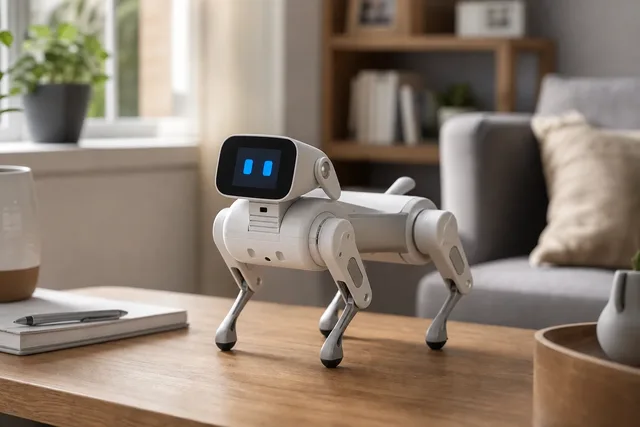
Gogobot D1
$379 USD
Moflin
$429 USD

Height

Gogobot D1
188 mm (7.4 in)
Moflin
9cm (3.5 in)

Weight

Gogobot D1
800 g (1.76 lbs)
Moflin
Approx. 260g (9.2 oz)

Battery Life

Gogobot D1
Approx. 70-90 minutes of intensive continuous movement; up to 3 hours of typical standby plus normal interaction
Moflin
Up to 5 hours

Max Speed

Gogobot D1
Not officially disclosed
Moflin
Stationary / carried companionNot comparable for this robot

AI

Gogobot D1
Official materials describe voice interaction, personality-style responses, smart motion, and app-based EDU programming support; independent launch coverage describes AI-powered conversation, but the exact model/provider is not officially disclosed.
Moflin
Proprietary Emotional AI with more than 4 million emotional possibilities and local voice-feature processing for owner recognition

Sensors

Gogobot D1
2× capacitive touch sensors, 6-axis IMU (gyroscope and accelerometer), 2× Time-of-Flight laser sensors, 4× bottom-port digital silicon microphones
Moflin
Microphone, Illuminance sensor, Touch sensors, Accelerometer / gyroscope sensor

Connectivity

Gogobot D1
2.4 GHz Wi-Fi, Bluetooth Low Energy 6.0, USB Type-C charging, Mobile app / remote control
Moflin

Status

Gogobot D1
Pre-order
Moflin
Available

Category

Gogobot D1
Companions
Moflin
Companions

Capabilities

Gogobot D1

App ControlD1 EDU App-Based Programming KitExpressive Screen FaceFall RecoveryFamily Companion BehaviorsMovable Ears and TailObstacle AvoidanceQuadruped WalkingRemote ControlTouch ResponseUSB-C Rechargeable BatteryVoice Interaction

Moflin

2-axis head movementEmotional companionshipInteractive charging-bed dockMood tracking via appOwner recognitionPersonality development over timeSoftware updates via MofLife appTouch responseVoice recognition

How to Compare Robots

Use this flow to get to a clean shortlist fast. The route works best as a dense research workbench, not a marketing page.

1

Choose comparable robots

Start with robots that solve the same job. Use category anchors like Humanoid, Cleaning, Companions, Research before you worry about micro-spec wins.

2

Read the big deltas first

Check price, status, battery, sensors, and capabilities before getting lost in minor spec rows.

3

Switch to differences only

Once you have a shortlist, hide shared rows. That turns the table from a spec dump into a real decision tool.

Cross-category comparisons still have value

A dedicated cleaner versus a home assistant with cleaning features can reveal whether you really need a specialist or just broader household coverage. Compare around the same outcome, not the same marketing language. And when blank-page friction is the problem, use one of the prebuilt quick-start pairings in the workbench above — open one, swap robots, and keep moving.

Making Your Decision

Turn comparison rows into an actual recommendation — not just more reading.

1

Weighted priorities

Not all spec deltas matter equally. Rank your buying criteria before crowning a winner.

  • List must-haves — smart-home platform, clearance, shipping status, or anything that eliminates a robot instantly.
  • Pick your top 3 differentiators — navigation, noise, battery, support, or whatever changes daily use.
  • Score only the finalists against those. The robot that wins your real priorities beats the one with the most green cells.
2

Total cost of ownership

The sticker price is only one row. Subscriptions, consumables, and service access often decide the real winner.

Subscriptions

Cloud AI and premium app tiers can make a cheaper robot more expensive over three years.

Consumables

Brushes, pads, filters, and bags flip the value story on high-frequency robots.

Energy & battery

Large batteries and frequent charging reveal everyday operating demands.

Repair & warranty

Local servicing and spare-parts access are the quietest but most important long-term costs.

3

Environment check

Specs describe ideal conditions. Your rooms, pets, and Wi-Fi determine what actually performs.

  • Floor types — carpet, hardwood, tile, and transition handling.
  • Space layout — open plans vs. multi-room homes with tight doorways.
  • Wi-Fi coverage — cloud-heavy robots need stable signal everywhere.
  • Household — pets, kids, shared spaces, and noise tolerance.

Buy now vs. wait

Of 412 robots tracked, 254 are available now. For household tasks, getting a capable robot into daily use today usually beats waiting for incremental improvements. For research or early-adopter use, waiting can make sense if the next model changes the platform story.

When it's too close to call

If two robots are still neck-and-neck, use softer signals that affect ownership quality more than spec sheets admit.

Return policy User community Ecosystem Aesthetics

Comparison FAQ

Questions buyers ask before the final click

Short answers to the questions that usually show up once the shortlist is live and the tradeoffs feel real.

Frequently Asked Questions

Using the workspace
How many robots can I compare at once?
You can compare up to four robots at once. Two or three is usually the cleanest decision view, but four-way comparisons work well for wider market scans.
What does 'Show differences only' do?
It hides rows where all selected robots share the same value, leaving only the rows that actually change your decision. It is especially useful for same-brand or same-category shortlists.
Can I compare robots from different categories?
Yes. You can compare any of the 412 robots in the database. Cross-category comparisons work best when the robots still compete for the same outcome in your home or workflow.
What makes a good comparison?
The best pairings share at least one real-world anchor: same job, similar price band, same room constraints, or competing brand tier. That keeps the table decision-focused instead of random.
Sharing & shortlisting
How do I share a comparison?
Once you have a live shortlist, a Share this comparison link appears in the workbench. It preserves your selected robots and the differences-only toggle in a permanent URL.
Can I save or bookmark a comparison for later?
Yes. Every live comparison has a stable route, so bookmarking the page preserves the exact configuration you built.
Can I compare by price alone?
Price is one row in the compare table, but if you want pure price sorting first, the all robots page is the better place to shortlist before coming back here.
Data & methodology
Are specifications up to date?
ui44 comparison data is sourced from official manufacturer documentation and re-verified on a rolling basis. Shipping products get the most frequent freshness checks.
What if a spec is missing?
A dash or 'Not specified' usually means the manufacturer has not published the detail clearly. It does not automatically mean the robot lacks the feature.
How should I compare robots at different development stages?
Status labels describe catalog records, not measured operational reliability. Available indicates a purchase listing, not verified stock or shipping dates. Active alone does not confirm public purchase access. Pre-order indicates a reservation listing, not engineering completion or a guaranteed delivery queue position. Development and Prototype identify recorded stages; Discontinued identifies a discontinued listing. Compare documented performance and current manufacturer terms, including any recorded sales notes, for the specific model and region.
Can I compare specific sensors or components more deeply?
Yes. The compare table gives you the side-by-side overview, then the components directory lets you go deeper on shared sensors, radios, and platform pieces across the catalog.