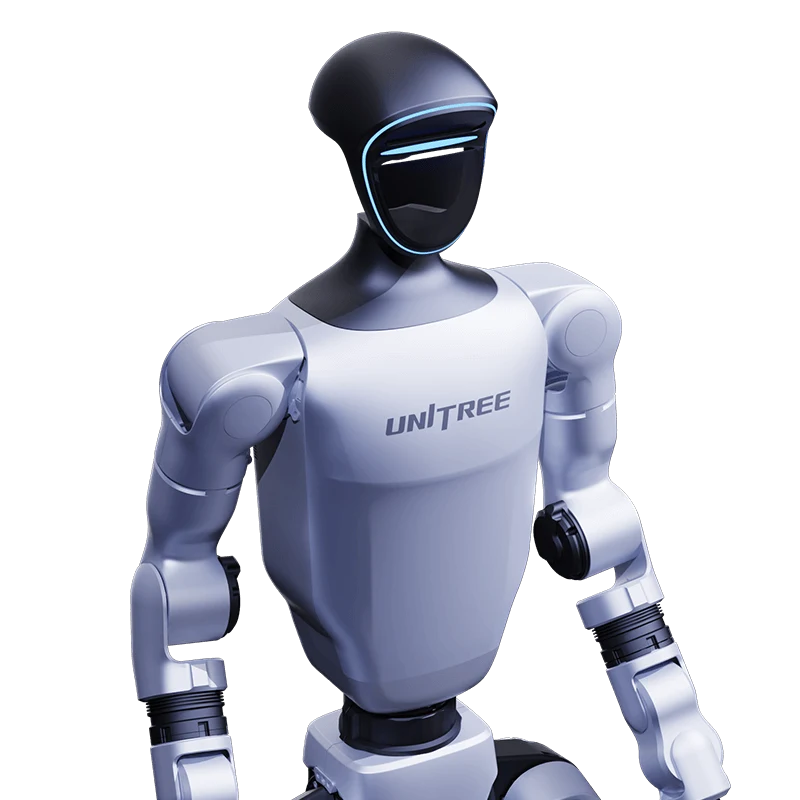
Nobody in the home-robot press is translating that finance story into buyer advice. So here it is: if you're considering a Unitree G1 or R1 for your home, lab, or classroom, does the IPO rollercoaster change anything? Short answer: prices haven't moved, but the crash is a useful reminder of what you're actually buying — and what could go wrong.
What actually happened, in numbers
Let's reconcile the conflicting figures first, because outlets reported different slices of the same frenzy:
- Debut pop: Forbes reported a 629% intraday spike; Fortune reported ~460%. Both describe the same August 19 mania — the difference is measurement timing during an extremely volatile first session.
- The slump: Reuters (Aug 25) reported shares down ~45% from the debut high. The Robot Report later measured the drawdown at 53%. Again, same story, different timestamps on a falling knife.
- The wiped value: Roughly $20–30B in market cap evaporated in the weeks after listing, per combined outlet estimates.
- The venue: Shanghai's STAR Market — China's tech board — which means most Western buyers can't trade the stock anyway, but everyone feels the narrative shockwaves.
Chatham House weighed in on September 3, asking outright whether China's humanoid industry is a bubble, with Unitree's gyrations as exhibit A. And Chinese regulators have since tightened guidance around humanoid IPOs, adding policy pressure on top of valuation pressure.
What ui44 tracks: the robots you can actually buy
Finance aside, here's Unitree's buyable lineup from our database:
Robot
Unitree R1 Air
- Price
- $4,900
- What it is
- Stripped-down biped, 20 degrees of freedom (DOF), ~27 kg — runs, cartwheels, recovers from pushes
Robot
Unitree R1
- Price
- $5,900
- What it is
- Standard tier, 26 DOF, denser sensors, local voice/image via UnifoLM (Unitree's on-device AI model)
Robot
Unitree R1 EDU
- Price
- Contact sales
- What it is
- Dexterous hands option, head tracking, NVIDIA Jetson Orin (an onboard AI processor) for AI workloads
Robot
Unitree G1
- Price
- From $13,500
- What it is
- Full-size humanoid (~1.32 m), the actual home/research contender
Robot
Unitree H2
- Price
- From $29,900
- What it is
- Larger humanoid base price; tax and shipping excluded
Robot
Unitree H1
- Price
- ~$90,000 (contact sales)
- What it is
- Flagship-scale humanoid, effectively enterprise pricing
| Robot | Price | What it is |
|---|---|---|
| Unitree R1 Air | $4,900 | Stripped-down biped, 20 degrees of freedom (DOF), ~27 kg — runs, cartwheels, recovers from pushes |
| Unitree R1 | $5,900 | Standard tier, 26 DOF, denser sensors, local voice/image via UnifoLM (Unitree's on-device AI model) |
| Unitree R1 EDU | Contact sales | Dexterous hands option, head tracking, NVIDIA Jetson Orin (an onboard AI processor) for AI workloads |
| Unitree G1 | From $13,500 | Full-size humanoid (~1.32 m), the actual home/research contender |
| Unitree H2 | From $29,900 | Larger humanoid base price; tax and shipping excluded |
| Unitree H1 | ~$90,000 (contact sales) | Flagship-scale humanoid, effectively enterprise pricing |
The key buyer split: the R1 line ($4,900–$5,900) is aimed at researchers, educators, hobbyists, and early consumer adopters priced out of the G1. The G1 (from $13,500) is the machine a serious home buyer actually considers — and the one where support longevity matters most.
Does the crash change prices? No — so far
There is zero evidence Unitree has cut or raised hardware prices in response to the stock swing. The G1 still lists from $13,500, the R1 Air at $4,900. Hardware pricing is set by bill of materials, competition with the likes of Agility Robotics and Figure, and sales strategy — not by the STAR Market ticker.
That's normal. Stock crashes don't reprice robots overnight. But they can reprice them indirectly over quarters: a cash-rich post-IPO company subsidizes aggressively; a cash-constrained one raises prices, slows support hiring, or delays the next model. Watch Unitree's next two quarters, not its next two trading days.
The 4 buyer risks the IPO chaos actually flags
1. Support longevity
A $13,500+ humanoid is a long-term relationship: spare parts, firmware updates, repair channels. Unitree's business is real — it ships real robots in volume — but a 50% drawdown plus regulatory tightening is exactly the backdrop where support quality gets quietly cut. Before buying, verify current parts availability and support response times, not launch-day promises.
2. The research-platform vs. home-robot gap
Be honest about what the G1 is today: a remarkably capable research and developer platform that can live in a home, not a home appliance with a service network. The IPO hype tempted casual buyers to treat it like a consumer product. The crash is a good moment to re-read the spec sheet as an engineer, not an investor.
3. US-China friction
Unitree lists in Shanghai; US buyers face the ongoing background noise of tariffs, export controls, and procurement bans on Chinese robotics in official settings (see our April 2026 coverage of the US-China ban chatter). A volatile stock doesn't cause those policies, but it gives regulators more attention — attention that can turn into shipping delays or compliance costs.
4. Bubble pricing on the used market
IPO mania briefly inflated everything Unitree-adjacent, including reseller markups. If you saw G1 units listed far above $13,500 during August hype, that premium should now be gone. Don't pay mania prices for a post-mania market.
G1 vs. R1: which one survives a downturn better?
If Unitree tightened its belt tomorrow, which product line would it protect? Almost certainly the volume lines: quadrupeds (Go2) and the affordable R1 tiers, which sell to schools and labs in quantity. The G1 sits in the middle — premium but strategic as the humanoid flagship. The ultra-premium H1/H2 are lowest-volume and most exposed to enterprise budget freezes.
Practical takeaway: the R1 at $4,900–$5,900 is the lower-regret entry point. You get bipedal Unitree hardware, local-model voice interaction, and a machine whose price stings less if the company's roadmap wobbles. The G1 at $13,500+ remains the right pick only if you have a concrete use — research, content, development — that justifies the premium over the R1.
The bottom line
Unitree's IPO pop-and-crash is a finance story, not a product recall. The robots are the same machines they were in July. Prices haven't moved. But the episode punctures the aura that a high-flying stock guarantees a safe purchase. It doesn't.
Buy the G1 or R1 because the hardware, price, and your use case make sense — after verifying parts, support, and import realities for your country. Don't buy it because the stock went up 600%, and don't panic-sell your plans because it fell 50%. The ticker is entertainment. The robot on your floor is the investment.
_Compare Unitree's lineup on ui44: /robots/unitree-g1, /robots/unitree-r1 — plus our compare tool and manufacturer overview._
Related in the database
Use this article as a buyer workflow
Turn the article into a real verification pass grounded in the robots, manufacturers, categories, components, and countries it actually references.
Unitree IPO Boom to Bust: What It Means If You Want a G1 already points you toward 4 linked robots, 2 manufacturers, and 1 country inside the ui44 database. That matters because strong buyer guidance is easier to apply when you can move immediately from a claim or warning into concrete product pages, manufacturer directories, component explainers, and country-level context instead of treating the article as an isolated opinion piece. The fastest next step is to turn the article into a shortlist workflow: open the linked robot pages, verify which specs are actually published for those models, then compare the surrounding manufacturer and component context before you decide whether the underlying claim changes your buying plan.
For this topic, the useful discipline is to separate the editorial lesson from the catalog evidence. The article gives you the framing, but the robot pages tell you what each product actually ships with today: sensor stack, connectivity methods, listed price, release timing, category, and support-relevant compatibility notes. The manufacturer pages then show whether you are looking at a one-off launch, a broader lineup pattern, or a company that spans multiple categories. That layered workflow reduces the risk of buying on a single marketing phrase or a single support FAQ.
The fastest win is to keep the article’s editorial framing tied to real product pages. That way you can test whether G1, R1, and Unitree H2 still make sense once price, category, release timing, and surrounding manufacturer context are visible in one place. If you want a quick working shortlist, open Compare G1, R1, and Unitree H2 next, then keep this article open as the reasoning layer while you compare structured data side by side.
Practical Takeaway
Every robot, manufacturer, category, component, and country reference below resolves to a real ui44 page, keeping the follow-up path grounded in database records rather than generic advice.
Suggested next steps in ui44
- Open G1 first so the article’s main point is anchored to a real robot page.
- Use Unitree to see the broader company context around the products linked in the article.
- Open the linked component pages when you want to separate a shared technology pattern from a single-brand story.
- Build a working shortlist with Compare G1, R1, and Unitree H2.
- Keep a short note of what is already verified in the article and what still needs live confirmation from current vendor documentation.
Robot profiles worth opening next
Use the linked product pages as the evidence layer
The linked robot pages are where this article becomes operational. Instead of asking whether the headline is interesting, use the robot entries to inspect the actual mix of sensors, connectivity options, batteries, pricing, release timing, and stated capabilities attached to the products mentioned in the article. That is the easiest way to see whether the warning or opportunity described here affects one product family, a specific design pattern, or an entire buying lane.
G1 is tracked on ui44 as a available humanoid robot from Unitree. The database currently records a listed price of $13,500, a release date of 2024-05-13, ~2 hours battery life, Not disclosed charging time, and a published stack that includes Depth Camera, 3D LiDAR, and 4 Microphone Array plus Wi-Fi 6 and Bluetooth 5.2.
For general buyer research, this route gives you the concrete profile that the article alone cannot. Compare the published capabilities of Bipedal Walking, Object Manipulation, and Dexterous Hands (optional Dex3-1) with the linked alternatives so the final decision is based on actual product fit, not just the framing of the article.
R1
Unitree Robotics · Humanoid · Pre-order
R1 is tracked on ui44 as a pre-order humanoid robot from Unitree Robotics. The database currently records a listed price of $4,900, a release date of 2025, ~1 hour (mixed activity) battery life, Not officially disclosed charging time, and a published stack that includes Monocular camera (R1 Air); binocular camera (R1/R1 EDU), 4-Mic Array, and Dual 6-Axis IMU plus Wi-Fi 6 and Bluetooth 5.2.
For general buyer research, this route gives you the concrete profile that the article alone cannot. Compare the published capabilities of Bipedal Walking & Running, Cartwheels & Handstands, and Push Recovery with the linked alternatives so the final decision is based on actual product fit, not just the framing of the article.
Unitree H2
Unitree Robotics · Humanoid · Available
Unitree H2 is tracked on ui44 as a available humanoid robot from Unitree Robotics. The database currently records a listed price of $29,900, a release date of 2025-10-20, About 3 hours battery life, Not officially disclosed charging time, and a published stack that includes Binocular Camera (Wide FOV), Array Microphone, and IMU plus Wi-Fi 6 and Bluetooth 5.2.
For general buyer research, this route gives you the concrete profile that the article alone cannot. Compare the published capabilities of 31 Degrees of Freedom, 360 N·m Peak Leg Joint Torque, and 120 N·m Peak Arm Joint Torque with the linked alternatives so the final decision is based on actual product fit, not just the framing of the article.
H1 is tracked on ui44 as a active humanoid robot from Unitree. The database currently records a listed price of Price TBA, a release date of 2023-08-15, ~2 hours battery life, ~2 hours charging time, and a published stack that includes 3D LiDAR, Depth Camera, and IMU plus Wi-Fi 6 and Bluetooth 5.2.
For general buyer research, this route gives you the concrete profile that the article alone cannot. Compare the published capabilities of Dynamic Walking, Running, and Stair Climbing with the linked alternatives so the final decision is based on actual product fit, not just the framing of the article.
Manufacturer context behind the article
Check whether this is one product story or a broader company pattern
Manufacturer pages add the market context that individual product pages cannot show on their own. They help you check whether the article is centered on a brand with a deep lineup, whether that brand spans several categories, and how much of its ui44 footprint depends on one flagship model versus a broader product strategy.
Unitree
ui44 currently tracks 2 robots from Unitree across 1 category. The company is grouped under China, and the current catalog footprint on ui44 includes H1, G1.
That wider brand context matters because the best buying decision usually depends on lineup depth and adjacent options, not just the one model featured most prominently in the article. The category mix here currently points toward Humanoid as the most useful next route if you want to see whether this article reflects a wider pattern inside the brand.
Unitree Robotics
ui44 currently tracks 9 robots from Unitree Robotics across 3 categorys. The company is grouped under China, and the current catalog footprint on ui44 includes B2, B1, Go2.
That wider brand context matters because the best buying decision usually depends on lineup depth and adjacent options, not just the one model featured most prominently in the article. The category mix here currently points toward Quadruped, Humanoid, Research as the most useful next route if you want to see whether this article reflects a wider pattern inside the brand.
Broaden the scan without leaving the database
Categories, components, and countries add the wider context
Category framing
Category pages are useful when the article touches a buying pattern that shows up across brands. A category route helps you confirm whether the linked products sit in a narrow niche or whether the same question should be tested across a larger field of alternatives.
Humanoid
The Humanoid category page currently groups 129 tracked robots from 92 manufacturers. ui44 describes this lane as: Full-size bipedal humanoid robots built to work alongside people — from factory floors to household tasks. Compare the cutting edge of humanoid robotics.
That makes the category route a practical follow-up when you want to check whether the products linked in this article are typical for the lane or whether they sit at one edge of the market. Useful starting examples currently include NEO, EVE, Mornine M1.
Country and ecosystem context
Country pages give extra context when support practices, launch sequencing, regulatory posture, or manufacturer mix matter. They are not a substitute for model-level verification, but they do help you see which ecosystems cluster together and which manufacturers sit in the same regional field when you broaden the search beyond the article headline.
China
The China route currently groups 189 tracked robots from 87 manufacturers in ui44. That gives you a useful regional lens when the article points toward support practices, launch sequencing, or brand clusters that may share similar ecosystem assumptions.
On the current route, manufacturers like AGIBOT, Dreame, Unitree Robotics make the page a good way to broaden the scan without losing the regional context that often shapes availability, documentation style, and adjacent alternatives.
Questions to answer before you move from reading to buying
A follow-up FAQ built from the entities already linked in this article
Frequently Asked Questions
Which page should I open first after reading “Unitree IPO Boom to Bust: What It Means If You Want a G1”?
Start with G1. That gives you a concrete product anchor for the article’s main claim. From there, branch into the manufacturer and component pages so you can tell whether the article is describing one specific model, a repeated brand pattern, or a wider technology issue that affects multiple shortlist options.
How do the manufacturer pages change the buying decision?
Unitree help you zoom out from one article and one product. On ui44 they show lineup breadth, category spread, and the neighboring robots tied to the same company. That context is useful when you are deciding whether a risk belongs to a single model, whether it shows up across a brand’s portfolio, and whether you should keep looking at alternatives before committing.
When should I switch from reading to side-by-side comparison?
Move into Compare G1, R1, and Unitree H2 as soon as you understand the article’s main warning or promise. The article explains what to watch for, but the compare view is where you can check whether price, status, battery life, connectivity, sensors, and category fit still make the robot a good match for your own home and budget.
Where to go next in ui44
Keep the research chain inside the database
If you want to keep going, these follow-on pages give you the cleanest expansion path from article to research session. Open the comparison route first if you are deciding between products today. Open the manufacturer, category, and component routes if you still need to understand the broader pattern behind the claim.
Written by
ui44 Team
Published September 16, 2026
Share this article
Open a plain share link on X or Bluesky. No embeds, no widgets, no cookie baggage.