Why should home robot buyers care about a warehouse robot? Because industrial safety is the home-readiness filter. Every humanoid that may one day enter your living room must first prove it can share space with unpredictable humans without hurting them. Digit 5 is the first humanoid to make that case with deployment evidence rather than demo videos.
What Digit 5 actually is
Digit 5 is a 5 ft 11 in (1.81 m), 284 lb (129 kg) bipedal humanoid built for logistics and warehouse work. It handles single-person lift loads up to 50 lb (22.7 kg), navigates stairs, and coordinates in fleets via Agility Arc. It is sold as enterprise deployment and Robots-as-a-Service (RaaS — robots leased with maintenance and fleet software as a subscription), with no consumer pricing. (For comparison, the earlier Digit 4 was listed at 175 cm, 65 kg, with payload up to 16 kg.) Commercial operators include Amazon, GXO, Schaeffler, Mercado Libre, and Toyota Motor Manufacturing Canada. Production runs out of Agility's RoboFab facility in Salem, Oregon.
Digit 5 builds on three years of Digit 4 production-floor experience. According to Agility, customers representing more than $300 million in multi-year orders (subject to contractual milestones) shaped the requirements. Early access is expected in the first half of 2027, with general availability for manufacturing, warehouse, and distribution operators by the end of 2027. Agility also plans its first commercial deployment outside North America, starting with the EU and UK with CE marking.
The business context matters: Agility generated $1.8 million in net sales in 2025, plans to go public via a SPAC merger with Churchill Capital Corp XI valuing the company at $2.5 billion, and now needs Digit 5 to convert pilots into scaled deployments. Safety certification is the bottleneck it is trying to remove.
What changed in Digit 5
Four upgrades matter for anyone tracking home humanoids.
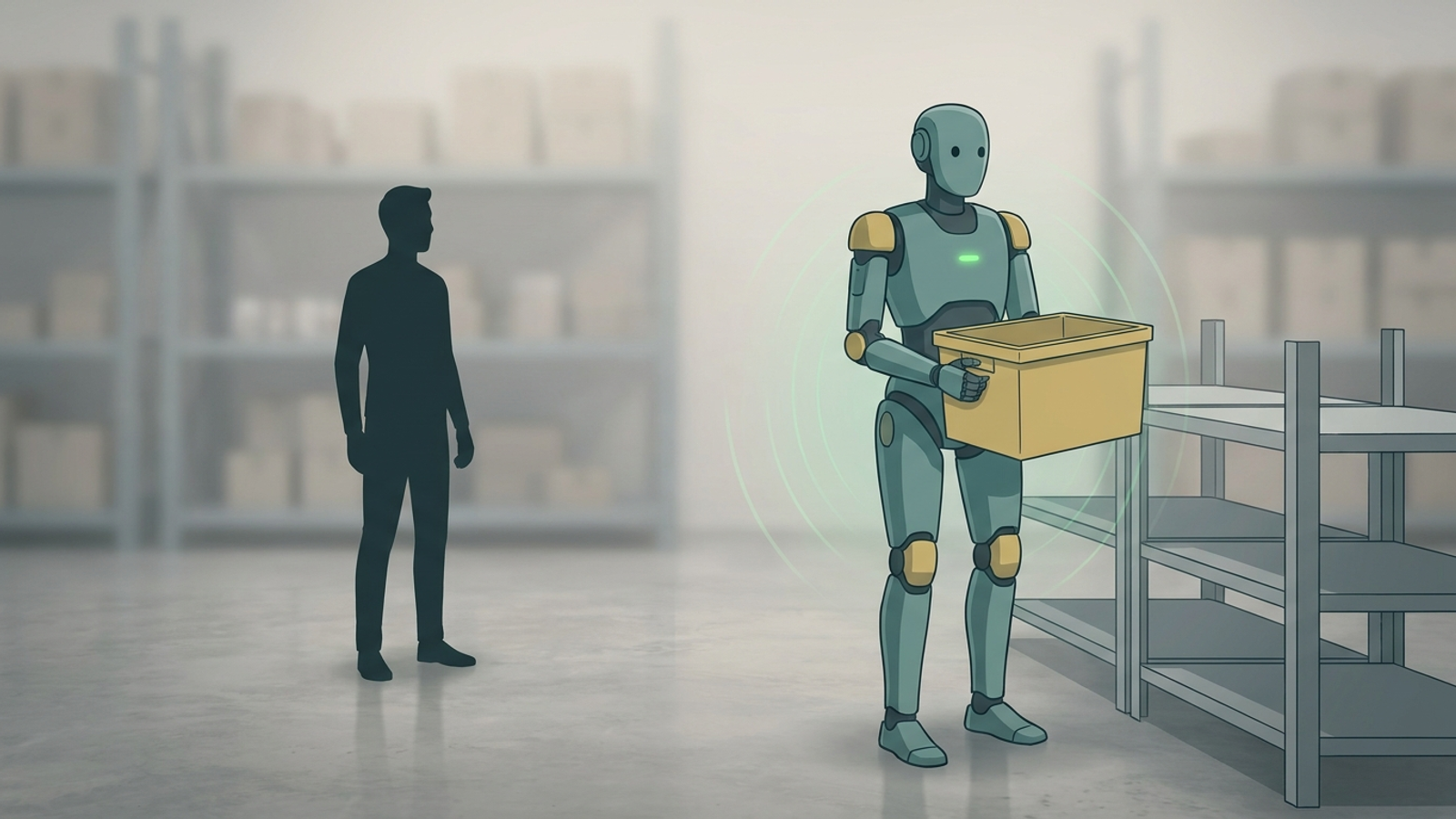
1. Cooperative safety architecture. Digit 5 continuously monitors for people using multiple sensor technologies and proprietary AI, then responds by avoiding the person, stopping, or sitting down. Visual and auditory cues signal motion intent so nearby people can participate in safe operation. An independent safety controller supervises the response whenever someone enters an unsafe distance and triggers the appropriate reaction instantly.
2. Independent safety validation. Agility says Digit previously became the first humanoid to pass an independent field evaluation on a customer production line for industrial safety standards administered by OSHA. Digit 5 extends that architecture rather than starting over.
3. Standards leadership. Agility says it is a project leader and contributor to ANSI/A3 TR R15.108, the technical report under development for dynamically stable industrial mobile robots including humanoids in the US and Canada, and to ISO 25785-1, described as the first international safety standard for the humanoid category. Whoever writes the safety standard shapes every home robot that follows.
4. Hardware built for repetition. New legs with proprietary cycloidal actuators — compact, high-torque rotary drives designed for shock loads — deliver a reported 40% more payload capacity and are engineered for repetitive lifting. Battery operations improved substantially: Digit 5 runs about 90 minutes and fully charges in about 9 minutes, a 10:1 run-to-charge ratio versus roughly 2:1 on Digit 4. That enables more than 20 hours of operation per day with fast autonomous charging. Digit 5 also adds manipulation skills beyond tote handling — depalletizing, machine tending, kitting and sequencing, and quality workflows — covering more of a facility's full workflow.

The compute partnership: NVIDIA Halos and IGX Thor
Agility says it is the first launch partner for NVIDIA's Halos for Robotics safety platform, pairing its systems with NVIDIA IGX Thor compute and Halos Core infrastructure. NVIDIA's robotics chief framed it plainly: safely operating around people and assets is what moves humanoids from pilots to industrial deployments at scale.
For home buyers, the takeaway is architectural. Safety cannot be a software patch on top of a fast, heavy biped. It has to span sensors, compute redundancy, an independent safety controller, and human-readable intent signaling. Expect the same stack — redundant sensing, a supervisor that can overrule the main planner, and explicit communication of intent — in any home humanoid worth trusting.
Why does removing the safety cage matter for home robots?
Traditional industrial robots work inside fences because they are fast, strong, and blind to context. Removing the fence means the robot must handle the hardest part of home robotics: unpredictable humans. Children run into the robot's path. Pets dart underfoot. Older adults move slowly and need extra reaction margin.
Digit 5's answer — detect, avoid, stop, or sit, plus signal intent — maps directly onto a home safety checklist:
- Does the robot detect people in all directions, including children and pets at low height?
- Does it default to a safe state (stop or sit) when uncertain, rather than pushing through?
- Can bystanders understand what it will do next from lights, sounds, or posture?
- Is there an independent safety supervisor separate from the main AI planner?
- Has any third party evaluated it against a published standard, not just the manufacturer's own test?
No home humanoid on the market today clears all five. That is exactly why Digit 5 matters: it shows what clearing them looks like in an industrial setting first.

What this means for home timelines
Be direct: Digit 5 is not a home robot. It is an enterprise RaaS platform with no public pricing, no home skills, and availability targeted at warehouses through 2027. Do not read this as a home launch.
What it does change is the timeline logic. Home humanoids from companies like 1X NEO, Figure 03, and Unitree G1 face the same trust problem Agility just spent three years solving: certifications (FCC, UL, ISO, CE), charger logistics, aisle and doorway clearances, workflow design, and documented safety behavior around people. Agility co-founder Jonathan Hurst put it well — doing the task was never enough (full story in From Digit 4 to Digit 5 below).
Any home humanoid company that cannot show equivalent homework — third-party evaluation, standards participation, fleet hours, and a documented safe-state behavior — is selling a demo, not a product. Ask for those four things before any preorder.
From Digit 4 to Digit 5: what three years on warehouse floors taught Agility
Digit 5 was not designed in a lab. Agility says its requirements came directly from customers after three years of Digit 4 working on production floors, and the design process was a first for the company: instead of building what engineers imagined as a technology demonstration, the team converted real deployment constraints into hundreds of engineering requirements.
Co-founder and chief robot officer Jonathan Hurst described the turning point during early work with Amazon. The robot did the job — moving bins off the putwall — but scaling up meant confronting FCC requirements, UL certifications, ISO certifications, and facility logistics nobody demos on stage: how wide are the aisles, where can chargers be bolted down, what does the workflow actually look like shift after shift.
That lesson generalizes. Every home humanoid startup currently showing polished demos will face the same wall the moment it tries to ship: certification regimes, charger placement (in your hallway, not a warehouse), doorway and furniture clearances, and hundreds of requirements discoverable only inside real homes. Companies with fleet hours learn this. Companies with only videos do not.
How Digit 5 compares to the home humanoid contenders
Nobody should cross-shop an enterprise RaaS biped against a consumer preorder. But the comparison is useful as a readiness audit — it shows which home contenders have deployment proof and which have promises.
Robot
Digit (Agility)
- Status
- Active enterprise, Digit 5 early access H1 2027
- Safety evidence
- OSHA field eval, ANSI/ISO standards work, 3 yrs floors
- Home readiness signal
- Strongest deployment proof; not a home product
Robot
- Status
- Industrial pilots
- Safety evidence
- Company-reported pilot hours
- Home readiness signal
- Watch for third-party evaluation
Robot
- Status
- Home-oriented preorder path
- Safety evidence
- Home trials reported
- Home readiness signal
- Closest to home use; demand independent safety data
Robot
- Status
- Buyable from ~$13,500
- Safety evidence
- Research/edu deployments
- Home readiness signal
- Affordable but buyer must verify support longevity
| Robot | Status | Safety evidence | Home readiness signal |
|---|---|---|---|
| Digit (Agility) | Active enterprise, Digit 5 early access H1 2027 | OSHA field eval, ANSI/ISO standards work, 3 yrs floors | Strongest deployment proof; not a home product |
| Figure 03 | Industrial pilots | Company-reported pilot hours | Watch for third-party evaluation |
| 1X NEO | Home-oriented preorder path | Home trials reported | Closest to home use; demand independent safety data |
| Unitree G1 | Buyable from ~$13,500 | Research/edu deployments | Affordable but buyer must verify support longevity |
The pattern: price and availability tell you what you can buy; safety evidence tells you what you should trust. Digit 5 leads on the second column by a wide margin, and it is not even trying to enter homes yet. Apply appropriate skepticism to any home humanoid that claims to be ahead of it on trust with a fraction of the proof.
The ui44 verdict: trust the safety evidence
Signal
Works beside people, no cage
- Digit 5 status
- Yes, cooperatively safe architecture
- Home relevance
- Required for any home humanoid
Signal
Third-party safety evaluation
- Digit 5 status
- OSHA-administered field eval (prior gen)
- Home relevance
- Ask every home vendor for equivalent
Signal
Standards participation
- Digit 5 status
- ANSI/A3 TR R15.108, ISO 25785-1
- Home relevance
- Shapes future home certification
Signal
Fleet proof
- Digit 5 status
- 3 years Digit 4 floors, $300M+ orders
- Home relevance
- Demos alone do not count
Signal
Home availability
- Digit 5 status
- None, enterprise RaaS only
- Home relevance
- Do not buy Digit for your home
| Signal | Digit 5 status | Home relevance |
|---|---|---|
| Works beside people, no cage | Yes, cooperatively safe architecture | Required for any home humanoid |
| Third-party safety evaluation | OSHA-administered field eval (prior gen) | Ask every home vendor for equivalent |
| Standards participation | ANSI/A3 TR R15.108, ISO 25785-1 | Shapes future home certification |
| Fleet proof | 3 years Digit 4 floors, $300M+ orders | Demos alone do not count |
| Home availability | None, enterprise RaaS only | Do not buy Digit for your home |
Digit 5 does not put a humanoid in your home. It puts a filter on every company that promises to. The next time a viral video shows a humanoid folding laundry beside a child, ask the Digit 5 questions: who evaluated its safety, what standard did they use, what does it do when uncertain, and how many hours has it worked beside real people? Until those answers exist, keep your wallet closed and keep watching the warehouses — that is where home readiness is being earned.
Browse every platform we track, from warehouse bipeds to home companions, in the Home Robot Database, compare contenders side by side in Compare, and follow the category in Humanoids.
That is the Digit 5 lesson for home buyers: trust the safety evidence, not the sizzle reel.
Related in the database
Use this article as a market-reality workflow
Turn the article into a market-reality pass grounded in the robots, manufacturers, and countries it actually references.
Digit 5: the Cage-Free Humanoid and Home Robot Safety already points you toward 4 linked robots, 4 manufacturers, and 3 countries inside the ui44 database. That matters because strong buyer guidance is easier to apply when you can move immediately from a claim or warning into concrete product pages, manufacturer directories, component explainers, and country-level context instead of treating the article as an isolated opinion piece. The fastest next step is to turn the article into a shortlist workflow: open the linked robot pages, verify which specs are actually published for those models, then compare the surrounding manufacturer and component context before you decide whether the underlying claim changes your buying plan.
For this topic, the useful discipline is to separate the editorial lesson from the catalog evidence. The article gives you the framing, but the robot pages tell you what each product actually ships with today: sensor stack, connectivity methods, listed price, release timing, category, and support-relevant compatibility notes. The manufacturer pages then show whether you are looking at a one-off launch, a broader lineup pattern, or a company that spans multiple categories. That layered workflow reduces the risk of buying on a single marketing phrase or a single support FAQ.
Launch claims age fast. The safest move is to pair the article with robot status, price, and manufacturer breadth checks inside ui44 so you can see whether Digit, Figure 03, and NEO are actually ready for a shortlist or still mostly launch-stage signals. If you want a quick working shortlist, open Compare Digit, Figure 03, and NEO next, then keep this article open as the reasoning layer while you compare structured data side by side.
Practical Takeaway
Every robot, manufacturer, category, component, and country reference below resolves to a real ui44 page, keeping the follow-up path grounded in database records rather than generic advice.
Suggested next steps in ui44
- Check each linked robot page for listed price, status, and release timing before you treat a launch announcement as a shipping reality.
- Open Agility to see whether the company’s ui44 footprint already shows a mature product lane or only a small launch cluster.
- Use country pages when the article spans several ecosystems, because launch timing and lineup depth often differ by region even when the headline sounds global.
- Finish with Compare Digit, Figure 03, and NEO so availability claims sit next to real product data.
- Treat every article as a live market snapshot. Re-check status and pricing before you move from interest to purchase intent.
Robot profiles worth opening next
Use the linked product pages as the evidence layer
The linked robot pages are where this article becomes operational. Instead of asking whether the headline is interesting, use the robot entries to inspect the actual mix of sensors, connectivity options, batteries, pricing, release timing, and stated capabilities attached to the products mentioned in the article. That is the easiest way to see whether the warning or opportunity described here affects one product family, a specific design pattern, or an entire buying lane.
Digit is tracked on ui44 as a active humanoid robot from Agility. The database currently records a listed price of Price TBA, a release date of 2023, ~4 hours battery life, ~2 hours charging time, and a published stack that includes LiDAR, RGB-D Cameras, and IMU plus Wi-Fi and 5G.
For market and launch stories, this entry grounds the article in real product data. Use the combination of status, release timing, price, and published capabilities like Box Carrying (16kg), Stair Navigation, and Warehouse Operations to decide whether Digit belongs on a live shortlist or should stay in the watchlist bucket a little longer.
Figure 03 is tracked on ui44 as a active humanoid robot from Figure AI. The database currently records a listed price of Price TBA, a release date of 2025-10-09, ~5 hours battery life, Not disclosed charging time, and a published stack that includes Stereo Vision, Depth Cameras, and Force Sensors plus Wi-Fi and Bluetooth.
For market and launch stories, this entry grounds the article in real product data. Use the combination of status, release timing, price, and published capabilities like Complex Manipulation, Warehouse Work, and Manufacturing Tasks to decide whether Figure 03 belongs on a live shortlist or should stay in the watchlist bucket a little longer.
NEO
1X Technologies · Humanoid · Pre-order
NEO is tracked on ui44 as a pre-order humanoid robot from 1X Technologies. The database currently records a listed price of $20,000, a release date of 2025-10-28, ~4 hours battery life, Not disclosed charging time, and a published stack that includes RGB Cameras, Depth Sensors, and Tactile Skin plus Wi-Fi and Bluetooth.
For market and launch stories, this entry grounds the article in real product data. Use the combination of status, release timing, price, and published capabilities like Household Chores, Tidying Up, and Safe Human Interaction to decide whether NEO belongs on a live shortlist or should stay in the watchlist bucket a little longer.
G1 is tracked on ui44 as a available humanoid robot from Unitree. The database currently records a listed price of $13,500, a release date of 2024-05-13, ~2 hours battery life, Not disclosed charging time, and a published stack that includes Depth Camera, 3D LiDAR, and 4 Microphone Array plus Wi-Fi 6 and Bluetooth 5.2.
For market and launch stories, this entry grounds the article in real product data. Use the combination of status, release timing, price, and published capabilities like Bipedal Walking, Object Manipulation, and Dexterous Hands (optional Dex3-1) to decide whether G1 belongs on a live shortlist or should stay in the watchlist bucket a little longer.
Manufacturer context behind the article
Check whether this is one product story or a broader company pattern
Manufacturer pages add the market context that individual product pages cannot show on their own. They help you check whether a launch headline is backed by a deeper tracked lineup, a visible order path, and adjacent products that make the company look committed rather than opportunistic.
Agility
ui44 currently tracks 1 robot from Agility across 1 category. The company is grouped under USA, and the current catalog footprint on ui44 includes Digit.
That wider brand context matters because launch headlines can obscure how deep or shallow a company’s actual product footprint is. The manufacturer route helps you tell the difference between a growing ecosystem and a single high-visibility announcement. The category mix here currently points toward Humanoid as the most useful next route if you want to see whether this article reflects a wider pattern inside the brand.
Figure AI
ui44 currently tracks 2 robots from Figure AI across 1 category. The company is grouped under USA, and the current catalog footprint on ui44 includes Figure 03, Figure 02.
That wider brand context matters because launch headlines can obscure how deep or shallow a company’s actual product footprint is. The manufacturer route helps you tell the difference between a growing ecosystem and a single high-visibility announcement. The category mix here currently points toward Humanoid as the most useful next route if you want to see whether this article reflects a wider pattern inside the brand.
1X Technologies
ui44 currently tracks 2 robots from 1X Technologies across 1 category. The company is grouped under Norway, and the current catalog footprint on ui44 includes NEO, EVE.
That wider brand context matters because launch headlines can obscure how deep or shallow a company’s actual product footprint is. The manufacturer route helps you tell the difference between a growing ecosystem and a single high-visibility announcement. The category mix here currently points toward Humanoid as the most useful next route if you want to see whether this article reflects a wider pattern inside the brand.
Unitree
ui44 currently tracks 2 robots from Unitree across 1 category. The company is grouped under China, and the current catalog footprint on ui44 includes H1, G1.
That wider brand context matters because launch headlines can obscure how deep or shallow a company’s actual product footprint is. The manufacturer route helps you tell the difference between a growing ecosystem and a single high-visibility announcement. The category mix here currently points toward Humanoid as the most useful next route if you want to see whether this article reflects a wider pattern inside the brand.
Broaden the scan without leaving the database
Categories, components, and countries add the wider context
Category framing
Category pages are useful when the article touches a buying pattern that shows up across brands. A category route helps you confirm whether the linked products sit in a narrow niche or whether the same question should be tested across a larger field of alternatives.
Humanoid
The Humanoid category page currently groups 129 tracked robots from 92 manufacturers. ui44 describes this lane as: Full-size bipedal humanoid robots built to work alongside people — from factory floors to household tasks. Compare the cutting edge of humanoid robotics.
That makes the category route a practical follow-up when you want to check whether the products linked in this article are typical for the lane or whether they sit at one edge of the market. Useful starting examples currently include NEO, EVE, Mornine M1.
Country and ecosystem context
Country pages give extra context when support practices, launch sequencing, regulatory posture, or manufacturer mix matter. They are not a substitute for model-level verification, but they do help you see which ecosystems cluster together and which manufacturers sit in the same regional field when you broaden the search beyond the article headline.
USA
The USA route currently groups 89 tracked robots from 69 manufacturers in ui44. That gives you a useful regional lens when the article points toward support practices, launch sequencing, or brand clusters that may share similar ecosystem assumptions.
On the current route, manufacturers like Faraday Future, iRobot, Boston Dynamics make the page a good way to broaden the scan without losing the regional context that often shapes availability, documentation style, and adjacent alternatives.
Norway
The Norway route currently groups 2 tracked robots from 1 manufacturers in ui44. That gives you a useful regional lens when the article points toward support practices, launch sequencing, or brand clusters that may share similar ecosystem assumptions.
On the current route, manufacturers like 1X Technologies make the page a good way to broaden the scan without losing the regional context that often shapes availability, documentation style, and adjacent alternatives.
China
The China route currently groups 189 tracked robots from 87 manufacturers in ui44. That gives you a useful regional lens when the article points toward support practices, launch sequencing, or brand clusters that may share similar ecosystem assumptions.
On the current route, manufacturers like AGIBOT, Dreame, Unitree Robotics make the page a good way to broaden the scan without losing the regional context that often shapes availability, documentation style, and adjacent alternatives.
Questions to answer before you move from reading to buying
A follow-up FAQ built from the entities already linked in this article
Frequently Asked Questions
Which page should I open first after reading “Digit 5: the Cage-Free Humanoid and Home Robot Safety”?
Start with Digit. That gives you a concrete product anchor for the article’s main claim. From there, branch into the manufacturer and component pages so you can tell whether the article is describing one specific model, a repeated brand pattern, or a wider technology issue that affects multiple shortlist options.
How do the manufacturer pages change the buying decision?
Agility help you zoom out from one article and one product. On ui44 they show lineup breadth, category spread, and the neighboring robots tied to the same company. That context is useful when you are deciding whether a risk belongs to a single model, whether it shows up across a brand’s portfolio, and whether you should keep looking at alternatives before committing.
When should I switch from reading to side-by-side comparison?
Move into Compare Digit, Figure 03, and NEO as soon as you understand the article’s main warning or promise. The article explains what to watch for, but the compare view is where you can check whether price, status, battery life, connectivity, sensors, and category fit still make the robot a good match for your own home and budget.
Where to go next in ui44
Keep the research chain inside the database
If you want to keep going, these follow-on pages give you the cleanest expansion path from article to research session. Open the comparison route first if you are deciding between products today. Open the manufacturer, category, and component routes if you still need to understand the broader pattern behind the claim.
Written by
ui44 Team
Published September 17, 2026
Share this article
Open a plain share link on X or Bluesky. No embeds, no widgets, no cookie baggage.