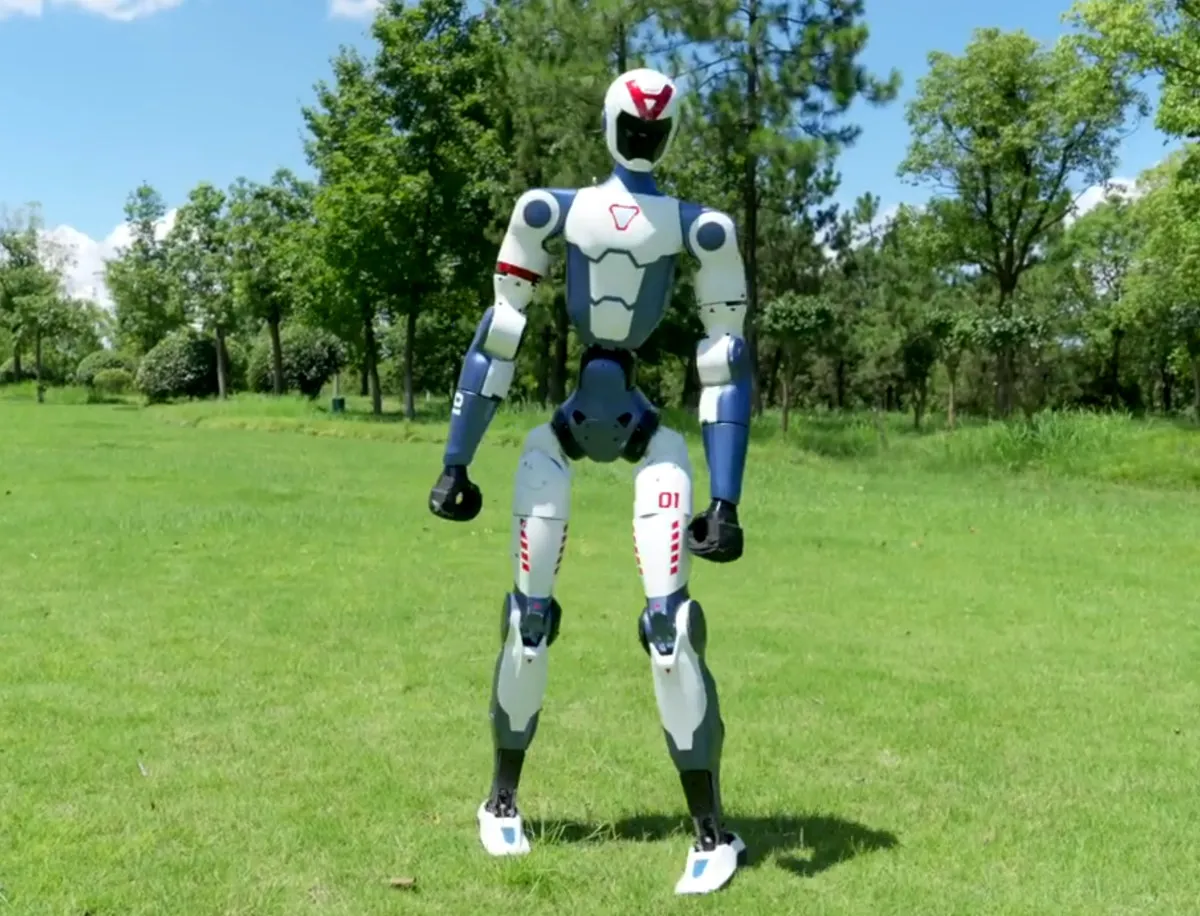
- Price $4,900 USD
- Weight ~29kg (with battery; ~25kg for Air model)
- Battery Life ~1 hour (mixed activity)
- Max Speed Not officially disclosed
- Status Pre-order
- Category Humanoid
Capabilities
The table expands across desktop, stays dense on mobile, and highlights the strongest numeric values so the real tradeoffs are easy to spot.
Capabilities
Capabilities
| Spec | ||
|---|---|---|
| Price | $4,900 USD | $19,990 USD |
| Height | 123cm (standing) | 131cm |
| Weight | ~29kg (with battery; ~25kg for Air model) | 39kg |
| Battery Life | ~1 hour (mixed activity) | Up to 2 hours |
| Charging Time | Not officially disclosed | Not disclosed |
| Max Speed | Not officially disclosed | 2 m/s (7.2 km/h) |
| AI | 8-core CPU + GPU; optional NVIDIA Jetson Orin (40–100 TOPS, EDU only); UnifoLM multimodal LLM | NVIDIA Jetson Orin NX (157 TOPS) |
| Sensors | Binocular Cameras, 4-Mic Array, Dual 6-Axis IMU | 3D LiDAR, Stereo RGB Cameras, Interactive RGB Camera, RGB-D Camera, Rear RGB Camera |
| Connectivity | Wi-Fi, Bluetooth 5.2 | Wi-Fi, 4G, 5G, VR Teleoperation |
| Voice Assistants | UnifoLM (voice + image commands) | None |
| Status | Pre-order | Available |
| Category | Humanoid | Humanoid |
| Manufacturer | Unitree Robotics | Faraday Future |
Capability matrix
Use this grid when the shortlist is already close and feature gaps become the real tiebreaker.
| Capability | R1 | FF Master |
|---|---|---|
| 26 Degrees of Freedom (standard) | ✓ | — |
| Adaptive Learning | — | ✓ |
| Autonomous Navigation | — | ✓ |
| Bipedal Walking | — | ✓ |
| Bipedal Walking & Running | ✓ | — |
| Cartwheels & Handstands | ✓ | — |
| Companion Interaction (children, elderly, families) | — | ✓ |
| Customizable Shell/Finish | ✓ | — |
| Dexterous Manipulation (7-DOF arms, 5-finger hands) | — | ✓ |
| Gesture Recognition | ✓ | — |
| Natural Language Interaction (up to 50 languages) | — | ✓ |
| OTA Software Updates | ✓ | ✓ |
| Obstacle Avoidance | — | ✓ |
| Optional Dexterous Hands (EDU) | ✓ | — |
| Push Recovery | ✓ | — |
| ROS 2 Support | ✓ | — |
| Remote Home Monitoring | — | ✓ |
| Secondary Development (EDU) | ✓ | — |
| VR Teleoperation | — | ✓ |
| Voice & Image Interaction (UnifoLM) | ✓ | — |
Use this flow to get to a clean shortlist fast. The route works best as a dense research workbench, not a marketing page.
Start with robots that solve the same job. Use category anchors like Humanoid, Cleaning, Lawn & Garden, Commercial before you worry about micro-spec wins.
Check price, status, battery, sensors, and capabilities before getting lost in minor spec rows.
Once you have a shortlist, hide shared rows. That turns the table from a spec dump into a real decision tool.
A dedicated cleaner versus a home assistant with cleaning features can reveal whether you really need a specialist or just broader household coverage. Compare around the same outcome, not the same marketing language.
Use a prebuilt pairing when blank-page friction is the problem. Open one, swap robots, and keep moving.
Price bracket check — Roomba Mini versus AquaSense X shows what the premium tier actually buys in navigation, maintenance, and smart-home polish.
Same-brand shortlist — 4NE-1 Mini versus 4NE-1 isolates whether the higher tier actually changes the ownership story.
Mobility platforms — CyberDog 2 versus D1 Pro is a fast way to compare payload, stability, and commercial ambition inside the quadruped category.
Home presence check — Miko Mini versus LOVOT reveals how much extra presence, hardware, and ecosystem you buy as companion robots move upmarket.
Turn comparison rows into an actual recommendation — not just more reading.
Not all spec deltas matter equally. Rank your buying criteria before crowning a winner.
The sticker price is only one row. Subscriptions, consumables, and service access often decide the real winner.
Subscriptions
Cloud AI and premium app tiers can make a cheaper robot more expensive over three years.
Consumables
Brushes, pads, filters, and bags flip the value story on high-frequency robots.
Energy & battery
Large batteries and frequent charging reveal everyday operating demands.
Repair & warranty
Local servicing and spare-parts access are the quietest but most important long-term costs.
Specs describe ideal conditions. Your rooms, pets, and Wi-Fi determine what actually performs.
Of 201 robots tracked, 138 are available now. For household tasks, getting a capable robot into daily use today usually beats waiting for incremental improvements. For research or early-adopter use, waiting can make sense if the next model changes the platform story.
If two robots are still neck-and-neck, use softer signals that affect ownership quality more than spec sheets admit.
Comparison FAQ
Short answers to the questions that usually show up once the shortlist is live and the tradeoffs feel real.